📋 Table of Contents
Quick Answer: A gemstone bracelet is the highest-risk piece in any jewelry collection — it sits on the wrist, the most contact-prone part of the body, taking hits from desks, doorframes, and daily life.
When buying, hardness comes first (Mohs 7+ for daily wear), setting type second (bezel protects edges, prongs expose them), and metal base third (sterling silver resists skin reactions). Quartz-family stones (Mohs 7) are the safest bet for everyday bracelets — softer stones like amazonite (Mohs 6-6.5) need more awareness.
Why Choose a Gemstone Bracelet Over All-Metal
An all-metal bracelet (gold chain, silver bangle) is versatile but anonymous — it looks the same on everyone who wears it. A gemstone bracelet — whether blue-green amazonite beads, rose quartz, or a multi-gemstone stack — carries your specific color signature. Three reasons to go gemstone:
- Personal color expression. Your wrist is one of the most visible parts of your body — hands move when you talk, gesture, type, eat. A gemstone bracelet's color is always in motion. Amazonite says cool and composed; rose quartz reads warm and romantic; a multi-gemstone stack announces that you don't follow rules — you make them.
- Every piece is one of a kind. Unlike metal bracelets produced in identical runs, natural gemstones vary: each amazonite bead has its own shade, each quartz bead its own internal cloud pattern. Your bracelet is genuinely unique — no one else has the same stone arrangement.
- Stone meaning adds intention. Amazonite is the "stone of courage." Rose quartz represents unconditional love. Quartz crystal amplifies energy. When you give a gemstone bracelet as a gift, you're offering a stone with a story — not just a shiny thing in a box.
Gemstone Hardness & Durability Guide for Bracelets
Bracelets take more impact than any jewelry type except rings. Every time you rest your wrist on a desk, reach into a bag, or shake hands, your bracelet is making contact — often with something harder than the stone. Here's what that means for gemstone selection:
| Gemstone | Mohs | Daily Wear | Risk | Best Style |
| Quartz / Rock Crystal | 7 | ✅ Yes | Low | Beaded, bezel |
| Rose Quartz | 7 | ✅ Yes | Low | Beaded, bezel |
| Austrian Crystal | 6-7 | ⚠️ Care | Medium | Cuff (stone protected) |
| Amazonite | 6-6.5 | ⚠️ Care | Med-High | Beaded, smooth |
A quick rule: Mohs 7 is the daily-wear threshold for bracelets. Stones above it handle desks and doorknobs without scratching. Stones below it need awareness — not kid-glove care, but don't wear your amazonite wrap bracelet to a pottery class either. If you're someone who forgets they're wearing jewelry and slams their wrist into everything, stick with quartz-family stones exclusively.
Gemstone Bracelet Styles Compared
How the stone is mounted matters as much as the stone itself. Four construction types, ranked by durability:
| Style | Construction | Durability | Best For |
| Beaded | Individual gemstone beads strung on cord | Moderate | Everyday, stacking, casual |
| Cuff | Solid metal band, gemstones set into surface | High | Evening, statement, gifts |
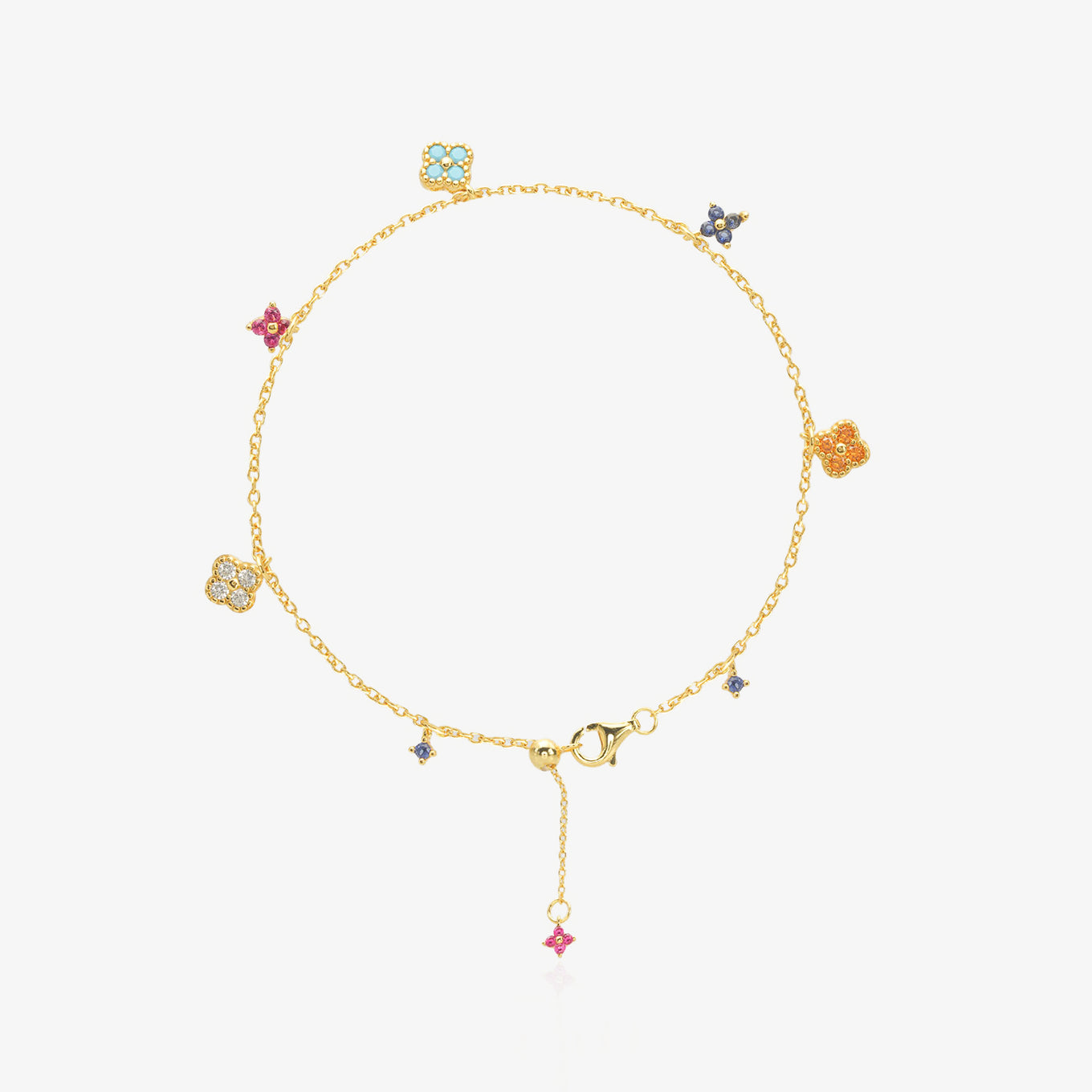
| Charm | Chain base with gemstone pendants attached | High | Personal storytelling, gifts |
| Wrap | Multiple wraps of beaded cord | Moderate | Bohemian, festival, layering |
Our Gemstone Bracelet Collection
We design gemstone bracelets starting from the stone's natural properties — color, hardness, texture — then build outward. The setting supports; it doesn't compete.
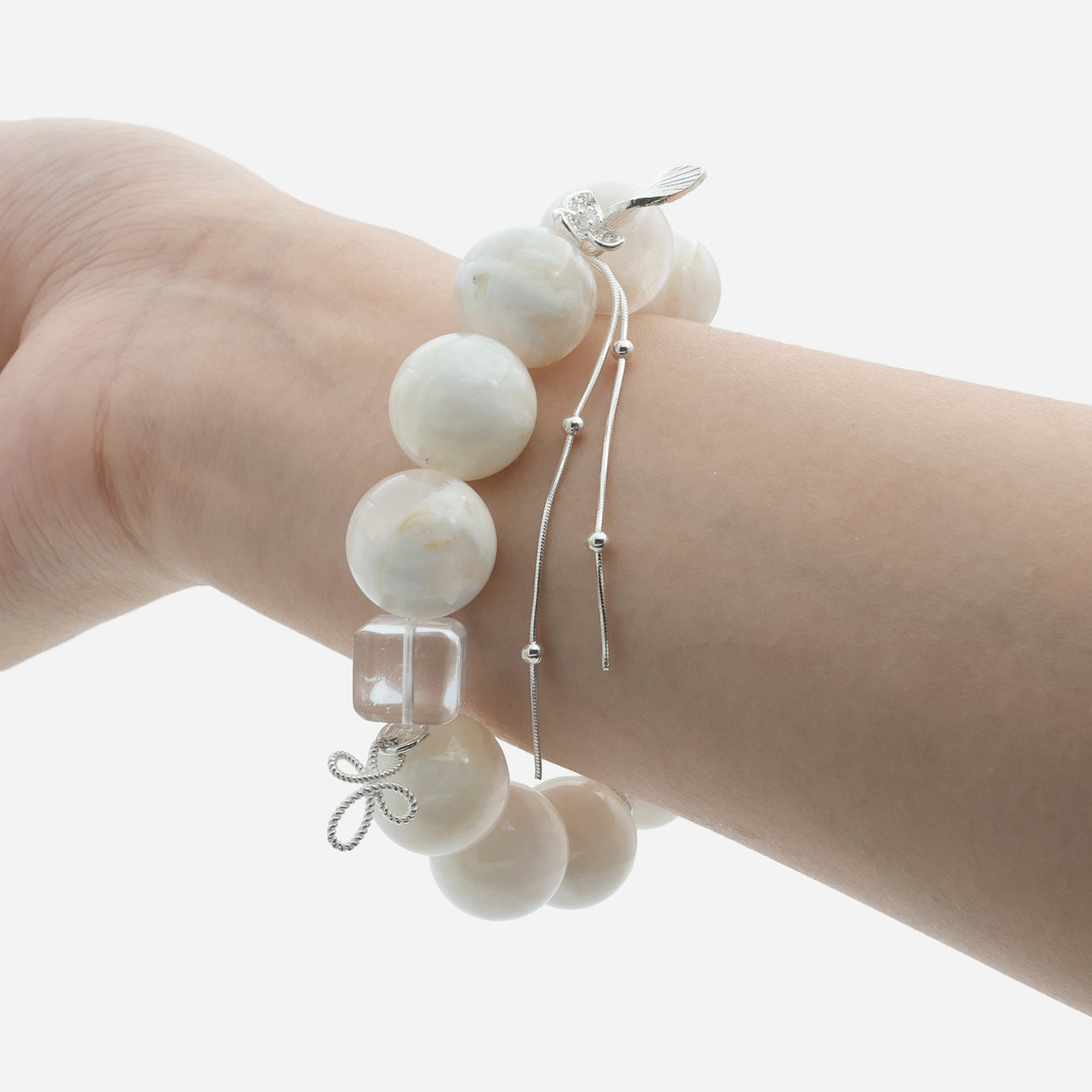
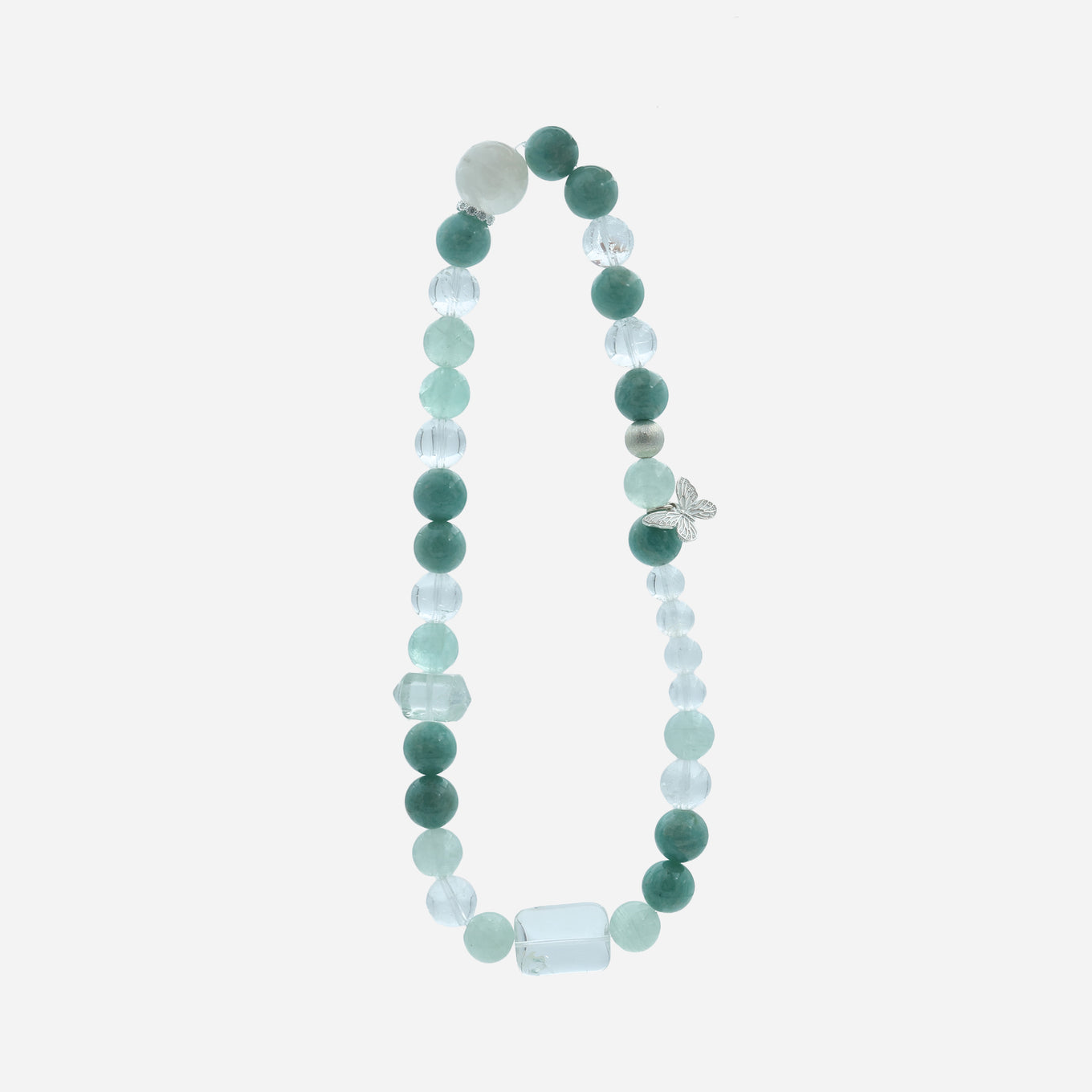
The Amazonite & Quartz Wrap Bracelet alternates genuine blue-green amazonite (Mohs 6-6.5) with clear quartz (Mohs 7) in a multi-wrap design..
The alternating stones create a rhythm — cool amazonite, crisp quartz — that reads intentional. Every amazonite bead is slightly different from the next, producing depth you can't get from dyed beads. Adjustable closure fits most wrists without sizing anxiety.
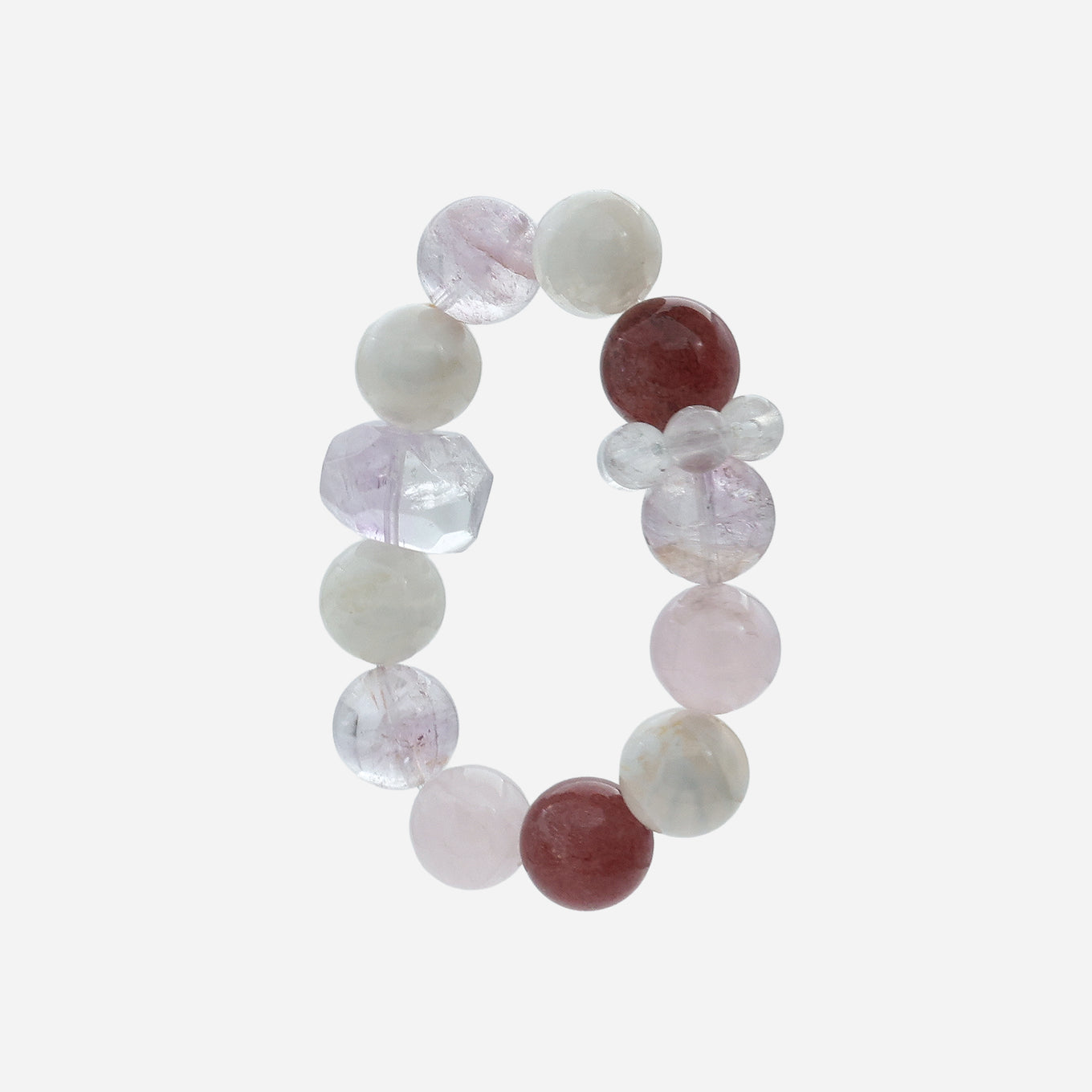
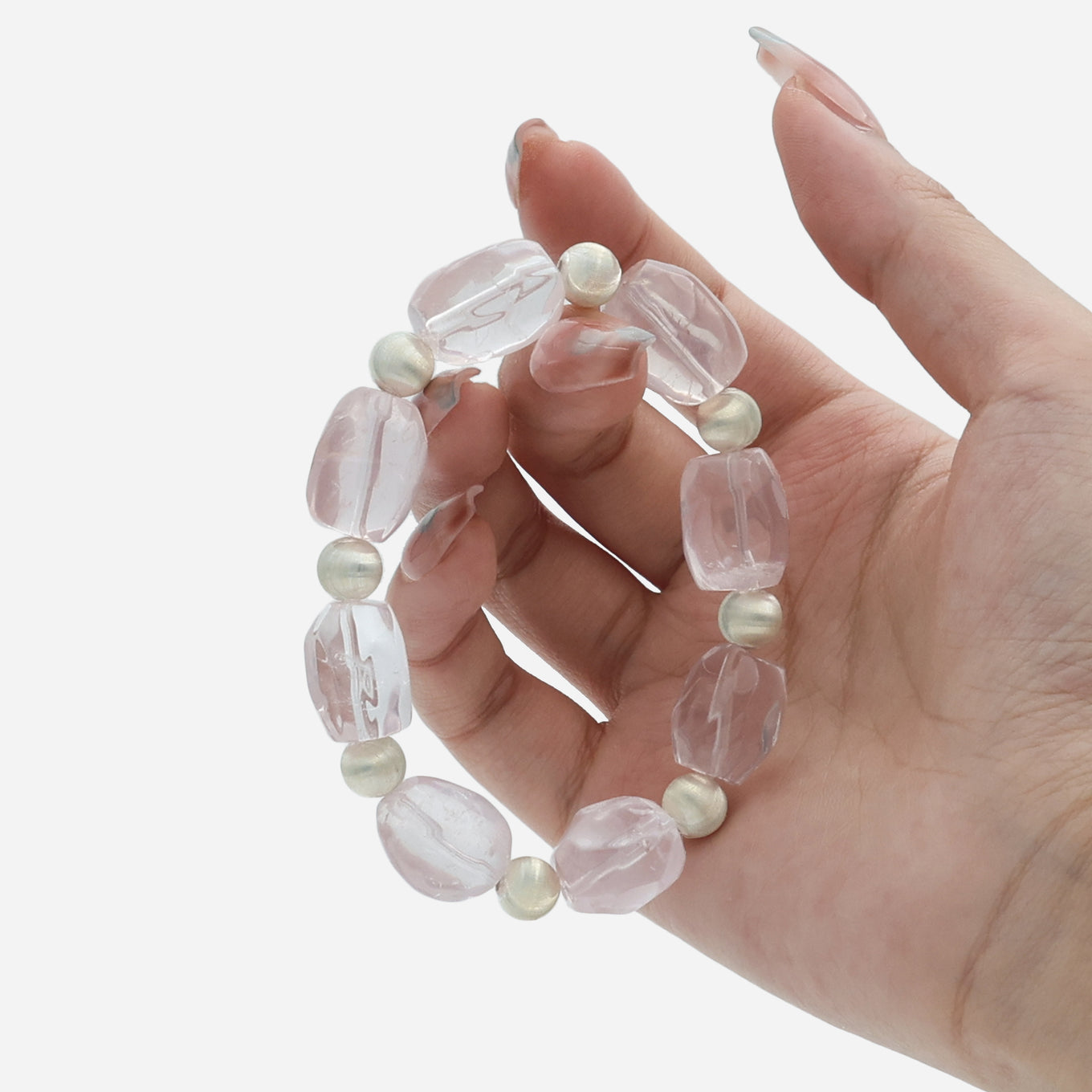
The Crystal Multi-Gemstone Stack layers different natural crystal beads — quartz, jade tones, and accent stones — into a single adjustable bracelet..
Three bracelets engineered into one piece, eliminating stacking guesswork entirely. The neutral-warm palette works with every skin tone and outfit color. Wear solo for easy color, or add a gold chain bracelet alongside for mixed-texture contrast.
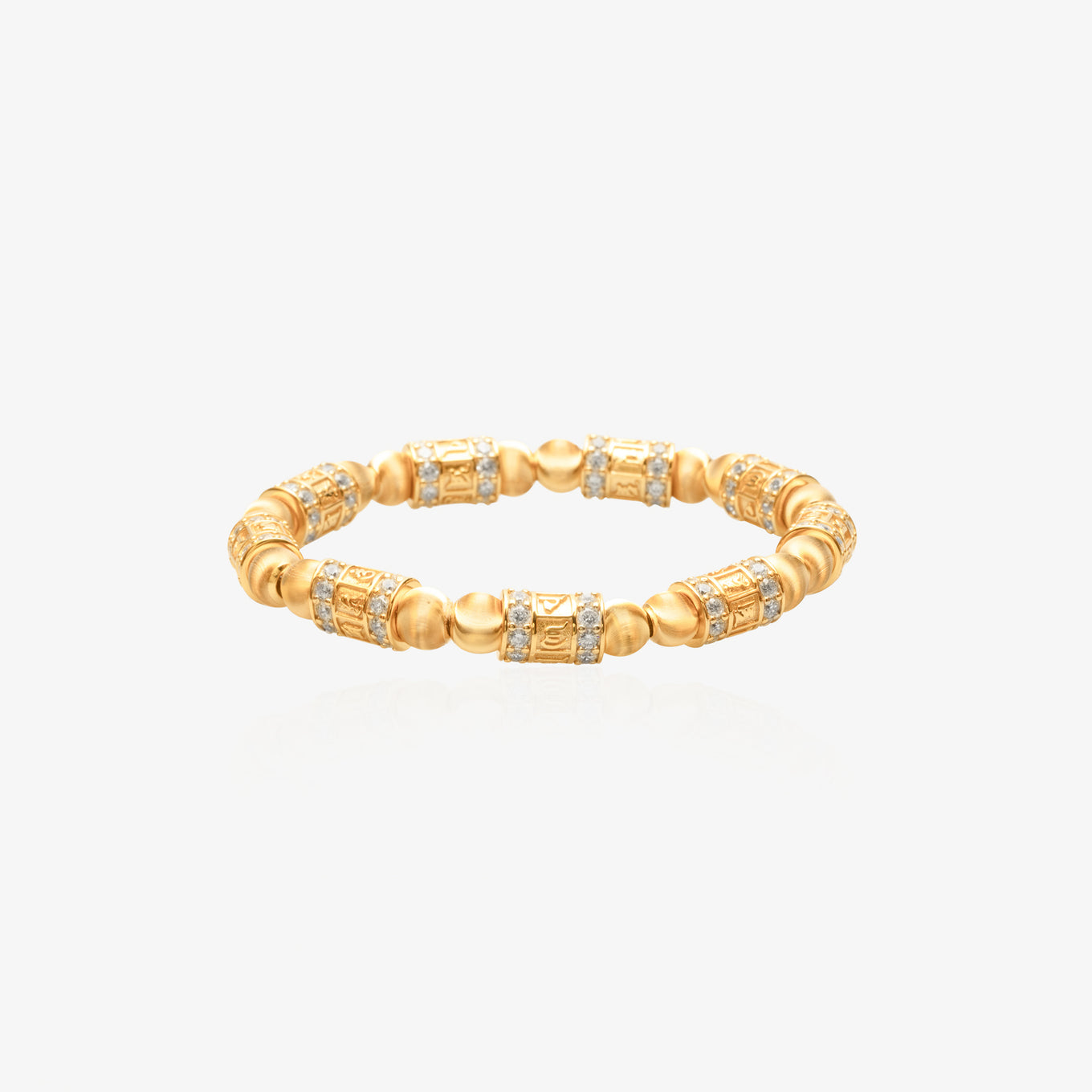
The Gold Open Cuff with Austrian Crystal Pearls is our most dramatic gemstone bracelet — a wide 18K gold-plated cuff studded with lab-grown Austrian crystal pearls..
Unlike beaded bracelets that read casual, this cuff reads event-ready. Open-cuff design means no clasp — slides on and off, adjusts to any wrist. The crystal pearls are precision-cut to catch light like natural pearls with the durability advantage of lab-grown consistency. Wear it alone as a statement with bare arms and a simple dress.
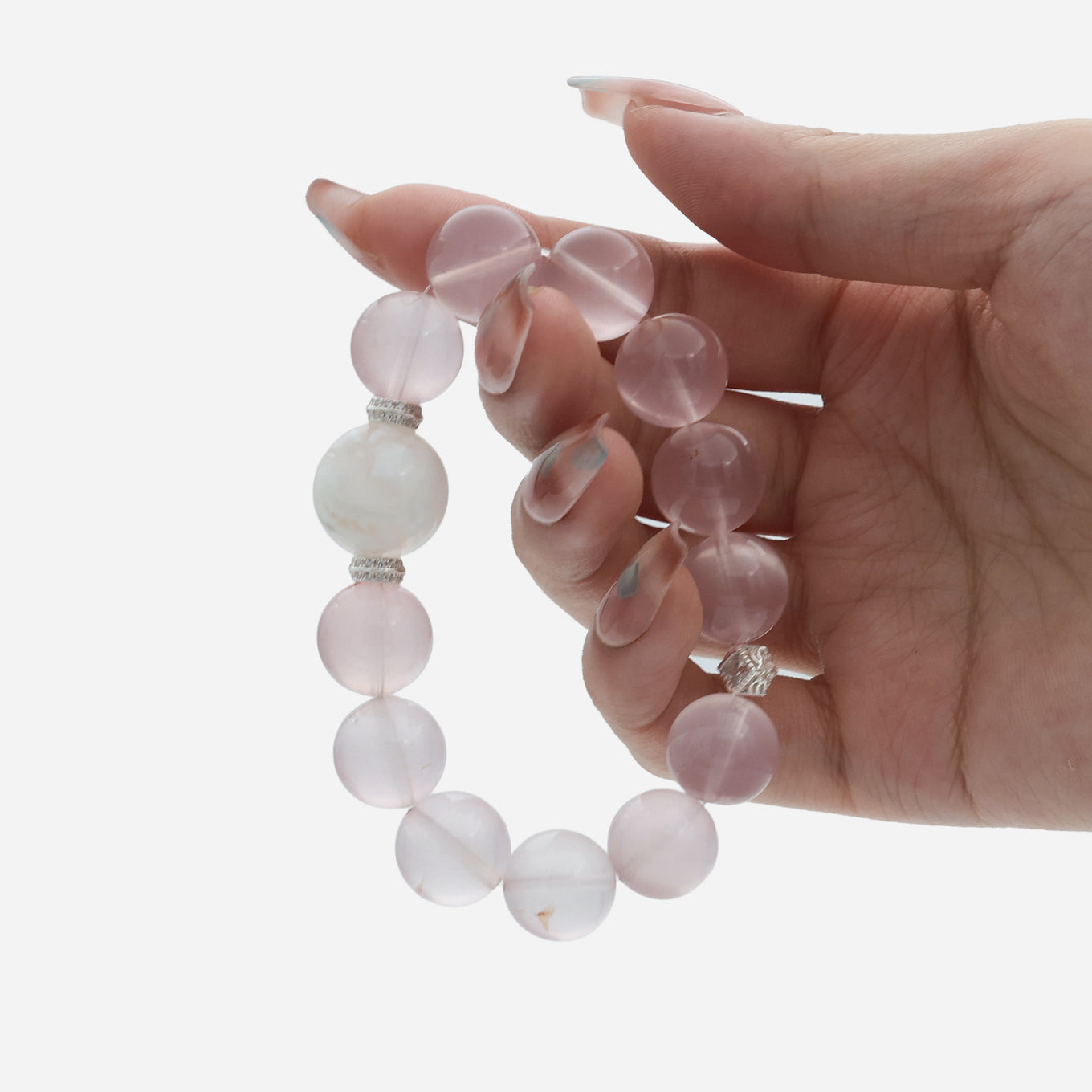
The Star Rose Quartz Bracelet features genuine rose quartz beads (Mohs 7) in a universally flattering soft pink. Rose quartz is the stone of unconditional love — making this bracelet a particularly meaningful gift. Unlike dyed alternatives that fade, natural rose quartz keeps its color permanently. It's pink through and through, not a surface treatment that washes away.
How to Stack Gemstone Bracelets
Gemstone bracelet stacking is trickier than metal-only stacking — color clashes are more noticeable, and softer stones can scratch harder ones if stacked wrong. Four principles:
- Hardest stone against the skin. Stack from hardest (Mohs 7 quartz) nearest the wrist to softest (Mohs 6 amazonite) on top. This prevents harder stones from grinding against softer ones during movement.
- One color anchor + one metal anchor. Pick one dominant gemstone color (rose quartz pink, amazonite blue-green) and pair with one metal bracelet as a neutral frame. Example: Star Rose Quartz Beads + Gilded Vine Chain Bracelet — pink stone against twisted gold rope, perfectly balanced. The metal bracelet prevents the stack from looking like you raided a bead shop.
- Texture variety over color variety. A stack of three beaded bracelets in identical bead sizes looks flat even with different colors. Mix: smooth beads (Gemstone Stack) + textured metal chain (Gilded Vine) + wide flat surface (Austrian Crystal Cuff). The eye registers texture differences before it processes color.
- Odd numbers: always three. Three bracelets read as a deliberate stack. Two can look like an afterthought. Five is trying too hard. Three gives you enough pieces to create visual rhythm without crossing into clutter territory.
Gemstone Bracelet Care by Stone Type
Different gemstones demand different care — applying one cleaning routine to all stones is how good bracelets get ruined:
- Quartz & Rose Quartz (Mohs 7). Lowest maintenance. Wipe with microfiber cloth after wear. Deep clean: lukewarm water + mild soap, soft toothbrush, rinse, pat dry. Never ultrasonic — vibrations can propagate along natural crystal fracture lines.
- Amazonite (Mohs 6-6.5). Moderate care. Same cleaning method as quartz, but store separately — harder quartz beads in the same jewelry box can scratch amazonite. Remove before sports or heavy activity — amazonite has perfect cleavage and can split if struck at specific angles.
- Austrian Crystal Pearls (Mohs 6-7). Most durable gemstone option. Lab-grown consistency means no natural fractures. Microfiber cloth for routine care. If deeper clean needed, lukewarm water rinse — but avoid prolonged soaking which can weaken the bond between crystal and setting.
- All gemstone bracelets. Remove before swimming, showering, or applying sunscreen and lotion. The metal components (gold plating, sterling silver findings) degrade from chemical exposure faster than the gemstones themselves. Apply beauty products first, allow them to absorb, then put bracelets on last.
More Resources
For more on bracelets, see our Gold Chain Bracelet Guide — the perfect companion to a gemstone bracelet stack. And for gemstone education, our Crystal Jewelry Guide covers stone identification in depth.
We Believe
We believe a gemstone bracelet should feel like a talisman, not a trinket — something you reach for because of what it means, not just how it looks. At ÉLARAMUSE, every gemstone is genuine, every setting is Ag925 sterling silver with 0.5-micron 18K gold plating, and every bracelet is designed to become part of your daily ritual rather than a piece that lives in its box.
Whether it's amazonite for courage, rose quartz for love, or quartz crystal for clarity, the right gemstone bracelet isn't just jewelry — it's a touchstone you carry on your wrist through every handshake, every meeting, every moment that matters. Be your own muse.
Key Terms
- Mohs Hardness Scale
- The universal mineral hardness scale, 1 (talc) to 10 (lab diamond). For bracelets specifically, Mohs 7 is the daily-wear threshold — stones above 7 resist scratches from most everyday surfaces. Anything below Mohs 5 will show wear quickly on a wrist.
- Amazonite
- A blue-green feldspar mineral (Mohs 6-6.5) prized for its variegated turquoise-to-green coloring. Amazonite's visible structure — alternating light and dark bands — proves its natural origin. Softer than quartz, it requires slightly more care in bracelets but rewards with unique depth of color.
- Rose Quartz
- The pink variety of quartz (Mohs 7), colored by trace amounts of titanium, iron, or manganese. Unlike dyed stones, rose quartz's color is structural — it won't fade with wear or washing. Known as the "stone of unconditional love" across multiple cultural traditions.
- Austrian Crystal Pearl
- A lab-grown crystal precision-cut into a sphere to simulate natural pearl luster. Unlike natural pearls (Mohs 2.5-3.5, extremely soft), Austrian crystal pearls have Mohs 6-7 hardness — they won't scratch or chip from casual contact. Lab-grown consistency also means every pearl in a strand matches perfectly.
- Elastic vs. Silk Cord
- Beaded bracelets are strung on either elastic (stretch to slide over hand, no clasp needed) or silk cord (requires a clasp). Elastic is more convenient for daily wear but degrades over 1-3 years and needs restringing. Silk with a clasp lasts longer but requires help to put on.
Frequently Asked Questions
Q: Can I wear a gemstone bracelet every day?
Yes — if you choose quartz-family stones (Mohs 7). Rose quartz, rock crystal, and multi-quartz bead bracelets handle daily wear including desk work, driving, and handshakes without visible scratching. Softer stones like amazonite (Mohs 6-6.5) and Austrian crystal (Mohs 6-7 on the softer side of the range) are better for occasional or office wear where wrist impact is minimal..
The single most important factor: the bracelet's placement makes it vulnerable — if your lifestyle involves your hands constantly making hard contact with surfaces, either choose quartz or accept that softer stones will develop character over time.
Q: What makes a gemstone bracelet good quality?
Three indicators. First, genuine stones — natural gemstones have color variation and inclusions; dyed beads are too uniform and fade over time. Second, quality cord or metal components — elastic cord should feel substantial and snap back firmly; metal findings (clasps, spacers) should be sterling silver or gold-plated, not base metal..
Third, consistent bead sizing — quality gemstone bracelets use beads that are uniform in diameter and smooth at the drill holes (rough drill holes abrade the cord and cause premature failure). Unlike fine jewelry where brand names signal quality, gemstone bracelets announce their quality (or lack of it) through these three physical details.
Q: Will the elastic in my beaded bracelet stretch out?
Eventually, yes — all elastic cord degrades over 1-3 years of daily wear. Signs it's time for restringing: the bracelet feels loose or spins freely on your wrist, the elastic doesn't snap back fully when stretched, or you notice the cord fraying between beads. Restringing is a simple and inexpensive repair (any jeweler or bead shop can do it). To extend cord life: roll the bracelet on and off rather than pulling and stretching it, and avoid getting it wet — water accelerates elastic degradation.
Q: How do gemstone bracelets compare to gemstone rings or necklaces?
Bracelets are the riskiest gemstone format. Rings are on fingers — you see them coming and (usually) protect them. Necklaces hang suspended — minimal contact with surfaces. Bracelets are on your wrist — the part of your body that rests on every surface you encounter..
This means bracelet gemstones need to be harder and better-protected than the same stone in a ring or necklace. An amazonite necklace? Fine for daily wear. An amazonite bracelet? Needs awareness. Quartz crystal ring? Indestructible. Quartz crystal bracelet? Also indestructible — quartz at Mohs 7 handles everything.
Q: What's the best gemstone bracelet for a gift?
Choose quartz (Mohs 7) for worry-free daily wear — it's the most forgiving stone for recipients who won't read a care guide. Rose quartz carries the most recognized symbolic meaning (love), making it the go-to for romantic gifts. For a recipient whose style you're unsure about, a multi-gemstone stack offers color versatility — it contains enough hues to match everything..
And always, always choose adjustable or stretch-fit bracelets for gifts: unlike bangles that require measuring, beaded gemstone bracelets flex to fit most wrists. The Crystal Multi-Gemstone Stack is our top gift pick — it checks every box: quartz-hard stones, versatile colors, adjustable fit, and gift-ready packaging.
Q: Can gemstone bracelets get wet?
Brief contact is fine — hand washing, light rain, a splash. Prolonged water exposure is the problem: swimming (chlorine attacks the gold plating on metal components), showering (hot water + soap degrades elastic cord), and hot tubs (heat + chemicals + prolonged submersion is the worst combination for both stones and metal)..
Remove gemstone bracelets before water activities. They're water-resistant for daily life, not waterproof — and unlike solid metal bracelets, the cord and stone components have multiple failure points that water accelerates.
References
- GIA (Gemological Institute of America). "Gemstone Encyclopedia: Quartz, Feldspar & Crystal Varieties." GIA Gem Encyclopedia
- American Gem Society. "Gemstone Hardness & Wearability Guide." AGS Buying Guides
- Smithsonian National Museum of Natural History. "The National Gem Collection." Smithsonian Mineral Sciences
- Victoria and Albert Museum. "Beaded Jewellery: Techniques & Materials Through History." V&A Jewellery Collection
Published: July 2026. This guide reflects current ÉLARAMUSE product specifications and gemological standards as of the publication date. Natural gemstones vary in appearance — each piece is unique.
Read next: Natural Garnet Bracelet | January Birthstone | Healing Talisman — 100% natural deep-red garnet with alternating bead rhythm, quartz focal, and sterling silver accents. The January birthstone bracelet that burns with quiet fire.