📑 In This Guide
Quick Answer: 3 Methods + Size Conversion Chart
Find your ring size instantly using the conversion table below — or follow one of our three no-tool methods. 60 seconds, no printer needed.
| Circumference (mm) | US Size | Diameter (mm) | UK / EU |
|---|---|---|---|
| 44.2 | 3 | 14.1 | F / 44 |
| 46.8 | 4 | 14.9 | H / 47 |
| 49.3 | 5 | 15.7 | J / 49 |
| 51.9 | 6 | 16.5 | L / 52 |
| 54.4 | 7 | 17.3 | N / 54 |
| 57.0 | 8 | 18.1 | P / 57 |
| 59.5 | 9 | 18.9 | R / 59 |
| 62.1 | 10 | 19.8 | T / 62 |
| 64.6 | 11 | 20.6 | V / 65 |
| 67.2 | 12 | 21.4 | X / 67 |
| 69.7 | 13 | 22.2 | Z / 70 |
📏 Method 1: The String Test (30 Seconds)
- Wrap — Cut a 6-inch strip of non-stretchy string, dental floss, or a thin strip of paper. Wrap it snugly around the base of your finger.
- Mark — Use a pen to mark the exact point where the string overlaps itself.
- Measure — Lay the string flat against a ruler. Measure the mark-to-mark distance in millimeters. This is your finger circumference.
- Match — Find your millimeter measurement in the circumference column of the table above. Read across to get your US ring size.
- Verify — Measure at the end of the day when fingers are naturally largest. For wide bands (6mm+), go up half a size.
💍 Method 2: Measure a Ring You Already Own (15 Seconds)
- Find — Grab a ring that fits the intended finger perfectly.
- Measure — Place a ruler across the inside of the ring. Measure the widest inner point in millimeters. This is the inner diameter.
- Match — Find your diameter in the table above (column 3). Read across to get your US ring size.
- Double-check — Measure 2-3 rings you already own. The most common size is likely your true size.
- Wide band note — For bands wider than 6mm (like the Bypass Ring or Wide Band Ring), go up half a size for comfortable wear.
📱 Method 3: Use a Free Ring Sizer App (10 Seconds)
- Download — Search "ring sizer" in the App Store or Google Play. Many free apps are available.
- Place — Put an existing ring on your phone screen over the sizing circle shown in the app.
- Align — Adjust until the on-screen circle matches your ring's inner edge exactly.
- Read — The app displays your US ring size instantly.
- Cross-check — For the most reliable result, confirm with Method 1 (string test).
💡 Pro tip: Your dominant hand is typically half a size larger. If you're right-handed, a ring that fits your left ring finger might feel tight on your right ring finger. Always measure the specific finger and hand you plan to wear the ring on.
Key Terms — Ring Sizing Vocabulary
Ring Diameter: The straight-line distance across the inside of a ring, measured in millimeters. The single number that converts across all international sizing systems.
Ring Circumference: The distance around the inside of the ring, also measured in millimeters. European sizing uses circumference directly; US sizing converts circumference to an arbitrary number scale.
US Ring Size: The numeric scale used in North America, ranging from size 3 (child) to size 13 (large adult male). A US size 7 is the statistical average for adult women.
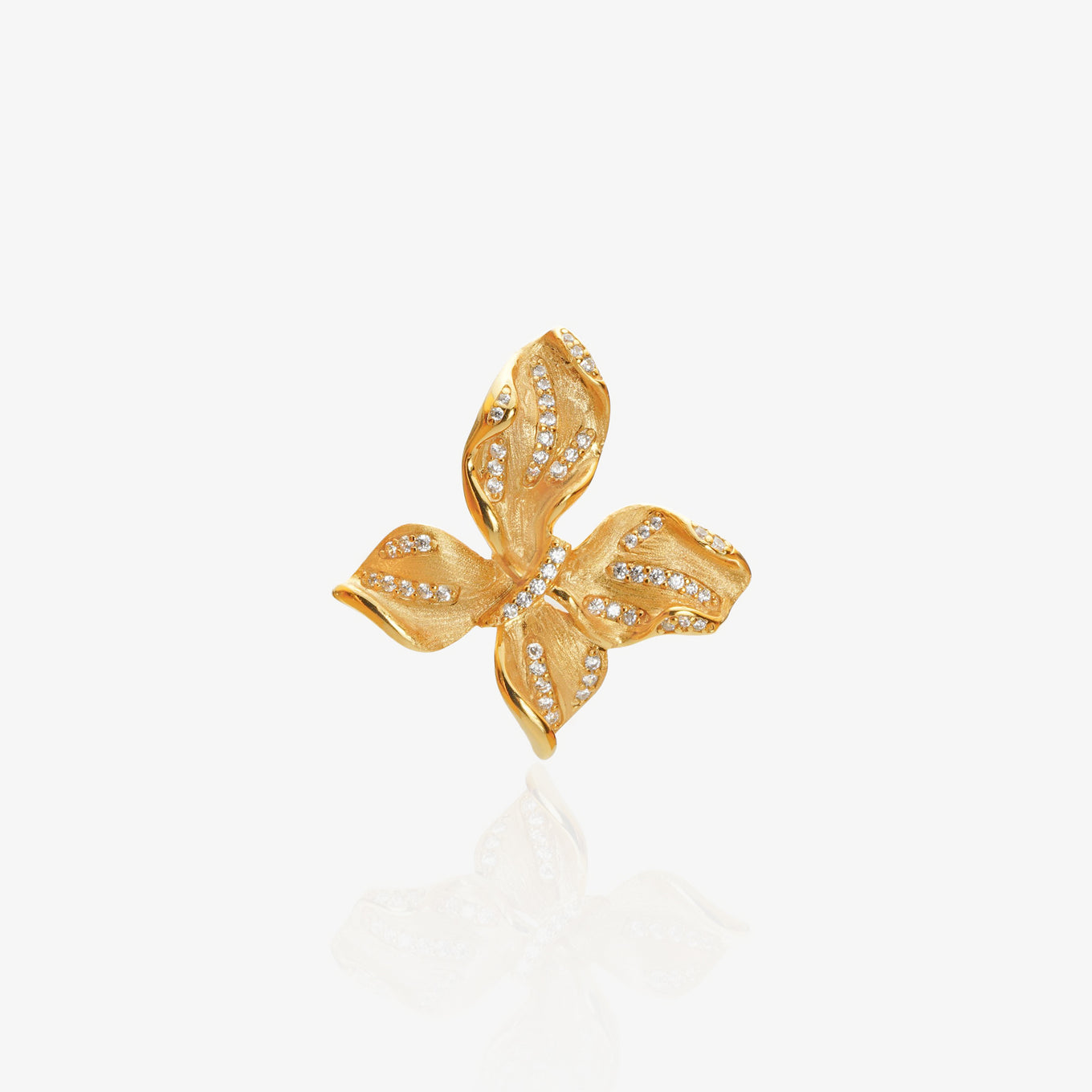
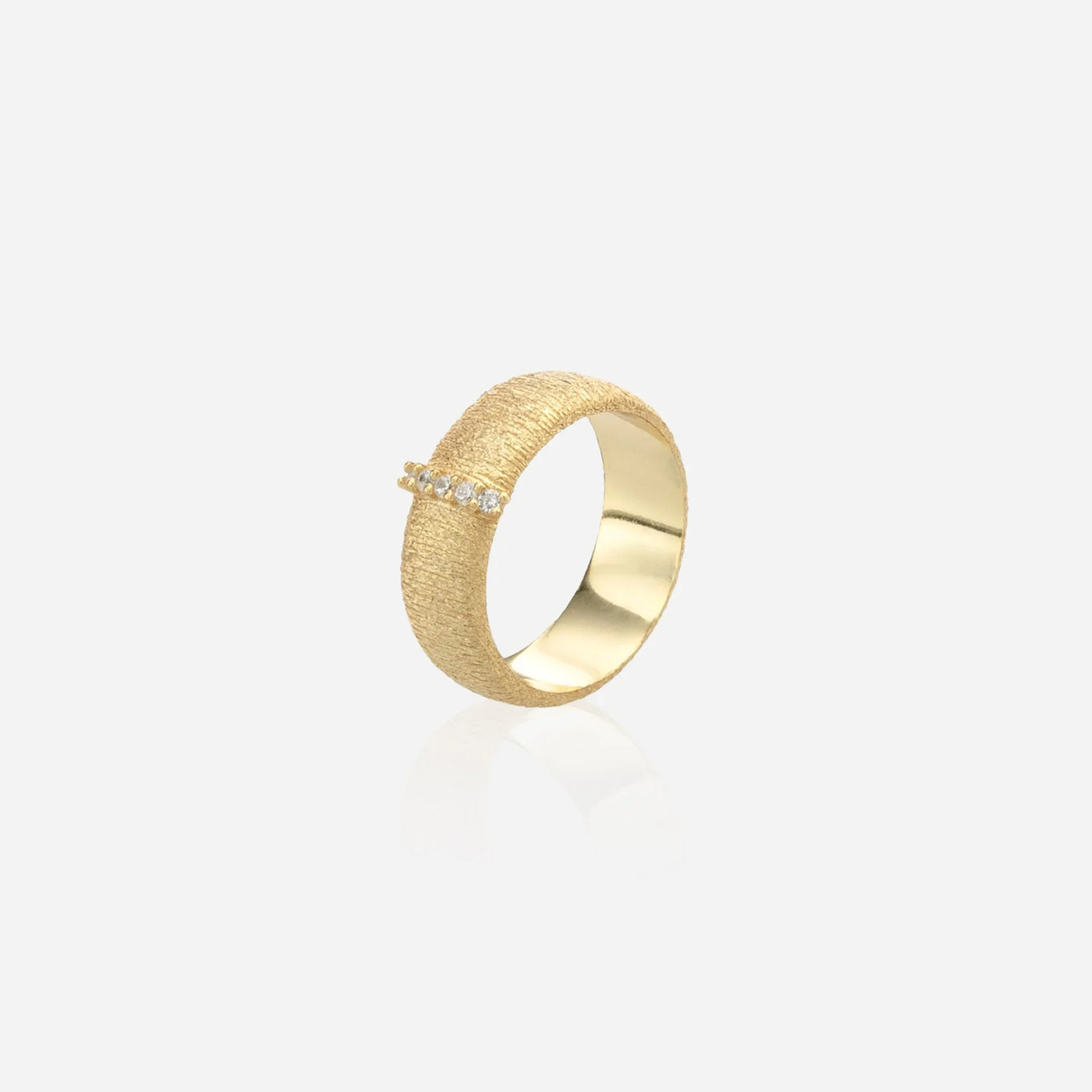
Wide Band Adjustment: For rings with a band width exceeding 6mm — like architectural statement rings such as the Dunecrest\ Ring or Dunecrest Ring — the standard rule is to go up half a size. The extra surface area of a wide band requires more room to fit the same finger comfortably.
Knuckle-to-Base Ratio: If your knuckle is significantly larger than the finger base, size for the knuckle — the ring must pass it. A ring adjuster or sizing beads can prevent spinning on a narrower base.
Editor's Picks: Rings Worth Measuring For
🎁 Gifting? Surprise someone with our Mystery Jewelry Box — a curated surprise set. Or explore our Drusy Pebble Cuff Ring and Gallery Band Ring for unique stacking options.
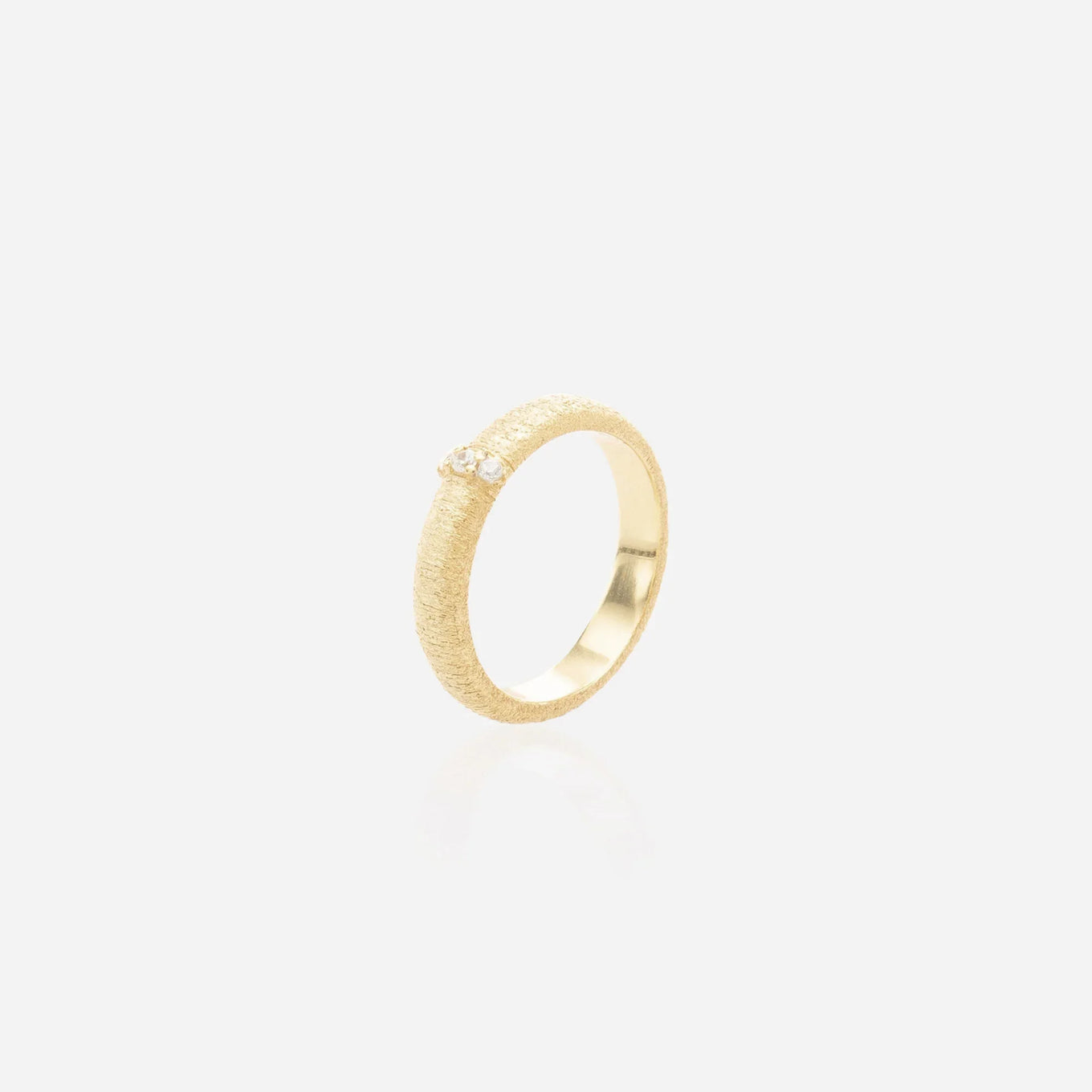
Dunecrest Ring | Wavy Gold Band | Lab Diamond | ÉLARAMUSE: Dunecrest Ring | Wavy Gold Band | Lab Diamond | ÉLARAMUSE — A freeform gold wave band. Worth 30 seconds of finger measurement.
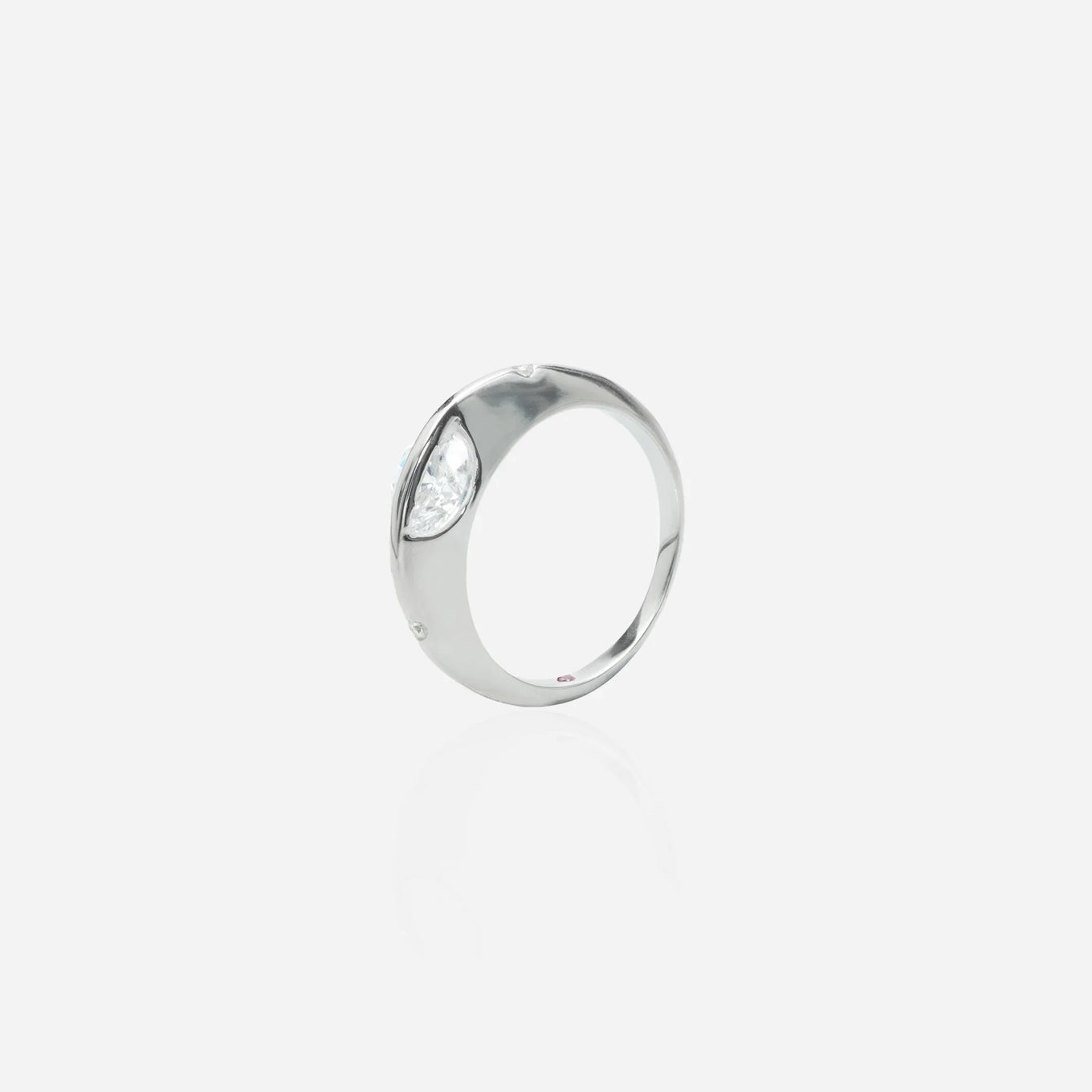
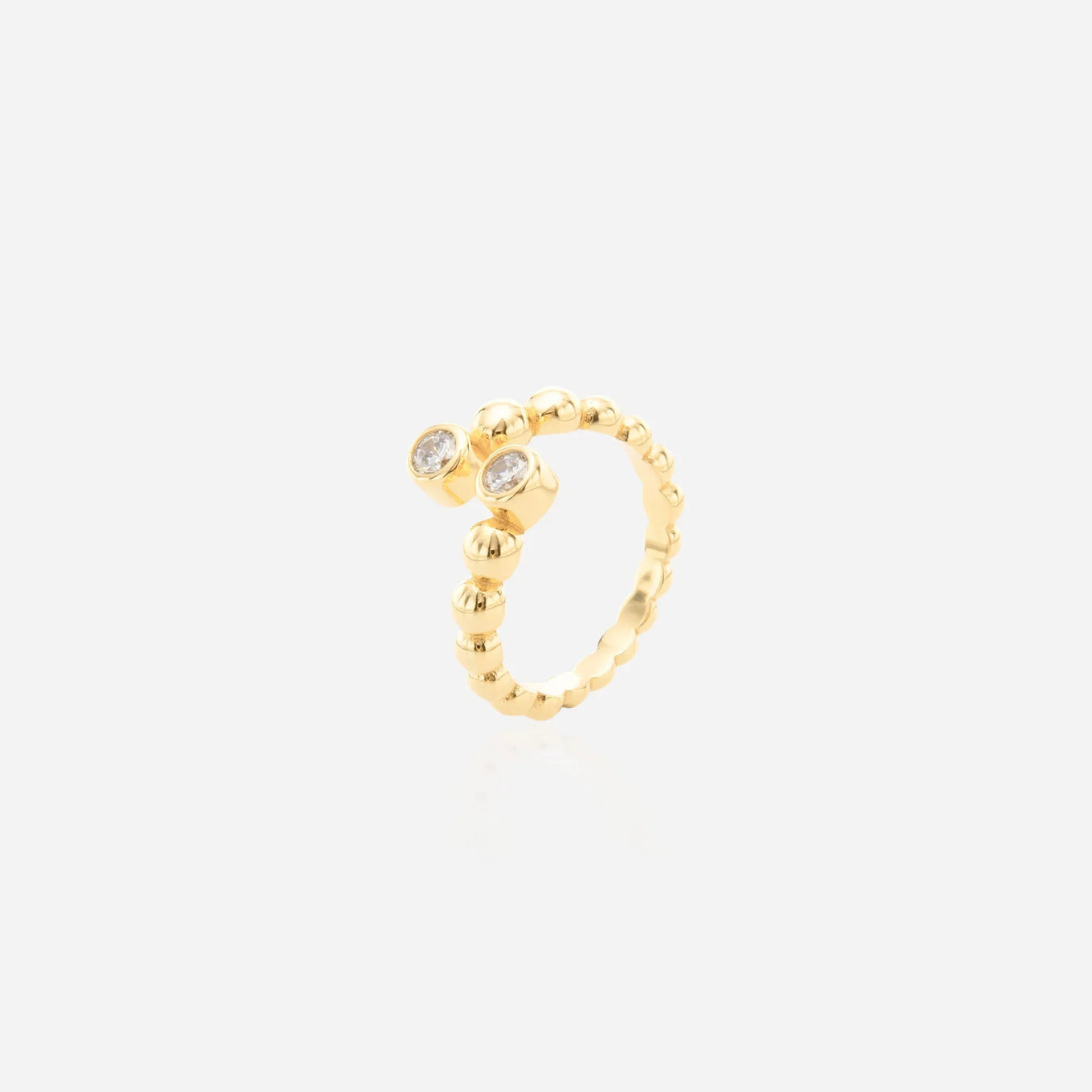
Bypass Ring | Toi et Moi Lab Diamond | ÉLARAMUSE: Bypass Ring | Toi et Moi Lab Diamond | ÉLARAMUSE — A sculptural open design. Forgiving on sizing, demands the right finger for impact.
Free US shipping over $99 · Cancel or swap anytime
💍 For Engagement Rings: Special Sizing Tips
Engagement ring sizing has one critical difference from everyday ring sizing: it often needs to be a surprise. Here are three stealth sizing strategies that work without raising suspicion:
- Borrow a ring she already wears — on the ring finger of her right hand. Most women's right and left ring fingers are within half a size of each other. Trace the inner circle on paper and measure the diameter.
- Enlist a friend — have her best friend casually mention they're "getting sized for a ring" and suggest doing it together at a jewelry store.
- Use a ring she leaves out — press it into a bar of soap or clay to create an impression. Measure the impression's inner diameter against the chart above.
Pro tip: When sizing for a surprise proposal, err slightly larger. A ring that's a quarter-size too big can be worn immediately with a temporary sizing adjuster. A ring that's too small can't be worn at all — and that's not the memory you want.
📏 What If You're Between Sizes?
Fingers rarely fall exactly on a standard ring size. If your measurement lands between two sizes on the chart, follow these rules:
- Always round up — a slightly loose ring can be adjusted with sizing beads or a ring guard. A tight ring cuts circulation and is uncomfortable in warm weather when fingers naturally swell.
- Wide band? Add half a size — bands 6mm and wider (like the Dunecrest Ring or Bypass Ring) cover more finger surface area. Going up half a size ensures comfortable wear across the full width.
- Stacking rings? Size individually — each ring in a stack sits at a slightly different position on your finger. The base of your finger is narrower than the middle. Measure at the exact position each ring will sit.
- Seasonal sizing — fingers can change up to half a size between summer and winter. If you're measuring in winter, consider sizing up a quarter-size for summer comfort.
⚠️ Common Ring Sizing Mistakes to Avoid
Even careful DIY measurers make these mistakes. Avoid all five for a perfect fit on your first try:
- Measuring in the morning — fingers are smallest right after waking. Measure at the end of the day for your true size.
- Using stretchy string — yarn, elastic, or rubber bands stretch during wrapping, giving you a smaller measurement than reality. Use non-stretchy string, dental floss, or a thin paper strip.
- Measuring a cold finger — cold fingers can be up to half a size smaller. Warm your hands before measuring or size after light activity.
- Ignoring the knuckle — if your knuckle is visibly larger than your finger base, the ring must fit over it. Size for the knuckle, then add a ring adjuster if the base feels loose.
- Measuring only once — at least two independent measurements with two different methods reduces error. If both methods agree, you have your size. If they differ by more than half a size, measure a third time.
Still unsure? When you shop at ÉLARAMUSE, our customer care team can help you confirm your size before we ship. We'd rather you wait an extra day than wear the wrong fit for years.
Frequently Asked Questions
How can I figure out my ring size without measuring tools?
If you don't have a measuring tape or string, try these creative methods: (1) borrow a ring that fits the person and trace the inside circle on paper; (2) use a ring you already own and compare it to a printable ring size chart at a jewelry store; (3) try on a friend's ring that you know fits you and ask them what size it is; (4) most jewelry stores offer free sizing — walk in and get measured in 30 seconds. These methods are quick estimates, not precise measurements, so use them for surprise gifts or when you're in a pinch.
Q: What if I measure my ring size wrong at home?
A: Most online retailers accept exchanges for sizing issues. Measure twice using the string method — it has the highest accuracy for DIY sizing. At ÉLARAMUSE, we recommend taking both a morning and evening measurement and using the larger of the two, since fingers swell throughout the day.
Q: Does ring size change with temperature or time of day?
A: Yes. Fingers swell in heat, during exercise, after salty meals, and in the evening. They are smallest first thing in the morning. For the most accurate measurement, size your finger at the end of the day, at room temperature, when your hands are relaxed.
Q: What is the difference between US, UK, and EU ring sizes?
A: US sizes use a numeric scale (5–13), UK uses letters (J–Z), and EU uses circumference in millimeters (50–70). A US 7 equals a UK O and an EU 54. Always convert using an international ring size chart rather than guessing across systems — a half-size error looks small on paper but feels significantly different on your finger.
Q: How do I know my ring size at home without a ring sizer?
A: Wrap a piece of non-stretchy string around the base of your finger, mark where it overlaps, then measure the length in millimeters. Divide by 3.14 to get your diameter, then match to a ring size chart. Dental floss works well because it is thin, non-stretchy, and available in most bathrooms.
Q: Should I size up for wide band rings?
A: Yes. For wide bands (6mm+) like the Bypass Ring or Dunecrest\ Ring, go up half a size. The extra metal covers more surface area of your finger and requires additional room to fit comfortably. Standard thin bands (2–3mm) can be ordered at your normal size.
Q: What if my knuckle is larger than the base of my finger?
A: Choose a size that fits over the knuckle comfortably. A ring that cannot get past the knuckle is useless regardless of how perfectly it fits the base. If the ring feels loose at the base after clearing the knuckle, a ring adjuster or sizing bead can prevent spinning without compromising the fit.
Q: How often should I re-measure my ring size?
A: Body weight changes, pregnancy, and aging can shift your ring size over time. Re-measure at least once a year, especially before investing in demi-fine pieces that are designed to last. A ring that fit perfectly two years ago may need a quarter-size adjustment today.
What We Believe
We believe that a correctly sized ring is the difference between a piece you wear every day and one that lives in a drawer. Ring sizing is not a minor detail — it is the foundation of the entire jewelry experience. Every ÉLARAMUSE ring, from the architectural Dunecrest Ring to the sculptural Bypass Ring, is engineered to be worn, not stored. Getting the size right is the first and most important step toward jewelry that becomes inseparable from its wearer.
References & Further Reading
- ISO 8653:2016 — "Jewellery — Ring Sizes — Definition, Measurement and Designation"
- Gemological Institute of America (GIA) — "Ring Size Guide: Measurement & Conversion Charts"
- How to check ring size at home: Use the string-and-ruler method or measure a ring you already own. Both methods work in under 2 minutes with no special tools.