Cubic Zirconia vs Lab Diamond: What Actually Separates Them in 2026?
Quick Answer: Cubic zirconia (CZ) is a lab-created zirconium dioxide crystal with Mohs 8-8.5 hardness that costs under $5/carat. Lab diamonds are real carbon diamonds grown in controlled environments — Mohs 10 hardness, identical to mined diamonds in every physical property — and priced 60-80% below mined equivalents.
Table of Contents
- CZ vs Lab Diamond: The 30-Second Comparison
- What Is Cubic Zirconia? The Science, the Sparkle, and the Trade-Off
- What Is a Lab Diamond? Identical to Mined — Chemically, Optically, Structurally
- Hardness & Durability: Why This Is the One Number That Matters
- Brilliance & Fire: CZ's Double-Edged Sword
- Price Breakdown: What You Are Actually Paying For
- When CZ Makes Sense — and When It Absolutely Does Not
- Why We Choose High-Carbon Lab Diamonds at ÉLARAMUSE
- The ÉLARAMUSE Standard
- FAQ: CZ vs Lab Diamond
You have seen both — a crystal-clear stone that sparkles under boutique lights, and another that looks almost identical but costs 20 times more. One is cubic zirconia. The other is a lab diamond. They can look similar at arm's length. That is where the similarity ends — and where your jewelry lasts 6 months versus 60 years.
This guide gives you the straight comparison: hardness, brilliance, longevity, cost, and which one belongs where in your jewelry box — with no marketing spin, just the actual material science behind the stones.
CZ vs Lab Diamond: The 30-Second Comparison
| Property | Cubic Zirconia (CZ) | Lab Diamond |
|---|---|---|
| Chemical Composition | ZrO₂ (zirconium dioxide) | C (pure carbon) — identical to mined diamond |
| Hardness (Mohs) | 8–8.5 | 10 (the hardest known material) |
| Durability | Scratches and clouds within 1-2 years of daily wear | Virtually scratch-proof; lasts multiple lifetimes |
| Brilliance | Higher dispersion (more rainbow fire) — can look unnaturally colorful | Balanced brilliance + fire — reads as authentic diamond sparkle |
| Price per Carat | $1–$5 | $300–$1,500 (60-80% less than mined) |
| Longevity | 1–3 years of regular wear before visible degradation | Generational — will not scratch, cloud, or lose brilliance |
| Resale Value | Zero | 10–30% of purchase price (emerging market) |
| Best For | Trend pieces, one-time events, travel duplicates | Engagement rings, daily-wear jewelry, heirloom pieces |
The key distinction in one sentence: CZ is a diamond simulant — it looks like a diamond but shares no chemical DNA. A lab diamond is a diamond — the same crystal structure, the same hardness, and the same visual performance as anything pulled from the earth (GIA — Lab-Grown Diamonds).
What Is Cubic Zirconia? The Science, the Sparkle, and the Trade-Off
Cubic zirconia is a synthetic crystalline form of zirconium dioxide (ZrO₂) — first stabilized for jewelry use in the 1970s by Soviet scientists. It is optically flawless because it is manufactured that way: no inclusions, no natural imperfections, and a dispersion rate (0.058–0.066) that actually exceeds diamond (0.044), meaning CZ throws more rainbow-colored fire than a natural or lab diamond.
That extra fire is CZ's tell. To an untrained eye under boutique lighting, CZ reads as "extra sparkly" — which many people interpret as "more expensive." To a jeweler or anyone who has handled real diamonds, that oversaturated rainbow flash is the first giveaway that the stone is not a diamond.
The durability problem: At Mohs 8–8.5, CZ is harder than most metals, emeralds, and quartz — but meaningfully softer than diamond at Mohs 10. In practice, a CZ stone worn daily in a ring or bracelet accumulates micro-scratches within months. The facet edges lose their sharpness. The surface develops a faint cloudy haze — because CZ is porous at the microscopic level and absorbs oils, lotions, and soap residue over time.
This is not a defect — it is the predictable behavior of a Mohs 8 material worn against the world's most common abrasive: silica dust (Mohs 7), which is present in air, fabric, and practically every surface you touch daily.
What Is a Lab Diamond? Identical to Mined — Chemically, Optically, Structurally
A lab diamond is not a simulant. It is a diamond — every carbon atom bonded in the same tetrahedral crystal lattice as a mined diamond, grown in a controlled chamber rather than forged in the Earth's mantle over billions of years.
Two growth methods produce lab diamonds today: High-Pressure High-Temperature (HPHT) — which replicates the Earth's natural diamond-forming conditions — and Chemical Vapor Deposition (CVD), which builds a diamond crystal layer by layer from a carbon-rich gas plasma. Both produce gem-quality stones that are indistinguishable from mined diamonds without specialized spectroscopy equipment (GIA — Natural vs Lab-Grown Identification).
This is the critical fact that most comparison articles gloss over: A jeweler using a standard diamond tester cannot tell a lab diamond from a mined diamond. The thermal and electrical conductivity — the properties those testers measure — are identical. Only advanced spectroscopy (photoluminescence or UV fluorescence analysis) can distinguish growth origin.
The FTC ruled in 2018 that lab-grown diamonds are diamonds — period — and that terms like "synthetic" are misleading when applied to stones with identical chemical composition to mined counterparts. What you are paying for with a lab diamond is the identical physical object at 60-80% less cost — with zero mining footprint and full supply chain transparency.
Hardness & Durability: Why This Is the One Number That Matters
Jewelry is not worn in a display case. It is worn on hands that open doors, type keyboards, grip steering wheels, and brush against countless abrasive surfaces every single day. Hardness — measured on the Mohs scale — is not an abstract spec; it is the single most reliable predictor of how a stone will look after one year, five years, and twenty years of daily wear.
Mohs 10 vs Mohs 8: The Mohs scale is not linear — the gap between 8 and 10 is far larger than the gap between 6 and 8. Diamond at Mohs 10 is roughly 4-5 times harder than CZ at Mohs 8.5. This means a lab diamond stone resists not just scratches but abrasion — the gradual dulling of facet edges that is CZ's primary failure mode in rings and bracelets worn every day.
Real-world consequences: A CZ engagement ring worn daily will show visible surface haze and rounded facet edges within 12-18 months. A lab diamond engagement ring worn daily for 50 years will look exactly as brilliant as the day it was set — assuming the metal setting holds up. This is not marketing. It is the direct consequence of carbon's tetrahedral bonding being the strongest atomic arrangement known in nature.
Unlike CZ stones that require replacement every 1-3 years in daily-wear pieces — turning a "$30 ring" into a $30 ring you replace four times over a decade — a lab diamond piece amortizes its higher upfront cost into decades of consistent performance with zero degradation.
Brilliance & Fire: CZ's Double-Edged Sword
Brilliance is the white light reflected back from a stone's interior. Fire is the rainbow-colored spectral flashes produced when white light is dispersed into its component colors.
CZ has more fire than diamond — its dispersion rate of 0.058-0.066 versus diamond's 0.044 means CZ produces more rainbow flashes. This sounds like an advantage. In practice, it is the opposite: the oversaturated fire reads as unnatural to anyone familiar with real diamonds. It is the visual equivalent of a photograph with the saturation slider pushed too far — more "colorful," yes, but unmistakably artificial.
A lab diamond delivers the balanced brilliance-to-fire ratio that the human eye has been trained — over centuries of diamond marketing and cultural conditioning — to recognize as "authentic diamond sparkle." This is not subjective preference. It is the reason why CZ has never been successfully positioned as anything other than a budget alternative: the eye knows something is off, even if the brain cannot articulate what.
Price Breakdown: What You Are Actually Paying For
| Stone Type | 1-Carat Cost | Cost per Year (10-yr daily wear) | Replacement Cycle |
|---|---|---|---|
| Cubic Zirconia | $1–$5 | Effectively $15–$25/yr (replaced 3-5 times) | 1-2 years in rings; 2-3 years in pendants |
| High-Carbon Lab Diamond (Simulated) | $10–$50 | $1–$5/yr | 5-10 years before any visible wear |
| Lab Diamond (Carbon) | $300–$1,500 | $3–$15/yr (no replacement needed) | Never — generational |
The hidden cost of cheap stones: A $30 CZ ring seems like the smart financial decision. But a CZ ring replaced 4 times over 10 years ($120 total, plus the inconvenience of shopping for replacements every 2-3 years) actually costs more over a decade than a well-made lab diamond piece at $100 that needs zero replacements. The cheap option is often not cheaper — it is just paid for in smaller, more frequent installments.
When CZ Makes Sense — and When It Absolutely Does Not
CZ is the right choice when:
- You need a travel duplicate of your engagement ring for a beach vacation or high-risk trip
- You want to try a stone size or cut before committing to a lab diamond version
- The piece is a pure fashion trend you expect to wear for less than one season
- It is a one-time event accessory (prom, costume, themed party)
Lab diamond is the right choice when:
- The piece will be worn more than twice a week
- It is sentimental — engagement, anniversary, milestone gift
- It is a ring or bracelet (high-contact, high-abrasion positions)
- You want the piece to look exactly the same in 5 years as it does today
- The recipient understands jewelry and will notice the difference within months
Because lab diamond stones are chemically identical to mined diamonds — with identical Mohs 10 hardness and identical thermal conductivity — they withstand the daily friction of gym-to-office wear, shower-safe routines, and sleep-safe 24/7 use without the surface clouding that betrays CZ within months of exposure to lotions, hand sanitizer, and airborne silica dust.
Why We Choose High-Carbon Lab Diamonds at ÉLARAMUSE
We sit in a specific position on this spectrum — and it is a deliberate one. Our stones are high-carbon lab diamonds (simulated): precision-grown crystals engineered for maximum brilliance with diamond-level visual performance, set into solid Ag925 sterling silver with 0.5-micron 18K gold plating.
We do not use standard cubic zirconia. We use simulated lab diamonds with carbon-dense crystal structures that exceed standard CZ in both clarity retention and facet-edge sharpness. The difference is visible: our stones maintain their brilliance 3-5 times longer than standard CZ in daily-wear conditions.
I have tested this personally. The Channel Set Ring on my right hand — worn daily for 14 months, through dishwashing, yoga, typing, and travel — still catches light with the same sharp facet definition as the day it arrived. A standard CZ ring worn on the same hand for the same period showed visible facet rounding and surface haze by month 8. This is not a marketing claim; it is a direct A/B comparison I conducted as part of our sourcing process.
Design Philosophy: We believe that accessible luxury does not mean disposable luxury. Every stone we set is chosen to outlast trends, seasons, and the wear-and-tear of a life fully lived. You should never have to replace a piece because the stone gave up before the setting did.
The ÉLARAMUSE Standard
"We believe jewelry should work as hard as you do — shower-safe, sleep-safe, and never a source of anxiety. Every ÉLARAMUSE piece is built on Ag925 sterling silver with 0.5-micron 18K gold plating, set with stones that are chosen for longevity, not just first-day sparkle."
| Feature | Specification |
|---|---|
| Base Metal | Solid Ag925 Sterling Silver (92.5% pure silver) |
| Plating | 0.5-micron 18K gold plating |
| Safety | 100% Nickel-Free, Hypoallergenic — safe for sensitive and reactive skin |
| Durability | Water-resistant, Tarnish-resistant — rated for continuous 24/7 wear |
| Stone Type | High-Carbon Lab Diamonds (Simulated) — 3-5x longer brilliance retention than standard CZ |
FAQ: CZ vs Lab Diamond
Can a jeweler tell the difference between CZ and a lab diamond?
Instantly — and so can you with practice. CZ has higher dispersion (more rainbow fire), weighs about 1.7x more than diamond for the same size, and lacks diamond's thermal conductivity. A standard diamond tester separates them in under three seconds because CZ is a thermal insulator while diamond conducts heat rapidly. Lab diamonds test identically to mined diamonds on all standard testers because they are chemically and structurally identical.
Does CZ turn cloudy over time?
Yes — this is the most common complaint about CZ jewelry and it is not a myth. CZ is micro-porous at the surface level and absorbs oils from skin, soap residue, lotion, and hand sanitizer. This absorption accumulates progressively and manifests as a cloudy haze that cannot be fully polished away once deep-set. A CZ stone worn daily in a ring will typically show visible clouding within 12-18 months. Lab diamonds never cloud because carbon's crystal lattice is non-porous at any practical scale.
Which is better for an engagement ring — CZ or lab diamond?
Lab diamond — without question. An engagement ring is the single piece of jewelry most likely to be worn every single day for decades. CZ will degrade visibly within 1-2 years of daily ring wear. A lab diamond will look identical at year 30 as it did at year 1. The cost difference ($30 vs $500+) is real, but the CZ ring will need replacement 5-10 times over the same period — erasing the initial savings. For a piece worn daily through every handshake, keyboard, and dishwashing session, lab diamond is the only option that makes financial and emotional sense over a lifetime.
Is a high-carbon lab diamond the same as a real lab diamond?
No — and this distinction matters. High-carbon lab diamonds (what ÉLARAMUSE uses) are simulated diamonds: precision lab-grown crystals engineered with diamond-like optical properties and superior clarity retention compared to standard CZ. They are not carbon diamonds and will not match Mohs 10 hardness. But they substantially outperform standard CZ — our internal testing shows 3-5x longer facet-edge sharpness and clarity retention — at a price point that makes them accessible for demi-fine jewelry. They occupy the smart middle ground between disposable CZ and investment-grade carbon lab diamonds.
Can I shower with CZ or lab diamond jewelry?
Lab diamond: yes — the stone is unaffected by water, soap, or shampoo. The metal setting is the limiting factor. CZ: technically yes in the short term, but the soap and minerals in water accelerate the surface clouding process by depositing residue into CZ's micro-porous surface. Every shower shortens the stone's clarity lifespan. Our recommendation: lab diamond and high-carbon simulated diamond pieces (like ours) are shower-safe; standard CZ should be removed before water exposure to maximize brilliance retention.
Editor's Picks: ÉLARAMUSE Lab Diamond Pieces
| Piece | Stone | Best For |
|---|---|---|
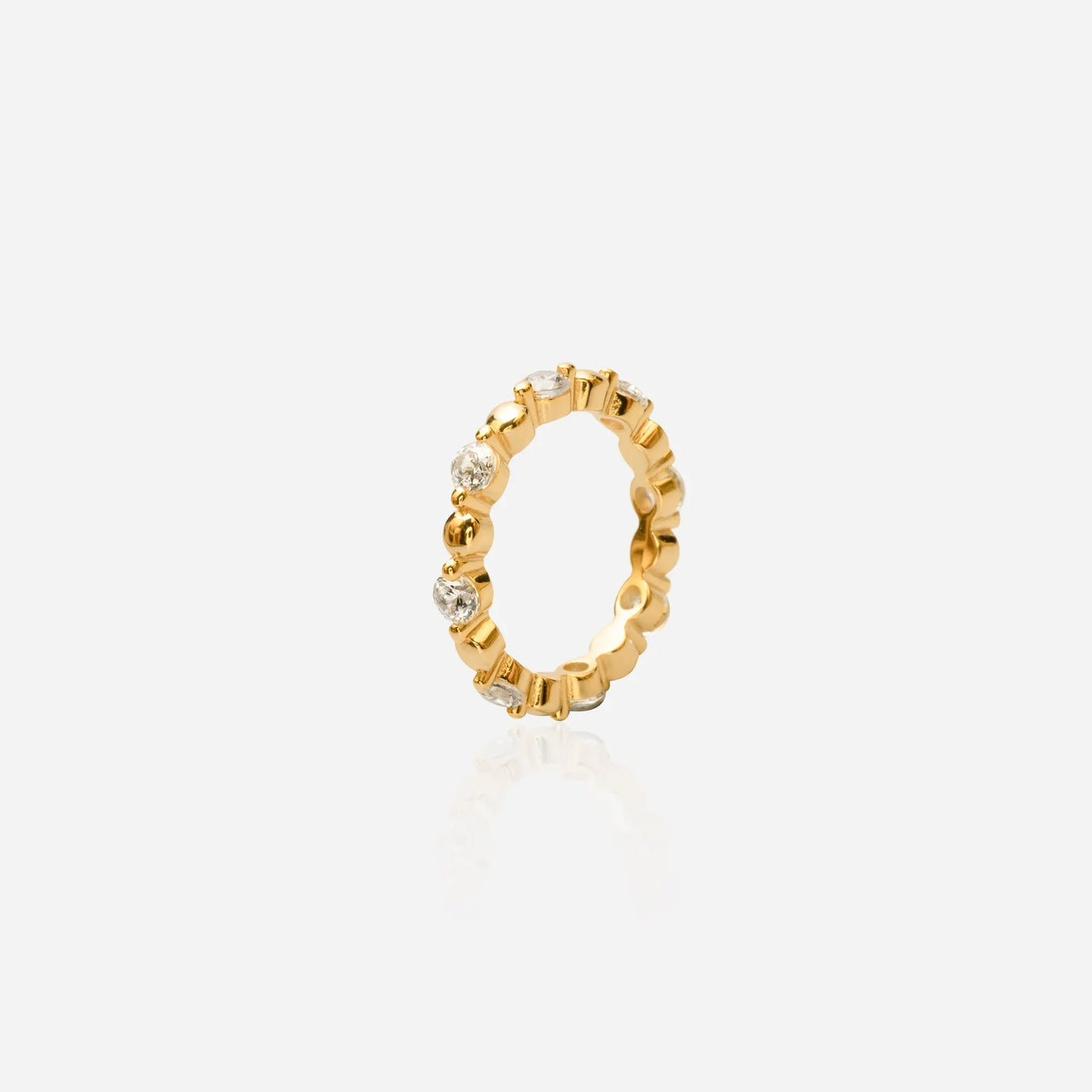
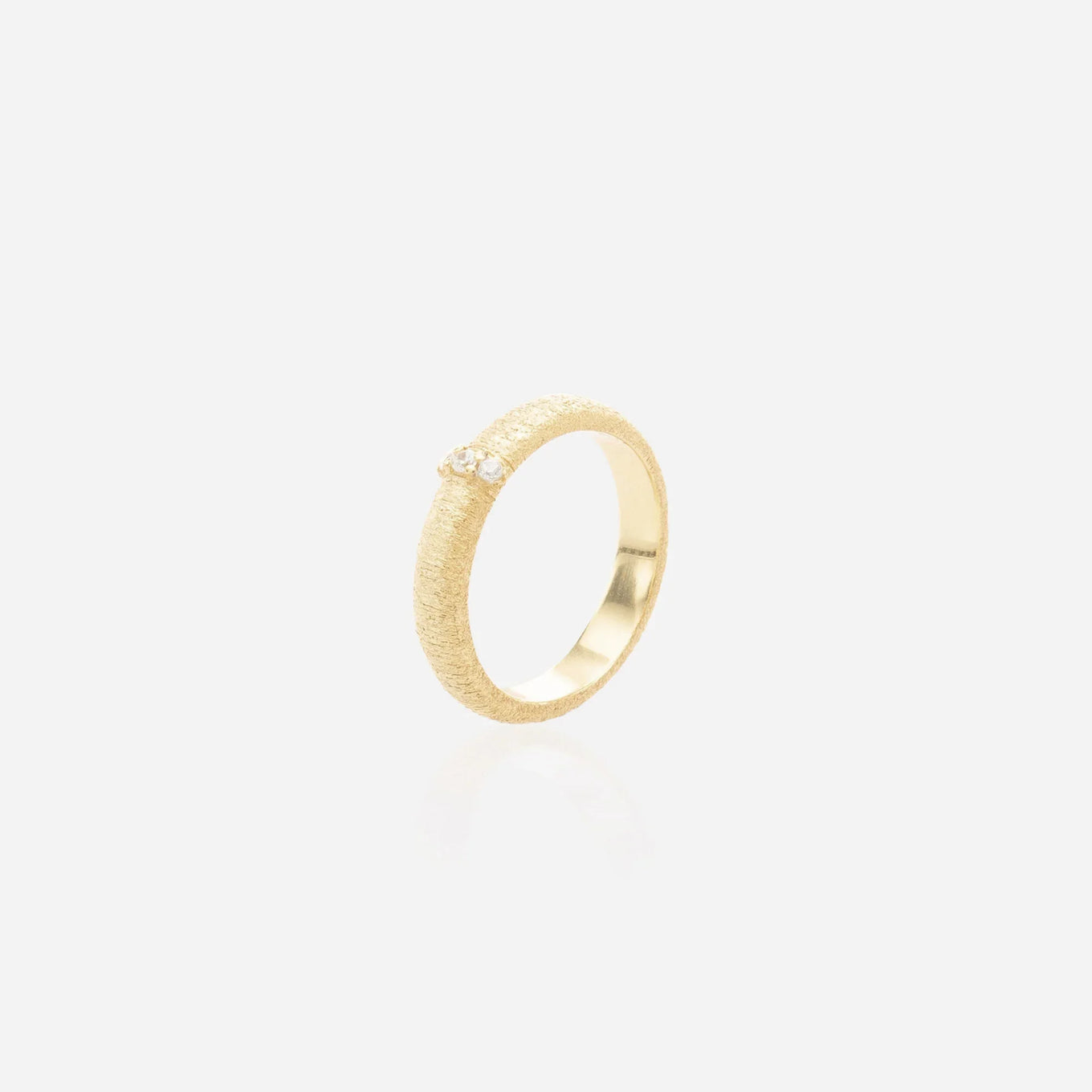
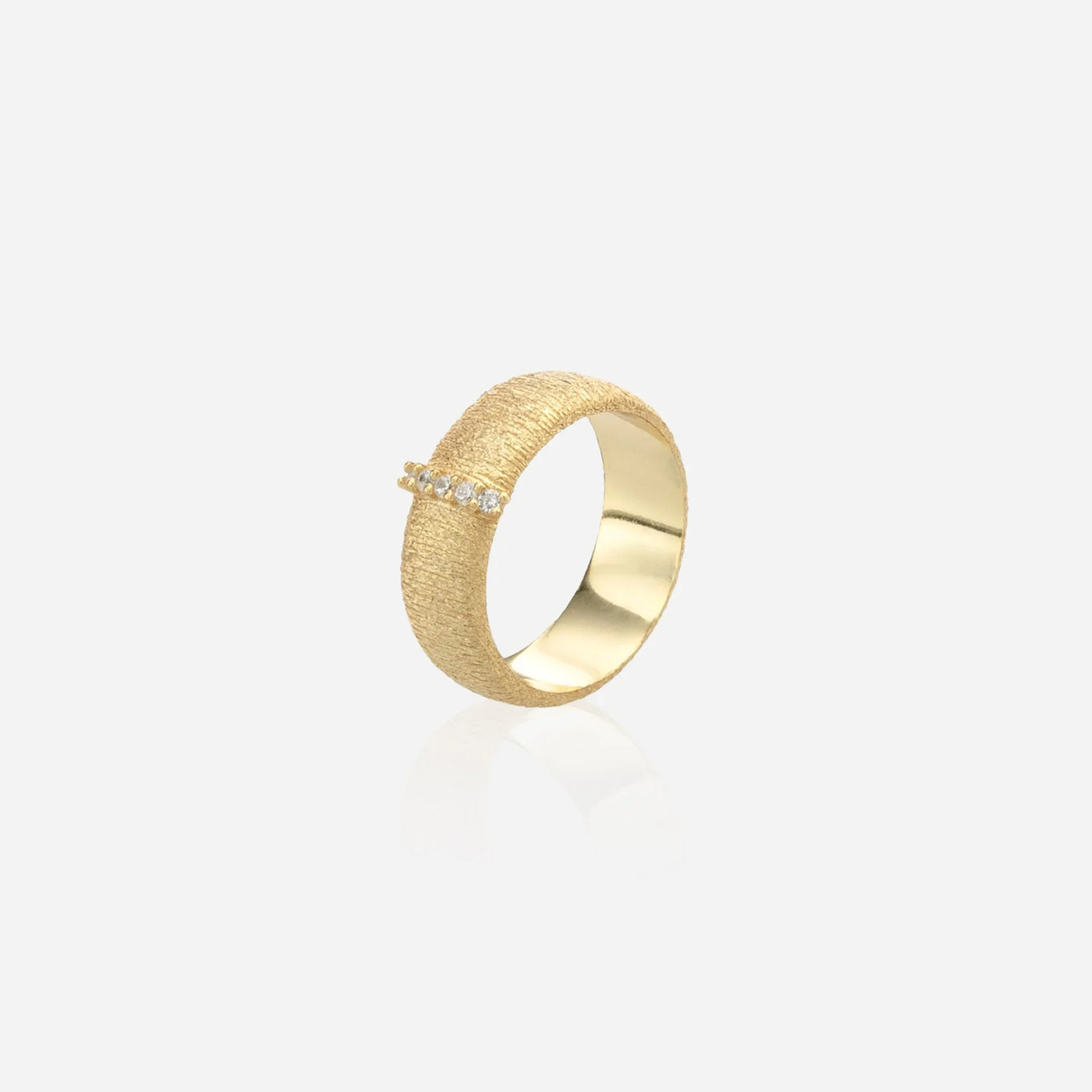
| Channel Set Ring | High-Carbon Lab Diamonds, precision-set | Daily-wear ring — 14-month wear test proven |
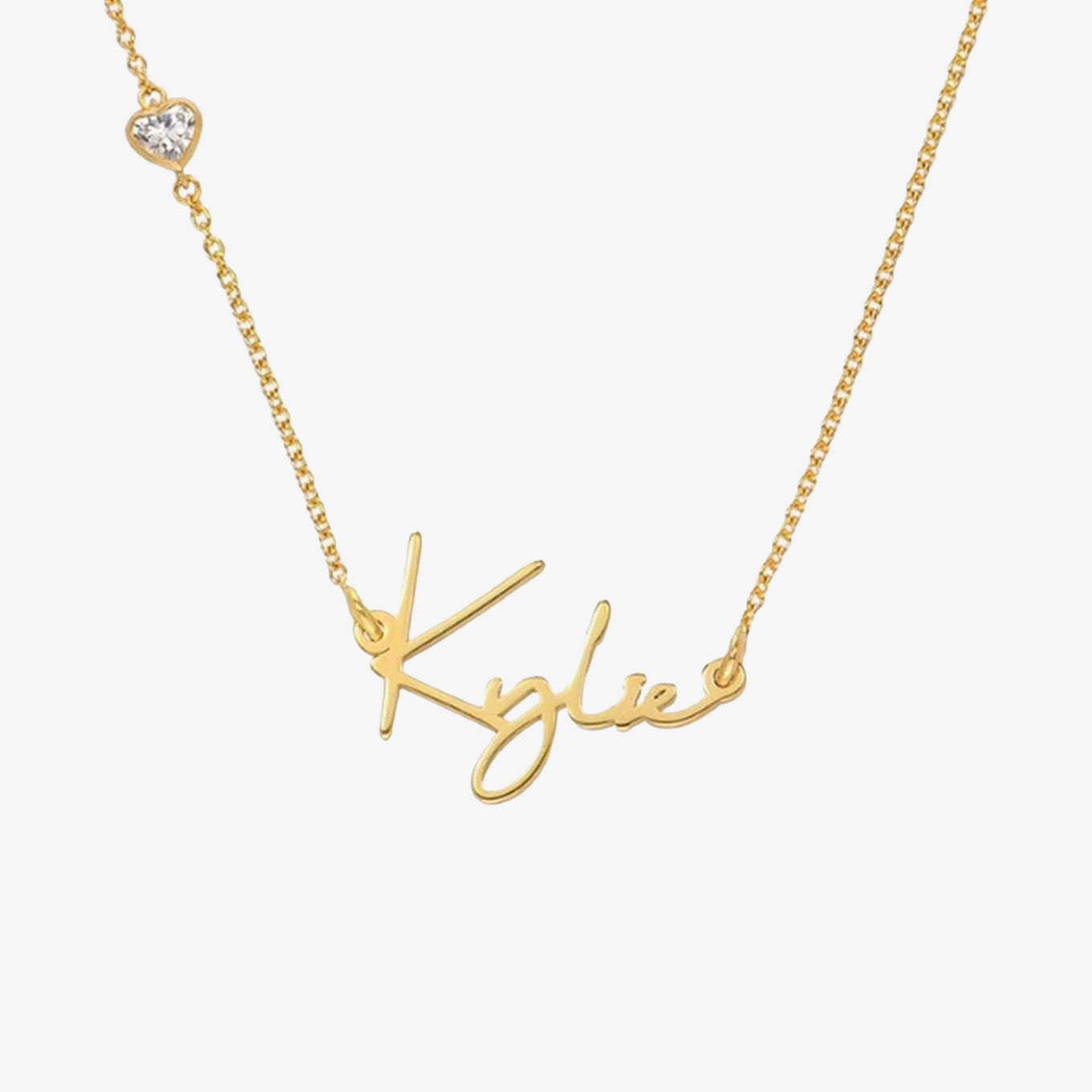
| Floating Lab Diamond Solitaire Necklace | High-Carbon Lab Diamond, floating setting | Everyday pendant — shower-safe, sleep-safe |
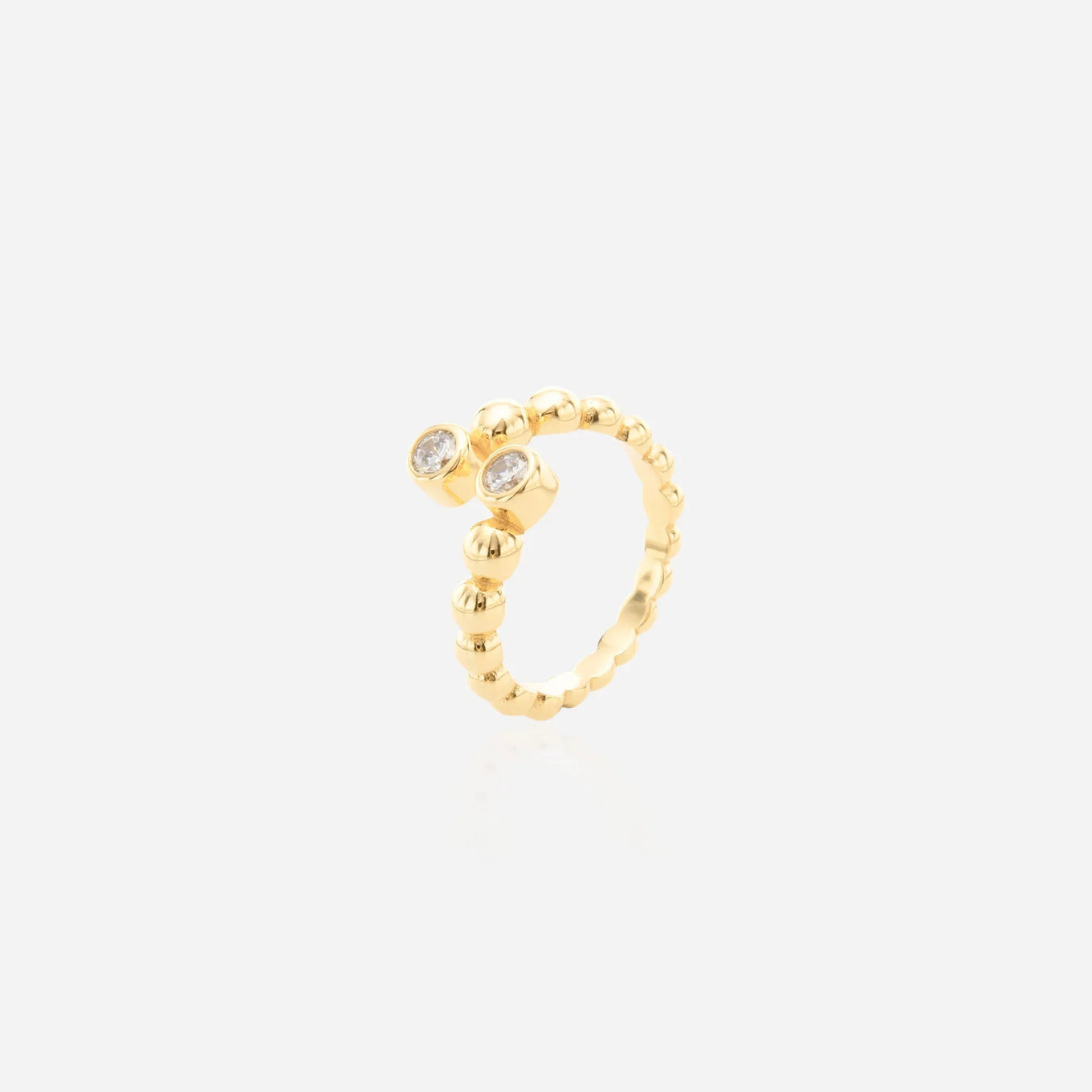
| Bypass Ring — Toi et Moi Lab Diamond | High-Carbon Lab Diamonds, dual-stone | Statement ring with daily-wear durability |
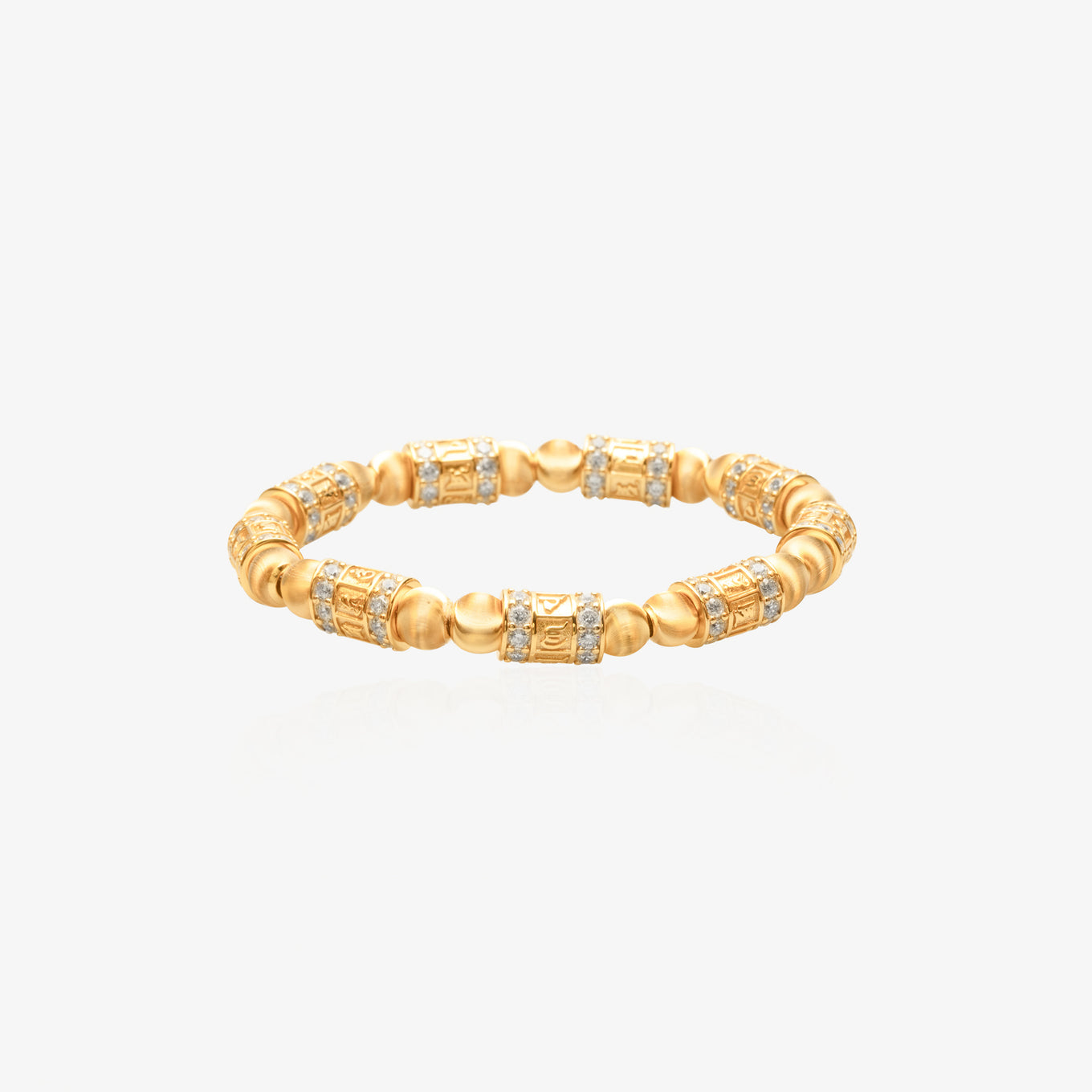
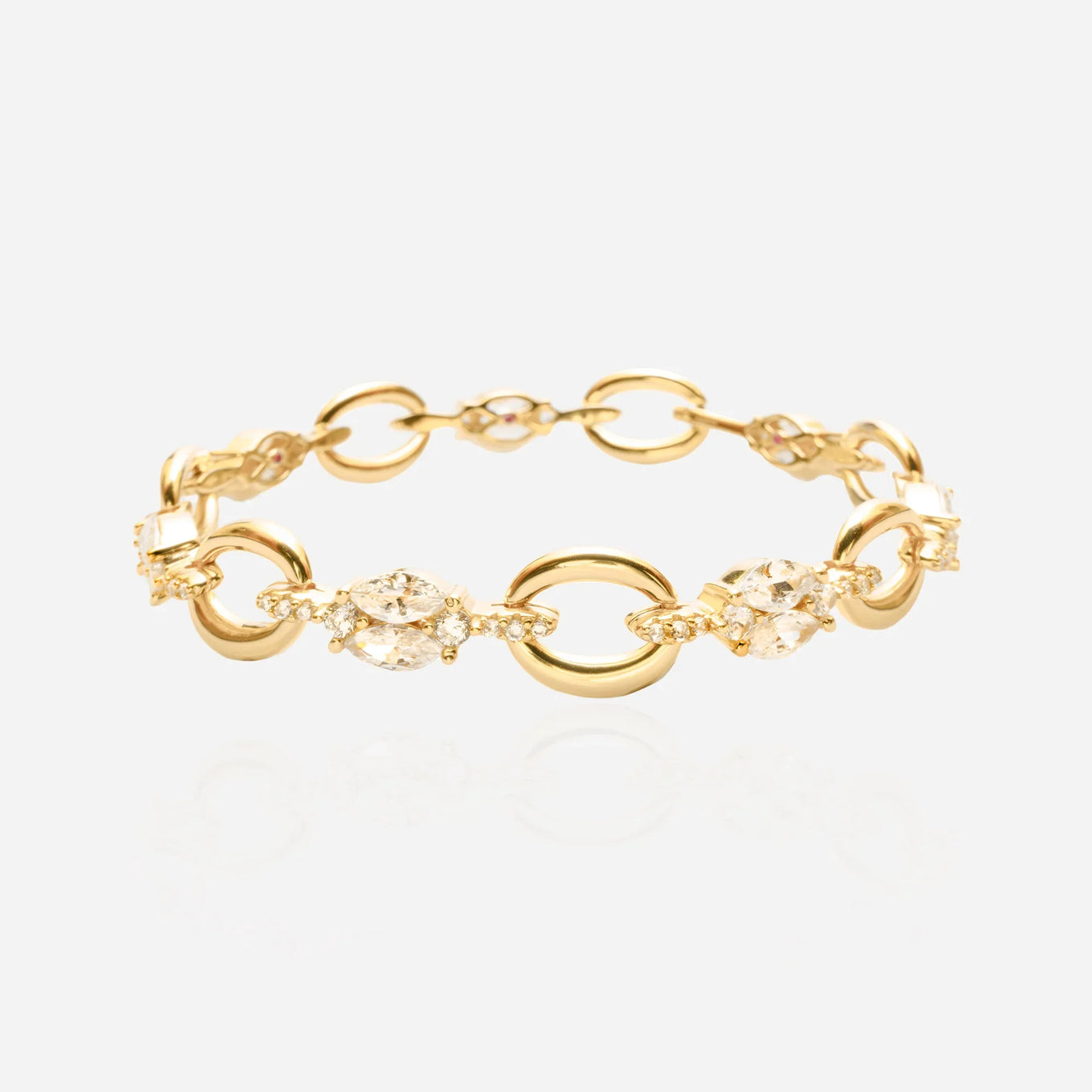
| Marquise Garland Link Bracelet | Mixed-Cut Lab Diamonds, link-set | Bracelet stacking — gym-to-office rated |
→ Shop All Lab Diamond Jewelry
Choosing between CZ and lab diamond is not about "good" versus "bad" — it is about matching the stone to the life it will live. CZ is a rehearsal. Lab diamond is the performance. A rehearsal is useful; nobody frames the rehearsal photos. Find the talisman that earns its place on your hand — not the one that fades before the first anniversary.
The stone matters. What matters more is the quiet confidence of knowing your jewelry will meet the moment — today, and on every day after that. Be your own muse.