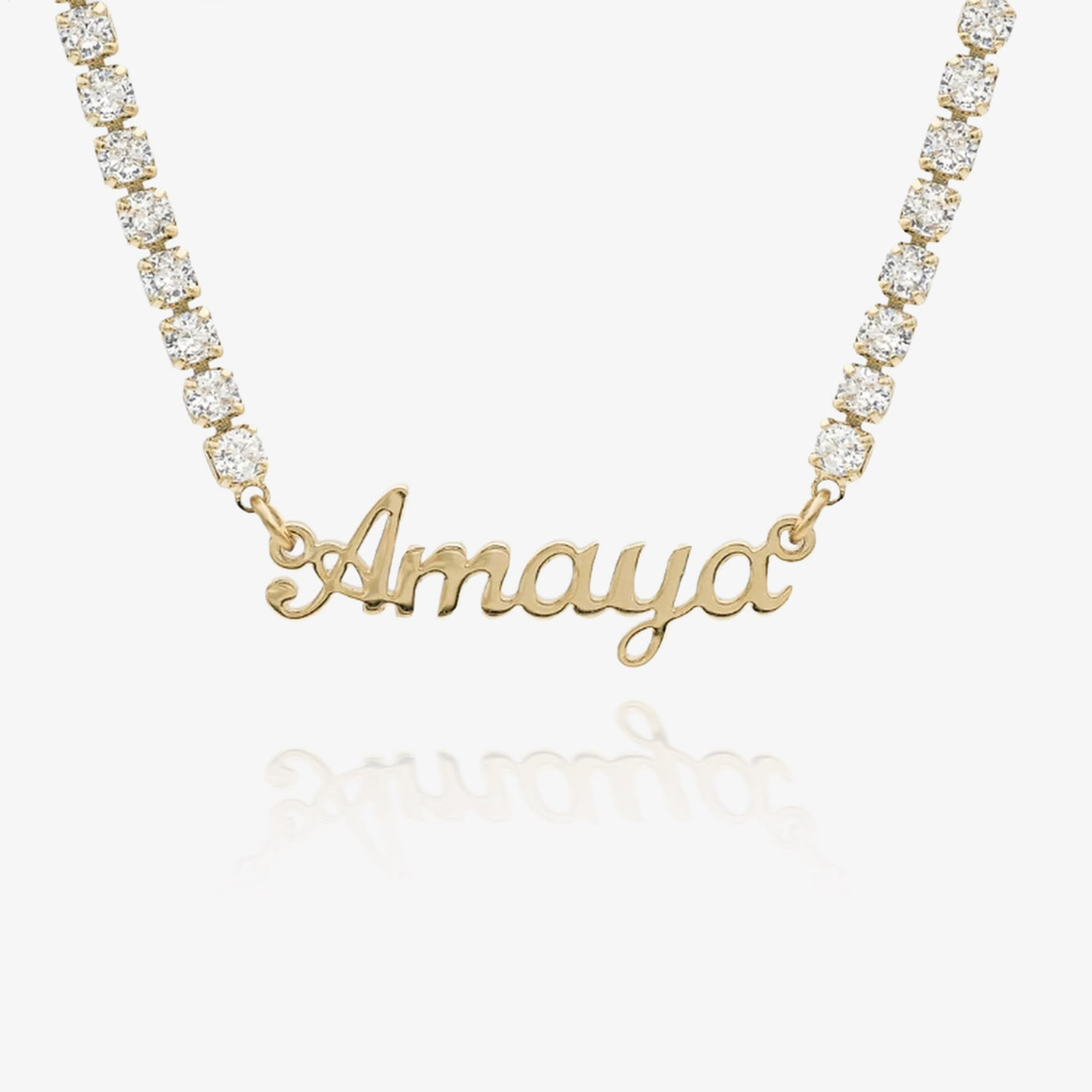
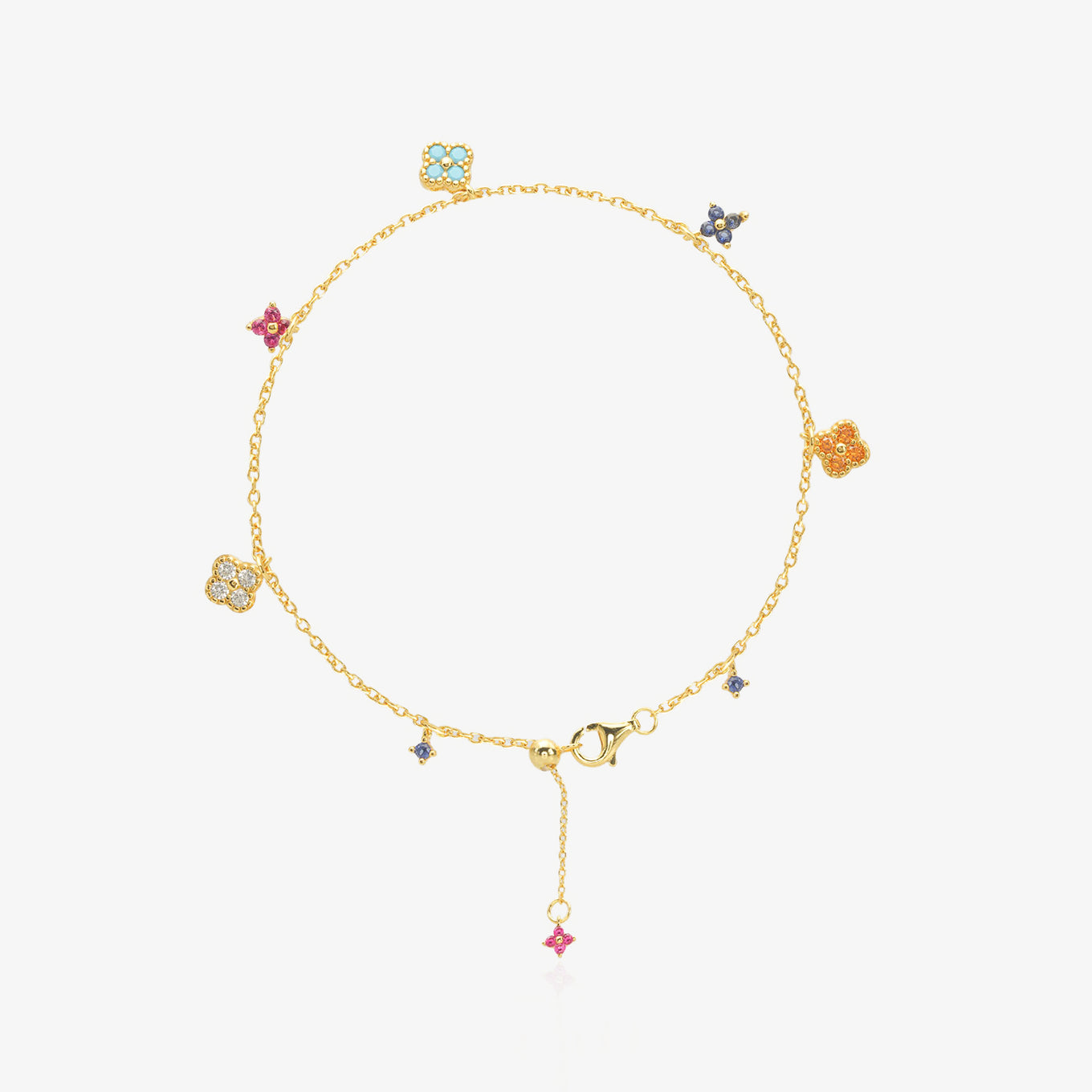
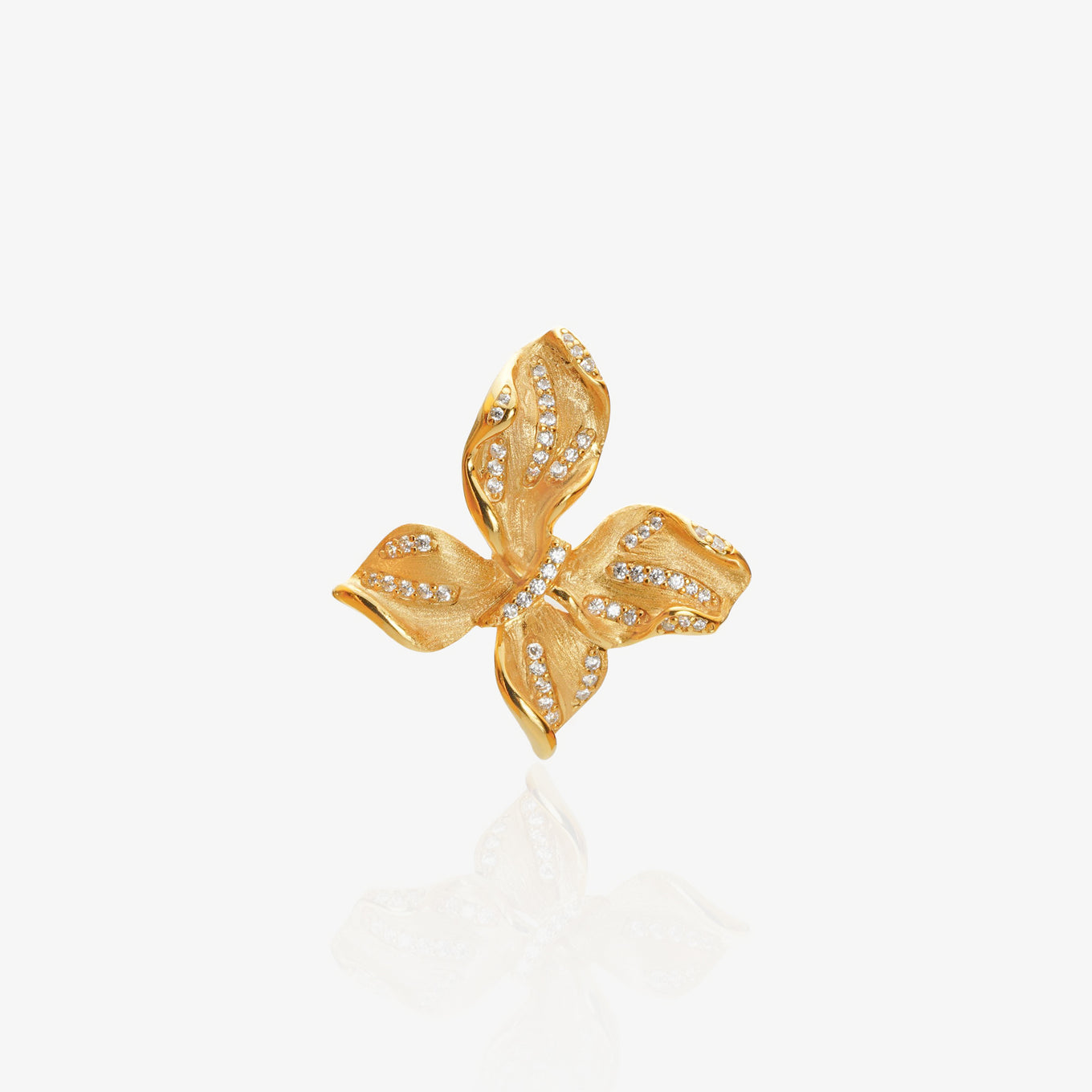
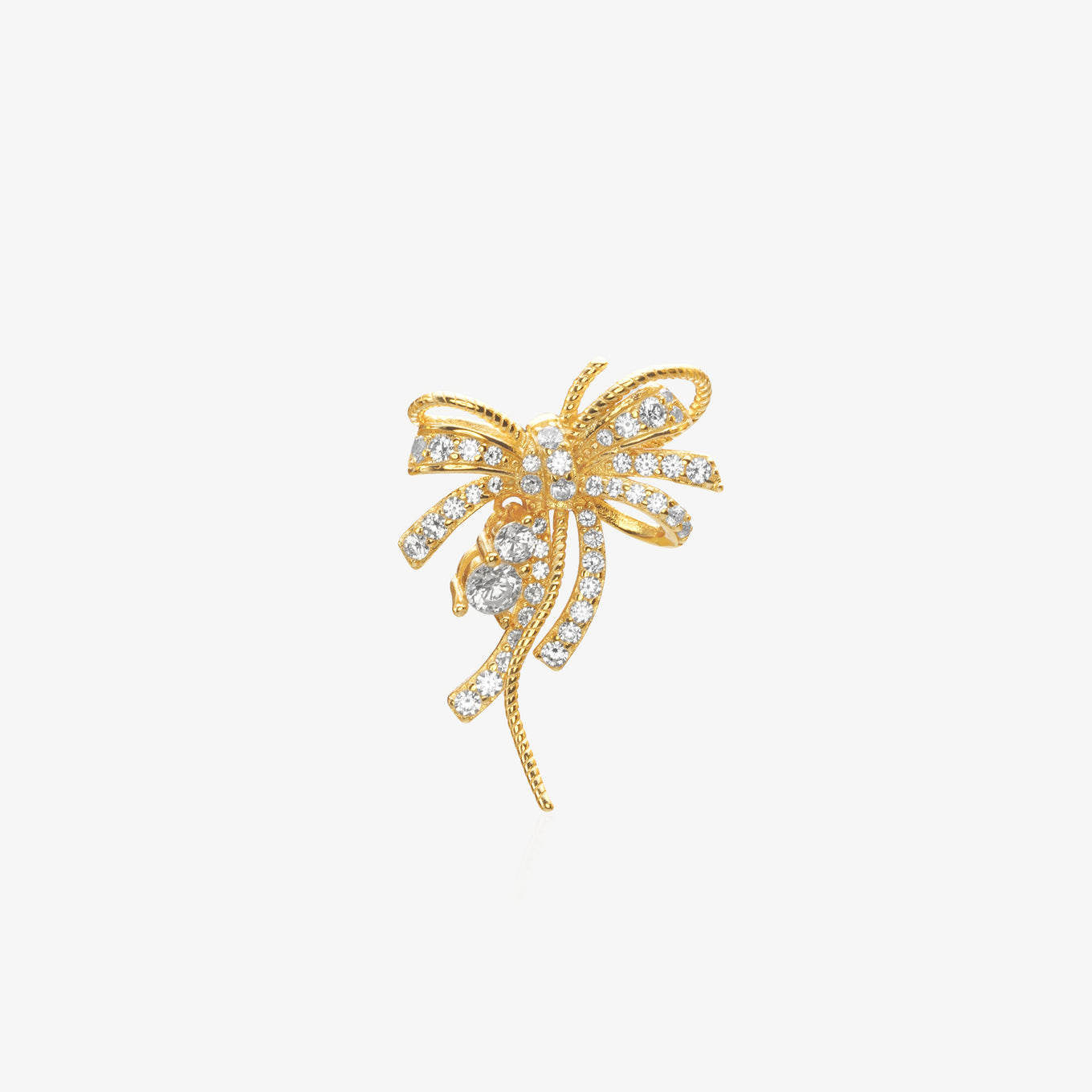
Everyday Diamond Styling Guide 2026: How to Wear Diamonds Daily
Quick Answer: Wearing diamonds every day isn't about the price tag — it's about choosing pieces with the right scale, setting, and attitude. A solitaire pendant on a fine chain, a stack of low-profile diamond bands, or a pair of barely-there diamond studs can work with jeans and a sweater exactly as well as with a cocktail dress. The 2026 "Everyday Diamonds" trend is about removing the velvet-rope formality from the world's most durable gemstone.
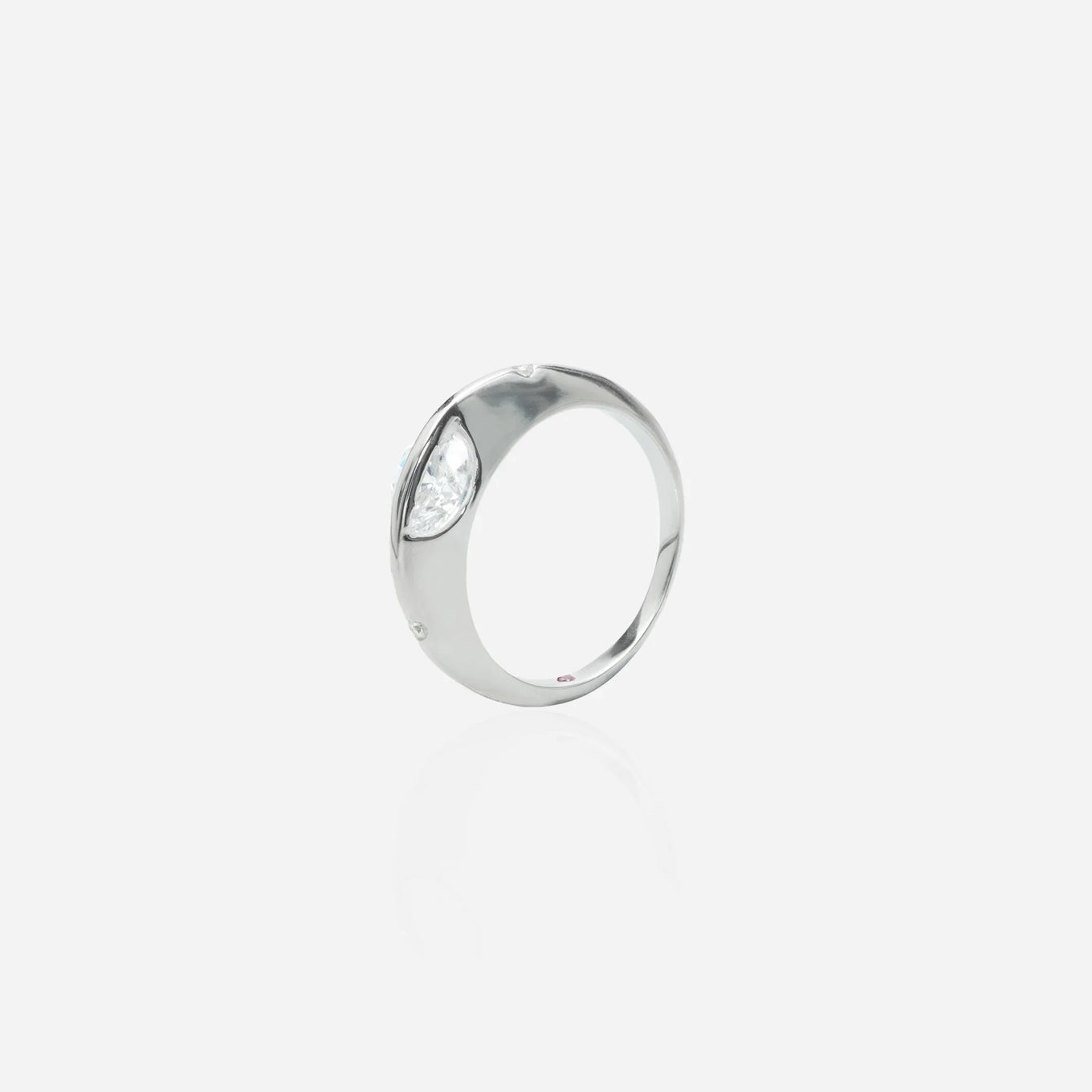
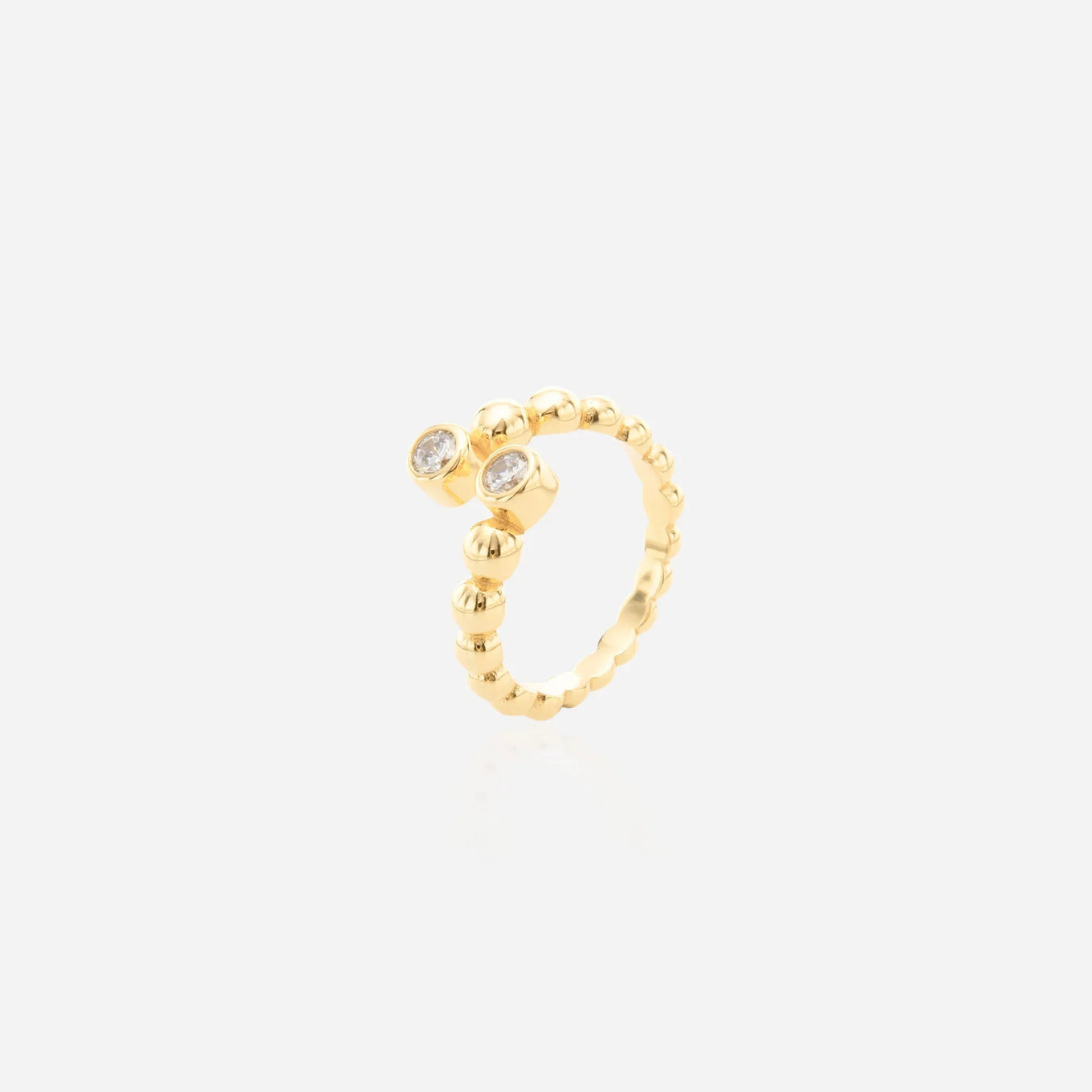
At ÉLARAMUSE, our lab diamond pieces — built on Ag925 sterling silver with 0.5-micron 18K gold plating — deliver the sparkle without the "should I insure this?" anxiety. Best daily starter: the Gold Solitaire Necklace ($85) — a floating lab diamond on a barely-there chain that layers with everything. Best daily ring: the Tempo Ring ($95) — an asymmetric open band that breaks the circle without breaking the minimalist code.
- Why "Everyday Diamonds" Is 2026's Most Liberating Trend
- What Makes a Diamond Piece "Everyday-Ready"
- The 3-Piece Everyday Diamond Formula
- Diamond Styling by Setting and Occasion
- Lab vs Mined: Why Lab Diamonds Own the Everyday Category
- Caring for Everyday Diamond Jewelry
- The ÉLARAMUSE Everyday Diamond Standard
- Key Terms
- Frequently Asked Questions
- Editor's Picks
Why "Everyday Diamonds" Is 2026's Most Liberating Trend
Marie Claire's 2026 jewelry trend report named "Everyday Diamonds" as one of the year's defining shifts — and the logic is refreshingly simple. Women own diamonds. They cost real money. They shouldn't live in a safe deposit box. A diamond that only sees daylight at weddings and anniversary dinners is a wasted asset.
The 2026 approach: buy diamonds at a price point where you're not terrified to wear them, choose settings designed for durability, and put them on with a T-shirt. The solitaire that sparkles against a white button-down at 10 AM is the same solitaire that catches candlelight at 8 PM.
Unlike the traditional "special occasion only" model that kept diamonds locked away 360 days a year, the everyday diamond philosophy treats sparkle as a daily vitamin, not a twice-yearly prescription. It's not about downgrading — it's about upgrading your everyday life to include the thing that makes you feel most polished. As one fashion editor put it: "I don't save my diamonds for dates. I wear them to the grocery store, because those fluorescent lights make them look incredible."
What Makes a Diamond Piece "Everyday-Ready"
| Quality | What to Look For | What to Avoid |
|---|---|---|
| Low Profile Setting | Bezel, flush, or channel settings that sit close to the skin and won't snag on sweaters, seatbelts, or hair | Tall prong settings that catch on everything — beautiful for evening, frustrating for 8 hours at a desk |
| Manageable Carat Size | 0.1-0.5 carat total weight — enough sparkle to notice, not so much that it dominates every outfit | Single stones over 1 carat — these read as "evening" and create proportion issues with casual clothes |
| Secure Clasp/Setting | Lobster clasps on chains, double-notched safety clasps on bracelets, tension-set or bezel-set stones | Magnetic clasps on heavy pieces, thin prongs on rings you'll wear while typing |
| Versatile Metal | Gold-plated sterling silver — warm enough for day, luminous enough for night, works with both warm and cool tones | White gold only (too formal for daytime) or rose gold only (can limit outfit coordination) |
The 3-Piece Everyday Diamond Formula
You need exactly three diamond pieces for a complete everyday rotation — one necklace, one ring, one earring. Not a matched set, not a suite. Three independent pieces that work solo and together. With these three, you're covered for every day of the week without a single jewelry change unless you want one.
Piece 1 — The Everyday Necklace: A solitaire pendant on a fine chain, 16-18 inches, that sits at the collarbone. Layer it with other chains or wear it solo. The Gold Solitaire Necklace ($85) is the archetype: one lab diamond, one chain, zero fuss.
It's the necklace equivalent of a white T-shirt — it goes with everything and makes everything look more intentional. The Sequin Station Necklace ($95) is the upgraded version — sparkle dots spaced along an o-chain for a diamond scatter effect that adds movement.
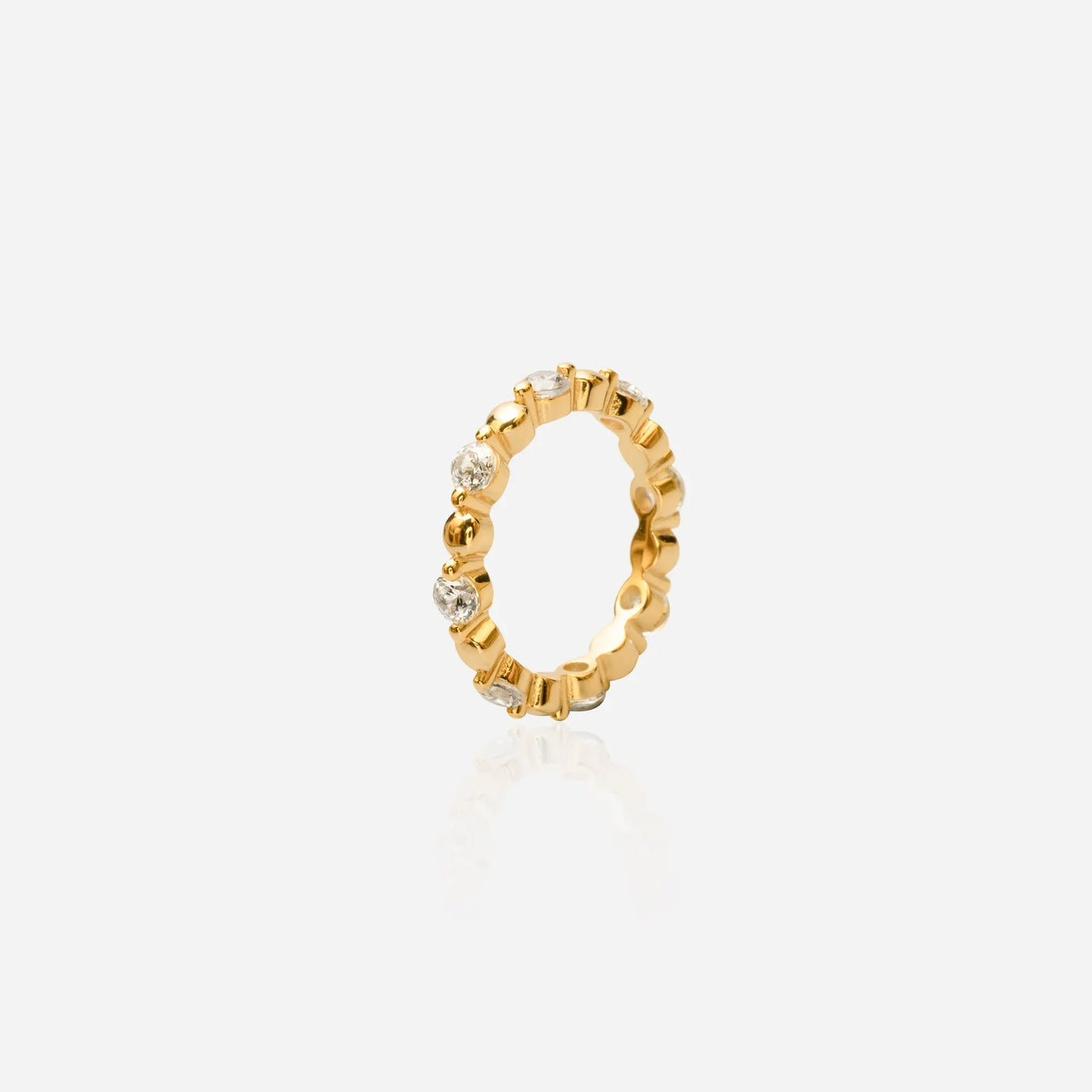
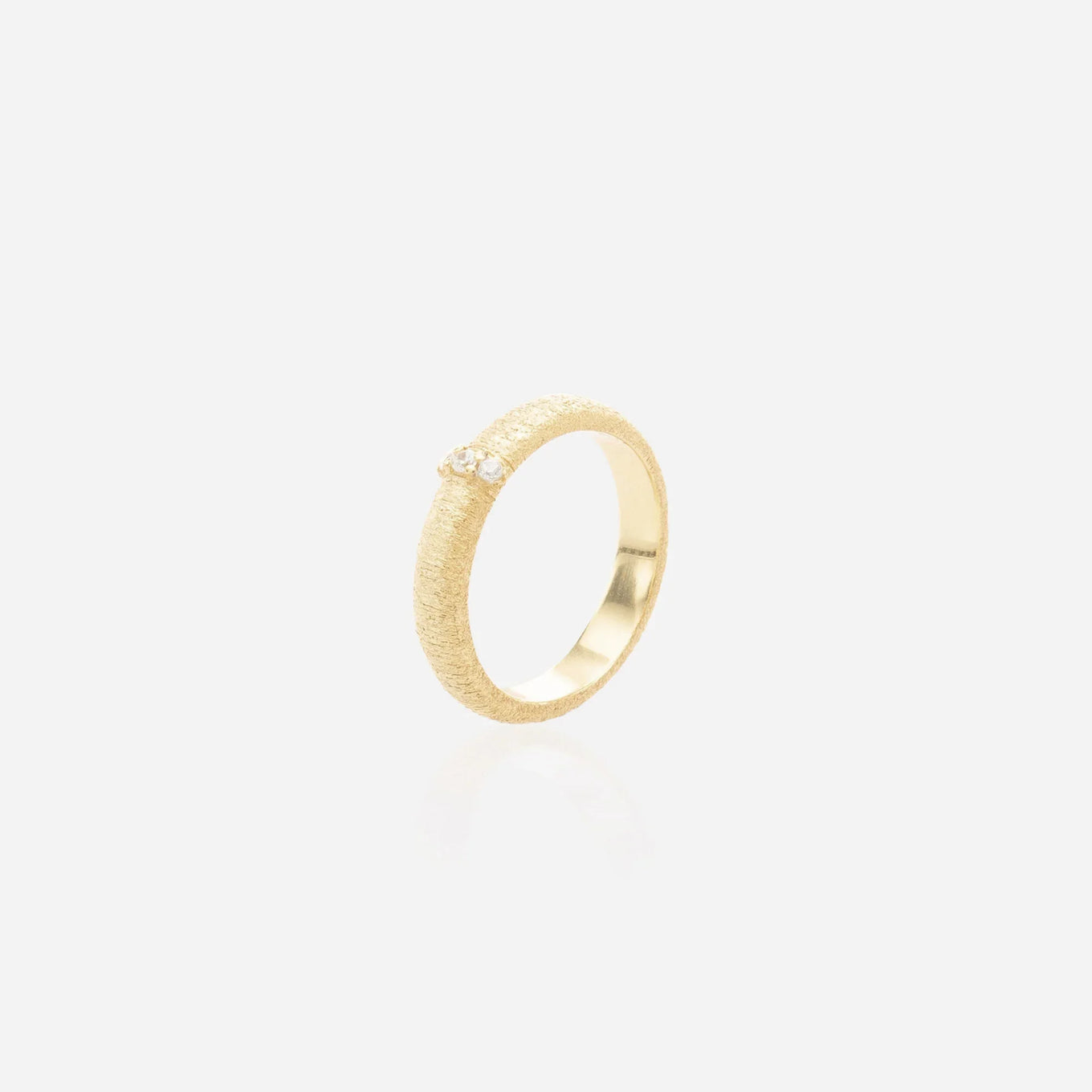
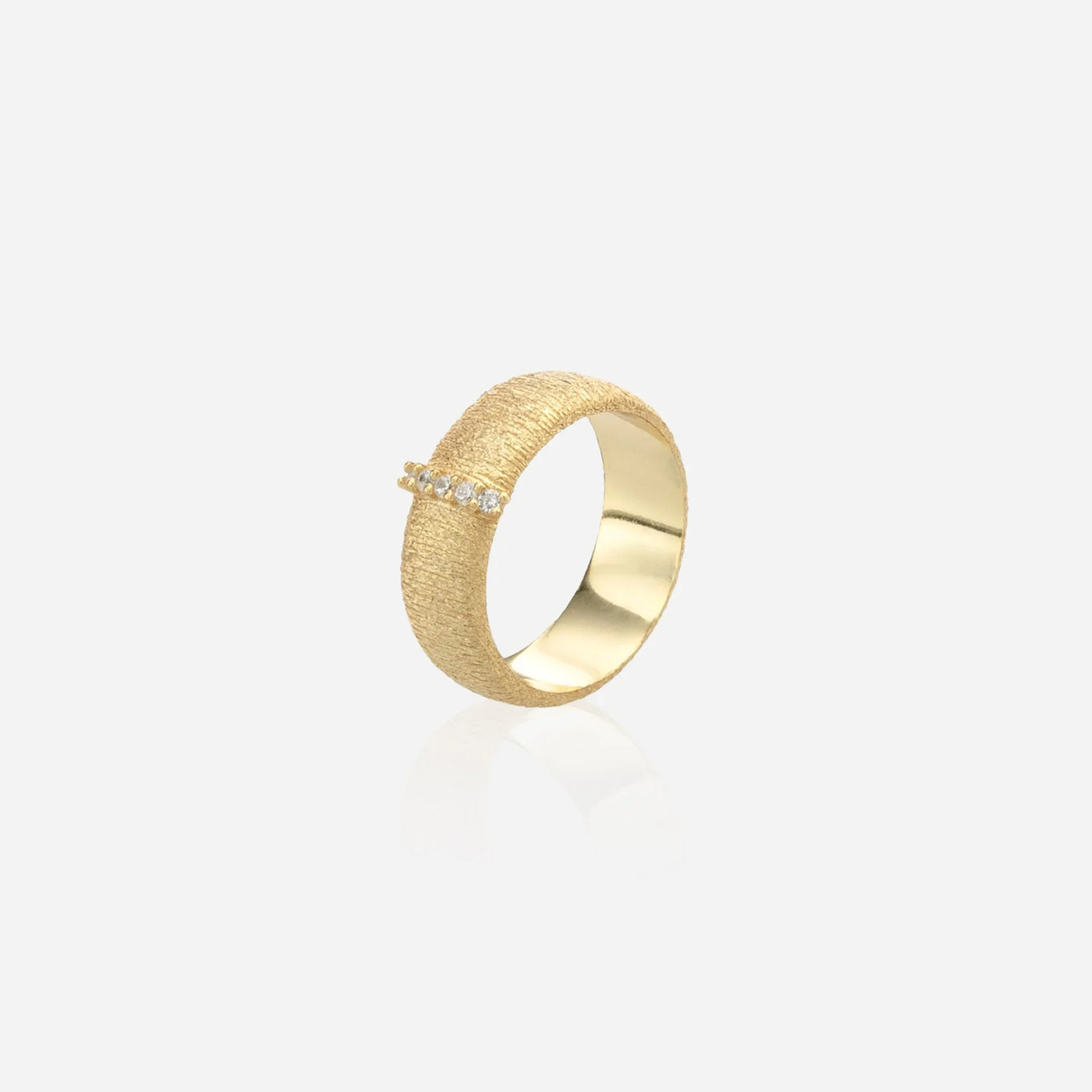
Piece 2 — The Everyday Ring: A band with sparse, low-profile diamonds — channel-set, bezel-set, or embedded. Not a standalone solitaire, which reads as an engagement ring proposition. Not a full eternity band, which wraps sparkle 360 degrees and competes with everything else.
The Channel Set Ring ($115) is a gallery band where stones sit flush in channels, visible from above but never catching. The Tempo Ring ($95) is an open asymmetric band with lab diamonds at the tips — minimal enough for daily stacking, distinctive enough to wear solo.
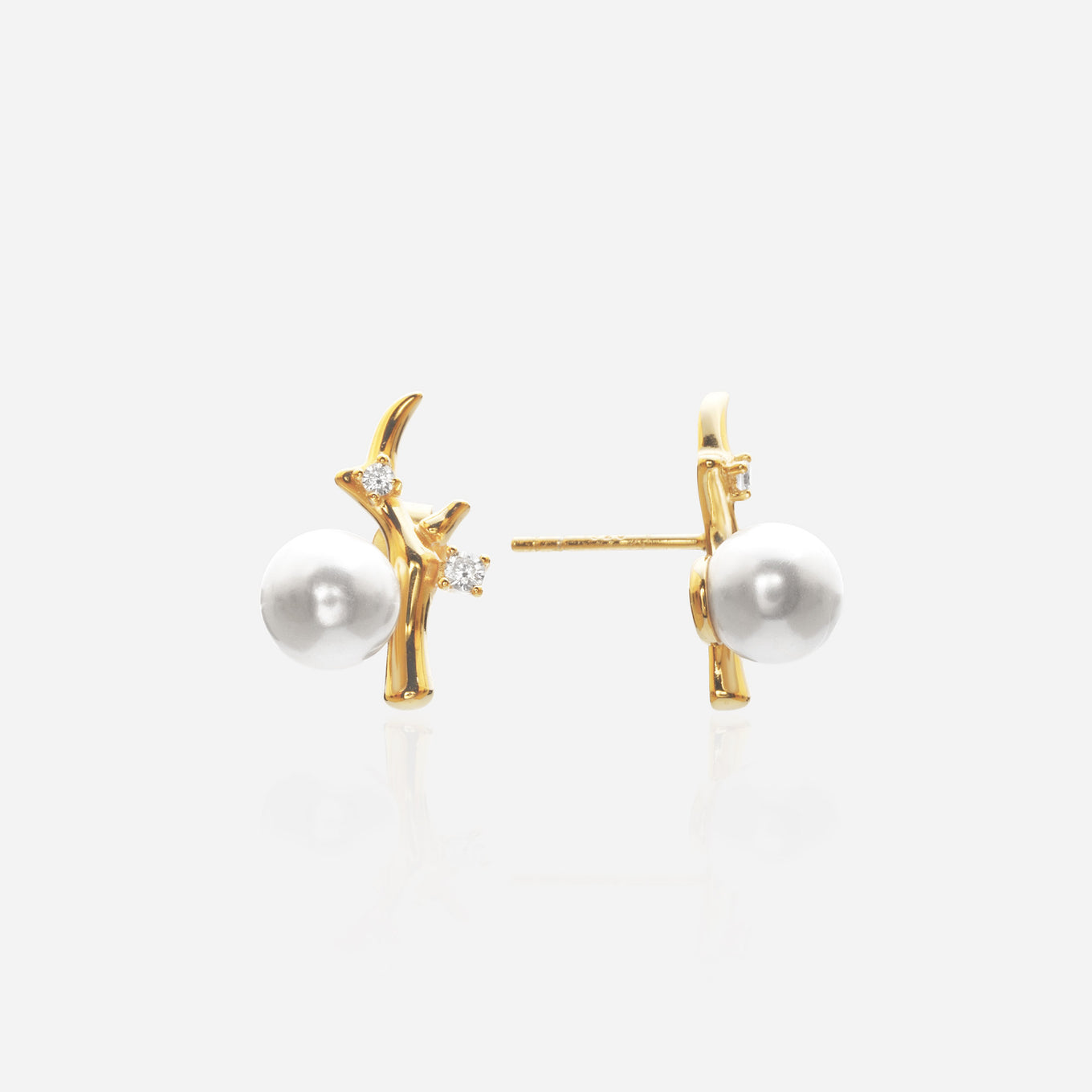
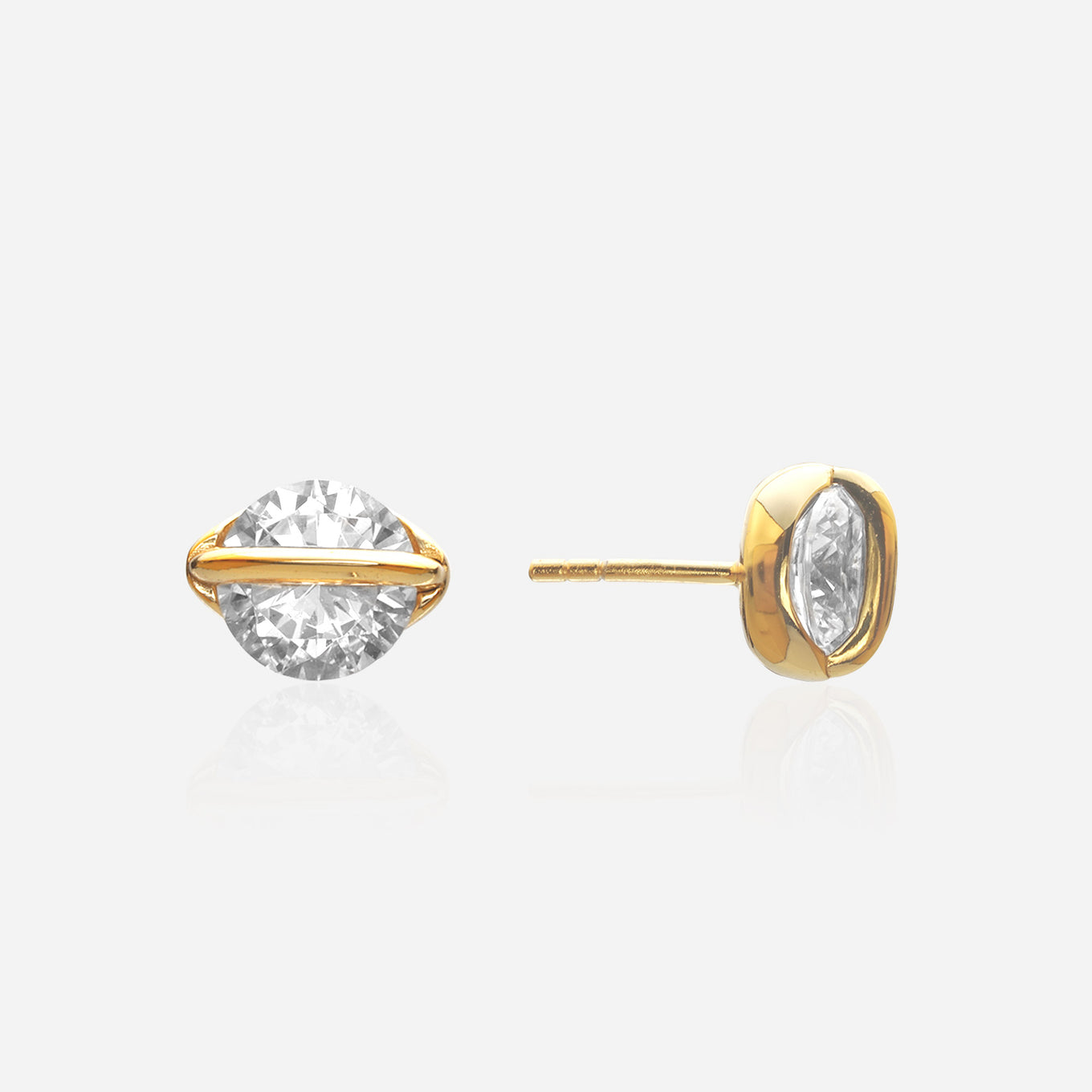
Piece 3 — The Everyday Earrings: Studs or small huggies with diamond accents — something you can sleep in if you forget to take them off. The Kite Diamond Studs ($75) — brushed gold kite shapes with a single lab diamond at the center — are the platonic ideal: geometric enough to look intentional, small enough to vanish into your daily life until someone notices the sparkle.
For huggie lovers: the Byzantine Lattice Hoops ($95) pack pavé sparkle into a profile that hugs the earlobe without dangling.
Diamond Styling by Setting and Occasion
| Day Type | Diamond Strategy | Piece Type | Our Pick |
|---|---|---|---|
| Office Day | One understated piece — a solitaire necklace under a blouse or a channel-set band on one finger | Solitaire pendant or channel-set ring | Solitaire Necklace or Channel Set Ring |
| Weekend Errands | Diamond studs + no other sparkle. The studs say "I tried" without saying "I tried too hard" | Small diamond studs or geometric studs | Kite Diamond Studs |
| Brunch / Lunch Date | Two pieces in conversation: solitaire necklace + stacking diamond bands | Necklace + 2-3 stacking rings | Solitaire Necklace + Macaron Ring Set |
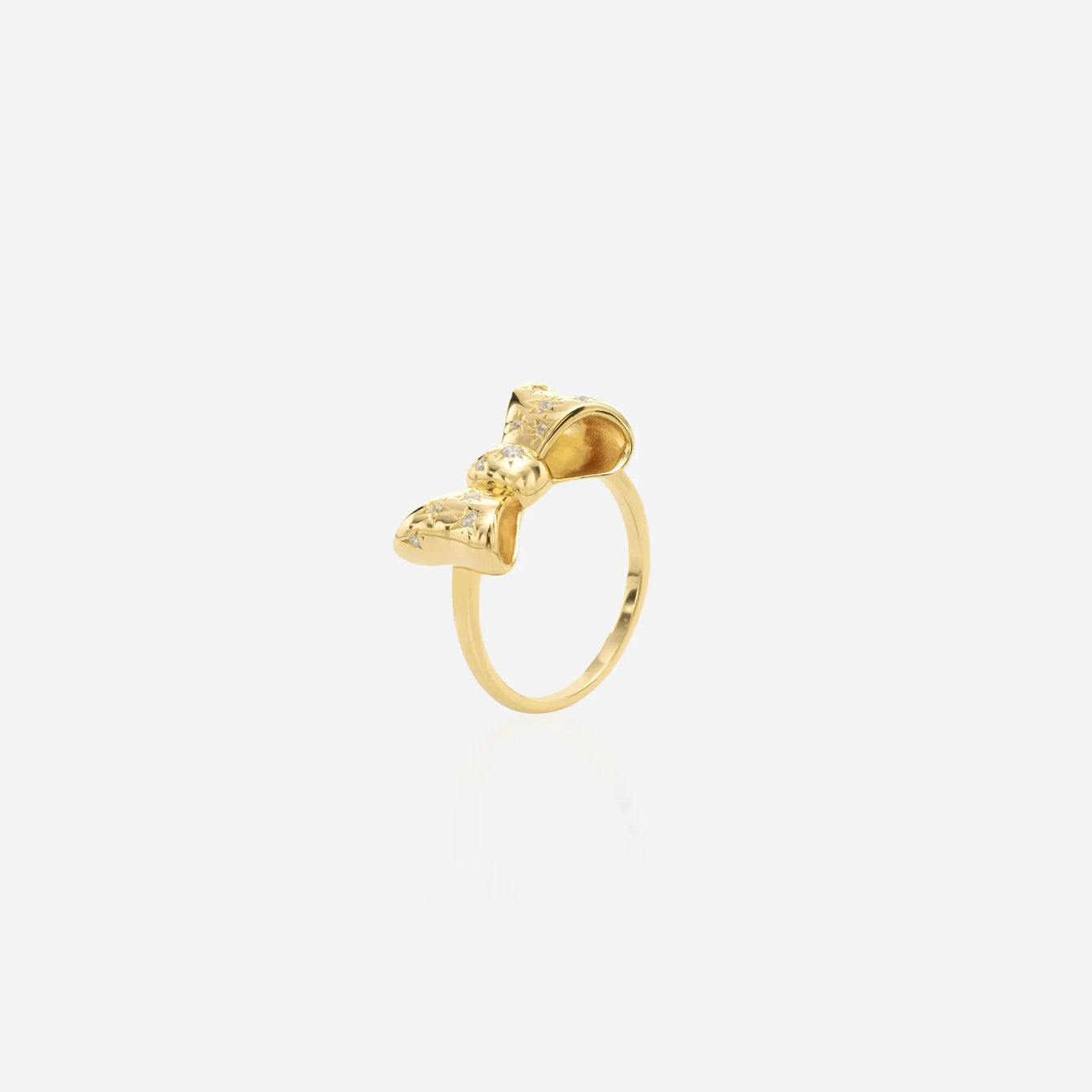
| Evening / Dinner | Three pieces maximum: necklace + ring + earrings. Add one more diamond piece than daytime | Necklace + statement ring + studs | Solitaire + Pleat Ring + Kite Diamond Studs |
Lab vs Mined: Why Lab Diamonds Own the Everyday Category
The everyday diamond trend is inseparable from the rise of lab diamonds — and the reason is practical, not ideological. A mined diamond of 0.3 carats might cost $400-600. Its lab equivalent — identical in chemical composition, crystal structure, and visual appearance — costs $85-150 at the demi-fine level.
The lab diamond lets you wear sparkle daily without the financial anxiety of losing or damaging a piece that cost a week's salary. Lab diamonds have Mohs 10 hardness (identical to mined), the same refractive index (2.42), and the same dispersion (0.044) — meaning the fire, brilliance, and scratch resistance are indistinguishable from mined.
The only difference is provenance: one came from a lab in weeks, the other from the Earth's mantle over billions of years. For a piece you're going to wear to the grocery store, the lab origin isn't a compromise — it's the entire point.
Caring for Everyday Diamond Jewelry
Diamonds are the hardest natural material on Earth (Mohs 10) — but the metal holding them is not. Your gold-plated sterling silver setting needs more attention than the diamond it holds. Remove rings before working with your hands — gardening, gym, dishes. The diamond won't scratch, but the prong or bezel holding it can bend if caught on equipment.
Clean at home once a week: warm water + mild dish soap + soft toothbrush, gently scrub the setting (not just the stone), rinse, pat dry with a lint-free cloth. Diamonds attract oil like magnets — the buildup comes from your skin's natural oils, lotion, and hand soap, not from some mysterious external source. A clean diamond sparkles twice as bright as a dirty one, and the difference between the two is about 90 seconds of weekly maintenance.
The ÉLARAMUSE Everyday Diamond Standard
| Feature | Specification |
|---|---|
| Base Metal | Solid Ag925 Sterling Silver — 92.5% pure silver, internationally hallmarked |
| Plating | 0.5-micron 18K gold plating — measured thickness, not an estimate |
| Hypoallergenic | 100% Nickel-Free — no skin reaction on sensitive ears, neck, or fingers |
| Diamond Type | High-Carbon Lab Diamonds (Simulated) — Mohs 8.5 hardness, identical visual properties to mined |
| lab diamond setting | Bezel, channel, flush, and low-profile prong settings — optimized for daily wear without snagging |
| Water Resistance | Water-resistant, tarnish-resistant — hand washing, rain, and light moisture are safe |
Key Terms
- Lab Diamond (Simulated): A diamond created in a laboratory with the same chemical composition (carbon), crystal structure (cubic), and physical properties as a mined diamond. In our pieces: High-Carbon Lab Diamonds with Mohs 8.5 hardness — the ethical, affordable alternative to mined diamonds.
- Channel Setting: A row of diamonds set into a grooved channel in the metal band, with no prongs between stones. The metal walls above and below hold the stones secure — ideal for everyday wear because nothing protrudes to catch or snag.
- Bezel Setting: A metal rim that encircles the diamond completely, holding it in place from all sides. The most secure setting type — used in rings designed for active lifestyles.
- Refractive Index: The measure of how much light bends when entering a gemstone — determines how much sparkle and fire a stone displays. Diamonds: 2.42 — one of the highest in the gem world.
Frequently Asked Questions
Q: Can I wear diamond jewelry to the gym?
Not recommended — not because the diamond will break (it won't), but because sweat, friction from equipment, and impact from weights can loosen prongs and scratch the gold plating. The stone survives the gym; the setting may not. Remove rings and bracelets before working out. Stud earrings and a fine chain necklace are lower-risk if you forget.
Q: Do lab diamonds look different from mined diamonds?
To the naked eye — no. They have the same sparkle, same fire, same color performance. Even trained gemologists can't distinguish lab from mined without specialized equipment (spectroscopy). The visual experience of wearing lab diamond jewelry is indistinguishable from mined — which is why the "everyday diamonds" trend is dominated by lab stones.
Q: How do I layer a diamond necklace with other chains?
The diamond solitaire goes in the middle position — not the shortest chain (collarbone level) and not the longest (sternum level). At 16-18 inches, it sits at the hollow of the throat. Layer one finer chain above it (14-16 inches, no pendant) and one heavier chain below it (20-22 inches, with or without a pendant). The diamond catches the most light in the middle position because it's least likely to be shadowed by your chin or hidden behind clothing.
Q: What's the minimum I should spend to get a diamond piece I can wear daily?
At the demi-fine level, $75-115 for a solitaire necklace or ring with lab diamonds, built on sterling silver with gold plating. This gets you a piece that looks and performs like fine jewelry without the anxiety of losing or damaging a four-figure investment. The $85 Gold Solitaire Necklace and $95 Tempo Ring are both well within this range and are the two most-purchased diamond everyday pieces in our collection.
Q: Can I sleep in my diamond jewelry?
Necklaces and stud earrings — occasionally, yes. Rings and bracelets — no. Your fingers swell slightly during sleep, and a ring that fits during the day can feel tight at 3 AM. Chains can tangle or break if you move in your sleep. The rule: if it has a clasp or a prong setting, take it off before bed. Stud earrings with secure backs can stay in — many people wear diamond studs 24/7 without issue.
Editor's Picks


We Believe — Diamonds shouldn't require a special occasion. They shouldn't sit in a box waiting for a wedding invitation or an anniversary dinner. The hardest substance on Earth — deserves to see sunlight every single day.
That's why we build our diamond pieces on Ag925 sterling silver with 0.5-micron 18K gold plating: the settings are durable enough for daily wear, and the price is accessible enough that you'll actually wear them. A diamond that costs a month's salary becomes a liability. A diamond that costs a nice dinner becomes your uniform. Be your own muse — put it on with a T-shirt and walk out the door.
See also: Our Lab Diamond Buying Guide for technical specs and grading, and the Solitaire Necklace Guide for finding your perfect pendant.
References
- Grechko, Irina. "7 Jewelry Trends Taking Over 2026." Marie Claire, Jan 2026. marieclaire.com
- GIA (Gemological Institute of America). Lab-Grown Diamonds: Properties, Identification, and Grading. gia.edu
- Smithsonian Institution. The Nature of Diamonds: Mineralogy and Crystal Structure. si.edu
- FTC Jewelry Guides. Standards for Diamond Disclosure in Jewelry Retail. ftc.gov