• Red Agate — A banded variety of chalcedony (microcrystalline quartz), Mohs 6.5-7. Forms in volcanic rock cavities over millions of years. Prized since ancient Mesopotamia for its protective symbolism.
• Ruby — Red corundum (aluminum oxide), Mohs 9. One of the four precious gemstones. Lab-created ruby costs 10-20x red agate for equivalent carat weight.
• Enamel — Colored glass powder fused to metal at 750-850°C. Produces vivid color but chips on impact. Used in fine jewelry since the Byzantine Empire.
• Mohs Hardness Scale — Mineral scratch resistance scale from 1 (talc) to 10 (diamond). Jewelry stones need ≥6 for daily wear durability.
• Chalcedony — The mineral family that includes agate, carnelian, jasper, and onyx. All are forms of microcrystalline quartz.
• Mother of Pearl (MOP) — The iridescent inner layer of mollusk shells. Used in the Reversible Clover Necklace for its luminous, shifting color.
• Four-Leaf Clover — A rare genetic mutation of the three-leaf clover (Trifolium repens), occurring in approximately 1 in 5,000 plants. Symbolized faith, hope, love, and luck since at least the 17th century.
• The Design Brief: A Collection Built Around a Stone
• Material Showdown: Red Agate vs Ruby vs Enamel
• The Symbolism Layer: 4,000 Years of Red Agate
• Inside the Clover Collection
• What This Design Decision Teaches About Jewelry Quality
• FAQ
• We Believe
• Editor's Picks
• References
The Design Brief: A Collection Built Around a Stone
Most jewelry collections start with a shape. Someone sketches a pendant, a pair of earrings, a bracelet, and then selects materials to fill the forms. The ÉLARAMUSE Clover Collection started the other way around. It started with the red agate.
In early design meetings, the creative brief was: "Build a collection around a stone that carries history but doesn't carry a luxury markup. Something with natural depth that a photograph can capture and a hand can feel." The designer tested three candidates — red agate, lab-created ruby, and red enamel — on a prototype clover-shaped setting. The results drove every decision that followed.
The four-leaf clover shape was non-negotiable. The clover is one of the most universally recognized symbols of luck — a rare natural variation occurring in roughly 1 in 5,000 white clover plants. Its four leaves represent faith, hope, love, and luck in Western tradition; in Celtic folklore, the clover was believed to allow the holder to see fairies and ward off evil. The challenge was not the shape. The challenge was what to put at its center.
Material Showdown: Red Agate vs Ruby vs Enamel
Three materials were prototyped on identical clover-shaped sterling silver settings. Here is what the design team found:
| Dimension | Red Agate | Lab-Created Ruby | Red Enamel |
|---|---|---|---|
| Hardness (Mohs) | 6.5-7 | 9 | 5-6 (glass) |
| Daily wear durability | Excellent — no chipping at impact points | Excellent — harder than nearly everything you'd contact | Poor — chips at edges within months |
| Visual character | Natural banding, depth, no two pieces identical | Glass-clear, uniform red, brilliant but "perfect" | Opaque flat red, no depth or light play |
| Production cost (center stone) | $2-4 | $25-40 | $0.50-1 |
| Resulting retail price | $79 | $300+ | $55-60 |
| Design verdict | SELECTED | Rejected — excellent stone, wrong price tier | Rejected — flat color, chips under wear |
Why not ruby? Lab-created ruby is objectively the hardest and most brilliant of the three options — Mohs 9, glass-clear red, almost indestructible. But it priced the necklace out of the demi-fine tier. A lab ruby large enough to fill the clover center (4-5mm) costs $25-40 at wholesale, which pushes retail above $300. That moves the piece into fine jewelry territory — a different customer, a different occasion, a different purpose. The design brief was accessibility: jewelry worn daily, not locked in a safe.
Why not enamel? Enamel — colored glass powder fused to silver at 750-850°C — is the traditional choice for colored jewelry centers. It produces a vivid, uniform red at the lowest cost. But enamel fractures. At Mohs 5-6, it is softer than agate, but more critically, it bonds rigidly to the metal surface. Every impact at the pendant's edge creates a stress point at the glass-metal interface. Within months of daily wear, the edges chip. And unlike a stone, chipped enamel cannot be polished — it must be removed and re-fired.
Why red agate won: Red agate naturally occupies the intersection the design brief demanded: visual depth, daily wear durability, and demi-fine accessibility. At Mohs 6.5-7, it survives keys, desks, doorknobs, and everything else a necklace encounters in daily life. Its natural banding — visible layers of iron-oxide deposition formed over millions of years in volcanic cavities — means every pendant is slightly unique. Hold two Gold Clover Necklaces side by side and the red centers have subtly different patterns. That is not a quality control issue. It is the stone's natural fingerprint, and it was the deciding factor in the design review.
Ruby says "look what I'm worth." Enamel says "look how bright I am." Red agate says "look closely."
The Symbolism Layer: 4,000 Years of Red Agate
The material choice carries meaning beyond the visual. Red agate is one of the oldest gemstones in human jewelry — beads found in Mesopotamian sites date to 2000 BCE, and Egyptian scarabs carved from banded agate have been recovered from tombs across the Nile Valley. Across cultures and millennia, red agate has carried a consistent symbolic charge: protection, courage, and grounded energy.
Ancient Mesopotamia: Agate seals and beads were worn as protective amulets. The stone's banded structure was believed to represent layers of divine protection — each band another shield against harm.
Ancient Rome: Red agate was carved into signet rings and intaglio seals. Its hardness made it practical for stamping wax, and its color associated it with Mars, the god of war and courage.
Medieval Europe: Agate was one of the stones set into ecclesiastical jewelry — bishops' rings, reliquaries, and processional crosses — for its association with strength under pressure. The belief was that agate did not crack under heat or impact, making it a symbol of resilience.
Chinese tradition: Red agate (红玛瑙, hóng mǎnǎo) is associated with prosperity, vitality, and protection against negative energy. It appears frequently in traditional jewelry, particularly in pieces given as talismans for new beginnings.
The four-leaf clover's modern symbolism — luck, hope, faith, love — gains a deeper dimension when combined with a stone that has carried "protection" as its primary meaning for 4,000 years. The design tells a complete story: the clover shape says "I wish you luck." The red agate center says "and I'll protect you while you find it."
Inside the Clover Collection
The Clover Collection unfolds in four variations, each exploring a different facet of the same design language.
Gold Clover Necklace | Red Agate Good Luck Pendant — $79
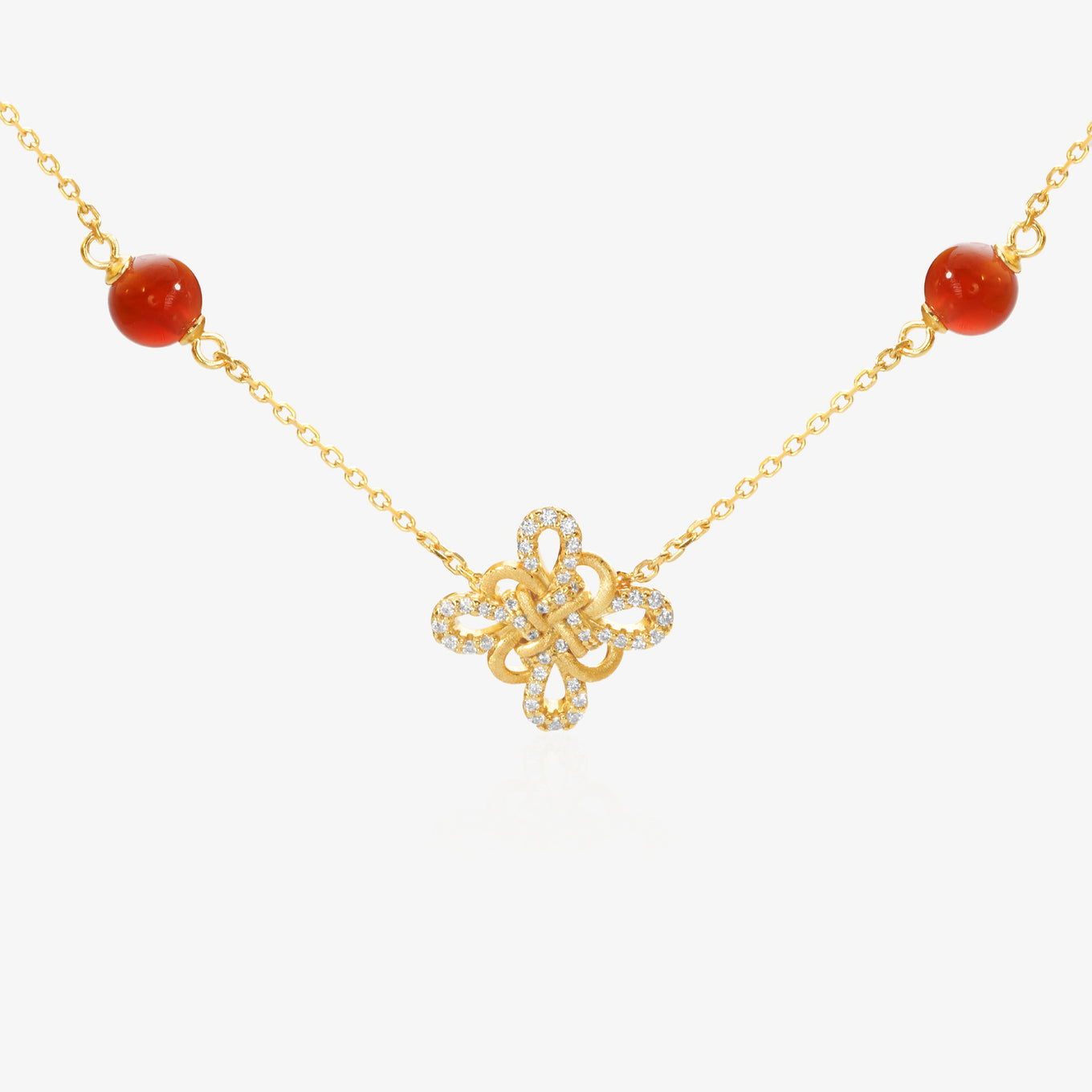
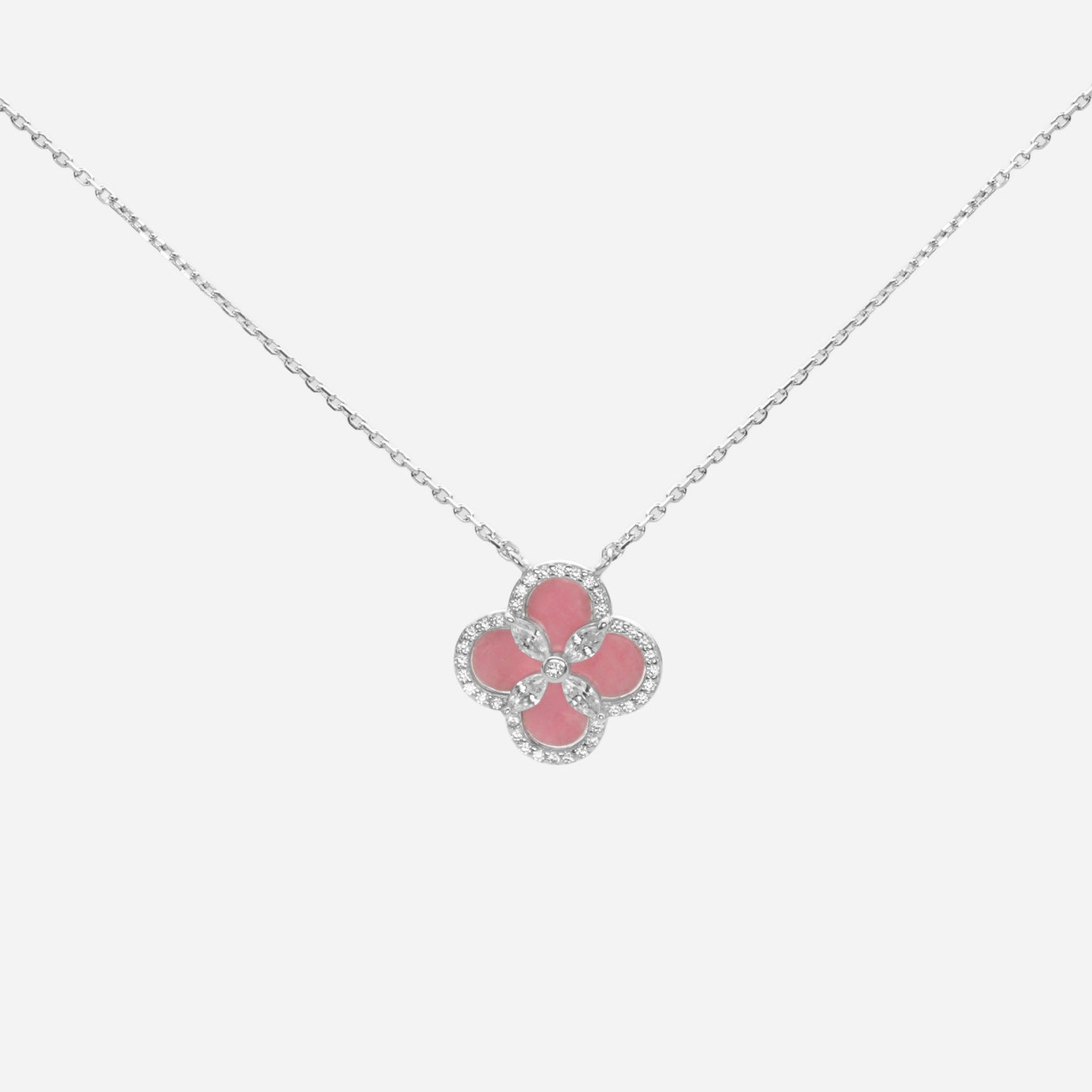
The anchor piece. A polished red agate cabochon set at the center of a four-leaf clover in 18K gold-plated sterling silver. The pendant hangs at 18 inches with a 2-inch extender, positioning it at the collarbone — close enough that the red agate catches light from every angle. The agate's natural banding means no two pendants are identical.
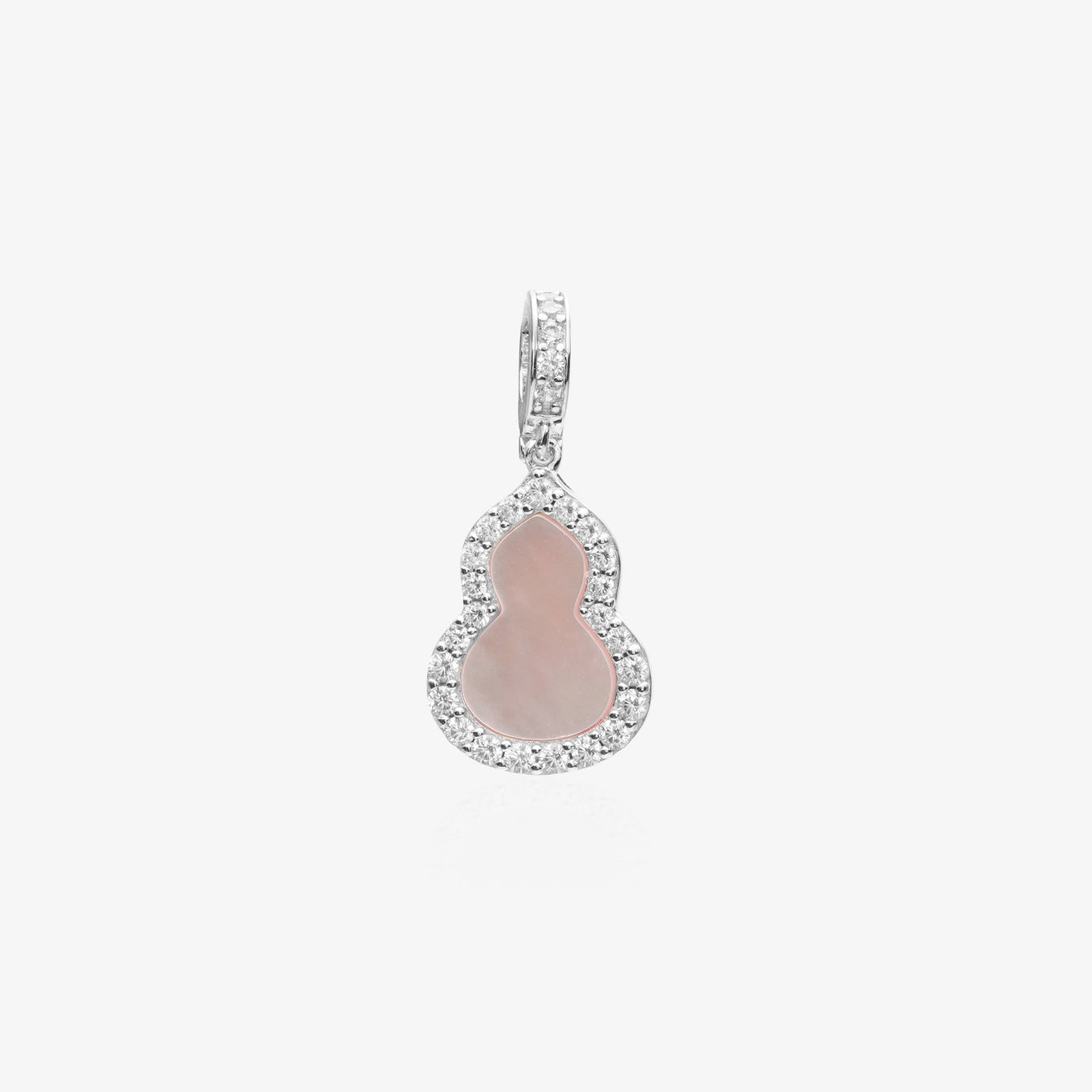
Reversible Clover Necklace | Pink Mother of Pearl — $79
A design experiment in duality. One side features pink mother of pearl — iridescent, luminous, shifting from pale pink to silver depending on the light. Flip the pendant and you get a textured gold clover in brushed 18K gold plate. Two necklaces in one, designed for the person who changes their mind between morning and evening.
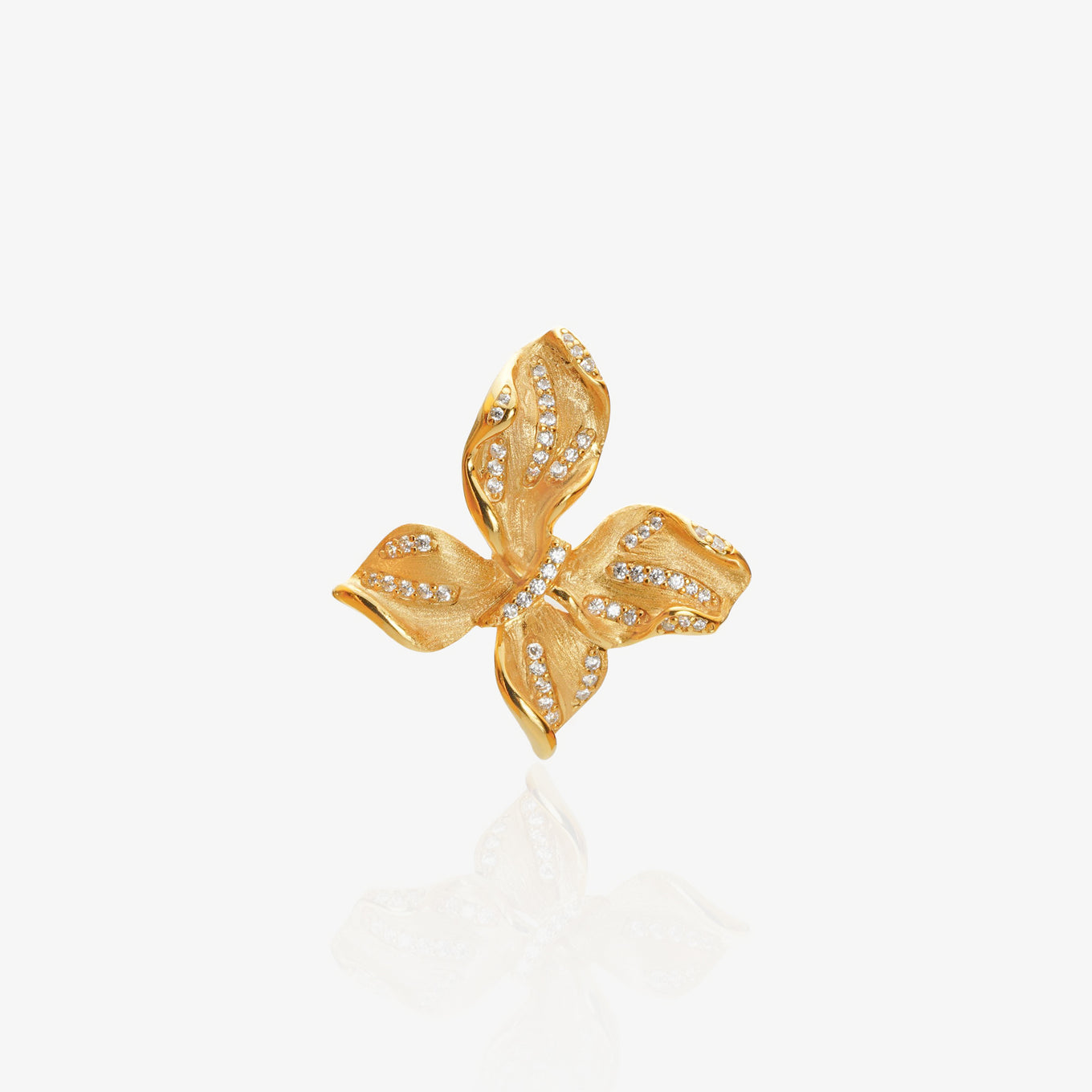
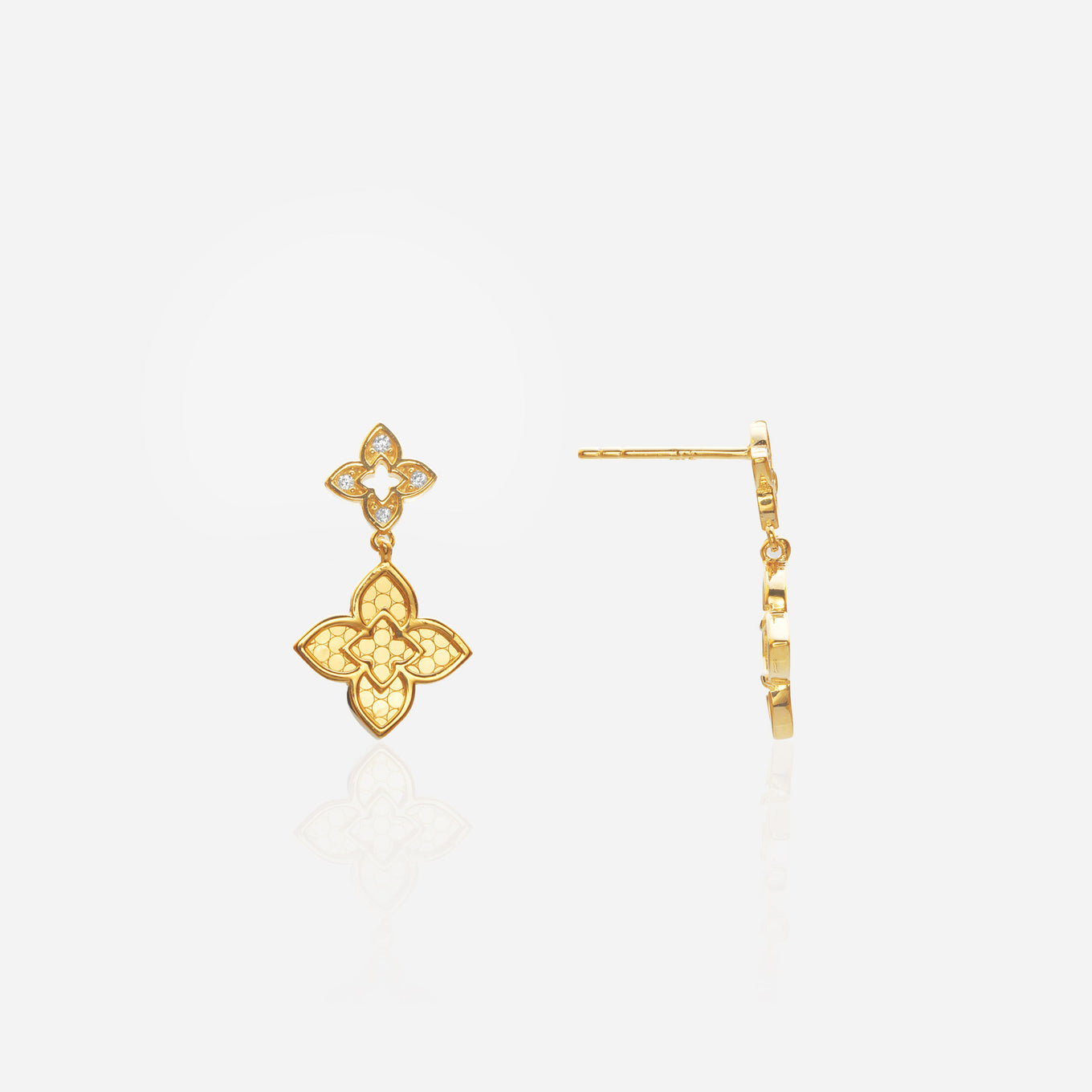
Gold Clover Earrings | Textured Pavé Drop — $35
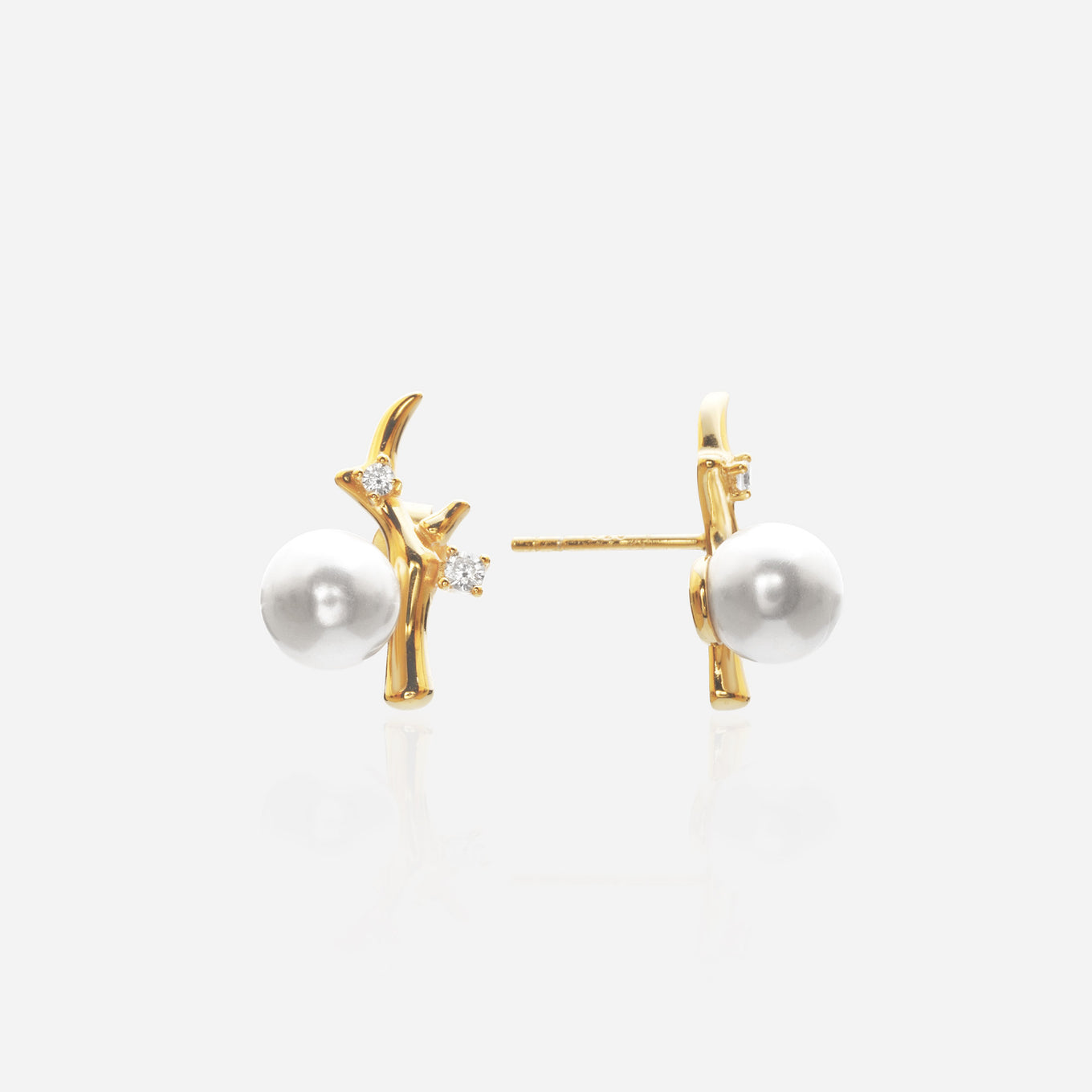
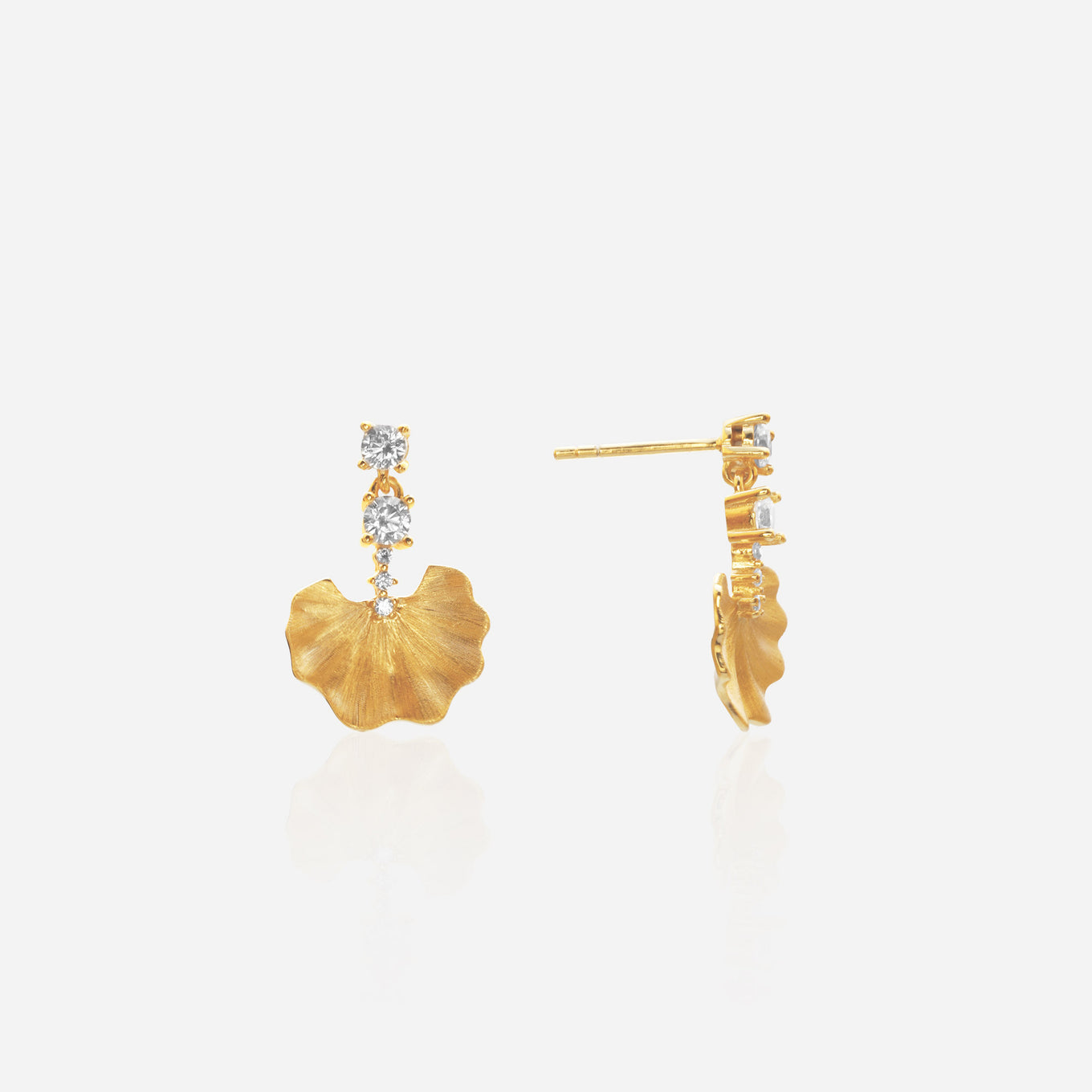
The clover motif reduced to its essence: a textured gold surface with micro-faceted pavé detailing that catches light like a disco ball at conversation distance. No stone, no center — just the shape, the texture, and the gold. The lightest entry point into the collection.
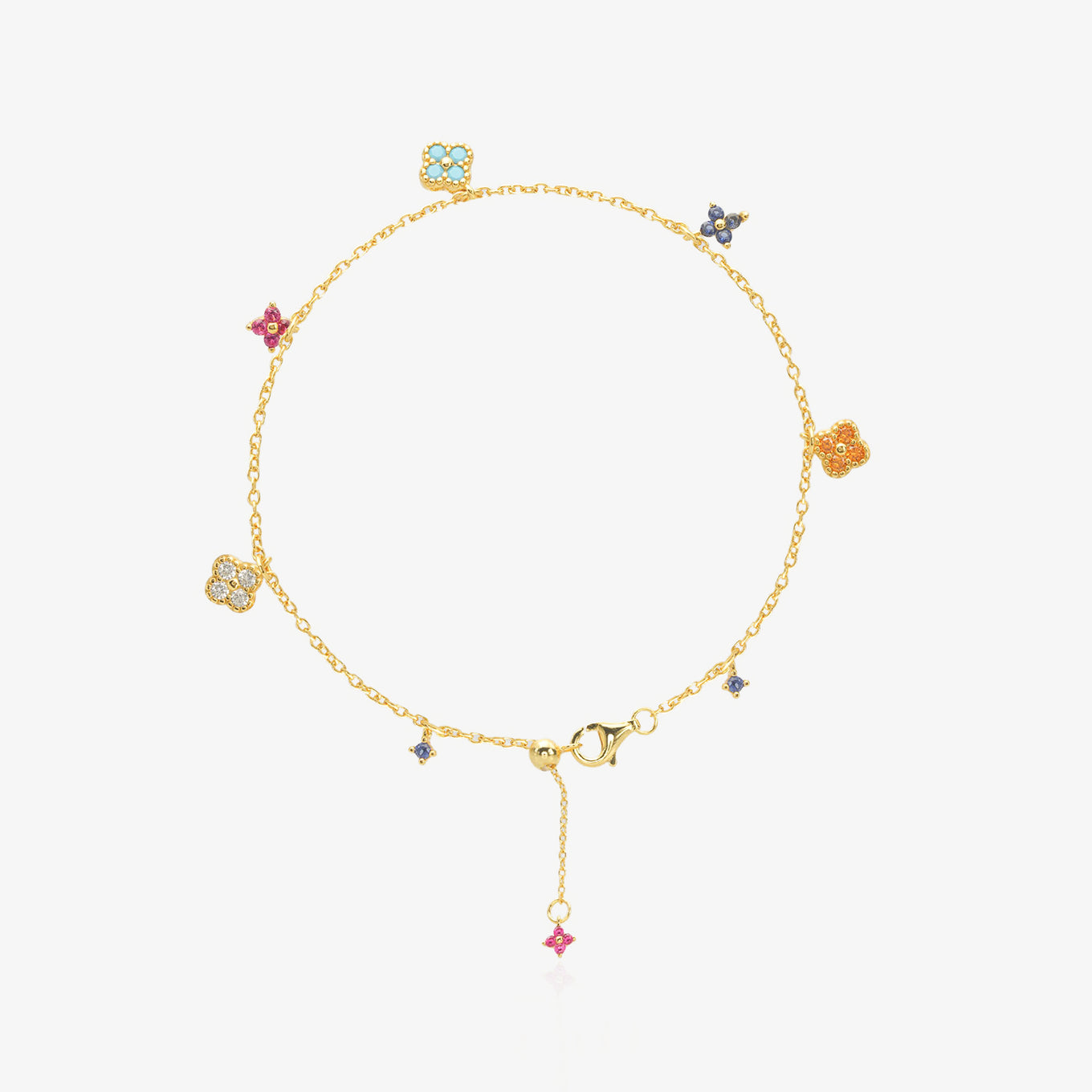
Multi-Color Clover Bracelet | Pastel Four-Leaf Charm — $49
Where the collection breaks its own rules. Instead of red agate, the bracelet features pastel enamel inlay — pale pink, mint, lavender, and baby blue set into four-leaf clover charms on a fine gold chain. It is the one piece in the line where the design brief said "let's do something different." The pastel palette turns the clover from a talisman into a celebration — more playful, more spring, more color-pop against a tan wrist.
What This Design Decision Teaches About Jewelry Quality
Most consumers shop for jewelry by looking at two things: the metal karat stamp and the price. But the material choices behind a piece tell a much richer story about what you're actually buying. The Clover Collection's design process reveals three principles that apply to evaluating any piece of jewelry:
1. A stone's hardness determines its lifespan, not its beauty. A material can be stunning in the box and unwearable after six months. Always ask: "Will this survive my daily life?" Enamel and opal are beautiful; agate and ruby survive.
2. The price of a stone often has nothing to do with its appropriateness for the design. Ruby is objectively "better" than agate by every gemological measure. It was still the wrong choice — not because it is inferior, but because it priced the piece into a category where the customer couldn't wear it daily. The right material is the one that fits the design's purpose, not the one with the highest carat value.
3. Natural variation is not a flaw — it is a signature. The fact that no two red agate clover centers look identical is the reason agate was selected over enamel. Uniformity is a factory metric. Uniqueness is a jewelry metric. When you hold a piece with a natural stone, you are holding the only one exactly like it in the world.
FAQ
Is red agate a real gemstone?
Yes. Red agate is a semi-precious gemstone — a naturally occurring variety of chalcedony quartz colored by iron oxide (the same mineral that gives rust its red color). It forms in volcanic rock cavities over millions of years and has been used in jewelry since at least 2000 BCE. It is a genuine natural stone, not a synthetic or imitation material.
Why not use real ruby in the Clover Collection?
Lab-created ruby was prototyped and rejected for a specific reason: cost-to-purpose ratio. A 4-5mm lab ruby large enough to fill the clover center would push the necklace's retail price above $300 — into fine jewelry territory, where the piece would be reserved for special occasions rather than daily wear. The design brief prioritized accessibility and daily wearability. Red agate delivered the visual impact and durability the design needed at the price point the customer wanted.
Does red agate fade or change color over time?
No. Unlike dyed agate (which is color-treated and can fade with prolonged sun exposure), natural red agate's color comes from iron oxide deposits formed within the stone's crystal structure over geological time. It does not fade, bleed, or change color with wear. The red you see on day one is the red you'll see on day 5,000.
What does the four-leaf clover symbolize in jewelry?
In Western tradition, each leaf represents a different quality: faith (first leaf), hope (second), love (third), and luck (fourth). In Celtic folklore, the four-leaf clover was believed to grant the holder the ability to see fairies and ward off evil spirits. In modern jewelry, the four-leaf clover is worn as a talisman — a wearable reminder of optimism, protection, and the belief that rare good things happen to those who look for them.
We Believe
We believe design decisions should be legible. When you pick up a piece of ÉLARAMUSE jewelry, you should be able to see the thinking behind it — not just "this looks nice," but "this material was chosen, that alternative was rejected, and here is why that matters for how the piece wears over time." The Clover Collection is a case study in that philosophy. Red agate was not the cheapest option. It was not the most expensive option. It was the right option — for the design, for the price, for the person who wears it every day. That is how we make every decision.
Editor's Picks

Gold Clover Necklace — Red agate cabochon, 18K gold plate on Ag925, 18" + 2" extender

Reversible Clover Necklace — Pink MOP + brushed gold, two necklaces in one

Gold Clover Earrings — Textured pavé, 18K gold plate, the collection's entry point at $35

Multi-Color Clover Bracelet — Pastel enamel inlay, fine gold chain, $49
References
- GIA. "Agate Description and Formation." Gemological Institute of America. GIA.edu/agate
- The Metropolitan Museum of Art. "Mesopotamian Jewelry and Amulets, 3000-500 BCE." Heilbrunn Timeline of Art History. MetMuseum.org
- Victoria & Albert Museum. "A History of Jewellery: Ancient to Modern." V&A Publishing. VAM.ac.uk/jewellery
- British Museum. "Agate and Chalcedony in the Ancient World." Collection Online. BritishMuseum.org
- Mohs, Friedrich. "Treatise on Mineralogy." (1812). Grundriss der Mineralogie — the original publication defining the Mohs hardness scale.