Quick Answer: A tennis bracelet is a symmetrical line of individually set diamonds or gemstones connected by a flexible chain — named after Chris Evert's 1987 U.S. Open moment when her diamond bracelet flew off mid-match and she refused to play until it was found.
📑 In This Guide
- Key Terms You Need to Know
- Why the Tennis Bracelet Endures: 37 Years of Wrist Real Estate
- The ÉLARAMUSE Standard
- Real Diamond vs. Lab Diamond vs. Diamond Simulant: What Matters for a Tennis Bracelet?
- How to Choose the Right Tennis Bracelet: 4 Questions
- 3 Ways to Style a Tennis Bracelet That Don't Feel Stale
- Scenarios Where a Quality Tennis Bracelet Earns Its Keep
- Behind the Design: The Marquise Garland Moment
- Editor's Picks: ÉLARAMUSE Bracelets That Capture the Tennis Bracelet Spirit
- Frequently Asked Questions About Tennis Bracelets
- What We Believe
- References & Further Reading
One snapped clasp at a tennis match in 1987 changed jewelry history. Chris Evert's lab diamond line bracelet broke during her U.S. Open match, scattering stones across the court. She stopped play cold — not for injury, but for her bracelet. Spectators leaned forward. Jewelers took notes. The "tennis bracelet" was born, and it's been the most requested bracelet style in fine jewelry ever since.
But here's the question most guides won't answer honestly: do you need to spend five figures on a diamond tennis bracelet to get the look, the feel, and the durability? The answer — backed by modern plating science and lab-grown stone technology — is absolutely not. A well-crafted demi-fine tennis bracelet gives you the same wrist presence, the same flexible flow, and (crucially) a metal base that won't turn your skin green after a sweaty afternoon.
Key Terms You Need to Know
ELARAMUSE Difference: Unlike mass-produced jewelry that prioritizes price over quality, our pieces are crafted with premium materials and rigorous testing -- because what you wear every day should stand the test of time.
- Tennis Bracelet: A flexible bracelet featuring a continuous line of individually set stones, typically diamonds, connected by articulated links. The defining characteristic is symmetry — every stone sits at exactly the same height with identical spacing.
- Prong Setting: Each stone is held by small metal claws (usually 4). Classic, maximizes light entry for brilliance, but prongs can catch on clothing.
- Bezel Setting: Each stone is encircled by a thin metal rim. Sleeker, more modern, and far less prone to snagging — ideal for everyday wear.
- Channel Setting: Stones sit in a grooved channel between two metal walls with no prongs between them. Creates an uninterrupted line of sparkle. Used in our Oasis Wide Band for the same clean-line effect.
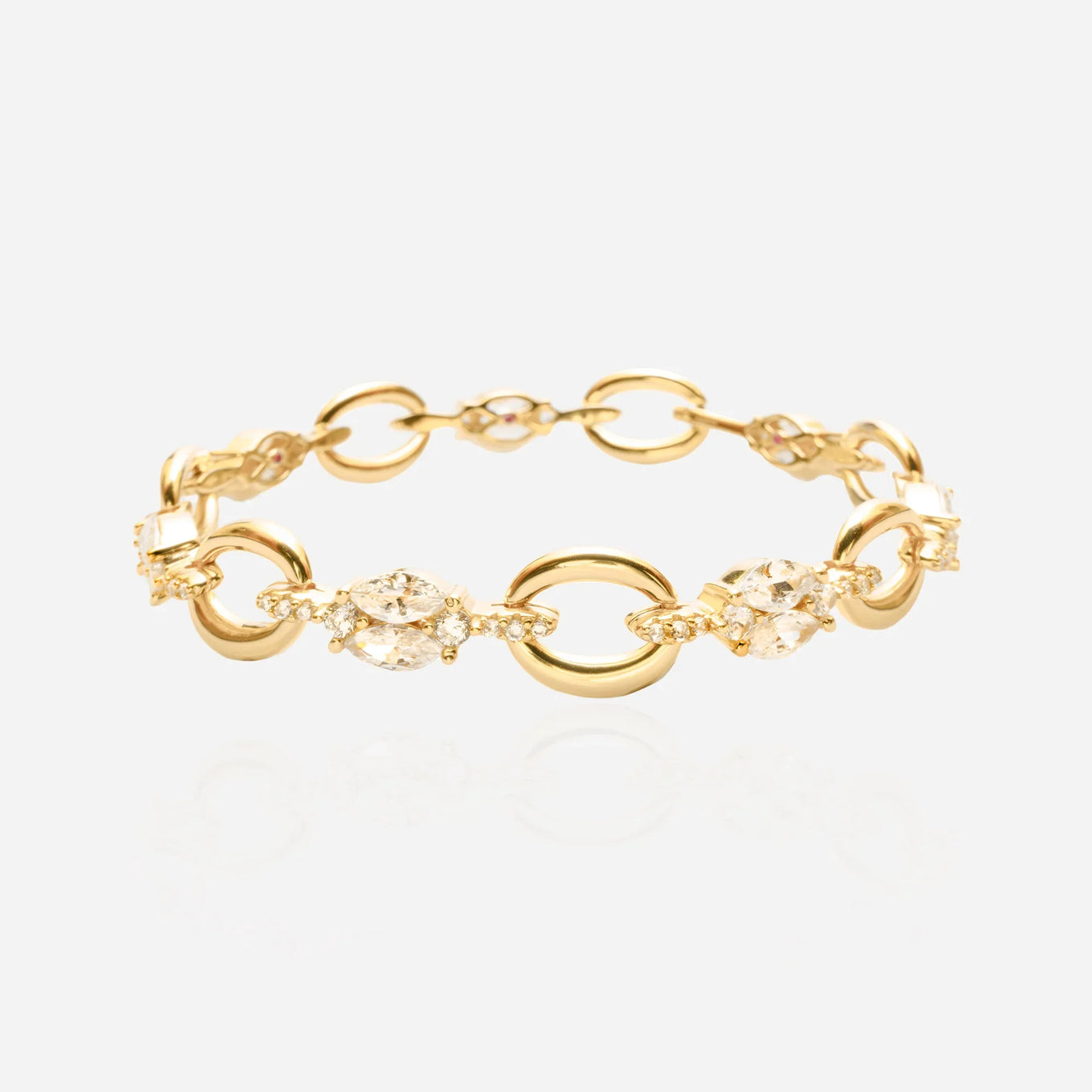
- Mixed-Cut: Alternating stone shapes along the same bracelet — round diamonds next to marquise next to oval. Creates rhythmic visual texture rather than uniform sparkle. Seen in our Marquise Garland Link Bracelet.
Why the Tennis Bracelet Endures: 37 Years of Wrist Real Estate
Few jewelry styles survive four decades without a single dip in demand. The tennis bracelet did it by being the rare thing that serves both minimalists and maximalists equally well. On a bare wrist, it's a statement. Stacked with a watch and a chain bracelet, it's one voice in a chorus. No other bracelet type flexes this easily between "I woke up like this" and "I dressed for this."
According to the GIA Diamond Guide, a well-set line bracelet requires individual calibration of every stone — not just matching the 4Cs, but ensuring identical table height, pavilion depth, and girdle thickness. A 0.1mm deviation between stones is visible to the naked eye across a 7-inch wrist.
This is why precision-setting matters more than carat weight: a poorly calibrated bracelet with bigger stones will always look cheaper than a perfectly aligned bracelet with modest ones.
The ÉLARAMUSE Standard
"We believe the best jewelry is the kind you forget you're wearing until someone leans across a table and says 'wait — show me that again.' A tennis bracelet should flow like liquid, sparkle without shouting, and survive hand-washing, typing, and a rushed gym-to-office change. Our designs use Ag925 sterling silver with 0.5-micron 18K gold plating because durability is the quietest form of luxury."
| Feature | Specification |
|---|---|
| Base Metal | Solid Ag925 Sterling Silver (92.5% pure silver) |
| Plating | 0.5-micron 18K Gold Plating |
| Stone Type | High-Carbon Lab Diamonds (Simulated) / Lab-Grown Nano Zircon |
| Safety | 100% Nickel-Free, Hypoallergenic — zero irritation, even in heat and humidity |
| Durability | Water-resistant, Tarnish-resistant — sweat-proof, shower-safe, built for real life |
Real Diamond vs. Lab Diamond vs. Diamond Simulant: What Matters for a Tennis Bracelet?
Unlike mined diamond tennis bracelets that start at $3,000 and routinely climb past $20,000 for G-color VS-clarity stones across a full line, lab-created stones deliver identical optical performance at a fraction of the cost. The sparkle — which is what a tennis bracelet is fundamentally selling — is visually indistinguishable to anyone without a loupe.
Unlike cheap rhinestone bracelets that use foil-backed glass with glued settings that discolor within weeks, high-carbon lab diamonds and lab-grown nano zircon are precision-cut gemstones set in sterling silver — they won't cloud, yellow, or fall out with normal wear. The distinction isn't subtle: one is jewelry, the other is costume.
The real question isn't "is it real?" — it's "can you wear it without thinking about it?" That's where metal quality becomes the decisive factor. A $50 tennis bracelet on mystery metal will oxidize and green your wrist before the first month is out. A properly constructed Ag925 piece with 0.5-micron gold plating stays brilliant through gym sessions, hand-washing, and 90-degree summer days.
How to Choose the Right Tennis Bracelet: 4 Questions
1. What's your wrist-to-bracelet width ratio? A 2mm-wide line reads as delicate, almost like a second skin. A 4mm line is a confident statement. Rule of thumb: if your wrist measures under 6 inches, stay at 2-3mm. Over 6.5 inches, 3.5-4.5mm balances the proportions beautifully.
2. Gold or silver? Gold-plated sterling silver warms the skin and reads as classic. Rhodium-plated silver reads as crisp, modern, and architecturally cool. Our Marquise Garland Link Bracelet comes in 18K gold plating — the sweet spot between warmth and longevity.
3. Prong, bezel, or mixed? Prong-set stones maximize sparkle. Bezel-set maximizes durability and minimizes snagging. If this is your daily bracelet, bezel or channel-set wins every time. If it's for dinners and events, prongs are the traditional choice.
4. Match or contrast with your watch? Gold watch + gold tennis bracelet = cohesive luxury. Silver watch + gold tennis bracelet = deliberate, editorial contrast. There's no wrong answer here — it's about whether you want your wrist to read as curated or striking.
3 Ways to Style a Tennis Bracelet That Don't Feel Stale
Solo, pushed high: Wear a single tennis bracelet alone, pushed 2-3 inches above your wrist bone rather than resting on it. The bracelet catches light differently when it moves freely — this is the "Chris Evert" original, and it still works perfectly.
Stacked with a watch: Tennis bracelet directly against the watch face (same metal tone), then a textured chain bracelet on the other side. The smooth line of stones provides structure; the chain adds texture. Three pieces, zero clutter.
The diamond sandwich: Fine chain bracelet → tennis bracelet → bangle or cuff. This is the maximalist approach and works best with a tennis bracelet in the 2-3mm range so it doesn't visually dominate the whole stack.
Scenarios Where a Quality Tennis Bracelet Earns Its Keep
Because our demi-fine bracelets are water-resistant and nickel-free, the old rules about when you can wear a tennis bracelet are obsolete:
- Office-to-dinner: Type for eight hours, wash your hands twenty times, and walk into a restaurant at 7 PM with the same bracelet catching candlelight like you just put it on. No clasp-checking, no skin irritation.
- Summer wedding season: Outdoor ceremony at 3 PM in July — sweat, sunscreen, champagne condensation on your glass. A tarnish-resistant tennis bracelet handles all of it without losing its luster before the cake is cut.
- Travel light strategy: One tennis bracelet replaces three statement pieces in a carry-on. It dresses up a white tee at the airport lounge and complements a cocktail dress at the hotel bar. Pack less, sparkle more.
Behind the Design: The Marquise Garland Moment
When we designed our Marquise Garland Link Bracelet, we started with a problem: every affordable tennis bracelet we tested was too stiff. The links didn't articulate smoothly; the bracelet fought the wrist instead of draping over it. So we spent three samples getting the link curvature right — each link needed to rotate 15 degrees independently without exposing gaps between stones.
The mixed-cut layout — alternating marquise and round stones — wasn't an aesthetic choice first. It was a mechanical one. Mixed shapes create natural articulation points that uniform round stones don't. The visual rhythm of marquise-round-marquise-round is a direct result of engineering for comfort. As a designer, there's a particular satisfaction in solving a wearability problem and having the solution turn out to be more beautiful than the original idea.
Why settle for stiff uniformity when flow is what makes a bracelet feel alive on the wrist?
Editor's Picks: ÉLARAMUSE Bracelets That Capture the Tennis Bracelet Spirit
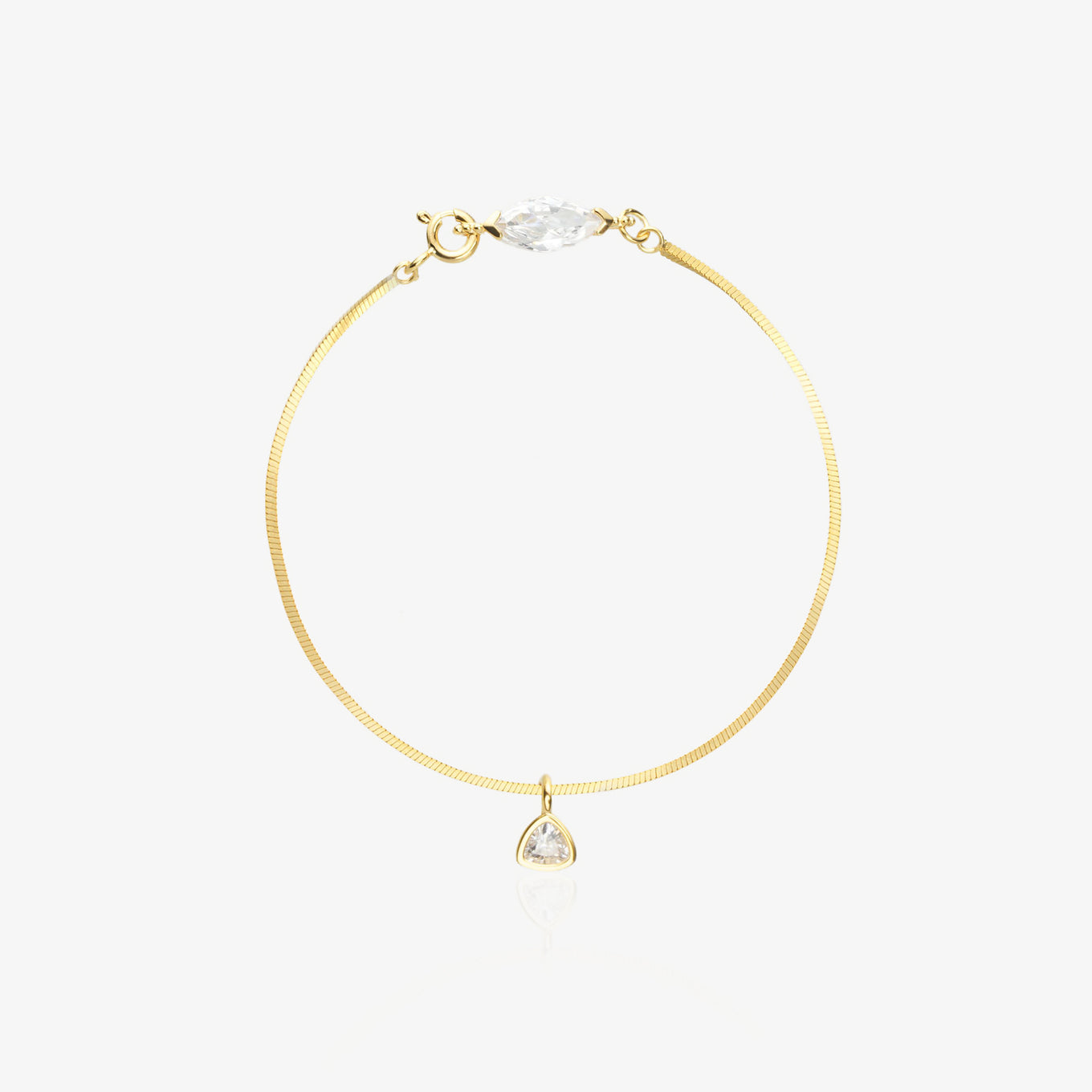
Marquise Garland Link Bracelet — Our direct tennis bracelet interpretation. Alternating marquise and round high-carbon lab diamonds on an articulated gold-plated chain. Fluid, flexible, built for daily wear.
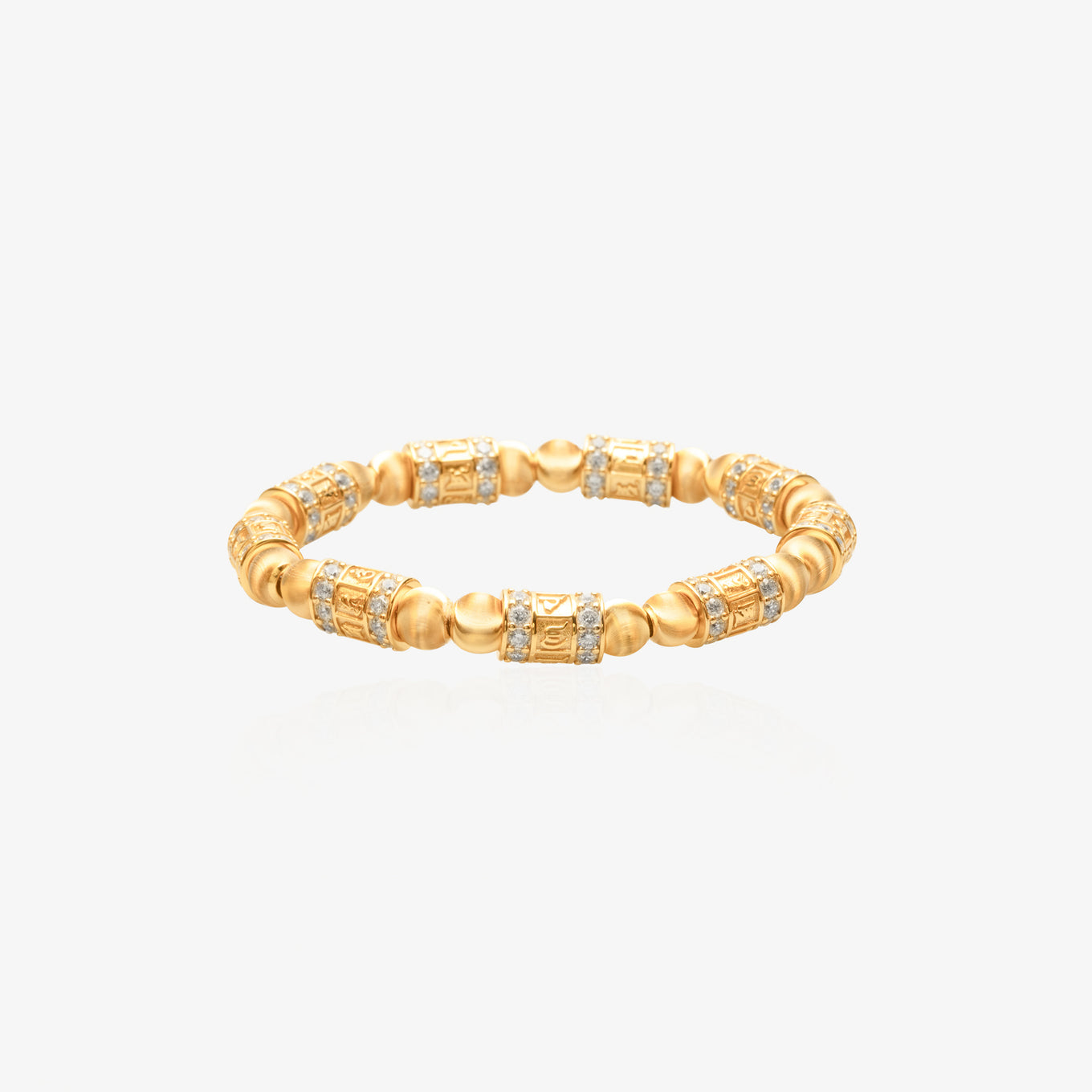
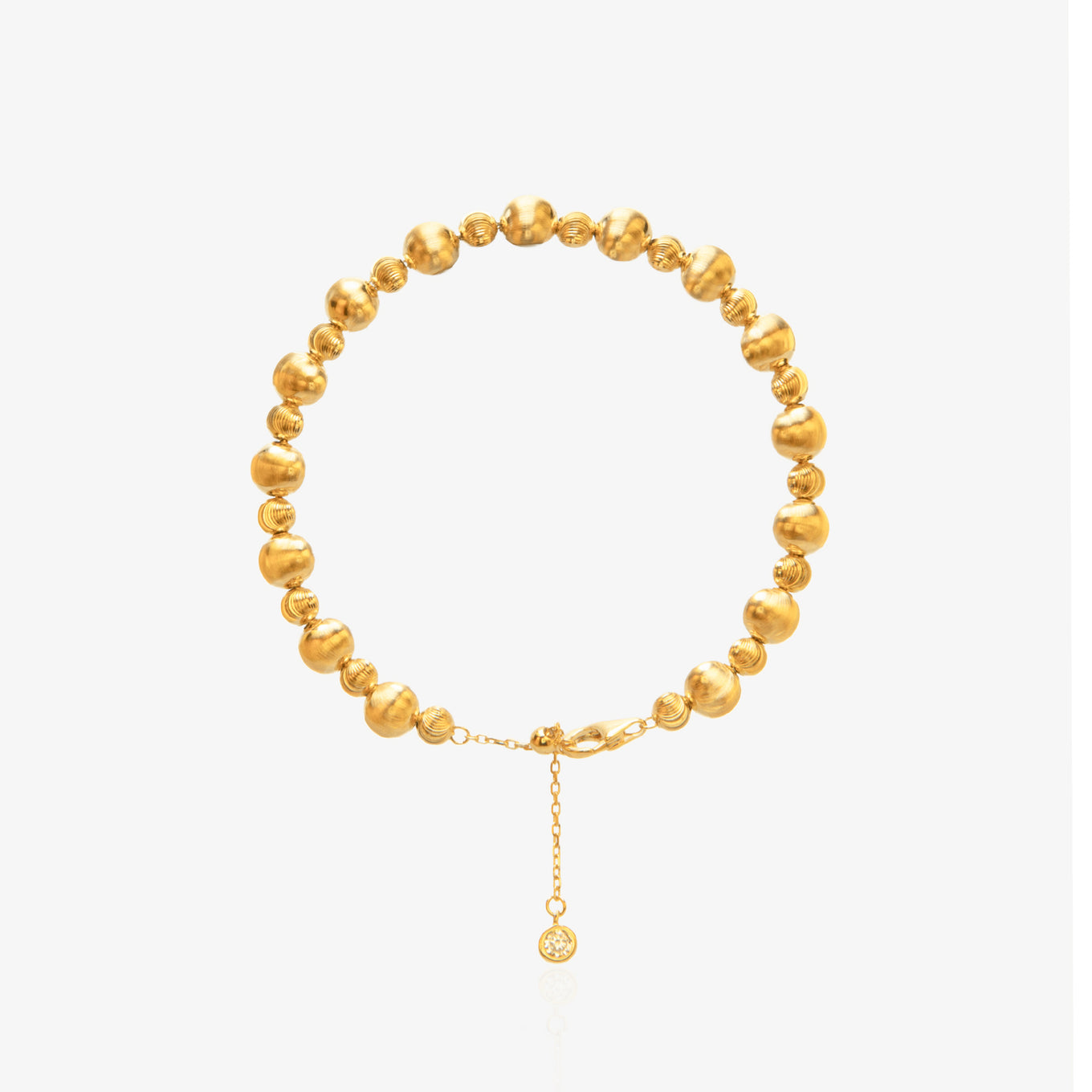
Cocoon Chain Bracelet — The tennis bracelet's minimalist cousin. Satin-finished oval beads create a continuous line of metallic luster without stones. Subtle enough for stacking, refined enough to wear alone.
Pavé Bamboo Link Bangle — Not a tennis bracelet in the traditional sense, but the articulated pavé segments deliver the same continuous-sparkle effect with architectural structure. Two-tone gold and rhodium plating.
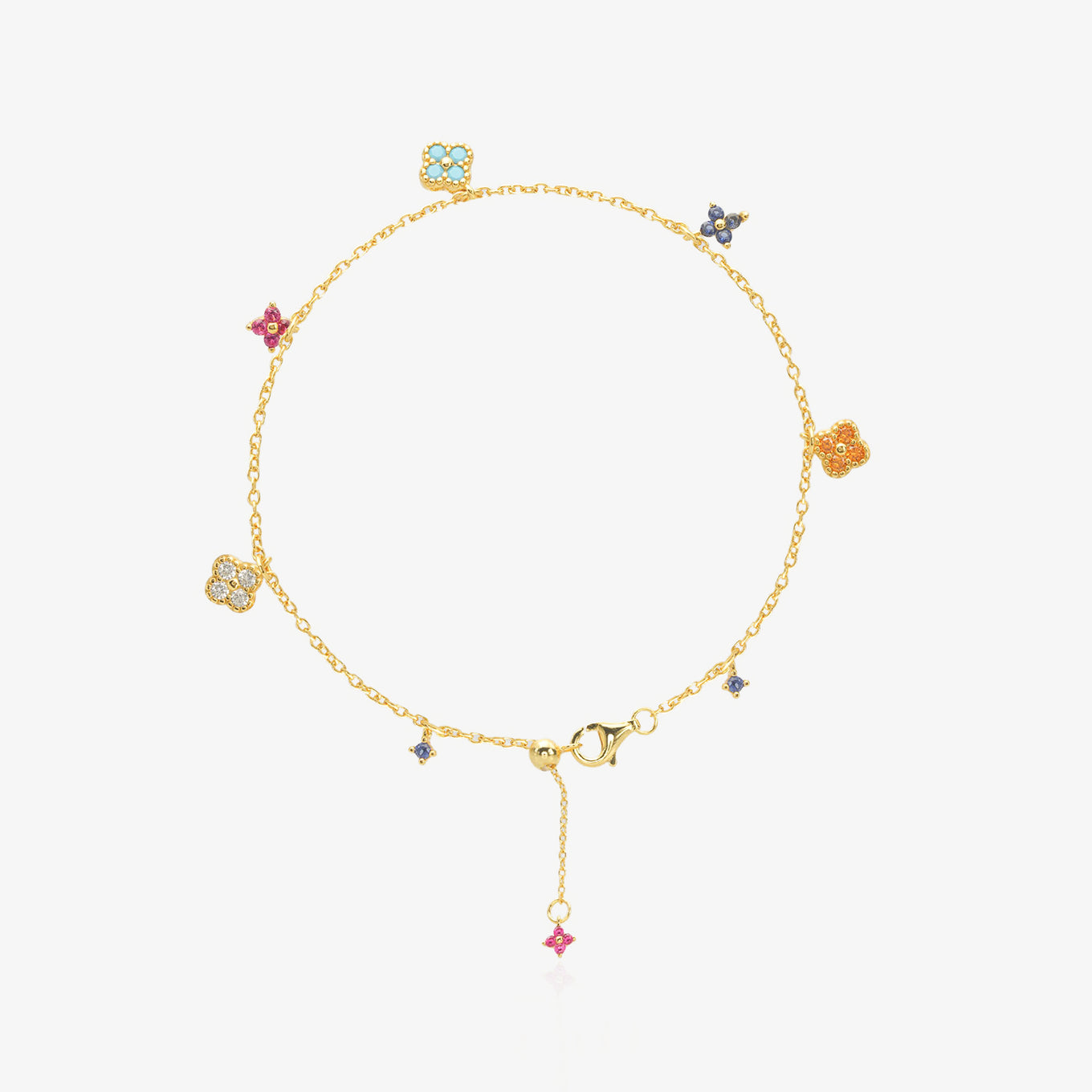
Papillon Chain Bracelet — For those who want the line-bracelet silhouette with a romantic twist. Micro-pavé butterfly stations alternate along a delicate gold chain — playful, not predictable.
Explore our full Bracelet Collection to discover more everyday luxury designs.
Frequently Asked Questions About Tennis Bracelets
Why is it called a tennis bracelet?
The name originates from Chris Evert's 1987 U.S. Open match. Her lab diamond line bracelet unclasped mid-point, and she famously asked officials to pause the match until the bracelet was recovered from the court. The televised moment gave the style its name — before 1987, it was simply called a "lab diamond line bracelet." Jewelers adopted "tennis bracelet" within weeks, and the term has been standard ever since.
How much should a quality tennis bracelet cost?
For natural diamond tennis bracelets, expect $3,000-$20,000+ depending on total carat weight, color, and clarity. For lab-diamond or high-carbon diamond simulant bracelets — which deliver identical visual impact — $80-$400 is reasonable for solid Ag925 sterling silver with genuine gold plating. Below $50, you're almost certainly getting mystery metal with glued stones that won't survive a month of daily wear. The metal base is the non-negotiable: sterling silver or don't bother.
Can I wear a tennis bracelet every day?
Yes — if the construction quality supports it. Key factors: (1) solid Ag925 sterling silver base with Premium 18K Gold Plating (not mystery alloy), (2) nickel-free certification for sensitive skin, (3) individually set stones (not glued), and (4) a secure double-locking clasp. Our ÉLARAMUSE bracelets meet all four criteria and are specifically tested for 24/7 wear including gym sessions and hand-washing.
For more on safe everyday metals, the American Academy of Dermatology offers guidance on nickel-free jewelry as the first line of defense against contact dermatitis.
Tennis bracelet vs bangle: which should I choose?
Tennis bracelets are flexible, articulated, and conform to your wrist — they feel like fabric. Bangles are rigid circles that slide over the hand and sit more loosely. Choose a tennis bracelet if you type, text, or use your hands extensively (the flexibility prevents laptop scratches and discomfort). Choose a bangle if you want a structured statement piece and don't mind occasional clinking against surfaces.
Stacking both together — bangle for structure, tennis bracelet for flow — is the editorial-stylist secret for a perfectly balanced wrist.
Do tennis bracelets go out of style?
The tennis bracelet has been in continuous demand since 1987 — 37 years and counting. Unlike trend-driven pieces that surge and fade, it occupies a unique position as both a classic (like pearl studs) and a status piece (like a Cartier Love bracelet). The style evolves through stone shapes, metal tones, and width preferences, but the fundamental concept — a flexible line of individually set stones — has never left the jewelry mainstream.
For more on the history and enduring appeal of classic jewelry styles, the Victoria & Albert Museum's jewelry collection documents centuries of design evolution.
A tennis bracelet isn't a purchase — it's a wrist strategy. One piece that works harder than three, sparkles through situations that would ruin costume jewelry, and earns more compliments than any other bracelet style in existence. Not because it's the loudest piece in the room, but because it's the one that makes people do a double-take — a flicker of light across a dinner table, a flash in a meeting, a tiny reminder on your own wrist that you showed up for yourself today.
Find the line that speaks your language.
What We Believe
We believe jewelry is not decoration - it is self-definition. Every piece we make must earn its place on your body: through material integrity (solid Ag925 cores, never hollow brass), through design intelligence (pieces that survive showers, sleep, and spontaneous decisions), and through a commitment to transparency that the jewelry industry has historically avoided. We do not chase trends. We build talismans for the captain of her own soul - pieces that feel like you, only more intentional.
References & Further Reading
- GIA — Diamond Quality Factors — Gemological Institute of America's official grading standards for gemstones and precious metals.
- FTC — Jewelry Guides — Federal Trade Commission regulations on precious metal marketing and jewelry disclosure standards.
- GIA — Simulant & Imitation Gem Guide — Educational resource on laboratory-created and simulated gemstones, including care and durability comparisons.
References
- GIA. Diamond Jewelry Guide. Gemological Institute of America.
- V&A. Tennis Bracelet Collection. V&A Collections.
- The Metropolitan Museum of Art. Tennis Bracelets. The Met Collection.