Pearl Necklace Guide 2026: Types, Lengths & How to Choose
✨ At a Glance: Your Pearl Necklace Quick Guide
A pearl necklace is a strand of pearls worn around the neck. Real pearls (freshwater, Akoya, Tahitian, South Sea) are formed by living mollusks. Freshwater pearls are the most affordable option; Akoya pearls are prized for mirror-like luster. The most versatile length is the Princess (17–19"), at the collarbone. To test authenticity, rub a pearl against your teeth — real pearls feel gritty. Pearls should be the last item you put on and the first you remove.
📖 In This Guide
- Types of Pearl Necklaces — Freshwater, Akoya, Tahitian, Baroque & More
- Pearl Necklace Lengths — Choker to Rope, Find Your Fit
- Real vs Fake Pearls: How to Tell
- How to Style a Pearl Necklace
- Pearl Necklace Meaning & Symbolism
- How to Care for Pearl Necklaces
- Editor's Picks from ÉLARAMUSE
- Frequently Asked Questions
References
Types of Pearl Necklaces: A Complete Breakdown
Not all pearl necklaces are created equal. The type of pearl — defined by the mollusk species, water environment, and cultivation method — determines a necklace's luster, surface quality, color, and price. Understanding pearl necklace types is the first step toward finding a strand you'll treasure for decades.
Freshwater Pearl Necklace: The Everyday Classic
Freshwater pearls are cultivated in freshwater mussels, primarily in lakes and rivers across China. A single mussel can produce up to 50 pearls, making freshwater pearl necklaces the most accessible genuine pearl option. Modern freshwater pearls offer remarkable luster and come in natural colors — white, cream, pink, lavender, and peach. They feature a soft, satiny glow rather than the sharp mirror finish of Akoya pearls, ideal for everyday wear and effortless layering.
Akoya Pearl Necklace: The Mirror of the Sea
Akoya pearls are saltwater pearls from Japan's coastal waters, cultivated in the Pinctada fucata oyster. Known for exceptional luster — a mirror-like brilliance — they are the classic round white pearls most envision in a traditional strand. Each Akoya pearl forms around a bead nucleus, yielding near-perfect spheres. Their signature rose or silver overtone makes them a perennial favorite for bridal jewelry and formal occasions.
Tahitian Pearl Necklace: The Dark Beauty
Cultivated in the black-lipped oyster (Pinctada margaritifera) in French Polynesia, Tahitian pearls are celebrated for their exotic dark colors — deep charcoal, peacock green, aubergine, and silver. These saltwater pearls are naturally large, typically measuring 8–14mm, and their bold, moody palette has made them a favorite among modern style icons who want a pearl necklace that defies tradition. A Tahitian pearl strand is a statement of sophisticated edge.
Baroque Pearl Necklace: Imperfectly Perfect
Baroque pearls are defined by their shape — irregular, non-spherical forms celebrating organic beauty. A baroque pearl necklace embraces asymmetry and individuality. These pearls can be freshwater or saltwater, each one unique. Their sculptural quality has captured contemporary designers and art lovers, moving pearl jewelry beyond uniform strands into wearable art. Baroque pearls prove perfection is not always round.
Mother of Pearl Necklace: Iridescent Elegance
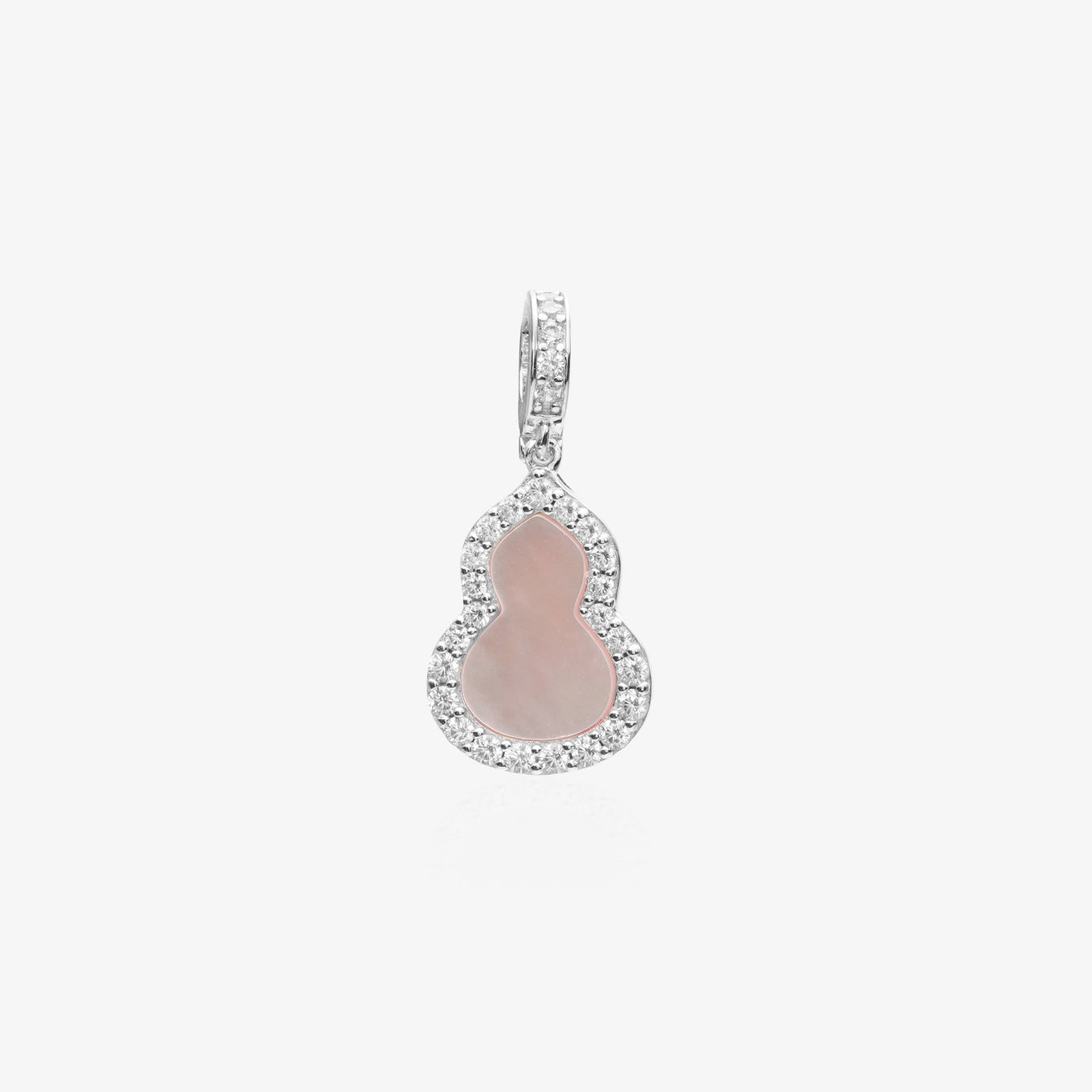
Technically not a pearl, mother of pearl (nacre) is the iridescent inner shell lining of mollusks — the same substance that forms pearls themselves. A mother of pearl necklace features carved or inlaid shell pieces that shimmer with rainbow-like iridescence. It offers the luminous beauty of pearls in a more sculptural, often more affordable form. Mother of pearl is particularly stunning in pendant designs, where larger flat surfaces can showcase its full play of color and light.
Cultured vs Natural Pearls: What You Need to Know
Nearly all pearls sold today are cultured pearls — formed when a small irritant is inserted into a mollusk, which coats it with layers of nacre. Natural pearls, formed without human assistance, are exceedingly rare. According to the GIA Pearl Guide, cultured pearls are genuine gems — sharing the same composition, structure, and beauty as natural pearls.
South Sea Pearl Necklace: The Ultimate Luxury
South Sea pearls are the largest and rarest cultured pearls, produced by the Pinctada maxima oyster in the warm waters of Australia, Indonesia, and the Philippines. Their thick nacre — often 2–4mm — gives them a unique satiny luster that seems to glow from within. Available in white, silver, and deep golden hues, South Sea pearl necklaces represent the pinnacle of pearl luxury and are often investment pieces passed down through generations.
Key Terms to Know
淡水珍珠 (Freshwater Pearl): Cultivated in freshwater mussels; most abundant pearl type.
Akoya: Saltwater pearls from Japan's Pinctada fucata oyster; known for sharp luster and round shape.
巴洛克 (Baroque): Irregularly shaped pearls valued for their one-of-a-kind organic forms.
有核养殖 (Bead-Nucleated): Cultured around a mother-of-pearl bead; typical of Akoya and South Sea.
无核养殖 (Tissue-Nucleated): Cultured using a piece of mantle tissue; typical of freshwater pearls.
光泽 (Luster): The quality and intensity of light reflected from the pearl's surface and inner layers.
珠层 (Nacre): The crystalline layers of calcium carbonate that mollusks secrete to form pearls.
Pearl Necklace Lengths: Your Complete Sizing Guide
Choosing the right pearl necklace length is just as important as selecting the right pearl type. Length determines where the necklace sits on your body, which necklines it complements, and what kind of statement it makes. Here is every standard length, decoded.
Collar (12–13"): The Regal Statement
A collar-length pearl necklace sits snugly against the middle of the neck. It is the most formal of all pearl lengths, historically associated with royalty and high-neck evening gowns. Collars work beautifully with strapless, off-the-shoulder, and boat-neck silhouettes. Wear it to black-tie events or whenever you want to channel polished, graceful authority.
Choker (14–16"): The Timeless Classic
Sitting at the base of the neck, the choker is the most iconic pearl necklace length. It frames the face beautifully and pairs effortlessly with V-necks, scoop necks, and open-collared shirts. A pearl choker conveys timeless sophistication — think Audrey Hepburn in Breakfast at Tiffany's. This length is ideal for women with slender necks and those seeking a versatile piece that transitions from day to evening.
Princess (17–19"): The Universal Favorite
The Princess length falls at or just below the collarbone and is widely considered the most versatile pearl necklace length. It complements almost every neckline — crew neck, collared blouse, sweetheart, and deep V alike. Because it sits at the same height as a standard pendant necklace, it layers effortlessly with other chains. If you own just one pearl necklace, make it a Princess length.
Matinee (20–24"): The Day-to-Evening Hero
Falling between the collarbone and the bust, the Matinee length is sophisticated without being overly formal. It pairs beautifully with high necklines and business attire, and can be doubled for a layered choker effect. A Matinee-length freshwater pearl necklace is a brilliant choice for professionals who want elegance that works from the boardroom to dinner.
Opera (28–36"): The Dramatic Choice
Opera-length pearl necklaces reach the breastbone or below, making a striking statement. This length can be worn as a single dramatic strand, doubled into a two-strand choker, or knotted for a vintage-inspired look. An opera-length strand in baroque pearls creates a particularly artistic silhouette. It is the go-to length for evening events, gallery openings, and moments that call for drama.
Rope (40"+): The Ultimate Versatility
Rope-length pearl necklaces extend beyond 40 inches and offer the most styling flexibility. A rope can be worn long and loose, doubled, tripled, or knotted in countless configurations. Coco Chanel famously layered multiple ropes of pearls to create her signature look. For the maximalist at heart, a rope-length strand is an entire jewelry wardrobe in one piece.
Real vs Fake Pearls: How to Tell the Difference
With imitation pearls becoming increasingly sophisticated, knowing how to distinguish real from fake is an essential skill for any jewelry lover. Genuine pearls — whether natural or cultured — have distinctive physical properties that no artificial material can precisely replicate. Here are the most reliable tests, endorsed by gemological authorities.
The Tooth Test (Most Reliable)
Gently rub a pearl against the edge of your front teeth. Real pearls feel slightly gritty — the microscopic layers of nacre at work. Imitation pearls feel smooth, like glass. The American Gem Society recommends this tactile test as one of the most reliable authenticity checks. A loupe reveals the textured surface of real pearls versus the perfect skin of fakes.
The Luster Test
Real pearls exhibit deep, multi-dimensional luster — light seems to come from within the pearl, with a soft inner glow that shifts as you turn it. Imitation pearls typically have a flat, glassy shine that sits only on the surface. Under close inspection, real pearls also display subtle variations in color and overtone around the surface, while fakes appear uniformly perfect. The GIA notes that luster is the single most important factor in evaluating pearl quality.
Temperature & Weight Test
Real pearls feel cool to the touch and gradually warm against the skin — much like marble or jade. Imitation pearls typically feel room temperature immediately. Real pearls also have a noticeable weight to them; they are denser than plastic beads. When you hold a strand of genuine cultured pearls, there is a satisfying heft that counterfeit pieces simply cannot match.
Surface Inspection
Real pearls are organic gems, which means they will almost always show minor surface characteristics — slight dimples, ridges, or irregular nacre layering visible under magnification. A strand of pearls that looks absolutely flawless to the naked eye under every lighting condition is almost certainly imitation. These tiny "imperfections" are nature's signature and part of what makes each real pearl unique.
How to Style a Pearl Necklace: Modern Looks for Every Occasion
The pearl necklace shed its "grandmother's jewelry box" reputation years ago. Today, how to style a pearl necklace (and how to style pearl necklace collections in general) is a question with endlessly creative answers — from minimalist layering to bold statement looks. The key is treating pearls as a versatile design element rather than a formal relic.
Casual Daywear: Pearls Meet Denim
A single strand of small freshwater pearls (5–7mm) worn with a white t-shirt and jeans is the ultimate effortless-chic combination. The contrast between the organic warmth of pearls and the utilitarian texture of denim creates visual interest without trying too hard. Add a leather jacket for edge, or a linen blazer for polished casual. This is how modern women are wearing pearls every single day.
Layering: The Art of the Pearl Stack
Layering multiple pearl necklaces of different lengths is the styling technique that defines contemporary pearl fashion. Start with a choker (14–16") as your anchor, add a Princess-length strand, then finish with a Matinee or longer pendant. Mix pearl sizes — tiny seed pearls with a bold baroque pearl pendant creates dynamic contrast. Mix metals too: a pearl necklace paired with a slim gold chain adds warmth and modernity.
Evening & Formal: Pearls After Dark
For formal occasions, a classic Akoya princess strand remains unmatched in its elegance. Pair it with a strapless gown or deep V-neck to let the pearls sit perfectly against bare skin. For a more contemporary formal look, a single Tahitian pearl pendant on a delicate gold chain makes a dark, romantic statement. Baroque pearls with sculptural gold settings are increasingly seen on red carpets, proving pearls have fully entered the world of high fashion.
Office-Ready: Pearls as Professional Armor
A Matinee-length pearl necklace over a silk blouse or tailored blazer projects competence and polish. Choose pearls with a soft luster — not overly shiny — for daytime professionalism. Mother of pearl pendants bring a subtle iridescent glow that reads as creative rather than conservative. The right pearl necklace in a professional setting signals attention to detail and quiet confidence.
Pearl Necklace Meaning & Symbolism: More Than a Beautiful Strand
Pearls carry a depth of meaning that few other gems can match. Across cultures and centuries, the pearl necklace meaning has been layered with symbolism — from purity and wisdom to love and resilience. Understanding these associations adds emotional depth to the act of wearing pearls.
Historical Symbolism: Tears of the Gods
In ancient mythology, pearls were believed to be the tears of gods, fallen from the heavens into the sea. In Chinese tradition, pearls symbolized wisdom, spiritual energy, and protection — often placed in the mouths of the deceased to guide them in the afterlife. In Hindu culture, pearls are associated with the moon and represent purity, love, and marital harmony. The ancient Romans reserved pearls for the highest ranks of society, making them the ultimate status symbol.
Modern Symbolism: Elegance, Wisdom & Milestones
Today, pearls represent timeless elegance and inner wisdom — qualities that deepen with age, like the nacre layers that build a pearl. Pearls are the traditional gift for the 30th wedding anniversary, symbolizing beauty born from decades of shared experience. They are also the birthstone for June. In modern symbolism, pearls represent quiet strength — the kind that forms under pressure, layer by layer, into something luminous.
How to Care for Pearl Necklaces: Preserve the Luster for Generations
Pearls are organic gems — softer and more delicate than diamonds or sapphires. With the right care, a pearl necklace can last for generations, becoming an heirloom passed from mother to daughter. Here is everything you need to know about protecting your investment.
The Golden Rule: Last On, First Off
Pearls should be the last accessory you put on and the first one you take off. Perfume, hairspray, body lotion, and makeup all contain chemicals that can dull the nacre over time. Apply all your beauty products first, let them dry completely, then put on your pearl necklace. At the end of the day, remove your pearls before anything else and gently wipe them with a soft, lint-free cloth to remove any body oils or residue.
How to Clean a Pearl Necklace
Clean your pearls only when necessary — and always gently. Use a soft, damp cloth (water only — never soap, detergent, or jewelry cleaner) and wipe each pearl individually. Never submerge a pearl necklace in water, as this can weaken the silk thread. After cleaning, lay the strand flat on a soft towel to air-dry completely before storing. Never use ultrasonic cleaners, steam cleaners, or abrasive cloths on pearls.
Storage: Give Them Room to Breathe
Store pearl necklaces flat in a soft pouch or a fabric-lined jewelry compartment — never hanging, which stretches silk thread. Pearls need humidity to maintain luster, so avoid airtight containers. Keep pearls separate from harder gems to prevent scratching.
If you wear your pearls frequently, the V&A Museum recommends restringing every 1–2 years, as silk thread naturally stretches and weakens with wear.
When to Restring & Professional Care
If the knots between your pearls have become dirty, discolored, or frayed, or if you notice the thread stretching (visible gaps between pearls), it is time for professional restringing. A skilled jeweler will typically use silk thread with a knot between each pearl — a technique that not only protects the pearls from rubbing against each other but also prevents all pearls from scattering if the strand breaks. Consider having your pearl necklace professionally inspected annually.
Editor's Picks: Pearl Necklaces & Jewelry from ÉLARAMUSE
Each ÉLARAMUSE pearl piece is designed to honor the natural beauty of pearls through artistic gold settings. Here are our editors' favorite pearl necklaces and coordinating pieces — every one a celebration of craftsmanship and organic elegance.

Woven Pearl Necklace — French Pastoral Basket
A miniature gold basket pendant filled with lustrous pearls and accented with diamonds. Inspired by French countryside markets, this piece merges cottagecore charm with fine jewelry craftsmanship. The perfect conversation-starting freshwater pearl necklace for romantic souls.

Gold Ginkgo Leaf Necklace — Aphrodite Pearl Heart
A textured heart pendant cradling a single luminous pearl, paired with ginkgo leaf motifs symbolizing resilience and hope. This necklace captures the essence of modern romance — botanical, sculptural, and deeply personal. A poetic baroque pearl-inspired silhouette with botanical detail.

Reversible Clover Necklace — Pink Mother of Pearl
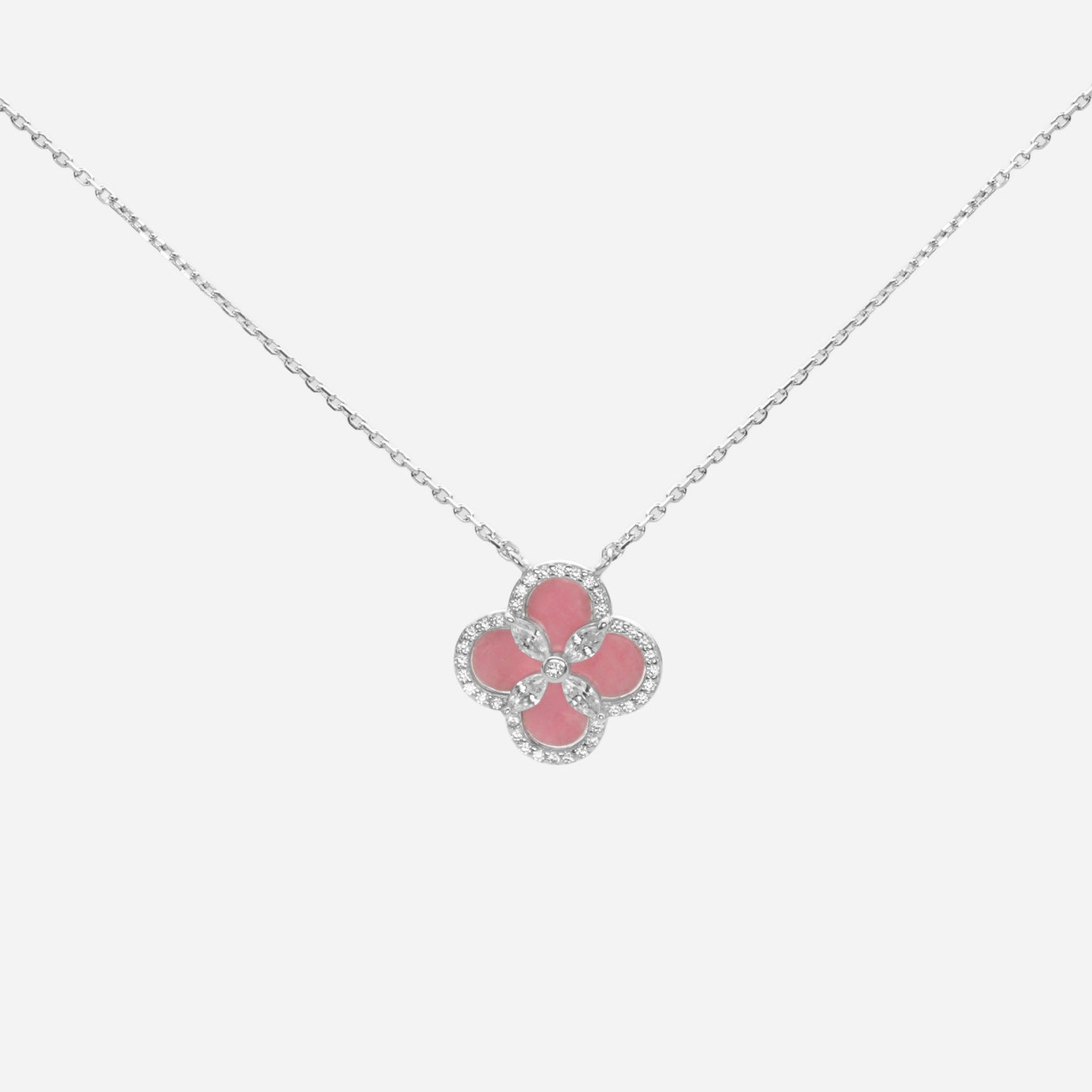
A showstopping mother of pearl necklace featuring a reversible clover design with a lab diamond halo. Wear the luminous pink mother of pearl side for soft, feminine glow, or flip to the diamond-studded side for maximum sparkle. Two necklaces in one, perfect for the woman who loves versatility and meaningful symbols — the clover represents luck and love in a single elegant motif.

Venus Scallop Shell Diamond Pendant — Ocean Pearl
Inspired by Botticelli's The Birth of Venus, this sculptural pendant captures the moment the goddess rises from the sea. A luminous pearl nestles within a gold scallop shell, accented with a lab diamond drop. A wearable piece of art history — for the woman who sees jewelry as storytelling.

Treasure Knot Pearl Ring — Pearl Statement Ring
A majestic pearl ring featuring criss-crossing diamond bands that wrap around a large, luminous pearl. Perfect as a pearl necklace companion — wear it on the same hand for a coordinated pearl moment, or as a striking standalone statement. An ideal 30th anniversary gift that celebrates enduring love.
Frequently Asked Questions About Pearl Necklaces
What is a pearl necklace? Are pearls real?
A pearl necklace is a strand of pearls worn around the neck. Pearls can be genuine (natural or cultured, formed by mollusks) or imitation (glass, plastic, or coated materials). Nearly all pearls sold today are cultured pearls — real pearls grown with human assistance. They are chemically identical to natural pearls. Cultured pearls are certified as genuine gemstones by the GIA.
How do I tell if pearls are real?
The most reliable at-home test is the tooth test: gently rub the pearl against the edge of your front teeth. Real pearls feel slightly gritty or sandy due to microscopic nacre layers; imitation pearls feel perfectly smooth. You can also check for subtle surface irregularities under magnification, feel the cool initial temperature against your skin, and inspect the drill holes (real pearls show layered nacre at the edges). When in doubt, consult a professional gemologist.
What length pearl necklace should I buy?
If you are buying your first pearl necklace, the Princess length (17–19") is the universal recommendation. It sits at the collarbone and complements virtually every neckline. For a more contemporary, layered look, choose a Choker (14–16"). For maximum versatility, a Matinee length (20–24") can be doubled for two different looks. Consider your height, neck size, and the necklines you wear most often when choosing.
How do I clean a pearl necklace?
Clean pearls gently with a soft, slightly damp cloth after each wear to remove body oils and residue. Use water only — never soap, detergent, or commercial jewelry cleaner. Wipe each pearl individually and lay the strand flat to air-dry completely before storing. Never submerge the necklace in water (it weakens the silk thread) and never use ultrasonic or steam cleaners. For deeper cleaning, take your pearls to a professional jeweler.
Can I wear a pearl necklace every day?
Yes, with proper care. Freshwater pearls and smaller pearl sizes (5–7mm) are durable enough for daily wear and actually benefit from the natural oils your skin produces, which help maintain luster. Follow the "last on, first off" rule — apply all beauty products before putting on your pearls, and remove them first at the end of the day. Wipe them down after each wear and store them flat. Have the strand restrung annually if you wear it frequently.
What is the difference between freshwater and Akoya pearls?
Freshwater pearls are cultivated in mussels in lakes and rivers (primarily China), while Akoya pearls come from saltwater oysters in Japan. Freshwater pearls are tissue-nucleated — almost entirely solid nacre — with a soft, satiny luster and wide color range. Akoya pearls are bead-nucleated, yielding rounder shapes with sharper, mirror-like luster. Freshwater pearls are more affordable; Akoya pearls command higher prices for exceptional roundness and brilliance.
We Believe
At ÉLARAMUSE, we believe pearls are not just gems — they are quiet miracles of nature, formed layer by layer through patience and resilience. Each pearl in our collection is chosen for its unique luster and character, then set into designs that honor both its organic origin and the woman who will wear it. We create jewelry for those who see beauty in the imperfect, strength in the delicate, and meaning in every detail.
Explore more at elaramuse.com