Table of Contents
Quick Answer: Opal is the October birthstone — a mesmerizing gemstone famous for its play-of-color, where flashes of rainbow fire shift as the stone moves. It's softer than most gemstones at Mohs 5.5–6.5 and needs mindful care, but rewards you with a kaleidoscopic display no other gem can match.
What Is Opal? — October's Kaleidoscope Birthstone
Opal isn't like other gemstones. Most gems are crystals — orderly arrangements of atoms that produce a single color. Opal is amorphous silica — microscopic spheres of silicon dioxide stacked like marbles in a jar. When the spheres are uniform in size and regularly packed, they diffract light into rainbow flashes that shift as you tilt the stone. That's play-of-color. That's the magic. That's why ancient Romans believed opal contained the beauty of every gemstone combined.
According to the GIA, opal contains 3% to 21% water trapped within its silica structure — which is why sudden temperature swings can crack an opal. Australia produces roughly 95% of the world's precious opal, with Coober Pedy, Lightning Ridge, and Queensland fields accounting for the majority. Ethiopian opal, a more recent discovery, has expanded the market with affordable hydrophane material that behaves differently from classic Australian opal.
But here's a question worth asking: if opal is so delicate, why has it been treasured for over 2,000 years? The answer is simple — there's nothing else like it. A fine opal contains an entire galaxy of color in a single stone. Sapphire is beautiful. Emerald is regal. But opal is unrepeatable. Every stone is a one-of-a-kind event, frozen in silica.
Types of Opal: White, Black, Fire & Boulder
Not all opal is created equal. The type determines everything about appearance, durability, and price:
White Opal
The most common precious opal — milky white body color with play-of-color visible against the pale background. Coober Pedy white opal is the workhorse: affordable, abundant, and genuinely beautiful. If you're buying your first opal piece, white opal is the smartest place to start.
Black Opal
The holy grail. Dark gray to jet-black body color that makes play-of-color explode with contrast — neon lightning on a midnight sky. Lightning Ridge black opal is the world's most coveted, with top specimens exceeding $10,000 per carat. This is collector territory. Black opal doesn't whisper; it commands attention.
Fire Opal
Mexican fire opal ranges from yellow to deep orange-red, with some specimens showing play-of-color and others glowing with warm body color alone. Unlike traditional opal, where white or black body color is the canvas, fire opal turns the entire stone into a warm ember that happens to throw sparks. It's sunny, tropical, and reads more like citrine until you catch the rainbow flash.
Boulder Opal
Thin veins of precious opal naturally bonded to ironstone host rock from Queensland. Boulder opal is more durable than solid opal — the ironstone provides structural support, and the thin opal layer concentrates play-of-color. The contrast between dark ironstone and opal veins creates a dramatic, organic look.
Crystal Opal
Transparent to semi-transparent opal with play-of-color visible inside the stone like trapped light. From Lightning Ridge and Coober Pedy. You're not looking at a surface — you're looking into the depth of the gem, watching color move through a three-dimensional space.
Opal Meaning, History & Symbolism
Opal has one of the most volatile reputations in gemstone history. In ancient Rome, it was the ultimate lucky stone — Pliny the Elder wrote that a single opal could combine the fire of garnet, the purple of amethyst, and the green of emerald. Senator Nonius chose exile over surrendering his opal ring to Mark Antony. But in 1829, Sir Walter Scott's novel Anne of Geierstein featured a cursed opal that drained its wearer's life force — and European opal sales collapsed for decades.
Today, opal is associated with creativity, spontaneity, and emotional amplification — the stone of artists, writers, and anyone who values inspiration over routine. In crystal practice, opal is believed to intensify emotions and bring buried feelings to the surface. Which prompts a fair question: are you ready to wear something that amplifies who you already are?
Birthstone Context: Opal is the traditional birthstone for October, alongside tourmaline. It's also the 14th wedding anniversary gemstone. With October being peak autumn, opal's fire-and-ice palette fits the season perfectly — falling leaves, bonfires, and the first frost caught in a single gem.
How to Judge Opal Quality
Opal quality rests on four factors entirely different from diamond grading:
Play-of-Color: This is everything. Look for brightness first — can you see the color flashes from across a room? Then pattern — broad flashes (harlequin) are most prized, followed by rolling flash and pinfire. Finally color range: opals that flash red are most valuable, with blue and green being most common.
Body Color: Darker body color usually means higher value — because the dark background makes play-of-color pop. Black opal commands the highest prices, followed by dark crystal, then white opal. All else equal, the same play-of-color on a black background is worth multiples of white.
Transparency: Crystal opal that lets you see into the stone adds depth to play-of-color. Opaque opals can still be beautiful, but transparency generally adds value — it's a third dimension of visual complexity.
Cut & Shape: Most opals are cut as cabochons (domed) — a smooth dome displays play-of-color best. Freeform shapes are common because cutters follow the opal vein to preserve color. A perfectly symmetrical cabochon with strong color commands a premium.
How to Style Opal Jewelry with Gold
Opal and gold is a pairing that makes both elements stronger. Gold frames opal's cool, ethereal color play with warmth — it anchors the rainbow flashes so they feel intentional rather than chaotic. If pearls are classical music, opals in gold are jazz — structured but unpredictable, elegant but alive.
Opal Pendants & Necklaces
An opal pendant on a fine gold chain is the best entry point for opal newcomers. The stone sits close to the chest, catching light as you move. Pair it with a rock crystal cage necklace for layered texture — the transparent crystal echoes opal's depth while gold ties everything together.
Opal Rings — The Honest Truth
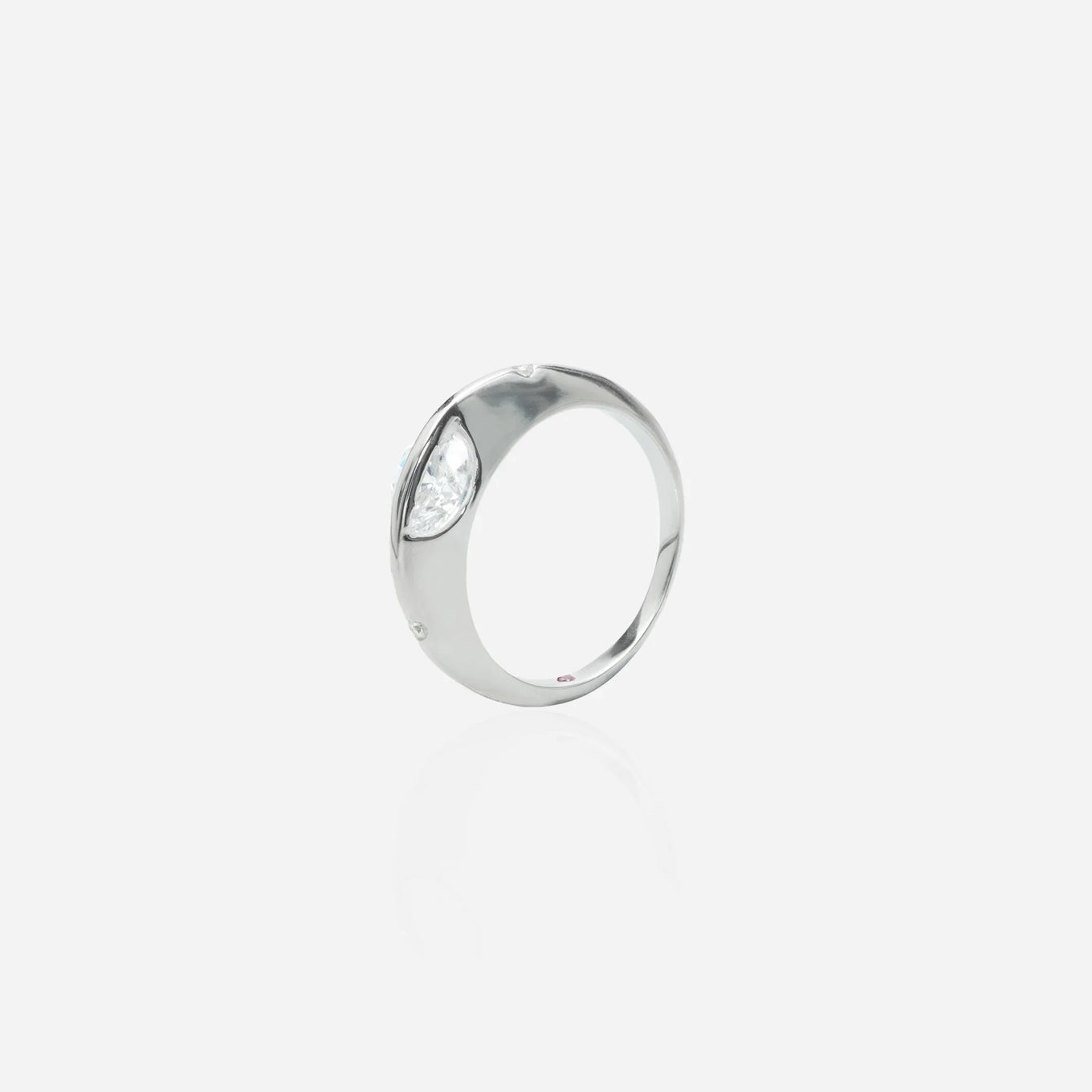
I'll be direct: opal engagement rings are risky. At Mohs 5.5–6.5, opal scratches more easily than quartz. Unlike diamond or sapphire, which shrug off daily bumps, opal requires genuine mindfulness — remove it for dishes, gardening, and gym sessions. An opal cocktail ring for special occasions is a different equation. A protective bezel paired with an architectural wide gold band elevates opal from fragile to intentional.
Opal Earrings & Bracelets
Earrings and pendants are opal's safest applications — they receive far less impact than rings. Small opal studs bring iridescent personality without the anxiety of ring-level wear. For the wrist, a drusy-textured cuff ring captures the scattered-light aesthetic of opal in a durable format. Unlike a delicate opal that demands kid gloves, drusy and crystal pieces at ÉLARAMUSE are genuinely shower-safe and tarnish-resistant — same visual DNA, zero anxiety.
Opal Care: The Honest Truth About Durability
Opal is soft (Mohs 5.5–6.5), contains water, and dislikes extreme dryness. But it's not as fragile as its reputation suggests if you follow these rules:
- Avoid ultrasonic and steam cleaners. The vibrations and heat can crack opal instantly. Just warm water, mild soap, and a soft cloth.
- Don't store opals in a safe deposit box or hot attic. Extreme dryness can cause crazing — fine cracks that ruin the stone. Store with a slightly damp cloth nearby in dry climates.
- Accept occasional wear. Opal rings will show fine surface scratches over decades of daily use. This is patina, not damage — the stone is living alongside you.
Ethiopian opal requires special caution. It's hydrophane — it absorbs water and can temporarily change appearance when wet, as documented by the GIA's opal quality factors guide. Sweat, lotion, or humid weather can alter its color temporarily.
At ÉLARAMUSE, we recommend Australian opal for jewelry that's meant to be worn, precisely because it's more stable. A beautiful gemstone that can't survive real life isn't jewelry — it's a museum piece.
The ÉLARAMUSE Standard — Jewelry Built for Real Life
"We believe jewelry should be worn, not stored. Every ÉLARAMUSE piece combines Ag925 sterling silver with 0.5-micron 18K gold plating — shower-safe, sweat-proof, and hypoallergenic. Whether you're pairing diamonds, crystals, or opals, the setting should work as hard as you do."
| Feature | Specification |
|---|---|
| Base Metal | Solid Ag925 Sterling Silver |
| Plating | 0.5-micron 18K gold plating |
| Safety | 100% Nickel-Free, Hypoallergenic |
| Durability | Water-resistant, Tarnish-resistant |
| Design Philosophy | Everyday talismans built for real life |
Behind the Design — Finding Opal's Magic in Durable Form
I'm fascinated by opal, but I'll be the first to admit it's not the most practical gemstone for daily wear. That's actually part of its draw — there's something compelling about a gem that asks you to slow down and pay attention. The first time I saw a Lightning Ridge black opal under a halogen lamp, the play-of-color literally stopped me mid-sentence — crimson, then electric green, then deep violet, all from the same stone within a single breath.
At ÉLARAMUSE, we don't currently work with opal — but we absolutely work with its aesthetic. Unlike opal, which fears impact and dryness, our drusy-textured pieces and faceted crystals deliver that same scattered-light thrill with zero fragility. A drusy surface splits light into a dozen directions, creating an opal-adjacent effect without the anxiety. We design our pieces to capture what makes gemstones magical — the way light shifts and reveals something new — in materials that can genuinely handle your Tuesday.
Editor's Picks — Opal-Adjacent Pieces from ÉLARAMUSE
These pieces channel opal's iridescent magic in durable, real-life-ready formats:
- Drusy Pebble Cuff Ring — Organic drusy crystal scatters light like opal's play-of-color, at Mohs 7 with zero water sensitivity.
- Crystal Cage Necklace — Transparent rock crystal pendant with depth and light play echoing white crystal opal.
- Mirrored Crystal Ring — Halo cocktail ring with faceted crystal throwing brilliant rainbows — same "wow" moment as opal.
- Solaris Dome Ring — Sunburst dome radiating light-catching facets inspired by opal's energy, built for daily wear.
FAQ: Opal Jewelry Questions
Is opal too soft for daily wear?
For earrings and pendants, opal is fine for daily wear — these positions receive minimal impact. For rings worn every day, remove during manual work or gym. At Mohs 5.5–6.5, ring opals will show surface wear over years. Some embrace this patina; if that's not you, choose sapphire or diamond for daily rings.
Can I shower with opal jewelry?
No. Opal contains water and can absorb more, which temporarily changes appearance. Australian opal is more stable than Ethiopian, but neither should be worn showering, swimming, or washing dishes.
Australian vs Ethiopian opal — what's the difference?
Australian opal (Coober Pedy, Lightning Ridge) is generally non-hydrophane — it doesn't absorb water and is more stable. Ethiopian opal is often hydrophane and can turn temporarily transparent or cloudy with sweat or lotion. Unlike Australian opal, which maintains consistent appearance regardless of humidity, Ethiopian opal can change visually throughout the day. For worn jewelry, Australian opal is the safer investment.
How can I tell if my opal is real?
Real opal has organic color patterns that shift naturally as you tilt the stone — no two angles look exactly the same. Common imitations include opalite (glass), synthetic opal (lab-grown with regular color columns), and doublets/triplets (thin opal slice glued to backing). If the color pattern looks too regular — uniform columns or a perfect honeycomb — it's likely synthetic. A gemological lab report is the most reliable verification.
Can opal be repaired if it cracks?
No. Once opal crazes or cracks, the damage is permanent. Opal cannot be reheated, repolished, or repaired. This is the fundamental trade-off: irreplaceable beauty paired with irreversible fragility. Treat your opal well from day one — it's not forgiving, but it's worth the effort.
Wear the Unrepeatable
Opal is a paradox — fragile yet irreplaceable, ancient yet futuristic, a single stone that contains every color. It asks more of its wearer than most gems: more care, more attention, more appreciation for the fleeting. But if you value uniqueness over ubiquity, if you'd rather own one strange and beautiful thing than ten interchangeable things, opal might be your gemstone.
Whether you're an October baby, celebrating 14 years, or simply drawn to the only gemstone that refuses to be categorized, opal jewelry is a talisman of creative courage. It reminds you — every time the light shifts — that the most beautiful things in life don't follow the rules. Be your own muse. Wear the stone nobody else can replicate.
✦