Lotus Flower Jewelry Meaning Guide 2026: Symbolism, Styling & Pure Gold Elegance
A lotus flower necklace or pair of lotus studs isn't just a botanical accessory — it's one of humanity's oldest symbols of spiritual metamorphosis, worn daily by millions who seek meaning beyond metal. Whether you're drawn to the lotus for its Buddhist serenity, its Egyptian rebirth mythology, or simply its sculptural beauty in gold, this guide covers everything from thousand-year-old temple carvings to 2026's most wearable lotus jewelry silhouettes.
📖 Quick Answer: What Does Lotus Flower Jewelry Symbolize?
- Purity & Rebirth — The lotus rises pristine from murky water, making it the universal emblem of spiritual awakening and fresh starts.
- Enlightenment — In Buddhism, the lotus represents the soul's journey from ignorance to wisdom (the mud to the bloom).
- Divine Beauty — In Hinduism, goddess Lakshmi stands on a lotus; the flower symbolizes prosperity, fertility, and eternal grace.
- Resilience — A lotus closes at night and reopens at dawn — a perfect metaphor for personal endurance and quiet strength.
- Good Fortune — In Chinese culture, the lotus (荷花, héhuā) represents harmony, purity, and continuous blessings.
Bottom line: Wearing lotus jewelry is a deliberate daily ritual — a talisman of becoming rather than just being.
📑 In This Guide
- Lotus Flower Symbolism Across 5 Cultures
- Lotus Color Meanings: Pink, White, Blue & Gold
- Lotus Jewelry Styles: Necklaces, Earrings, Rings & Bracelets
- How to Style Lotus Jewelry: 3 Everyday Scene Maps
- Behind the Design: Why We Created Our Lotus-Inspired Collection
- ÉLARAMUSE Standard: What to Look for in Quality Lotus Jewelry
- FAQ: Lotus Jewelry Questions, Answered
Lotus Flower Symbolism Across 5 Cultures
The lotus isn't just pretty — it's archaeologically documented as a sacred symbol spanning at least 5,000 years across three continents. Its unique biology (a flower that submerges at night and rises clean each morning) made it irresistible to ancient storytellers.
Cultural Symbolism at a Glance
| Culture | Lotus Meaning | Key Deity / Concept | Jewelry Application |
|---|---|---|---|
| Ancient Egypt | Rebirth, creation, the sun | Nefertem (lotus-born sun god) | Blue lotus motifs on gold amulets; open-lotus pendants |
| Buddhism | Purity, enlightenment, detachment | Buddha seated on lotus throne | Minimalist lotus pendants for meditation & mindfulness |
| Hinduism | Divine beauty, prosperity, creation | Lakshmi, Brahma, Vishnu | Ornate lotus rings & multi-petal statement pieces |
| Chinese Culture | Harmony, purity, continuous blessings | 荷花 (héhuā) — noble character | Gold lotus earrings as wedding & prosperity gifts |
| Yoga & Modern Spiritual | Chakra alignment, inner peace, self-growth | 7-chakra lotus (Sahasrara crown chakra) | Lotus stud earrings as daily grounding talisman |
Why the Lotus Beats Other Floral Motifs
Unlike a rose — which primarily signals romantic love — the lotus carries layered meaning that works across contexts: wear it to a business meeting (resilience), a yoga class (spiritual grounding), or a dinner date (divine beauty). Unlike a lily — which tilts heavily toward funereal associations in Western culture — the lotus is universally optimistic without being saccharine. A ginkgo leaf may symbolize endurance, but only the lotus carries the full arc from darkness to light: mud, stem, bloom, enlightenment.
Lotus Color Meanings: The Full Spectrum for Jewelry Lovers
Every lotus hue carries a distinct message. Choosing the right color in your jewelry is like selecting the right stone for the right intention.
| Lotus Color | Symbolism | Best For | Metal Pairing |
|---|---|---|---|
| Pink Lotus | Supreme lotus; Buddha's own flower; compassion, divine love | Spiritual seekers, self-love rituals, meaningful gifts | Rose gold or 18K yellow gold |
| White Lotus | Purity of mind, spiritual perfection, Bodhi (awakening) | Meditation practitioners, new beginnings, bridal jewelry | White gold or sterling silver |
| Blue Lotus | Wisdom, knowledge, victory over senses; rare ancient Egyptian motif | Intellectuals, artists, those starting a new chapter | Yellow gold with blue enamel or lapis accents |
| Purple Lotus | Mysticism, the Eightfold Path, spiritual royalty | Advanced practitioners, unique statement jewelry | Yellow gold with amethyst |
| Gold Lotus | Achievement, enlightenment attained, total fulfillment | Milestone celebrations, graduation, promotion gifts | 18K gold or high-polish gold-plated S925 |
"Gold is the metal of the lotus at dawn. When we design a lotus piece, we don't ask 'what shape looks right' — we ask 'what would it feel like to open, petal by petal, toward the sun?' That's why every lotus curve in our collection has a deliberate upward sweep."
— ÉLARAMUSE Design Studio
Lotus Jewelry Styles: Find Your Perfect Silhouette
Lotus Pendant Necklaces
The lotus pendant is far and away the most popular form of lotus jewelry — and for good reason. Worn near the heart, a lotus necklace functions as a constant reminder of inner calm. The Metropolitan Museum of Art holds Egyptian lotus amulets dating to 1550 BCE, proving this style has literally millennia of precedent. For 2026, look for open-petal silhouettes rather than flat stamped discs — the dimensionality catches light in ways that elevate a simple chain.
Lotus Stud & Drop Earrings
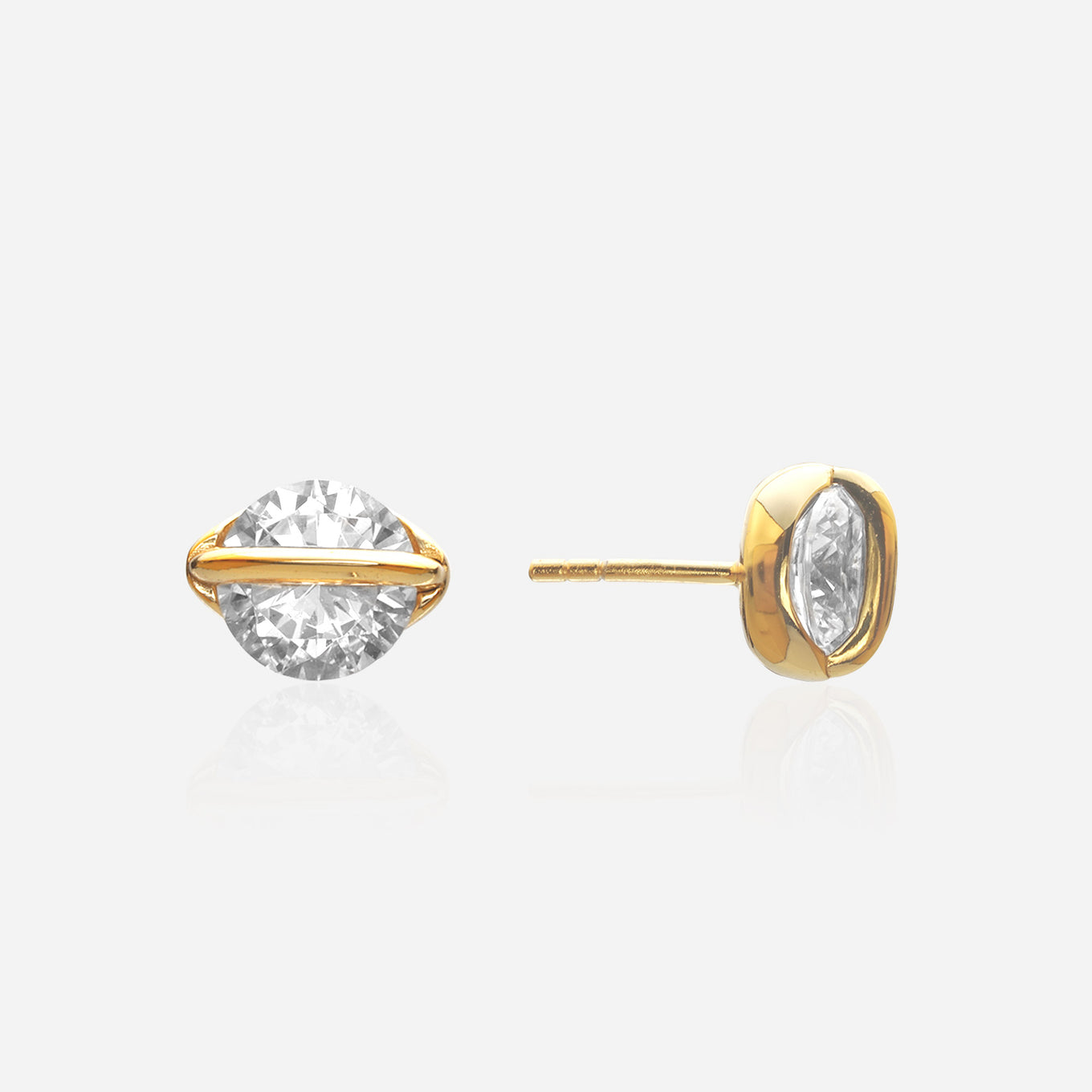
Lotus earrings sit at eye level and make the strongest statement-per-square-inch of any lotus jewelry type. Studs telegraph quiet confidence; drop earrings with articulated petals bring movement to the lotus metaphor. Pair a gold lotus stud with a second piercing for a curated ear that tells a story. Pro tip: Lotus earrings are especially flattering on round and heart-shaped faces — the upward petal sweep elongates visually.
Lotus Rings
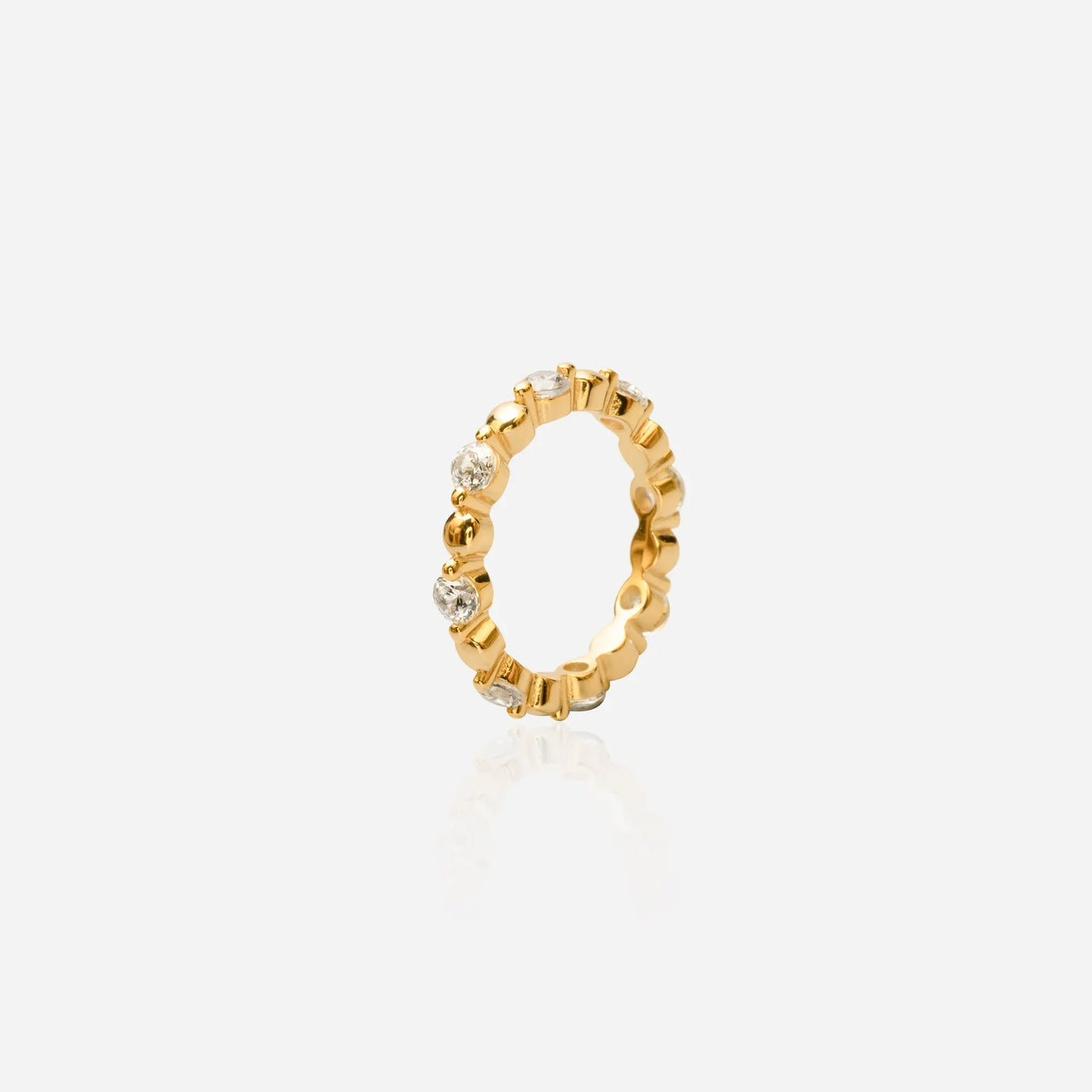
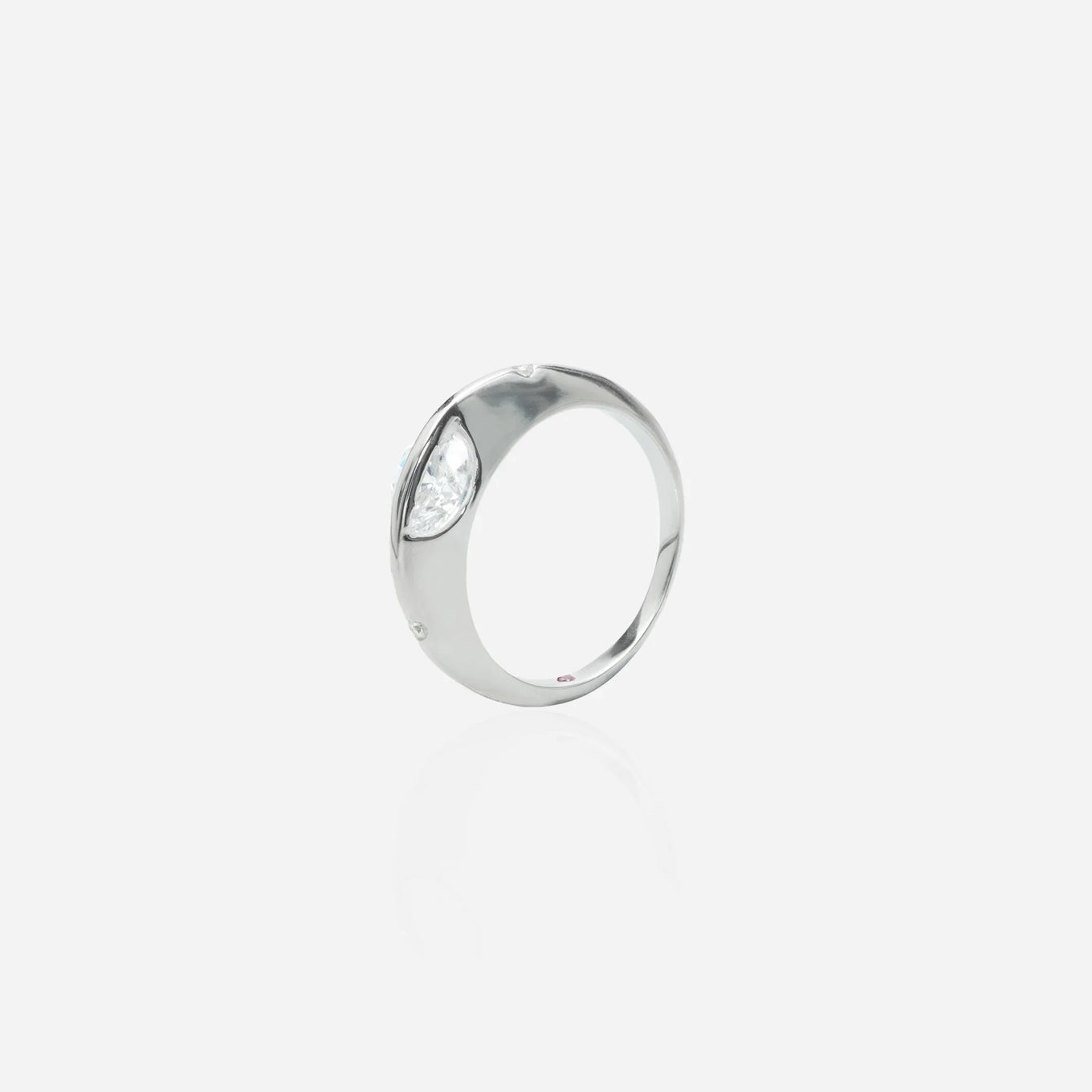
A lotus ring worn on the index finger is said to strengthen personal authority (mudrā tradition in yoga). Worn on the ring finger, it signals a commitment — whether to a partner, a personal vow, or a spiritual path. Unlike a typical floral ring that reads purely decorative, a lotus ring carries intentional weight: every time you glance at your hand, you're reminded of the journey upward.
Lotus Bracelets & Bangles
Lotus cuff bracelets — particularly open-cuff styles — mirror the unfurling of a lotus petal. The wrapping motion of putting one on echoes the meditation practice of intentionality. Unlike charm bracelets that accumulate meaning externally, a lotus bangle is meaning baked into the form itself.
How to Style Lotus Jewelry: 3 Everyday Scene Maps
The lotus symbol isn't just for yoga studios — it's one of the most versatile motifs in jewelry. Here's how to wear it across your actual life, not a stylist's fantasy.
Scene 1: The 9-to-5 Power Lotus
Scenario: You have a quarterly review at 10am, a client lunch at noon, and need jewelry that reads "competent and composed" without screaming.
The move: A single gold lotus pendant necklace on a fine chain (16-18"), layered with nothing else. Paired with a structured blazer, it sits precisely at the collarbone — visible enough to be noticed, subtle enough to be professional. Skip the lotus earrings here; let one lotus do the talking.
Why it works: The lotus's association with clarity and rising above mud maps perfectly onto a high-stakes professional day. You're literally wearing composure.
Scene 2: The Weekend Wind-Down Lotus
Scenario: Saturday brunch, farmer's market, maybe a bookstore. You want jewelry that's present but effortless — the opposite of try-hard.
The move: Lotus stud earrings in gold (small, 8-10mm) plus a stack of thin gold rings on alternating fingers. One of those rings should be a lotus or floral band — it creates visual rhythm without being matchy. A linen shirt or soft knit completes the grounding, earthy feel.
Why it works: Studs are the most low-commitment way to wear lotus symbolism. They don't demand attention; they reward it when someone leans in.
Scene 3: The Evening Ritual Lotus
Scenario: Birthday dinner, gallery opening, anniversary — an occasion that calls for "I made an effort" without costume jewelry energy.
The move: Lotus drop earrings with articulated petals, paired with a matching lotus pendant. Both in warm gold. If you're wearing your hair up, the earrings frame your face with the lotus's upward sweep. Unlike chandelier earrings that compete with your face, lotus drops complement it — their silhouette mirrors natural facial contours.
Key detail: This is the one scenario where doubling lotus pieces works. The repetition creates a narrative: you didn't just pick a flower; you chose a symbol deliberately.
Behind the Design: Why We're Drawn to the Lotus
When I first sketched the lotus motif for our collection, I wasn't thinking about trends. I was thinking about the year I spent in a cramped studio apartment, working three jobs, saving every dollar to start this brand. Every morning I'd pass a pond near my bus stop — murky, unremarkable — but in July, lotuses bloomed on its surface. Not despite the mud. Because of it.
That image has never left me. The lotus doesn't apologize for where it came from. It doesn't pretend the mud didn't happen. It uses the mud as fuel, then rises above it — pristine, open, unafraid of the sun. That's the energy I wanted to bake into ÉLARAMUSE from day one. Jewelry that doesn't just decorate — it declares what you're becoming.
Our lotus-inspired pieces aren't literal botanical reproductions. They're abstractions — the curve of an opening petal captured in a ring shank, the upward sweep of a lotus stem in an ear cuff's contour. We want you to feel the lotus, not just see it. The brushed gold finish on our flower pendants mimics the soft matte texture of a real lotus petal at dawn. The articulated joints on our drop earrings let each petal catch light independently — the way a lotus opens one petal at a time toward the sun.
When we craft a lotus piece, every decision traces back to one question: Does this feel like rising? If it doesn't, we start over. That's the promise. That's the talisman. That's the art of becoming.
— Joyce, Founder of ÉLARAMUSE
💭 The Lotus as Talisman: According to the Encyclopædia Britannica, the sacred lotus (Nelumbo nucifera) can remain viable for over 1,000 years — seeds found in a dry lakebed in China were successfully germinated after 13 centuries of dormancy. If that isn't the ultimate emblem of latent potential and resurrection, nothing is. Every lotus jewelry piece you wear carries a fraction of that thousand-year resilience.
ÉLARAMUSE Standard: What Quality Lotus Jewelry Should Be Made Of
Symbolism means nothing if the jewelry turns green after three wears. Here's what matters in lotus jewelry construction — and what the industry often hides.
| Specification | ÉLARAMUSE Lotus Pieces | Industry Average |
|---|---|---|
| Base Metal | 925 Sterling Silver (S925 hallmark) | Often brass or alloy (undeclared) |
| Gold Plating | 18K gold, 0.5+ micron thickness | 0.1-0.3 micron; "gold tone" common |
| Nickel Content | Nickel-free (hypoallergenic) | Nickel frequently used as binder |
| Stone Type | Lab-created gemstones, high-carbon diamond simulants, natural crystals | Often acrylic, resin, or undyed low-grade stones |
| Wearability | Sweat-resistant, shower-safe (with care) | "Remove before water contact" mandatory |
| Warranty | 90-day quality guarantee | Often no warranty on plated jewelry |
Key principle: If a lotus symbolizes purity, the jewelry carrying it shouldn't be made of mystery metal. Always check for the S925 stamp, declared plating thickness, and nickel-free certification before buying lotus jewelry — especially if you plan to wear it daily as a talisman. The Victoria & Albert Museum's jewelry collection documents centuries of goldsmithing standards that contemporary lotus pieces should honor, even at accessible price points.
Editor's Picks: Lotus-Adjacent ÉLARAMUSE Pieces You Can Wear Today
While our dedicated lotus collection is in development, these botanical pieces share the lotus spirit — nature transformed into talisman. Each carries the upward-motion, open-petal design language that makes lotus jewelry so compelling.
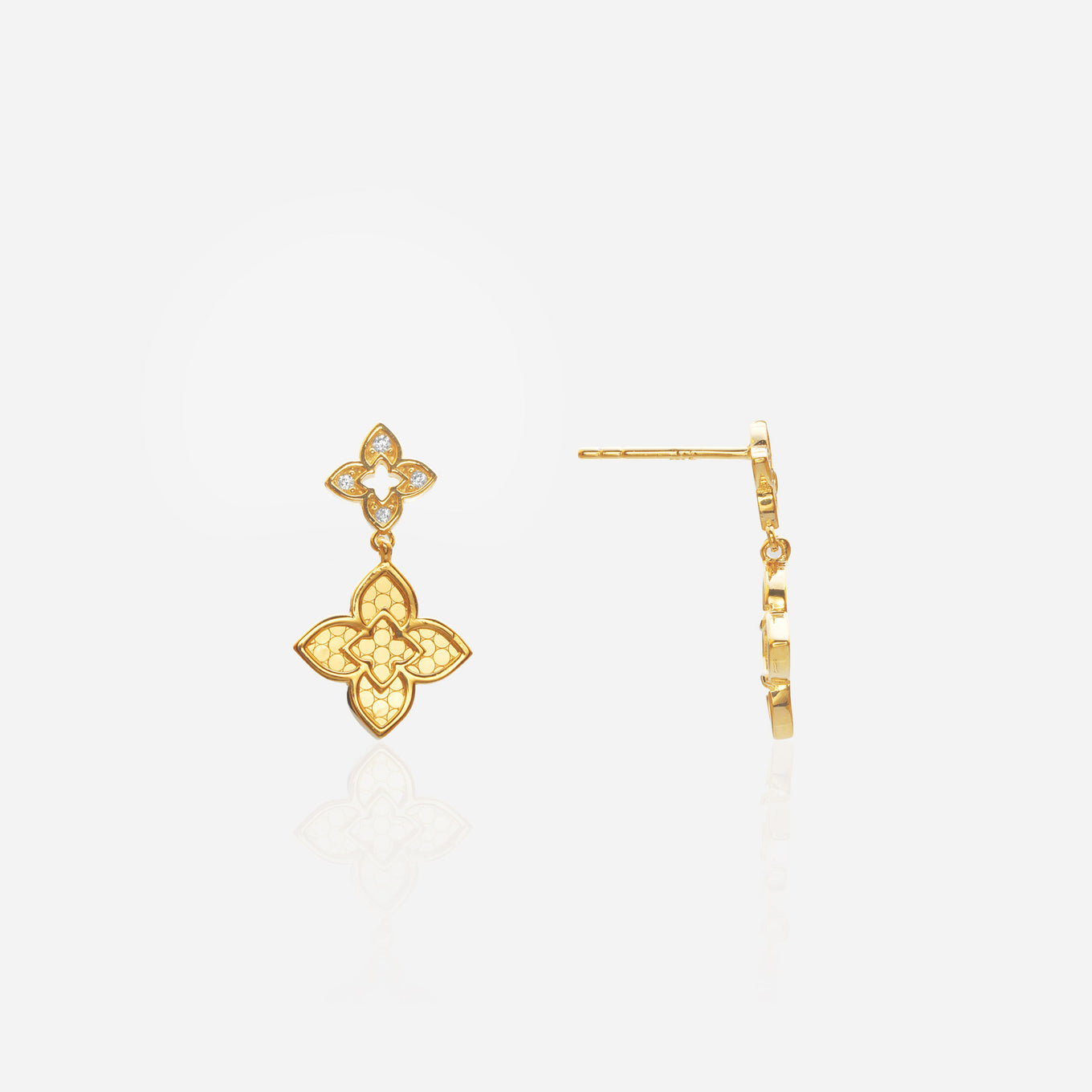
🍀 Gold Clover Earrings
Textured Pavé Drop — $35
The four-leaf clover's luck-meets-nature DNA perfectly complements the lotus's resilience narrative. Textured pavé catches light like morning dew on petals.
Shop Now →🌸 Gardenia Ring
Layered Flower Petal Gold Statement Ring — $98
Multi-layer petal construction echoes the lotus's unfurling geometry. Statement size with the delicacy of real botanical structure.
Shop Now →🌿 Gold Ginkgo Leaf Earrings
Diamond Dangle Drop — $38
The ginkgo's ancient resilience mirrors the lotus's thousand-year seed story. Diamond-accented drop design for those who prefer leaf silhouettes with movement.
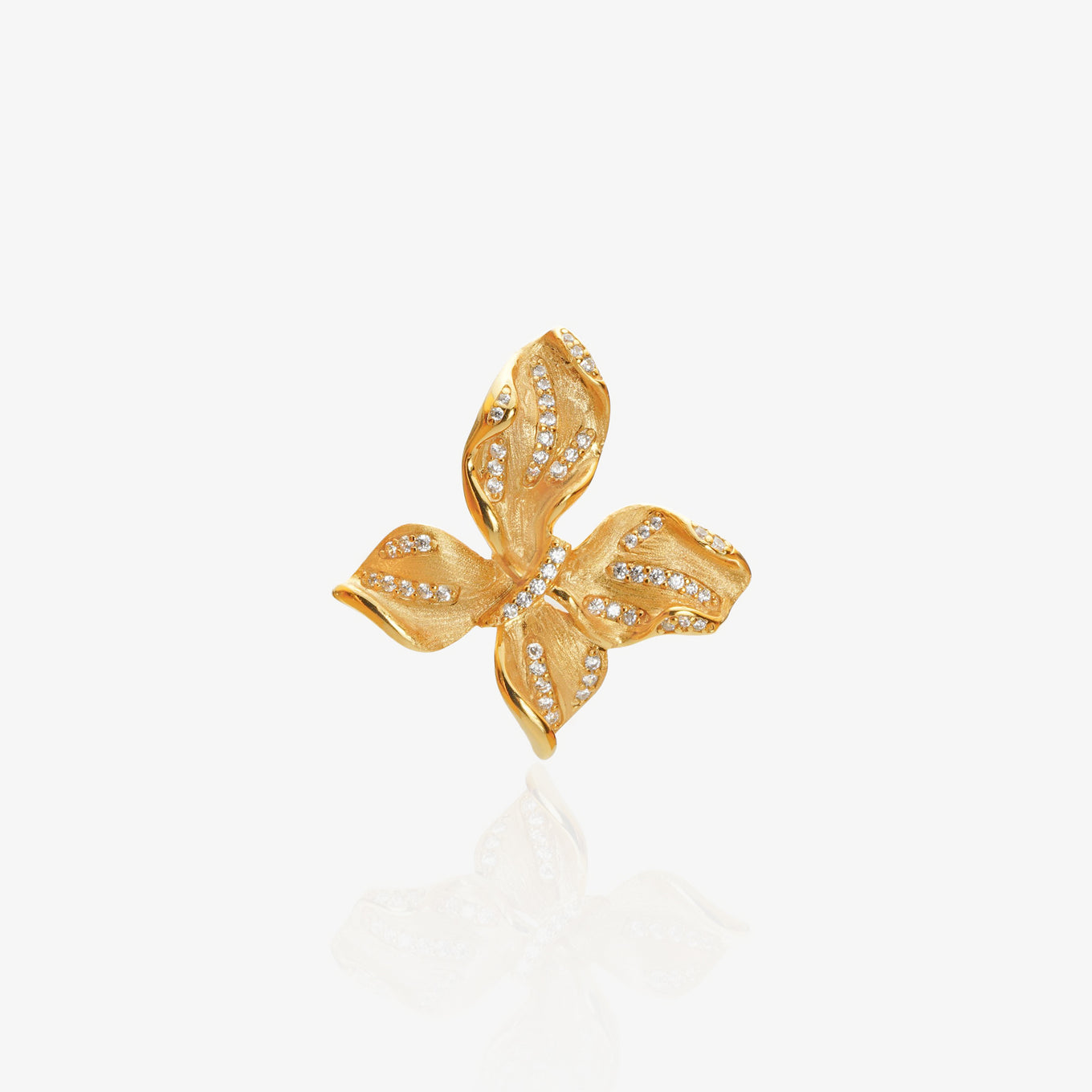
Shop Now →🌻 Brushed Gold Flower Pendant
Asymmetrical Gold Flower Necklace — $46
The open-petal brushed-gold finish echoes the lotus at dawn. Asymmetrical silhouette for those who reject cookie-cutter floral jewelry.
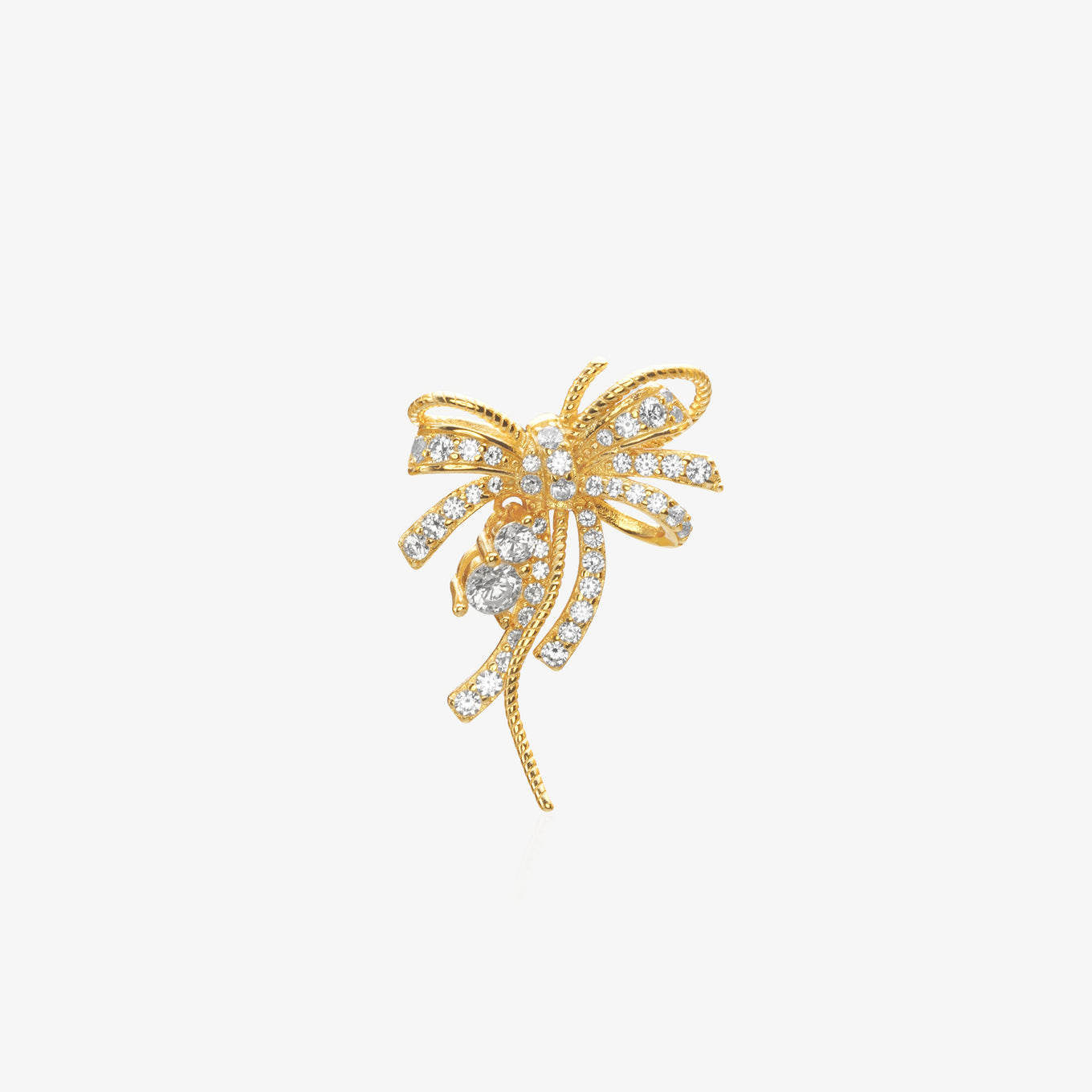
Shop Now →🌺 Gold Ear Cuff | Flower Wrap
No-Piercing Chain Tassel Ear Wrap — $42
The wrapping motion of this ear cuff mimics the lotus stem's spiral. No piercing required — wear the lotus energy without commitment.
Shop Now →💐 Bouquet Ring
Flower Cluster Pavé | 18K Gold on S925 — $79
Multiple flower heads clustered like lotus blooms on a pond. The ring that says "abundance" without saying a word.
Shop Now →FAQ: Lotus Flower Jewelry — Honest Answers
Q1: Is lotus flower jewelry only for Buddhists or spiritually-minded people?
Not at all. While the lotus carries profound Buddhist and Hindu significance, it functions beautifully as a secular symbol of personal growth, resilience, and fresh starts. Many of our customers buy lotus jewelry simply because the sculptural form is stunning — the meaning reveals itself over time. Think of it like a compass rose: you don't need to be a sailor to appreciate direction.
Q2: Can I wear lotus jewelry every day without it tarnishing?
Yes, if the base is S925 sterling silver with proper gold plating (0.5+ microns). Most drugstore lotus jewelry uses brass or alloy cores with flash plating — expect tarnishing within weeks. ÉLARAMUSE lotus-adjacent pieces use 925 sterling silver cores with 18K gold plating at 0.5+ microns. That means: sweat-resistant, gym-to-office wearable, and nickel-free for sensitive skin. Remove before swimming or hot tubs (chlorine eats plating regardless of quality), but daily wear is absolutely fine.
Q3: What's the difference between a lotus and a water lily in jewelry design?
The lotus (Nelumbo) rises above the water on tall stems with a distinctive central seed pod; the water lily (Nymphaea) floats flat on the surface with a notch in each petal. In jewelry, lotus motifs tend to show upward-thrusting petals surrounding a visible center pod, while water lily designs are broader and flatter. For symbolic jewelry, the lotus is vastly preferred — it's the one that rises from the mud, not just floats on top of it.
Q4: Can I wear lotus jewelry with other symbol jewelry (cross, hamsa, evil eye, etc.)?
Absolutely — the lotus is arguably the most interfaith-friendly symbol in jewelry. It predates religious divisions (5,000-year-old Egyptian lotus amulets confirm this) and harmonizes with crosses (both symbolize resurrection), hamsas (both offer protection), and evil eye motifs (both ward off negativity). The only styling rule: keep scale balanced. If you're stacking a lotus pendant with a cross, make sure one is smaller so they converse rather than compete.
Q5: Gold lotus vs. silver lotus — which metal is "correct"?
Gold is historically preferred. In Buddhist iconography, the gold lotus represents total enlightenment — the highest spiritual state. In Hindu tradition, Lakshmi (the goddess of prosperity) is always depicted on a gold lotus. That said, white lotus jewelry (symbolizing spiritual perfection) looks most natural in silver or white gold. Our recommendation: If you want the full symbolic weight, choose gold. If you prefer quiet, monastic energy, white gold or silver feels right. There's no wrong answer — only the metal that matches your intention.