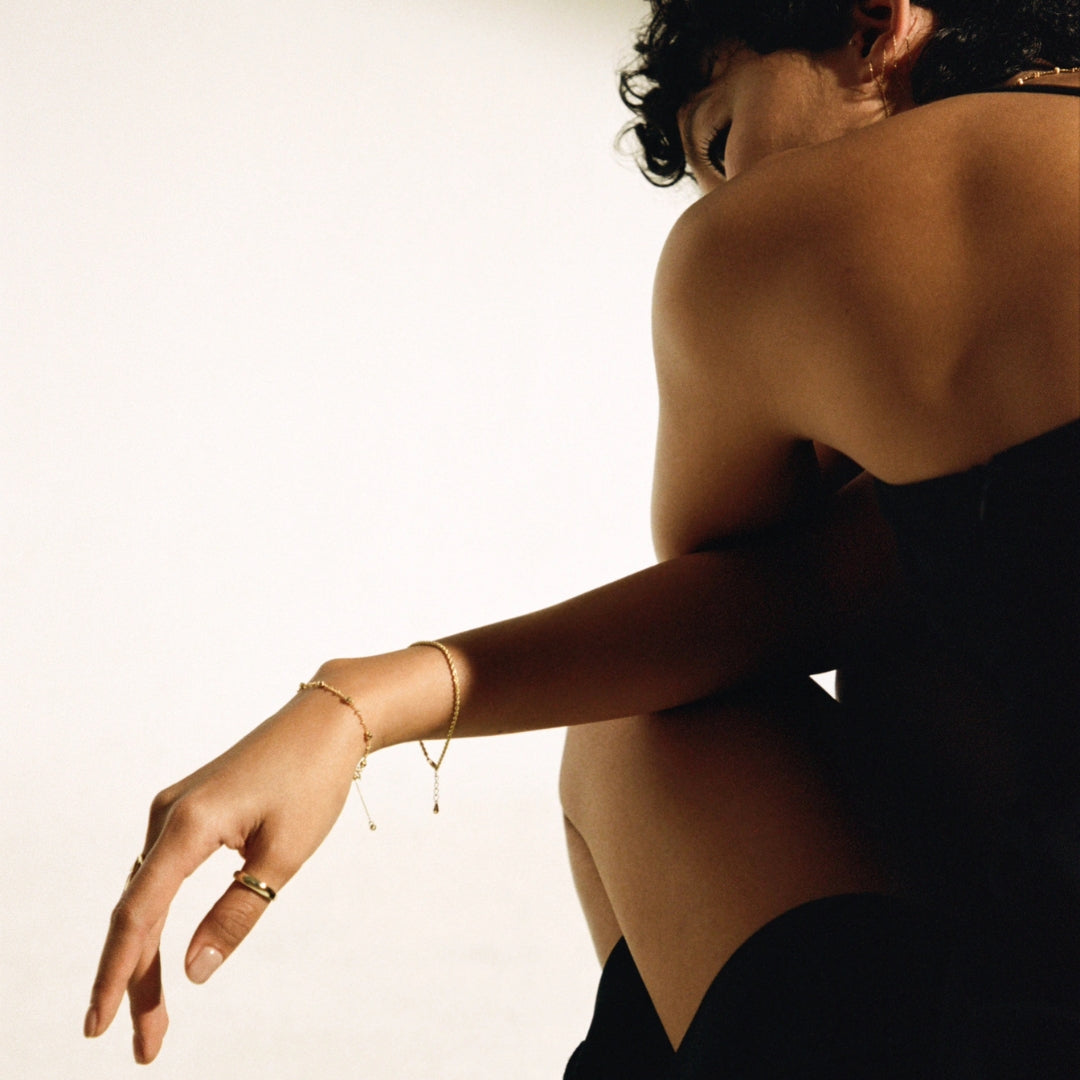
Jewelry for a Job Interview: How to Wear Quiet Confidence in 2026
Quick Answer: For a job interview, wear one subtle piece per zone — small studs, a delicate chain necklace, and a single band ring. Ag925 sterling silver with 18K gold plating keeps it professional, hypoallergenic, and entirely distraction-free.
Table of Contents
Why Interview Jewelry Matters More Than You Think
Here's something most career advice skips: the jewelry you wear to an interview does half the talking before you open your mouth. A 2017 study published in the Scandinavian Journal of Psychology found that first impressions form within 100 milliseconds of meeting someone — and accessories are among the first visual cues processed. Your earrings, necklace, and rings aren't just decoration. They're nonverbal signals of judgment, self-awareness, and respect for context.
We believe jewelry should work as hard as you do — shower-safe, sleep-safe, and never a source of anxiety. Every ÉLARAMUSE piece is built on Ag925 sterling silver with 0.5-micron 18K gold plating, rigorously tested for real life. That matters doubly in an interview room, where the last thing you need is a green mark on your skin or a clasp that gives out mid-handshake.
Picture this: you walk into the room. The hiring manager glances at your resume, then at you. On your ears — tiny gold bar studs, nothing dangling. Around your neck — a whisper-thin chain with a single lab-diamond at the hollow of your throat. On your hand — one textured gold band. No jangling, no distracting shine, no visible branding. Just presence. Just quiet confidence. Isn't that exactly what you want the hiring manager to remember — you, not your accessories?
That's what we're building here — an interview jewelry strategy that serves you, not the other way around.
The One-Piece-Per-Zone Rule
Interview jewelry follows a principle borrowed from architecture: one focal point per visual zone. The human eye naturally scans faces in zones — ears, neckline, hands. When every zone competes for attention, none wins. When one deliberate choice anchors each zone, the effect is cohesive and commanding.
Zone 1: Ears — Studs Only
Dangling earrings sway when you turn your head. Hoops catch light unpredictably. Statement drops telegraph "look at me" — and in an interview, you want them looking at your ideas, not your earlobes. Small gold studs — geometric, clean-lined, no larger than a dime — are the unequivocal right choice.
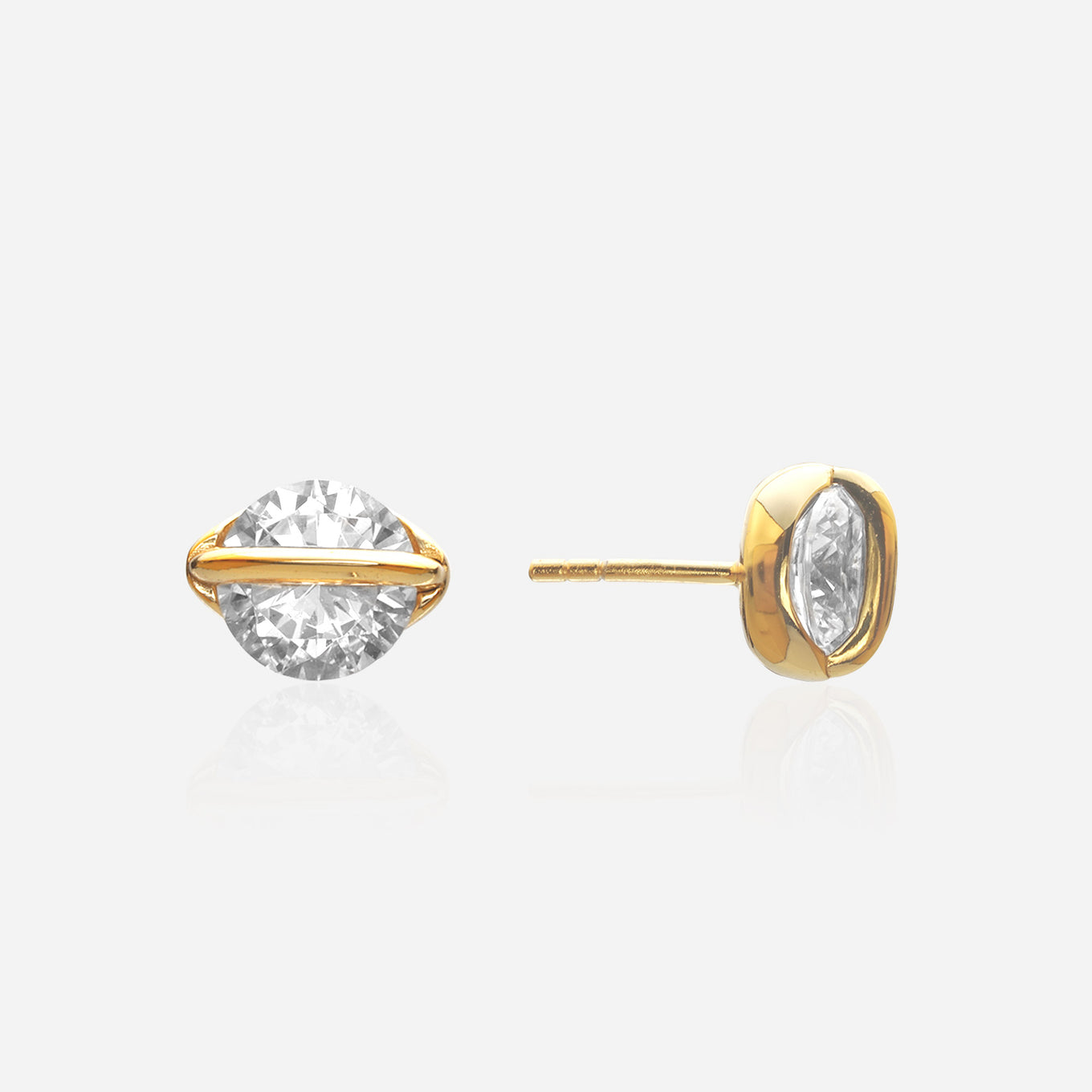
Unlike oversized hoops that dominate the frame with movement and shine, a pair of bar studs in 18K gold plating sits flush against the ear and adds just enough polish to signal "I thought about this" without screaming "I thought about this too much." The Gold Geometric Studs — a horizontal bar of pavé-set lab diamonds on Ag925 sterling silver — nail this balance: architectural enough to feel intentional, minimal enough to disappear when you start talking. That's the point.
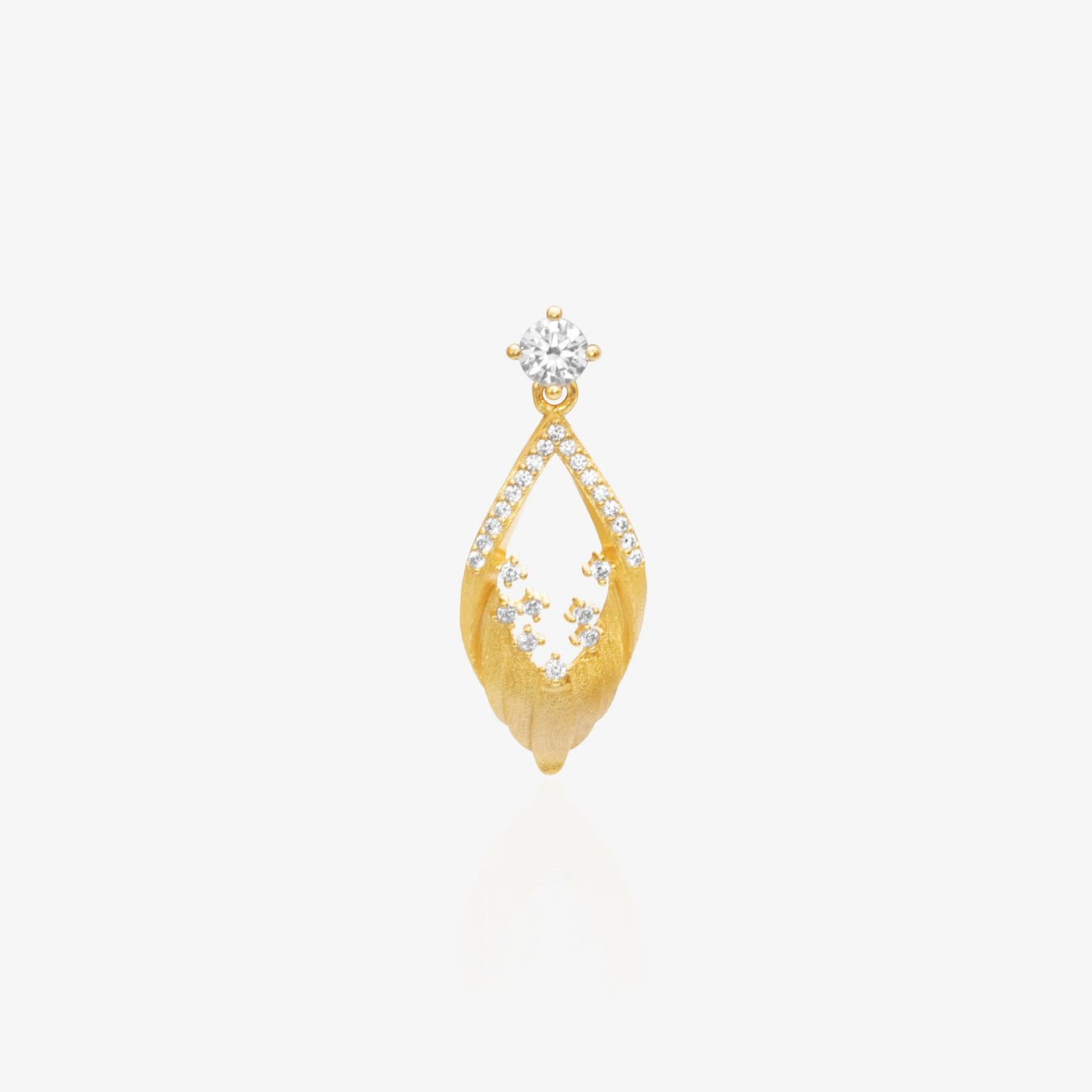
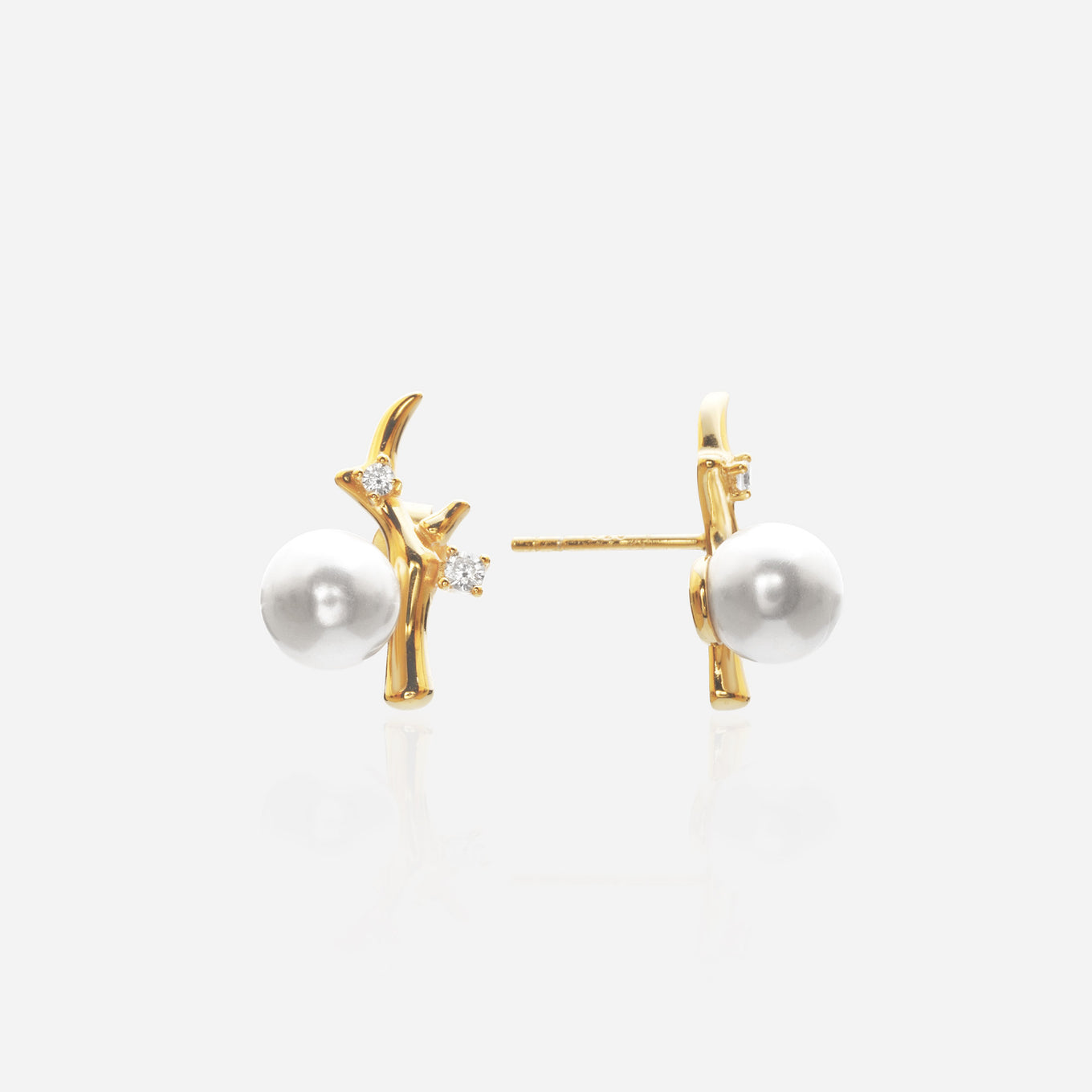
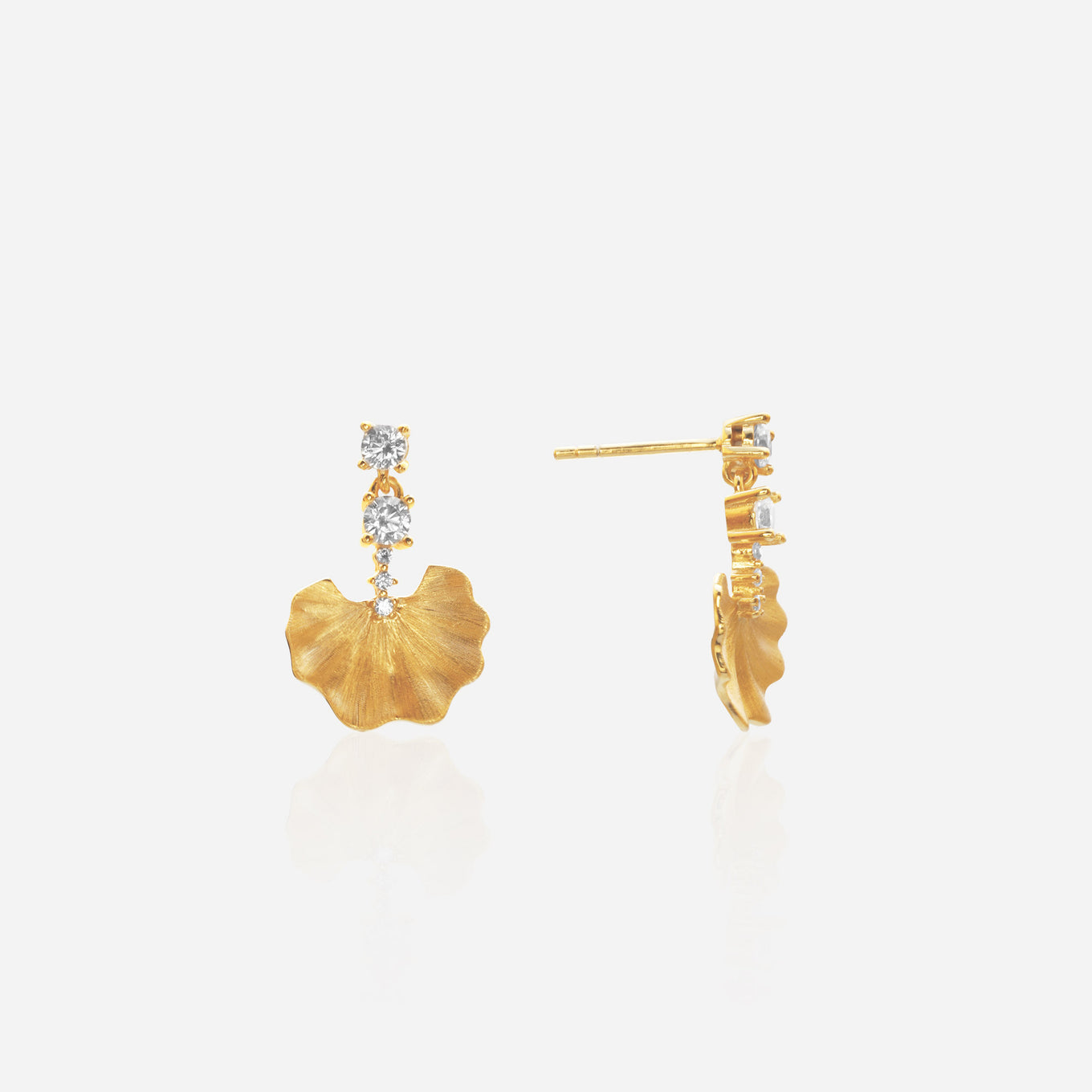
For creative or design-adjacent interviews where a whisper of personality is welcome — say, a gallery assistant role or a boutique marketing coordinator — a subtle organic shape like the Gold Fern Earrings or Breeze Leaf Studs introduces a botanical note without crossing into statement territory. The rule stays the same: no dangle, no dropped back, nothing that moves independently of your head.
Zone 2: Neck — One Delicate Chain
The neckline is the trickiest zone because it's closest to your face. Every flicker of light on a necklace draws the interviewer's gaze upward — toward your words, ideally. Toward a clunky pendant, less ideally. A single fine chain with a near-invisible diamond — what the jewelry world calls a "floater" — is the safest, most elegant bet.
Unlike layered chains that create visual noise and risk tangling audibly (you would be shocked how much a twisted clasp sounds in a silent conference room), a solo Classic Solitaire Necklace or the even more restrained Emerge Necklace — a barely-there bezel-set diamond on a 16-inch chain — reads as deliberate rather than decorative. After all, who wants their necklace to get more eye contact than their answers? The 0.5-micron 18K gold plating over Ag925 sterling silver means it won't tarnish mid-interview even if you're sweating through a case-study presentation.
For mock-neck or turtleneck outfits: skip the necklace entirely. A bare neck with small earrings is cleaner than any chain competing with a high collar. For V-neck or collared blouses: position the pendant so it falls just at or slightly above the collarbone — never into the décolletage zone, which distracts downward.
Zone 3: Hands — One Band Ring (No Stacking)
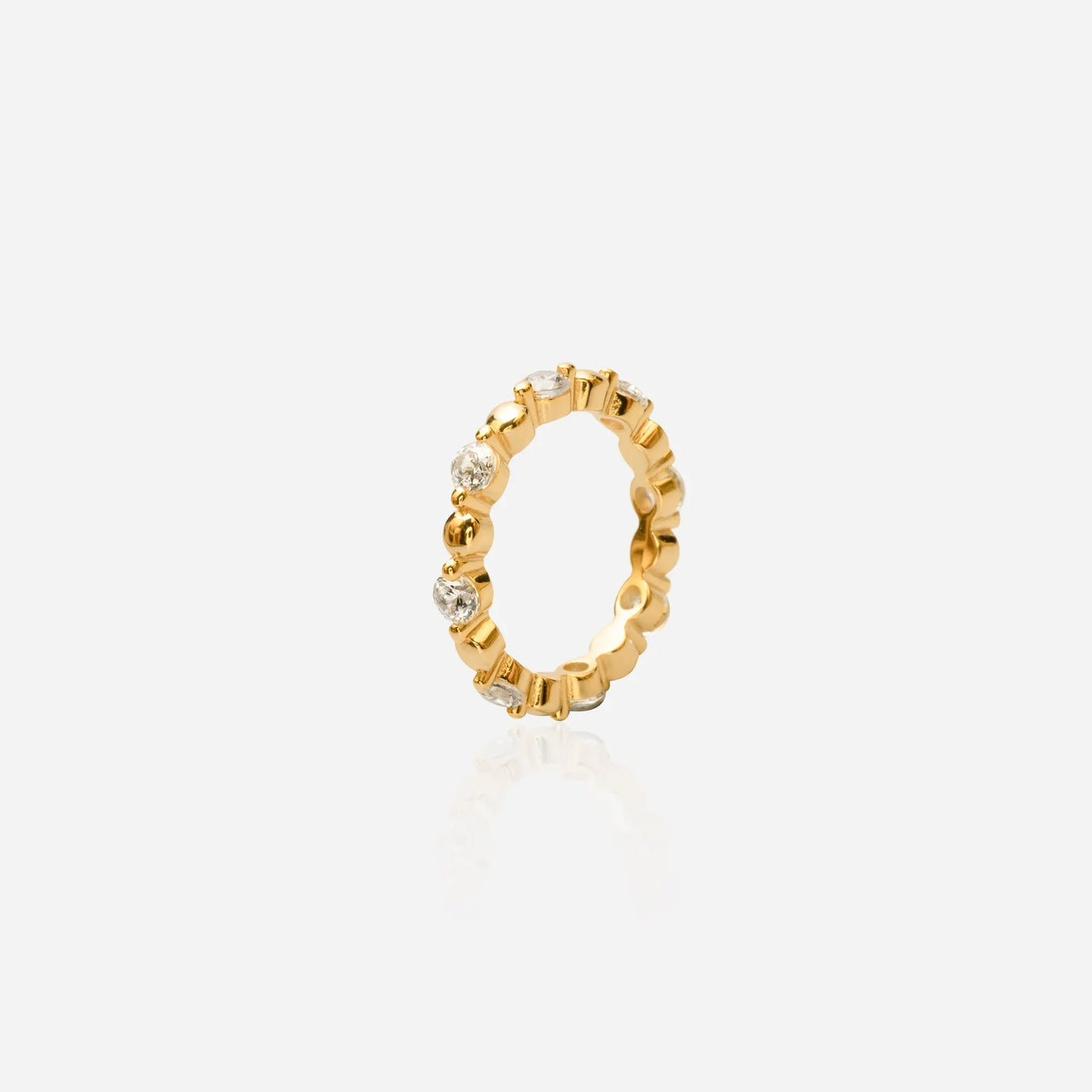
Your hands are moving constantly — gesturing, flipping pages, shaking at the start and end. Ring stacking, beloved as it is for brunch and date night, introduces a percussive clinking sound and a visual busyness that's counterproductive when someone is trying to focus on your words. One ring per hand. No more.
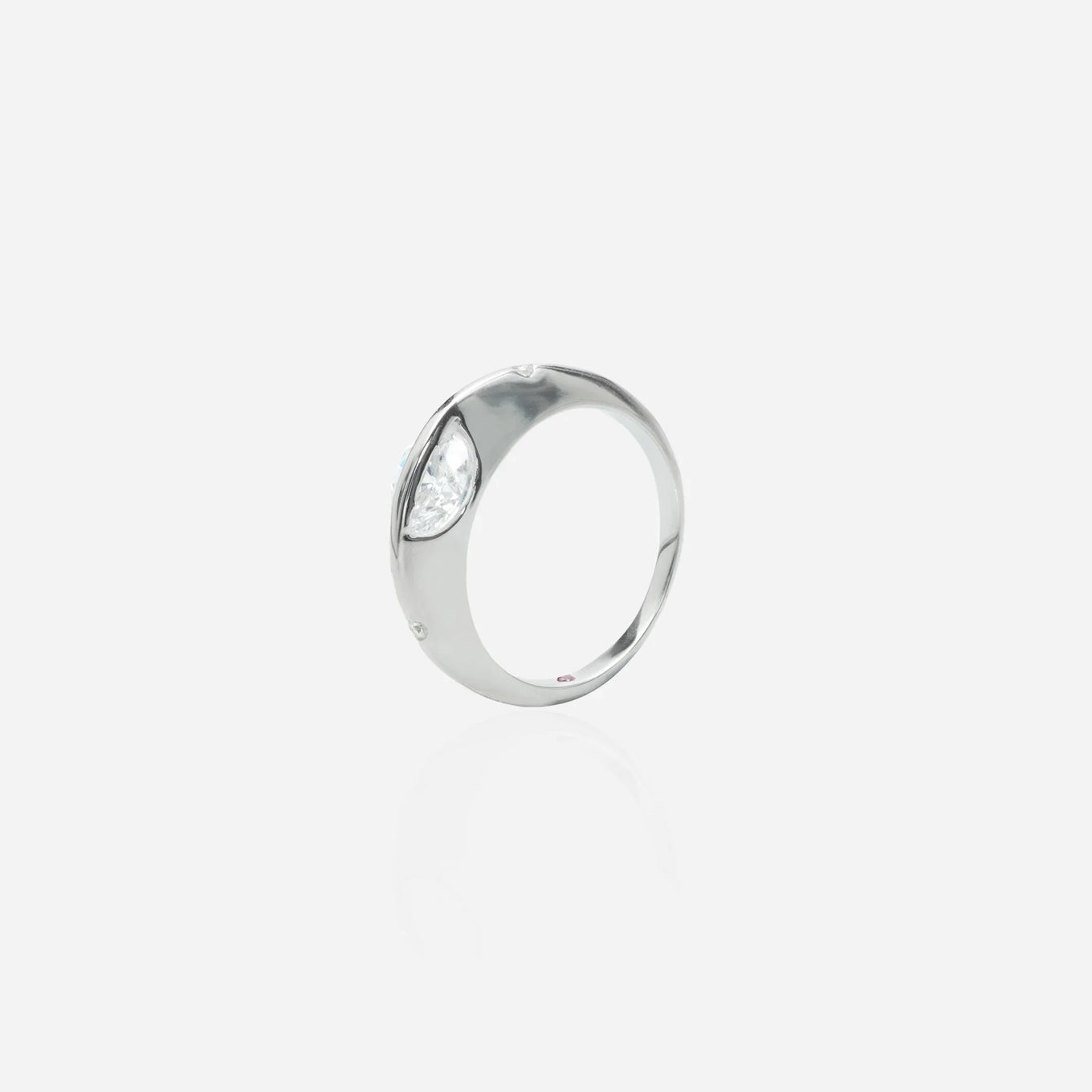
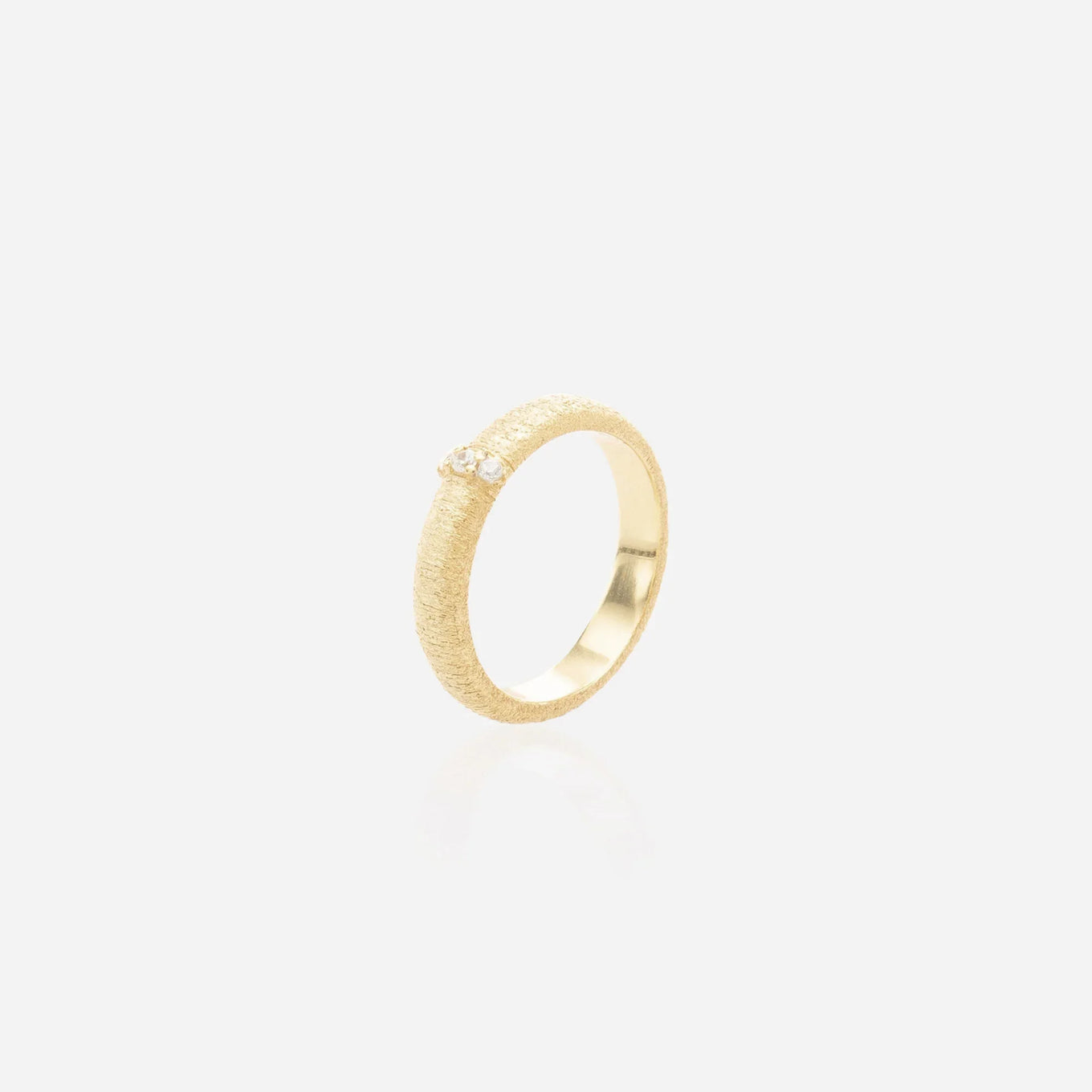
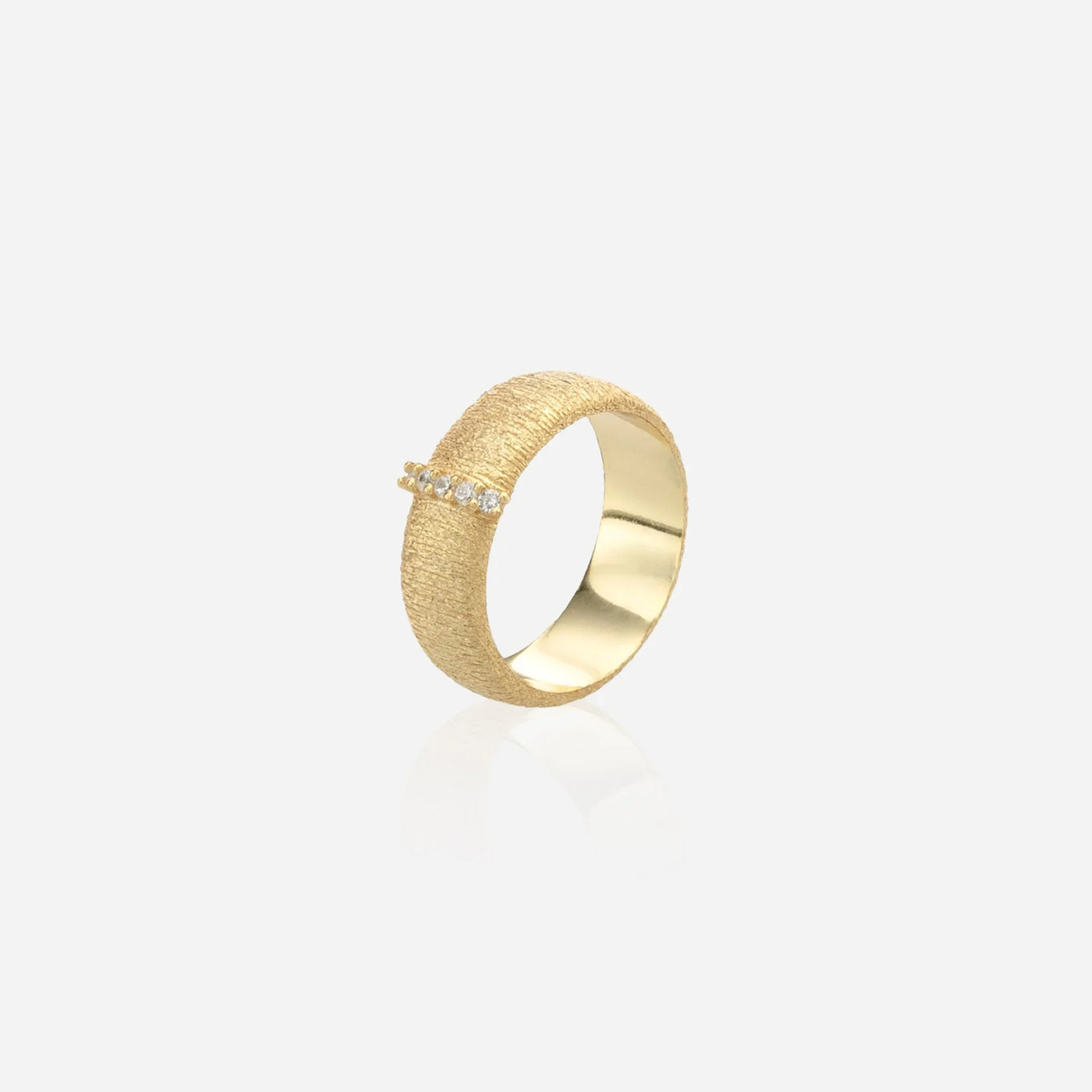
Unlike stackable sets that bundle 3–4 bands into a layered statement, a single textured band like the Oasis Ring — flush-set lab diamonds in a wave-textured 18K gold-plated band — offers visual texture without visual noise. The texture catches light in a subtle, repeatable pattern rather than random sparkle bursts, which the brain processes as calm rather than chaotic. If you wear an engagement ring or wedding band: that counts as your single. Don't add anything else to either hand.
| Zone | Do Wear | Don't Wear |
|---|---|---|
| Ears | Small studs, geometric bar, tiny botanical shapes | Hoops, dangles, chandeliers, threaders, anything over 1cm |
| Neck | Single fine chain, solitaire pendant, no necklace | Layered chains, statement pendants, chokers, Y-necklaces |
| Hands | One band ring per hand, wedding set | Stacked rings, cocktail rings, midi rings, thumb rings |
| Wrist | Watch (analog, leather/metal strap) | Bangles, charm bracelets, anything that clinks |
What to Avoid: 4 Interview Jewelry Mistakes
Knowing what not to wear is at least half the battle. These four mistakes show up in interview rooms far more often than you'd expect — and each one is entirely avoidable.
Mistake 1: The "Signature Statement" Piece. You know the one — the bold geometric necklace or oversized cocktail ring that usually draws compliments at dinner parties. Save it. An interview isn't the place for a conversation-starting accessory. The conversation needs to be about you, not your jewelry.
Mistake 2: Audible Jewelry. Bangles, stacked rings, charm bracelets — anything that clinks, chimes, or rattles when you move — should stay home. In a silent room, a single metal-on-metal click registers as loud as a cough. Buy silence; wear studs and a single band.
Mistake 3: Visible Branding. This goes for logo-heavy jewelry and designer-name pendants alike. An interview is about proving your own value, not borrowing a brand's. The ÉLARAMUSE design philosophy — no visible logos, no name-stamped chains, just architectural presence — exists precisely for moments like this.
Mistake 4: Skin-Irritating Metals. Interview rooms run warm. Nerves run warmer. If your jewelry contains nickel (the #1 cause of jewelry allergies, per the American Academy of Dermatology), sweating through an hour-long panel interview can trigger redness, itching, and visible irritation — all of which communicate physical discomfort, not calm capability. Every ÉLARAMUSE piece uses Ag925 sterling silver as its base metal, with less than 0.01% nickel — effectively zero — and 0.5-micron 18K gold plating that creates an impenetrable barrier between your skin and any trace metal beneath.
Industry-Specific Interview Jewelry Guide
Context matters. The right jewelry for a startup interview might read as underdressed at a law firm, and what works in banking could feel suffocating at a creative agency. Here's a cheat sheet by industry.
| Industry | Recommended | Why |
|---|---|---|
| Finance / Law | Gold bar studs + solitaire necklace (or none) + thin band ring | Conventional, conservative: jewelry should be nearly invisible |
| Tech / Startup | Geometric studs + delicate chain + textured band ring | Clean, modern, unpretentious — polish without formality |
| Creative / Design | Botanical studs (leaf/floral) + fine chain + single architectural ring | Tasteful personality: one organic or sculptural element signals design sensibility |
| Healthcare / Education | Minimal studs + no necklace + wedding band only | Hygiene-first: minimal surfaces, nothing that catches on equipment |
| Retail / Hospitality | Polished studs + delicate chain + clean band ring | Approachable and put-together, with enough polish to reflect the brand |
The underlying principle across every industry is the same: jewelry should never distract from your qualifications. It should signal that you understand the room — and that you belong in it.
The ÉLARAMUSE Standard
We believe jewelry should work as hard as you do — shower-safe, sleep-safe, and never a source of anxiety. When you walk into an interview room, the metal on your skin should be the last thing you're thinking about. That conviction shapes every technical decision we make.
| Feature | Specification |
|---|---|
| Base Metal | Solid Ag925 Sterling Silver |
| Plating | 0.5-micron 18K gold plating |
| Safety | 100% Nickel-Free (<0.01% Ni), Hypoallergenic |
| Durability | Water-resistant, Tarnish-resistant, Sweat-proof |
| Design | Architectural, logo-free, distraction-free |
| Wearability | Shower-safe, sleep-safe, 24/7 wear |
Unlike fast-fashion jewelry that uses brass or copper alloys — metals that react with sweat and leave green marks on your skin within hours — our Ag925 sterling silver base and 0.5-micron 18K gold plating create a stable, tarnish-resistant barrier that stands up to the longest interview day. You've got enough to think about. Your jewelry's metal composition should not be on the list.
Editor's Picks: Interview-Ready Pieces
- Gold Geometric Studs — Horizontal bar pavé studs. Clean geometry, zero movement, maximum polish. The definitive interview earring.
- Emerge Necklace — A barely-there bezel-set lab diamond on a fine 16-inch chain. Visible only when you want it to be.
- Oasis Ring — Textured gold band with flush-set lab diamonds. Texture without noise. A single ring that does the work of a stack.
- Classic Solitaire Necklace — Floating lab diamond pendant on an Ag925 chain. Understated, utterly professional.
Frequently Asked Questions
Can I wear a watch to an interview?
Yes — and you should. An analog watch with a leather or metal strap reads as punctual, prepared, and respectful of time. Skip the smartwatch (notifications during an interview are disqualifying) and anything with a plastic or overly casual band.
What if I usually wear multiple ear piercings?
Pick one piercing per ear — the lobe, ideally — and wear a single small stud. Remove all cartilage, helix, tragus, and conch jewelry for the interview. You can put them back five minutes after you leave the building, and you'll have lost nothing by erring on the side of convention for one hour.
Does jewelry color matter — gold vs. silver?
Both are fine. What matters far more is that the metal doesn't react with your skin under stress. Hypoallergenic sterling silver (gold-plated or not) is the safest choice regardless of tone. Match your jewelry metal to your watch metal where possible — mixed metals introduce an extra variable into an already complex visual first impression.
Gold-plated vs. fine gold — which is better for an interview?
For a single occasion, the difference is invisible. A well-made 18K gold-plated piece with 0.5-micron plating over Ag925 sterling silver looks identical to solid gold on the body — and at a fraction of the stress. If you get the job, buy yourself the fine gold celebration piece. For the interview, demi-fine is more than enough.
Should I wear my engagement ring plus a fashion ring?
No. Your engagement ring (or wedding band) is your single hand piece. Adding a fashion ring on the same hand — or even the opposite hand — crosses from "polished" into "accessorized." One ring per hand, maximum. If your engagement ring is a substantial solitaire, consider wearing it alone and skipping additional rings entirely.
Behind the Design: Why We Build for Silence
I designed the Gold Geometric Studs after a personal disaster — a pair of cheap drop earrings that unhooked themselves mid-interview, landing on the conference table with a sound I can still hear. The interviewer was gracious. I was mortified. That afternoon I sketched the first version of what became our bar stud: flush-backed, screw-on, locked into place with a tension mechanism that simply does not release on its own.
That design principle — jewelry as a silent partner, never the main character — runs through everything we make. The Emerge Necklace uses a bezel setting (not prong) because prongs catch on blouse threads. The Oasis Ring has flush-set diamonds because raised stones snag on handshake grips. These aren't aesthetic choices. They're functional decisions made by someone who has been in the room, failed in the room, and rebuilt for the room.
When you wear ÉLARAMUSE to an interview, you're wearing metal that has already been field-tested under the exact conditions you're walking into. Shower-safe. Sweat-proof. And engineered to stay exactly where you put it — quietly, reliably, invisibly.
Interview Jewelry Principle: Jewelry should be felt, not noticed. A piece that earns a compliment before the interview ends has already failed at its job. — Joyce, Founder
A Final Word
You've already done the hardest part: building the résumé, writing the cover letter, landing the interview. The jewelry piece is the easy part — and paradoxically, the part most candidates get wrong by trying too hard. One stud. One chain. One band. That's it. The goal isn't to look like you tried. The goal is to look like you didn't have to.
Find your quiet-confidence talisman. Walk in. Take the room.