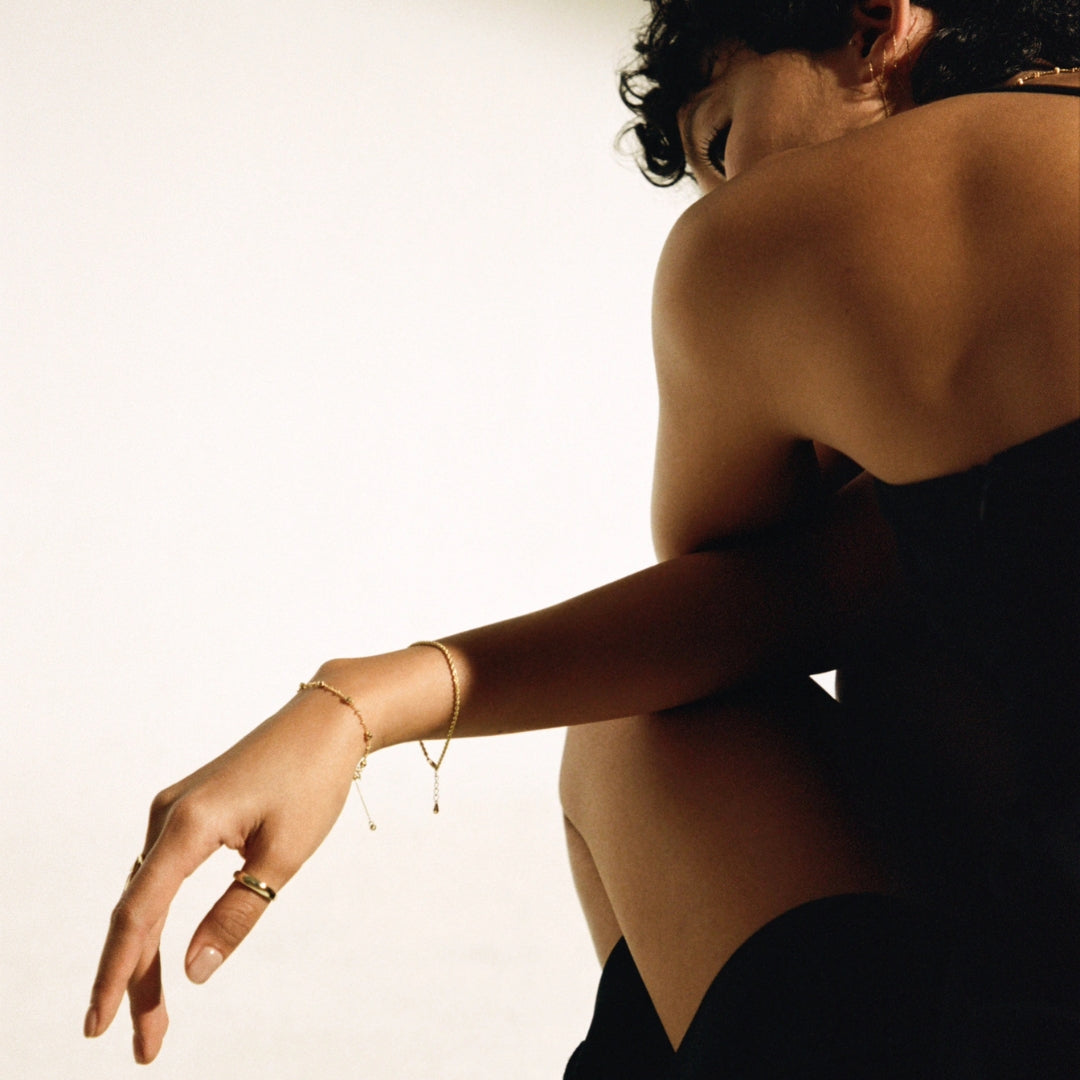
How to Stack Rings 2026: The Complete Ring Stacking Style Guide
Ring stacking — the art of wearing multiple rings on one finger — has evolved from a trend into a defining jewelry language of the 2020s. This guide covers everything from proportions and metal mixing to finger placement and care, with curated picks from ÉLARAMUSE's lab diamond stacking collection.
Table of Contents
- What Is Ring Stacking?
- Ring Stacking Rules: Proportion, Balance & The Rule of Three
- How to Stack Rings by Finger
- Mixed Metal Ring Stacking: Gold + Silver
- Wedding Ring Stacking: Engagement, Wedding Band & Anniversary Bands
- Ring Stacking Sets vs. Building Your Own
- How to Care for Stacked Rings
- Editor's Picks: ÉLARAMUSE Stacking Rings
- Key Terms
- FAQ: Ring Stacking Questions Answered
What Is Ring Stacking?
Ring stacking is the practice of wearing two or more rings on a single finger, arranged intentionally to create contrast, depth, and personal expression. It transforms individual pieces into a curated composition — much like layering necklaces or bracelets, but with greater precision and tactile presence.
The concept has deep historical roots. According to the Victoria and Albert Museum's jewelry collection, stacked rings date back to ancient Rome, where multiple bands on one finger signified marital status, social rank, and personal wealth. Medieval European portraits at the Metropolitan Museum of Art depict nobles wearing layered gemstone bands across multiple fingers — an early precursor to today's curated stacking aesthetic.
In 2026, ring stacking has matured beyond a trend into a mainstream styling language. Google search interest for "stacking rings" is consistently one of the most searched jewelry styling terms — reflecting genuine, sustained consumer intent. The modern stack is less about maximalism and more about intentionality: each ring chosen for how it interacts with its neighbors in texture, width, and tone.
The appeal is practical as well as aesthetic. Stacking lets you refresh your jewelry look daily without purchasing entirely new pieces. A core collection of three to five stackable rings can produce dozens of distinct combinations. For those building a fine jewelry wardrobe, stacking rings offer the highest versatility-per-wear ratio of any jewelry category.

Ring Stacking Rules: Proportion, Balance & The Rule of Three
While ring stacking is ultimately personal, a few structural principles help stacks look intentional rather than chaotic. These are guidelines refined by jewelers and stylists, rooted in the physical dynamics of how rings sit against each other on the finger.
The Rule of Three. Three rings per finger is the sweet spot for most hand shapes. It creates visual rhythm — a beginning, middle, and end — without overwhelming the finger or compromising comfort. Two can feel sparse; four or five risks crowding and accelerated wear. The Gemological Institute of America notes that stacked rings should maintain a combined width of approximately 8–12mm for comfortable daily wear, depending on finger length.
Proportion hierarchy. The most visually successful stacks follow a deliberate width pattern. Place the widest ring at the base of the finger (closest to the hand), a medium-width ring in the middle, and the thinnest band at the top. This creates a tapering effect that elongates the finger. Reversing this — thin at base, thick at top — can make fingers appear shorter.
Texture contrast. A stack composed entirely of smooth polished bands reads as one-dimensional. Introduce at least one textured element — pavé diamonds, a waved silhouette, or milgrain detailing — to create friction between surfaces. The eye naturally pauses at points of texture contrast, making each ring individually legible rather than blending into a single metallic blur.
Spacing and comfort. Rings in a stack should sit flush against each other without pinching. A gap of less than 0.5mm between bands is ideal — close enough to look intentional, wide enough to prevent metal-on-metal friction during hand movement. If rings overlap or crowd, swap one out for a slimmer profile.

How to Stack Rings by Finger
Each finger offers a different canvas for stacking, with its own proportions, visibility, and practical considerations. The choice of finger is as important as the rings themselves.
Ring finger — the classic canvas. The ring finger is the most popular stacking location, largely because it already hosts engagement and wedding rings. The traditional wedding stack — engagement ring, wedding band, eternity band — is the original three-ring stack. For non-bridal stacking, the ring finger offers the widest visibility in hand gestures and photographs, making it ideal for showcasing elaborate combinations.
Index finger — the statement stack. The index finger's prominence makes it suited for bolder, wider bands. Because it moves independently, rings here see more light exposure. A single wide textured band or a two-ring combination with strong architectural lines works best. Avoid delicate thin bands on the index finger — they read as fragile against its assertive positioning.
Middle finger — the balanced option. The middle finger occupies the center of the hand and anchors the overall look. It pairs well with medium-width bands and symmetrical stacks. Three-ring combinations work particularly well here, creating a visual bridge between ring and index fingers. This finger tolerates slightly wider combined widths than the ring finger.
Pinky finger — the refined accent. Pinky stacking is emerging as a 2026 styling signature. A single signet-style band or a two-ring micro-stack on the pinky adds polish without competing with larger stacks on other fingers. The pinky's limited real estate means thin bands (1–2mm each) are essential — anything wider looks disproportionate.

Mixed Metal Ring Stacking: Gold + Silver
The old rule that metals must match is definitively retired. Mixed metal stacking — particularly yellow gold with sterling silver or white gold — is one of the fastest-growing segments in the stacking category, with search interest for "mixed metal stacking rings" growing steadily at (a popular search) and remarkably low competition.
Mixed metal stacking works because contrast is the point. A warm gold band next to a cool silver band creates deliberate tension that makes each piece more distinct. The key to success is repetition: if you wear one gold ring in a predominantly silver stack, it reads as an outlier. Two gold rings among three silver rings creates pattern and intention.
Start with a dominant metal (60–70% of the stack) and introduce a secondary metal as accent pieces. Position the contrasting metal in the middle position for maximum visual impact — flanked by the dominant metal on either side. Sterling silver at 925 purity offers an accessible entry point for mixing metals, as its bright white finish provides the strongest contrast against yellow gold.
The rise of mixed metal stacking also reflects changing consumer preferences. Younger buyers increasingly reject committing to a single metal color for life. A mixed metal stack is both contemporary and practical — it unifies pieces acquired at different life stages into one coherent, intentional look.
Wedding Ring Stacking: Engagement, Wedding Band & Anniversary Bands
The wedding stack is the original ring stack — and with (a popular search) for "wedding ring stack," it remains the category's anchor. The classic three-ring configuration places the wedding band closest to the heart, the engagement ring in the middle, and an eternity or anniversary band on top.
This sequence is both symbolic and practical: the wedding band stays most secure at the base, while the engagement ring's center stone gets maximum visibility in the center position. Contemporary bridal stacking has expanded beyond the traditional three. Many couples now plan their wedding stack at the time of engagement, choosing ring settings that accommodate future bands.
Anniversary bands, push presents, and milestone markers — collectively driving (a popular search) for "birthstone stacking rings" — have turned the wedding stack into an evolving narrative. Each band represents a chapter, and the stack grows over decades. This emotional dimension makes wedding stacking one of jewelry's most meaningful categories.
For those building a wedding stack, the engagement ring should anchor the design. Its metal color and stone shape determine the parameters for every band that follows. A gold engagement ring calls for gold or mixed-metal companion bands; a platinum setting works best with white metals and deliberate gold accents for striking contrast.
Ring Stacking Sets vs. Building Your Own
One of the most practical decisions in ring stacking is whether to purchase a pre-coordinated set or curate your own combination. Both approaches have merit — the right choice depends on your styling confidence and how you plan to wear the stack.
Stacking ring sets offer immediate cohesion. They are designed to sit flush together, with widths, textures, and metal finishes calibrated for harmony. For those new to stacking, a set eliminates the guesswork. A well-designed trio pairs a lab diamond accent band with complementary plain bands in a proportion sequence that would take careful hunting to replicate. Sets also tend to be more cost-effective than buying three rings separately.
Building your own stack rewards those who enjoy the curation process. It lets you incorporate existing pieces into a personal composition. The challenge is achieving flush fit and aesthetic balance across pieces purchased at different times, possibly from different makers. Start with one anchor ring that defines the stack's character, then add bands one at a time, testing each for both comfort and visual rhythm.
A hybrid approach often works best: begin with a coordinated stacking ring set as a foundation, then add individual pieces over time to personalize the stack. This combines the instant gratification of a finished look with the long-term joy of curation. Several of our customers start with a trio and return for complementary bands as their style and collection evolves.

How to Care for Stacked Rings
Stacked rings require more maintenance than rings worn solo. Constant metal-to-metal contact creates friction that can accelerate wear on softer gold alloys, particularly at contact points between bands. The GIA recommends specific care protocols for stacked jewelry to preserve both finish and structural integrity.
Rotate your combinations. Wearing the same rings in the same order every day creates predictable wear patterns — micro-abrasions where specific surfaces repeatedly rub against each other. Rotating ring positions weekly distributes friction evenly across all surfaces, extending the life of each piece significantly.
Remove stacks for physical activity. The combined weight and friction of stacked rings amplifies risk during exercise, cleaning, or any activity involving hand impact. More rings mean more edges to catch and more metal to deform under pressure. Store your stack in a lined jewelry box with individual compartments — stacking rings loose in a dish accelerates scratching.
Clean with intention. Dirt and oil accumulate faster between stacked rings than on single rings — there are more crevices where residue can collect. Use a soft brush with warm water and mild soap between bands monthly. Ultrasonic cleaners are effective but should be used cautiously on rings with pavé settings, as vibration can loosen small stones over time.
Check settings regularly. Lab lab diamond pavé bands in stacked configurations face micro-impact from adjacent rings hundreds of times daily. Have a jeweler inspect prong-set stones annually — a five-minute check prevents a lost diamond. This is especially important for eternity bands worn in the middle stack position, where they receive contact from both sides simultaneously.
Editor's Picks: ÉLARAMUSE Stacking Rings
These six pieces represent the most versatile building blocks for a lab diamond stacking collection. Each is designed to work solo or in combination, with compatible widths and flush-fit profiles that make stacking effortless.
1. Gold Macaron Ring Set
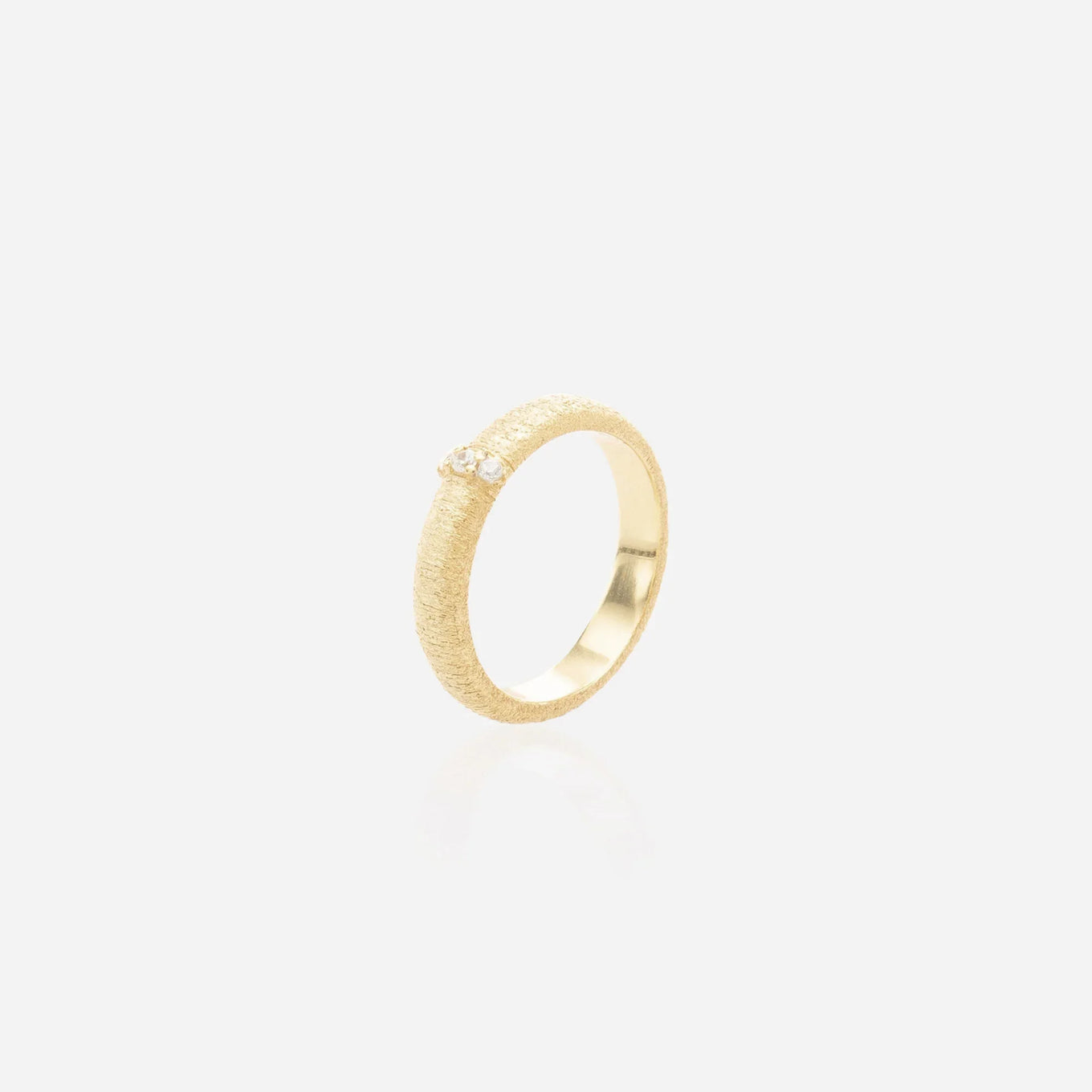
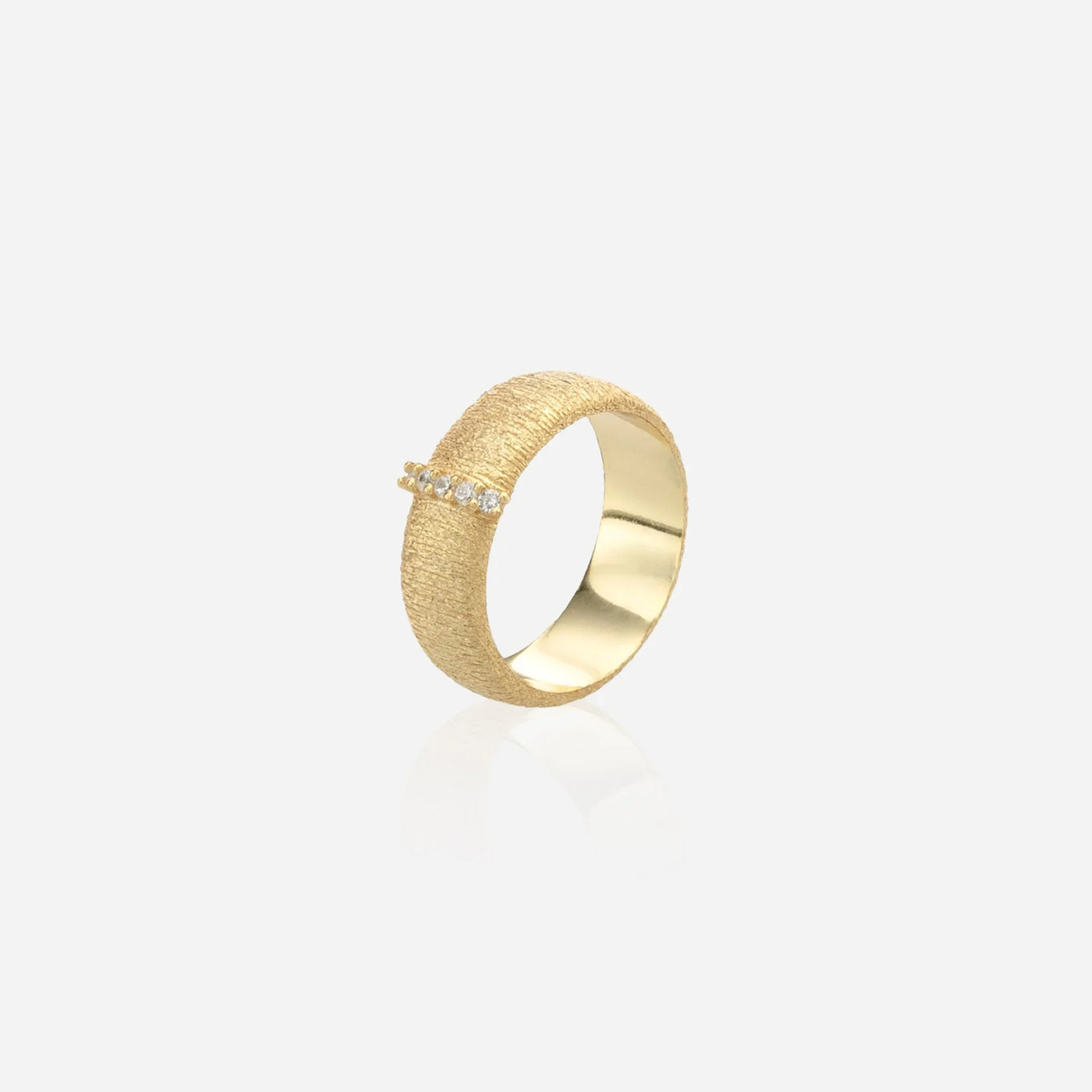
Three-piece lab diamond stacking trio. A full pavé lab lab diamond band flanked by two textured gold bands. Best for: instant, cohesive stacks with zero setup.
View Set →
2. Gold Wave Ring Set
Sterling silver with gold plating, waved dome bands framing a central pavé lab lab diamond band. Best for: mixed metal beginners and minimalist aesthetics.
View Set →
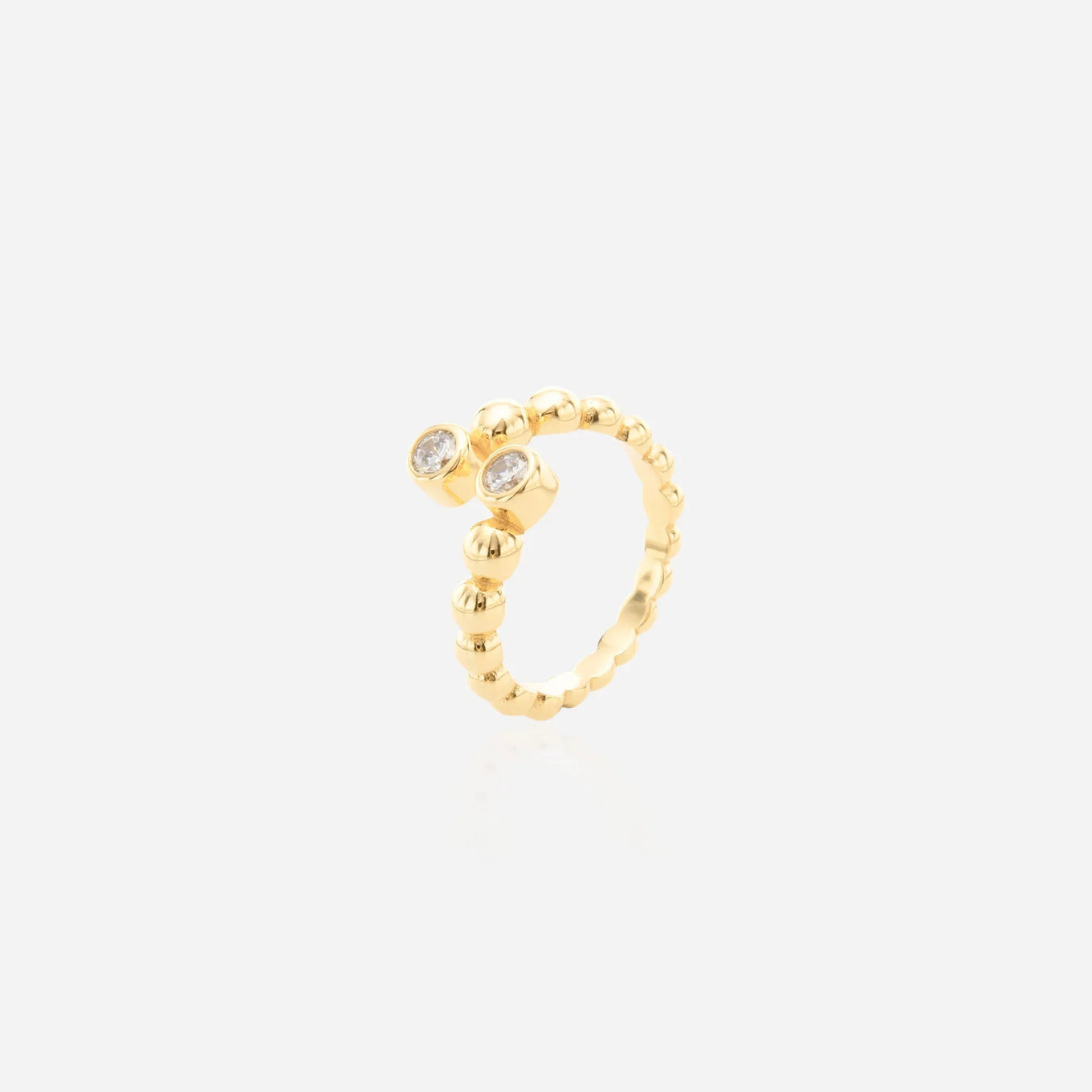
3. Gold Bubble Ring
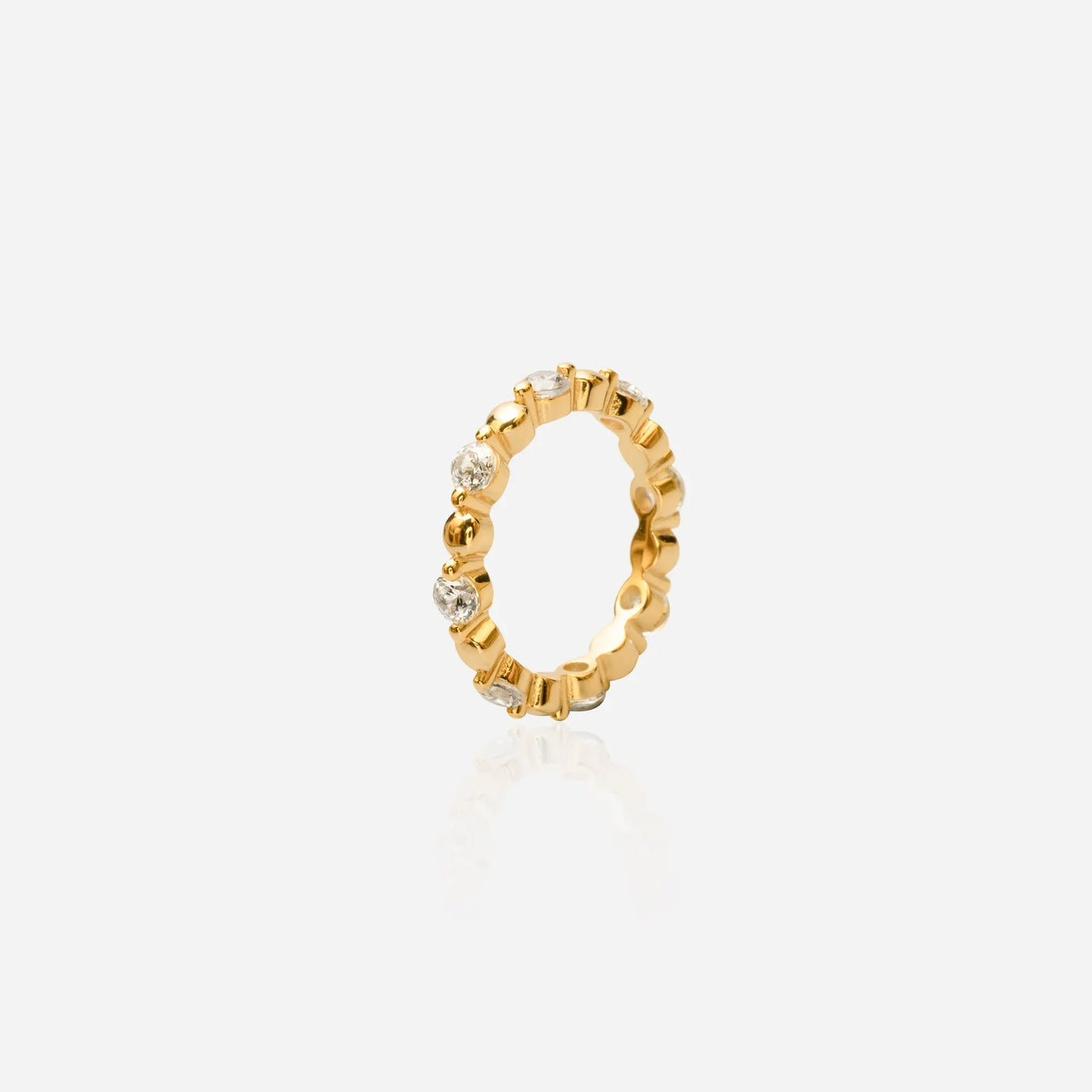
Alternating bezel-set lab diamonds and polished gold beads in an eternity band. Best for: adding texture contrast to any existing stack.
View Ring →

4. Ruby Posy Band
A dainty 1.8mm eternity band with milgrain edges and ruby clusters. Best for: the thinnest layer in a multi-ring stack.
View Ring →
5. Gold Entwine Ring
Two intertwined bands of pave diamonds in satin gold. Best for: a statement centerpiece in a mixed-metal stack.
View Ring →

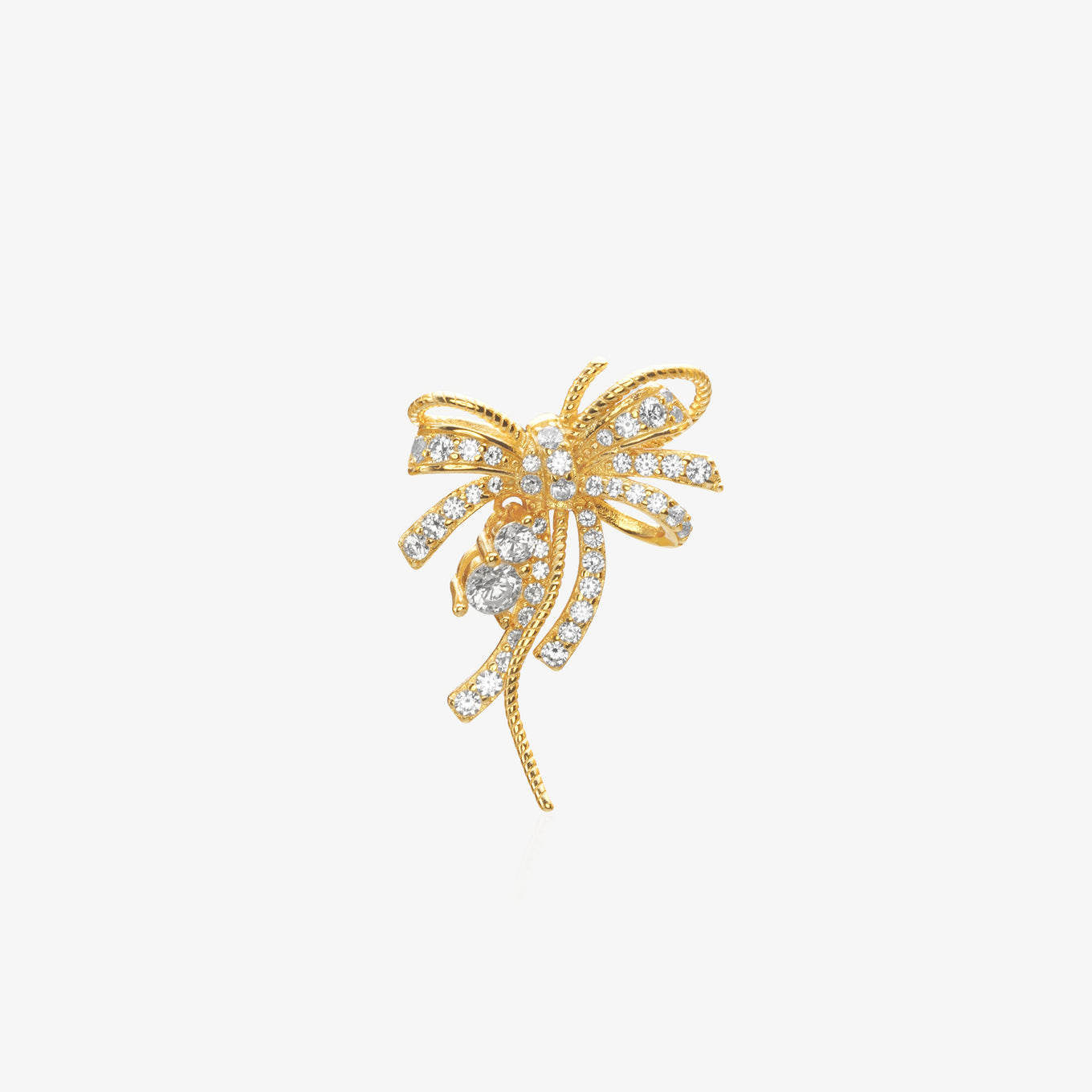
6. Delicate Bow Ring
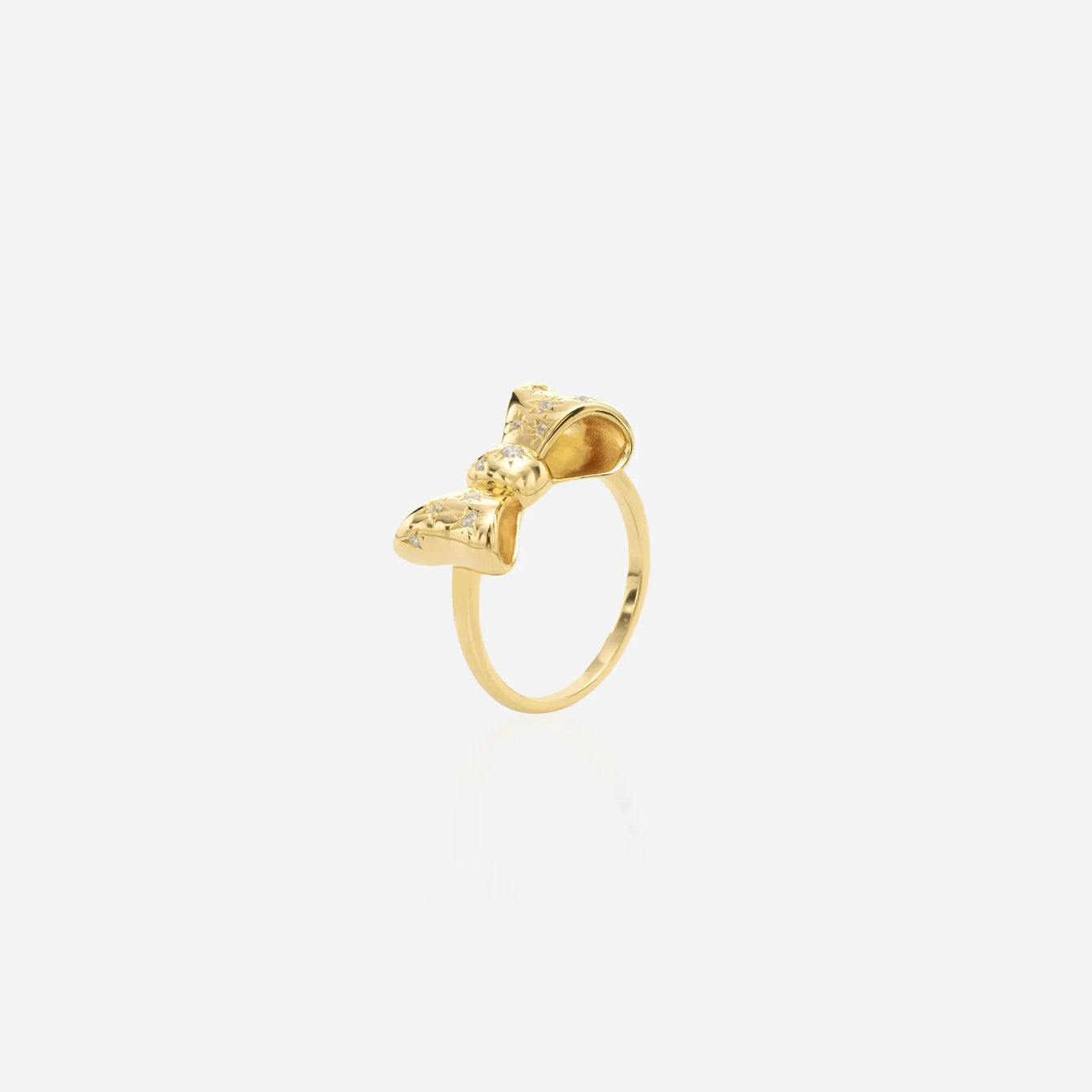
Velvet gold with a sculptural bow design and central diamond knot. Best for: a romantic, feminine accent in a stack.
View Ring →
Key Terms
- Ring Stacking
- The practice of wearing two or more rings on a single finger in a deliberate arrangement.
- Rule of Three
- A styling guideline recommending three rings per finger as the optimal balance of visual rhythm and comfort.
- Stacking Ring Set
- A pre-coordinated collection of rings designed to be worn together on one finger with flush fit and complementary design.
- Mixed Metal Stacking
- Combining rings of different metal colors, such as yellow gold and sterling silver, within a single stack.
- Pave Setting
- A setting technique where small diamonds are set closely together with minimal visible metal, creating a continuous surface of sparkle.
- Eternity Band
- A ring with gemstones set continuously around its entire circumference, symbolizing endless love.
- Flush Fit
- When two rings sit directly against each other without gaps, essential for polished-looking stacks.
FAQ: Ring Stacking Questions Answered
How many rings is too many?
Three rings per finger is the widely accepted maximum for comfort and proportion. Beyond three, stacks tend to look cluttered and create accelerated wear from increased friction. The combined width of stacked rings should stay under 12mm for most fingers. If rings begin overlapping the knuckle, reduce the count.
Can you mix gold and silver rings in a stack?
Yes, and it is one of 2026's defining stacking trends. The key is to avoid a 50-50 split, which can look unintentional. Aim for a dominant metal (roughly two-thirds of the stack) with one or two contrasting pieces. Position the contrasting metal in the middle of the stack for maximum visual impact.
What finger should I wear stacking rings on?
The ring finger is most common, especially for wedding stacks. The index finger works well for bolder pieces, the middle finger for balanced three-ring stacks, and the pinky for delicate accent stacks. There is no wrong answer; choose the finger that feels most comfortable and visually balanced with your other jewelry.
Do stacked rings damage each other?
Yes, stacked rings create metal-on-metal friction that accelerates wear over time, particularly on softer gold alloys. To minimize damage, rotate ring positions weekly, remove stacks during physical activity, and have pave settings inspected annually by a jeweler. With proper care, stacked rings maintain their finish for years.
How do you clean stacked rings?
Clean stacked rings monthly with warm water, mild soap, and a soft brush. Pay extra attention to the spaces between rings where oil and debris accumulate. For deep cleaning, an ultrasonic cleaner is effective but should be used cautiously on pave-set rings, as vibration can loosen small diamonds over time. Always dry thoroughly before restacking.
What is the rule of three in ring stacking?
The rule of three is a design principle stating that three rings per finger creates the ideal visual rhythm. It provides a clear beginning, middle, and end to the composition without overwhelming the finger. The three rings should vary in width — thickest at the base, medium in the middle, thinnest at the top — to create a naturally tapering silhouette.
We Believe
Jewelry should be personal, intentional, and built to last. At ELARAMUSE, we design every ring to stand alone with confidence — and stack with purpose. Our lab diamond stacking collection is made for women who curate their look with care, one band at a time.
References
- Victoria and Albert Museum. "A History of Jewellery: Ancient to Renaissance." V&A Collections Online.
- The Metropolitan Museum of Art. "Medieval Jewelry in Europe, 1100-1500." Heilbrunn Timeline of Art History.
- Gemological Institute of America. "Jewelry Care and Maintenance Guide." GIA.edu.
- GIA. "Durability of Gold Alloys in Jewelry Applications." Gems & Gemology.
- V&A. "The Ring: A Symbol of Power, Love, and Fidelity." V&A Publishing.