Curated Ear Stacking 2026: How to Mix Studs, Huggies & Ear Cuffs for Your Signature Look
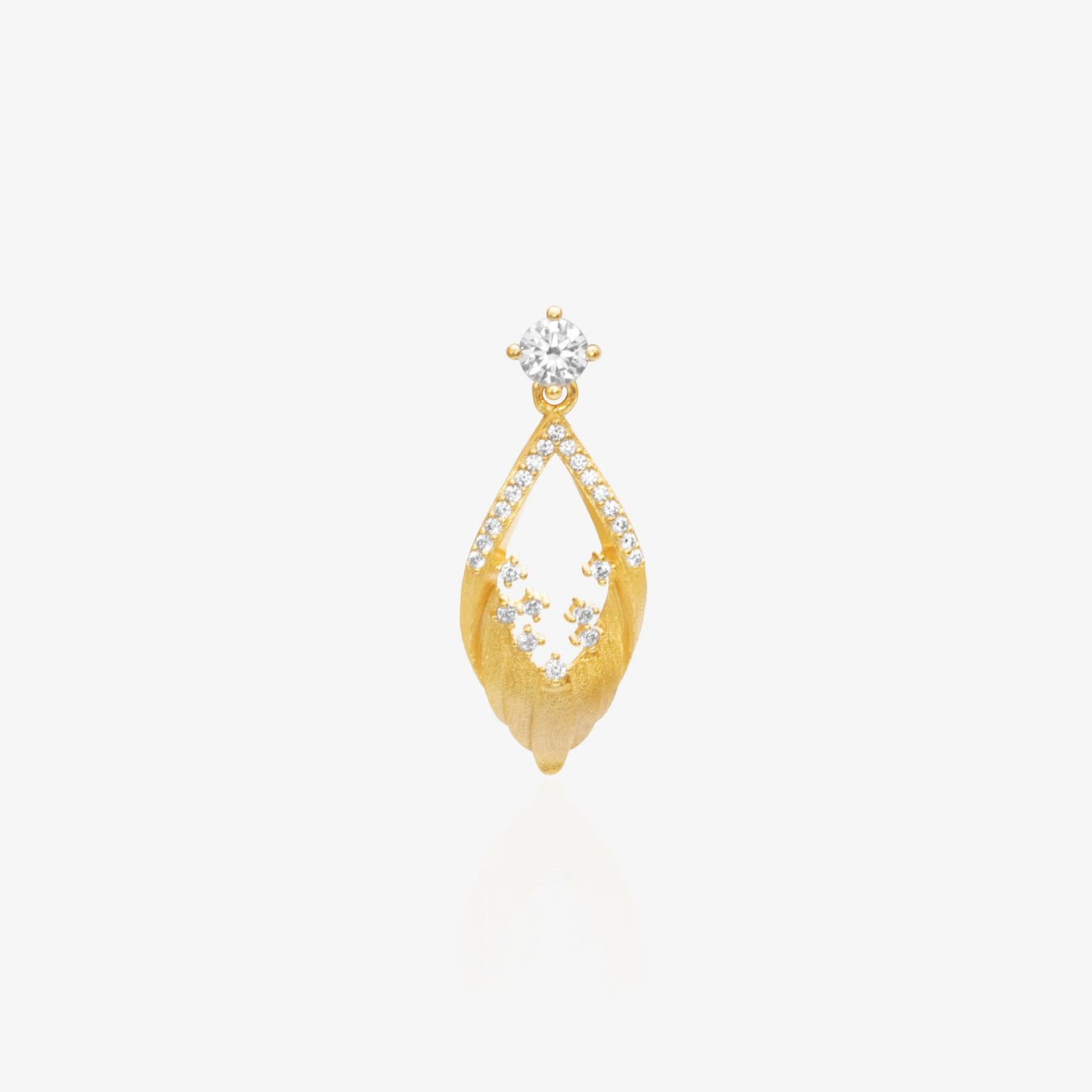
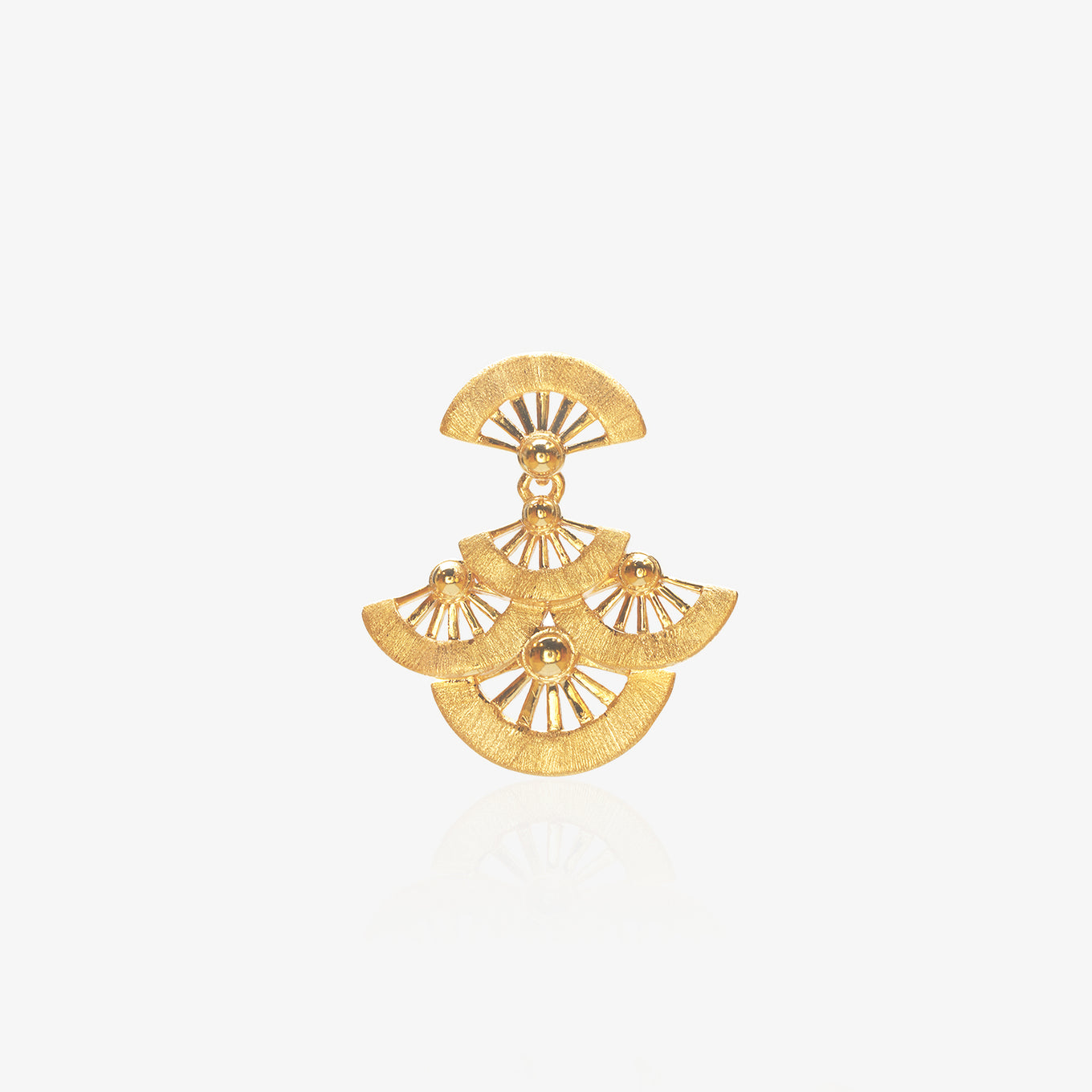
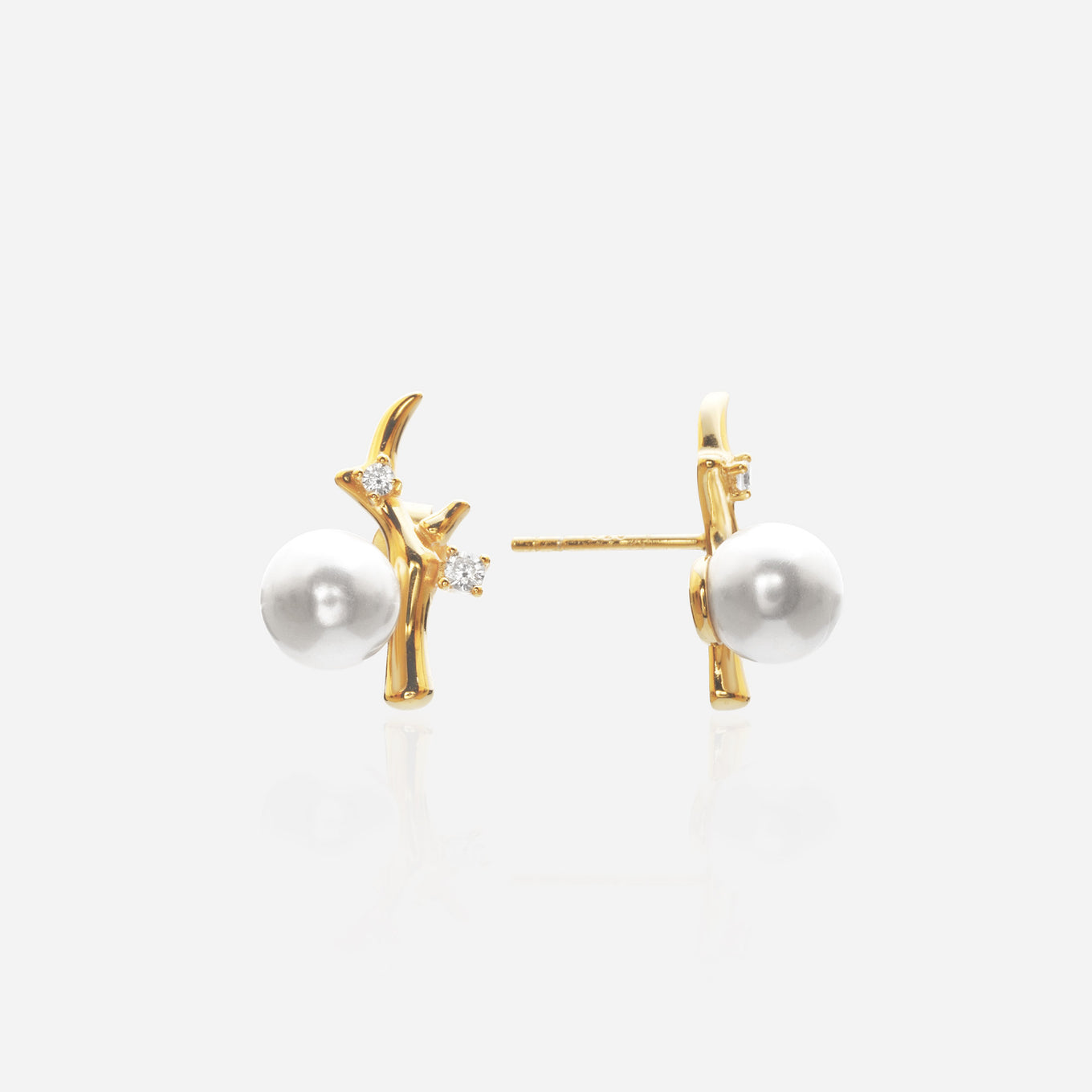
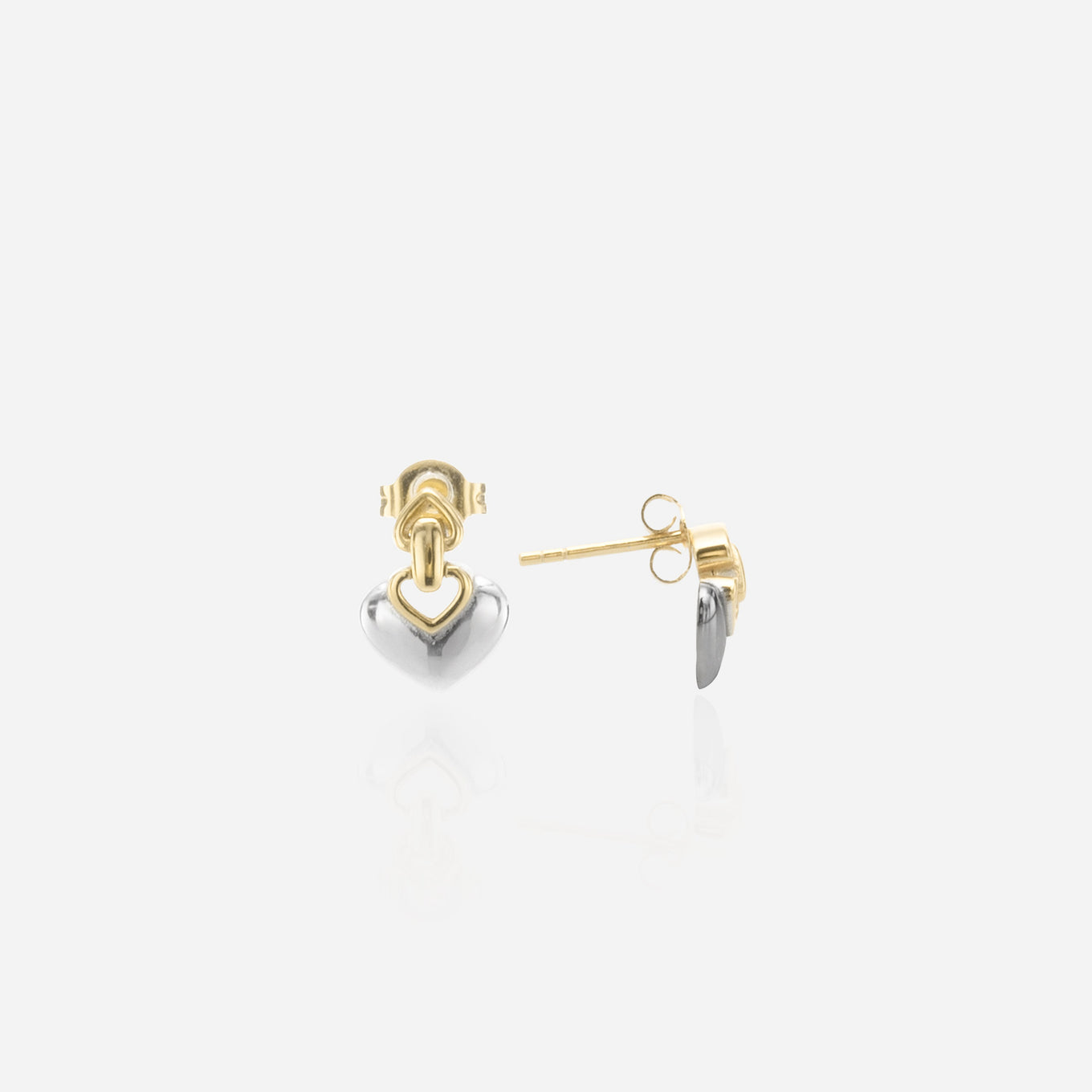
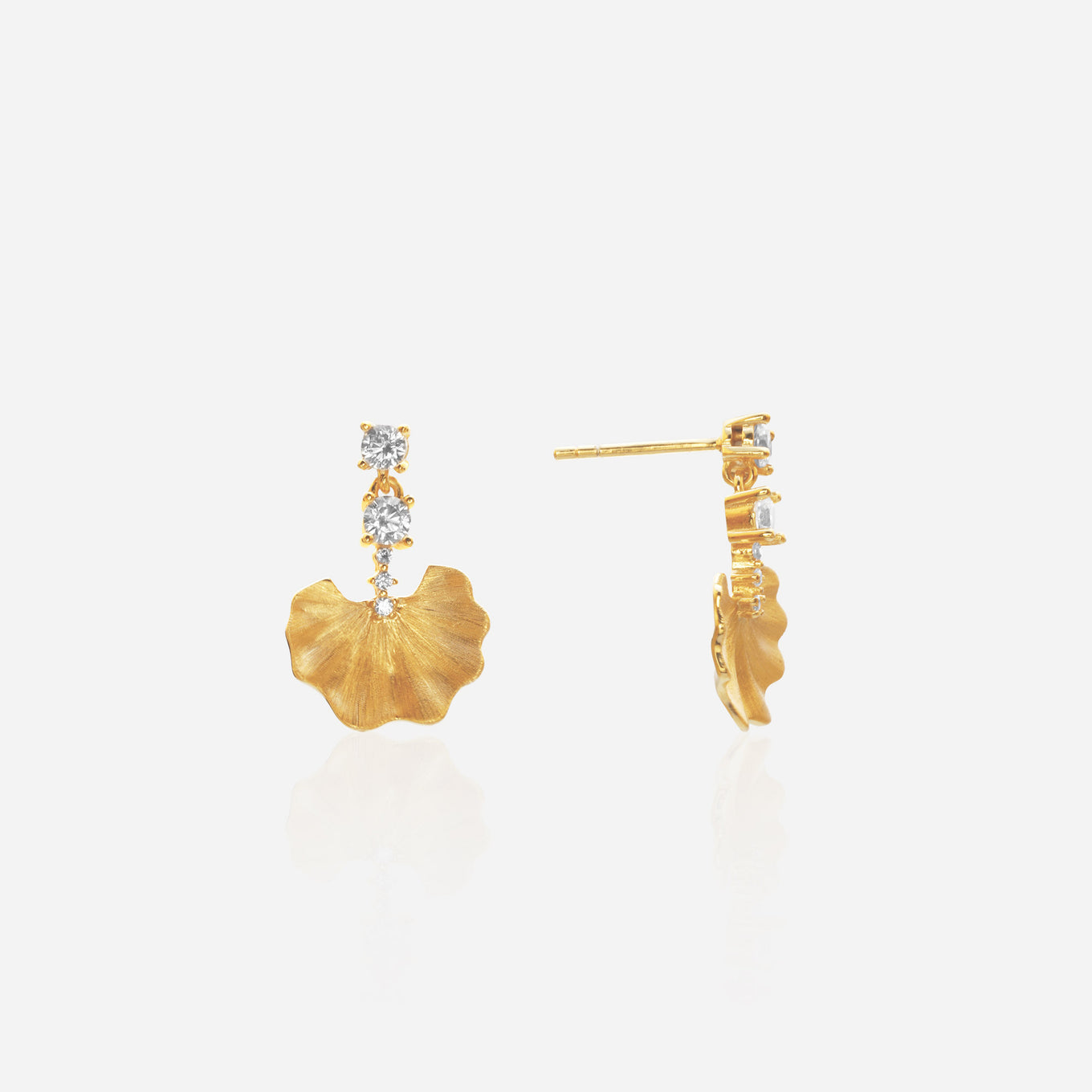
From the Gold Leaf Earrings to Quick Answer: Curated ear stacking — mixing studs, huggies, cuffs, and dangles across multiple piercings — from Gold Button Earrings with their vintage tweed texture to Gold Coral Branch Earrings with crystal pearl drops — — is 2026's most personal jewelry trend. Start with a helix cuff as your anchor, build with a mid-ear huggie, and finish with a lobe stud. The whole look can work with just two piercings and one no-piercing ear cuff.
📑 In This Guide
- The Anatomy of a Perfect Ear Stack: It's Not Random — It's Rhythm
- Rule 1: Anchor First, Fill Second
- Rule 2: The Lobe Is Your Canvas — Don't Waste It
- Rule 3: Mix Pierced + No-Piercing — It's Your Secret Weapon
- Ear Stacking by Ear Shape: Because Anatomy Matters
- Metal Mixing in Ear Stacks: The 2026 Rules Have Changed
- The ÉLARAMUSE Standard
- How to Build Your Stack: A Step-by-Step Blueprint
- Key Terms for Ear Stacking
- Ear Stack Care: Because Multiple Pieces Mean Multiple Touch Points
- Frequently Asked Questions
- Editor's Picks: Build Your Ear Stack
- References & Further Reading
The Anatomy of a Perfect Ear Stack: It's Not Random — It's Rhythm
Walk past any mirror in 2026 and you'll spot it: ears that tell a story. Not a single lonely stud — but a constellation. A tiny gold snake curling up the helix, a diamond chain draping from cartilage to lobe, a four-leaf clover winking from the second piercing.
This isn't maximalism for maximalism's sake. A curated ear stack is the jewelry equivalent of a capsule wardrobe — every piece earns its place through deliberate contrast, not accident. The best part? You don't need a dozen piercings to pull it off. Two or three well-placed holes, plus the right no-piercing pieces, can create a look that took an hour to plan and zero seconds of pain to execute.
I learned this the hard way. My first attempt at an ear stack looked like a jewelry box exploded on my ear. Too many competing shapes, no visual flow, and — worst of all — a cheap cuff that pinched so hard I took it off before lunch. The difference between "curated" and "cluttered" comes down to three rules I now live by.
Rule 1: Anchor First, Fill Second
Every balanced ear stack needs a focal point. That's your anchor — the piece that draws the eye first and sets the scale for everything else.
For most people, the helix (the upper cartilage curve) is the natural anchor position. It's high enough to be visible, far enough from the lobe to create negative space, and — critically — it's where ÉLARAMUSE's no-piercing ear cuffs shine.
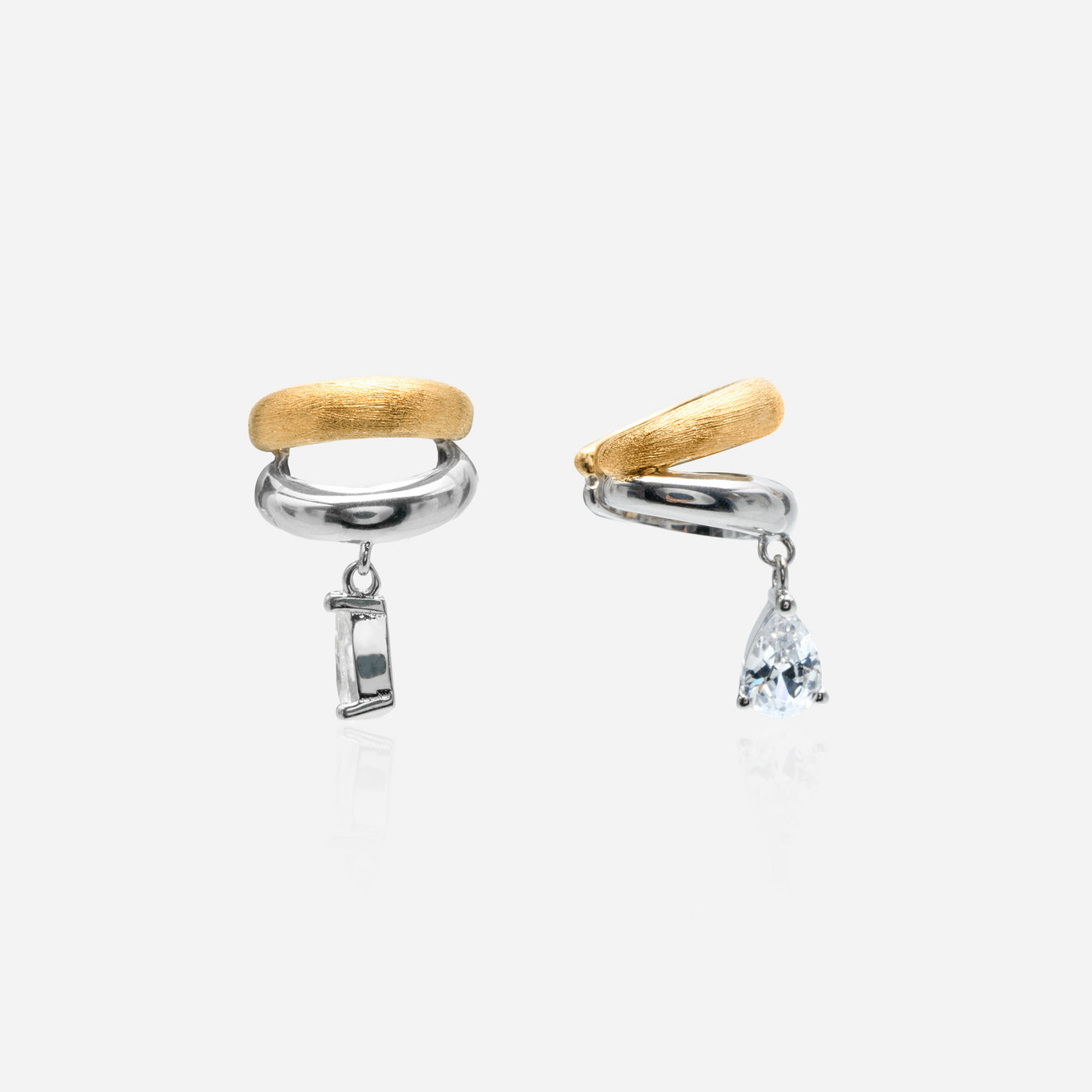
The Gold Helix Ear Cuff ($38) wraps around your upper cartilage without a single needle. Its two-tone finish catches light from both angles, and the pear-shaped drop at the tip creates a vertical line that elongates the ear. Put it on first. Build everything else around it.
If you do have a helix piercing, swap the cuff for a Guardian Snake Stud ($49) — the emerald eyes add just enough color to anchor a gold-heavy stack without overwhelming it. The snake's coiled body sits flush against the cartilage curve, as if it were designed for exactly this spot.
Rule 2: The Lobe Is Your Canvas — Don't Waste It
Your first lobe piercing is the most versatile spot on your ear. It's where you can go bold without shouting, delicate without disappearing.
For a balanced stack, your lobe piece should be slightly larger than your mid-ear pieces but not as visually dominant as your helix anchor. Think of it as the bass note — grounding the composition.
Three configurations that actually work — tested on real ears, not mood boards:
- The Romantic Stack: Love Knot Drop Earrings ($45) on the first lobe → dainty stud on the second → helix cuff. The knot's pear-shaped drop creates movement against the static upper ear. The love knot symbolism adds a layer of intention — this isn't just pretty; it means something.
- The Botanical Stack: Cascade Ginkgo Leaf Earrings ($38) on the lobe → Gold Clover Earrings ($35) on the second piercing → helix cuff. Nature motifs that share a visual language without matching. Ginkgo leaves symbolize resilience (these trees survived Hiroshima); clovers represent luck. Together they tell a story of earned fortune.
- The Dramatic Stack: Firework Threader Earrings ($59) through the lobe → single stud above → Diamond Chain Ear Cuff ($63) hugging the cartilage. The chain drapes across the ear's middle third, connecting upper and lower in one fluid line. This is your "I have plans" ear.
Rule 3: Mix Pierced + No-Piercing — It's Your Secret Weapon
Here's where most ear stack guides fall short. They assume you have — or want — five piercings. You don't.
The real innovation in 2026 ear styling is the hybrid stack: one or two piercings combined with no-piercing ear cuffs and wraps. This approach gives you the density of a fully pierced ear without the commitment, healing time, or — let's be honest — the pain of cartilage needles.
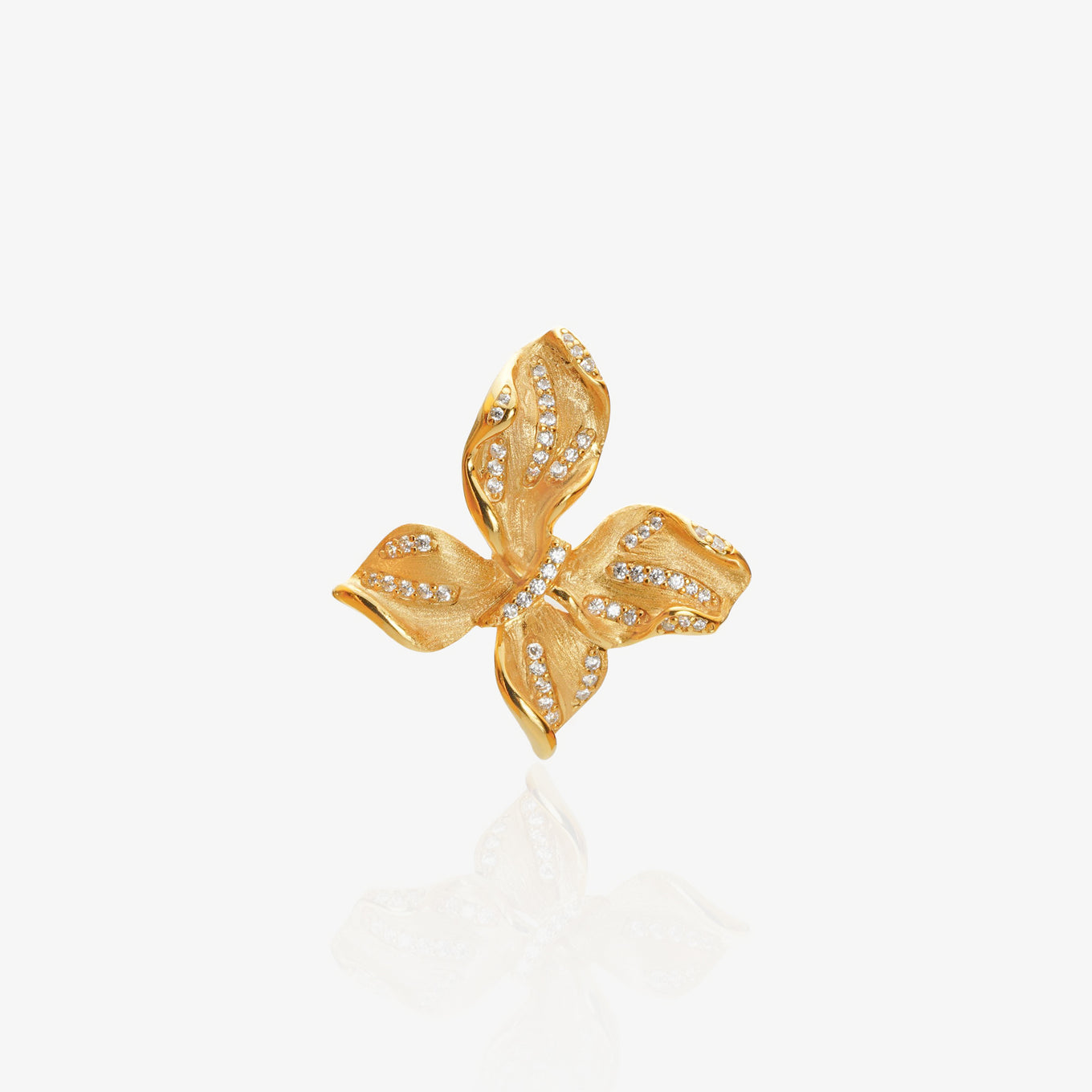
Unlike traditional clip-ons that pinch after an hour, a well-designed ear cuff uses tension, not compression. ÉLARAMUSE's Gold Flower Ear Cuff ($42) slides onto the thinnest part of your cartilage and stays put through dinner, dancing, and everything in between. The flower motif — a cluster of delicate gold petals with a chain tassel drop — adds organic softness to what could otherwise feel like an armor-heavy look.
Why does this matter? Because 72% of women have exactly two lobe piercings per ear, according to industry surveys. The hybrid stack strategy meets people where they actually are — not where a piercing studio wants them to be.
Ear Stacking by Ear Shape: Because Anatomy Matters
For Small Ears: Two Pieces, Maximum Impact
If you have petite ears, skip the mid-ear real estate entirely. Go with a single statement helix cuff + one delicate lobe stud. Two pieces, maximum impact. The Gold Helix Ear Cuff at 1.2cm diameter is scaled for smaller cartilage curves, and the Guardian Snake Studs at 0.8cm won't overpower a narrow lobe.
For Elongated Ears: Work the Vertical
Your ear's natural shape creates length — lean into it. Stack three pieces in a vertical line: lobe → mid-cartilage → upper helix. Use the Diamond Chain Ear Cuff ($63) as your connector — its chain drapes downward, linking the upper and lower thirds visually without adding bulk to the middle.
For Round Ears: Add Structure with Angular Pieces
Rounder ear shapes benefit from geometric contrast. The Love Knot Drop Earrings with their angular pear drop create diagonal lines that structure a soft contour. Pair with a Gold Clover Earring on the second piercing for a luck-and-love narrative that feels intentional rather than random.
Metal Mixing in Ear Stacks: The 2026 Rules Have Changed
Three years ago, mixing metals was a "fashion risk." In 2026, it's practically expected. The key isn't whether you mix — it's how.
The 70/30 Rule: Let one metal dominate 70% of your stack, with 30% in a contrasting finish. If you're wearing all ÉLARAMUSE gold-plated pieces, add one bright sterling silver accent for dimension without chaos.
Unlike costume jewelry that uses mystery alloys and turns your ear green by lunch, every ÉLARAMUSE piece shares the same Ag925 sterling silver base. Even when finishes differ — polished gold, two-tone, bright silver — the underlying metal is identical. That means zero risk of galvanic corrosion, the chemical reaction that happens when dissimilar metals touch and accelerate tarnish.
Material Science Reality: Ag925 sterling silver (92.5% pure silver + 7.5% copper alloy) is inherently hypoallergenic. When plated with 0.5-micron 18K gold and manufactured nickel-free (Ni <0.01%), the result is jewelry that doesn't react with skin chemistry — even when worn 24/7 in a multi-piece stack. The American Academy of Dermatology confirms that nickel is the #1 cause of contact dermatitis from jewelry. Eliminate it, and you eliminate the problem.
The ÉLARAMUSE Standard
| Feature | Specification |
|---|---|
| Base Metal | Solid Ag925 Sterling Silver |
| Plating | 0.5-micron 18K gold plating |
| Safety | 100% Nickel-Free, Hypoallergenic |
| Durability | Water-resistant, Tarnish-resistant |
| Wear | Shower-safe, Sweat-proof, Sleep-safe |
"We believe jewelry should work as hard as you do — shower-safe, sleep-safe, and never a source of anxiety. Every ÉLARAMUSE piece is built on Ag925 sterling silver with 0.5-micron 18K gold plating, rigorously tested for real life. An ear stack you're afraid to sweat in is an ear stack you won't wear."
How to Build Your Stack: A Step-by-Step Blueprint
- Start with your anchor. Pick one statement piece — helix cuff, dramatic dangle, or bold stud — and place it where your ear naturally draws the eye (typically the helix or first lobe).
- Add a connector. Choose a mid-ear piece that bridges the gap between anchor and lobe. The Diamond Chain Ear Cuff is purpose-built for this — its chain drape literally connects two points on your ear.
- Finish with a lobe stud. This is your foundation piece. It should be smaller than your anchor, complementary in shape, and secure enough to sleep in.
- Check the negative space. Step back from the mirror. Is there breathing room between pieces? If every millimeter of ear is covered, remove one piece. Curated means edited — not stuffed.
- Wear it for a full day before committing. A stack that looks perfect in the mirror can feel like a sensory nightmare by 4 PM. The ÉLARAMUSE no-piercing cuffs are weight-tested for all-day comfort — but your personal tolerance is the final judge.
Key Terms for Ear Stacking
- Helix: The upper curved rim of the ear's cartilage — the most popular spot for cuffs and cartilage studs.
- Curated Ear: A deliberately composed arrangement of multiple earrings across different piercing positions, selected as a cohesive set rather than worn randomly.
- Threader Earring: A fine chain that passes through the piercing and dangles on both sides — creates movement without weight.
- Ear Cuff: A no-piercing jewelry piece that clips or wraps around the cartilage — zero commitment, maximum impact.
- Negative Space: The intentional gaps between stacked pieces — without it, a stack reads as clutter.
Ear Stack Care: Because Multiple Pieces Mean Multiple Touch Points
When you're wearing three or four earrings daily, maintenance compounds. Here's what actually matters:
- Remove cuffs before showering. Even waterproof jewelry benefits from a break. Water pressure behind the ear can loosen tension-fit cuffs over time.
- Rotate your studs. Wearing the same stud in the same piercing for months can cause metal fatigue at the post. Switch pieces every two weeks — your ear stack will feel new without buying anything.
- Clean the backs. Earring backs collect more debris than fronts. A quick wipe with a microfiber cloth once a week prevents buildup that can irritate piercings.
- Store vertically. Lay ear cuffs flat in a jewelry tray — never toss them in a pouch where chains and dangles tangle.
Frequently Asked Questions
Q: How many piercings do I actually need for a curated ear?Two per ear is the sweet spot. A first and second lobe piercing, combined with one or two no-piercing ear cuffs, creates a five-piece look with zero cartilage commitment. If you have a helix piercing, even better — but it's optional.
Q: Can I sleep in my ear stack?Studs and huggies — yes, if they're flat-back and nickel-free. Cuffs and dangles — no. Remove anything with a chain or extended shape before bed. The ÉLARAMUSE Guardian Snake Studs are sleep-safe; the Firework Threader Earrings are not. Sleep in your base layer, add drama in the morning.
Q: Will mixing gold and silver jewelry cause tarnish?Only if the base metals differ. All ÉLARAMUSE pieces share an Ag925 sterling silver base regardless of surface finish, so mixing gold-plated and silver-finish pieces from the same brand won't trigger galvanic corrosion. Mixing across brands with unknown alloys? That's when problems start.
Q: How do I match my ear stack to my outfit without overthinking it?Let your ear stack be the outfit's constant. Build one signature stack that works with 80% of your wardrobe — neutral gold tones, organic shapes, no novelty pieces — and wear it daily. Change it only for special occasions. A consistent ear stack becomes part of your visual identity, not something you redraft each morning.
Q: What's the difference between ear stacking and just wearing multiple earrings?Ear stacking is compositional — each piece relates to the others through scale, shape, or symbolism. "Wearing multiple earrings" is additive — you put on what you like without considering spatial relationships. The former looks curated; the latter looks busy.
Editor's Picks: Build Your Ear Stack
- Anchor Piece: Gold Helix Ear Cuff — Two-tone wrap for upper cartilage, no piercing needed. $38
- Connector Piece: Diamond Chain Ear Cuff — Chain drape linking upper to mid-ear, one piercing required. $63
- Lobe Statement: Love Knot Drop Earrings — Pear-shaped drop with diamond accents. $45
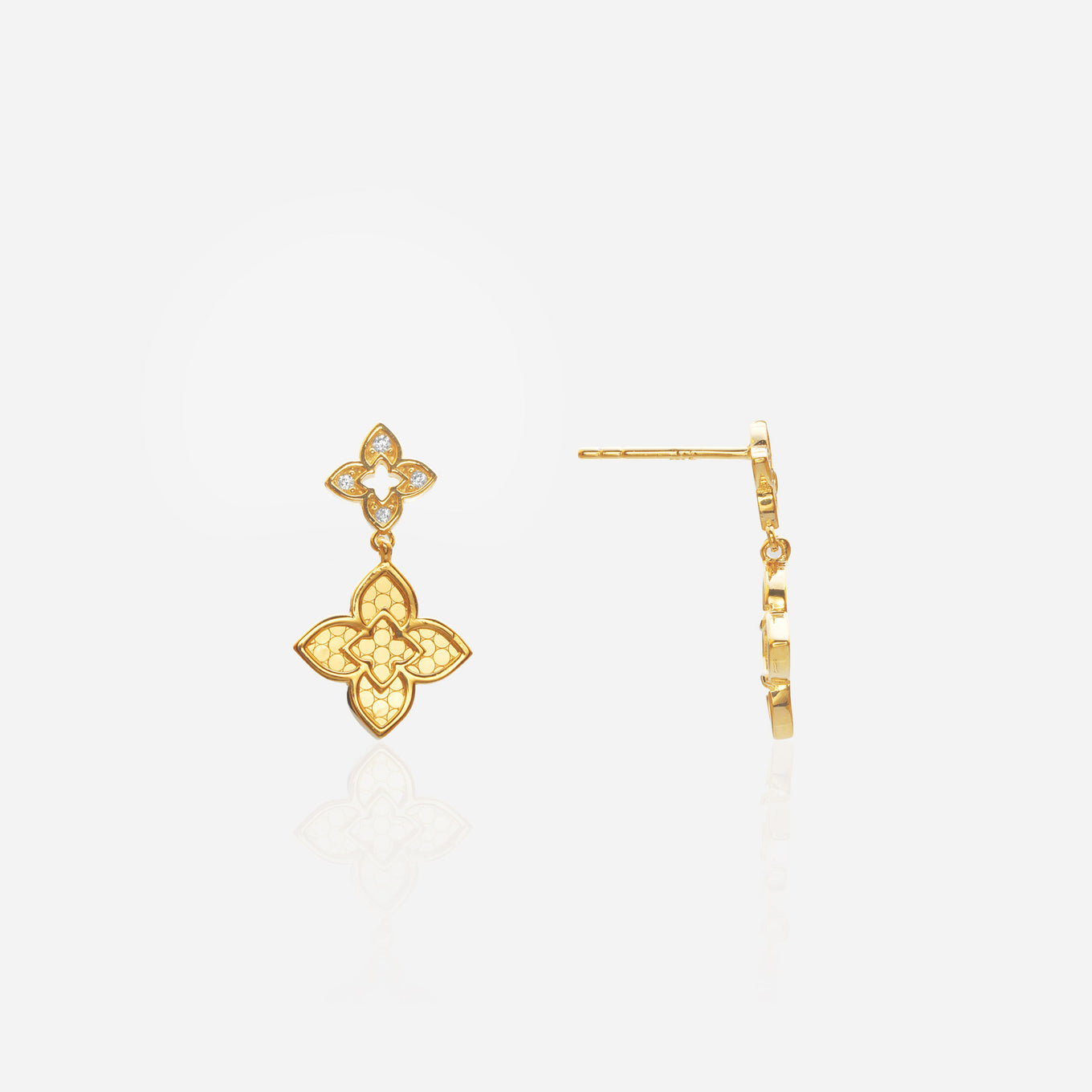
- Second Piercing: Gold Clover Earrings — Textured four-leaf design, luck you can wear. $35
Shop the Full Ear Collection →
Your ear stack is a talisman you wear facing the world — a composition of symbols, metals, and shapes that says something about who you are before you open your mouth. Build it with intention. Wear it with confidence. And if a piece doesn't earn its place after a week? Edit it out. Curated means chosen — not collected.
Deep Dive: Specialized Ear Cuff Styles for Your Curated Stack
Mastering ear stacking means understanding the full spectrum of ear cuff options available to you. Beyond the basic cuff, there are entire subcategories—each with their own design philosophy, placement rules, and styling potential. Below, we explore three specialized ear cuff styles that elevate any curated stack from "nice" to "unforgettable."
Botanical & Floral Ear Cuff Styles
Botanical jewelry—pieces that reference real flowers, leaves, and organic forms—has dominated jewelry trends for three consecutive years. But here's the gap most people miss: nearly all flower earrings are post-back studs or hook-style dangles. Both require a pierced earlobe. Both leave the upper ear completely bare.
A flower ear cuff changes the equation entirely. By occupying the upper helix—the same placement as a cartilage piercing—it creates the "curated ear" aesthetic without a single needle. The visual impact is architectural: your ear becomes a canvas, and the flower cuff is the undeniable focal point.
Behind the design philosophy that separates our Gold Flower Ear Cuff from costume jewelry: two deliberate choices. First, abstraction over realism—the petals are sculpted with geometric precision, referencing a flower without being one.
It feels more Art Deco than botanical illustration. Second, sculptural dimension—the petals stand away from the ear, casting micro-shadows that shift as you move. Unlike enameled flower cuffs that rely on bright colors (and chip within months), our design uses the natural warmth of 18K gold plating on sculpted sterling silver. The light play does all the communicating.
Style it three ways: as a solo statement (one cuff, nothing else—the cleanest approach), in a curated stack (pair with the Diamond Chain Ear Cuff below it like a vine to your flower), or as a mixed-metal moment (the warm gold tone plays beautifully with silver and rose gold pieces in the same ear).
Helix & Cartilage Ear Cuff Styling
The helix—from the Greek word for "spiral," the same root as the DNA double helix—is the curved outer rim of your upper ear. A helix ear cuff wraps around this cartilage ridge using spring tension rather than a puncture wound, staying put through pressure rather than pain.
The benefit is immediate: the same bold visual impact as a cartilage piercing, but with zero healing time. The American Academy of Dermatology notes that cartilage piercings can take 4 to 12 months to fully heal, with higher infection risk due to limited blood supply in cartilage tissue. A cuff gives you the same look with zero recovery.
Our Gold Helix Ear Cuff was designed with a deliberate two-tone finish: brushed 18K gold along the top edge, polished rhodium-plated silver on the inner band. This solves the biggest frustration in ear stacking—compatibility. Single-metal cuffs force you to commit to one color family. A two-tone cuff bridges gold and silver automatically, making your entire mixed-metal stack look intentional rather than chaotic.
The pear-drop lab diamond at the bottom swings freely—a kinetic detail that catches light with every turn of your head. This is the kind of movement you only get from a well-placed ear cuff. Styling plays: wear it solo on bare ears for maximum impact, pair with a single gold stud for a minimalist stack, or add it to an ear that already has both gold and silver piercings to tie everything together instantly.
The Complete No-Piercing Ear Cuff Guide
Ear cuffs aren't one monolithic category—they come in distinct types, each suited to different ear anatomy and style goals. Understanding the landscape helps you choose the right piece for your curated stack:
- Helix ear cuffs sit on the upper cartilage—the most popular placement, ideal for first-time wearers.
- Lobe ear cuffs mimic the look of a dangling earring on the earlobe with zero piercing required—perfect for achieving the classic earring silhouette without commitment. Our Lily Drop Ear Cuff exemplifies this category.
- Chain ear cuffs drape across the ear from one anchor point to another, creating a dramatic, architectural line. Best for those who already have a single piercing to serve as the lower anchor.
The #1 mistake to avoid: buying cheap wire ear cuffs under $15. These are made from thin, flexible wire that loses its shape after a few wears—sliding off the moment you turn your head. A quality ear cuff, by contrast, is constructed from solid Ag925 sterling silver with adjustable tension, engineered to stay securely in place from morning to night.
All ÉLARAMUSE ear cuffs share the same material standard: Ag925 sterling silver base (92.5% pure silver), 0.5-micron 18K gold plating (approximately 5x the durability of industry-standard flash plating), and 100% nickel-free construction.
This means every cuff is shower-safe, gym-to-office ready, and engineered for the estimated 15–20% of women with nickel sensitivity—the single most common metal allergy according to the American Academy of Dermatology. Whether you're building your first ear stack or adding a fourth piece, start with material integrity. The right cuff stays with you for years, not seasons.
Explore All Ear Cuffs & No-Piercing Styles →
References & Further Reading
- Gemological Institute of America (GIA) — "Metal Allergies and Jewelry"
- Victoria and Albert Museum — "A History of Earrings: From Ancient to Avant-Garde"
- American Academy of Dermatology — "Nickel Allergy: Jewelry Selection Guide"