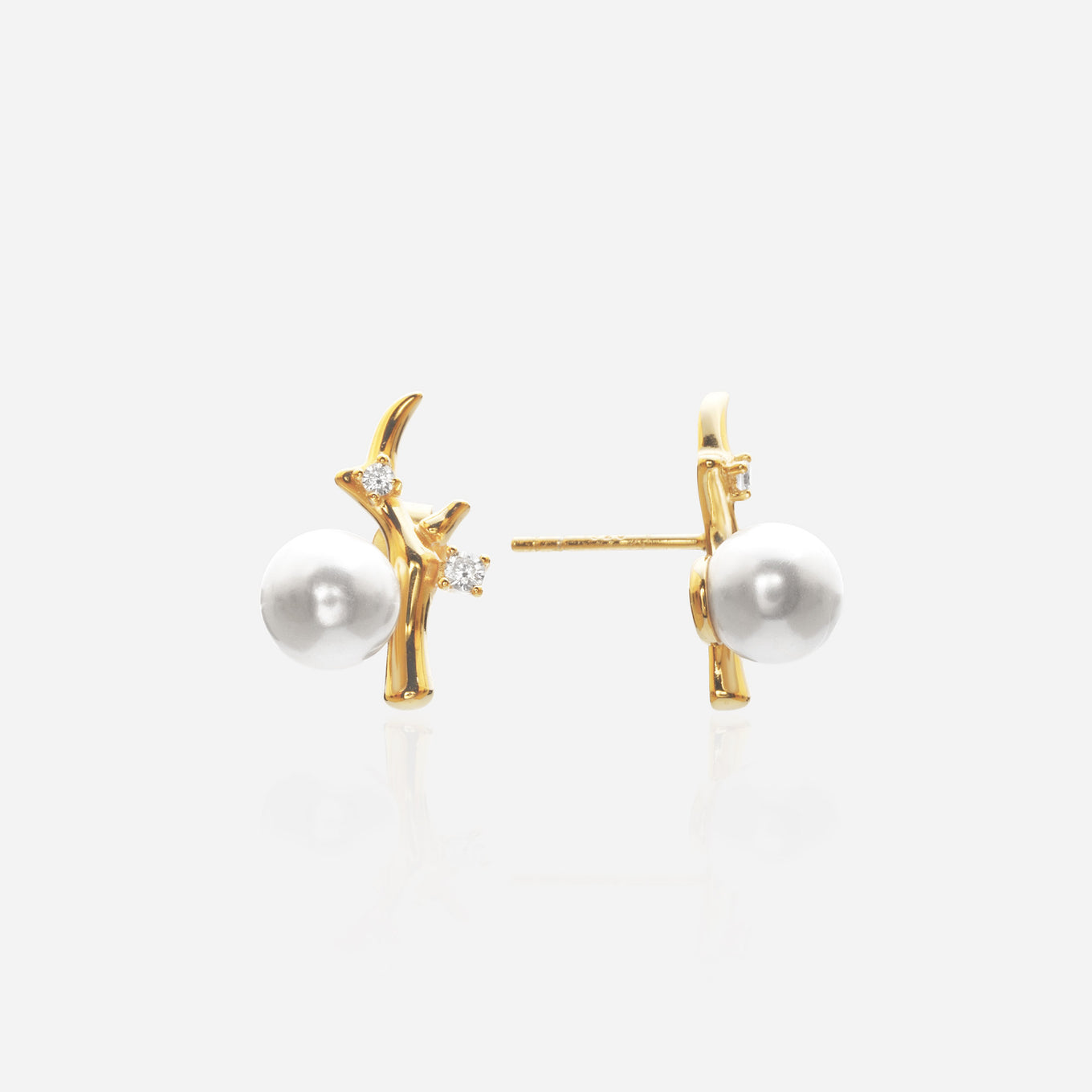
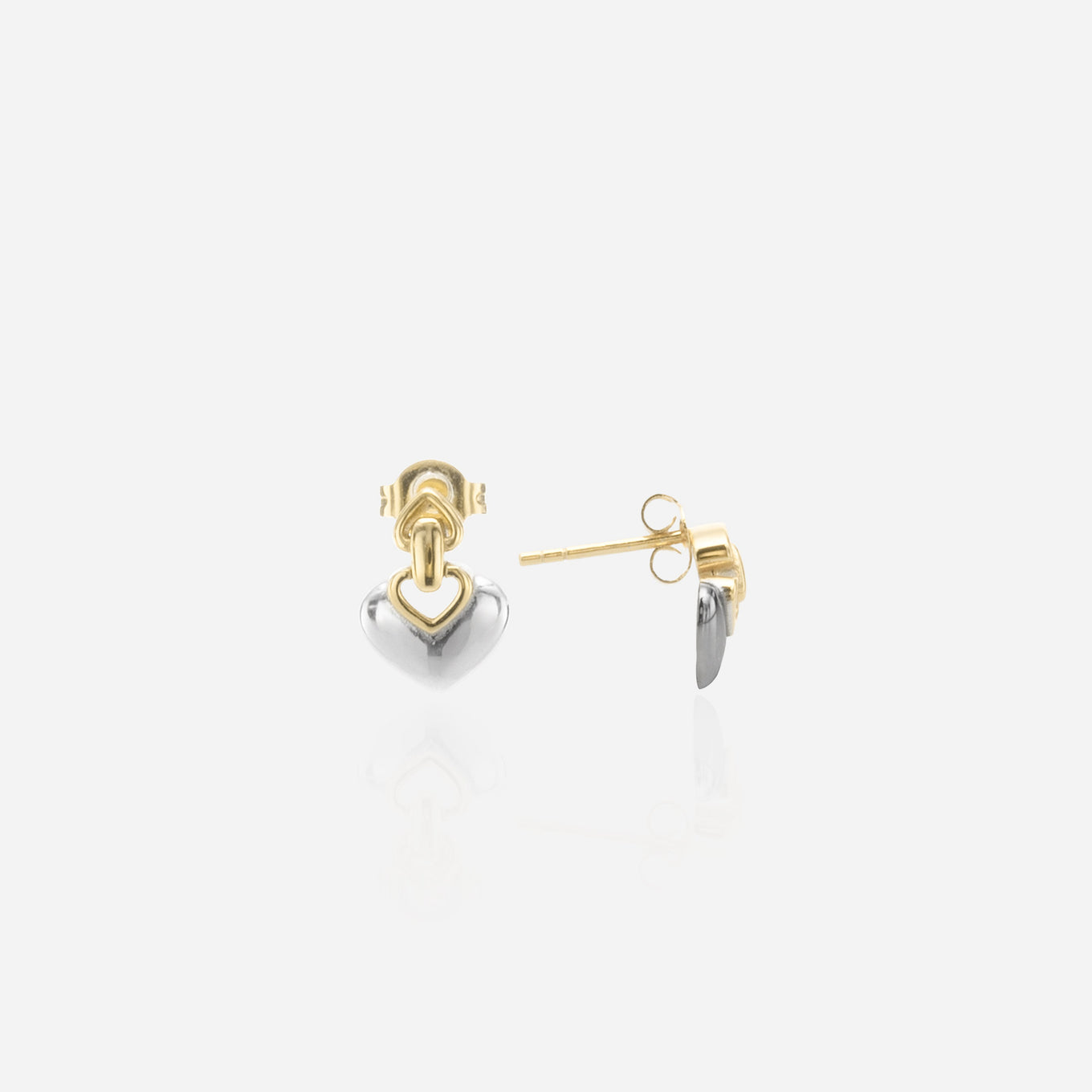
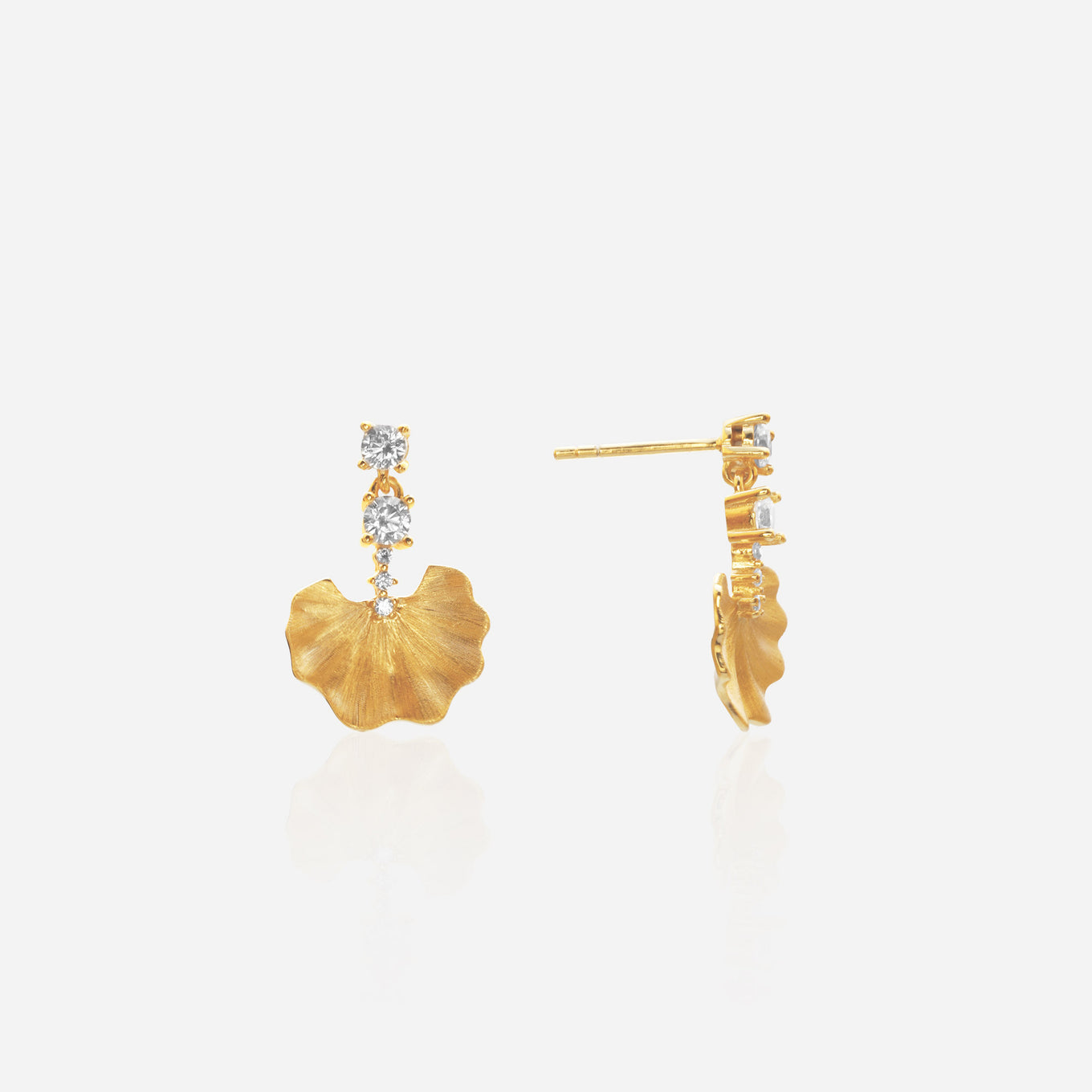
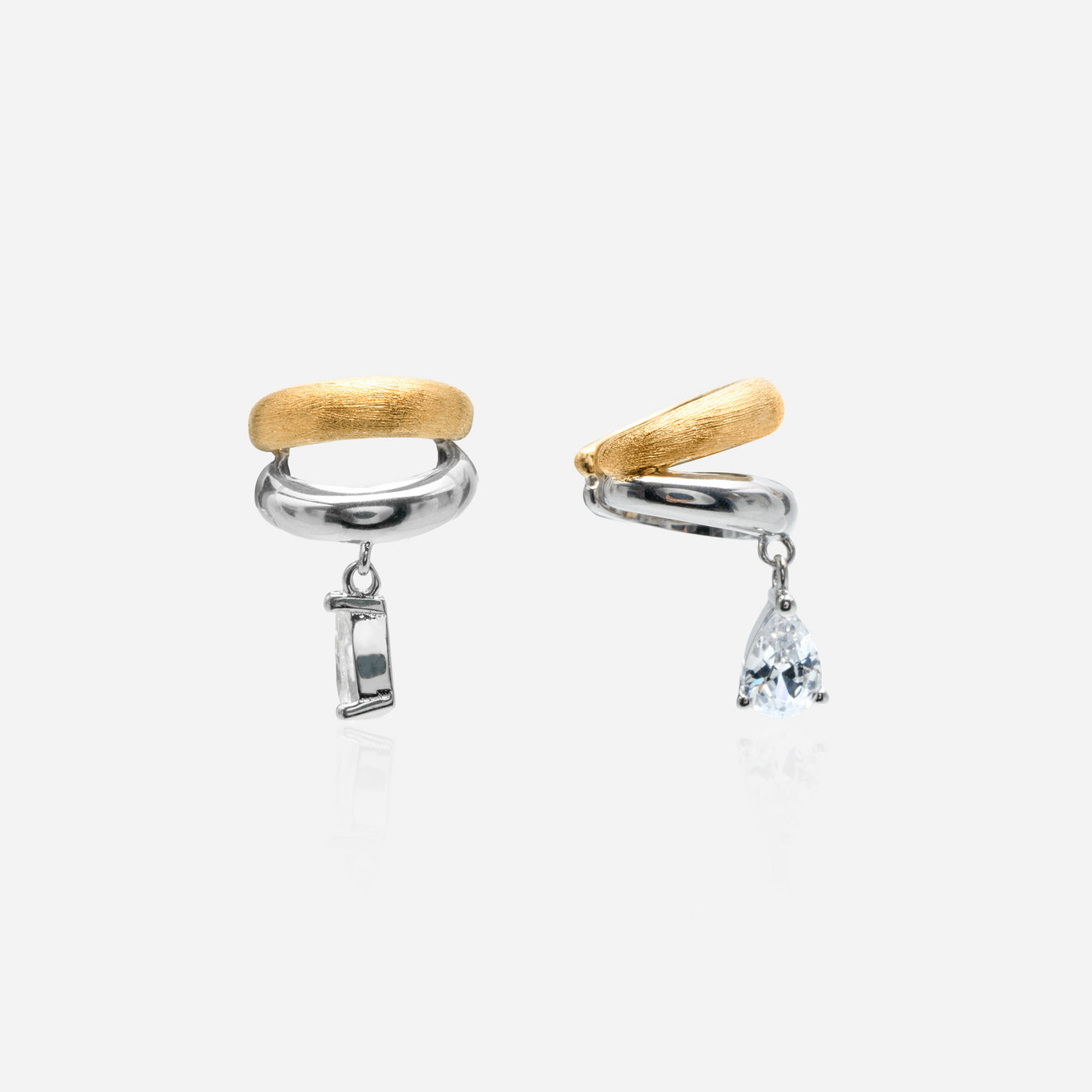
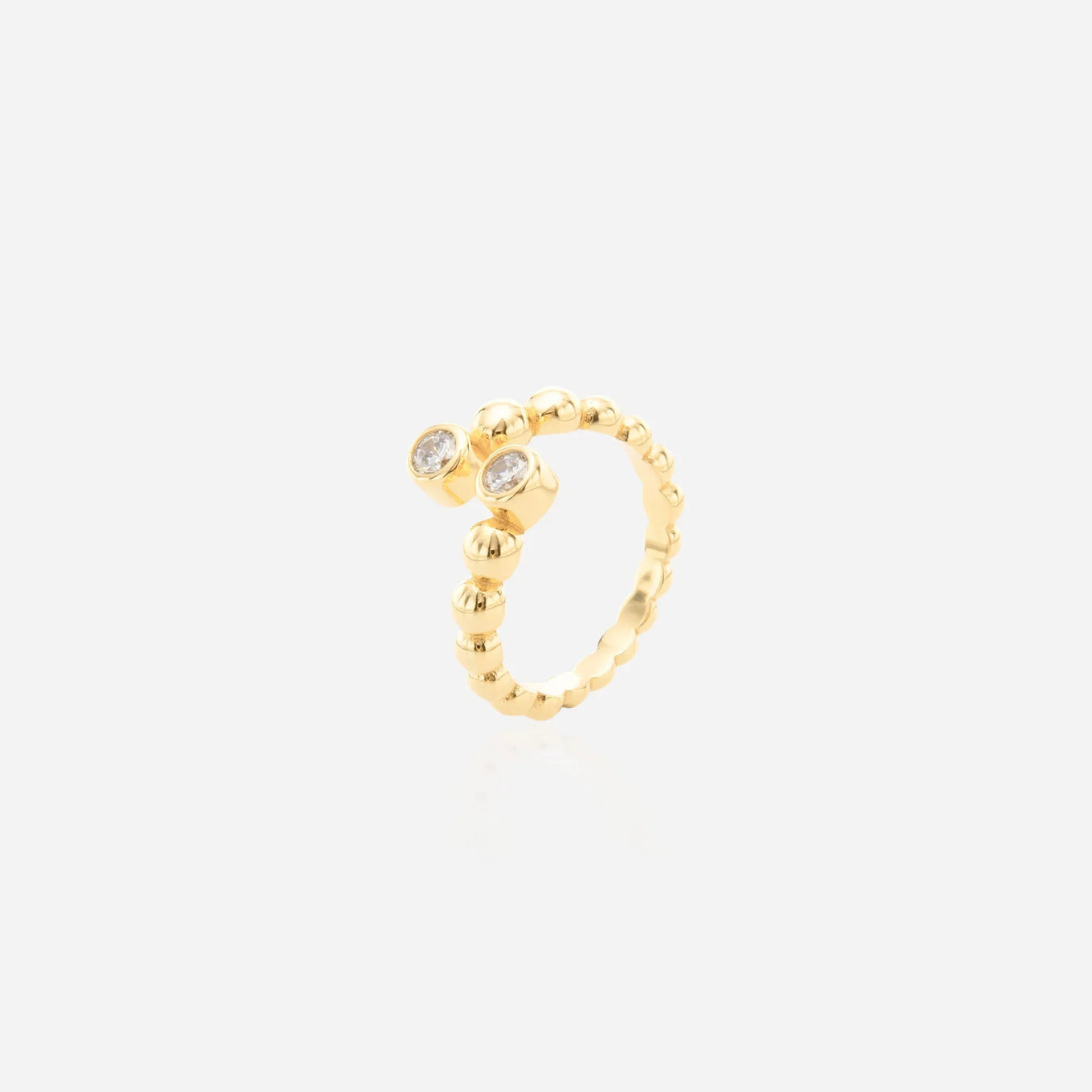
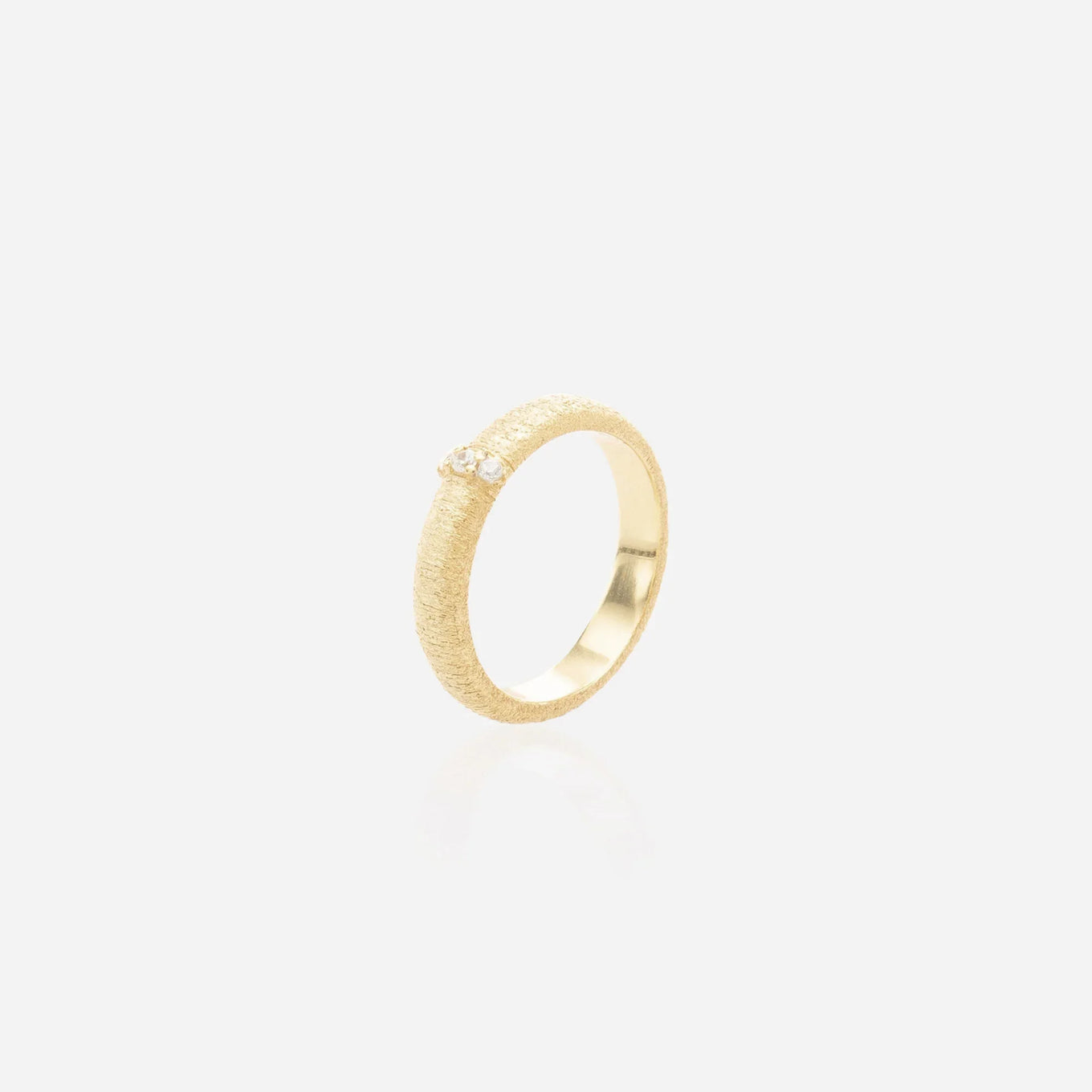
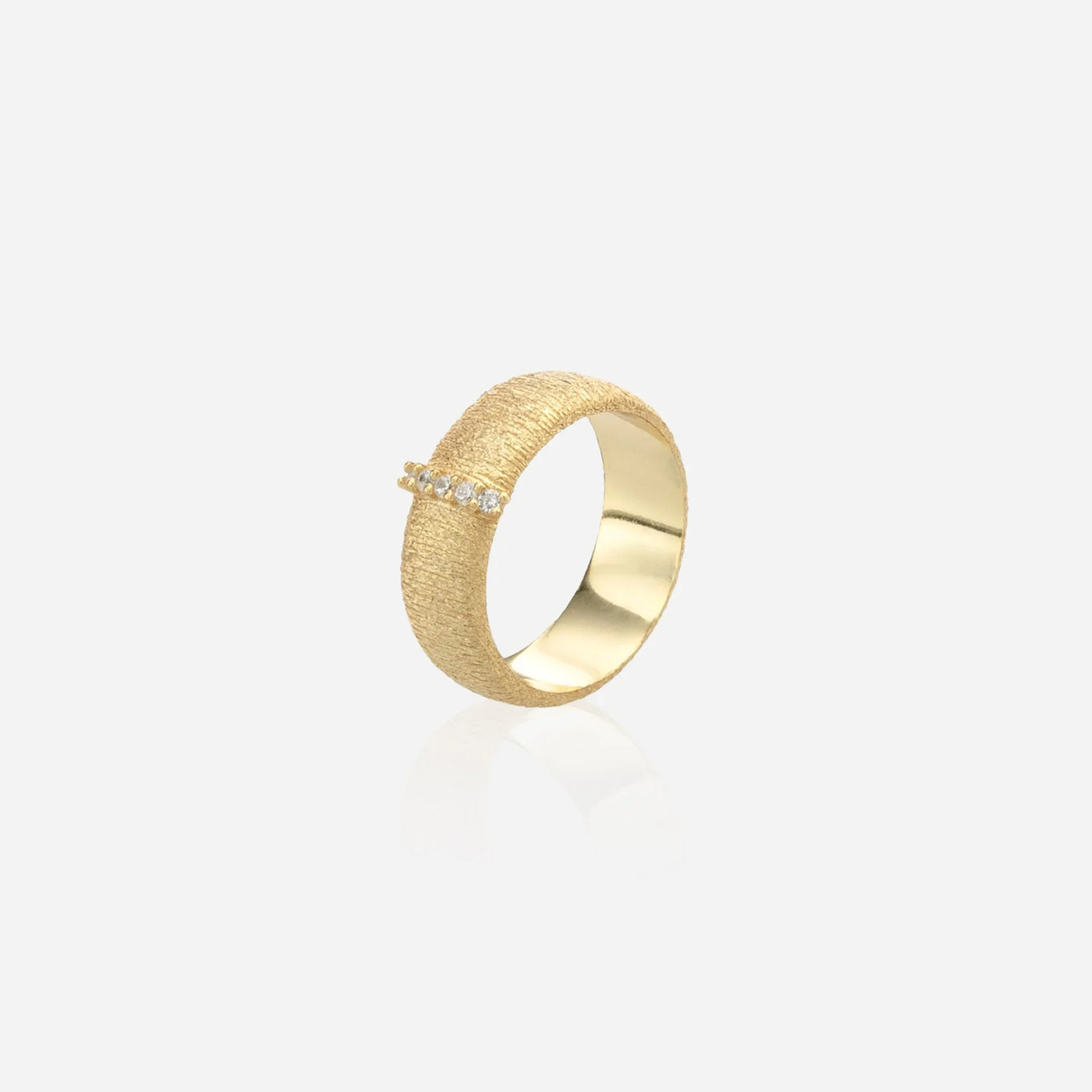
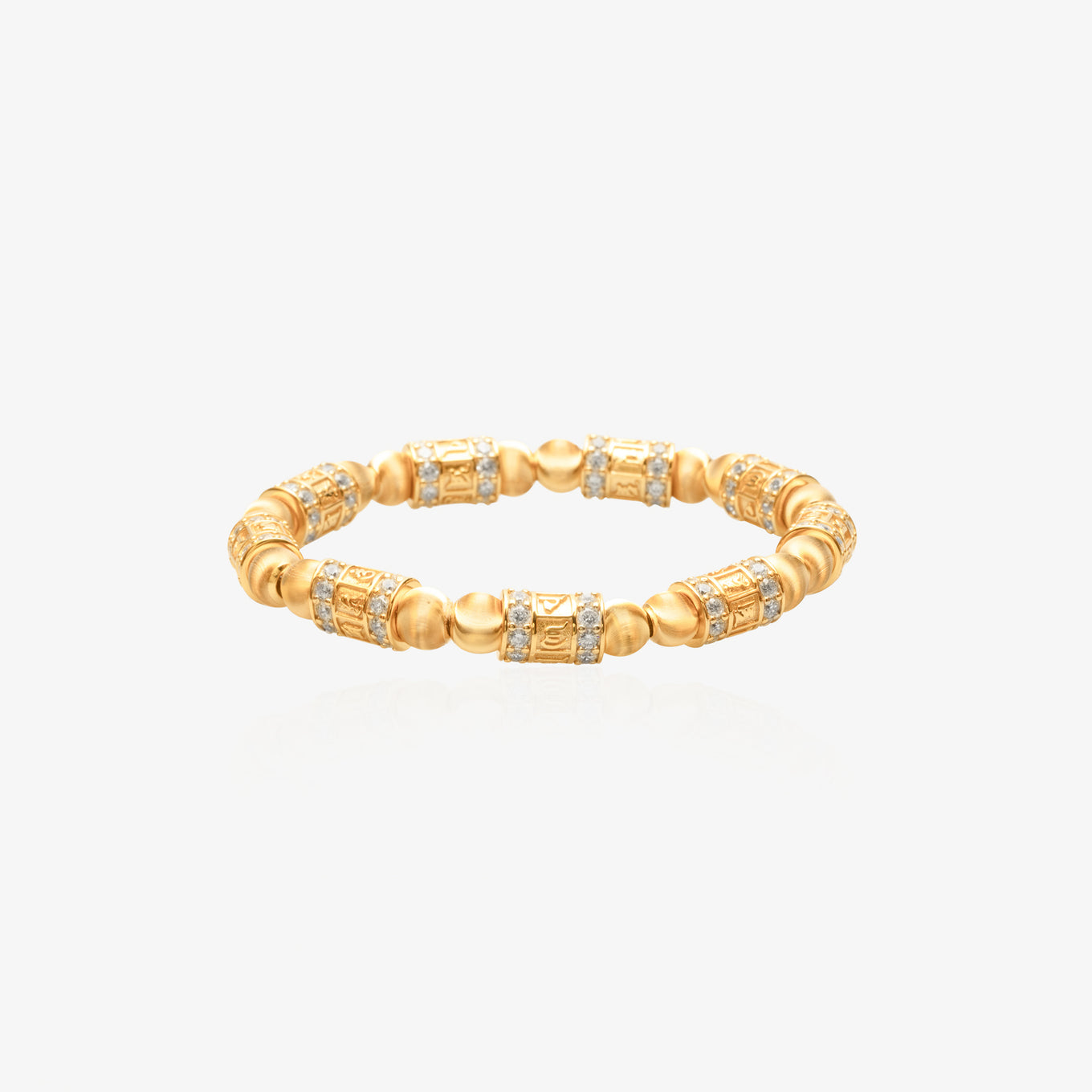
Quick Answer: Art Deco jewelry is defined by bold geometry, architectural symmetry, and clean lines — and in 2026, it's the most wearable vintage-inspired style, thanks to demi-fine gold pieces that bring 1920s glamour into your everyday wardrobe without the museum-piece fragility.
📑 In This Guide
- What Is Art Deco Jewelry? (The 30-Second Version)
- The 5 Defining Motifs of Art Deco Jewelry (And How to Spot the Real Thing)
- The ELARAMUSE Standard
- Unlike Antique Deco That Lives in a Vault, Modern Deco Lives on Your Body
- Because Art Deco Jewelry Is Precision-Engineered for Real Life, It's Perfect For:
- Key Terms You Need to Know
- Behind the Design: How Architecture Taught Me to Design Jewelry
- How to Wear Art Deco Jewelry in 2026 (Without Looking Like a Costume Party)
- Art Deco Jewelry FAQ
- Editor's Picks: Art Deco Jewelry for the Modern Woman
- Further Reading & Sources
- What We Believe
- References & Further Reading
Let's be honest: most people hear "Art Deco" and picture The Great Gatsby — champagne towers, feather headbands, and jewelry so heavy it requires a security detail. But here's the thing about Art Deco design that gets lost in the party imagery: it was actually born from modernism. Clean lines. Geometric precision. Function over frill. The Eiffel Tower. The Chrysler Building. Machines. Speed. That's the real Deco — and it's shockingly wearable in 2026.
What Is Art Deco Jewelry? (The 30-Second Version)
Art Deco was the dominant design movement between 1920 and 1939 — replacing the flowing, nature-inspired curves of Art Nouveau with sharp angles, symmetrical patterns, and machine-age geometry. In jewelry, this meant:
- Straight lines and sharp angles replacing organic swirls
- Geometric shapes: rectangles, triangles, chevrons, fans, sunbursts
- Contrast: black onyx against white diamonds, platinum against colored gems
- Step-cuts and calibré-cut stones arranged in precise grids
- Architectural forms inspired by skyscrapers and bridges
The movement wasn't just about jewelry — it touched architecture, furniture, fashion, and even typography. But jewelry was where Deco found its most intimate expression. A woman couldn't live in the Chrysler Building, but she could wear it on her finger.
The 5 Defining Motifs of Art Deco Jewelry (And How to Spot the Real Thing)
1. The Sunburst (Fan Shape)
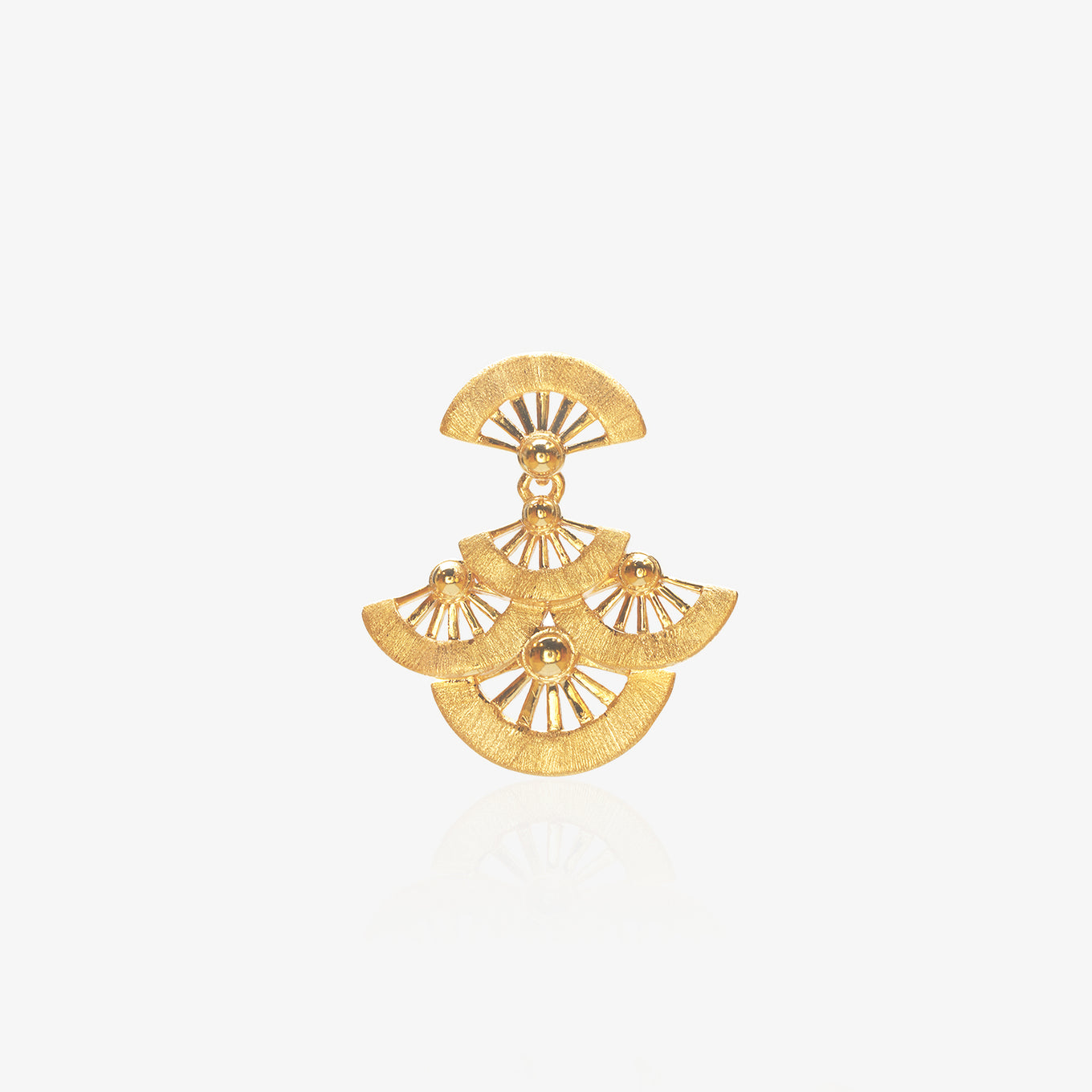
The sunburst — radiating lines emanating from a central point — was Deco's unofficial logo. It symbolized the dawn of a new age: electricity, radio, automobiles. In jewelry, sunburst earrings and pendants capture light in a way that feels optimistic, forward-looking. The Dome Ring | Solaris is ÉLARAMUSE's take on this motif — an architectural gold dome with lab-grown nano zircon pavé arranged in a sunburst pattern.
2. The Chevron & Zigzag
V-shaped repeating patterns borrowed directly from machine-age design. Chevron jewelry creates a lengthening effect on the body — a chevron ring makes fingers look longer, a chevron necklace draws the eye down the neckline. This is geometry working in your favor.
3. The Kite & Diamond Shape
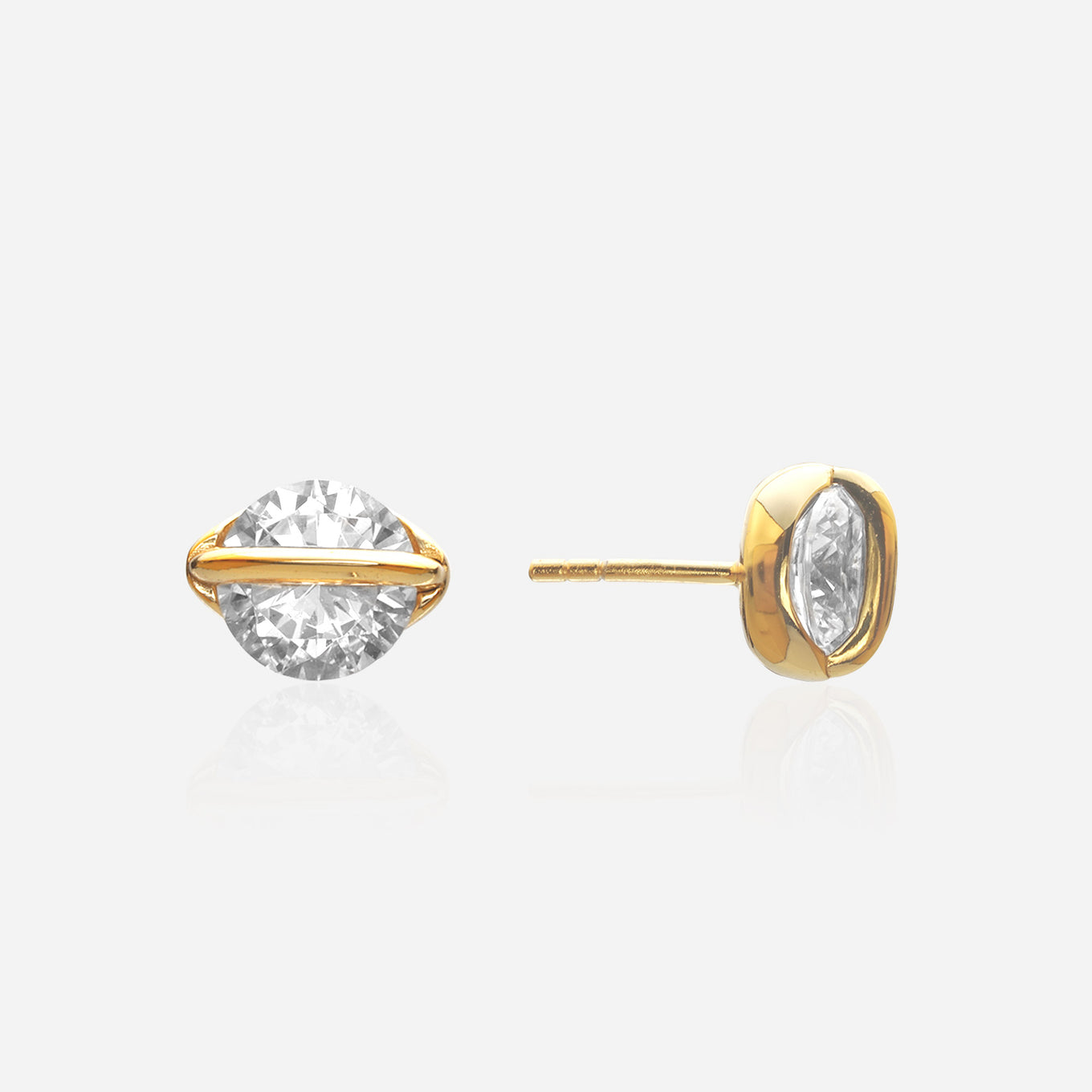
While round cuts dominated earlier eras, Deco embraced the elongated, angular kite shape. It's sharper, more architectural, and reads as deliberately modern even today. The Kite Diamond Earrings from ÉLARAMUSE take this motif and render it in gold with pavé diamonds — Deco geometry in stud form.
4. The Stepped/Squared Arch
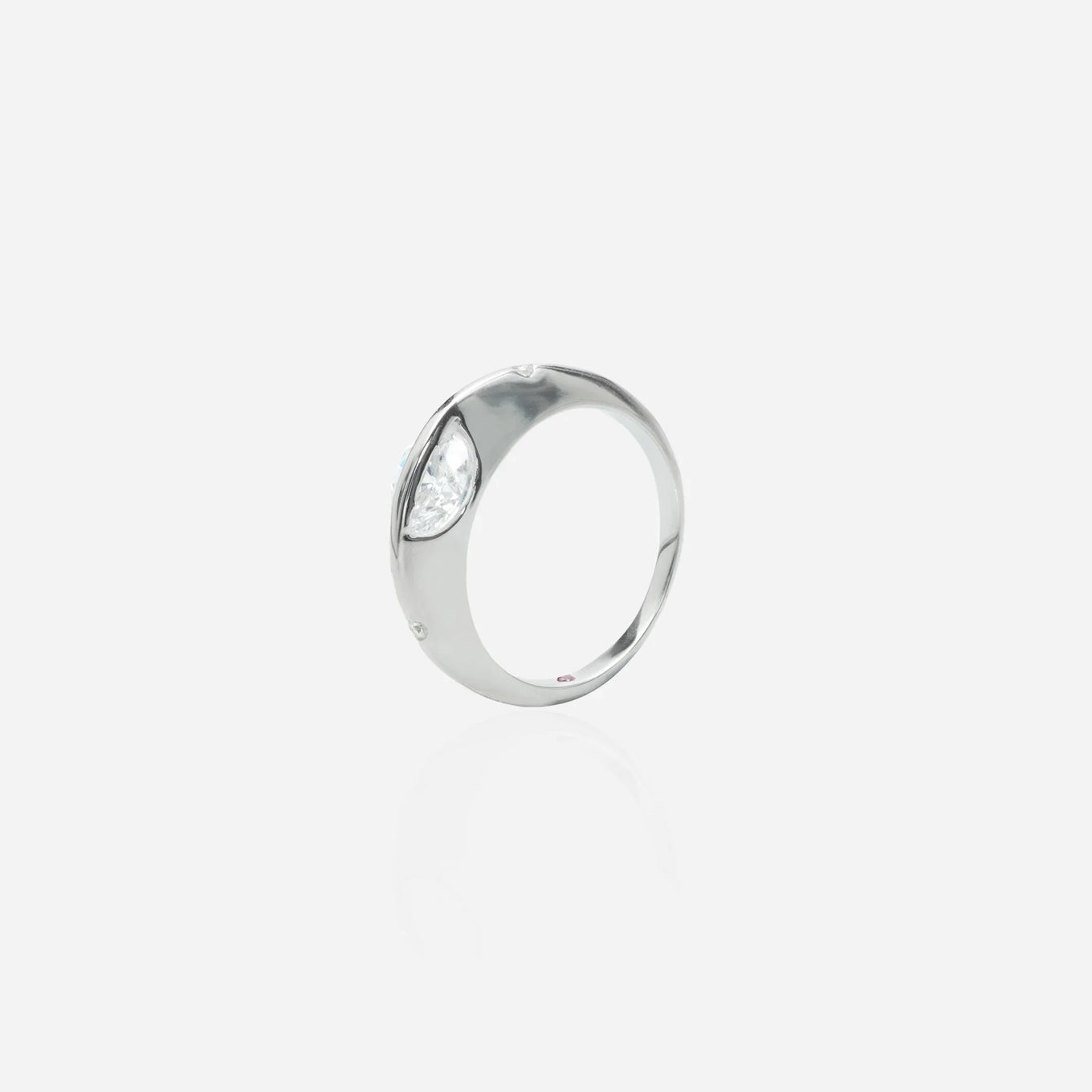
Skyscraper-inspired stepped forms — each level slightly smaller than the one below — appeared in rings, earrings, and pendants. It's the visual language of the Manhattan skyline circa 1930, compressed into jewelry scale. The Wide Band Ring channels this with its architectural gold surface and geometric precision.
5. The Lattice & Grid
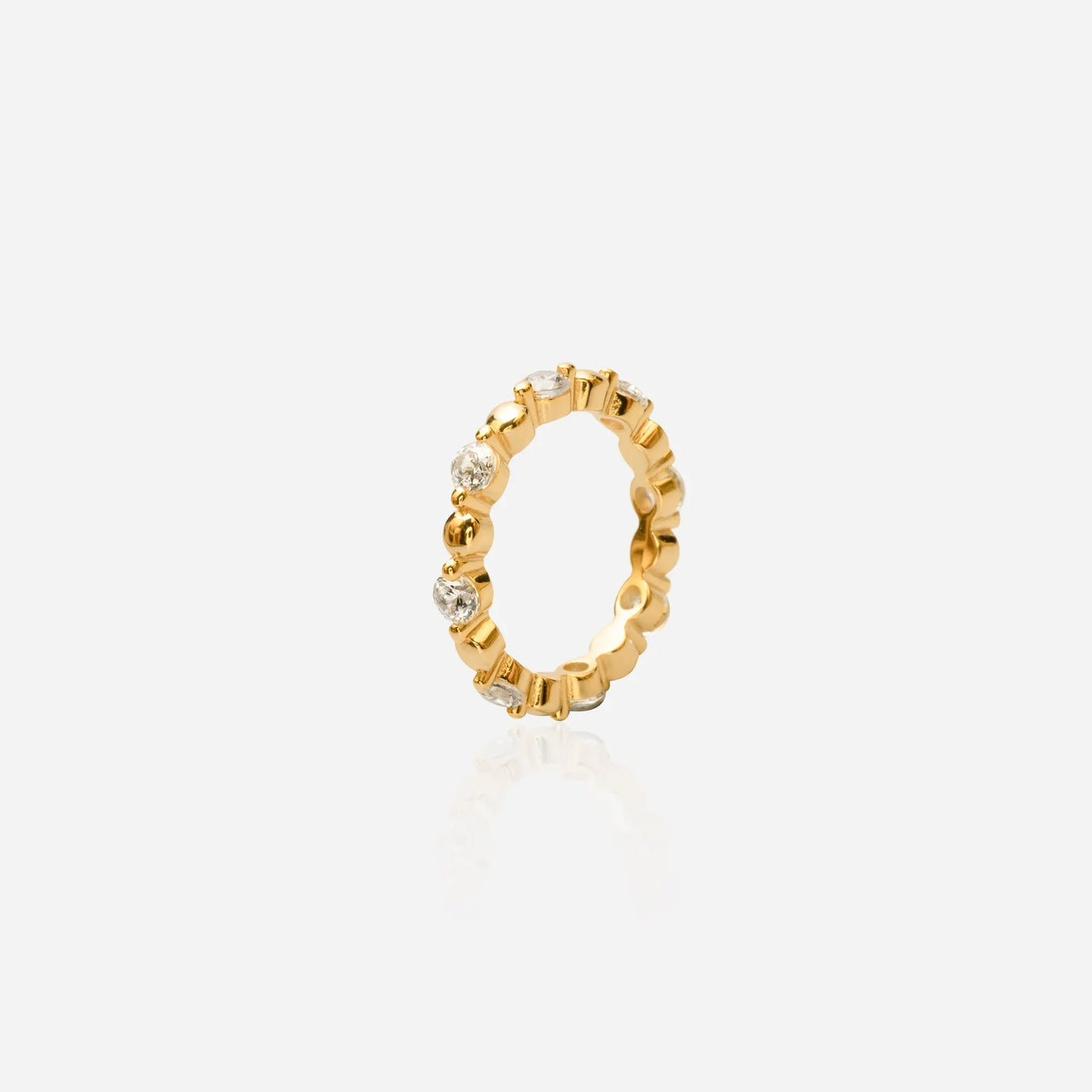
Machine-age precision expressed as repeating geometric grids. Unlike the organic lattice of Mughal jewelry, Deco lattice is mathematical — equal spacing, clean intersections, no curves. The Byzantine Lattice Hoops reinterpret this Deco staple in two-tone gold and silver, making an ancient geometric pattern feel utterly contemporary.
The ELARAMUSE Standard
We believe that jewelry with architectural ambition shouldn't come with architectural fragility. Every geometric piece we make is built on solid Ag925 sterling silver with 0.5-micron 18K gold plating — precision-engineered for the woman who wants Deco drama without museum-piece anxiety.
| Feature | Specification |
|---|---|
| Base Metal | Solid Ag925 Sterling Silver |
| Plating | 0.5-micron 18K gold plating |
| Safety | 100% Nickel-Free, Hypoallergenic |
| Durability | Water-resistant, Tarnish-resistant |
| Stones | High-carbon lab diamonds (simulated), lab-grown nano zircon (lab-grown) |
Unlike Antique Deco That Lives in a Vault, Modern Deco Lives on Your Body
Authentic Art Deco jewelry from the 1920s comes with a harsh reality: it's expensive, fragile, and incompatible with modern life. Platinum settings are soft and bend. Old-cut diamonds chip. And wearing a century-old heirloom to the gym is — well, let's call it what it is — reckless.
Unlike genuine Art Deco antiques that demand climate-controlled storage and insurance riders, modern demi-fine Deco pieces use precision-engineered sterling silver and lab-grown stones that withstand showering, sweating, and daily wear. You get the geometry without the guilt.
And then there's the fast-fashion alternative. Those $15 "geometric" earrings that look Deco-inspired on the rack but turn your ears green by Wednesday. Unlike cheap alloy geometric jewelry that loses its plating within weeks and irritates sensitive skin, our Deco-inspired pieces are built on Ag925 sterling silver with 0.5-micron 18K gold plating — nickel-free, hypoallergenic, and engineered to survive your actual life.
Because Art Deco Jewelry Is Precision-Engineered for Real Life, It's Perfect For:
- Gym-to-boardroom transitions: Geometric gold studs that survive spin class and still look architectural and intentional at the 2 PM pitch meeting. No mid-day jewelry change required.
- Shower-safe confidence: Your kite-shaped earrings or geometric ring stay on through your entire morning routine — because the woman with architectural jewelry doesn't pause for water.
- Sweat-proof summer events: Outdoor weddings, rooftop parties, July garden ceremonies — your Deco-inspired pieces won't discolor when the temperature climbs past 90°F.
- Sleep-safe nights: Smooth edges and comfortable profiles mean your geometric studs stay in from morning alarm to midnight — the way jewelry should work.
Key Terms You Need to Know
- Art Deco: Design movement (1920-1939) characterized by geometric shapes, symmetry, bold colors, and machine-age influence.
- Calibré-Cut: Gemstones cut to precise geometric shapes and set edge-to-edge with no visible metal between them — a Deco signature.
- Filigree: Delicate metalwork using thin threads of precious metal — in Deco jewelry, typically geometric rather than organic.
- Pavé Setting: Small stones set closely together with minimal visible metal, creating a continuous "paved" surface of sparkle.
- Baguette Cut: Rectangular step-cut stone — one of the most iconic Deco stone shapes.
Behind the Design: How Architecture Taught Me to Design Jewelry
Before I designed jewelry, I obsessively photographed buildings. Not the pretty ones — the structural ones. Bridge cables. Steel beams. The way light hits a glass facade at 4 PM. When I started ÉLARAMUSE, those photos became my reference library.
The Kite Diamond Earrings came directly from a trip to Chicago, where I spent an afternoon staring at the Tribune Tower's flying buttresses — those angled supports that make a stone building look like it's about to take off. The kite shape captures that same tension: angular, directional, loaded with potential energy.
We went through six stone arrangements before landing on the one that "flew" properly — three pavé diamonds per wing, graduated from small to large, creating an optical lift effect.
The Byzantine Lattice Hoops have a different origin story. I was studying Islamic geometric tilework at the V&A in London — those infinite repeating patterns where every line supports every other line. The hoop design took that principle and extruded it into three dimensions. What you see isn't a flat pattern; it's a lattice that wraps around your earlobe, catching light at different angles as you move.
How to Wear Art Deco Jewelry in 2026 (Without Looking Like a Costume Party)
1. The One-Piece Statement
Deco works best when it's the protagonist. Pick one architectural piece — kite diamond earrings (Kite Diamond Earrings) or the Wide Band Ring (Wide Band Ring) — and keep everything else minimal.
Let the geometry do the talking.
2. The Mixed-Era Layering
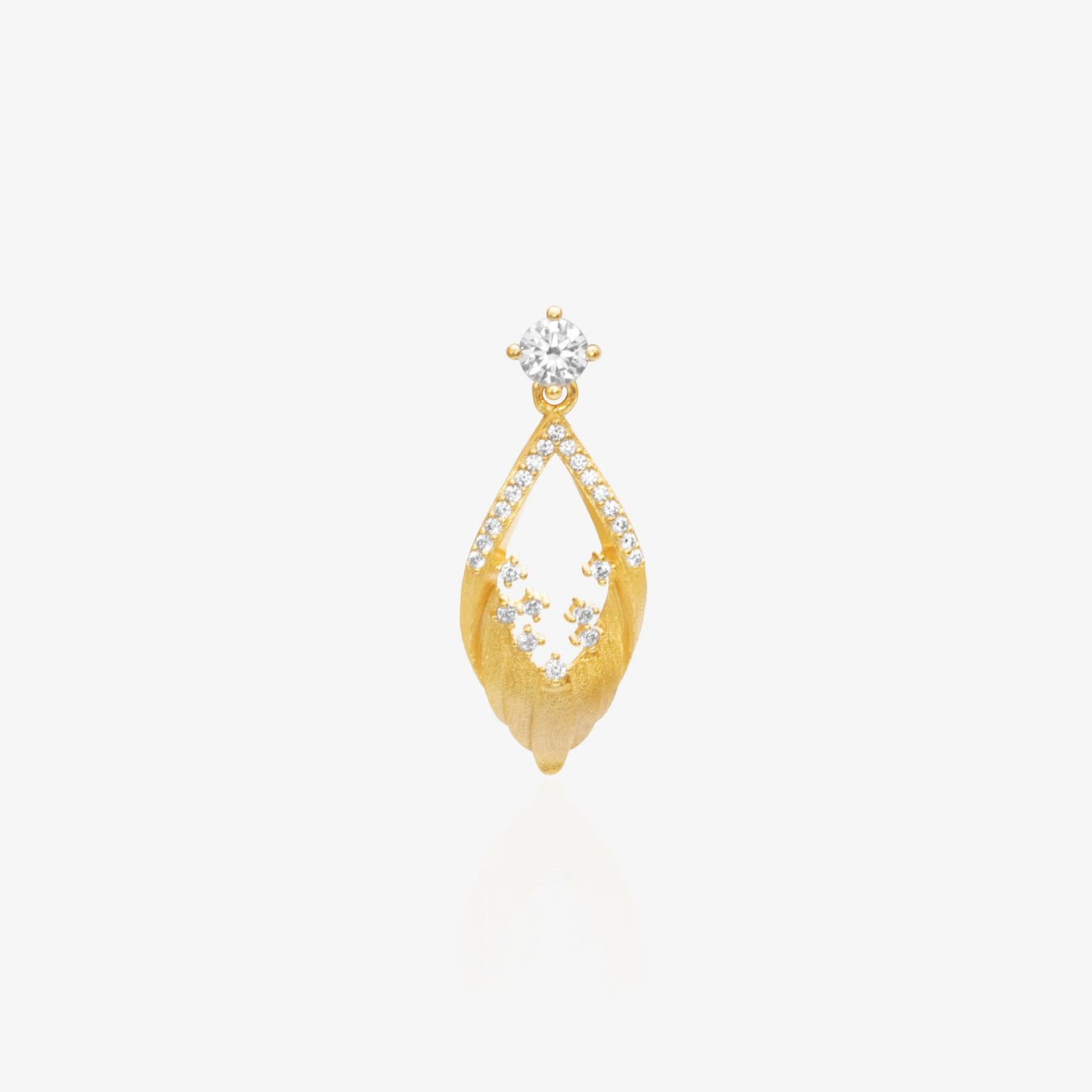
Pair a Deco geometric stud with something organic for contrast: the Gold Leaf Earrings (Gold Leaf Earrings) in one ear, a geometric bar stud (Gold Geometric Studs) in the other.
The tension between nature and geometry is what makes it feel modern.
3. The Deco Minimalist
You don't need a full Gatsby setup. The Gold Button Earrings (Gold Button Earrings) — two-tone pavé in a circular geometric arrangement — give you Deco energy in a size that works with a white t-shirt and jeans.
Add the Rayline Ring (Rayline Ring) for a second geometric hit, and you've got Deco for people who don't "do" vintage.
Browse: All Earrings
Art Deco Jewelry FAQ
Q: What makes jewelry "Art Deco" vs. "Art Nouveau"?
Art Nouveau (1890-1910) is organic — flowing lines, nature motifs, asymmetrical curves. Art Deco (1920-1939) is geometric — straight lines, symmetry, machine-age precision. If it looks like it could be a building facade, it's Deco. If it looks like it could be a vine growing up a wall, it's Nouveau.
Q: Is Art Deco jewelry still in style in 2026?
Yes — and arguably more than ever. The 2020s share several cultural parallels with the 1920s: post-pandemic optimism, technological acceleration, and a desire for bold, confident self-expression. Geometric gold jewelry has been steadily trending since 2023, and the clean lines of Deco feel more contemporary than the maximalism of other vintage styles.
Q: Can I wear Art Deco jewelry casually, or is it only for formal events?
Modern demi-fine Deco pieces are designed for everyday wear. A pair of geometric gold studs works with jeans and a blazer as naturally as with an evening dress. The key is scale — choose pieces under 1 inch for daytime, and save larger statement pieces for evening.
Q: What metals work best for Art Deco jewelry?
Historically, platinum dominated Art Deco fine jewelry because its strength allowed for delicate geometric settings. Today, sterling silver with 18K gold plating gives you the same visual weight at a fraction of the cost — plus it's hypoallergenic and nickel-free, which antique platinum definitely is not (most vintage platinum contains nickel alloys).
Q: Art Deco geometric earrings vs. organic botanical earrings — which is more versatile?
Geometric Deco earrings tend to be more versatile because their clean lines complement virtually any outfit — structured blazers, flowing dresses, casual denim. Botanical/organic earrings (like leaf or flower shapes) can clash with heavily patterned clothing. If you're building a capsule jewelry collection, start with geometric and add organic pieces as accents.
Editor's Picks: Art Deco Jewelry for the Modern Woman
The Architecture Lover: Kite Diamond Earrings — The Tribune Tower in earring form. Angular, directional, loaded with potential energy. Three graduated pavé diamonds per wing.
The Minimalist Deco: Gold Geometric Studs — lab diamond bar earrings that do Deco in three clean lines. Works with everything from cashmere to cotton.
The Pattern Person: Byzantine Lattice Hoops — Two-tone gold and silver with an infinite geometric pattern that wraps around the earlobe. Mathematical precision meets everyday wearability.
The Statement Maker: Wide Band Ring — Architectural gold with surface geometry that catches light at every angle. The Chrysler Building you can wear on your finger.
Further Reading & Sources
- The Metropolitan Museum of Art — Art Deco Overview
- Victoria and Albert Museum — Art Deco Collection
- Victoria and Albert Museum — "Art Deco: The 20th Century's Most Influential Design Movement"
- Art Deco Society of New York — "Defining Characteristics of Art Deco Architecture and Design"
- The Metropolitan Museum of Art — "Jewelry in the Art Deco Era: 1920–1935"
- Journal of Design History (2019) — "Geometric Ornament: Architectural Influence on 20th Century Personal Adornment"
What We Believe
We believe geometry is the purest form of elegance — and that architectural jewelry should live on skin, not behind museum glass. Every Art Deco-inspired piece at ÉLARAMUSE is cast in nickel-free Ag925 sterling silver with 18K gold plating, designed to hold clean lines through daily wear, not just special occasions. The step cut, the chevron, the sunburst — these aren't trends. They're a century-old design language we're proud to translate for 2026.