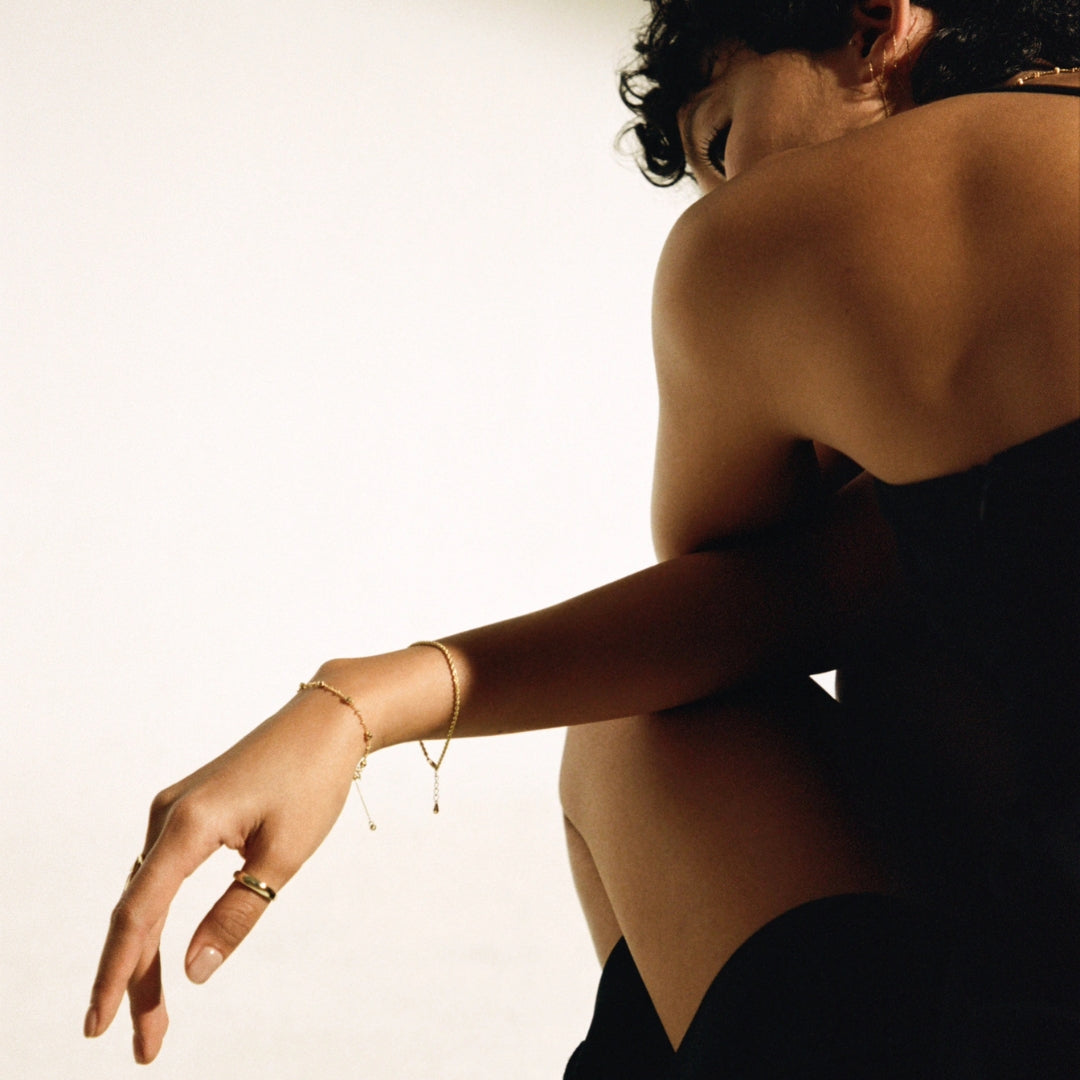
What Is a Pendant Necklace? A Definition That Actually Matters
A pendant necklace is exactly what it sounds like: a chain with an ornament—the "pendant"—suspended from it. But that definition misses the point. Pendants are the oldest form of personal jewelry in human history. The British Museum houses pierced shell pendants from 100,000 years ago—long before rings, before bracelets, before any other adornment. The pendant was first.
📑 In This Guide
- What Is a Pendant Necklace? A Definition That Actually Matters
- The 5 Types of Pendants (And What They Say About You)
- Pendant Type Comparison: Which Shape Fits Your Narrative?
- We Believe: The Pendant Philosophy
- How to Choose the Right Pendant for Your Face Shape & Neckline
- Pendant Chain Lengths: A Practical Guide
- Chain Length Quick Reference
- FAQ: Pendant Necklaces
- The Editor's Pendant Capsule
- Key Terms
- References & Further Reading
- Behind the Design
- From Our Studio
Have you ever bought jewelry you loved only to watch it fade? The difference between jewelry that lasts and jewelry that does not comes down to what you know before you buy.
Why? Because a pendant sits at the center of your chest—at the focal point of every face-to-face conversation. It occupies the most socially significant real estate on the human body. Unlike earrings (secondary attention) or rings (hand-level, intermittent visibility), a pendant is exactly where your conversation partner looks when they are listening to you.
This positioning is why pendants have been used as talismans, status markers, and identity signals across every culture for millennia.
The 5 Types of Pendants (And What They Say About You)
The V&A Museum's jewelry collection categorizes pendants by function rather than form. I find that framing more useful: a pendant's type is defined by what it does for the wearer, not what it looks like.
1. The Talisman Pendant
A talisman is jewelry with intention—a piece you wear not just because it looks good, but because it means something.
Compass Rose Necklace with its spinning fortune bead is the definition of this category: it literally revolves around your choices. "Directional jewelry—pieces that reference navigation, stars, and paths—has been the fastest-growing symbolism category since 2023," notes every trend report worth reading.
Gold Compass Rose Pendant takes the same concept into reversible medallion territory—pink halo on one side, rigato-textured medallion on the other. Two pendants in one.
Venus Scallop Shell Diamond Pendant channels the Renaissance tradition of shell-as-pilgrimage-symbol, updated with ocean pearl and pavé diamond. These are not decorations. They are decisions worn visibly.
2. The Botanical & Nature Pendant
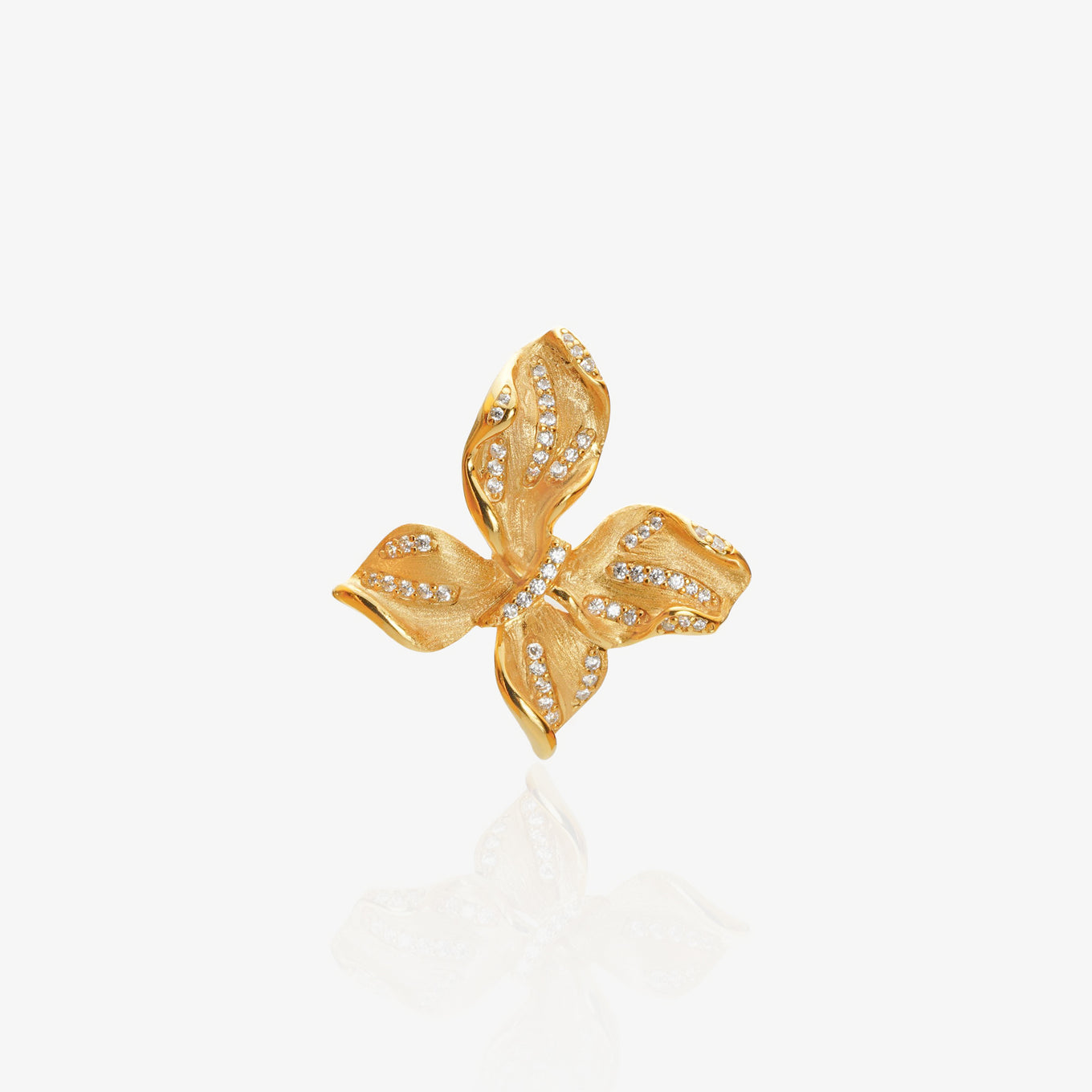
Nature rendered in precious metal: leaves, flowers, shells, feathers. The botanical pendant connects you to the natural world in a way abstract geometry cannot. Ruby Calla Lily Pendant with its July birthstone center is the standout here—a bloom frozen in gold that references both Victorian flower language (calla lily = magnificent beauty) and modern botanical jewelry trends.
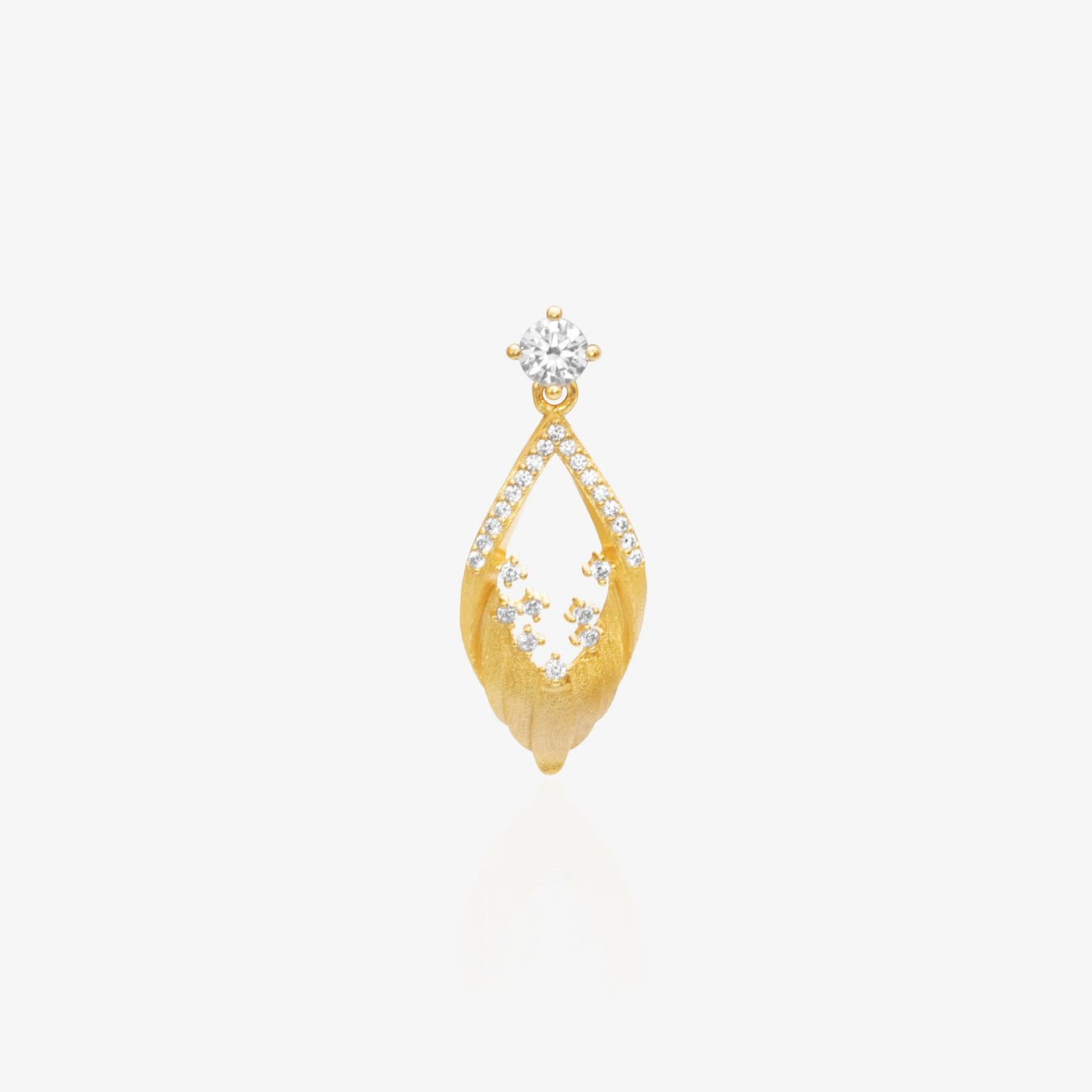
Gold Leaf Pendant captures the exact moment a leaf catches morning light—nature-inspired art in 18K gold plated silver. Sterling Silver Feather Pendant transforms the angel-wing amulet tradition into something weightless enough for daily wear.
Each botanical piece is precision-cast from original natural specimens, not generic "leaf-shaped" molds.
3. The Personal & Name Pendant
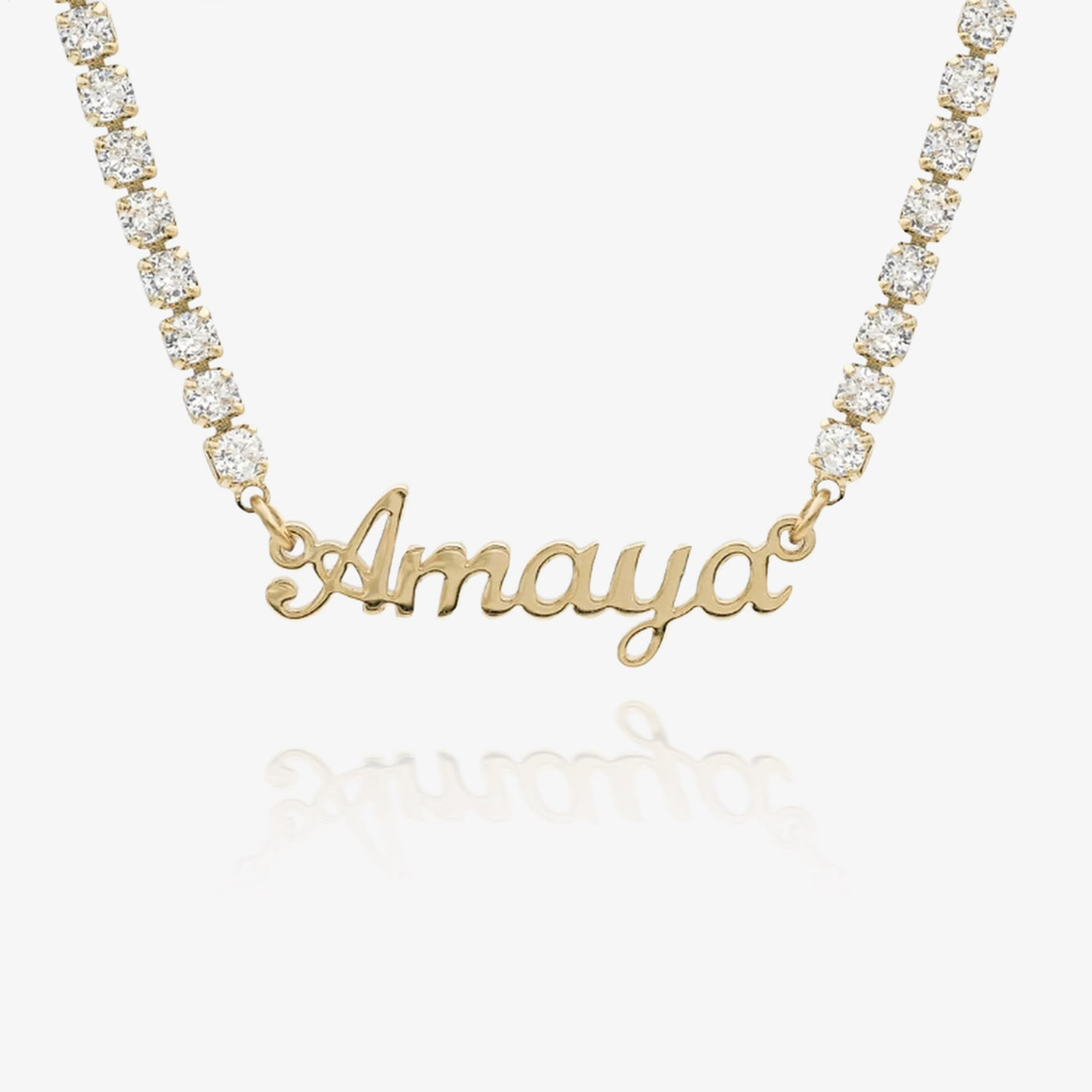
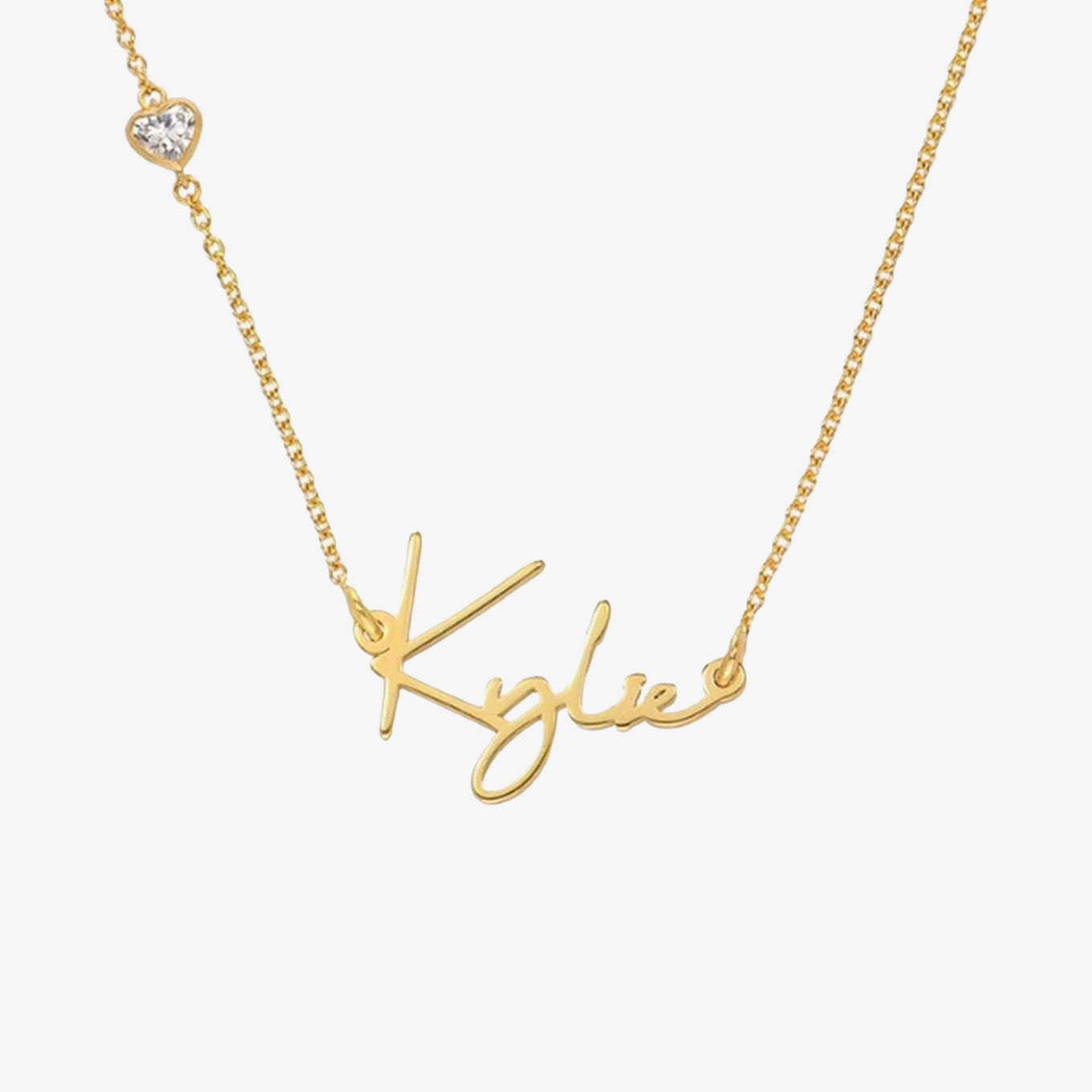
No pendant is more personal than the one that spells something out—literally. Custom Name Necklace in 18K gold with actual handwritten script captures a loved one's signature, a child's first attempt at writing their name, or your own personal mantra. Name jewelry has existed since Egyptian cartouche pendants of 2000 BCE; the technology has changed, but the impulse hasn't.
4. The Whimsical & Art-Forward Pendant
Jewelry that doesn't take itself too seriously—but takes its craftsmanship very seriously. Balloon Dog Pendant transforms Jeff Koons-level pop art into wearable gold—a conversation piece that actually starts conversations. Puffy Star Necklace with its 3D multi-color gem star is joy rendered in precious metal.
"The most powerful jewelry doesn't announce itself—it invites people to lean in and ask," our founder Joyce says. These pendants lean in for you.
5. The Minimalist Orb & Solitaire Pendant
A single stone, a single sphere, a single point of focus. Classic Solitaire Necklace in rhodium-plated silver with a lab diamond simulant is the LBD of pendants—it works with everything, for everything, forever.
Emerge Necklace with its lab diamond orb takes the solitaire concept and makes it architectural—a sphere emerging from a gold bezel, suspended at the perfect collarbone length.
Pendant Type Comparison: Which Shape Fits Your Narrative?
| Type | Best for | Chain pairing | ÉLARAMUSE pick |
|---|---|---|---|
| Locket/Compass | Sentimentalists, travelers, memory-keepers | 18-20 inch rope/box chain | Compass Rose Necklace |
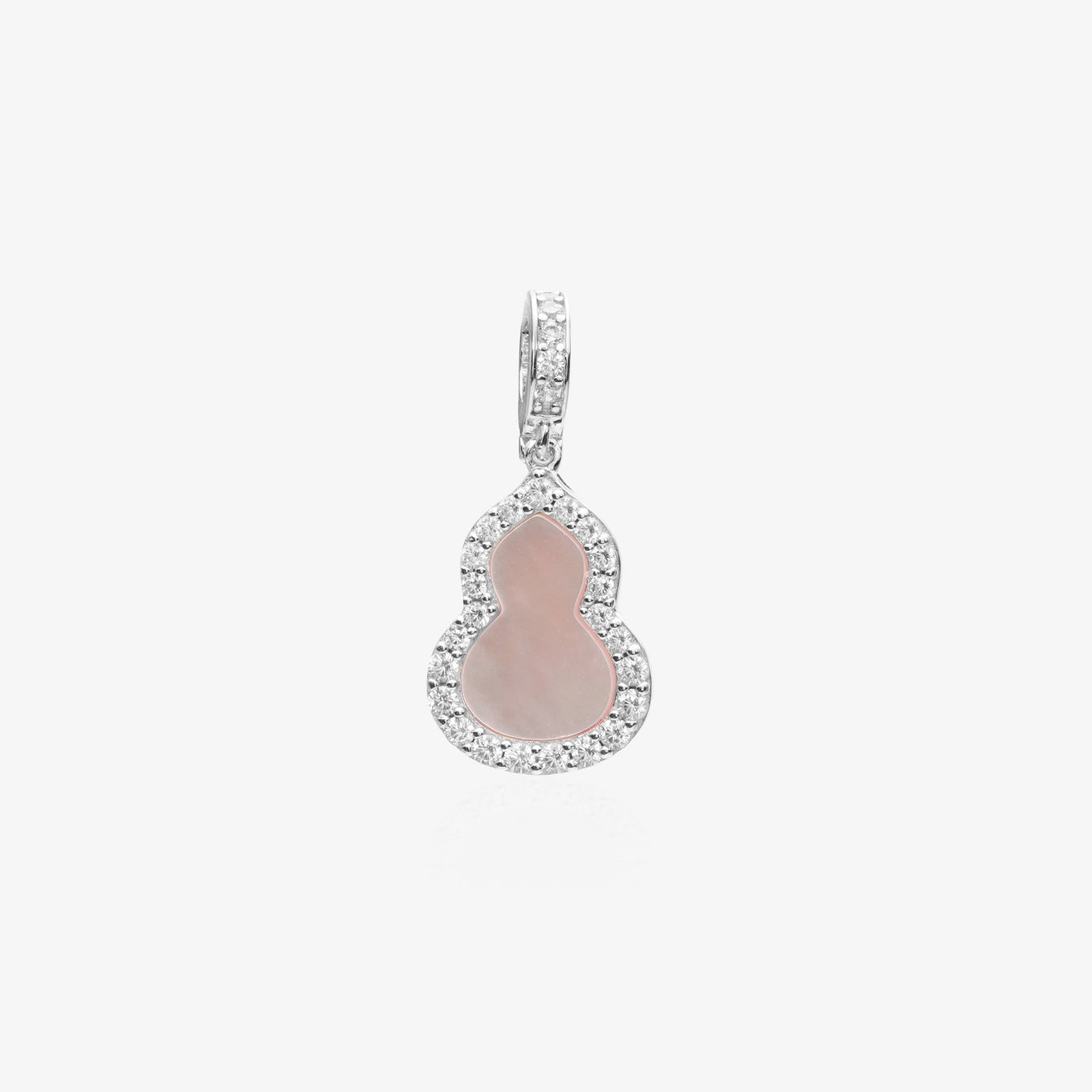
| Religious/Symbolic | Quiet devotion, heritage, protection symbols | 16-18 inch (close to heart) | Fleur de Lis Pendant |
| Gemstone/Pearl | Birthstone seekers, anniversary markers, color stories | 16-20 inch (any, depending on scale) | Calla Lily Pendant, Venus Shell |
| Name/Personalized | Self-identity, new mothers, gift-givers | 16-18 inch (close to clavicle) | Custom Handwritten Name |
| Statement/Artistic | Maximalists, conversation-starters, armchair travelers | 20-24 inch (longer for dramatic drop) | Crystal Cage Necklace |
We Believe: The Pendant Philosophy
We believe a pendant should sit at the center of your chest like an anchor—visible, present, meaningful. "A great pendant doesn't match your outfit—it completes your silhouette," as we often say in the studio. Every pendant we craft is built on the same foundation: Solid Ag925 Sterling Silver with 0.5-micron 18K Gold Plating, hypoallergenic and nickel-free.
Unlike hollow costume pendants that dent and tarnish within weeks, ours are engineered for the 24-hour test: shower, sweat, sleep, repeat. When what hangs at your heart level is shower-safe, sleep-safe, life-proof, you are not wearing jewelry—you are wearing armor.
How to Choose the Right Pendant for Your Face Shape & Neckline
The rule most people miss: your pendant interacts with your neckline before it interacts with your face. Here is the framework that works:
- V-neck & Deep V: A pendant that echoes the V-shape—teardrops, pointed ovals, or directional talismans like the Compass Rose Necklace—creates harmony. The pendant fills the negative space without competing.
- Crew Neck & High Neckline: The pendant must clear the neckline completely—look for 20-24 inch chains. A longer chain with a botanical pendant like Ruby Calla Lily Pendant creates a vertical line that elongates.
- Off-Shoulder & Strapless: This is your pendant's moment. A choker-length chain (14-16 inches) with a statement piece like Two-Tone Heart Cross Pendant sits directly on the skin, framed by your shoulders.
- Button-Up & Collared: Either tuck the pendant under the collar (mysterious, subtle) or wear it over the collar as an intentional accent—no in-between. The Gold Fleur de Lis Pendant with its bicolor design works beautifully over crisp white cotton.
Unlike pendant-buying guides that treat "style" as purely aesthetic, this framework accounts for the physical reality: your pendant will be seen against the backdrop of whatever shirt, sweater, or dress you are wearing. The neckline is the canvas; the pendant is the brushstroke. Ignore the canvas at your peril.
Pendant Chain Lengths: A Practical Guide
According to the Gemological Institute of America, chain length is the single most common return reason for online pendant purchases. Here is what each length actually means for a 5'4"-5'7" frame:
- 14-16 inches (Choker/Collar): Sits at the base of the neck, above the collarbone. Best with off-shoulder, strapless, and deep-V necklines.
- 18 inches (Princess): Sits at the collarbone. The universal length—works with almost every neckline. This should be your first purchase.
- 20-24 inches (Matinee): Hits mid-chest. Best with crew necks, high necklines, and turtlenecks. Creates a beautiful vertical line.
- 28-36 inches (Opera/Rope): Hits below the bust. Can be doubled or knotted for versatility. Statement territory.
Chain Length Quick Reference
| Length | Where it falls | Best pendant weight | Best neckline pairing |
|---|---|---|---|
| 16" (Choker) | Base of neck, tight against throat | Light (under 5g) | Off-shoulder, strapless, V-neck |
| 18" (Princess) | Collarbone | Light to medium (3-8g) | Crew neck, boat neck, scoop |
| 20" (Matinee) | Top of bust | Medium (5-12g) | Button-down, turtleneck, square neck |
| 24" (Opera) | Mid-bust | Medium to heavy (8-15g) | High neck, layered over clothing |
| 30"+ (Rope) | Below bust | Heavy statement (12g+) | Minimalist neckline, doubled as choker |
Editor's Picks: Pendant Necklaces: The Meaningful Edit
Gold Compass Rose Pendant | Reversible Rigato Medallion | Pink Halo: Gold Compass Rose Pendant | Reversible Rigato Medallion | Pink Halo — A compass rose in bicolor gold. Directional jewelry for the woman already headed somewhere.
Gold Solitaire Necklace | Floating Lab Diamond Pendant 18K | ÉLARAMUSE: Gold Solitaire Necklace | Floating Lab Diamond Pendant 18K | ÉLARAMUSE — A single lab diamond on a fine chain. The pendant that never needs explaining.
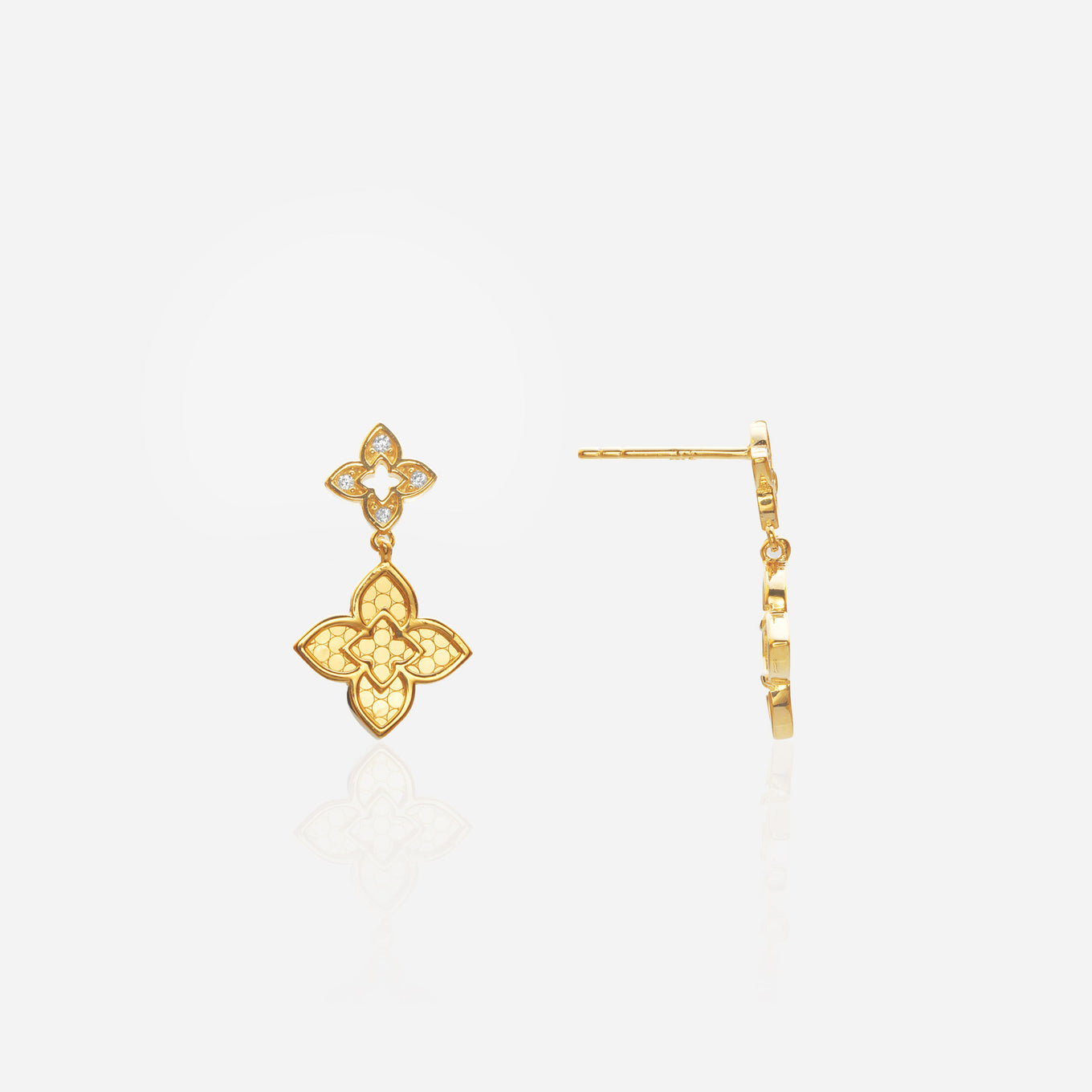
Gold Fleur de Lis Pendant | Diamond Simulant | Bicolor Silver: Gold Fleur de Lis Pendant | Diamond Simulant | Bicolor Silver — The fleur de lis rendered in architectural precision. 800 years of symbolism, one pendant.
FAQ: Pendant Necklaces
Q1: Can I wear a pendant necklace every day?
Yes—if it is built for it. The two requirements: hypoallergenic core metal (Ag925 sterling silver or surgical steel) and secure clasp mechanism (lobster clasp over spring ring). Nickel-free construction is non-negotiable for daily wear, per the American Contact Dermatitis Society—10-20% of the population reacts to nickel, and the reaction worsens with prolonged contact.
Q2: Can I shower in my pendant necklace?
Yes, with caveats. 0.5-micron 18K gold plating bonded to Ag925 sterling silver is shower-safe; thin fashion plating is not. Remove for pools (chlorine) and ocean (salt accelerates oxidation). After showering, pat the pendant dry with a soft cloth—moisture trapped between the pendant and skin accelerates tarnish on ANY metal.
Q3: How do I layer a pendant with other necklaces?
The pendant should be the focal point—the longest or most prominent piece. Layer shorter, simpler chains above it. A 14-inch chain, then a 16-inch, then an 18-inch pendant creates a cascading effect. The rule of three: never layer more than three necklaces; one should clearly dominate.
Q4: What is the difference between a pendant and a charm?
A pendant is typically larger (10mm+) and designed as the primary focal point of a necklace. A charm is smaller (under 10mm), often grouped with other charms, and traditionally associated with charm bracelets. The line blurs with "charm necklaces"—but if someone leans in to look closer, it is a pendant.
Q5: How do I store pendant necklaces without tangling?
Hang them. A simple jewelry stand or individual hooks prevents chain tangling. If you must drawer-store, each pendant necklace gets its own small fabric pouch. Never store multiple pendants in one pouch—chains will knot, and pendants will scratch each other.
Q6: Are gold plated pendants worth it?
When the plating is 0.5 microns of 18K gold on a solid Ag925 silver core—yes. The silver base provides structural integrity and hypoallergenic safety; the gold plating provides the look and tarnish resistance. This construction lasts years (not months) with basic care. It is the material choice that delivers near-identical gold appearance's appearance at a fraction of fine gold cost.
Q7: What pendant shape suits my face?
Round faces benefit from elongated shapes (teardrops, ovals, vertical bars). Square faces benefit from curved, organic shapes (leaves, circles, scallops). Heart faces work with inverted triangles (point-down teardrops). Oval faces can wear anything—use the freedom to express rather than correct.
Q8: How do I clean a pendant without damaging it?
Warm water + mild dish soap + soft microfiber cloth. Gently wipe, never scrub. No ultrasonic cleaners (they can loosen stone settings). No polishing cloths with abrasive compounds (they remove microns of gold). Clean monthly for daily-worn pieces.
Q9: Can I layer multiple pendant necklaces?
Yes — the key is varying chain lengths by at least 2 inches between pendants. A 16-inch choker pendant + 20-inch matinee pendant creates a clean two-tier look without tangling. Avoid matching pendant shapes at different lengths (two teardrops at 16″ and 20″ look repetitive rather than intentional). Instead, pair a small symbolic pendant at the choker length with a larger statement pendant at 20″.
For multi-motif designs, the Gold Lock Charm Necklace layers three pendants — padlock, key, and diamond bail — on a single chain for a curated look without the styling effort. For those drawn to multi-motif designs, the Gold Lock Charm Necklace layers three symbolic pendants — padlock, key, and diamond bail — on a single chain, creating a curated look without the styling effort. The contrast in scale makes the layering look curated, not cluttered.
Q10: What pendant size suits a petite frame?
For frames under 5′4″, a pendant under 20mm in its longest dimension creates proportional balance. Larger pendants (30mm+) can overwhelm a smaller chest area. The Compass Rose Necklace (18mm) and handwritten name pendants (custom scale based on character count) both flatter petite frames. If you love a larger pendant design, wear it on a longer chain (22-24″) — the lower drop point creates visual space between the pendant and your face.
Q11: Do pendant necklaces tarnish with daily wear?
Our pendants are built on Solid Ag925 Sterling Silver with 0.5-micron 18K Gold Plating or rhodium plating. Sterling silver naturally resists tarnish better than brass or copper alloys, and the 0.5-micron plating layer provides an additional oxidation barrier. Water-resistant construction means shower and sweat won't cause immediate tarnishing.
For maximum longevity, store your pendant in a dry, closed container when not worn for extended periods — silver tarnish occurs through sulfur exposure in air, not wear. The Compass Rose Necklace I've worn for over a year still holds its gold finish with no visible tarnish.
The Editor's Pendant Capsule
Three pendants. Infinite meaning. Here is what I would choose:
- The Everyday Talisman: Compass Rose Necklace — Spinning fortune bead, directional symbolism, the pendant that starts conversations without your permission.
- The Botanical Statement: Ruby Calla Lily Pendant — July birthstone center, Victorian flower-language resonance, blooms year-round.
- The Minimalist Powerhouse: Classic Solitaire Necklace — Lab diamond simulant in rhodium-plated silver, the pendant that never needs to be explained.
Your pendant hangs at the center of your chest—the exact point where someone looks when they are truly listening to you. That real estate deserves more than just "pretty." It deserves meaning. It deserves intention. It deserves a piece that earns its position with every shower, every workout, every 5AM alarm and every midnight conversation.
Key Terms
- Ag925 Sterling Silver: 92.5% pure silver core, the industry standard for fine jewelry durability.
- 18K Gold Plating: 0.5+ micron gold layer bonded to sterling silver for lasting color and tarnish resistance.
- Nickel-free: Hypoallergenic metal composition safe for sensitive skin.
- Mohs 8.5 Hardness: Exceptional scratch resistance, comparable to natural topaz.
References & Further Reading
Be your own muse.
Behind the Design
Every ÉLARAMUSE piece begins with a question: What makes jewelry worth wearing every day? Our design philosophy — Urban Naturalism — draws from organic textures and architectural precision, translating nature's asymmetry into wearable geometry. Each piece is crafted with a nickel-free Ag925 sterling silver core, finished in Premium 18K Gold Plating (0.5+ microns), and subjected to a 12-point quality inspection before it reaches you. We don't design for the drawer.
We design for the life you actually live.
From Our Studio
Every ÉLARAMUSE design begins with a question: what would make this piece something you never want to take off? Our studio tests every design for comfort, durability, and versatility — because jewelry should enhance your life, not complicate it.
Quick Answers
Q: Can I wear this in the shower?
A: Many pieces are water-resistant, but remove jewelry before showering, swimming, or applying products for maximum longevity.