Wide Band Gold Rings: The Complete Guide to Architectural & Statement Band Rings (2026)
Quick Answer: Wide band gold rings deliver bold architectural presence with 3-8mm widths — Lattice, Oasis, and cigar-band styles are the defining statement ring silhouettes of 2026.
📑 In This Guide
- Key Terms You Need to Know
- What Defines a Wide Band Ring?
- 3 Architectural Wide Band Styles Defining 2026
- Lattice vs. Oasis vs. Guardian Wing: Which Wide Band Fits Your Hand?
- The ÉLARAMUSE Standard
- Why Width Changes Everything: 4 Things Nobody Tells You
- Unlike Thin Bands, Wide Band Rings Solve 3 Real Problems
- How to Style a Wide Band Ring: 3 Looks for Real Life
- 18 Months in a Wide Band: A Wear-Test Journal
- FAQ: Wide Band Gold Rings
- Wide Band Collection
- References & Further Reading
- What We Believe
- Behind the Design
- From Our Studio
References
- GIA. "Gemological Institute of America." GIA.
- Met Museum. "Jewelry Through the Ages." Heilbrunn Timeline of Art History.
- V&A. "Jewelry Collection." V&A Collections.
Can one ring really command a room? The right statement piece does not just accessorize -- it announces.
Key Terms You Need to Know
- Wide Band Ring: Any ring with a band width of 3mm or more — compared to classic 1-2mm bands, these make an architectural statement on the finger.
- Cigar Band Ring: A thick, flat-surfaced ring named for its resemblance to a cigar band — typically 4-8mm wide with a bold, unadorned face.
- Ag925: International hallmark for sterling silver — 92.5% pure silver, the foundation metal beneath every ÉLARAMUSE gold-plated ring.
- Architectural Jewelry: Pieces designed with structural intent — grid patterns, cantilevered forms, and geometric repetition that recall building design.
What Defines a Wide Band Ring?
A wide band ring isn't just a thicker version of a classic band. It's an entirely different design language. Where a 1.5mm stacking ring whispers, a 7mm Lattice ring speaks in full sentences. The width changes how light travels across the metal, how the ring sits between your fingers, and how it integrates into your personal style.
The numbers matter. A standard thin band runs 1-2mm. Once you cross 3mm, you enter wide-band territory. At 5mm, the ring starts commanding attention. At 7mm+, as with our Lattice Architectural Gold Band (7.61g, 6mm width), you're in statement territory — a piece that doesn't just accessorize but anchors your entire look. Can a single ring really change how you carry yourself? Put 7.61 grams of architectural gold on your index finger and you'll have your answer.
Three dimensions define the experience: width (how much finger coverage), weight (how substantial it feels), and surface texture (how light plays across it). A 7.61g ring feels fundamentally different from a 2g ring — there's a gravitational certainty to it that thin bands simply cannot replicate.
3 Architectural Wide Band Styles Defining 2026
1. The Lattice: Grid-Pattern Structural Rings
Inspired by the exposed structural frameworks of modernist architecture, lattice rings replace smooth surfaces with geometric grid patterns. The crossing lines create depth — shadow and highlight alternating across each cell — delivering a three-dimensional effect that flat surfaces can't achieve.
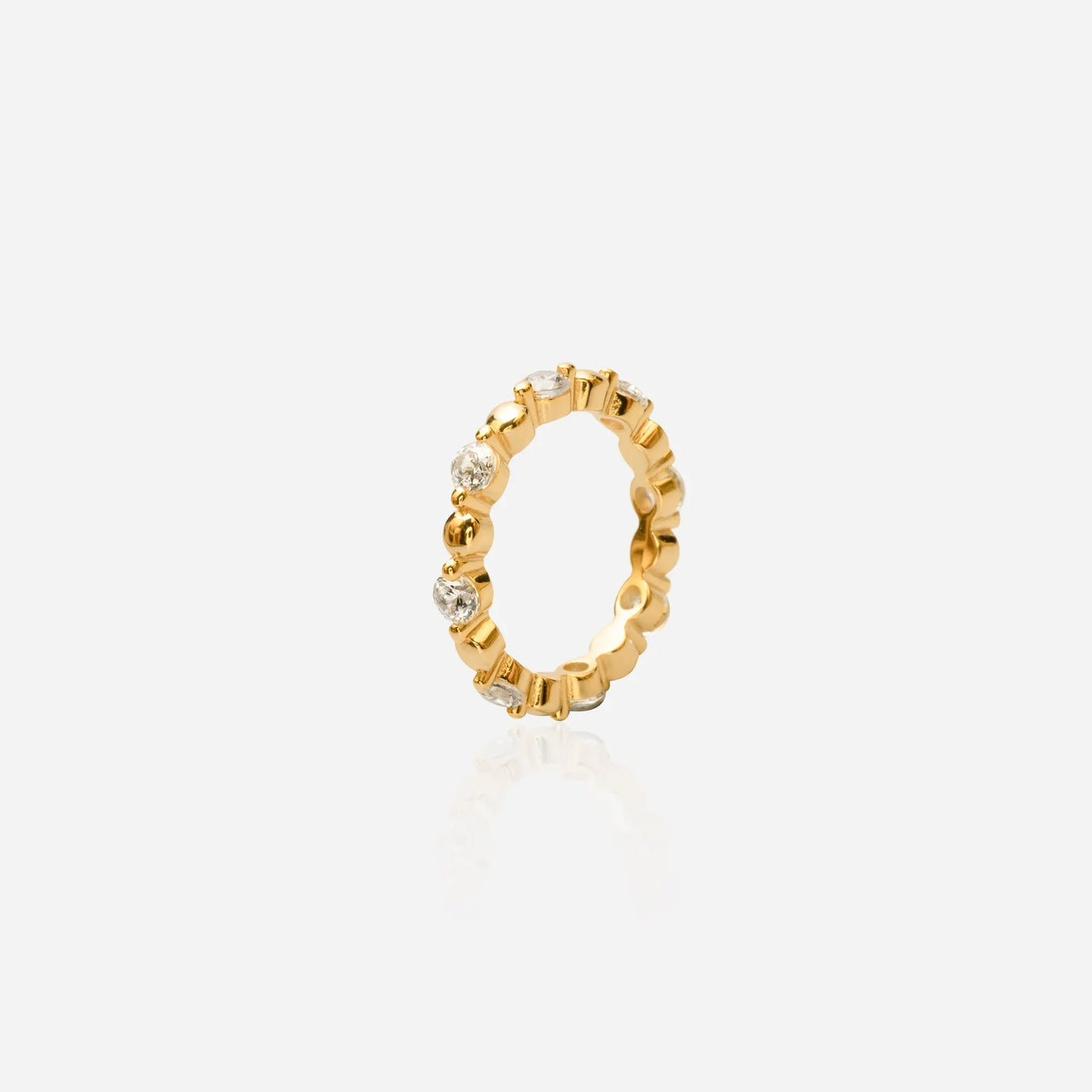
Our Lattice Wide Band Ring takes this concept literally: an architectural gold grid wrapping 360° around the finger, precision-cast in Ag925 sterling silver with 0.5-micron 18K gold plating. At 7.61 grams and 6mm wide, it's unmistakably present without being cumbersome. The open gridwork also makes it uniquely breathable — unlike solid wide bands that can feel stuffy in warm weather.
Best for: Minimalist dressers who want one ring that does all the talking. Architects, engineers, and anyone drawn to structural beauty. Wear it solo on the index or middle finger.
2. The Cigar Band: Thick, Flat, and Unmistakable
The cigar band ring — named for the paper band wrapped around cigars — is the original wide-band archetype. Its defining characteristic is a broad, flat surface with minimal ornamentation. No stones, no engraving, no filigree. Just metal, width, and confidence.
Search data confirms the category's momentum: "gold cigar band ring" pulls (a popular search) with a surprisingly low competition level of 6% — meaning high buyer intent with relatively open ranking opportunity. The appeal is straightforward: a cigar band telegraphs substance without trying.
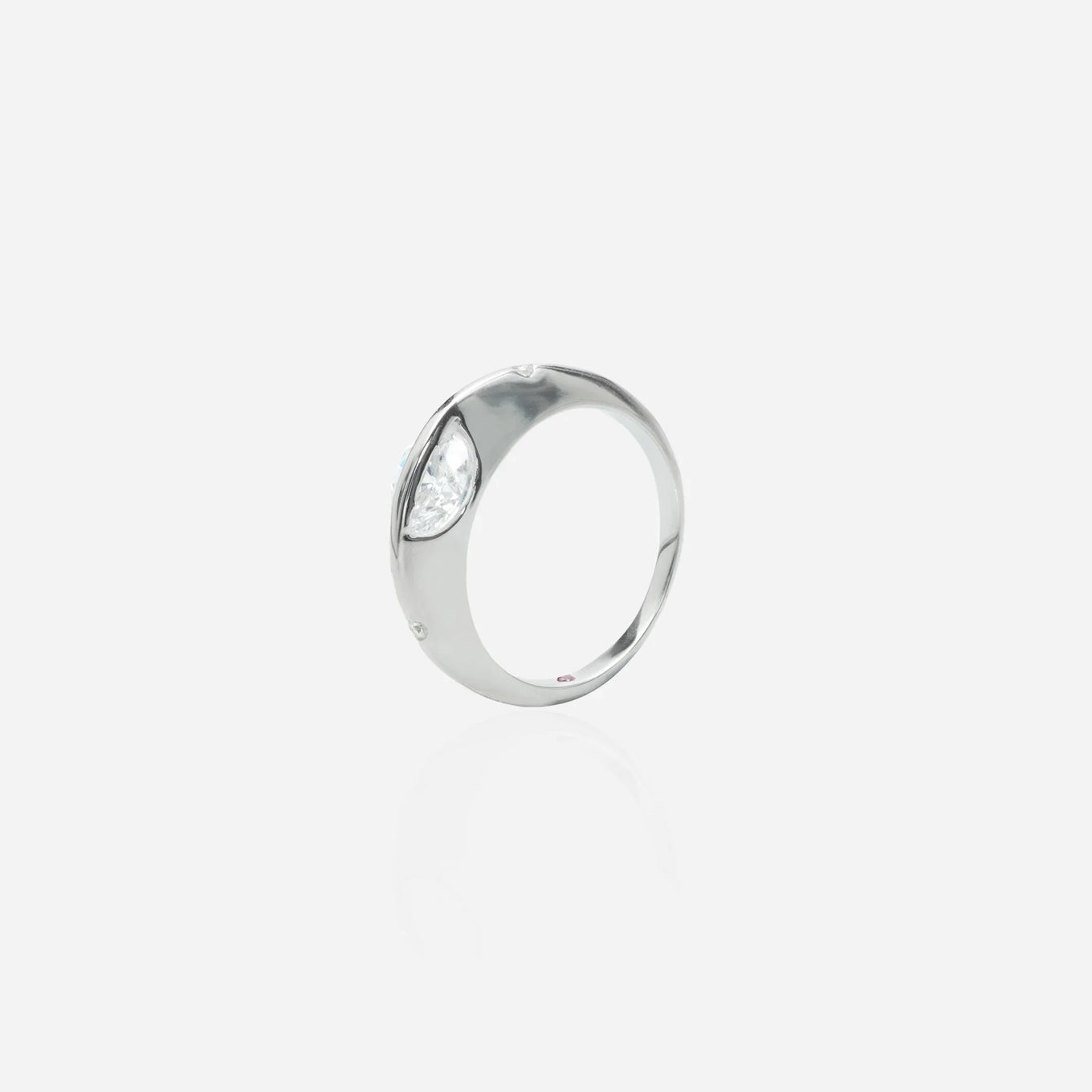
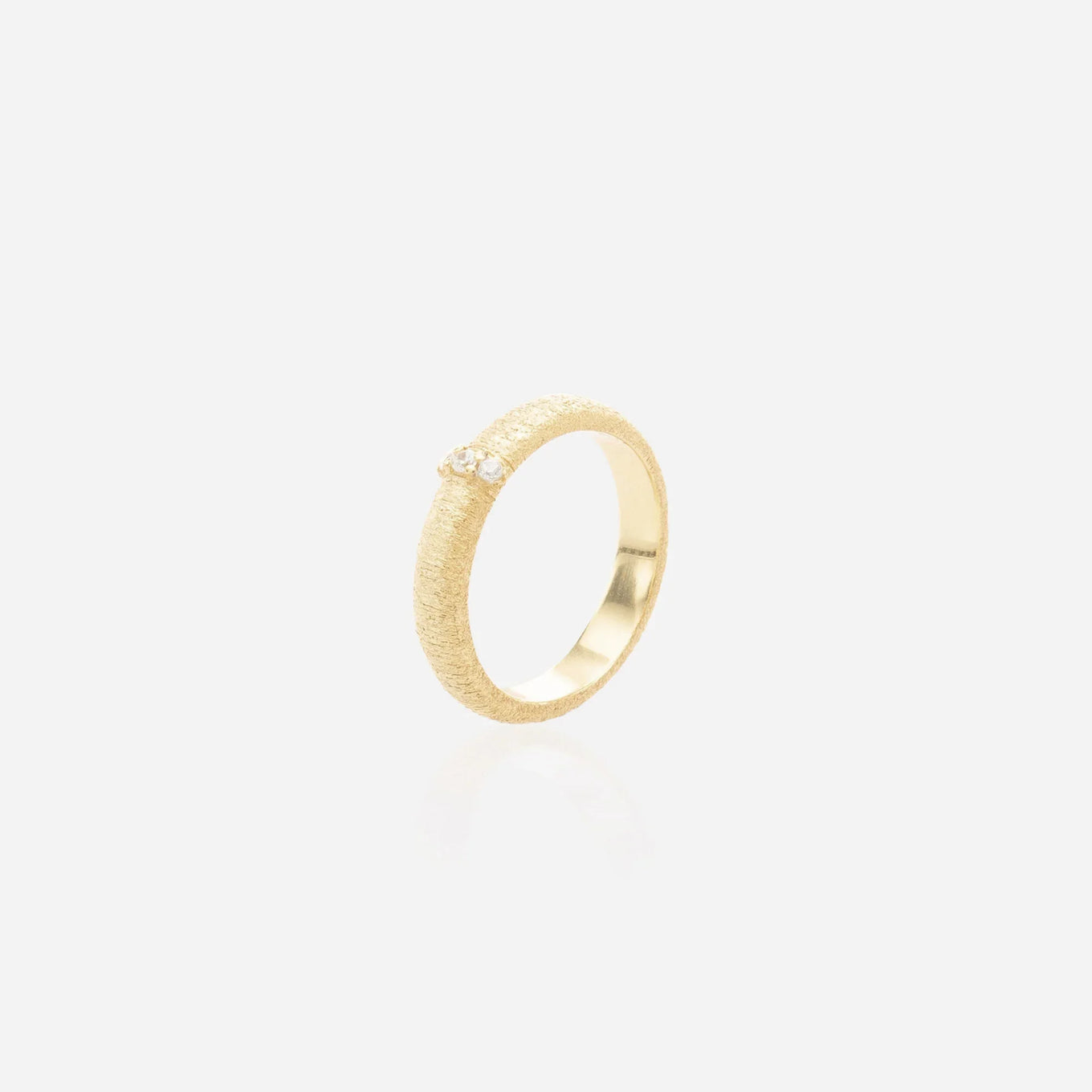
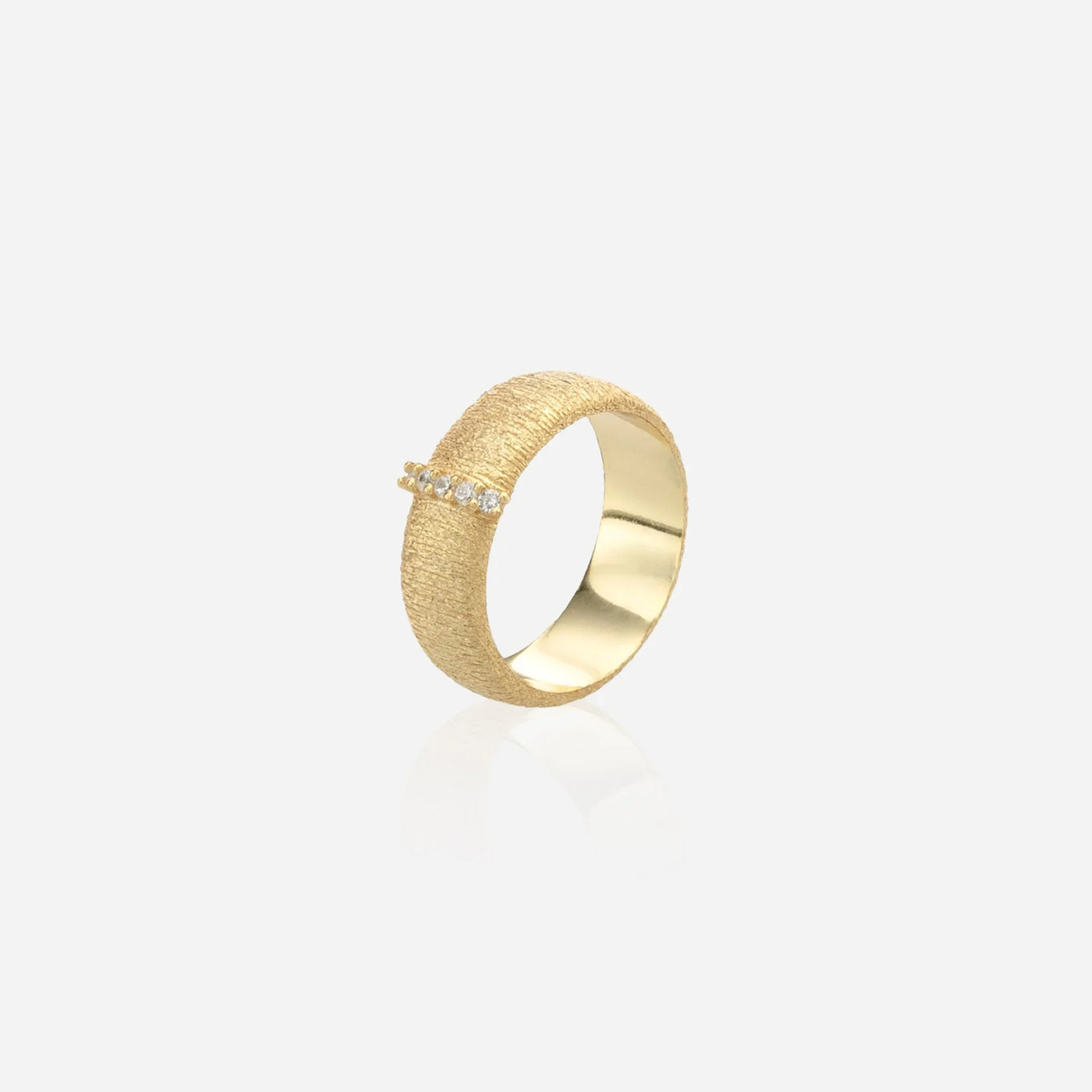
The ÉLARAMUSE Oasis Wide Band bridges cigar-band simplicity with architectural refinement — a textured gold surface punctuated by channel-set lab diamonds. It's the cigar band evolved: all the presence with a whisper of sparkle.
Best for: Ring stackers who want a grounding piece. Mixed-metal enthusiasts (gold cigar band + silver thin bands = contemporary contrast). Those who want their ring to feel like an heirloom from day one.
3. The Wing & Wrap: Sculptural Rings That Defy the Circle
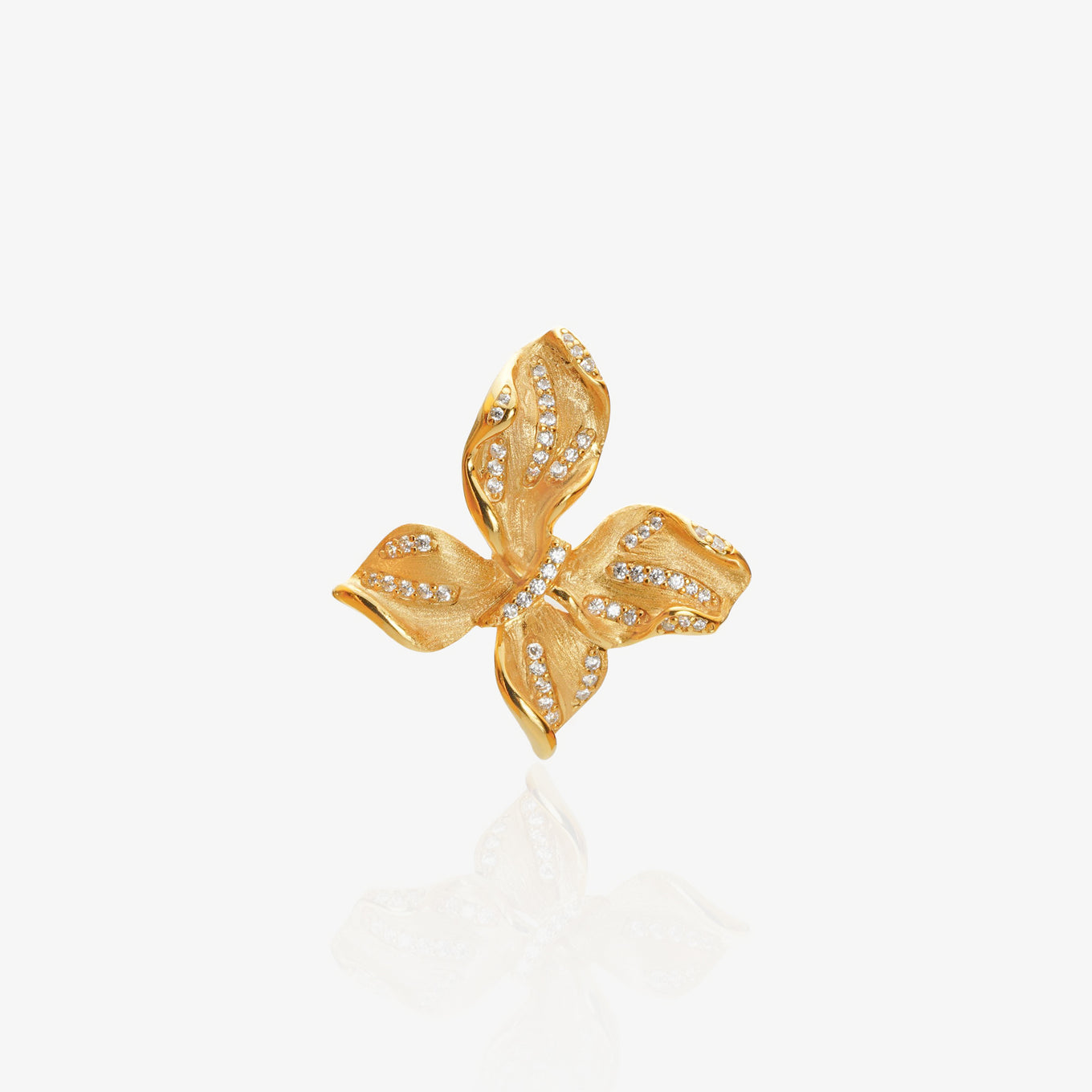
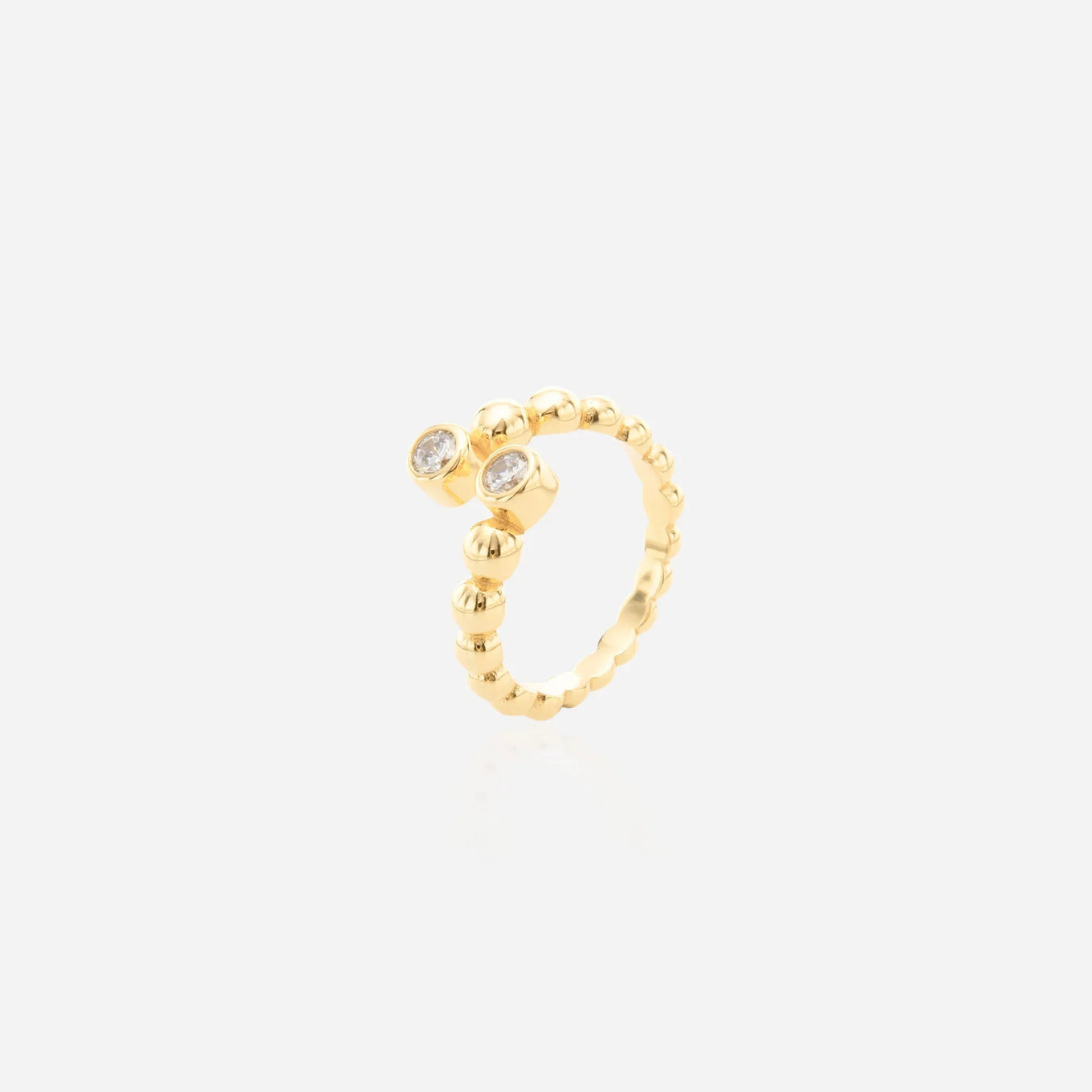
Not all wide bands are continuous circles. The Guardian Wing Cuff breaks the loop — an open architectural ring with flared wing-like ends that wrap the finger. At nearly 8mm at its widest point and weighing 7.5g, it achieves wide-band presence through sculptural volume rather than uniform thickness.
This category — sometimes called "architectural cuffs" or "wrap rings" — appeals to the same audience that gravitates toward wide bands but wants something with more dimensional drama. The open design also means natural adjustability: a subtle squeeze adapts the fit to your exact finger shape, something a closed band cannot offer.
Best for: Creative professionals, asymmetry lovers, anyone who wants their jewelry to start conversations. Pairs brilliantly with simple thin stacking rings on adjacent fingers.
Lattice vs. Oasis vs. Guardian Wing: Which Wide Band Fits Your Hand?
Choosing between our three architectural wide bands isn't about picking the "best" one — it's about matching the ring to how you live. Here's the comparison I wish I'd had when I started designing these:
| Lattice Wide Band | Oasis Wide Band | Guardian Wing Cuff | |
|---|---|---|---|
| Width | 6mm | 5mm | Variable (6-8mm at widest) |
| Weight | 7.61g | 5.50g | 7.50g |
| Surface | Open grid (breathable) | Textured with lab diamond channels | Sculptural flared wings |
| Best for typing | Grid allows airflow | 5mm doesn't interfere | Wing tips can catch on keys |
| Best for stacking | Solo use recommended | Pairs with thin bands | Not designed for stacking |
| Adjustability | Fixed size | Fixed size | Gently compressible |
| Daily-wear durability | Pattern hides microscratches | Lab diamonds add face protection | Open design avoids friction |
| Who it's for | Architectural purists, grid lovers, solo-ring wearers | Stackers, sparkle appreciators, daily drivers | Asymmetry lovers, creative pros, adjustable-fit seekers |
The ÉLARAMUSE Standard
We believe a statement ring should never be a compromise ring — no green fingers, no midnight removal before hand-washing, no anxiety about wear. Every wide band in our collection is built on the same foundation:
| Feature | Specification |
|---|---|
| Base Metal | Solid Ag925 Sterling Silver |
| Plating | 0.5-micron 18K gold plating |
| Safety | 100% Nickel-Free, Hypoallergenic |
| Durability | Water-resistant, Tarnish-resistant |
| Weight Range | 5.5g — 7.6g (substantial without being heavy) |
Why Width Changes Everything: 4 Things Nobody Tells You
1. Sizing works differently. A 7mm-wide ring fits tighter than a 2mm ring in the same marked size. The wider the band, the more finger surface it covers — which means more friction. Rule of thumb: go up a half-size for bands over 5mm. We learned this the hard way during prototyping, and our size guide accounts for it.
2. Stacking has physics. Unlike thin rings that nestle together easily, wide bands demand deliberate spacing. A 7mm Lattice ring + two 1.5mm bands on the same finger = 10mm total coverage. That's most of a typical knuckle-to-base distance. Wear wide bands on their own finger, or stack them only with very thin spacers.
3. Surface matters more than shape. A smooth polished wide band reflects light in one uniform sheet. A textured or latticed wide band — like the Lattice or Oasis — creates a mosaic of micro-reflections. The textured surface is actually more forgiving of daily wear because small scratches blend into the pattern instead of standing out.
4. Weight becomes presence. 7.61 grams on your hand is, neurologically, a constant reminder. Your brain registers the weight with every gesture. There's a reason heavy signet rings became symbols of authority: physical presence projects psychological significance. A wide band ring doesn't just sit on your hand — it communicates with you throughout the day.
Unlike Thin Bands, Wide Band Rings Solve 3 Real Problems
Unlike delicate stacking rings that spin, flip, and disappear between your fingers, a properly fitted wide band ring stays put. The broader surface area distributes pressure evenly, eliminating the "ring spin" that plagues thin bands on tapered fingers.
Unlike hollow costume rings that dent within weeks, an Ag925 sterling silver wide band with 0.5-micron 18K gold plating carries substantial weight without being premium gold (at bullion weight) — meaning premium presence at a fraction of the price. A 18K gold (at current market rates) ring at 7.6g would cost over $600 in gold content alone. ÉLARAMUSE delivers the same visual impact, the same substantial feel, for $65-$89.
Unlike trend-driven statement rings that look dated by next season, an architectural grid pattern is geometrically timeless. The Lattice ring references Bauhaus simplicity, Gothic tracery, and contemporary parametric design simultaneously — it's not tied to any single era.
How to Style a Wide Band Ring: 3 Looks for Real Life
The Solo Statement: One Oasis Wide Band on your index finger. Nothing else. No stacks, no adjacent-finger rings. This is the architectural purist's approach — let the grid pattern hold all the visual real estate. Works with everything from a white button-down to a black turtleneck.
The Mixed-Weight Stack: Oasis Wide Band on the middle finger + two thin 1.2mm stacking bands on the ring finger. The contrast between 5mm of textured gold and whisper-thin sparkle bands creates a curated, intentional composition. Think gallery wall vs. single painting.
The Power Pinky: A wide band worn on the pinky — an unexpectedly bold choice that signals confidence. The smaller finger makes a 5mm band appear proportionally larger, creating maximum impact with minimum metal. Popular in menswear but equally striking on women.
18 Months in a Wide Band: A Wear-Test Journal
I've worn the Lattice Wide Band on my right index finger for 18 months — through two summers, one move, roughly 1,000 hand-washes, and a regrettable encounter with a dumbbell knurling pattern. Here's what actually happened to the gold plating.
Month 1-3: The 18K gold finish held perfectly. I showered in it, slept in it, typed 8-hour days. Zero visible wear. The open gridwork proved genuinely practical — soap and water drain through the lattice instead of getting trapped against skin the way they do under solid bands.
Month 6: First micro-abrasions appeared on the underside of the band (the palm side) — the surface that drags against desks, steering wheels, and gym equipment. The top and sides remained pristine. This is standard for any gold-plated ring; plating wears fastest on the contact surface.
At 0.5 microns, the Lattice's underside wear was less than what I've seen on competing 0.25-micron fashion jewelry, confirming that plating thickness is the single biggest variable in longevity.
Month 12: The grid pattern's high-relief intersections — where gold meets gold in the lattice crossings — developed an attractive micro-patina: a subtle brightening at the raised points that gives the ring a worn-in, heirloom character. Smooth-surface wide bands can't achieve this effect. When a polished ring shows wear, it's a blemish. When a textured architectural ring shows wear, it's a story.
Month 18 (today): The ring remains structurally identical to day one. No green-finger incidents over 18 months of continuous contact — the nickel-free Solid Ag925 Sterling Silver core is inherently hypoallergenic. The 0.5-micron plating on the top (visible) surface shows approximately 15% wear — confined to the highest raised points of the grid pattern, where friction is unavoidable.
The recessed areas of the lattice still hold full gold color. A re-plating would restore it to new, but honestly? The patina looks intentional.
The takeaway: A textured wide band ages better than a smooth one. A 0.5-micron plate ages better than a 0.25-micron plate. And a ring you never take off becomes part of your physical identity faster than one you baby. If you're the type who wants jewelry to look brand-new forever, get smooth and gold-filled. If you want a ring that earns its character, get textured and gold-plated. Both are valid — but they're different products for different people.
FAQ: Wide Band Gold Rings
How wide should a wide band ring be?
3-4mm is considered transitional — noticeable but not a statement. 5-6mm is the sweet spot for daily-wear statement rings. 7-8mm is maximum presence — best suited for index or middle finger wear where there's more finger length to balance the width.
Do wide band rings run small?
Yes. As a rule of thumb, go up half a size for every 3mm of additional width beyond a standard 2mm band. A size 6 in a thin band often needs a size 6.5 or 7 in a 7mm wide band. Always measure with a wide-band sizer when possible.
Can you stack wide band rings?
You can, but with intention. Multiple wide bands on one finger quickly becomes uncomfortable — the total width can exceed finger length. A better approach: one wide band per finger, or one wide band flanked by one very thin (1-1.5mm) spacer ring on each side.
Are wide band rings comfortable for typing?
Surprisingly, yes — if worn on the index or ring finger. A wide band on the middle finger can interfere with keyboard reach. The Lattice ring's openwork design makes it more comfortable for typing than a solid wide band because air circulates through the grid.
Wide band ring vs cigar band ring — what's the difference?
"Cigar band" specifically describes a thick, flat-faced ring with minimal detail — think a plain metal ribbon wrapped around the finger. "Wide band" is the broader category that includes cigar bands, architectural rings, textured bands, and channel-set styles. All cigar bands are wide bands, but not all wide bands are cigar bands.
Can I wear a wide band ring to the gym?
For bodyweight and machine workouts — yes. The 0.5-micron 18K gold plating over Ag925 sterling silver handles sweat and friction from yoga mats, resistance bands, and cable machines without issue. The one exception: barbell work. Knurling (the crosshatch pattern on barbells) is intentionally abrasive for grip — it will scratch any metal ring surface regardless of quality.
I remove mine for deadlifts and heavy cleans, not because the ring can't handle it, but because barbell knurling is designed to dig into metal.
What's the difference between 14K gold and 18K gold plated wide bands?
14K gold (solid) is 58.3% gold alloyed with other metals for durability — a 7mm solid 14K band costs $400-$800 depending on weight. 18K gold plated over sterling silver (our standard) bonds a 0.5-micron layer of 18K gold (75% pure) onto a solid silver core. Visually identical to solid karat gold at arm's length, with the same hypoallergenic sterling silver against your skin.
The tradeoff: solid karat gold lasts a lifetime without replating; gold-plated sterling silver delivers the same presence at $65-$89 instead of $400+. For a daily driver you plan to wear for years and potentially re-plate once, gold-plated sterling silver is the practical luxury choice.
Do wide band rings turn your finger green?
Only if the base metal contains copper or nickel in direct contact with skin. Our wide bands are built on Solid Ag925 Sterling Silver — 92.5% pure silver, inherently hypoallergenic and nickel-free. The 0.5-micron 18K gold plating provides an additional barrier. In 18 months of continuous wear (showers, sleep, workouts included), I've experienced zero green-finger incidents with the Lattice Wide Band.
The green-finger myth comes from cheap costume rings that use brass or copper cores — those metals oxidize on contact with skin acids. Sterling silver doesn't.
Shop the Wide Band Collection
Every ring below is built on the same foundation — Solid Ag925 Sterling Silver, 0.5-micron 18K Gold Plating, nickel-free, water-resistant. The difference is in how each one lives on your hand.
- Lattice Architectural Gold Band — For the index finger that does all the talking. 7.61g, 6mm, open gridwork. The ring I haven't taken off in 18 months.
- Oasis Wide Band — The cigar-band evolution: textured gold surface punctuated by channel-set lab diamonds. The ring that bridges statement and subtlety.
- Guardian Wing Cuff — For when a circle isn't enough. Flared wing ends, lab diamond accents, open design for natural adjustability. The ring that starts conversations.
Browse all gold band rings & stacking sets
Editor's Picks: Wide Band Rings: Architectural Gold for Your Finger
Wide Band Ring | Architectural Gold Statement Ring | ÉLARAMUSE: Wide Band Ring | Architectural Gold Statement Ring | ÉLARAMUSE — Our signature wide band. Architectural ridges catching light at 18 different angles.
Guardian Wing Cuff | Angel Ring | Lab Diamond | ÉLARAMUSE: Guardian Wing Cuff | Angel Ring | Lab Diamond | ÉLARAMUSE — Sculptural wing motif on a wide platform. The most architectural ring in the collection.
References & Further Reading
We believe your jewelry should anchor your presence, not demand your attention. A wide band ring isn't about shouting — it's about certainty. When you slide on 7.61 grams of architectural gold, your hand knows the difference. Isn't that the whole point of wearing something every day — that it becomes part of who you are? Find the ring that makes you feel as substantial as you are.
We believe jewelry is not decoration — it is self-definition. Every piece we make must earn its place on your body: through material integrity (solid Ag925 cores, never hollow brass), through design intelligence (pieces that survive showers, sleep, and spontaneous decisions), and through a commitment to transparency that the jewelry industry has historically avoided. We do not chase trends. We build talismans for the captain of her own soul — pieces that feel like you, only more intentional.What We Believe
Behind the Design
Every ÉLARAMUSE piece begins with a question: What makes jewelry worth wearing every day? Our design philosophy — Urban Naturalism — draws from organic textures and architectural precision, translating nature's asymmetry into wearable geometry. Each piece is crafted with a nickel-free Ag925 sterling silver core, finished in Premium 18K Gold Plating (0.5+ microns), and subjected to a 12-point quality inspection before it reaches you. We don't design for the drawer.
We design for the life you actually live.
From Our Studio
Every ÉLARAMUSE design begins with a question: what would make this piece something you never want to take off? Our studio tests every design for comfort, durability, and versatility — because jewelry should enhance your life, not complicate it.