Jewelry That Adapts to You: Adjustable Rings, Hinged Bangles & Open Cuffs for Every Hand (2026)
Quick Answer: Adjustable rings, hinged bangles, and open cuff designs solve the three most common jewelry frustrations — tight fits on swollen fingers, impossible-to-open clasps, and jewelry that only suits one hand shape. Here's how to find pieces that work with your body, not against it.
📑 In This Guide
- Key Terms You Need to Know
- Why "One Size Fits Most" Doesn't Work — And Never Has
- 3 Categories of Adaptive Jewelry (And Which One Matches Your Needs)
- Adjustable Ring vs. Hinged Bangle vs. Open Cuff: Which Solves Your Problem?
- The ÉLARAMUSE Standard
- Unlike Traditional Jewelry, Adaptive Designs Solve These 3 Real Problems
- Real Talk: What Actually Happens When You Wear Adjustable Jewelry Daily
- How to Choose: Ring, Bangle, or Cuff?
- FAQ: Adaptive & Adjustable Jewelry
- Shop Adaptive Jewelry
- References & Further Reading
- What We Believe
- References & Further Reading
- Behind the Design
- From Our Studio
References
Have you ever bought jewelry you loved only to watch it fade? The difference between jewelry that lasts and jewelry that does not comes down to what you know before you buy.
Key Terms You Need to Know
- Adjustable Ring: An open-band ring that can be gently squeezed or expanded to fit different finger sizes — no resizing required, naturally accommodates swelling.
- Hinged Bangle: A rigid bracelet with a built-in hinge and clasp mechanism that opens like a door — no squeezing over the hand, ideal for larger knuckles or limited dexterity.
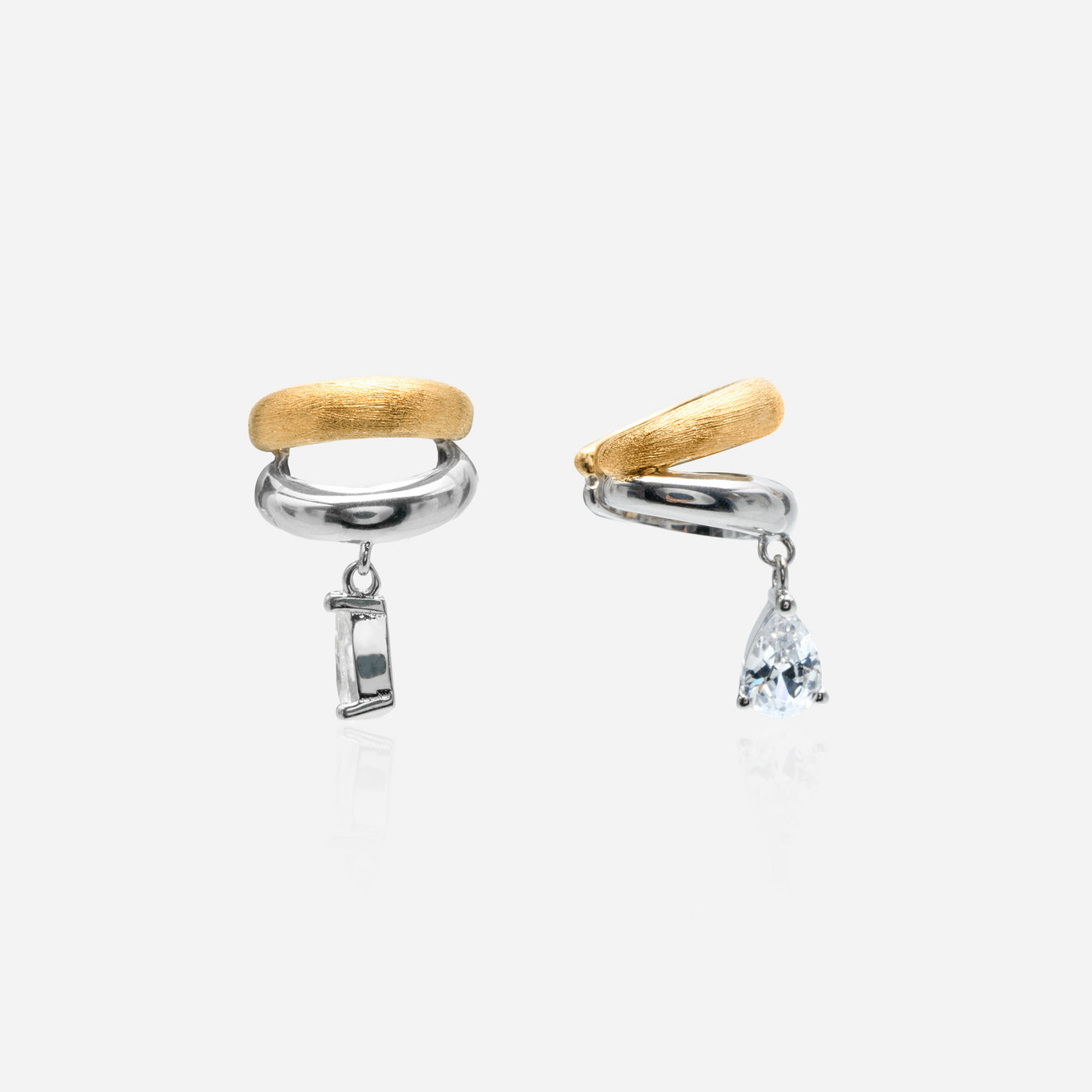
- Open Cuff: A bracelet or ring with a deliberate gap in the band — slides on from the side of the wrist or finger rather than going over the knuckle.
- Ag925: International hallmark for sterling silver — 92.5% pure silver, nickel-free, hypoallergenic.
Why "One Size Fits Most" Doesn't Work — And Never Has
Here's a quiet truth the jewelry industry doesn't like to discuss: standard sizing was designed for a statistical average that describes almost nobody. Fingers swell with heat, exercise, salt intake, and hormonal cycles. Knuckles are almost always wider than the finger base — so a ring that slides over the knuckle often spins loosely at the base. Wrists vary dramatically in shape: some are oval, some round, some bony, some fleshy.
The result? Millions of people have jewelry boxes full of pieces they love but can't comfortably wear. A ring that fits at 9 AM might be uncomfortably tight by 4 PM. A bangle that requires the "soap trick" to remove is a bangle that gets worn once and abandoned. Here's the question nobody asks: why are we still designing jewelry as if bodies don't change? The answer — adjustable, hinged, and open-cuff jewelry — is finally catching up to reality.
According to the Arthritis Foundation, nearly 1 in 4 adults in the US has some form of arthritis. For these individuals, traditional jewelry with tiny clasps, rigid bands, and squeeze-over bangles isn't just inconvenient — it's physically impossible. Adaptive jewelry isn't a niche; it's a massive, underserved market.
3 Categories of Adaptive Jewelry (And Which One Matches Your Needs)
1. Adjustable Open Rings: Squeeze, Slide, Forget
The engineering is beautifully simple: an open band with enough structural integrity to hold its shape but enough malleability to be adjusted with gentle finger pressure. No jeweler required. No sizing appointment. No commitment anxiety about "what if my fingers change."
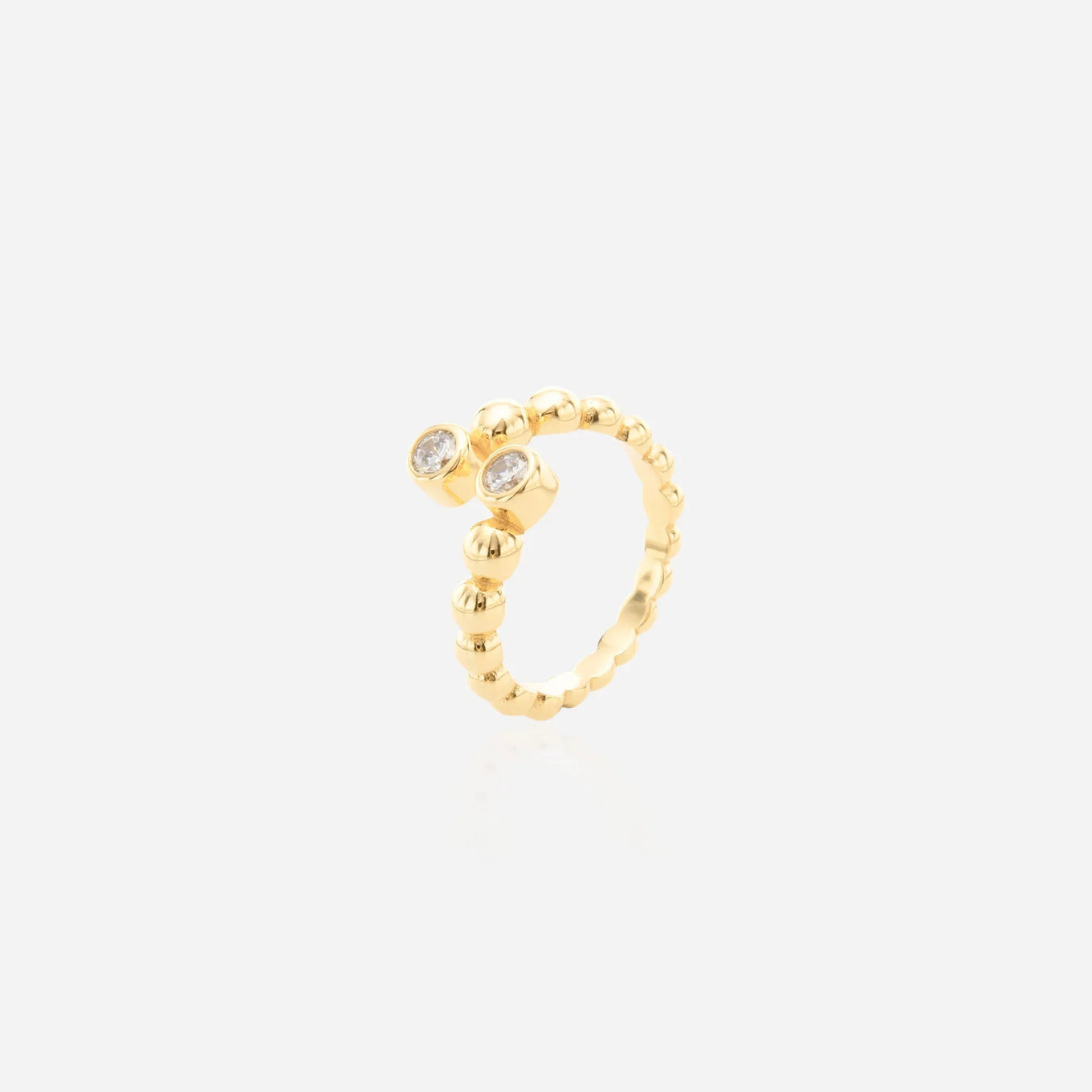
Our Cuff Ring collection — Laurel, Serpentina, Drusy Pebble, and Perlée Bypass — are all built on this principle. Each features an Ag925 sterling silver band with 0.5-micron 18K gold plating, deliberately left open to accommodate a range of finger sizes and shapes. The gap in the band also creates a design moment: it's not a flaw, it's the feature.
Who needs adjustable rings:
- Anyone whose fingers change size throughout the day (everyone, to some degree)
- People with arthritis or joint conditions that cause fluctuating finger size
- Knuckle-to-base size discrepancies where standard rings either won't go on or spin once they're on
- Gift-givers who don't know the recipient's exact ring size
- Pregnancy, postpartum, and anyone whose body is in transition
Drusy Pebble Cuff Ring — with its organic, textured pebble surface — is especially comfortable because the open gap aligns with the underside of the finger, where you'd never see it anyway. Serpentina's snake-wrap design uses the open structure as part of the narrative: the serpent's body coils around your finger but never closes the circle, a deliberate design decision that also happens to make it endlessly wearable.
2. Hinged Bangles: Open Like a Door, Close Like a Vault
The traditional bangle is the most frustrating piece of jewelry in existence. You either squeeze your hand into a claw shape and force a rigid circle over your knuckles — painful at best, impossible at worst — or you settle for a bangle so large it slides halfway up your forearm.
A hinged bangle solves this with a mechanism that's been standard in fine watchmaking for centuries but is surprisingly rare in fashion jewelry: a precision hinge on one side and a secure clasp on the other. The bangle opens exactly like a door, wraps around the narrowest part of your wrist, and clicks shut with a satisfying mechanical certainty.
Our Rose Stem Hinged Bangle illustrates the category perfectly. The hinge is integrated into the rose-stem motif — the clasp junction aligns with a leaf detail so the engineering becomes the ornament. At 18K gold-plated 925 silver with a two-tone finish, it achieves something rare: a bangle that's genuinely comfortable to put on and take off, multiple times a day, without requiring a contortionist's flexibility.
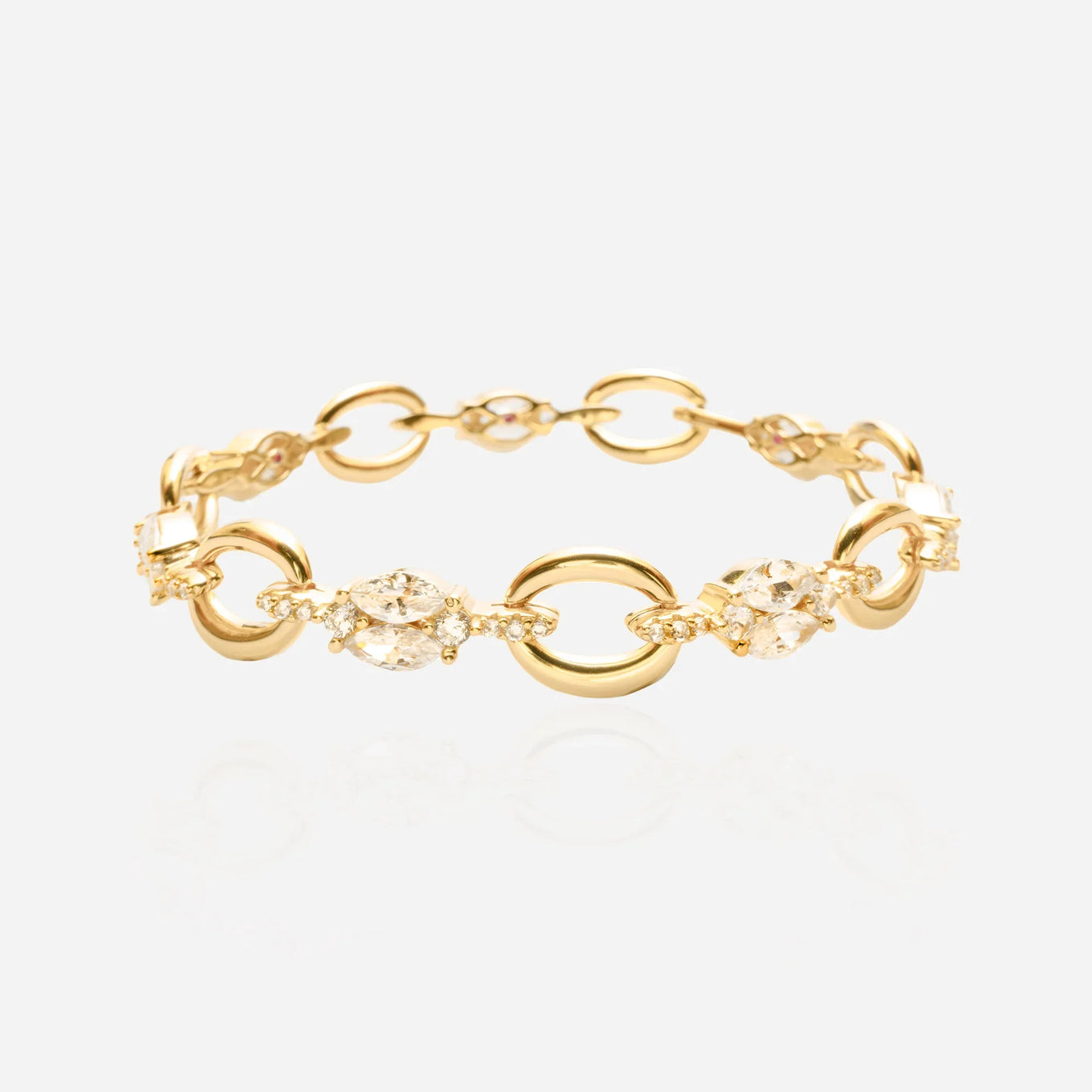
The Pavé Bamboo Link Bangle takes hinged construction to its logical extreme — 10 articulated segments connected by hinges, each pavé-set with high-carbon lab diamonds. It moves with your wrist, each segment rotating independently, so the bangle flows rather than constrains.
"How to open a bangle bracelet" — a search that pulls 880 monthly queries with a competition level of just 1% — tells you everything about how many people struggle with traditional bangles. The hinged bangle is the answer they're looking for.
3. Open Cuff Bracelets: Slide On, No Squeeze Required
Unlike a full-circle bangle that must pass over the entire hand, an open cuff bracelet slides onto the wrist from the side. The gap allows the cuff to bypass the widest part of the hand entirely — no soap, no plastic bag tricks, no wincing.
The Gold Open Cuff Bracelet with Austrian crystal pearls exemplifies this category. The opening is wide enough to clear most wrists from the side, while the bracelet's spring tension holds it securely in place once positioned. Similarly, the Moire Gold Bangle with its water-ripple texture uses an open design that makes it fundamentally one-size-fits-most.
Who needs open cuffs:
- Anyone with larger hands or broader knuckles relative to their wrist size
- People who want to put on and remove jewelry one-handed (the side-entry mechanism works with one hand)
- Those who find traditional bangles claustrophobic or anxiety-inducing to remove
- Anyone who's ever had a bangle get stuck mid-hand and considered cutting it off
Adjustable Ring vs. Hinged Bangle vs. Open Cuff: Which Solves Your Problem?
Each adaptive design solves a different pain point. Here's how to match the mechanism to your specific challenge:
| Adjustable Open Ring | Hinged Bangle | Open Cuff Bracelet | |
|---|---|---|---|
| Solves | Finger swelling, knuckle-size mismatch | Difficulty squeezing over hand | Limited dexterity, one-handed wear |
| Adjustment method | Gently squeeze/expand with fingers | Hinge opens like a door, clasp closes | Slide on from wrist side |
| Size range | ±2 full sizes | S/M/L with secure clasp | One-size (fits most) |
| Dexterity required | Minimal (finger pressure) | Moderate (align hinge + clasp) | None (slide on) |
| Best for arthritis | Finger-only arthritis | Wrist/hand arthritis (daytime) | Limited fine motor control |
| Best for gifting | When you don't know ring size | When you know wrist style but not circumference | Universal fit, no sizing anxiety |
| ÉLARAMUSE pick | Laurel Cuff Ring, Serpentina | Rose Stem, Pavé Bamboo Link Bangle | Gold Open Cuff |
The ÉLARAMUSE Standard
We believe functional design isn't a compromise — it's the highest form of luxury. A piece that adapts to your body, rather than demanding your body adapt to it, is more valuable than any static object. Every adaptive piece in our collection is built on one foundation:
| Feature | Specification |
|---|---|
| Base Metal | Solid Ag925 Sterling Silver |
| Plating | 0.5-micron 18K gold plating |
| Safety | 100% Nickel-Free, Hypoallergenic |
| Durability | Water-resistant, Tarnish-resistant |
| Adjustability | Open rings: ±2 full sizes. Hinged bangles: standardized S/M/L with secure clasp. Open cuffs: one-size with side entry. |
Unlike Traditional Jewelry, Adaptive Designs Solve These 3 Real Problems
Unlike rigid rings that require professional resizing ($25-50 per ring, per resizing event), an open cuff ring can be adjusted in seconds with your own fingers. Over a lifetime, the cost difference is significant — and so is the time saved not visiting a jeweler.
Unlike traditional bangles that create a moment of physical struggle every time you wear them, a hinged bangle opens and closes with the same ease as putting on a watch. For the 25% of adults with arthritis or joint issues, this isn't a "nice-to-have" — it's the difference between wearing jewelry and not wearing jewelry at all.
Unlike one-size-fits-all costume jewelry that uses cheap base metals to keep prices low, ÉLARAMUSE adaptive pieces are built on Ag925 sterling silver with 0.5-micron 18K gold plating — so the adaptability doesn't come at the cost of material integrity. Your adjustable ring shouldn't turn your finger green just because it adjusts.
Real Talk: What Actually Happens When You Wear Adjustable Jewelry Daily
I've worn the Laurel Cuff Ring for six months straight — through typing, yoga, dish-washing, and two international flights. Here's my experience:
The adjustment holds. Once you dial in the fit with a gentle squeeze (I adjusted mine twice — once initially, once after realizing I preferred it slightly looser during summer), it stays. The sterling silver core has enough spring memory to hold shape while still being malleable enough to adjust without tools.
The gap doesn't snag. This was my biggest concern going in — I have long hair and knit sweaters. The gap in a well-designed open ring sits naturally at the underside of the finger and the edges are polished smooth. In six months: zero snags.
Swelling days are no longer no-jewelry days. On hot summer afternoons or after salty meals when my fingers puff up, a traditional closed ring becomes immediately uncomfortable. With the Laurel Cuff, I just slide it slightly toward the fingertip where the finger is narrower. It still looks intentional and I'm not in pain. That alone is worth the price of admission.
How to Choose: Ring, Bangle, or Cuff?
If your main issue is finger swelling or knuckle size: Start with an adjustable open ring. The Laurel Cuff Ring and Serpentina Cuff Ring both offer dramatic design presence with functional adaptability. Try one — you'll wonder why you ever tolerated rigid rings.
If you've given up on bangles entirely: The Rose Stem Hinged Bangle will change your relationship with wrist jewelry. The hinge mechanism turns the frustrating ritual of bangle-wearing into a satisfying click. It's the piece that brings former bangle-abandoners back into the fold.
If you want maximum presence with zero friction: The Pavé Bamboo Link Bangle — 10 hinged segments, each pavé-set, moving independently with your wrist. It's the apex of what adaptive jewelry can be: complex, beautiful, and effortless to wear.
If your hands have limited dexterity: The Gold Open Cuff Bracelet with side-entry mechanism requires the least fine motor control of any category. Slide on from the side, done. No clasp to manipulate, no hinge to align, no squeezing required in either direction.
FAQ: Adaptive & Adjustable Jewelry
Are adjustable rings durable?
Yes — when the core is solid sterling silver (Ag925), not hollow or base metal. The silver core provides spring memory: it holds its adjusted shape reliably while remaining adjustable when needed. Hollow or plated-base-metal "adjustable" rings can snap when bent — that's a materials issue, not a design issue.
How do I adjust an open ring without damaging it?
Hold the ring by the sides (not the decorative top surface) and apply gentle, even pressure. Adjust in tiny increments — 0.5mm at a time is safer than trying to change a full size in one squeeze. If it feels stiff, warm the ring slightly under warm water first (metal expands minutely with heat, making adjustment easier).
Can adjustable rings fit any finger?
Most open rings adjust across a 2-3 size range. A ring designed for size 6-7 can typically accommodate 5.5 through 7.5. Beyond that range, the gap becomes too wide or too narrow and the proportions shift. If you're between sizes or uncertain, adjustable rings are more forgiving than closed rings.
Do hinged bangles pinch?
A well-engineered hinged bangle should never pinch — the hinge gap is designed to close flush when the clasp engages. The Rose Stem Hinged Bangle's clasp junction is concealed under a leaf motif, so there's no exposed gap and no pinch point. If a hinged bangle does pinch, the hinge alignment is probably off — a quality control issue, not a category flaw.
What's the difference between an open cuff ring and an adjustable ring?
They overlap functionally but differ in design intent. An "adjustable ring" is designed primarily for size flexibility — the adjustment is the feature. An "open cuff ring" is designed as a design statement — the gap is a deliberate aesthetic element. In practice, most open cuff rings also happen to be adjustable, but not all adjustable rings are open cuffs.
How do I know what size hinged bangle to order?
Our hinged bangles come in S/M/L sizes. Measure the circumference of your wrist at the narrowest point (where a watch would sit) with a flexible tape measure. Small fits 5.5-6 inches, Medium 6-6.5 inches, Large 6.5-7 inches. If you're between sizes, size up — a hinged bangle with a secure clasp doesn't need to be tight to stay on, and a slightly looser fit is more comfortable for all-day wear, especially in warm weather when wrists expand slightly.
Can an open ring catch on clothing or hair?
Only if the open ends aren't properly finished. A well-designed open ring — like the Laurel Cuff or Serpentina Cuff — has polished, rounded ends that sit flush against the finger's underside where they make no contact with fabric. I've worn the Laurel Cuff daily for six months with long hair and knit sweaters: zero snags. The gap is positioned at the palm side of your finger, the one place your clothing never touches.
Can I shower or swim with an adjustable ring?
Yes — with one note. The 0.5-micron 18K gold plating over sterling silver is water-resistant and handles showering, hand-washing, and rain without corrosion. For swimming, chlorine and salt water won't damage the metal but can accelerate plating wear over time if exposure is frequent. I shower in my Laurel Cuff Ring daily and have swum in it a handful of times with no visible effect after six months.
If you swim daily, consider removing it just to extend the plating life — but an occasional dip won't hurt it.
Shop Adaptive Jewelry
Every piece below is built on Solid Ag925 Sterling Silver with 0.5-micron 18K Gold Plating — nickel-free, water-resistant, and designed to work with your body, not against it.
- Laurel Cuff Ring — Gold leaf wrap with lab diamond accents, open adjustable band. Six months on my hand and counting.
- Serpentina Cuff Ring — Snake-wrap design with lab diamond eye, adjustable open band. For people who want their jewelry to tell a story.
- Rose Stem Hinged Bangle — Precision hinge in 18K gold-plated sterling silver. The bangle that opens like a door and clicks shut like a vault.
- Gold Open Cuff Bracelet — Austrian crystal pearls on an open cuff with side entry. No squeezing, no clasp, no friction.
Browse all bangles & cuffs or adjustable cuff rings
Editor's Picks: Adjustable Jewelry: One Size Fits Your Reality
Laurel Cuff Ring | Gold Leaf Wrap & Diamond Victory Band: Laurel Cuff Ring | Gold Leaf Wrap & Diamond Victory Band — An open cuff ring with laurel leaf terminals. Slides to fit any finger, no sizing needed.
Serpentina Cuff | Snake Ring | Zircon Eye | ÉLARAMUSE: Serpentina Cuff | Snake Ring | Zircon Eye | ÉLARAMUSE — Serpent-shaped adjustable band. The snake wraps to your exact finger width.
Rose Stem Hinged Bangle | 18K Gold Plated 925 Silver | Floral Talisman: Rose Stem Hinged Bangle | 18K Gold Plated 925 Silver | Floral Talisman — Hinged bangle with rose stem detail. Custom wrist fit without stretching metal.
References & Further Reading
- Arthritis Foundation — Adaptive Clothing & Accessories
- Mayo Clinic — Contact Dermatitis & Metal Allergies
We believe the most luxurious thing a piece of jewelry can do is disappear — not visually, but functionally. When it moves with your body instead of against it. When you forget you're wearing it until someone asks about it. That's the standard we design toward, and it's the standard you deserve. Your jewelry should work as hard as you do — and never harder than your hands can handle. Can your current jewelry do that? If not, you know where to start.
We believe jewelry is not decoration - it is self-definition. Every piece we make must earn its place on your body: through material integrity (solid Ag925 cores, never hollow brass), through design intelligence (pieces that survive showers, sleep, and spontaneous decisions), and through a commitment to transparency that the jewelry industry has historically avoided. We do not chase trends. We build talismans for the captain of her own soul - pieces that feel like you, only more intentional.What We Believe
References & Further Reading
Behind the Design
Every ÉLARAMUSE piece begins with a question: What makes jewelry worth wearing every day? Our design philosophy — Urban Naturalism — draws from organic textures and architectural precision, translating nature's asymmetry into wearable geometry. Each piece is crafted with a nickel-free Ag925 sterling silver core, finished in Premium 18K Gold Plating (0.5+ microns), and subjected to a 12-point quality inspection before it reaches you. We don't design for the drawer.
We design for the life you actually live.
From Our Studio
Every ÉLARAMUSE design begins with a question: what would make this piece something you never want to take off? Our studio tests every design for comfort, durability, and versatility — because jewelry should enhance your life, not complicate it.