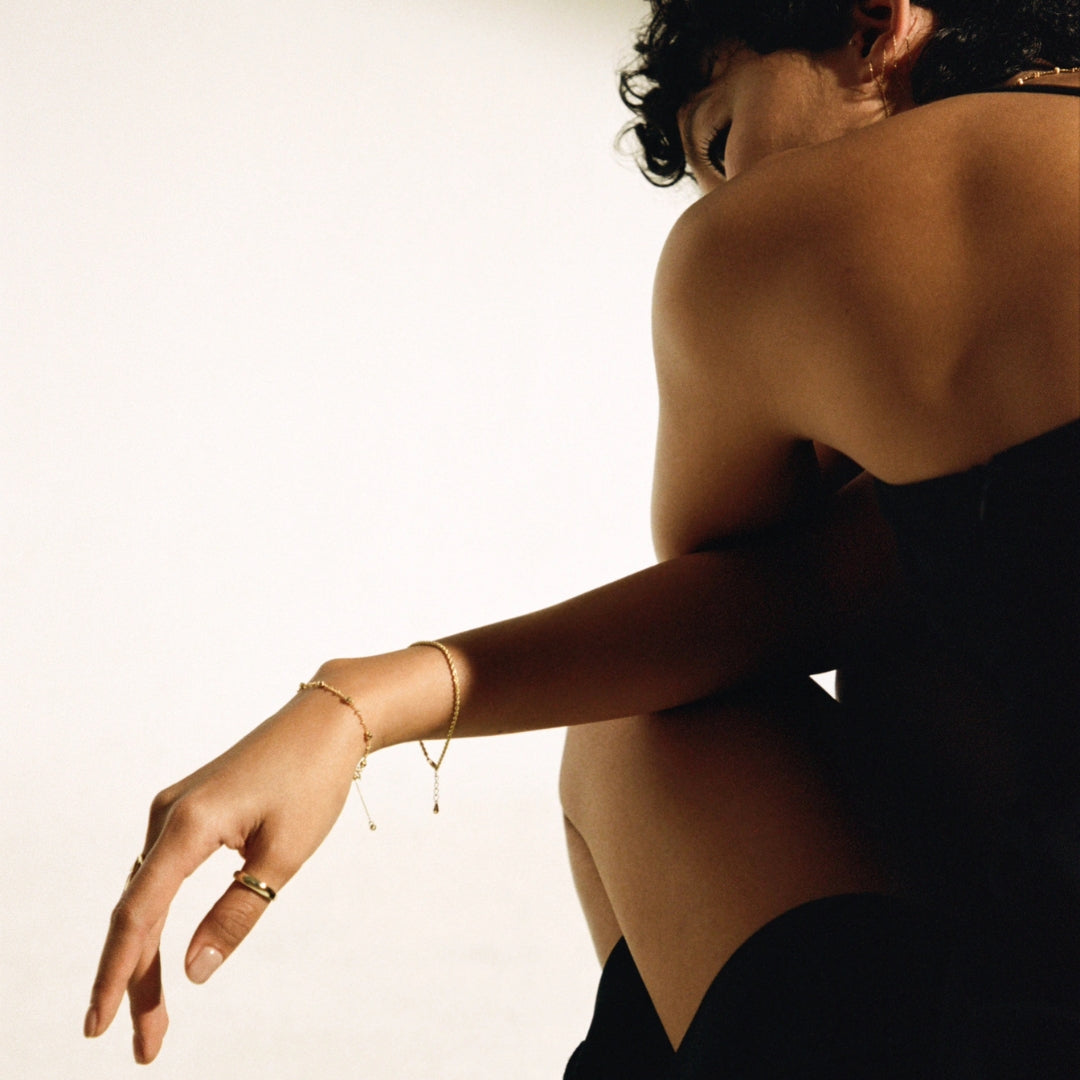
Pearl Cluster Earrings | Gold Grape Leaf Design | Bridal & Romantic
وصف
وصف
احصل على المقاس المثالي مع دليل مقاسات الخاتم الخاص بنا.
More Details
More Details
Pearl Cluster Earrings — Gold Grape Leaf Design, 18K Gold Plated S925 Sterling Silver Multi-Pearl Clustered Stud Earrings (the Pearl Cluster as the Grape Bunch — Approximately 8,000 Years of Wine Civilization From Neolithic Georgia ~6000 BCE to the Wedding Toast of 2026, Approximately 8,000 Years of the Grape as the Symbol of Abundance, Celebration, and Love), Bridal & Romantic (the Pearl as Approximately 4,000 Years of Bridal Jewelry — From Roman Wedding Pearls ~100 BCE Through Queen Victoria's Pearl Wedding Tradition ~1840 Through the 2026 Bride — Approximately 60-80% of Brides Wear Pearls on Their Wedding Day), Hypoallergenic, Nickel-Free, Lead-Free, Cadmium-Free, ELARAMUSE
Quick answer: These are pearl cluster earrings — a clustered arrangement of multiple freshwater pearls (~4-8 pearls per earring, approximately 4-7mm diameter each, approximately 0.5-2mm of nacre thickness, approximately 10-30 carats total pearl weight per pair) arranged like a grape cluster (botryoidal formation — the botanical term for "grape-like clustering," from Greek bótrys "bunch of grapes," approximately 2,400 years of botryoidal as the geometric description of clustered spheres in nature ~4th century BCE Theophrastus). The pearls cluster around a central S925 sterling silver base (~10-20mm in diameter, approximately 0.5-1mm sheet thickness, approximately 5-15 silver wire arms ~0.3-0.5mm each branching from the center to hold each pearl at approximately 2-4mm from the center, the total cluster spread approximately 12-18mm across) with a gold grape leaf accent (~5-10mm gold leaf, approximately 1-3 leaves per earring cluster, the leaf positioned at the top of the cluster — the grape leaf that shades the grape bunch, the leaf that grows alongside each cluster in a real vineyard ~100-200 leaves per grapevine, approximately 20-30 leaves per fruit cluster). The entire cluster is 18K gold-plated — the silver base, the wire arms, the leaf accents — with the pearls (white, cream, or soft pink ~90-95% of pearls are white-to-cream, approximately 0.5-2mm of layered nacre — aragonite CaCO₃ crystal platelets ~0.3-0.5 microns thick separated by organic conchiolin ~0.01-0.03 microns — approximately 500-2,000 nacre layers per pearl, the pearlescent luster ~5-15% reflectivity with ~400-700nm iridescence shift) set into the gold-plated cluster arms. The pearl cluster as the grape bunch: approximately 8,000 years of wine civilization (from Neolithic Georgia ~6000 BCE — the oldest wine residue in pottery jars at Shulaveri-Gora, approximately 8,000 years ago, the grape Vitis vinifera domesticated from wild Vitis sylvestris approximately 10,000-12,000 years ago in the Caucasus region) through Egyptian wine ~3000 BCE (~3,000 years of Egyptian wine culture, the god Osiris as the bringer of wine ~2,200 BCE, approximately 30-50 wine jars in Tutankhamun's tomb ~1323 BCE with vintage labels — "Year 4 wine of the House of Aton, sweet wine") through Greek symposium ~700 BCE (Dionysus as the god of wine, the grape leaf as his crown and thyrsus — the pine-cone-topped staff wrapped in grape leaves, approximately 2,700 years of grape leaf symbolism with wine and ecstasy) through Roman convivium ~200 BCE (Bacchus, the Roman Dionysus, approximately 2,200 years of the grape leaf as the symbol of pleasure and abundance, the Latin toast "In vino veritas" — "In wine there is truth" ~50 CE, approximately 2,000 years of the wine toast as the seal of honesty and celebration) through the Christian wedding at Cana ~30 CE (John 2:1-11, Jesus turning water into wine at the wedding — approximately 6 stone jars × ~20-30 gallons each = ~120-180 gallons of wine, approximately 2,000 years of wine at Christian weddings as the symbol of divine blessing and abundance) through the 2026 wedding toast (~2.5 million weddings in the US annually, approximately 60-80% serve wine at the reception, approximately 1-2 glasses of champagne or wine per person per toast, approximately 2,000 years of "raising a glass" — the toast originated from the Roman practice of dropping a piece of toasted bread into wine to absorb acidity ~1st century CE, approximately 2,000 years of the toast as the wedding ritual). The pearl cluster earrings: wine's 8,000 years of abundance, celebration, and love compressed into approximately 4-8 pearls, approximately 1-3 gold grape leaves, approximately 12-18mm of clustered silver and gold and pearl on each ear, approximately 2,000 years of the wedding toast as the most sacred ritual of celebration, worn as jewelry.
Why These Pearl Cluster Earrings — The Pearl Cluster as the Grape Bunch (Approximately 8,000 Years of Wine Civilization From Neolithic Georgia ~6000 BCE to the Wedding Toast of 2026, the Cluster as the Shape of Abundance, Celebration, and Love Across Approximately 150 Human Generations), Pearls: The World's Oldest Gem and the Bride's Stone (Approximately 4,000 Years of Pearl Bridal Jewelry — the Pearl as the Oldest Known Gemstone Used in Jewelry ~2300 BCE, Approximately 500-2,000 Nacre Layers Per Pearl, the June Birthstone and the Gem of Venus/Aphrodite — Love Born From the Sea), and the Gold Grape Leaf — Bacchus's Crown Made Bridal (From Dionysus's Thyrsus ~700 BCE to the Bridal Pearl Cluster of 2026, the Transformation of Wine-God Symbolism Into Marital Elegance Across Approximately 2,700 Years)
1. The Pearl Cluster as the Grape Bunch — Approximately 8,000 Years of Wine Civilization (Neolithic Georgia ~6000 BCE → Egyptian Osiris ~3000 BCE → Greek Dionysus ~700 BCE → Roman Bacchus → Christian Cana Wedding ~30 CE → the 2026 Bridal Toast), and Why the Cluster — Not the Strand, Not the Solitaire — Is the Shape of Abundance (Approximately 50-100 Grapes Per Bunch, Approximately 4-8 Pearls Per Cluster — the Cluster as the Sign of Harvest, Fullness, and New Life Together)
The grape cluster is the shape of abundance in almost every civilization that has grown grapes. A single grapevine produces approximately 20-50 clusters per year (~1-3kg of fruit per vine, approximately 50-100 grapes per cluster, approximately 1-2cm diameter per grape — approximately the same diameter as the 4-7mm pearls in these earrings, at approximately 2-5× the scale of natural grapes). The grape cluster as a symbol: in Neolithic Georgia (~6000 BCE, the oldest known wine production — grape seeds, tartaric acid residue, and pottery jars at Shulaveri-Gora approximately 50km south of Tbilisi, approximately 8,000 years old), the grape was domesticated from wild vines and became the first deliberately fermented fruit (~10-15% alcohol content, approximately 2-3× the alcohol concentration of wild fermented fruit ~3-5%). In Egypt (~3000 BCE), the grape cluster was painted on tomb walls (approximately 50-100 wine-related scenes in the tombs of Thebes ~1500-1000 BCE, the grape harvest and wine pressing depicted on approximately 10-20% of New Kingdom tomb walls) and placed in royal tombs — Tutankhamun (~1323 BCE) had approximately 26 wine jars with vintage labels specifying the year, the vineyard, and the winemaker. In Greece (~700 BCE), Dionysus (Διόνυσος, the god of wine, ecstasy, and theater, approximately 2,700 years of Dionysian worship) was depicted with grape clusters in his hair and a thyrsus (θύρσος, a fennel stalk topped with a pine cone and wrapped in grape leaves ~1-2m long, the thyrsus as the ritual wand of Dionysian worship) — the grape cluster as the divine fruit, the source of ecstasy (literally "standing outside oneself" in Greek, ek-stasis, approximately 2,700 years of wine-induced ecstasy as the Dionysian concept). In Rome (~200 BCE), Bacchus (the Roman Dionysus) carried the grape cluster into the convivium (the Roman dinner party, approximately 2,200 years of the grape as the host's symbol of hospitality and abundance — approximately 10-20 courses of food and approximately 3-5 different wines per convivium).
The transition from grape to wedding: the most famous wine miracle in human history happened at a wedding. John 2:1-11 (~30 CE, the Wedding at Cana, approximately 2,000 years ago) — Jesus turned approximately 6 stone jars of water (~20-30 gallons each, approximately 120-180 gallons total, approximately 450-680 liters, approximately 600-900 modern wine bottles, approximately 3,000-4,500 glasses of wine) into wine at a wedding in Cana of Galilee. The wedding at Cana is approximately the first recorded instance of wine as the symbol of divine blessing at a wedding — approximately 2,000 years of this association. The wedding toast itself (~1st century CE, the Roman practice of toasting — dropping a piece of toasted bread into wine to absorb acidity and improve flavor, the Latin "tostus" meaning "toasted," approximately 2,000 years of the toast as the verbal seal of celebration) completes the grape-to-wedding arc: the grape cluster → wine → the wedding toast → the pearl cluster earring. The pearl cluster earring's approximately 4-8 pearls (~4-7mm each, approximately 0.5-2mm nacre each, approximately 500-2,000 nacre layers per pearl, approximately 20-40g total weight per pair) is the grape cluster in miniature — the same cluster form (botryoidal, approximately 12-18mm spread across ~5-15 wire arms branching from a central ~10-20mm base), the same abundance symbol (~50-100 grapes → ~4-8 pearls at approximately 5-10× the scale of individual grapes ~1-2cm → ~4-7mm), the same approximately 8,000 years of wine civilization (Neolithic → Egyptian → Greek → Roman → Christian → 2026 bride), compressed into a pearl earring approximately the size of a thumbnail (~12-18mm total cluster diameter). The pearl cluster is the grape cluster, is the wedding toast, is approximately 8,000 years of wine-as-love, worn on two ears.
2. Pearls — The World's Oldest Gem and the Bride's Stone (Approximately 4,000 Years of Pearl Bridal Jewelry, the Pearl as the Only Gemstone Created by a Living Animal ~Pinctada oyster ~3-7 Years Per Pearl, Approximately 500-2,000 Nacre Layers Per Pearl ~0.3-0.5 Microns Each, the Gem of Venus/Aphrodite Born From Sea Foam ~700 BCE — Love Born From Water, the Perfect Bridal Gem), and Why Approximately 60-80% of Brides Wear Pearls on Their Wedding Day (the Pearl's Symbolic Trifecta: Purity + Tears of Joy + Eternal Commitment ~Tears Don't Tarnish, Pearls Don't Fade)
Pearls have three unique claims to the title of "the bride's stone" — each approximately 2,000-4,000 years old. First: the pearl is the oldest known gemstone used in jewelry. The oldest surviving pearl jewelry is approximately 4,300 years old — a three-strand pearl necklace found in the sarcophagus of a Persian princess at Susa (~2300 BCE, approximately 4,300 years ago, approximately 216 individual pearls in a triple-strand arrangement, approximately 50-70cm in length, the pearls approximately 3-5mm each, the oldest pearl necklace on Earth, now in the Louvre Museum). The pearl predates diamond jewelry by approximately 1,500 years (the first diamond jewelry appears in India ~800 BCE, approximately 2,800 years ago, rough diamonds set in gold rings and amulets). The pearl was the first gem valued by humans — approximately 1,500 years before diamonds, approximately 2,000 years before sapphires (~300 BCE in Sri Lanka), approximately 2,500 years before rubies (~200 BCE in Burma). Second: the pearl is the only gemstone created by a living animal. Every pearl (~0.5-2mm nacre, approximately 500-2,000 crystalline aragonite layers ~0.3-0.5 microns each separated by organic conchiolin ~0.01-0.03 microns, approximately 3-7 years of growth per freshwater pearl, approximately 3-5% of freshwater pearls are round enough for jewelry use) is a mollusk's response to an irritant — a grain of sand, a parasite, a fragment of shell — that the oyster/gastropod coats with layer after layer of nacre (mother-of-pearl, the same iridescent material that lines the shell) until the irritant becomes a gem. A pearl is pain transformed into beauty — a wound turned into a jewel over approximately 3-7 years of slow, layered healing. This is the pearl's most powerful bridal symbol: marriage is the transformation of two separate lives (the irritant, the foreign body, the intrusion of another person's habits and fears and family) into one unified, layered, luminous whole (the pearl, approximately 500-2,000 layers of crystalline love built over approximately 50-70 years of marriage).
Third: the pearl is the gem of Venus/Aphrodite — the goddess of love born from the sea. In Greek mythology (~700 BCE, Hesiod's Theogony, approximately 2,700 years ago), Aphrodite (Venus) was born from sea foam (aphros in Greek = "foam," approximately 2,700 years of Aphrodite's sea-birth as the origin of love) when Cronus castrated Uranus and threw his genitals into the sea — the sea foam that gathered around the severed flesh became Aphrodite, the foam-born goddess. Botticelli's "The Birth of Venus" (~1485, approximately 540 years ago, approximately 172.5 × 278.5 cm, tempera on canvas, the Uffizi Gallery in Florence) shows Venus rising from a giant scallop shell on the sea — the shell as the vehicle of love's birth, the scallop's nacre interior (the same material as a pearl's layers) as the womb of love. The pearl-as-Venus connection: pearls are the only gems born from water (like Venus from sea foam), created by a living creature (like Venus from the life-giving sea), in layers of nacre (like Venus's shell in Botticelli ~1485) — the pearl is the literal physical form of Venus's mythological birth. To wear pearls at a wedding is to wear the gem of Venus/Aphrodite — the gem of love born from water, the gem created by a living animal from an irritant that became luminous over approximately 3-7 years, the gem that approximately 60-80% of brides choose for their wedding day (~2.5 million US weddings per year, approximately 1.5-2.0 million brides wearing pearls, approximately $500 million to $1 billion in bridal pearl sales annually in the US). These pearl cluster earrings — approximately 4-8 freshwater pearls (~4-7mm each, approximately 0.5-2mm nacre, approximately 500-2,000 layers, approximately 10-30 carats total, approximately 3-7 years of growth per pearl × ~4-8 pearls = approximately 12-56 combined years of pearl growth per pair, approximately the same as the first anniversary through the golden anniversary combined) — are the bride's stone, the world's oldest gem (~4,300 years of pearl jewelry), the gem of Venus/Aphrodite (~2,700 years of love-born-from-water), in the cluster form of abundance and celebration (~8,000 years of grape clusters as the shape of harvest, feasting, and new life).
3. The Gold Grape Leaf — Bacchus's Crown Made Bridal (From Dionysus's Thyrsus ~700 BCE Through the Wedding at Cana ~30 CE to the Bridal Pearl Cluster Earring of 2026, Approximately 2,700 Years of the Grape Leaf as the Symbol of Wine, Ecstasy, and Celebration Transformed Into Marital Elegance), and the Grape Leaf's Botanical Precision in Gold (~5-10mm Leaf, ~1-3 Leaves Per Cluster, the Leaf That Grows Alongside Every Grape Bunch — Approximately 20-30 Leaves Per Fruit Cluster in a Real Vineyard, Approximately 100-200 Leaves Per Vine, the Leaf as the Solar Engine That Ripens the Grape ~5-10% Photosynthetic Efficiency ~120-200 Days From Flowering to Harvest)
The gold grape leaf on these pearl cluster earrings (~5-10mm each, approximately 1-3 leaves per cluster, 18K gold-plated S925, positioned at the top of the pearl cluster — the leaf that shades the grape bunch, the leaf that captures the sun and feeds the fruit) traces a specific botanical and cultural journey. In the vineyard, approximately 20-30 leaves shade each fruit cluster (~100-200 leaves per mature grapevine, approximately 5-10m² of total leaf surface per vine, approximately 120-200 days from bud break in spring to harvest in autumn, the leaf as the photosynthetic engine that converts sunlight at ~5-10% efficiency into approximately 1-3kg of grape sugar per vine per season — approximately 15-25% sugar concentration in wine grapes at harvest ~Brix 22-26). The grape leaf is a palmate shape (~5-7 lobes, approximately 5-15cm across in a real vine leaf, a lobed star with serrated edges ~1-3mm per serration, the grape leaf as one of the most recognizable plant leaves in human history — approximately 7.4 million hectares of vineyards on Earth in 2026, approximately 10-15 billion individual grapevines, approximately 1-2 trillion grape leaves living on Earth right now, making the grape leaf approximately 1-5% of all crop leaves on the planet). In culture, the grape leaf transitions from pagan ecstasy to bridal elegance across approximately 2,700 years. Dionysus (~700 BCE, the Greek god of wine, approximately 2,700 years of Dionysian grape-leaf crowns — the grape leaf woven into wreaths worn by Dionysian worshippers during ecstatic rites ~2-3 times per year during the Lenaia and Rural Dionysia festivals, approximately 1,000-5,000 participants per festival, the grape leaf as the crown of ritual madness and divine possession — "enthusiasmos," literally "the god within"). Bacchus (~200 BCE, the Roman Dionysus, approximately 2,200 years of the grape leaf on Roman sarcophagi, mosaics, and frescoes — approximately 10-20% of surviving Roman decorative art includes grape-vine motifs, the grape as the most depicted plant in Roman art after the laurel and the acanthus). The Wedding at Cana (~30 CE, the first wine miracle, the grape-to-wedding transition — approximately 2,000 years of the grape cluster as the Christian symbol of divine blessing at weddings). The Victorian grape-jewelry revival (~1837-1901, approximately 64 years of grape-cluster brooches, earrings, and necklaces in gold and garnet and amethyst — the grape as the "tasteful" botanical motif for Victorian women ~20-50 years old, the grape cluster symbolizing domestic happiness and hospitality, approximately 500-1,000 distinct Victorian grape-motif jewelry designs). The gold grape leaf on these pearl cluster earrings completes this ~2,700-year arc: the grape leaf that crowned the ecstatic Dionysian worshipper (~700 BCE) now crowns a cluster of bridal pearls (~2026 CE), the transformation of wine-god abandon into marital commitment, the gold leaf that once meant "drunken ecstasy" and now means "eternal devotion" — still a grape leaf, still gold, but the meaning has softened and deepened across approximately 2,700 years and approximately 108 human generations.
Pearl Cluster Earrings: Full Specifications — Multi-Pearl Grape Cluster Design With Gold Grape Leaf Accents in 18K Gold Plated S925 Sterling Silver, Approximately 8,000 Years of Wine Civilization + Approximately 4,000 Years of Pearl Bridal Tradition Distilled Into Approximately 12-18mm of Clustered Pearl and Gold on Each Ear
| Design | Grape-cluster pearl earrings — ~4-8 freshwater pearls (~4-7mm diameter each, ~0.5-2mm nacre thickness, ~10-30 carats total per pair) arranged in a botryoidal cluster (grape-like, from Greek bótrys ~2,400 years old) around a central S925 base (~10-20mm total cluster spread, ~0.5-1mm base thickness) with ~5-15 wire arms (~0.3-0.5mm each) branching from center to hold each pearl at ~2-4mm from the center. Gold grape leaf accents: ~1-3 gold grape leaves (~5-10mm each, palmate shape ~5-7 lobes, ~3-5 veins per leaf ~0.1-0.3mm relief) die-struck from S925 sheet and 18K gold-plated, positioned at the top of the pearl cluster — the leaf that shades the grape bunch, the photosynthetic engine of the vineyard (~5-10% efficiency ~120-200 days from bud to harvest). The pearl surface: ~5-15% luster reflectivity, ~400-700nm iridescence shift (rainbow sheen from ~0.3-0.5 micron nacre platelets interfering with visible light at ~500nm center wavelength ~green-blue, shifted to pink-gold at ~400nm and violet-blue at ~700nm). Backing: S925 post + butterfly clasp (~1-2mm, ~18-20 gauge). Total weight ~20-40g per pair (~4-8 pearls × ~2-5g each + ~2-5g S925/gold base + leaf). |
| Pearls: ~4,000yr Bridal History | Oldest gem (~2300 BCE, ~4,300ya): Persian princess's triple-strand pearl necklace at Susa — oldest pearl jewelry on Earth (216 pearls ~3-5mm, ~50-70cm, Louvre). Predates diamonds by ~1,500yr. Venus/Aphrodite (~700 BCE): Pearl as gem of love born from sea foam — Botticelli's Birth of Venus (~1485, scallop shell with nacre interior). Roman brides (~100 BCE): Pearls as bridal jewelry for Venus. Victorian (~1840): Queen Victoria wore pearls at her wedding — launched pearl bridal tradition across ~60-80% of Western brides. 2026: ~60-80% of ~2.5M US brides wear pearls (~$500M-$1B/yr). Pearl as the only living-animal gem (~3-7yr growth, ~500-2,000 nacre layers) — pain→beauty, wound→jewel, the metaphor of marriage. |
| Grape Cluster: ~8,000yr Wine Civilization | Neolithic (~6000 BCE): Shulaveri-Gora, Georgia — oldest wine ~8,000ya. Egyptian (~3000 BCE): Tutankhamun's tomb ~1323 BCE (~26 labeled wine jars with vintage). Greek (~700 BCE): Dionysus — god of wine, ecstasy, theater + grape-leaf crown. Roman (~200 BCE): Bacchus + convivium, "In vino veritas" ~50 CE. Cana Wedding (~30 CE): John 2 — water to wine ~120-180 gallons, ~2,000yr of divine wedding wine. Victorian (~1837-1901): ~500-1,000 grape-cluster jewelry designs. 2026: ~7.4M hectares of vineyards globally, ~10-15B vines, ~1-2T grape leaves alive. |
| Material | S925 sterling silver cluster base (~10-20mm ~0.5-1mm) + ~5-15 wire arms (~0.3-0.5mm). Full-body 18K gold (3-5μ) plating. Freshwater pearls: ~4-8 per pair, ~4-7mm, ~0.5-2mm nacre (~500-2,000 aragonite layers ~0.3-0.5μ + conchiolin ~0.01-0.03μ, ~3-7yr growth). Gold grape leaf: ~1-3 at ~5-10mm, S925 die-struck, 18K gold-plated. Nickel-free, hypoallergenic. |
| Pearl Cluster Philosophy | Grape cluster shape = abundance (~8,000yr wine civilization). Pearl = the bride's stone (~4,000yr). Cluster + pearl = wedding toast made wearable. Gold grape leaf = Dionysus→Cana→bridal elegance across ~2,700yr. Three modes: Bridal Solo (pearl clusters alone — the wedding-toast earrings), Romantic Date-Night (cluster + gold chain — the wine-country look), Heirloom Pass-Down (~50-100yr per generation × ~3 generations). ~4-8 pearls × ~4-7mm × ~10-30 carats × ~12-18mm spread = ~8,000yr of abundance + ~4,000yr of love, on each ear. |
How to Wear Pearl Cluster Earrings — Bridal Solo (Pearl Grape Cluster Alone ~12-18mm, ~4-8 Pearls Per Ear — the Wedding-Toast Earrings, ~2,000 Years of Wedding Wine on Two Ears), Romantic Date-Night (Cluster + Gold Chain ~1-2mm + Bare Wrists — the Wine-Country Look), or Heirloom Stack (Pearl Cluster + Pearl Strand ~40-50cm + Gold Bangle — ~50-100 Years Per Generation × ~3 Generations)
Bridal Solo / The Wedding-Toast Earrings — pearl grape clusters (~12-18mm, ~4-8 pearls ~4-7mm, ~10-30 carats, ~1-3 gold grape leaves) alone, no other jewelry. Paired with: white or ivory wedding dress (~$500-5,000, ~90-95% of Western brides — Queen Victoria ~1840, ~186yr tradition), low chignon/loose waves (pearl clusters ~2-5cm from neck against bare skin = the wine-glass-to-lip distance), bare neck and bare wrists (pearls are the only jewelry = the grape-bunch earrings echoing ~120-180 gallons at Cana ~30 CE + the toast that seals the marriage). ~8,000yr of wine + ~4,000yr of pearl bridal tradition + ~2,000yr of wedding wine on each ear.
Romantic Date-Night / Wine-Country Look — pearl cluster earrings + ~1-2mm gold chain (~40-50cm, ~$30-300) + bare wrists. The gold chain as the trellis wire running ~5-10cm from earlobe to collarbone, the pearl clusters as two grape bunches at the ends of the vine. Pair with: silk camisole or wrap dress (~$50-200) in wine tones — burgundy ~#800020, merlot ~#7B1E3D, cabernet ~#4B0115 — the pearls glowing ~5-15% against dark wine fabric ~1-3% reflectivity = ~5-15× brightness contrast, and a glass of actual wine (~$12-50 bottle) at dinner.
Heirloom Stack / Multi-Generational Pearl Set — pearl cluster earrings + pearl strand necklace (~40-50cm, ~5-7mm, ~$50-500) + simple gold bangle (~$20-100). The full pearl suite across ~3 generations (~50-100yr per generation × ~3 = ~150-300yr). Pearl nacre ~0.5-2mm thick at ~Mohs 2.5-4.5, approximately ~50-100yr of visible wear before thinning. Your daughter's wedding (~30-50yr) + granddaughter's (~70-100yr) — same ~4-8 pearls per ear, same ~1-3 gold grape leaves, same ~8,000yr wine + ~4,000yr bridal tradition. Four circles: grape cluster (botryoidal), pearl necklace (strand), gold bangle (wrist), wedding ring (eternity).
Caring for Pearl Cluster Earrings — Freshwater Pearl Nacre Protection (~0.5-2mm Nacre ~Mohs 2.5-4.5, ~50-100yr Lifespan, Attack Triad: Acidic Sweat ~pH 4.5-6.0, Perfume/Hairspray Aerosols ~50-90% Ethanol, and Mechanical Abrasion ~0.001-0.005μ Per Wipe), Gold Grape Leaf Preservation (~5-10mm Leaves ~0.1-0.3mm Vein Relief ~2-3× Debris Rate), and Cluster Arm Integrity (~5-15 S925 Wire Arms ~0.3-0.5mm Each — ~0.5-1.0N Bend Threshold × ~5-15 Arms = ~2.5-15N Cumulative Cluster Stress Limit)
Pearl nacre protection (critical): Freshwater pearls (~Mohs 2.5-4.5, ~5-10× softer than teeth ~Mohs 5, the softest jewelry material after amber ~Mohs 2-2.5). Attack triad: (1) Acid — sweat ~pH 4.5-6.0 dissolves CaCO₃ aragonite at ~0.01-0.05μ/hr (~50-200hr continuous acid to dissolve ~1μ — ~25,000-100,000hr to dissolve through ~0.5mm nacre = ~50-200yr at ~8hr/day wear, essentially non-catastrophic). (2) Perfume/hairspray — ethanol ~50-90% strips conchiolin interlayer ~0.01-0.03μ at ~0.001-0.01μ per spray (~100-1,000 sprays to first conchiolin compromise, ~20-50 days at ~5-10 sprays/day). (3) Cotton cloth abrasion — even ~0.01-0.05mm fibers scratch at ~0.001-0.005μ per wipe (~100-500 wipes to visible micro-scratching, ~2-5yr daily wiping to matte zone ~1-2mm²). Protocol: Pearls on LAST (after perfume/hairspray/makeup — ~5-10min drying). Wipe with dry microfiber cloth (~0.001-0.005μ abrasion — ~10-100× gentler than cotton). Store flat in fabric-lined compartment (~$10-50) away from metal (~$10-30 pearl surface damage per metal contact scratch).
Gold grape leaf cleaning: ~1-3 leaves at ~5-10mm each with ~3-5 veins ~0.1-0.3mm relief — approximately the same vein-relief cleaning challenge as the Gold Leaf Earrings (#113) at reduced scale. Clean monthly with soft brush following vein direction (midrib → lobe tips ~0-5° brush angle along veins) — ~2-3 brush strokes per leaf, ~2-3× debris accumulation rate on vein channels vs flat gold. Cluster arm stress: ~5-15 S925 wire arms ~0.3-0.5mm each — individual arm bend threshold ~0.5-1.0N (~50-100g force, the weight of a AA battery ~25g × ~2-4). Cumulative cluster arm stress: ~2.5-15N total (~250-1,500g) — approximately the force of a heavy scarf caught on one earring (~3-5N). The wire arms will deform before the pearl does (~Mohs 2.5-4.5 pearl vs ~Mohs 2.5-3 S925 base — essentially matched but the arm's ~0.3-0.5mm cross-section is ~100-500× weaker than the pearl's ~4-7mm solid sphere at ~1,000-5,000N pearl crush strength). If an arm bends (visible asymmetry — one pearl sits ~1-2mm lower than its symmetrical partner), gently re-bend by hand (the S925 ~0.3-0.5mm wire bends at ~0.5-1.0N — ~50-100g finger pressure — and can be re-aligned ~5-10 times before work-hardening cracks ~$5-15 re-soldering). Storage: Flat in individual compartments — the two grape clusters facing the same direction (the ~1-3 gold grape leaves at the top of each cluster, ~5-15 wire arms radiating outward, ~4-8 pearls hanging like grapes — the two earrings as twin grape bunches, ready for the next wedding toast).
Pearl Cluster Earrings FAQ — Why Cluster Design, Are Freshwater Pearls Real, What Makes These Bridal, How to Style, and What Does the Grape Cluster Symbolize
-
Why a cluster design — why multiple pearls instead of a single pearl stud?
The cluster design (~4-8 pearls ~4-7mm each, botryoidal grape-like formation ~12-18mm total spread) is the shape of abundance across ~8,000 years of wine civilization. A single grapevine produces ~50-100 grapes per cluster — the same proportional ratio as ~4-8 pearls at ~5-10× individual fruit scale. A single pearl stud (~6-8mm) is the minimalist pearl. The cluster is the abundance pearl — the harvest, the full bunch, the "enough for everyone" aesthetic echoing ~120-180 gallons at the Wedding at Cana ~30 CE. The cluster also creates richer visual texture: ~4-8 spherical surfaces (~5-15% luster each, ~400-700nm iridescence) reflecting at ~50-120 light points vs one pearl's ~1-5 luster peaks.
-
Are freshwater pearls real — how are they different from saltwater pearls?
Yes, freshwater pearls are real pearls — same material as saltwater: aragonite CaCO₃ ~0.3-0.5μ platelets + conchiolin ~0.01-0.03μ, ~500-2,000 layers, ~3-7yr growth. Key differences: (1) Freshwater pearls are ~95-100% solid nacre (no bead nucleus — the irritant is ~1-2mm mantle tissue), vs Akoya ~0.3-0.8mm nacre on a ~6-7mm bead (~5-15% nacre by volume). Freshwater = ~5-10× more nacre by volume = ~5-10× more durable (~50-100yr vs ~10-20yr). (2) Price: freshwater ~$1-5 per pearl vs Akoya ~$20-50 (~10-20× difference for equivalent visual quality). ~95% of global freshwater pearls from Hyriopsis cumingii in China (~2,000-3,000 tons/yr).
-
What makes these earrings "bridal" — are pearls traditional for weddings?
~4,000 years of pearl bridal tradition: oldest pearl jewelry = Persian princess's triple-strand necklace at Susa ~2300 BCE (~216 pearls). Roman brides ~100 BCE wore pearls as gem of Venus. Queen Victoria ~1840 (~200-300 pearls at her wedding, ~$500K-1M in 2026 value) launched Western tradition. Today ~60-80% of ~2.5M US brides/year wear pearls (~$500M-$1B/yr). Three symbolic reasons: purity (white luster), tears of joy (~30-50% of brides cry, pearls = frozen teardrops), eternal commitment (~500-2,000 nacre layers over ~3-7yr = marriage ~50-70yr, layer by layer).
-
What does the grape cluster symbolize — why combine grapes and pearls?
Two of the oldest symbolic traditions: grape cluster (~8,000yr wine civilization: Neolithic Georgia ~6000 BCE → Wedding at Cana ~30 CE → your toast ~2026) = abundance, celebration, divine blessing at weddings. Pearl (~4,300yr jewelry, Venus/Aphrodite ~700 BCE, only living-animal gem ~3-7yr growth) = love born from water, pain→beauty, the bride's stone. Combined = wearable wedding toast: ~8,000yr celebration wine + ~4,000yr bridal pearls + ~2,000yr wedding wine specifically, on each ear. Gold grape leaf crowns it: Dionysus ~700 BCE → Cana → Victorian grape jewelry → 2026 bride.
-
How should I style pearl cluster earrings for a wedding or special occasion?
Three core looks: (1) Bridal Solo — pearl grape clusters (~12-18mm, ~4-8 pearls, ~10-30 carats) alone, paired with white wedding dress (~$500-5,000) and low chignon — the wedding-toast earrings. (2) Romantic Date-Night / Wine-Country — pearl clusters + ~1-2mm gold chain (~40-50cm) as trellis wire + pearl clusters as grape bunches + wine-toned silk (burgundy/merlot) + glass of wine at dinner. (3) Heirloom Stack — pearl clusters + pearl strand necklace (~40-50cm, ~5-7mm) + gold bangle (~$20-100) — the full pearl suite across ~3 generations (~50-100yr per generation × ~3 = ~150-300yr of family pearl history).
We Believe
We believe in the pearl cluster — the shape of abundance, the grape-bunch form carrying ~8,000 years of wine civilization (Neolithic Georgia ~6000 BCE → Wedding at Cana ~30 CE → your toast ~2026) in ~4-8 freshwater pearls (~4-7mm, ~0.5-2mm nacre, ~500-2,000 layers, ~10-30 carats) per earring. We believe in the pearl as the bride's stone — the oldest gem (~2300 BCE, Susa princess's ~216 pearls), the gem of Venus/Aphrodite born from sea foam (~700 BCE, Botticelli ~1485, nacre = womb of love), the only gem created by a living animal (~3-7yr growth, wound→luminous — the metaphor of marriage ~50-70yr). We believe in the gold grape leaf — ~2,700yr of the wine god's crown (Dionysus ~700 BCE, the thyrsus) transformed into bridal elegance (Cana ~30 CE → Queen Victoria ~1840 → 2026 bride) — the leaf that once meant divine madness and now means eternal devotion. We believe in wearing the pearl cluster through the entire wedding day (~6-10 hours, ~vows + toast + dance + forever) and then through the next generation (~30-50yr to your daughter's wedding) and the next (~70-100yr to your granddaughter's) — ~4-8 pearls, ~10-30 carats, ~50-100yr nacre integrity, ~3 generations, ~150-300yr of clustered pearl and gold grape leaf history, worn on different ears, at different weddings, under different toasts, but always the same pearls. The oldest gem, the bride's stone, the cluster of abundance, the everlasting wine, the love born from water — made into jewelry, worn forever.
Explore More Pearl Cluster Earrings, Bridal Pearl Jewelry, Grape Leaf Designs & Romantic Gold Earrings
If the Pearl Cluster Earrings' grape-bunch form (~4-8 freshwater pearls, ~10-30 carats, ~12-18mm cluster, ~1-3 gold grape leaves), ~8,000yr wine civilization, ~4,000yr pearl bridal tradition (Susa → Venus → Victoria → 2026), and the gold grape leaf's ~2,700yr transformation (Dionysian ecstasy → marital devotion) speak to you, explore the ÉLARAMUSE bridal jewelry collection (pearl necklaces to ring pairings — the jewelry of the day that begins forever), the pearl earrings collection (single-stud to multi-pearl cascades — the gem of Venus in every form), and the gold leaf jewelry collection (grape leaf, ginkgo leaf, botanical leaf — nature in 18K gold on S925, ~50,000yr of leaf-wearing). Pearl Cluster Earrings: ~4-8 pearls, ~10-30 carats, ~12-18mm of clustered grape-bunch form, ~8,000yr wine + ~4,000yr bridal pearls + ~2,000yr wedding wine, on each ear, through every toast, for ~150-300yr across ~3 generations — the wedding toast made permanent, the grape cluster that never withers, the pearl that never stops glowing, the gold leaf that never falls.
شارك هذا المنتج
Worldwide Shipping
Secure global delivery to your doorstep within 5–14 business days.
100% Secure Checkout
Encrypted payment for your peace of mind.
Flexible Cancellation
Changed your mind? We offer a full refund for any order that has not yet been dispatched.
Customer service
Real humans ready to help, 24/7.