Table of Contents
Quick Answer: The 3 foolproof gold jewelry outfit formulas are: (1) Statement Necklace + Mini Studs for bold neckline focus, (2) Layered Chains + Sculptural Earrings for balanced interest, (3) Pendant Necklace + Hoops for effortless everyday polish. Each takes under 30 seconds to execute.
How many mornings have you stared at your jewelry box, necklace in one hand, earrings in the other, paralyzed by the quiet terror of "do these actually go together?"
I've been there. I've also been the woman at brunch subtly adjusting her earrings because they're competing with her necklace instead of complementing it. Jewelry pairing shouldn't require a styling degree — and yet, nobody teaches it. Fashion guides obsess over clothes: what shoes go with what hemline, which bag color matches which belt. Jewelry? It's treated as an afterthought — a "just pick something" category.
That's a mistake. Jewelry sits at eye level — directly in the line of conversation. A mismatched necklace-and-earring combination is far more noticeable than mismatched shoes. The good news: getting jewelry pairings right is dramatically simpler than getting clothing pairings right. There are essentially three formulas that work across necklines, occasions, and personal styles. Here they are.
Formula #1: The Statement Necklace + Mini Studs
When to use it: You want your necklace to carry the conversation. V-neck, off-shoulder, or plunging necklines. Date night. Gallery openings. Any moment when one bold piece says everything you need to say.
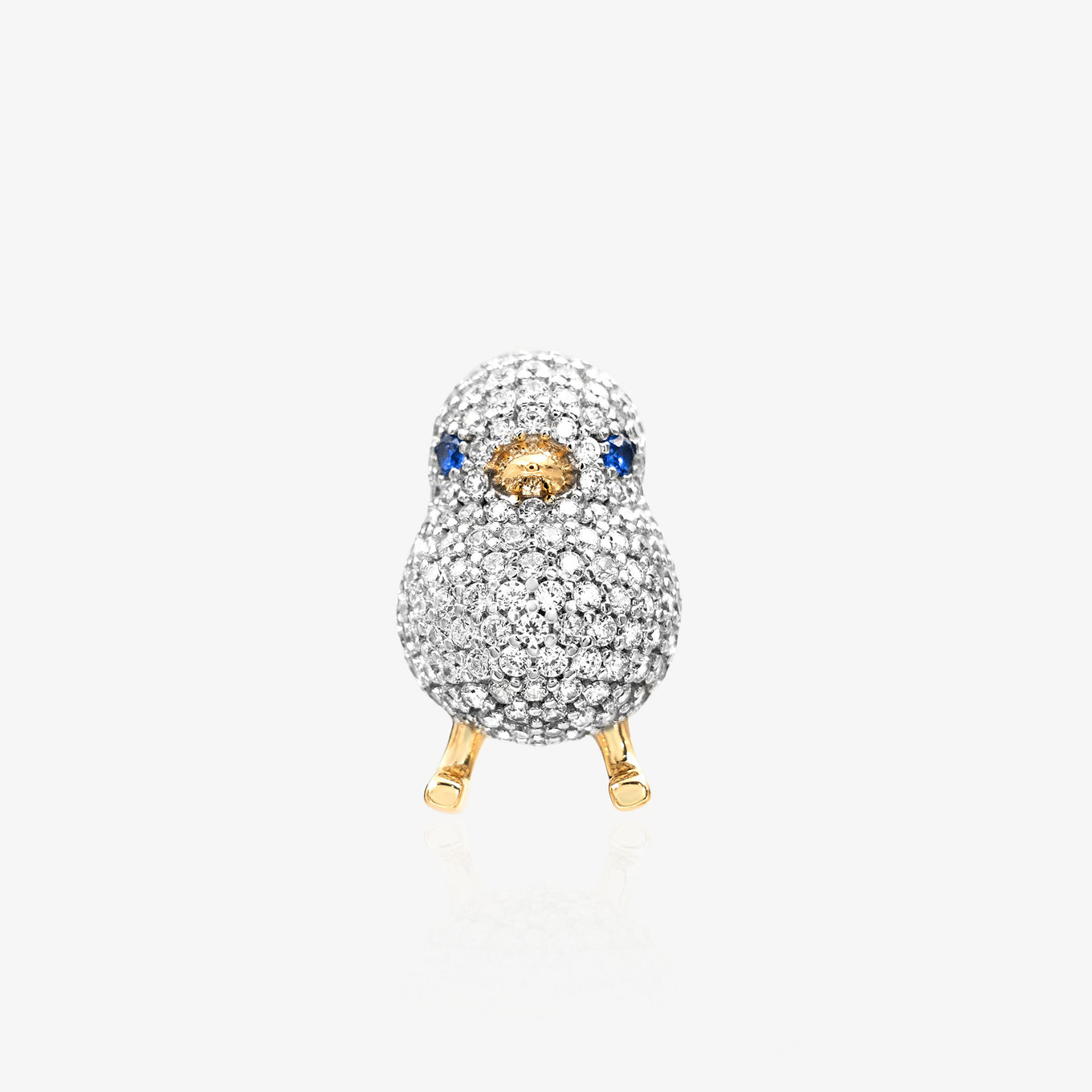
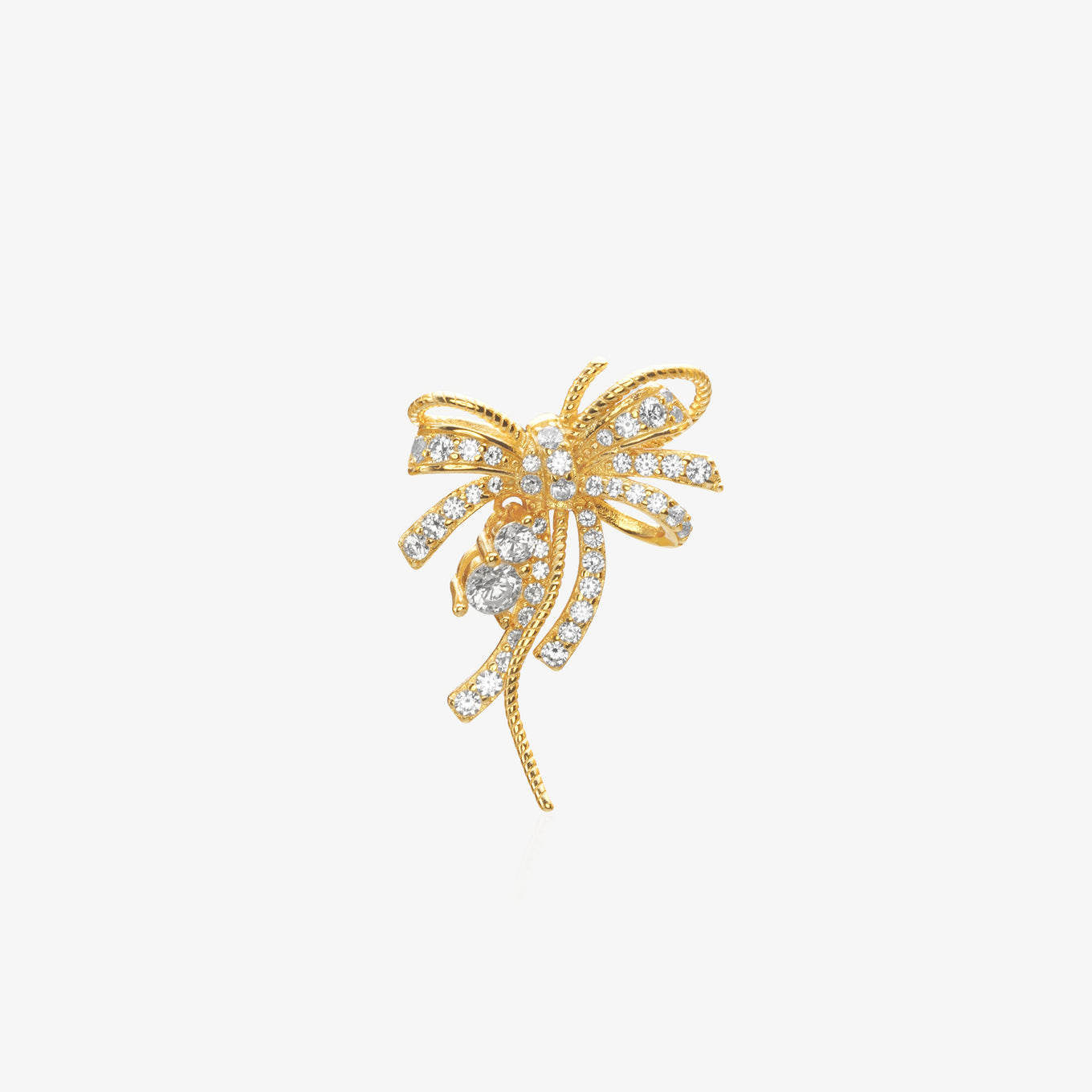
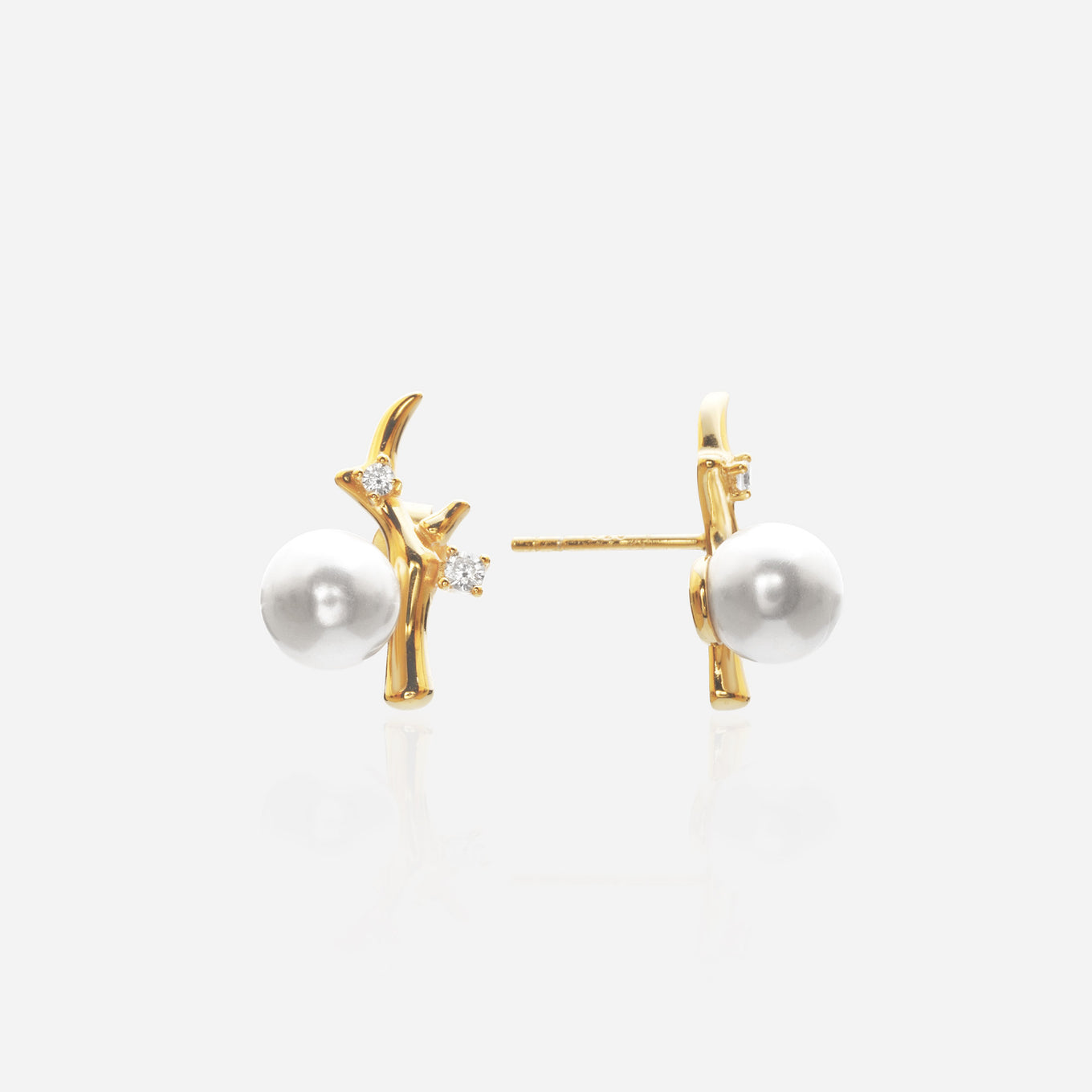
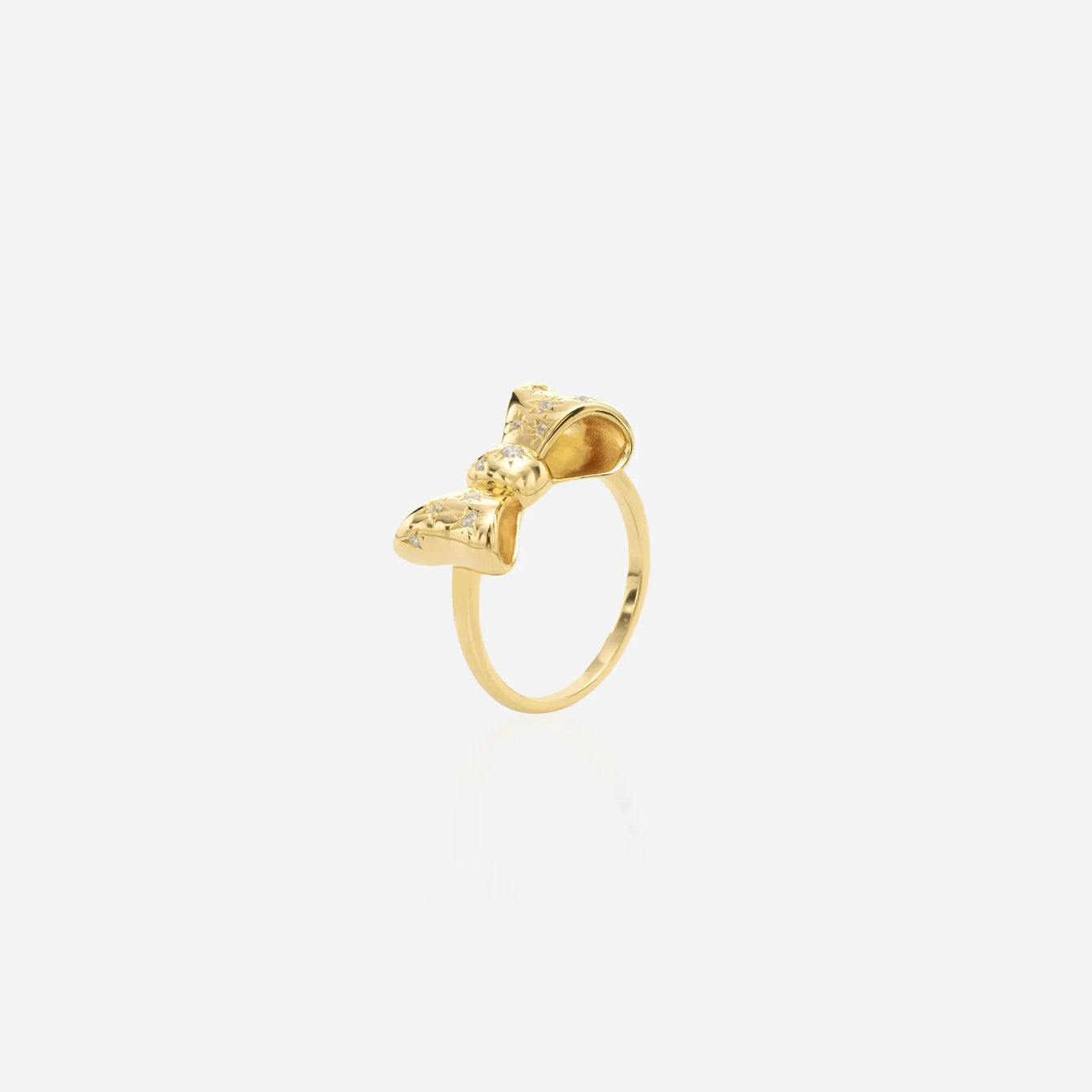
Why it works: The rule is visual economy — give the eye one focal point. A statement necklace like the Arcana Key Pendant demands attention with its serpent-and-fleur-de-lis talisman silhouette. Pair it with dramatic earrings, and the two pieces enter a visual shouting match — neither wins, and the overall effect reads as clutter. Pair it with mini studs like the Bow Stud Earrings, and you create a clean frame: the necklace commands, the studs whisper, and the composition reads as intentional rather than chaotic.
This is the formula behind every red carpet look where a star wears a show-stopping diamond collar with earrings so small you barely register them. The neck is a stage — put one performer on it.
The math of proportion matters here: a necklace that occupies 3-4 inches of visual real estate around your collarbone needs earrings that occupy less than half an inch. Skip the dangles. Skip the hoops. The smaller the stud, the more commanding the necklace becomes.
Style Principle — Visual Weight Ratio: For any jewelry pairing to read as intentional, pick one piece to carry 70% of the visual weight and let the supporting piece carry 30%. When both carry 50%, the eye bounces between them without resting. — Based on principles of Costume Institute curatorial guidelines on accessory hierarchy
Formula #2: The Layered Chains + Sculptural Earrings
When to use it: Crew necks, turtlenecks, high collars, or any top that blocks the décolletage. Brunch. Office days. Airport style. Everyday confidence.
Why it works: When a high neckline eliminates the "frame" around a necklace, a single chain can feel lost — swallowed by fabric. Layered chains solve this by creating horizontal rhythm across the fabric surface. Two or three chains of different lengths (typically a 16-inch choker + 18-inch princess + 20-inch matinee) create a graduated cascade that turns the sweater or tee into a backdrop rather than a barrier.
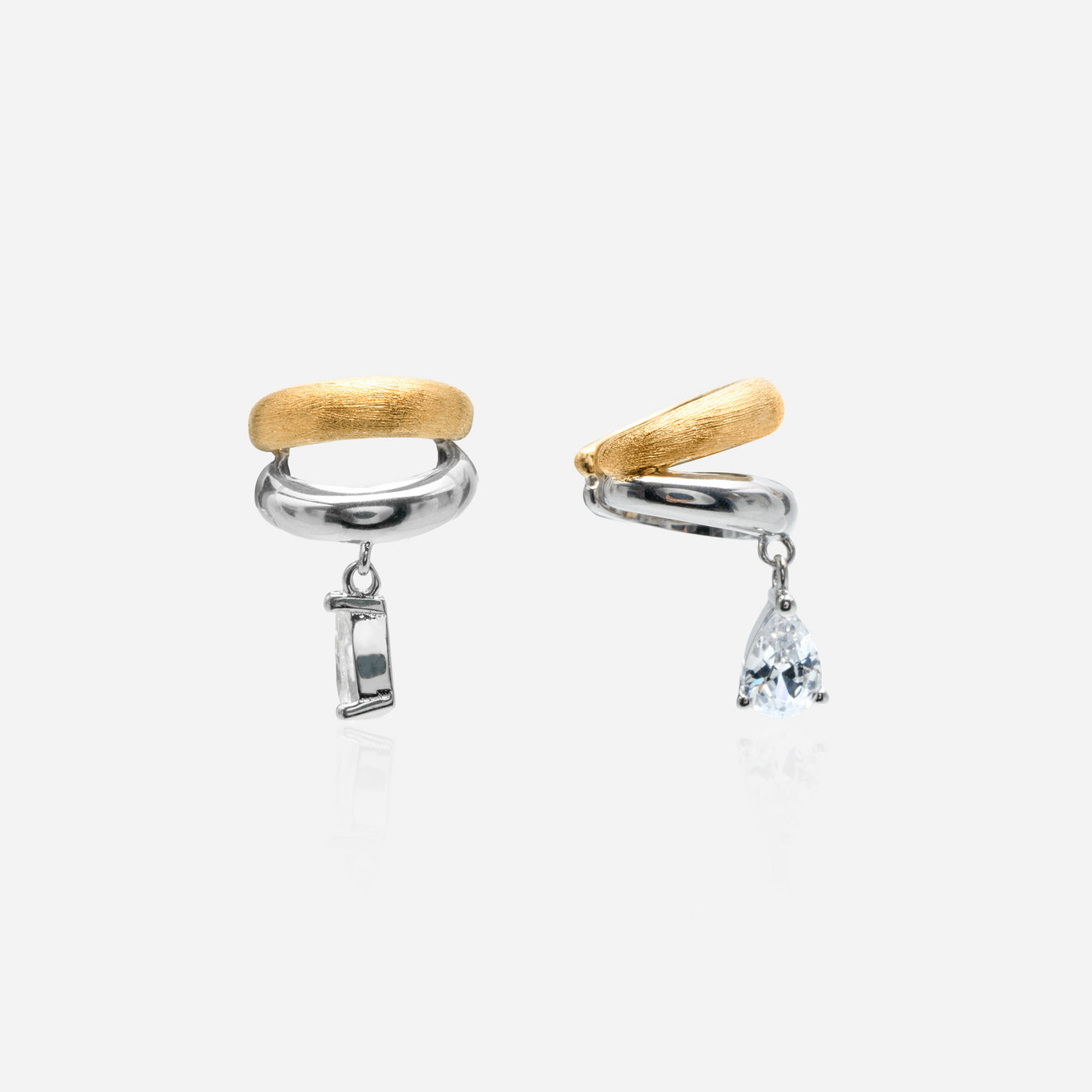
With layered chains occupying the neckline, you now have architectural space around the face for sculptural earrings. A pair of Diamond Chain Ear Cuffs or Butterfly Pearl Drop Earrings fills the ear zone with movement and light — balancing the horizontal rhythm of the chains below with vertical interest above.
This is the formula for "I'm put together but not trying too hard" — the holy grail of everyday style. Unlike Formula #1 (which reads as intentional glamour), this pairing reads as innate taste. It's the jewelry equivalent of perfectly messy hair.
Unlike single-strand styling — which can disappear against a dark turtleneck — layered chains create visual density that holds its own against substantial fabric. The sculptural earrings prevent the look from feeling bottom-heavy.
Formula #3: The Pendant + Hoops (Never Fails)
When to use it: Literally any occasion, any neckline, any mood. This is the default — the pairing you reach for when you don't want to think about pairing. It works 100% of the time because it's based on geometric complement: the vertical line of a pendant against the circular geometry of a hoop.
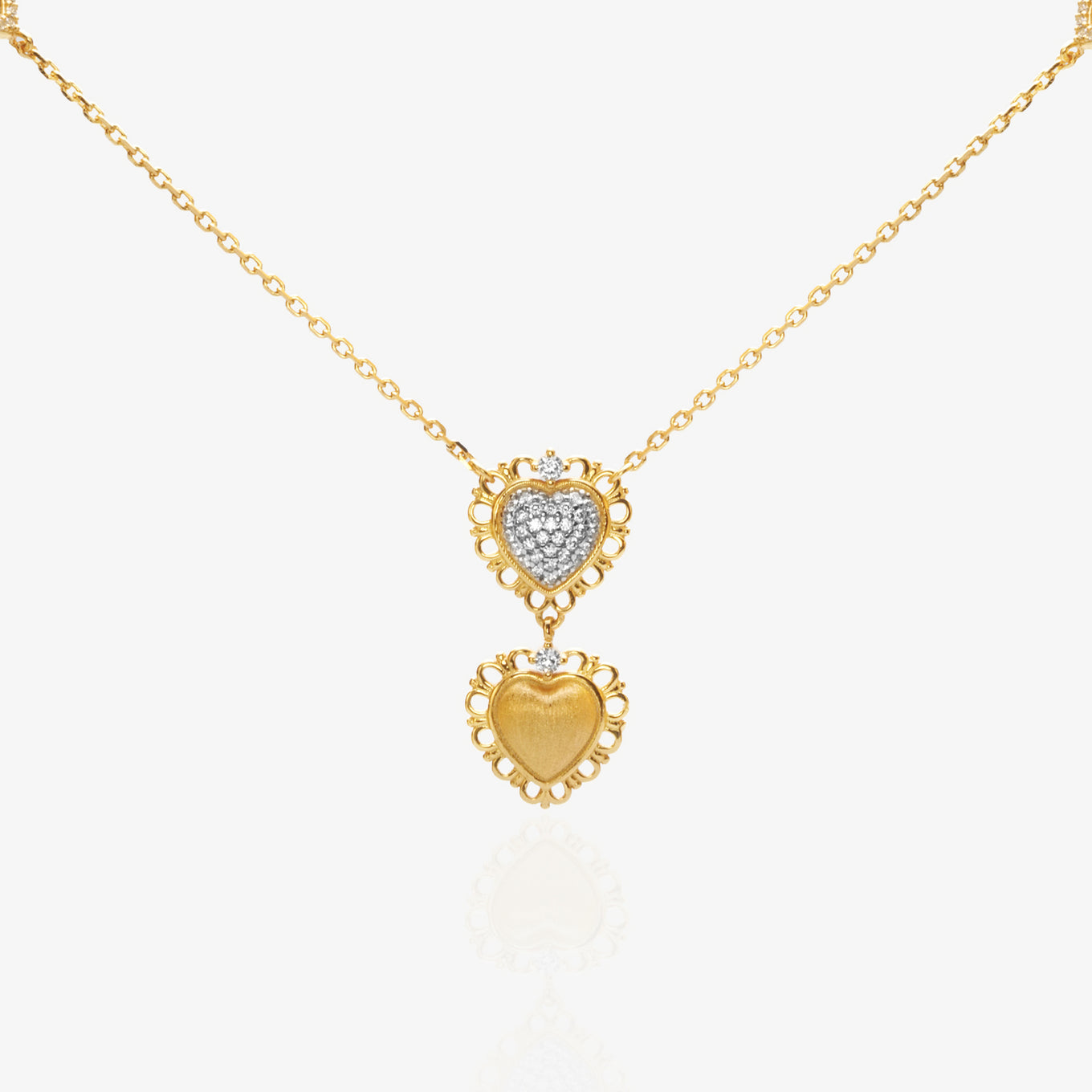
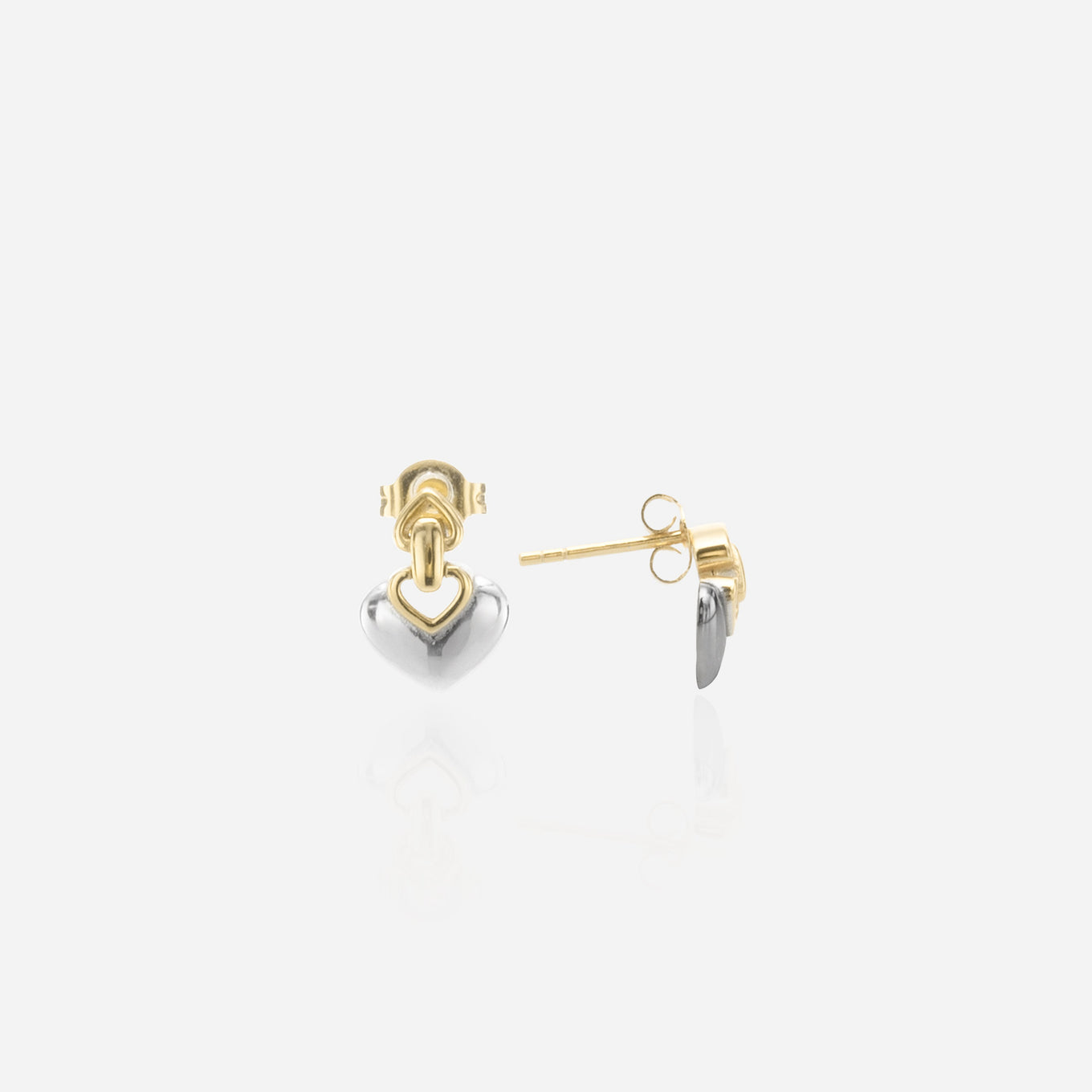
Why it works: A pendant necklace like the Bijou Heart Pendant creates a single vertical drop — a clear, unbroken line from collarbone downward. Hoops create a circular frame around the face. Line + circle is one of the most stable visual relationships in design — think of it as the jewelry equivalent of a square and a circle in a Bauhaus composition. They don't compete; they complete each other.
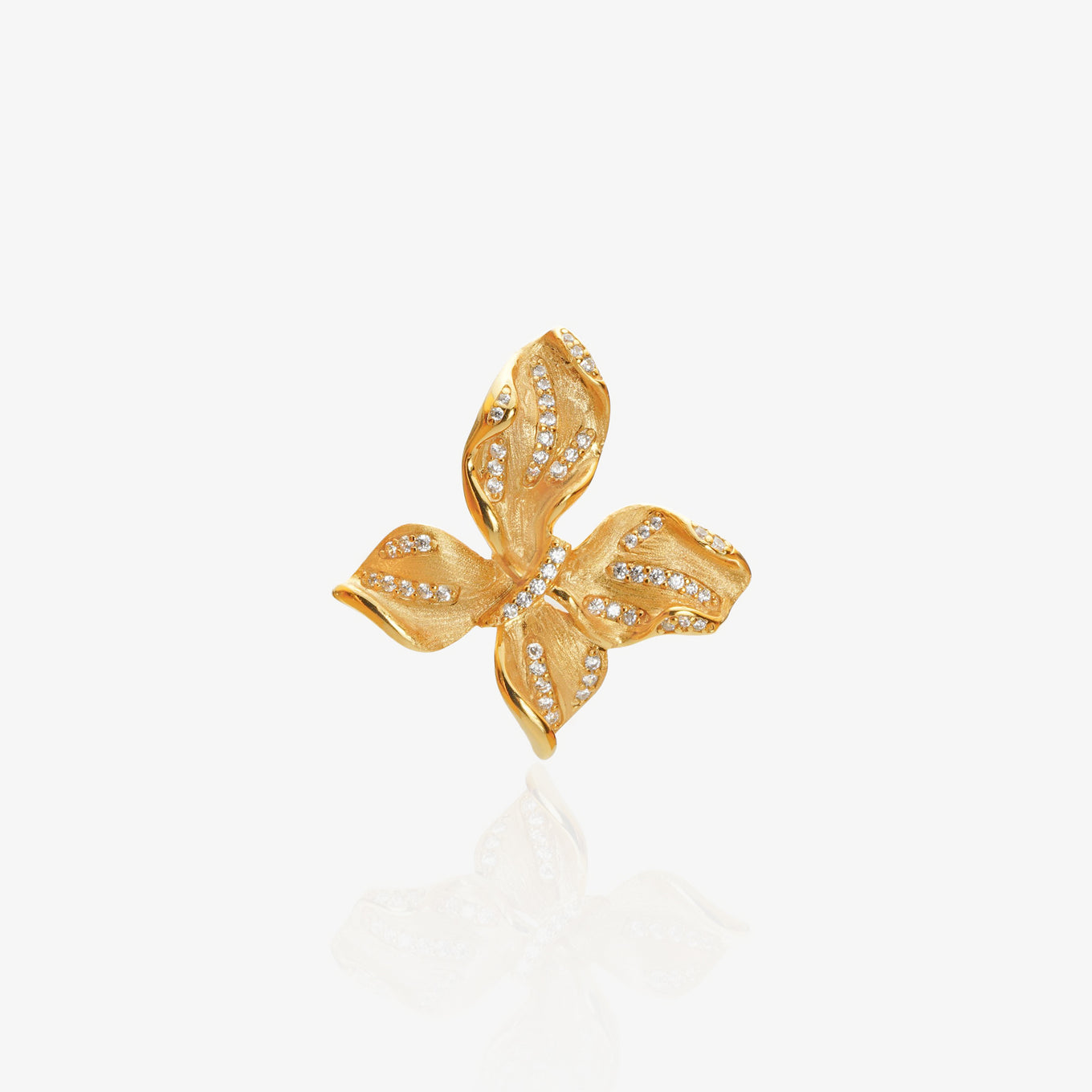
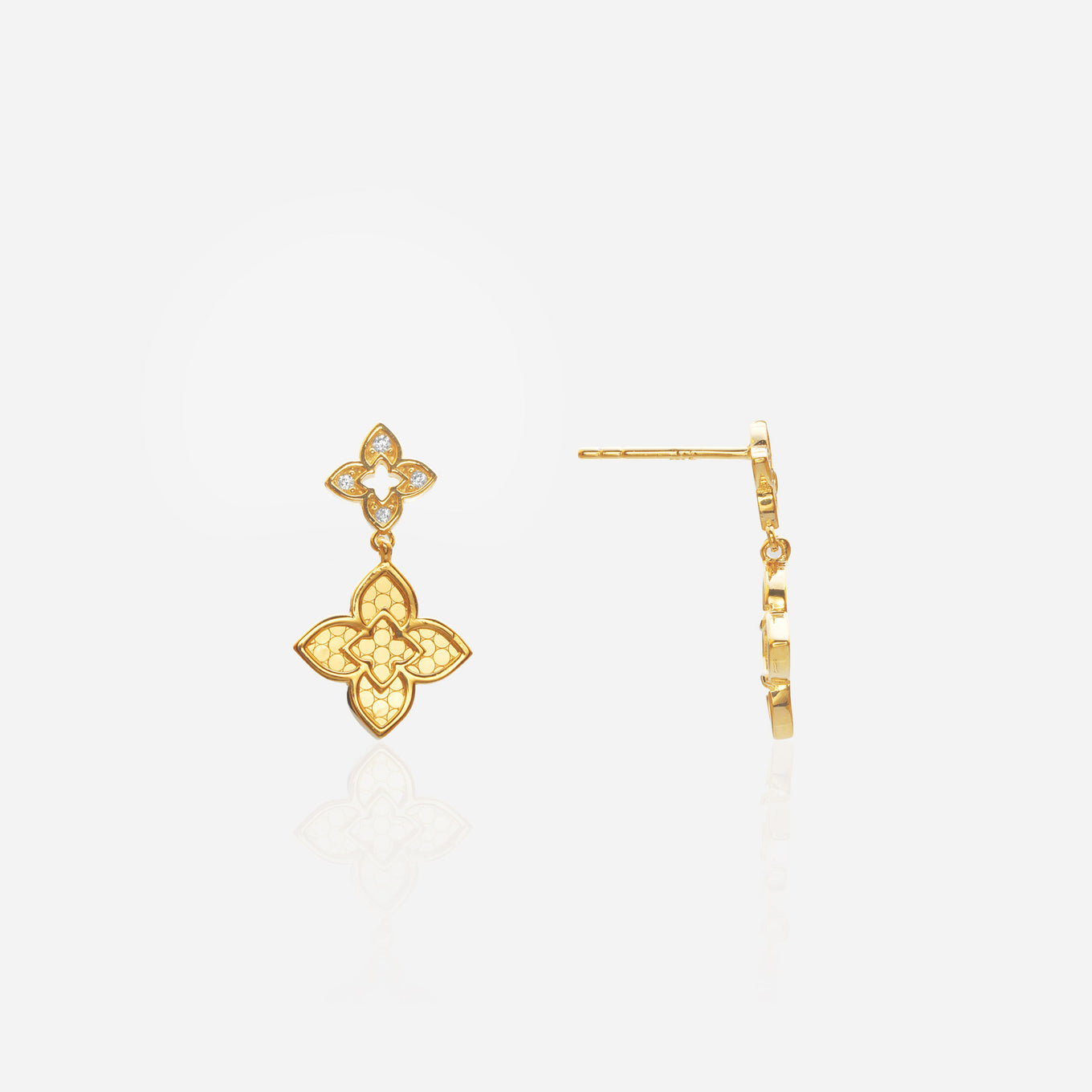
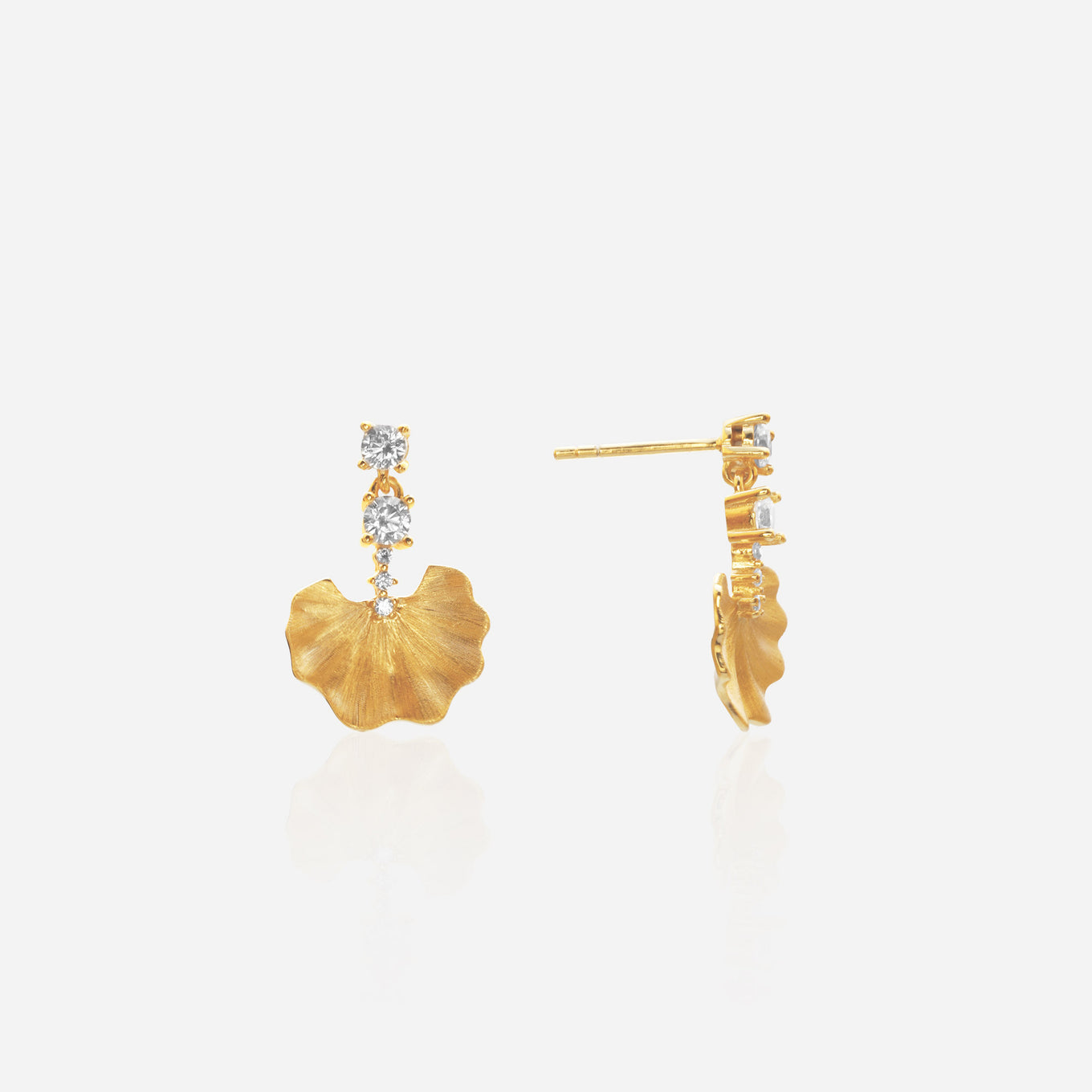
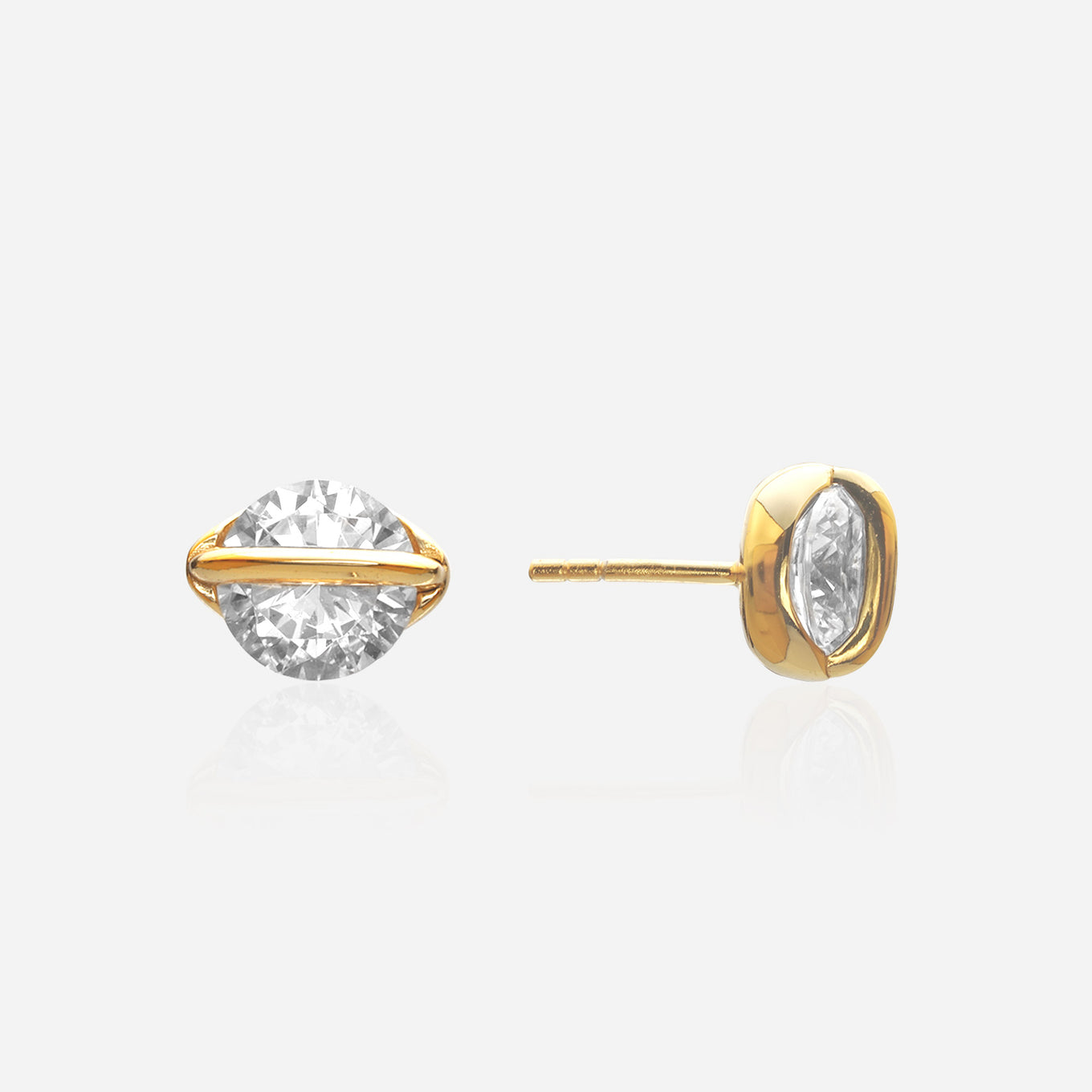
Gold Clover Earrings (shop here) in their textured pavé drop silhouette work beautifully with a delicate pendant for daytime, or with a bolder medallion for evening. The key is proportional matching: a delicate pendant (under 1 inch) pairs best with small-to-medium hoops (15-20mm); a substantial pendant (1-2 inches) can handle medium-to-large hoops (25-35mm).
This is the formula to memorize. It's the "white shirt and jeans" of jewelry — impossible to get wrong, endlessly versatile, and always appropriate. If you only learn one jewelry pairing rule, make it this one.
How to Build Your Own Outfit Formula
We believe jewelry should serve you — not the other way around. The best pairing formulas are the ones that feel so natural you don't remember deciding to wear them. They become automatic, a morning reflex as unthinking as putting on your watch.
| Neckline | Best Formula | Reason |
|---|---|---|
| V-Neck / Plunge | Formula #1 (Statement + Studs) | The V-shape frames a bold pendant perfectly |
| Crew / Turtleneck / High Collar | Formula #2 (Layered + Sculptural) | Layers create rhythm against substantial fabric |
| Scoop / Boat / Square | Formula #3 (Pendant + Hoops) | Wide necklines pair best with visual balance |
| Off-Shoulder / Strapless | Formula #1 or #3 | Exposed skin = room for statement OR elegant simplicity |
| Button-Up / Collared | Formula #3 (Pendant + Hoops) | Pendant tucks elegantly under collar points |
Unlike conventional "match your necklace to your neckline" guides — which give you rules but leave you alone once you've chosen the necklace — our formula system solves the whole look: what the earrings are doing while the necklace handles the neckline. It's a complete system, not a half-answer.
Unlike trend-based styling advice that shifts every season, these three formulas are derived from visual geometry and proportion — principles that don't expire. A pendant + hoop combo worked in 1996, works in 2026, and will work in 2056.
Behind the Design: Why Jewelry Pairing Matters to Us
When I design a piece, I think about what it will sit next to — literally next to on the body. A necklace doesn't exist in isolation; it shares real estate with earrings, hair, collar, skin. The ÉLARAMUSE collection is built with this in mind: our necklaces are deliberately scaled so you can layer two or three without tangling; our earrings are proportioned to complement rather than compete with our pendants. Visit our necklace collection and earring collection to see the full range.
I want you to open your jewelry box in the morning and feel clarity, not confusion. These three formulas are the bridge between a beautiful collection and a beautiful look — and the bridge is shorter than you think.
FAQ: Jewelry Outfit Pairing Questions
Can I mix gold and silver in the same outfit?
Absolutely — and it's one of 2026's strongest jewelry trends. The key is intentionality: wear at least two pieces in each metal so the mix reads as deliberate rather than accidental. A two-tone piece like our Byzantine Lattice Hoops bridges gold and silver seamlessly. For a complete guide, read How to Wear Gold and Silver Together.
What if I only wear one piece of jewelry — is that okay?
More than okay — it's often the most powerful choice. A single Balloon Dog Pendant worn alone on a bare neckline makes a stronger statement than any paired combination. The formulas above are starting points, not requirements. When in doubt, wear less.
How do I choose between gold and silver jewelry for my outfit?
The simplest approach: warm-toned clothing (cream, camel, coral, olive) calls for gold; cool-toned clothing (navy, gray, burgundy, white) can take either gold or silver, depending on your skin undertone. For a complete wardrobe-color guide, see How to Style Gold Jewelry with Every Outfit Color.
What if my earrings and necklace are different styles?
Style contrast is encouraged — a romantic pendant with architectural earrings, for example, creates tension that reads as sophisticated. What matters is visual weight balance, not stylistic matching. The only truly "wrong" combination is two pieces of equal visual weight fighting for the same focal zone.
How do you layer necklaces without them tangling?
Choose chains of different weights and link styles — a Box Chain at 16 inches, a Cutout Chain at 18 inches, and a Marquise Chain at 20 inches naturally separate rather than tangle because their link geometries don't interlock. For more detail, read our Necklace Layering Guide.
Your jewelry is a small act of self-possession — a talisman worn not for anyone else's gaze, but for the quiet certainty it gives you. The right necklace-and-earring combination isn't about perfection; it's about presence. Wear what makes you feel fully yourself, and the outfit takes care of the rest. Be your own muse.