Does Perfume Damage Jewelry? How to Protect Gold Plated Pieces from Fragrance, Lotion & Hairspray (2026)
Quick Answer: Yes — perfume can damage gold plated jewelry within weeks of direct contact. The ethanol and essential oils in fragrance degrade the thin gold layer, causing discoloration, tarnish, and permanent wear. Apply perfume first, let it dry, then put on your jewelry. This single habit protects your pieces for years.
Yes, perfume damages gold plated jewelry — and faster than most people realize. I learned this the hard way when a favorite necklace developed a dull patch exactly where I'd been spraying fragrance on my neck for months. The gold layer had literally worn away at that exact spot. It wasn't the brand's fault. It wasn't a "bad batch." It was chemistry — and once I understood the mechanism, protecting my collection became second nature. Here's everything I wish someone had told me years ago.
In This Article
- The Chemistry: Why Perfume and Gold Plating Don't Mix
- What's Actually in Your Fragrance? (The Ingredients That Attack Jewelry)
- The Damage Timeline: From First Spray to Visible Wear
- How to Wear Perfume AND Jewelry: The Protection Protocol
- The ÉLARAMUSE Standard: Jewelry Built for Real Life
- What to Do If Your Jewelry Has Already Been Exposed
- Frequently Asked Questions
The Chemistry: Why Perfume and Gold Plating Don't Mix
Gold itself is chemically inert — it doesn't tarnish, rust, or react with almost anything. That's why solid gold jewelry from ancient Egypt still gleams in museums. The problem with gold plated jewelry isn't the gold. It's what the gold is sitting on.
Premium jewelry like ÉLARAMUSE pieces uses a base of Ag925 sterling silver (92.5% pure silver, 7.5% copper alloy) with a 0.5-micron layer of 18K gold electroplated on top. This micron-thick gold layer is your first — and only — line of defense. When you spray perfume directly onto your necklace or bracelet, three things happen simultaneously:
Ethanol penetration: Most fragrances are 70-90% ethanol — the same type of alcohol used as a laboratory solvent. Ethanol's molecular structure allows it to slip through microscopic pores and grain boundaries in the gold plating layer. Once it reaches the sterling silver base, it begins oxidizing the copper content, creating silver sulfide — that gray-black tarnish you see on old jewelry.
Essential oil residue: The aromatic compounds that give perfume its scent are dissolved in oil carriers (jojoba, fractionated coconut, or synthetic esters). These oils form an invisible film on your jewelry's surface. Over hours and days, they trap moisture against the metal — and moisture is a tarnish accelerator. Worse, some essential oils, particularly citrus oils like bergamot and lemon, contain limonene and citral, which oxidize into acidic compounds on contact with air and light.
pH shift: Healthy human skin has a naturally acidic pH of 4.5-5.5. Most perfumes are more acidic still — typically pH 3.5-4.5 — due to their botanical extracts and preservatives.
When this acidic solution sits on a metal surface for hours, it accelerates galvanic corrosion, the same electrochemical process that corrodes ship hulls in seawater. Your skin's sweat, combined with perfume acidity, creates a miniature battery where electrons flow from the less noble metal (copper in your sterling silver base) to the more noble metal (gold), slowly eating away at the structure beneath the plating.
A single daily perfume spray deposits approximately 50-100 microliters of ethanol solution on your skin. Over 30 days of wear, that's up to 3 milliliters of pure solvent sitting on your jewelry's surface — equivalent to soaking your necklace in laboratory-grade ethanol for 72 continuous hours each month.
Key Terms
- Ethanol (Alcohol Denat.)
- The primary carrier solvent in spray perfumes (70–95% concentration). Penetrates microscopic pores in gold plating and strips protective oils from metal surfaces.
- Galvanic Corrosion
- Electrochemical reaction where dissimilar metals + electrolyte (sweat + perfume) create a current that corrodes the base metal beneath gold plating.
- Gold Plating (µ)
- Gold layer applied via electrodeposition. Industry flash plating: 0.05–0.1 microns. ÉLARAMUSE: 0.5 microns — 5x thicker and significantly more resilient.
- Photodegradation
- Light-induced breakdown of materials. Citrus oils (bergamot, lemon) contain furocoumarins that produce free radicals under UV light, accelerating gold plate surface degradation.
What's Actually in Your Fragrance? (The Ingredients That Attack Jewelry)
Perfume labels list "fragrance" as a single ingredient — but that one word legally hides hundreds of compounds. Here are the specific chemicals to understand if you wear jewelry daily. Have you ever read your perfume bottle and wondered what's actually making your necklace tarnish?
The Primary Offenders
Ethanol (Alcohol Denat.): The carrier solvent for virtually all spray perfumes. Concentrations range from 70% in eau de toilette to 95% in eau de parfum. Ethanol is a powerful degreaser — the same property that makes it evaporate quickly on skin also makes it strip protective oils from metal surfaces. Repeated exposure creates microscopic etching patterns on gold plating that eventually become visible as dull patches.
Benzyl Salicylate: A common fixative that helps fragrance last longer on skin. It's an ester compound that hydrolyzes (breaks down) in the presence of moisture and metal ions, releasing salicylic acid — the same active ingredient in chemical exfoliants. Over time, this mild acid can pit the surface of softer metals.
Citrus Essential Oils (Bergamot, Lemon, Orange): These natural oils seem harmless but contain photo-reactive compounds called furocoumarins. When exposed to UV light, furocoumarins generate free radicals — unstable molecules that steal electrons from nearby materials. On skin, this causes photosensitivity. On jewelry, it accelerates photodegradation of the gold plating's surface structure. The combination of sunlight + citrus perfume on your necklace is far more damaging than either alone.
Propylene Glycol: A humectant that holds moisture. It's great for skin hydration, terrible for metals — it actively pulls water from the air and holds it against your jewelry's surface long after the alcohol has evaporated. This sustained moisture creates ideal conditions for tarnish formation.
Synthetic Musks: These large, oily molecules give perfume its lasting power. They're intentionally designed to resist evaporation — which means they sit on your jewelry for hours, forming a sticky film that attracts dust, dirt, and environmental pollutants. According to the NIH's research on contact dermatitis, prolonged exposure to synthetic fragrance compounds can also trigger skin sensitivity reactions, particularly when metal ions from degrading plating enter the skin barrier.
The Damage Timeline: From First Spray to Visible Wear
You won't notice the damage immediately — and that's exactly why most people don't connect perfume to their jewelry's decline. The process is cumulative and deceptively slow. Here's what the timeline actually looks like based on thin-film degradation research:
Days 1-7: No visible change. The gold plating appears intact. At the microscopic level, however, ethanol is already penetrating grain boundaries in the gold layer. The essential oil residue is beginning to accumulate in surface imperfections invisible to the naked eye.
Weeks 2-4: A subtle shift in luster. The jewelry doesn't look "damaged" — it just doesn't gleam quite the way it did when new. This is the chelating effect: acidic perfume compounds are binding to metal ions at the surface, altering the refractive properties that give polished gold its mirror-like shine. If you compare it side-by-side with a rarely-worn piece, you'll see the difference.
Months 2-3: First visible wear. Dull, grayish patches appear — typically at the exact spot where you spray perfume (the collarbone for necklaces, the inner wrist for bracelets). This is the gold layer thinning to the point where the sterling silver base shows through. The copper in the silver alloy has begun oxidizing, creating silver sulfide tarnish.
Months 4-6: The gold plating is fully compromised at contact points. The underlying sterling silver is now directly exposed to skin oils, sweat, and continued perfume application. At this stage, the piece requires professional re-plating — polishing cloths and gentle cleaning won't restore the lost gold.
Does this timeline terrify anyone else who loves wearing fragrance daily? Because it certainly changed how I think about my morning routine.
How to Wear Perfume AND Jewelry: The Protection Protocol
The solution isn't to choose between your signature scent and your favorite necklace. It's about sequence, placement, and timing. I've tested these methods across my entire collection — from everyday studs to statement pieces — and the difference is measurable.
The Golden Rule: Spray First, Accessorize Second
Apply perfume to clean, dry skin before putting on any jewelry. Wait until the fragrance is fully dry to the touch — typically 30-60 seconds for eau de toilette, 60-90 seconds for eau de parfum. If you can feel moisture when you press your fingertip to the sprayed area, it's not dry enough yet.
I keep my jewelry box on my vanity next to my perfume bottles specifically so I remember: spray, dress, then jewelry — always in that order. The "last on, first off" rule applies here just as strongly as it does with sunscreen and lotion.
Strategic Placement: Where You Spray Matters
Perfume performs best on pulse points — wrists, inner elbows, behind the ears, behind the knees. These warm areas diffuse fragrance throughout the day. Notice what's not on that list: your neck, where your necklace sits. Your collarbone, where your pendant rests. The exact spot under your ring.
Spray perfume on your wrist pulse points and behind your ears rather than directly on your neck or chest where your jewelry lives.
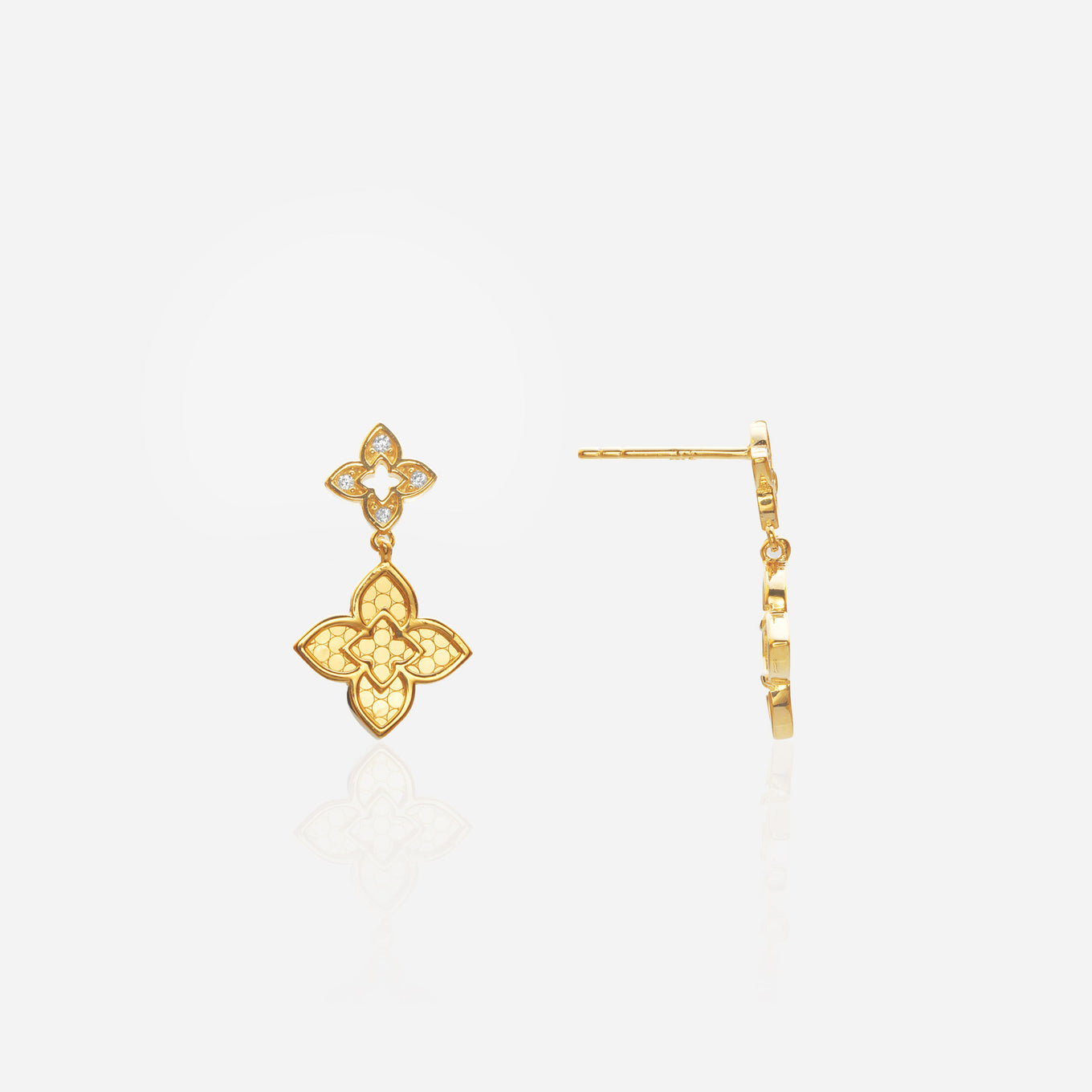
For earrings specifically, avoid spraying perfume anywhere near your earlobes — the gold plating on posts and backs is especially thin and vulnerable to direct ethanol contact. Pieces like our Gold Clover Earrings feature precision-etched texturing that would trap perfume residue in the design details, making this placement strategy essential for preserving their finish.
The Moisture Barrier Method
For necklaces that sit directly against your chest — the exact area most people spray perfume — apply a thin layer of unscented lotion to your skin first, then perfume, then let dry, then put on your necklace. The lotion creates a protective barrier that: (1) holds the fragrance on your skin longer (bonus!), and (2) prevents direct contact between perfume compounds and your jewelry.
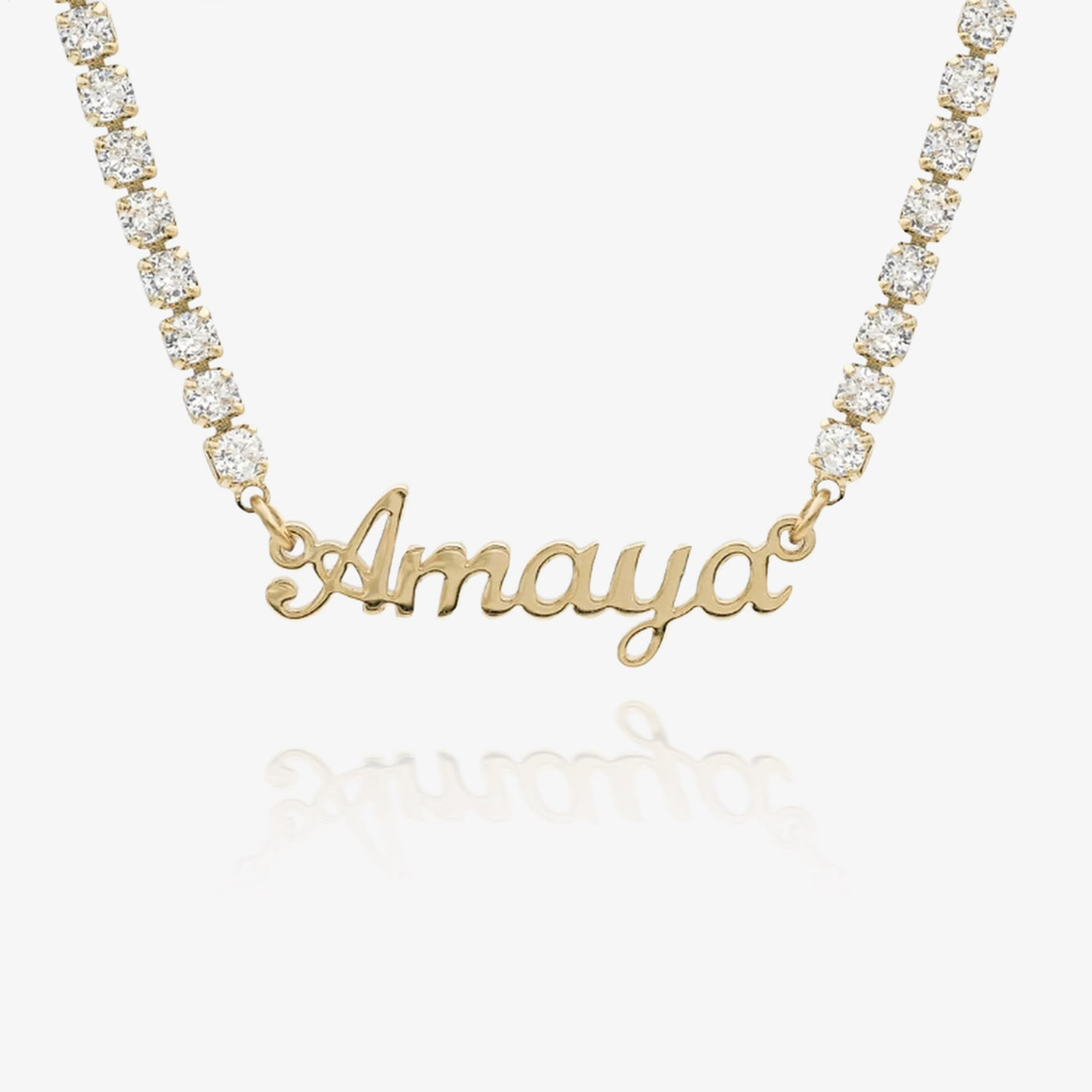
This technique works beautifully with delicate chain necklaces. I use it daily with my Gold Solitaire Necklace — the fine chain is especially vulnerable to accelerated wear because its high surface-area-to-volume ratio means more metal is exposed to any substance it touches.
What About Solid Perfume and Perfume Oils?
Solid perfume balms and rollerball oils eliminate the ethanol problem entirely — there's no alcohol solvent to penetrate your plating. However, the oil base creates its own issue: a thick, long-lasting residue that clings to metal surfaces and attracts environmental pollutants. If you use perfume oils, wipe your jewelry with a dry microfiber cloth at the end of each day. This 10-second habit removes the accumulated oil film before it can trap moisture overnight.
Storage: Give Your Jewelry Room to Breathe
Never store jewelry in the bathroom — the humidity alone will accelerate tarnish faster than any perfume could. And never, ever put your jewelry back on immediately after re-applying perfume mid-day. If you freshen your fragrance in the afternoon, remove your necklace and earrings first, spray, let dry, then put them back on. This extra 90 seconds saves weeks of wear.
For pieces you wear daily — like the Box Chain Necklace or our Gold Button Earrings — dedicate a small jewelry dish on your nightstand (not your bathroom counter). Give each piece its own space so chains don't tangle and scratch against each other. A dry, dark, room-temperature environment extends plating life by months.
The ÉLARAMUSE Standard: Jewelry Built for Real Life
We believe jewelry should adapt to your life — not the other way around. You shouldn't have to choose between wearing your signature fragrance and wearing the necklace that makes you feel like yourself. That belief shapes every material decision we make, from the thickness of our gold plating to the purity of our silver base.
Unlike mass-market gold plated jewelry that uses brass or copper bases with a whisper-thin 0.1-micron gold wash, our process starts with solid 925 sterling silver and applies a 0.5-micron 18K gold layer through precision electroplating.
This five-times-thicker gold layer doesn't just look better initially — it withstands daily exposure to everything from perfume to sweat to saltwater for significantly longer. Unlike costume jewelry that tarnishes within weeks of fragrance contact, our pieces are life-proof without being life-interrupting.
| Specification | The ÉLARAMUSE Standard | Why It Matters for Perfume Wearers |
|---|---|---|
| Base Metal | Ag925 Sterling Silver (92.5% pure silver) | Hypoallergenic base won't react with skin or fragrance acids — safe for the 10-20% of people with nickel sensitivity, as documented by the Mayo Clinic |
| Gold Plating | Premium 18K Gold Plating (0.5 micron) | 5x thicker than standard flash plating — withstands months of indirect perfume exposure without base metal showing through |
| Nickel Content | Nickel-free (<0.01% Ni) | Zero risk of allergic contact dermatitis — wear confidently even if you've reacted to jewelry before |
| Water Resistance | Shower-safe & sweat-proof | Impervious to the moisture trap that perfume oils create on standard plating surfaces |
| Stone Setting | Precision-set stones | No adhesive gaps where perfume residue can accumulate and degrade the bond between stone and metal |
| Skin Compatibility | Sensitive-skin friendly | Tested for prolonged skin contact — no reaction even when perfume-altered skin pH makes contact |
Behind the Design: A Note from the Founder
I started ÉLARAMUSE because I was tired of beautiful jewelry that couldn't keep up with my actual life. I spray perfume every morning. I shower without thinking twice about my earrings. I travel, I sweat, I live — and I believe my jewelry should come with me through all of it.
Our 0.5-micron gold plating standard wasn't chosen for marketing copy. It was chosen because I wanted to create pieces that feel like a daily ritual — not a daily worry. The necklaces you reach for without hesitation because you know they can handle your day, whatever it brings. That's the jewelry I wanted to wear. That's the jewelry we make.
What to Do If Your Jewelry Has Already Been Exposed
If you've been wearing perfume directly on your jewelry for months and you're starting to see signs of wear, don't panic. The damage might not be as irreversible as it looks.
Step 1: Identify What You're Actually Seeing
Not all discoloration is permanent damage. Run your fingertip over the affected area. If the surface feels sticky or greasy, you're dealing with perfume oil residue — not metal degradation. A gentle cleaning with lukewarm water and a microfiber cloth should restore the original luster. If the surface feels rough or textured compared to the surrounding area, the gold plating has thinned.
Step 2: Gentle Cleaning (Not Polishing)
Mix one drop of fragrance-free dish soap with lukewarm water. Dip a soft microfiber cloth — never a polishing cloth, which contains abrasives — and gently wipe the piece. Rinse briefly under running water and pat dry immediately. This removes accumulated perfume residue that's accelerating further damage. Do not use jewelry cleaning dips, ultrasonic cleaners, or silver polish — these aggressive methods will strip remaining gold plating.
Step 3: Break the Habit Loop
The single most powerful thing you can do is change your routine starting today. Remove jewelry before spraying perfume. Wait 60 seconds. Put jewelry back on. I know it sounds too simple to matter — but this one change stopped the damage on my own pieces literally overnight. No new dull patches appeared, and the existing wear didn't get worse.
Step 4: Know When to Re-Plate
If your piece already shows significant silver exposure, professional re-plating restores it at a fraction of replacement cost. We're always happy to recommend trusted re-plating services — reach out through our contact page. The sterling silver base underneath is still perfect; it just needs a fresh gold layer.
Prevention Checklist: Print This
- Spray perfume on wrists and behind ears — not neck, chest, or earlobes
- Wait 60 seconds for fragrance to dry before putting on jewelry
- Apply unscented lotion as a barrier between perfume and necklace chains
- Wipe jewelry with a dry microfiber cloth at the end of each day
- Store pieces in a dry, dark jewelry dish outside the bathroom
- Remove jewelry before re-applying perfume mid-day
- Rotate pieces — giving each necklace "rest days" extends total wear life
Frequently Asked Questions
Can I spray perfume on my neck if I'm not wearing a necklace that day?
Yes — perfume on bare skin is completely safe. The issue only arises when fragrance makes direct contact with gold plated jewelry on the same skin surface. Spray freely on days you're not wearing jewelry, or spray areas that don't touch your pieces. The chemistry between your skin and fragrance is entirely different from the chemistry between fragrance and metal plating.
Is solid gold jewelry safe from perfume damage?
Solid gold (14K, 18K, 24K) is largely immune to perfume damage because there's no plating layer to wear through. The gold content runs through the entire piece. However, even solid gold can accumulate perfume residue that dulls its shine over time — a quick microfiber wipe resolves this. The concern discussed in this article applies specifically to gold plated and gold vermeil pieces where a micron-thin gold layer protects a different metal underneath.
Does perfume affect sterling silver differently than gold plating?
Yes — the mechanism is different. Perfume doesn't penetrate sterling silver the way it does gold plating because silver is a homogeneous material (no layered structure). However, the sulfur compounds and moisture in perfume still accelerate tarnish formation on silver.
Sterling silver will darken faster when regularly exposed to fragrance, but unlike gold plating, tarnish can be polished away from solid silver without losing material. Gold plating has no such recovery option — once worn through, only re-plating helps.
Can I wear perfume with my ÉLARAMUSE necklace every day?
Yes — as long as you follow the sequence. Our 0.5-micron gold plating is designed for exactly this lifestyle. Apply perfume to your wrists and behind your ears, let it dry for 60 seconds, then put on your necklace. This indirect exposure won't damage the plating. Our pieces are shower-safe and sweat-proof by design, so the brief, dried fragrance contact doesn't pose a risk. Thousands of our customers wear both daily with no issues.
What about hair perfume and body mist — are they equally damaging?
Hair perfume is actually less of a concern for jewelry because it's applied to hair, not skin — there's typically no direct metal contact. Body mists, however, contain the same ethanol base as traditional perfumes (usually at lower concentrations of 50-60%) and pose the same risk when sprayed near jewelry. Treat body mists with the same "spray first, accessorize second" rule. The lower alcohol content means they dry faster — 20-30 seconds is usually sufficient.
How do I know if a discolored patch is from perfume or just normal wear?
Pattern location is your diagnostic clue. Perfume damage appears precisely where you spray — the collarbone crease for necklaces, the inner wrist for bracelets. Normal wear from friction appears on edges and high-contact points (the back of a chain where it rubs against clothing, the bottom of a ring against desks).
If the dull patch maps exactly to your fragrance spray zone, perfume is the cause. If wear is evenly distributed or concentrated at friction points, it's mechanical abrasion — which happens to all plated jewelry eventually.
Editor's Picks: Jewelry That Handles Your Daily Ritual
These are the pieces I reach for on perfume-every-day mornings. Each one is built on the same 0.5-micron gold plating standard that makes fragrance-friendly wear possible.
Gold Solitaire Necklace
The delicate chain that taught me the moisture barrier method. Its fine 18K gold plated chain has a high surface-area-to-volume ratio, making the "lotion first" technique especially valuable. A single brilliant-cut stone sits at the collarbone — exactly where you'd spray perfume. With the right sequence, it stays luminous through months of daily wear. A talisman of quiet confidence that belongs in every jewelry box.
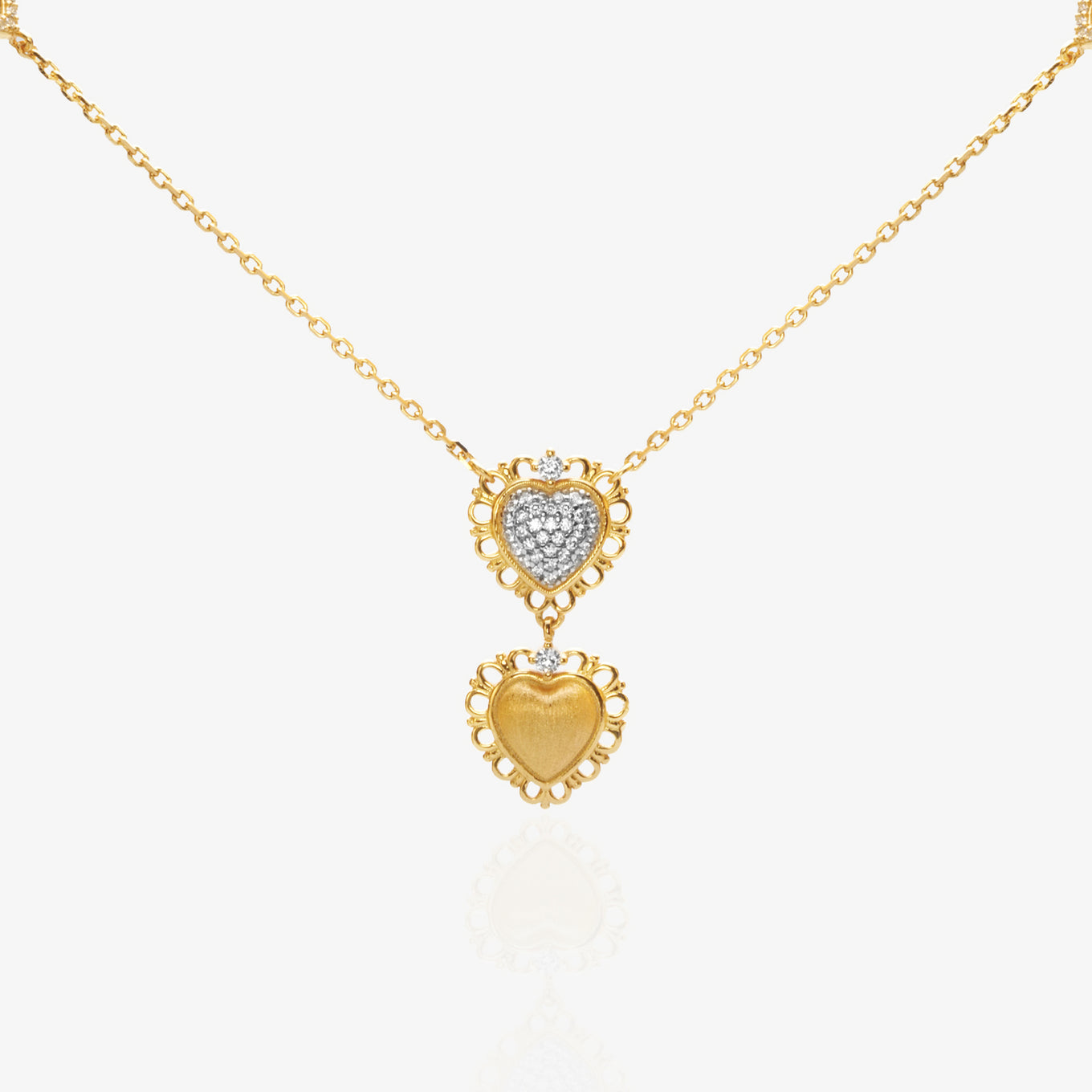
Bijou Heart Charm Necklace
A dainty puffy heart station chain that rests gently between the collarbones. The station-chain design means the charm naturally lifts away from the skin slightly — less direct contact with fragrance residue compared to a flat pendant. Its minimalist profile doesn't trap perfumed oils the way intricate filigree designs might. For the woman who believes jewelry should be seen, not worried about.
Gold Clover Earrings
Textured drop earrings with a lucky four-leaf motif. The precision-etched surface catches light beautifully — but also makes strategic perfume placement non-negotiable. Spray behind your ears (where the fragrance warms and diffuses naturally) rather than on your earlobes, and these earrings maintain their golden depth indefinitely. Sleep-safe by design, they're the earrings you forget you're wearing until someone compliments them.
Box Chain Necklace
A sleek, geometric chain that embodies the gym-to-office versatility we design for. The box-link structure is inherently more durable than cable chains — each link distributes force evenly, reducing stress on any single point of the plating. I wear mine layered with the Solitaire Necklace on days when I want to feel put-together without trying too hard. Be your own muse.
Further Reading & References
- Mayo Clinic: Nickel Allergy — Symptoms, Causes, and Management — Authoritative medical resource on metal sensitivity affecting 10-20% of the population
- NIH National Library of Medicine: Contact Dermatitis Overview — Comprehensive review of allergic and irritant contact dermatitis mechanisms, including fragrance and metal ion triggers
- ÉLARAMUSE Official Jewelry Care Guide — Detailed maintenance instructions for every material we use
- Explore All Necklaces — Browse our complete collection of everyday pieces built for real life
- Explore All Earrings — Hypoallergenic, shower-safe earrings designed for sensitive ears