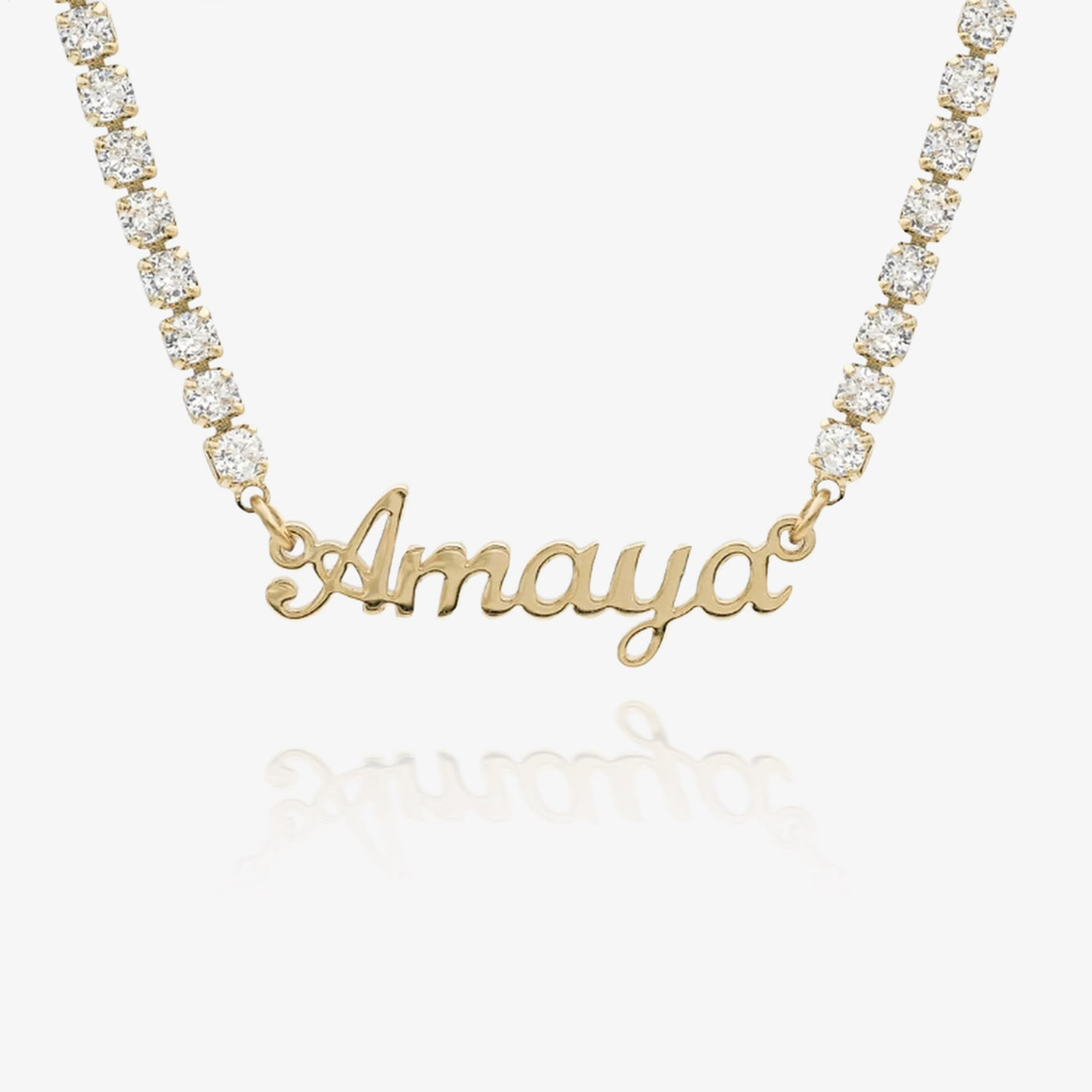
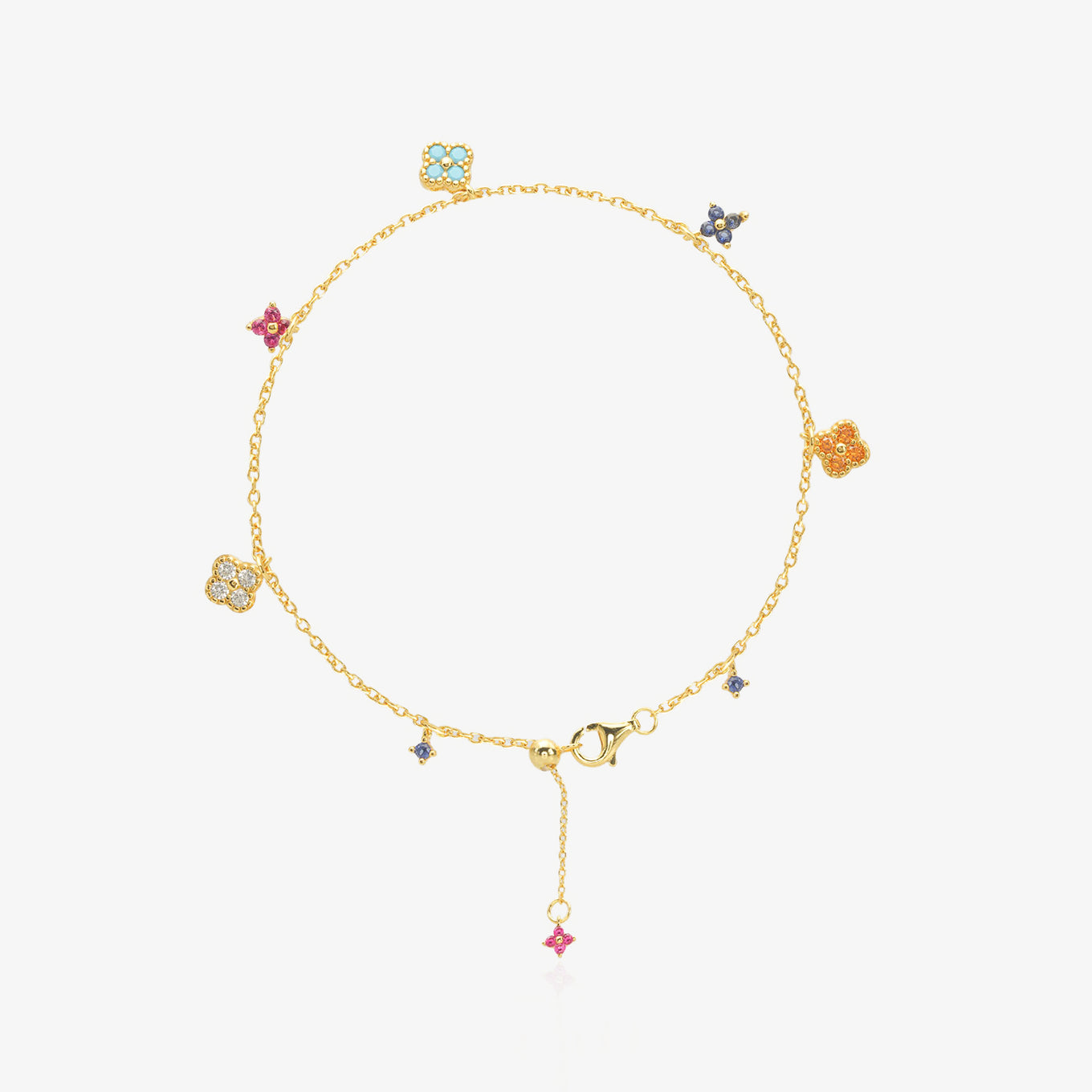
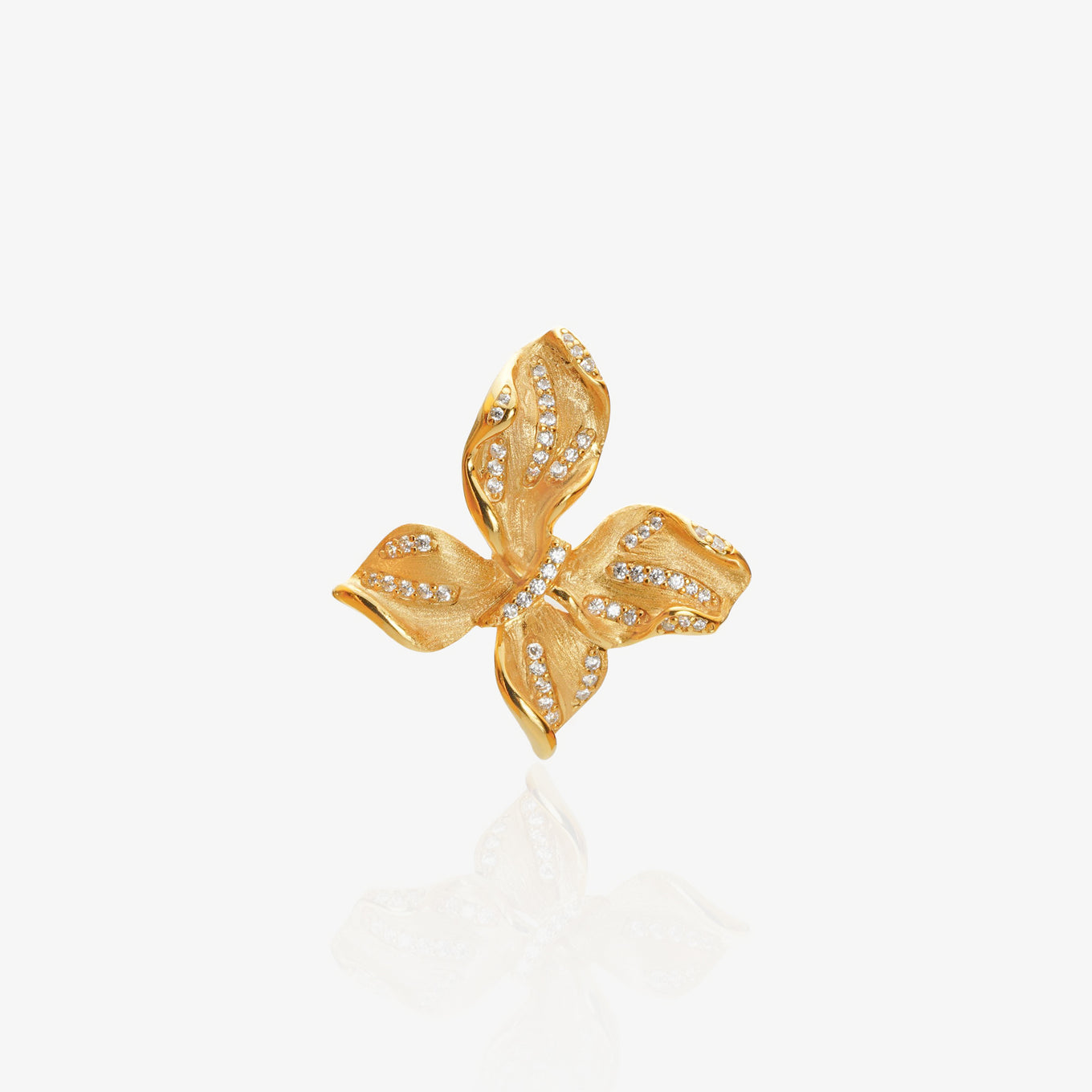
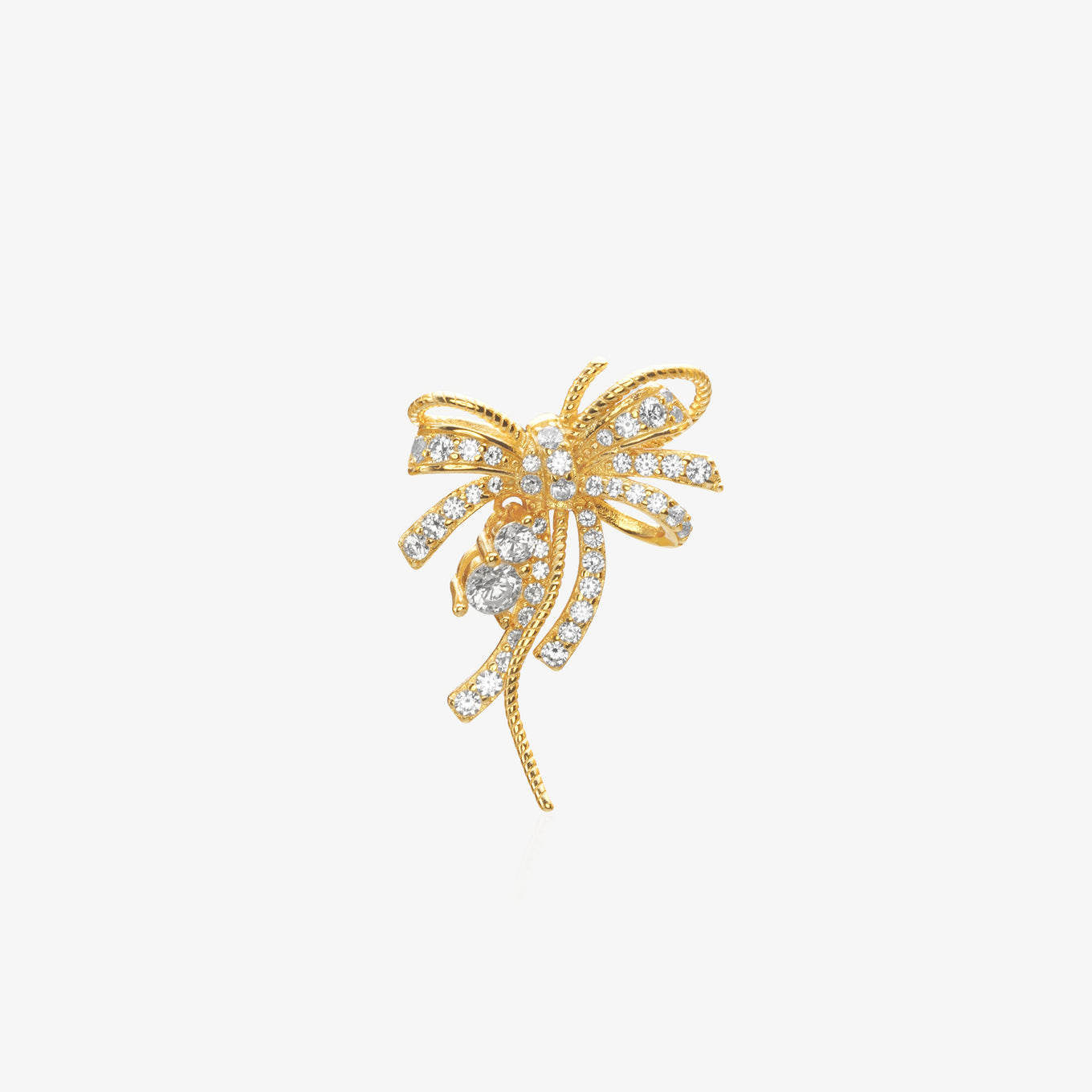
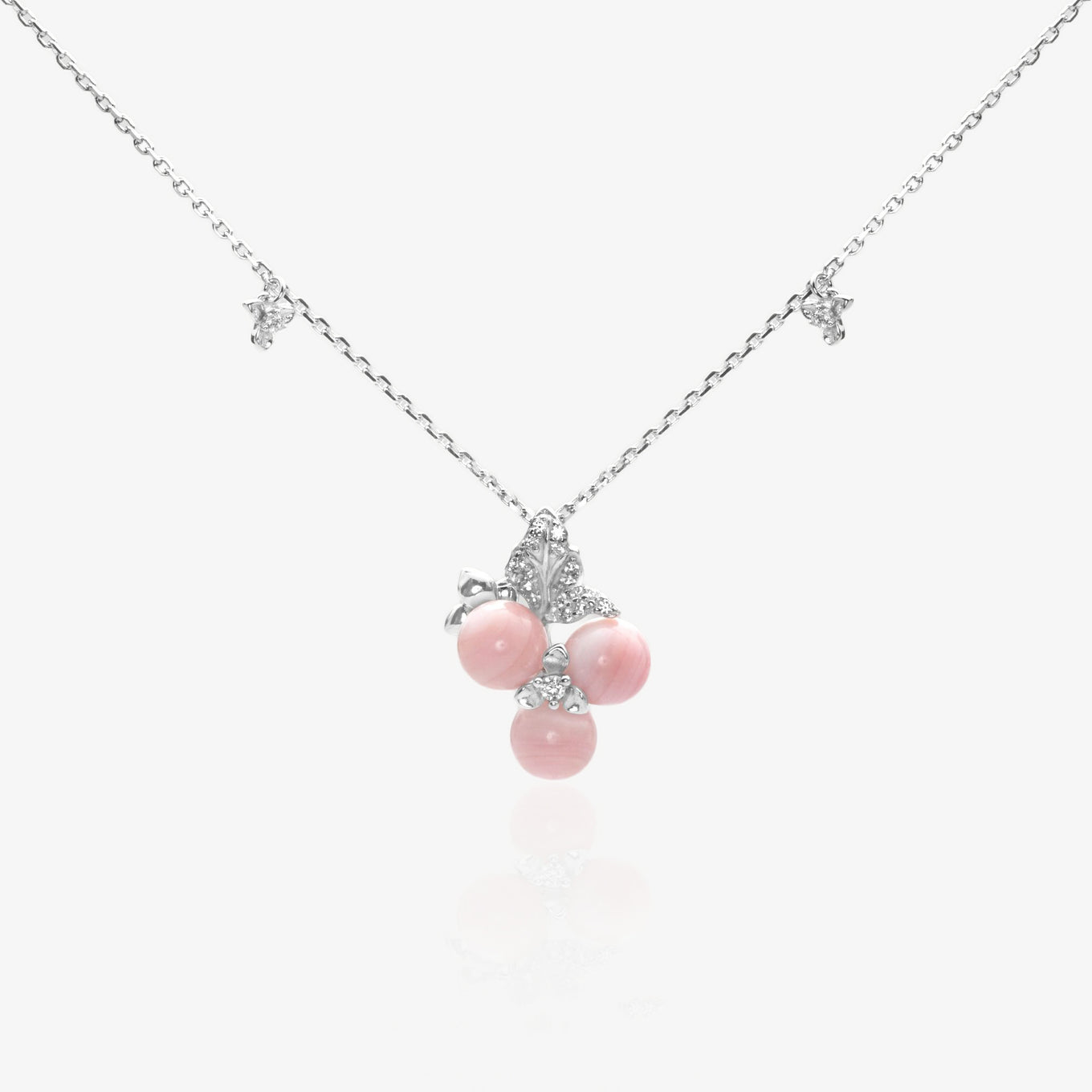
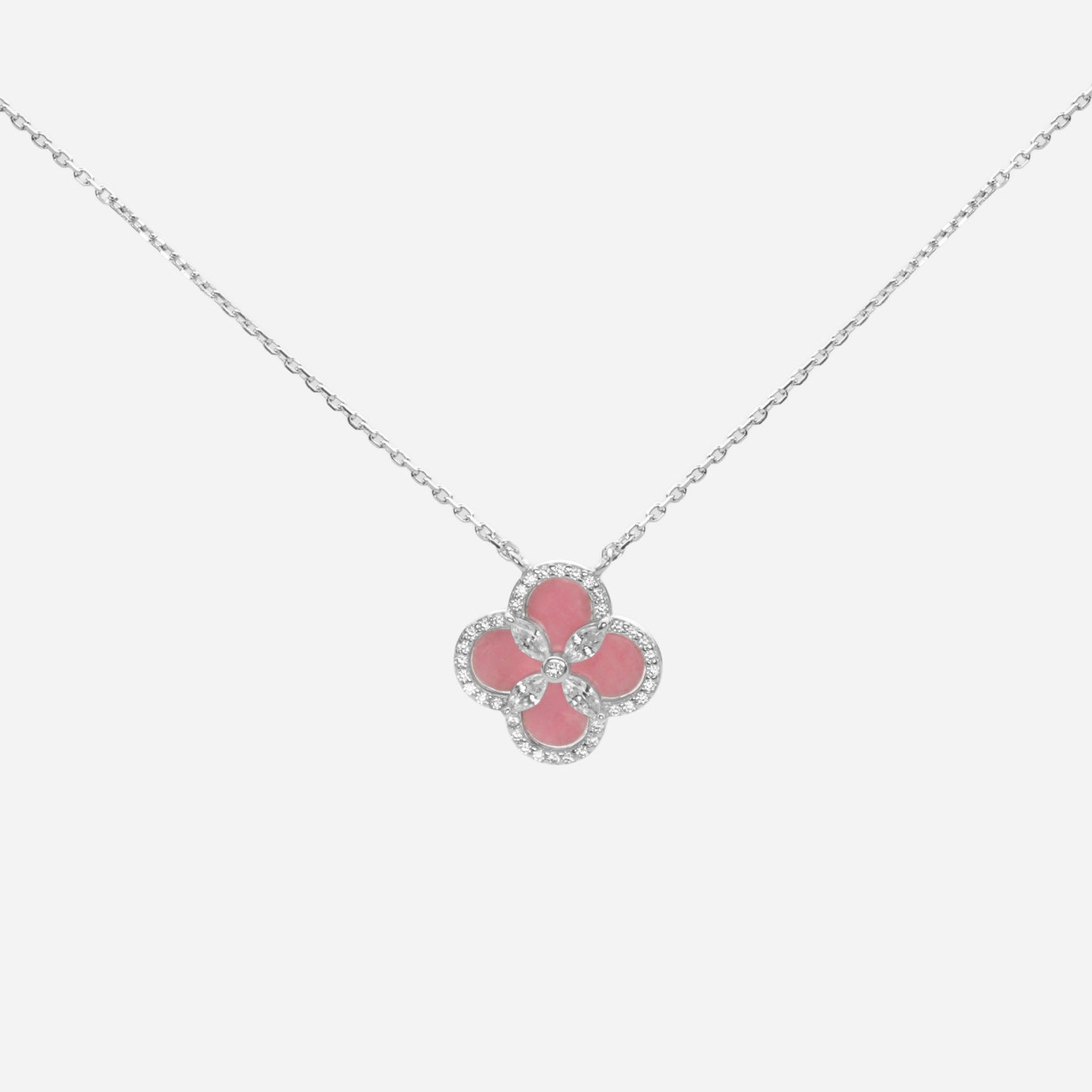
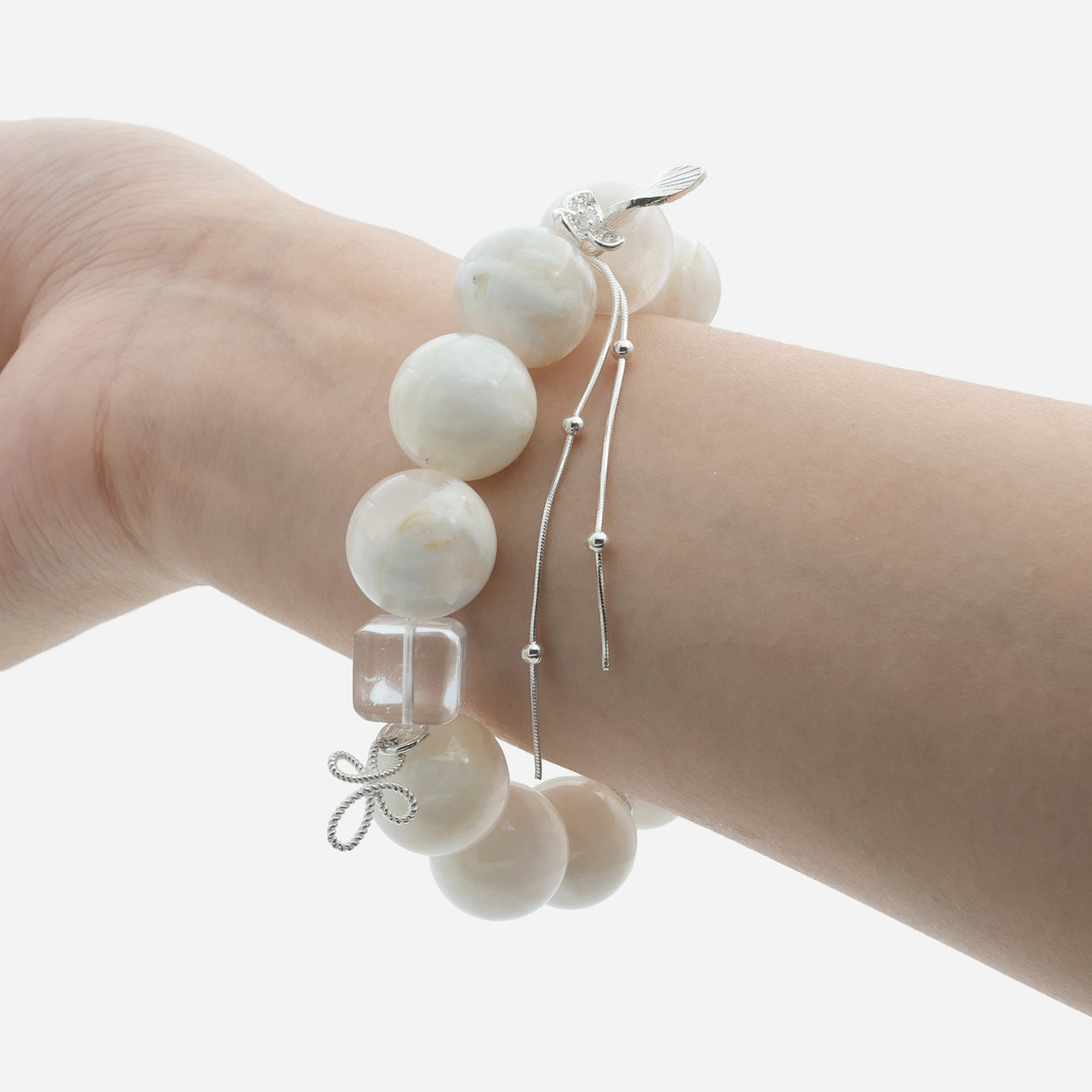
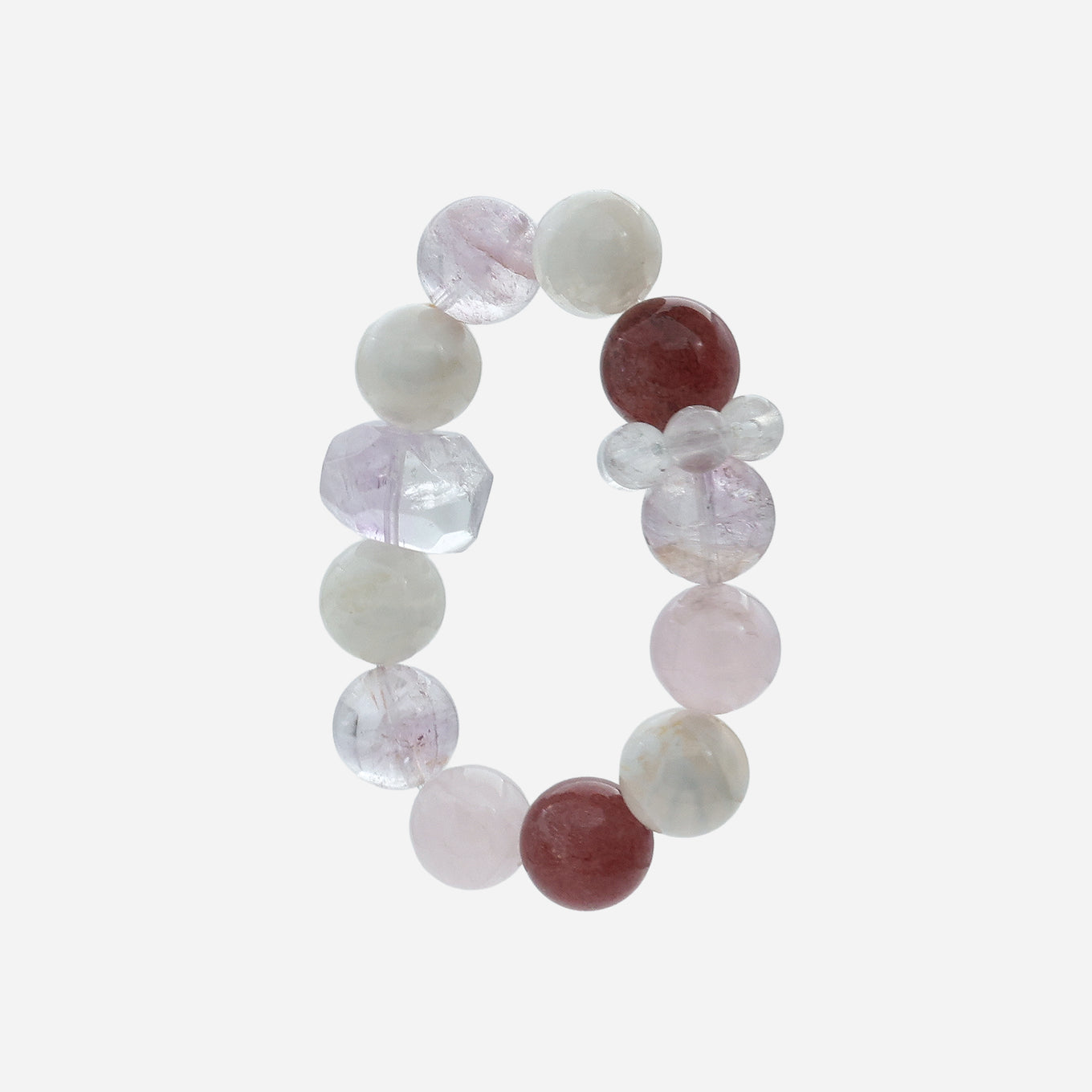
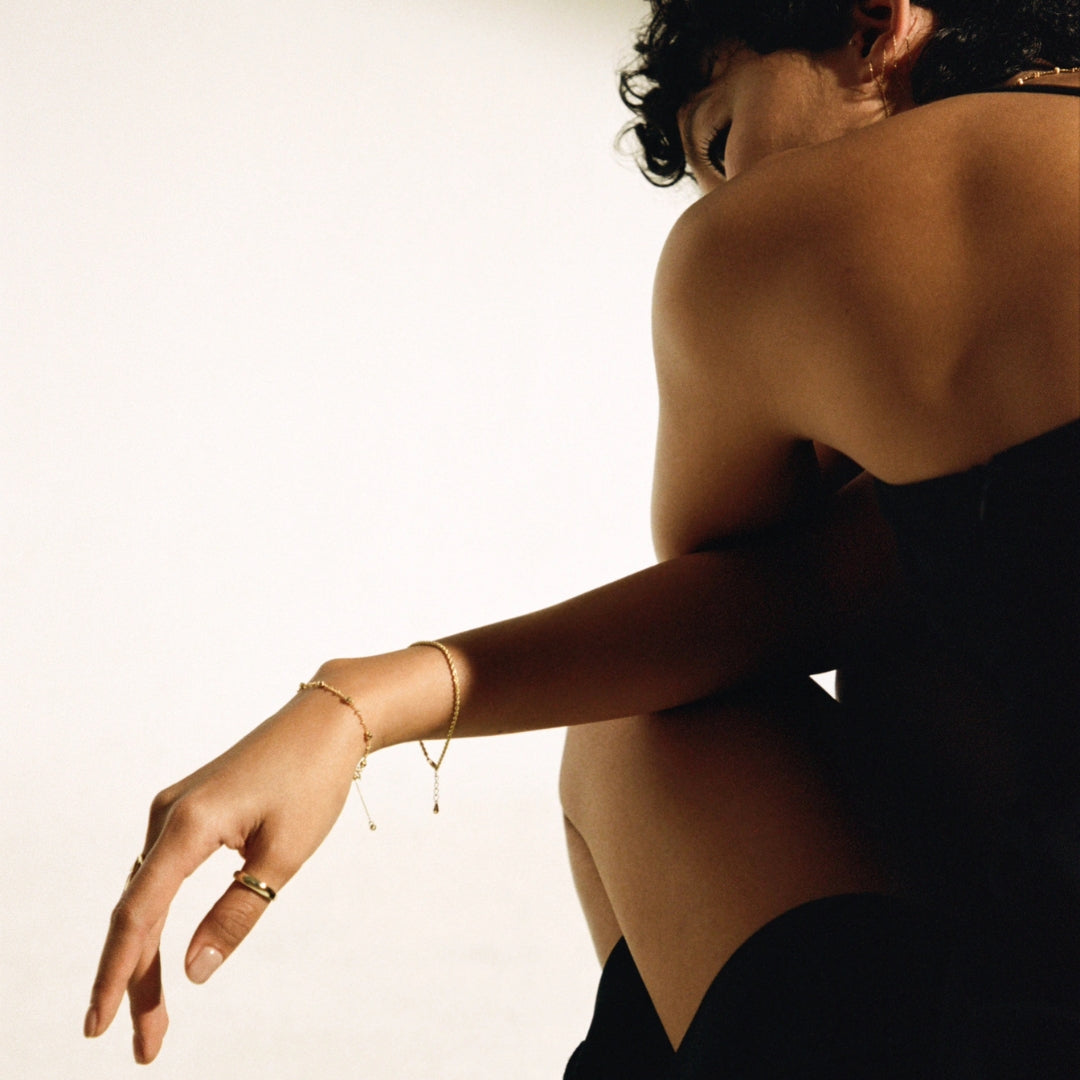
You have opened your jewelry box in front of the mirror a hundred times. You have held a pendant against a crew neck, frowned, and put it back. You have worn a V-neck with the wrong chain length and felt the dissonance without being able to name it. The problem is not your taste. It is geometry. A necklace and a neckline either harmonize — continuing the line — or compete. When they compete, the necklace looks wrong no matter how beautiful it is in the box.
This guide solves the problem with geometry, not opinion. Each neckline type gets a recommended necklace shape, the physics of why it works, a specific ÉLARAMUSE piece that executes it perfectly, and the rule to memorize so you never second-guess the mirror again.
The 7 Neckline Rules: A Quick-Reference Table
| Neckline | Best Necklace | Why It Works | Rule |
|---|---|---|---|
| V-Neck | V-shaped pendant or lariat | Pendant mirrors the V — creates a continuous descending line | Echo the angle |
| Crew Neck | Statement collar (16"-18") | Sits above the neckline — creates intentional contrast | Go above or go long |
| Strapless | Choker or collar (14"-16") | Fills the exposed canvas — no fabric to compete with | Own the bare space |
| Square Neck | Geometric pendant | Clean lines echo the angular neckline | Right angles for right angles |
| Turtleneck | Long chain (20"+), worn outside | Length elongates the torso — worn inside a turtleneck disappears | Length over proximity |
| Off-Shoulder | Bold collar or bare + lariat | Asymmetry demands either maximum presence or maximum absence | All or nothing |
| Cowl Neck | Short pendant (16"-18") | Pendant weight anchors the draped fabric | Anchor the drape |
V-Neck: Echo the Angle
The V-neck is the most accommodating neckline in fashion — and the easiest to get wrong. The instinct is to wear a delicate chain that falls inside the V, which is correct in principle but wrong in execution when the chain is too short. A 16-inch chain on a deep V-neck creates a T-shape: the horizontal line of the chain crossing the vertical line of the neckline. That T-shape is the dissonance.
The fix: Match the pendant fall to the depth of the V. A Classic Solitaire Necklace at 16-18 inches, with the floating lab diamond pendant falling precisely at the start of the V, continues the descending line from chin to sternum without interruption. The eye follows the V — and the pendant travels with it.
Rule to memorize: The pendant should reach exactly to where the V begins to open. If the pendant sits above the V, shorten the chain. If it falls below, lengthen it. The point of the pendant and the point of the neckline should be in visual alignment — not touching, but in the same vertical channel.
Crew Neck: Go Above or Go Long
The crew neck is the most difficult neckline for jewelry because the fabric sits close to the collarbone — too high for a pendant, too high for a choker. Two strategies work. Strategy one: a Italian Gold Collar sitting above the neckline at 16 inches — a 21-gram satin silk gold statement that makes the crew neck read as a deliberate frame rather than an obstacle. Strategy two: a long chain at 20-24 inches that drops below the neckline entirely, creating verticality against the horizontal line of the crew neck.
What never works: A 16-18 inch chain with a small pendant that lands exactly at the crew neck's hem. The pendant will disappear under the fabric every time you move, creating the illusion that you are wearing nothing — and worse, creating sensory friction as metal catches on knit. The Box Chain Necklace at 18 inches on a crew neck is the middle ground that satisfies neither rule. Go above with a collar or go long with a 22-inch chain.
Strapless: Own the Bare Space
A strapless neckline presents the largest uninterrupted canvas in fashion — bare skin from shoulder to shoulder with no fabric lines to respect. This is where the choker, the collar, and the dramatic short necklace come into their element. The Bicolor Choker — a twisted rope chain with a pavé magnetic clasp — fills the space at 14-16 inches without competing with any fabric line because there is no fabric line.
Rule to memorize: The more skin is exposed above the fabric, the closer the necklace should sit to the throat. Strapless → choker. Off-shoulder (still some fabric) → collar. Boat neck → mid-length. As the fabric moves up toward the throat, the necklace drops lower to meet it.
Square Neckline: Right Angles for Right Angles
A square neckline presents distinct horizontal and vertical edges — it is a geometric shape, not an organic one. Organic-shaped pendants (teardrops, asymmetrical stones, organic forms) create visual conflict because the neckline has a rule and the pendant is breaking it. A Compass Rose Pendant — a reversible circular medallion with a pink halo — works because the circle is the geometric complement to the square, not a rebellion against it. Clean geometry honors clean geometry.
What never works: Multiple thin chains that cross at different lengths. The square neckline gives you one strong horizontal reference line and one strong vertical — more than one chain competes with both. Choose one pendant on one chain. Let the geometry of the neckline do the structure work.
Turtleneck: Length Over Proximity
The turtleneck covers everything from the collarbone up. Any necklace worn inside the turtleneck is invisible — and wearing invisible jewelry defeats the purpose. The only correct strategy is a long chain (20-24 inches or more) worn entirely outside the fabric. A Herringbone Chain Necklace at 22 inches — the flat, woven Italian gold chain — creates a single, uninterrupted vertical line from chest to waist that elongates the torso, counterbalancing the turtleneck's compression of the neck.
Rule to memorize: Turtleneck = longest chain. The more fabric covering the neck, the longer the chain needs to be. This is not preference — it is a question of whether the necklace is visible at all. A 16-inch chain under a turtleneck is invisible. A 22-inch chain over a turtleneck is a statement.
Off-Shoulder: All or Nothing
The off-shoulder neckline is asymmetrical by design — one shoulder exposed, one covered. This asymmetry demands one of two extreme responses: maximum jewelry presence or none at all.
A 21-gram Italian Gold Collar at the throat makes the off-shoulder read as editorial — a deliberate red-carpet choice where the jewelry is the co-star, not the accessory.
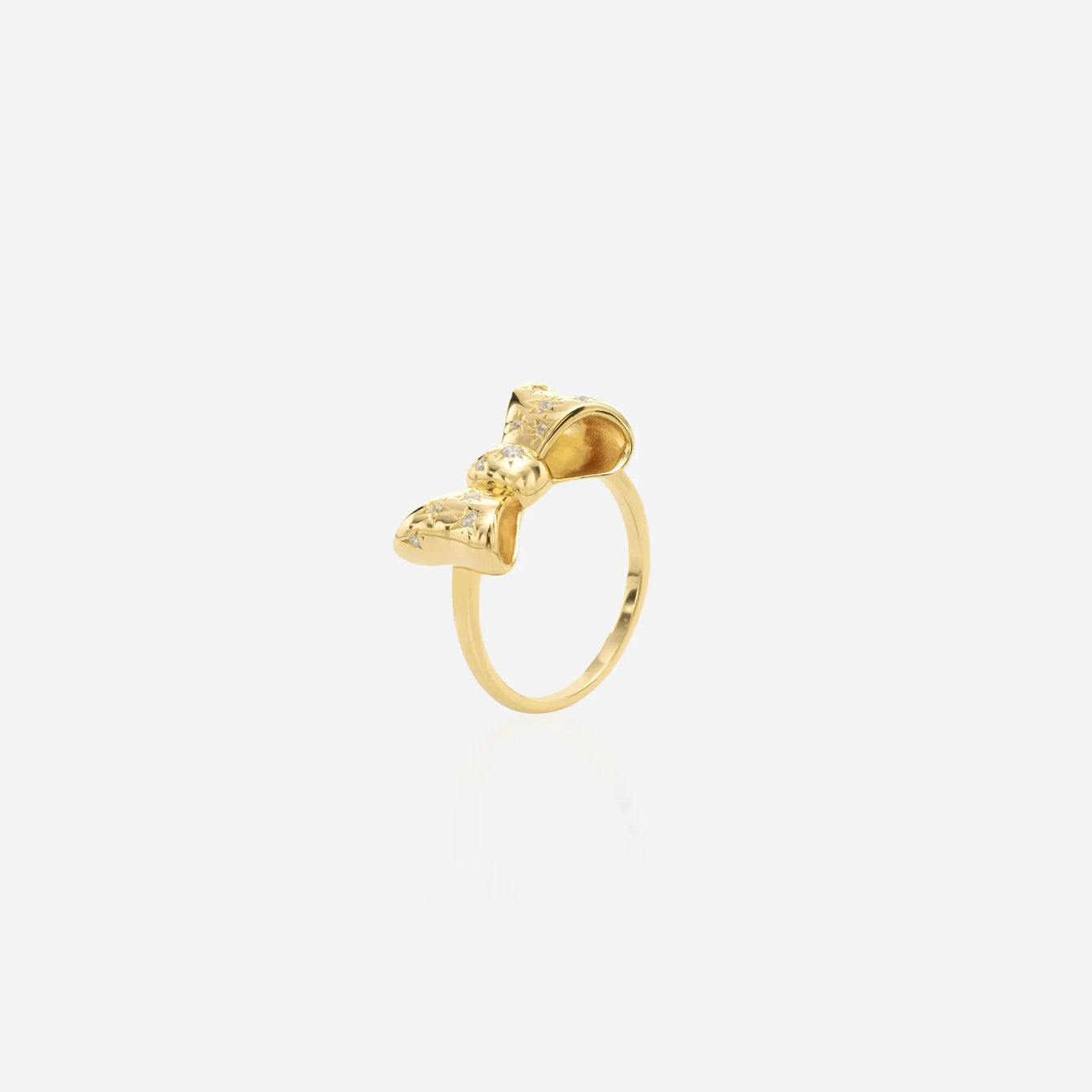
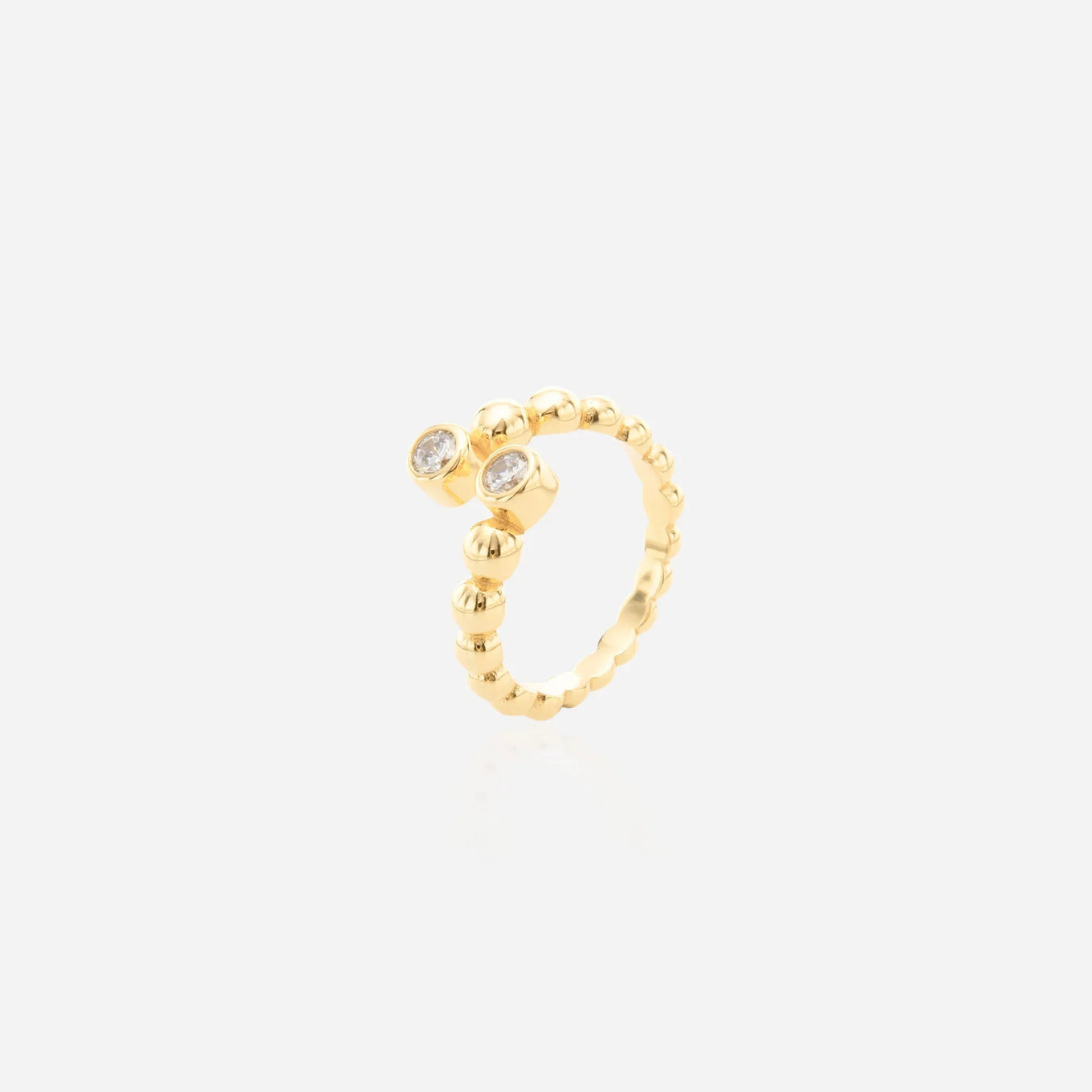
The alternative: bare neck with a dramatic Crossover Ring on the hand. The eye goes to the exposed shoulder and decorated hand — the neck is left deliberately bare, which itself reads as a choice.
What never works: A delicate chain at 16-18 inches. It is too timid for the drama of the neckline, and it looks like an afterthought. The off-shoulder is not a neutral canvas — it is a designed asymmetry. Your necklace must either match its drama or cede the stage entirely.
Cowl Neck: Anchor the Drape
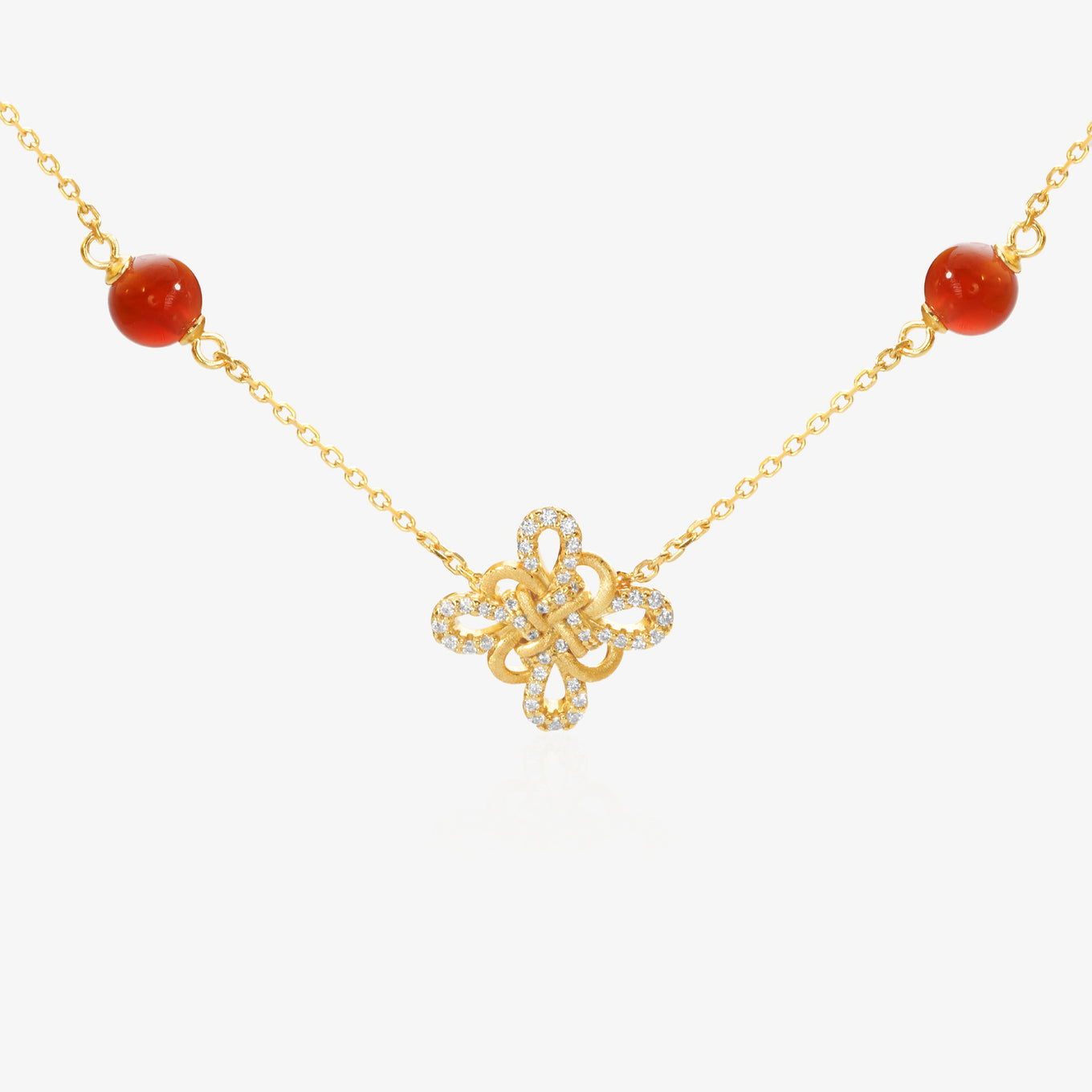
The cowl neck is the only neckline where the fabric itself has a visual rhythm — soft folds that cascade from the neck. A necklace must work with this rhythm, not against it. A Gold Clover Necklace with a red agate pendant at 18 inches drops into the first fold, its weight anchoring the fabric and creating a visual anchor where the drape naturally pools. The pendant becomes the point around which the cowl organizes itself.
Rule to memorize: Cowl neck = pendant with weight. The pendant must be heavy enough to sit still inside the draped fabric — a floating solitaire will get lost in the folds; a clover or medallion that has visual mass will anchor the entire neckline.
Key Terms: The Neckline-Jewelry Lexicon
- Visual Continuity
- The principle that a necklace should extend the visual line established by the neckline rather than creating a new, competing line. When a V-neck meets a V-shaped pendant, the eye travels from chin to sternum in one smooth motion. When a V-neck meets a horizontal chain, the eye stops, disrupted. Visual continuity is the difference between looking "put together" and "off."
- Chain Length Zones
- Chain lengths in inches and where they sit on the average frame: 14" = choker (tight at throat), 16" = collar (at collarbone), 18" = princess (at or just below collarbone), 20" = matinee (mid-chest), 22"-24" = opera (lower chest to sternum), 30"+ = rope/lariat (waist or below). Each neckline type prefers a specific zone — matching the zone to the neckline is the mechanical side of this art.
- Geometric Complementarity
- The visual principle that certain shapes harmonize when paired: circles with squares, triangles with V-shapes, ovals with scoops. A round pendant on a square neckline reads as complementary (two geometric shapes in dialogue). An irregular organic pendant on a square neckline reads as dissonant (one structure, one absence of structure). The principle applies to all neckline types.
- Negative Space Management
- The exposed skin between the necklace and the neckline fabric. Too much negative space looks disconnected — the necklace appears to float. Too little looks cramped — the necklace reads as an extension of the clothing rather than a separate accessory. The optimal negative space for a pendant is 1-3 inches between the bottom of the neckline and the top of the pendant.
The ÉLARAMUSE Standard
| Chain Lengths Available | 14", 16", 18", 20" — every neckline in this guide has an ÉLARAMUSE piece at exactly the right length |
| Design Philosophy | Clean geometry (Compass Rose for square necklines, Solitaire for V-necks, Collar for strapless) — every piece answers a specific neckline geometry |
| Material | Ag925 sterling silver core + 0.5-micron 18K gold plating — lightweight enough to wear at any length, substantial enough to sit correctly |
| Versatility | Every necklace in the collection is designed for 24/7 wear — shower, sleep, and any neckline your day demands |
FAQ: Neckline & Jewelry Matching
What if I am wearing a boat neck?
A bateau (boat) neck sits high and wide, exposing the collarbones horizontally. The best choice is a mid-length chain at 18-20 inches with a small, centered pendant — the chain length drops the pendant below the high neckline while the pendant creates a vertical line to counterbalance the horizontal width. The Gold Clover Necklace works well here because the pendant has visual mass without being so bold it competes with the boat neck's width.
Can I layer necklaces with any neckline?
Layering works best with V-necks and strapless necklines — the open space allows multiple chains at different lengths to read as intentional variation rather than clutter.
The worst neckline for layering is the crew neck: multiple chains at different heights compete with the horizontal line of the fabric and create visual noise. Turtlenecks can support a layered look if both chains are worn outside the fabric and spaced 2+ inches apart in length.
For a complete layering system, see our guide to necklace layering and use the neckline-to-length rules from the table above for each individual chain.
What if my outfit has no distinct neckline — like a button-down shirt?
A button-down shirt worn open creates a V-shape with the collar points — treat it as a V-neck with a pendant that falls into the open area. A button-down worn fully buttoned creates a small V at the throat — a short chain at 16" with a small pendant or a collar works best. The Classic Solitaire Necklace at 16" under a buttoned collar is the classic office look: visible enough to register, subtle enough to be professional.
Does the fabric pattern matter for necklace choice?
Yes. A busy print (florals, large plaids, graphic patterns) competes visually with an ornate necklace. On a busy print, choose the simplest possible necklace — a plain chain or a single solitaire pendant.
A solid-color top, by contrast, invites a more ornate piece — a Herringbone Chain with its woven texture, or a Bicolor Choker with its twisted rope pattern.
The necklace and the fabric share the same visual bandwidth; a busy fabric + a busy necklace exceeds it, and the eye does not know where to look.
Editor's Picks: The Neckline Solution Set
- For V-Necks: Classic Solitaire Necklace — floating lab diamond pendant that echoes the V every time.
- For Crew Necks: Italian Gold Collar — 21-gram satin statement that sits above the fabric with authority.
- For Strapless: Bicolor Choker — twisted rope chain with pavé clasp at 14-16 inches.
- For Square Necklines: Compass Rose Pendant — circular geometry that complements right angles.
- For Turtlenecks: Herringbone Chain — flat woven gold at 22 inches that elongates beautifully.
- For Off-Shoulder: Italian Gold Collar — editorial boldness that matches the drama.
- The Universal Workhorse: Box Chain Necklace at 18 inches — works with V-necks, button-downs, cowl necks, and square necklines.
We believe jewelry should make getting dressed easier, not harder. Every ÉLARAMUSE necklace is designed with a specific neckline geometry in mind — so when you open your jewelry box in front of the mirror, the right piece is not a question. It is a certainty. The chain is Ag925 sterling silver with 0.5-micron 18K gold plating — built to survive the daily ritual of dressing, undressing, and everything in between.
References & Further Reading
- Victoria & Albert Museum — "A History of Jewellery" (Necklace Evolution by Era)
- The Metropolitan Museum of Art — Jewelry Design Through History
- GIA — Gem Encyclopedia (Jewelry Design Principles)
- Marie Claire — Jewelry Trends 2026 (Styling & Proportion)
Written by Joyce | Founder, ÉLARAMUSE