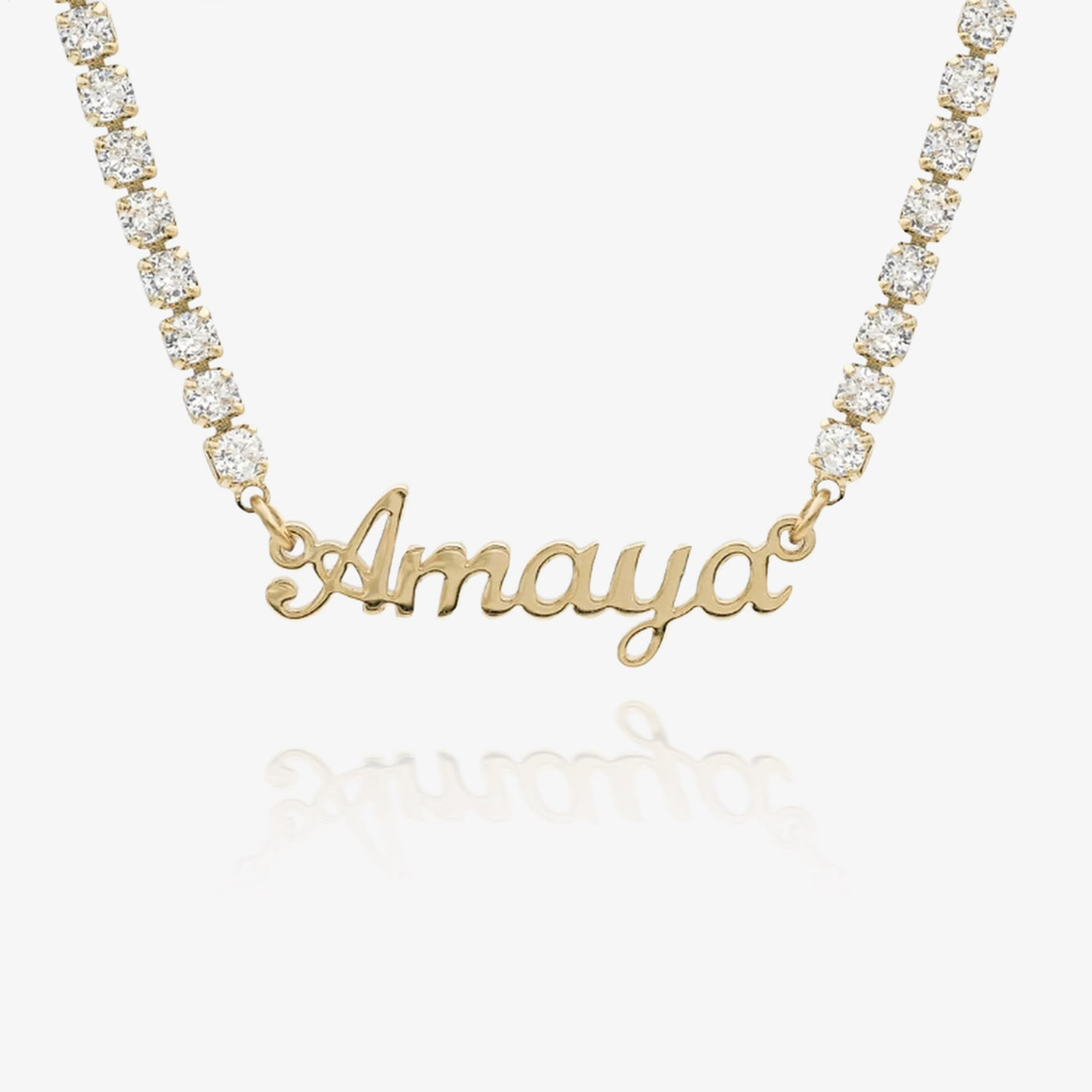
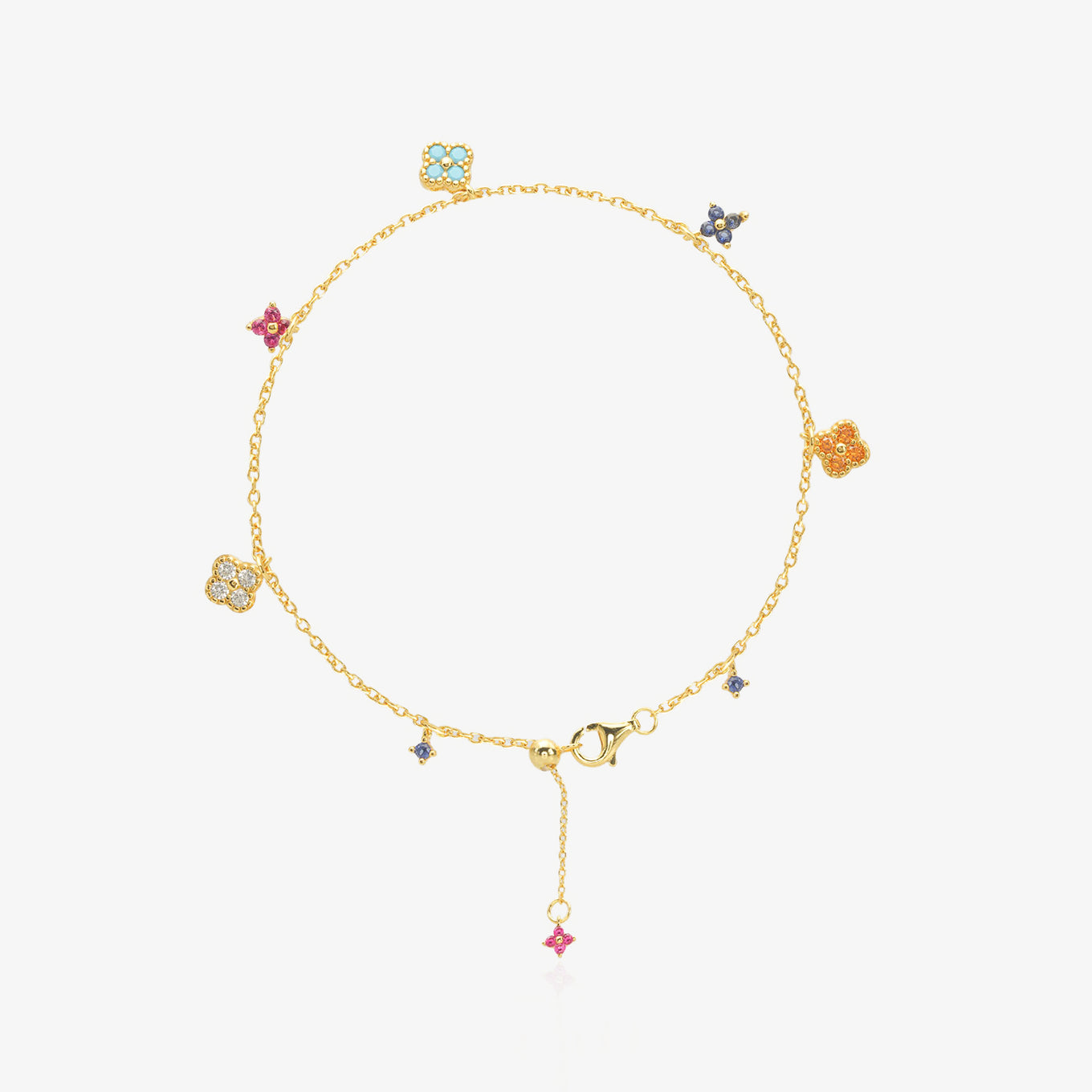
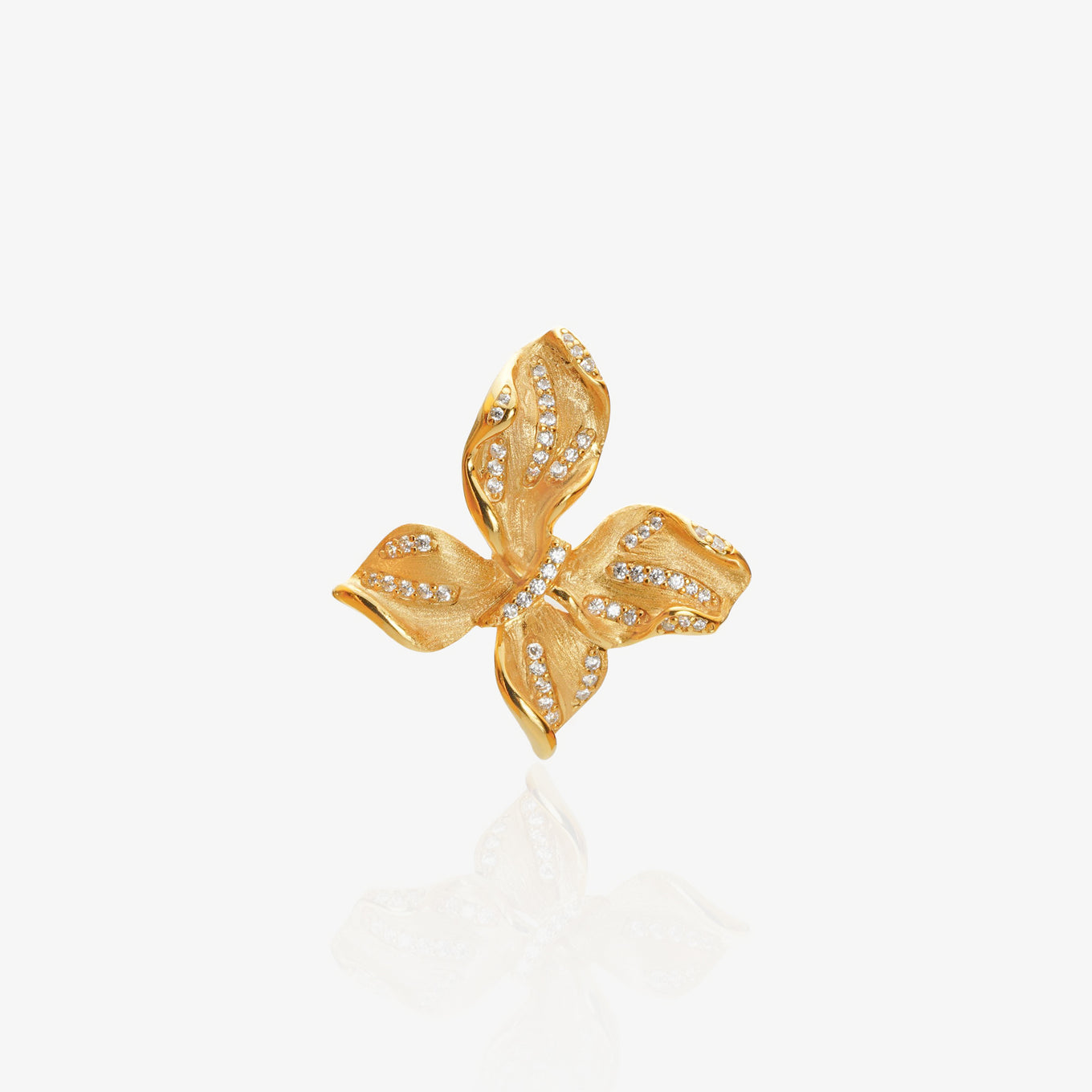
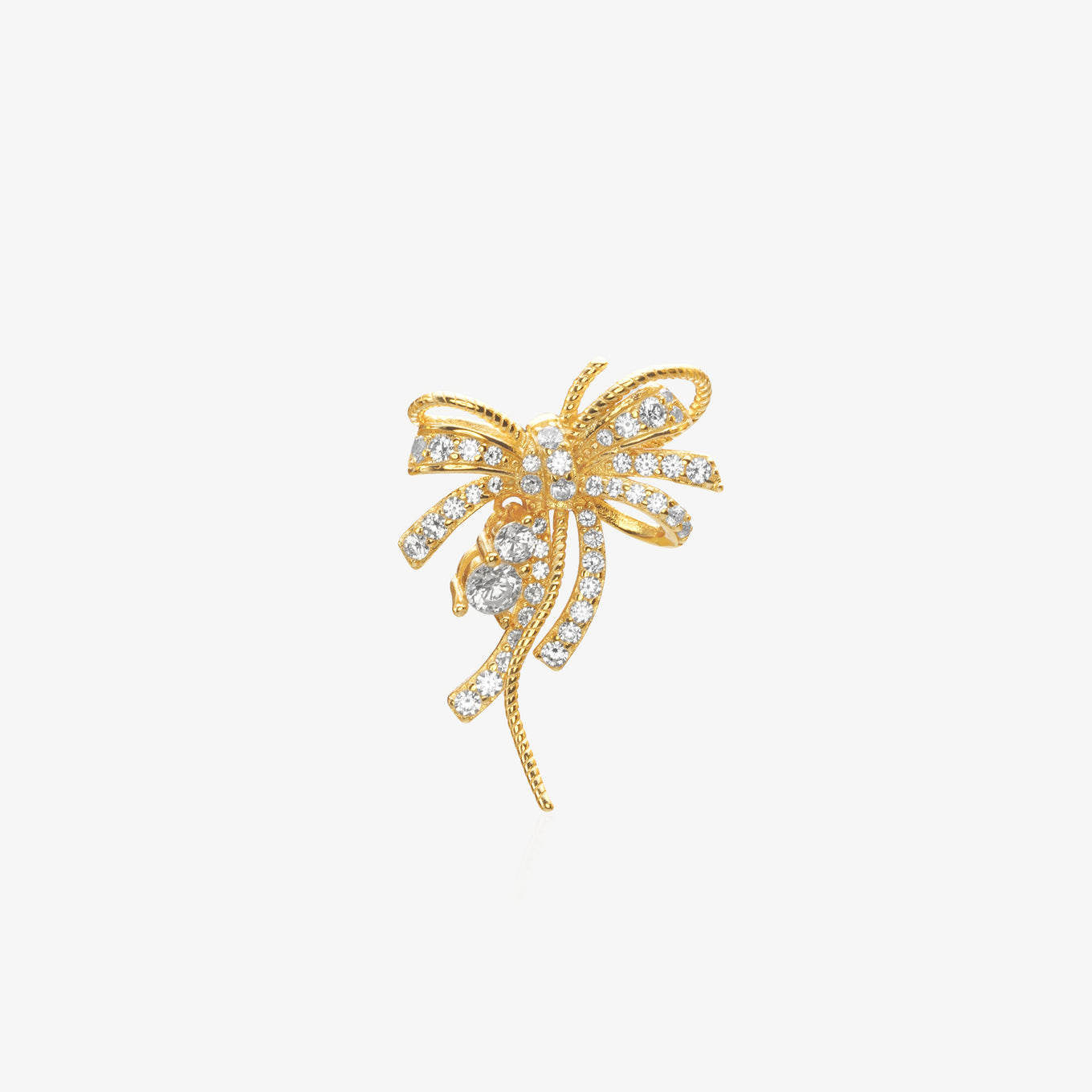
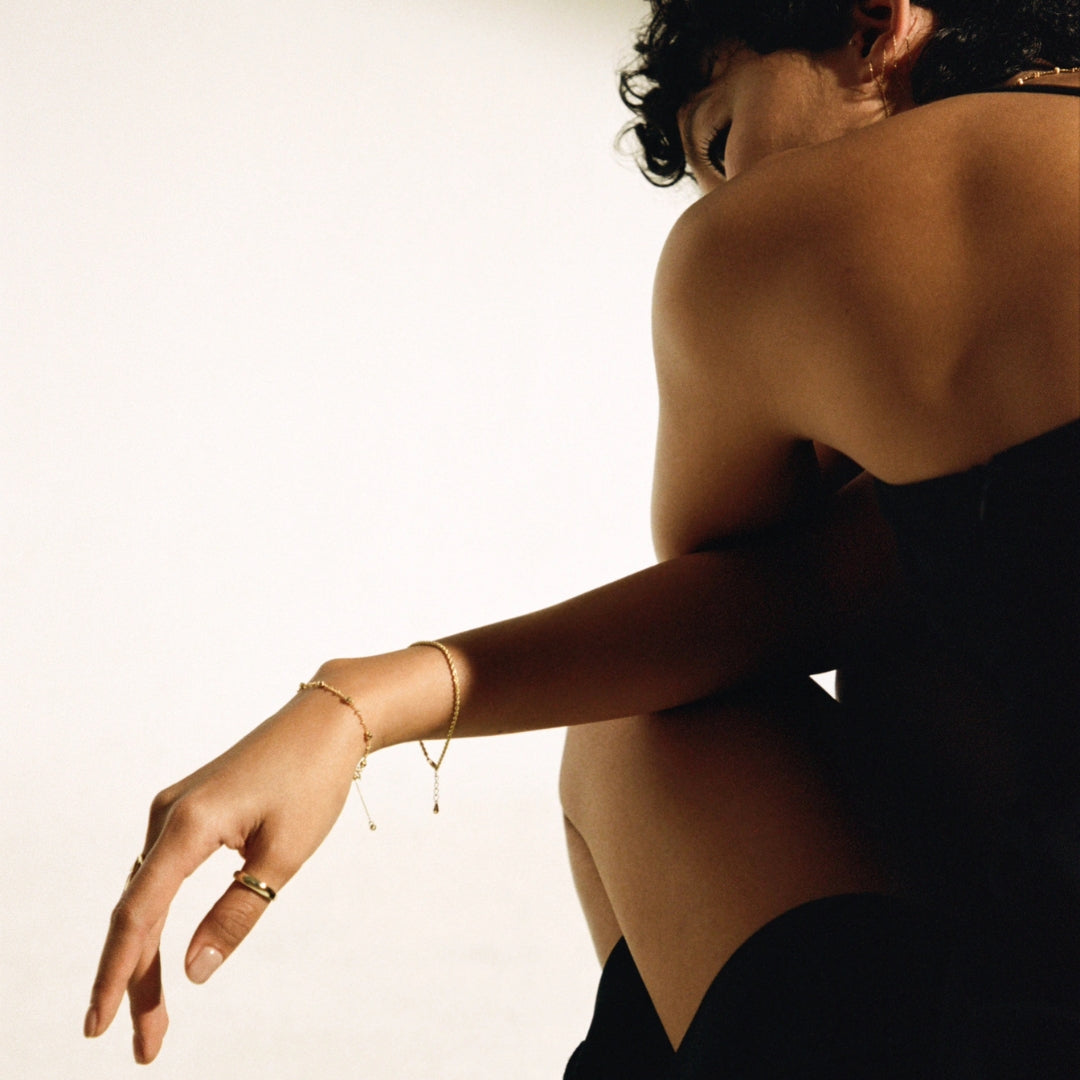
You've seen it: a photo where someone's necklace looks like a glowing halo of light around their neck, while yours — clearly visible in the mirror — has somehow vanished into the shadows of your collarbone. Jewelry photography is not fair. Some pieces are born photogenic; others actively resist being captured.
This guide explains why — and which pieces to choose if you want your jewelry to show up on camera as beautifully as it does in person. Whether it's a Zoom call where only your neckline is visible, a wedding where you'll be photographed 300 times, or an Instagram flat-lay where every sparkle counts, the physics of photogenic jewelry is consistent. Once you know it, you'll never buy a piece that disappears on camera again.
The Physics of Photogenic Jewelry: What Cameras See That Eyes Don't
Human eyes see jewelry in three dimensions, with depth perception, ambient light, and the brain's ability to fill in missing information. Cameras flatten everything to two dimensions. That's why a textured ring that looks dimensional in person can read as a featureless gold band in photos: the texture casts shadows your eye processes but the camera sensor compresses into uniform pixels.
Three factors determine photogenic performance:
- Light Return (LR): How much light a surface reflects back toward the camera. Polished gold plate and lab diamond pavé have high LR. Matte finishes have low LR — they absorb light rather than bouncing it back, making them excellent for subtle, in-person wear and invisible for photography.
- Silhouette Clarity (SC): Whether the shape of the piece is recognizable at the camera's resolution and distance. A 1mm chain vanishes at three feet. A 6mm wide band communicates its architecture clearly. Geometric shapes (rectangles, circles, triangles) register faster than organic shapes (leaves, vines, flowers) on most sensors.
- Scale-to-Distance Ratio (SDR): The size of the piece relative to the camera's distance. A detailed pavé stud earring that's beautiful at conversation distance becomes a tiny blurry dot at selfie-arm's-length. A dome ring that's visible across a dinner table translates to the camera frame perfectly.
The Most Photogenic Necklace: A Floating Solitaire
A single lab diamond suspended on a fine chain is the most reliably photogenic necklace in existence. The Classic Solitaire Necklace — a high-carbon lab diamond on a 20-inch chain — photographs brilliantly because the lab diamond's table acts as a tiny mirror, returning light to the camera regardless of angle. The chain itself, at 1mm, nearly disappears on camera — which is the point. The stone appears to float.
This is the necklace you wear on Zoom calls where only your neckline is visible. The lab diamond catches your ring light or window light and creates a single, precise point of sparkle that reads as "put together" without reading as "trying to be noticed."
For photographs with more context — full-body shots, group photos — layer the solitaire under a Bicolor Choker. The twisted rope chain texture creates shadow lines that cameras read as depth, and the two-tone gold/silver contrast prevents the choker from becoming a flat gold smear. The combination — textured choker above, floating lab diamond below — creates a two-level neckline that photographs like editorial styling.
Earrings That Survive the Camera: Geometry Over Detail
The Rectangular Stud
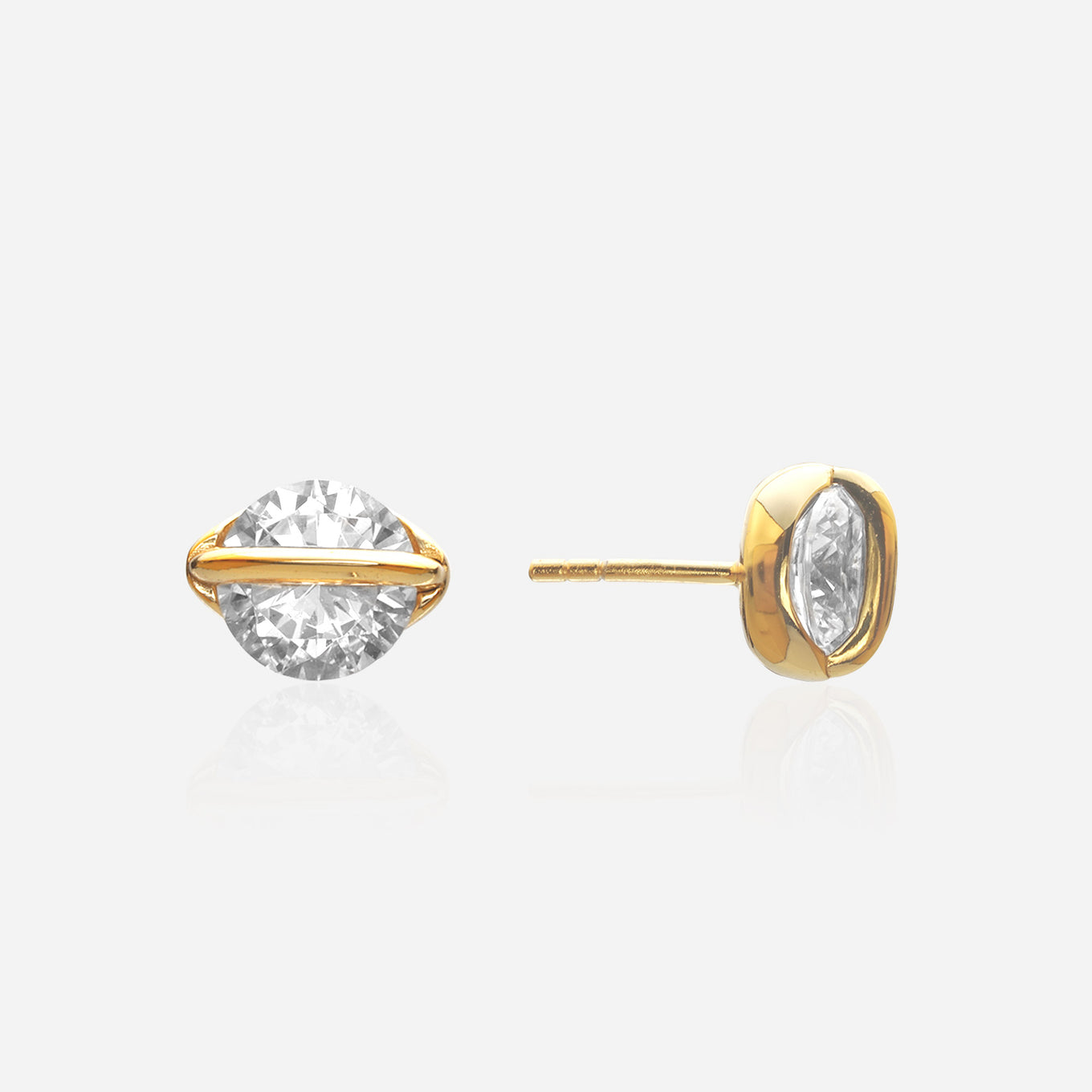
Round studs photograph as dots. Rectangular studs photograph as shapes. The Gold Geometric Studs — lab diamond bar earrings with a clean horizontal line — are the earrings for any situation where your face will be photographed. Their silhouette is unambiguous: two bright rectangles at the earlobes that frame the face like punctuation.
For Zoom specifically, studs outperform drop earrings. Drop earrings sway with head movement, creating motion blur on lower-quality webcams. Studs stay put — every frame is sharp.
The Textured Hoop
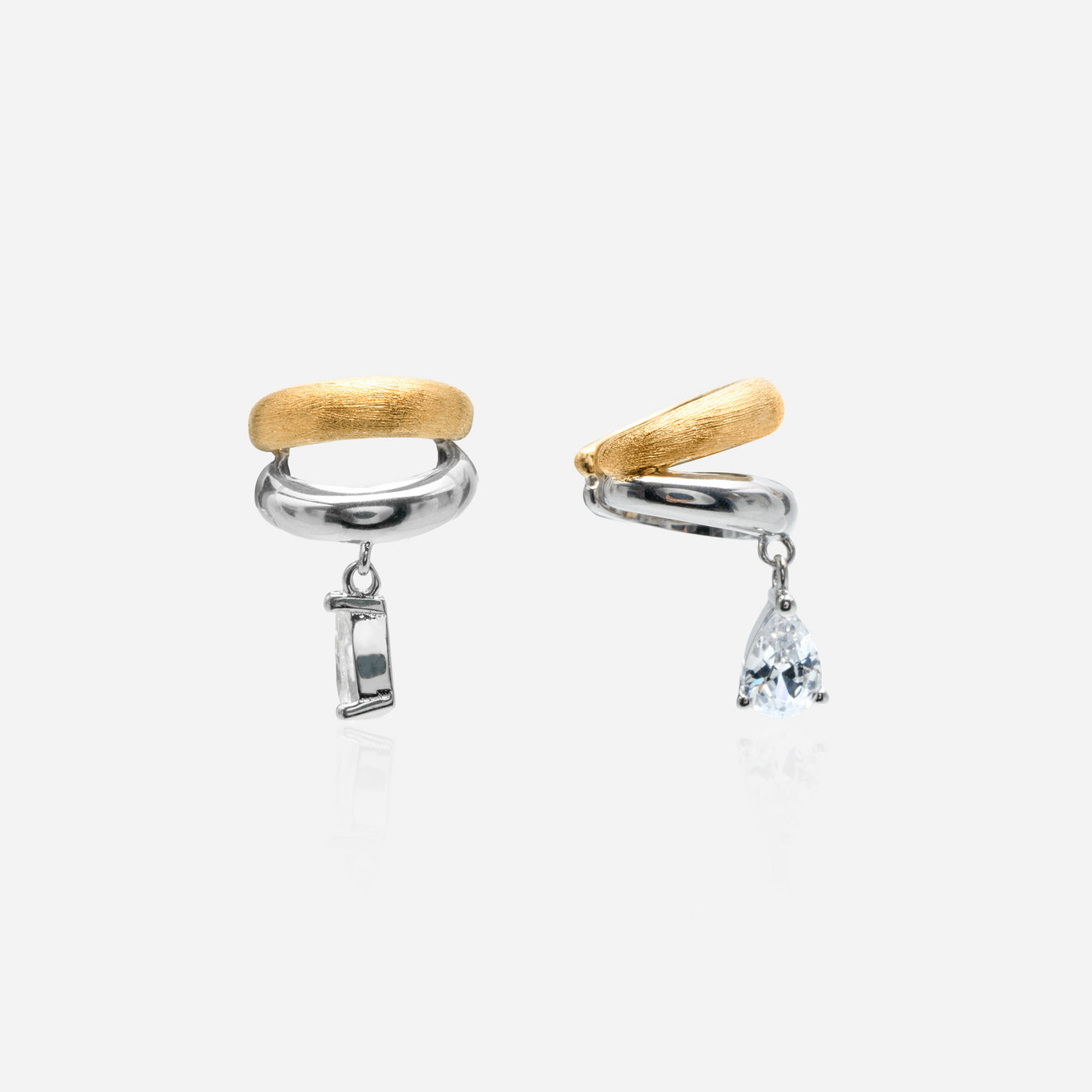
Hoop earrings photograph well when they have three-dimensional architecture — depth that creates shadow and highlight in the same frame. The Byzantine Lattice Hoops — wide huggie hoops in two-tone gold and silver with an open lattice structure — are built for this. The open lattice creates contrast between the metal and the skin visible through it, which cameras read as intentional detail rather than a solid gold blob.
The Pearl Cluster
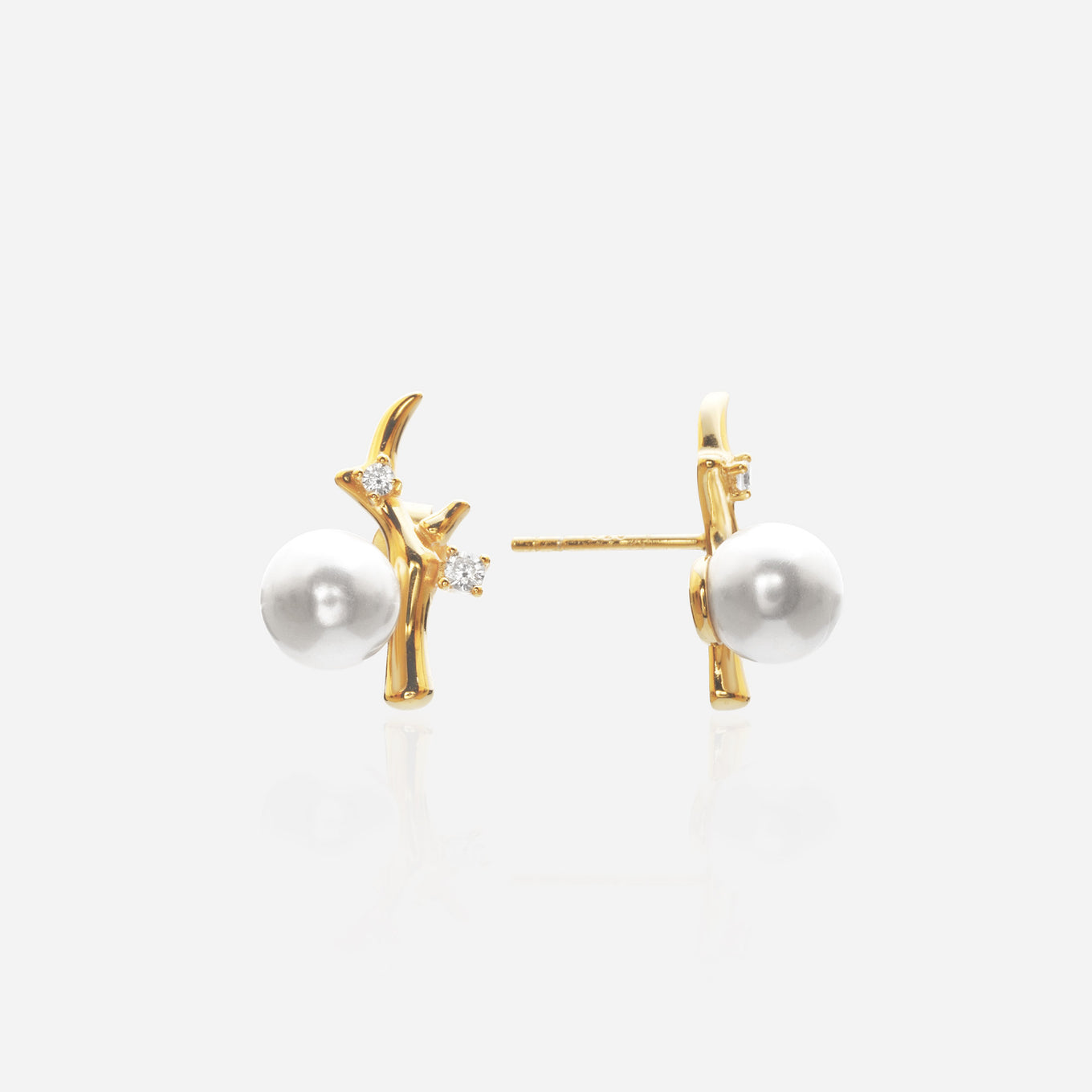
Pearls — especially high-luster simulated pearls — reflect light differently than metals. Their spherical surface produces a soft, diffused highlight rather than a sharp metallic glint. The Pearl Cluster Earrings with their grape leaf gold design photograph with a dimensional, editorial quality: the pearls catch soft light while the gold leaf catches hard light, creating two different light signatures in the same shot.
Rings That Photograph: Architectural Over Delicate
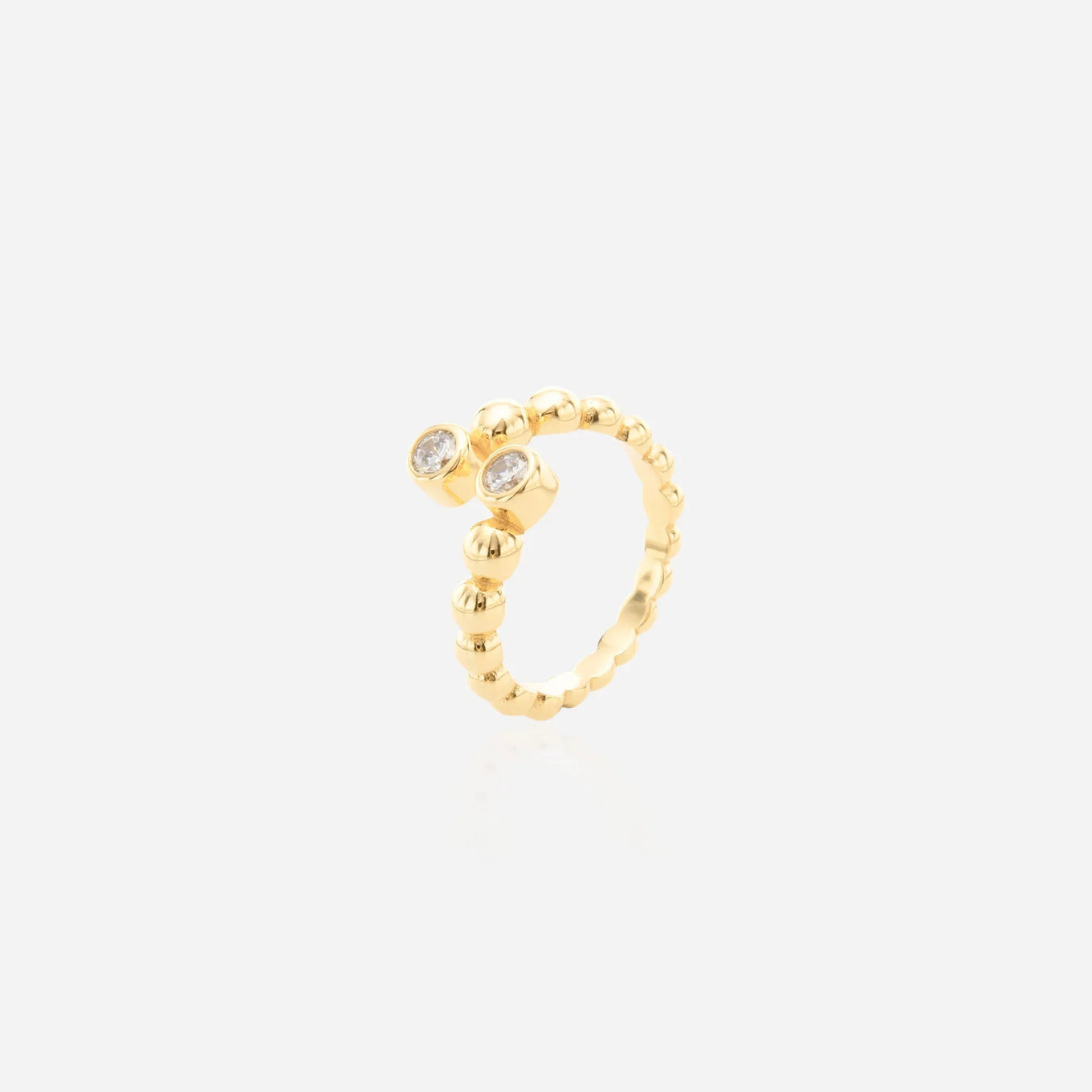
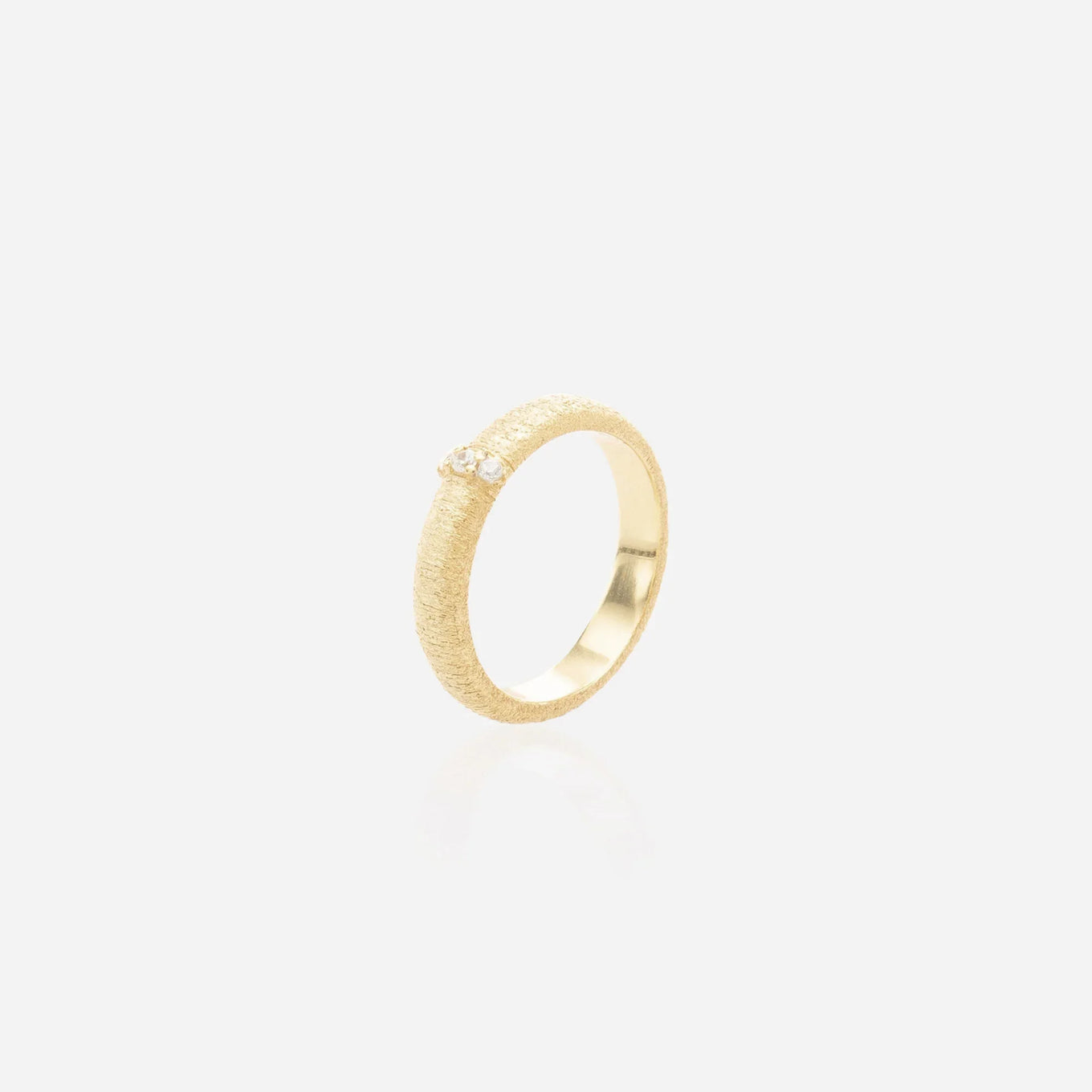
Ring photography is the hardest category because hands are constantly moving, changing angles, shifting in and out of frame. A ring that photographs well needs to register at a glance — the camera has a fraction of a second to capture it before the hand moves.
The Dome Ring
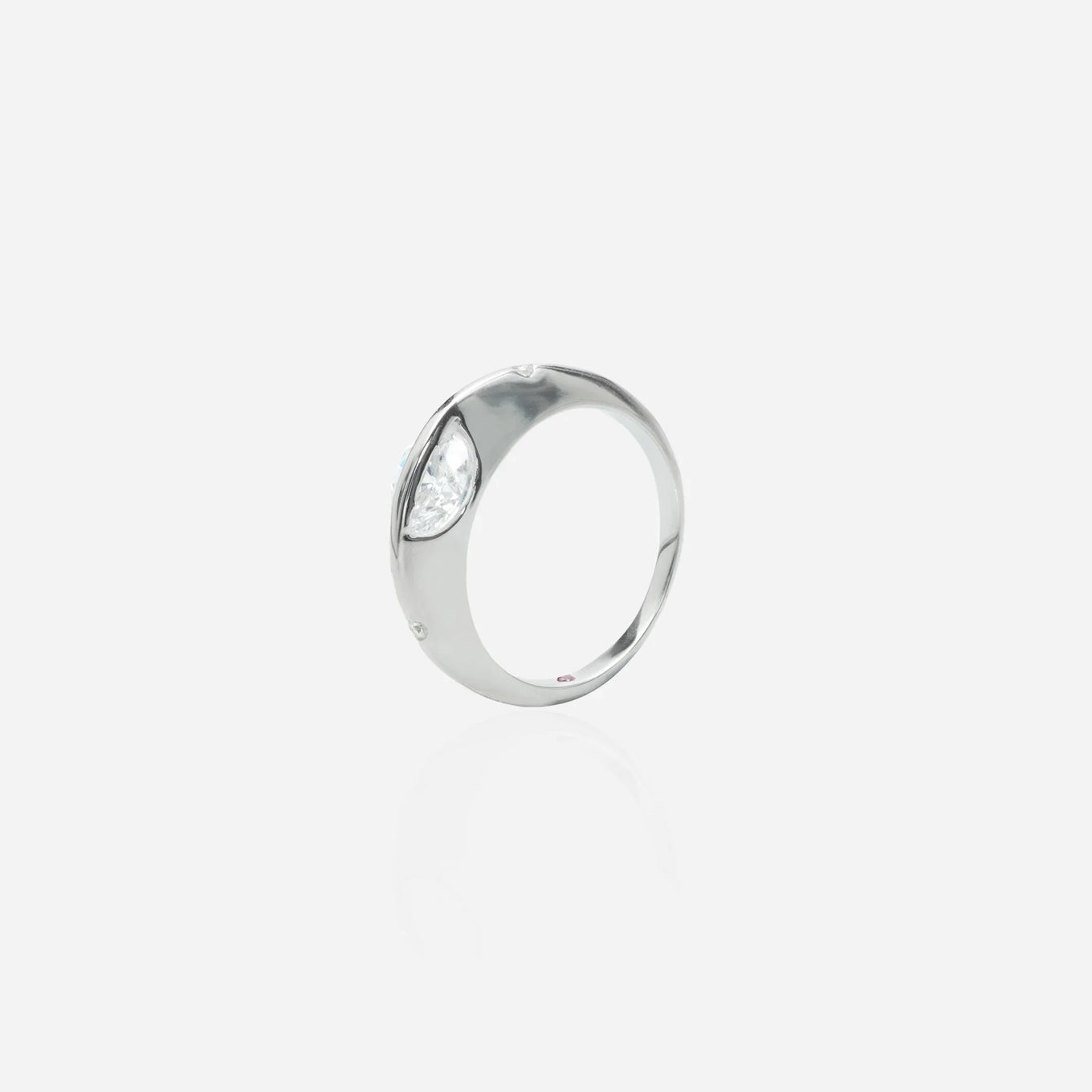
The Solaris Dome Ring is the most photogenic ring in the ÉLARAMUSE catalog. Its sunburst geometry creates radial highlight lines that catch light from every angle, and the central lab-grown nano zircon acts as a focal point. Even at a distance where the sunburst detail blurs, the dome silhouette — a clear architectural curve — remains legible. This is the ring for hand-on-cheek poses, hand-on-wine-glass shots, and the inevitable ring-close-up photo someone takes at every event.
The Wide Band
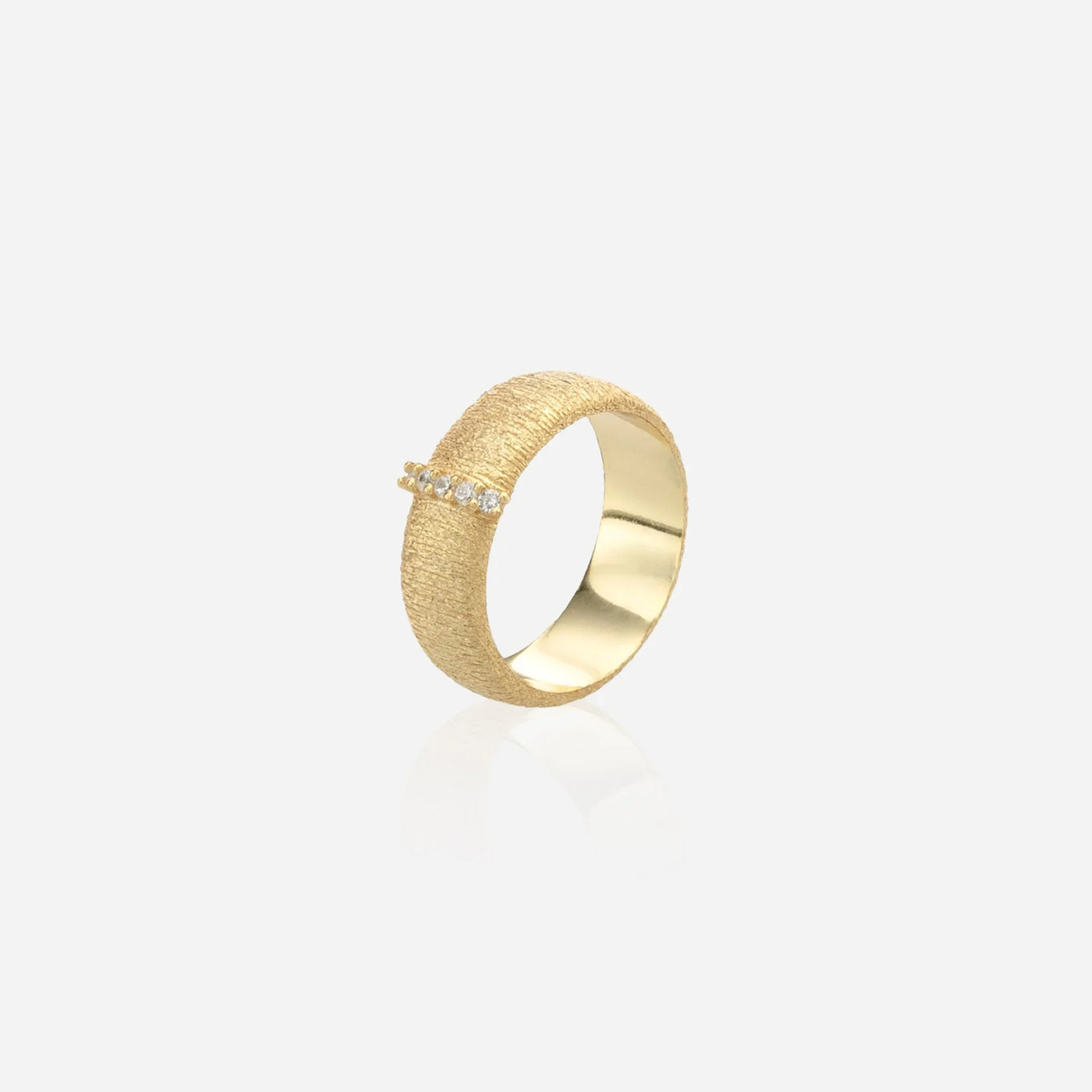
The Wide Band Ring at 6mm photographs with the clarity of a cuff link — it's simply large enough to register in any hand shot. The polished gold surface acts as a continuous light returner, creating a horizontal band of highlight across the finger that reads as "deliberate jewelry" rather than "is that a ring?"
The Mirrored Cocktail Ring
For flash photography specifically — weddings, galas, events with professional photographers — the Mirrored Crystal Ring is unmatched. Its vintage halo design with a large central crystal catches flash from any angle and returns it as a starburst. This is the ring that looks almost too bright in photos — which, for most jewelry, is exactly what you want.
Jewelry Photography by Context: A Cheat Sheet
| Context | Camera Distance | Best Pieces | Why |
|---|---|---|---|
| Zoom / Video Call | ...BODYEOF echo "A1 part 1: $(wc -c < /Users/mac/.jvs/.openclaw/workspace/temp/batch18/a1_photo.txt) bytes"Solitaire necklace + geometric studs | Solo pendant visible in neckline frame; studs sharp at lobe distance | |
| Selfie / Arm's Length | 2-3 feet | Wide band ring, textured hoops, pavé choker | Small details blur; architectural shapes and light-return surfaces survive |
| Event / Group Photo | 6-15 feet | Dome ring, mirrored cocktail ring, bicolor choker, lattice hoops | Only the boldest light-return and widest silhouettes register at distance |
| Flat Lay / Product Shot | 6-12 inches | Textured bangle, pearl cluster, pavé bracelet, marquise chain | Texture and pavé capture maximum detail at macro distance |
| Flash Photography | Any distance | Mirrored Crystal Ring, lab diamond pavé, polished gold plate | Flash returns directly from mirror-like surfaces; matte and silver absorb flash |
The Bracelets That Photograph
Bracelets are the most challenging jewelry category for photography because they're typically captured at the edge of the frame — on a wrist that's holding a drink, gesturing, or resting on a table. They need to be photographable without being the subject of the photograph.
The Moire Bangle — a water ripple textured gold cuff — solves this through surface complexity. The ripple pattern creates alternating bands of highlight and shadow that cameras read as texture rather than as a single flat surface. Even at the edge of a frame, the bangle communicates "jewelry" rather than "shiny blob."
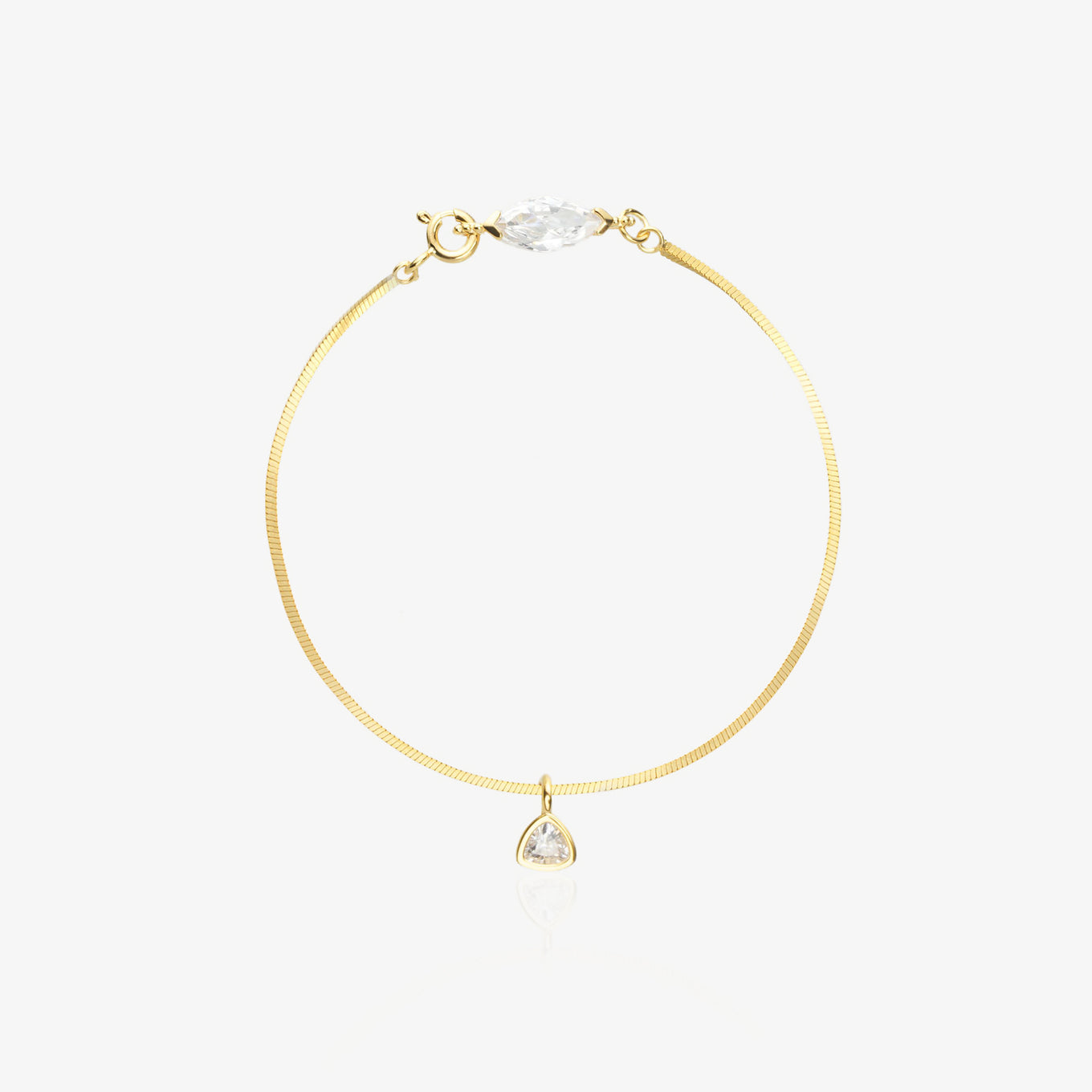
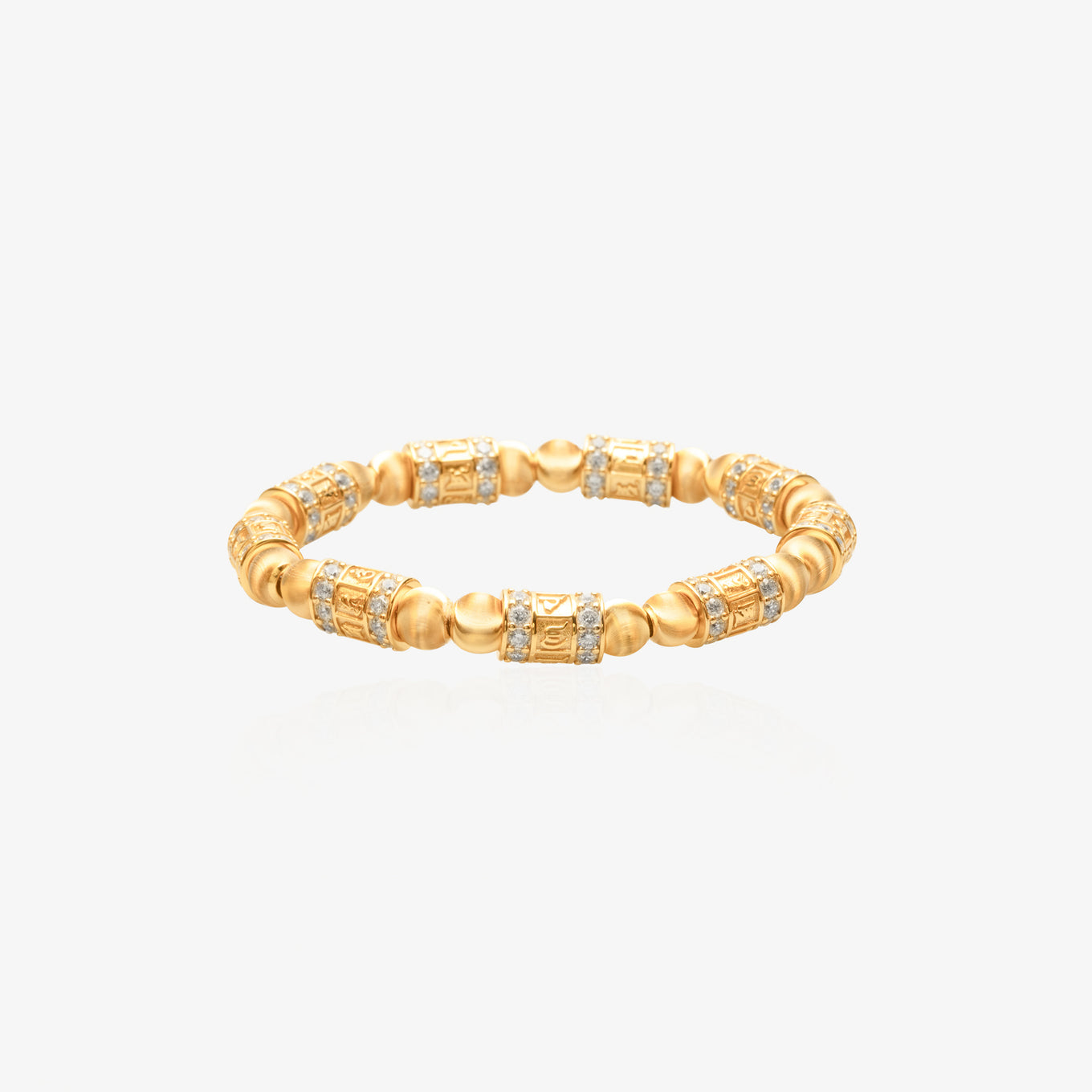
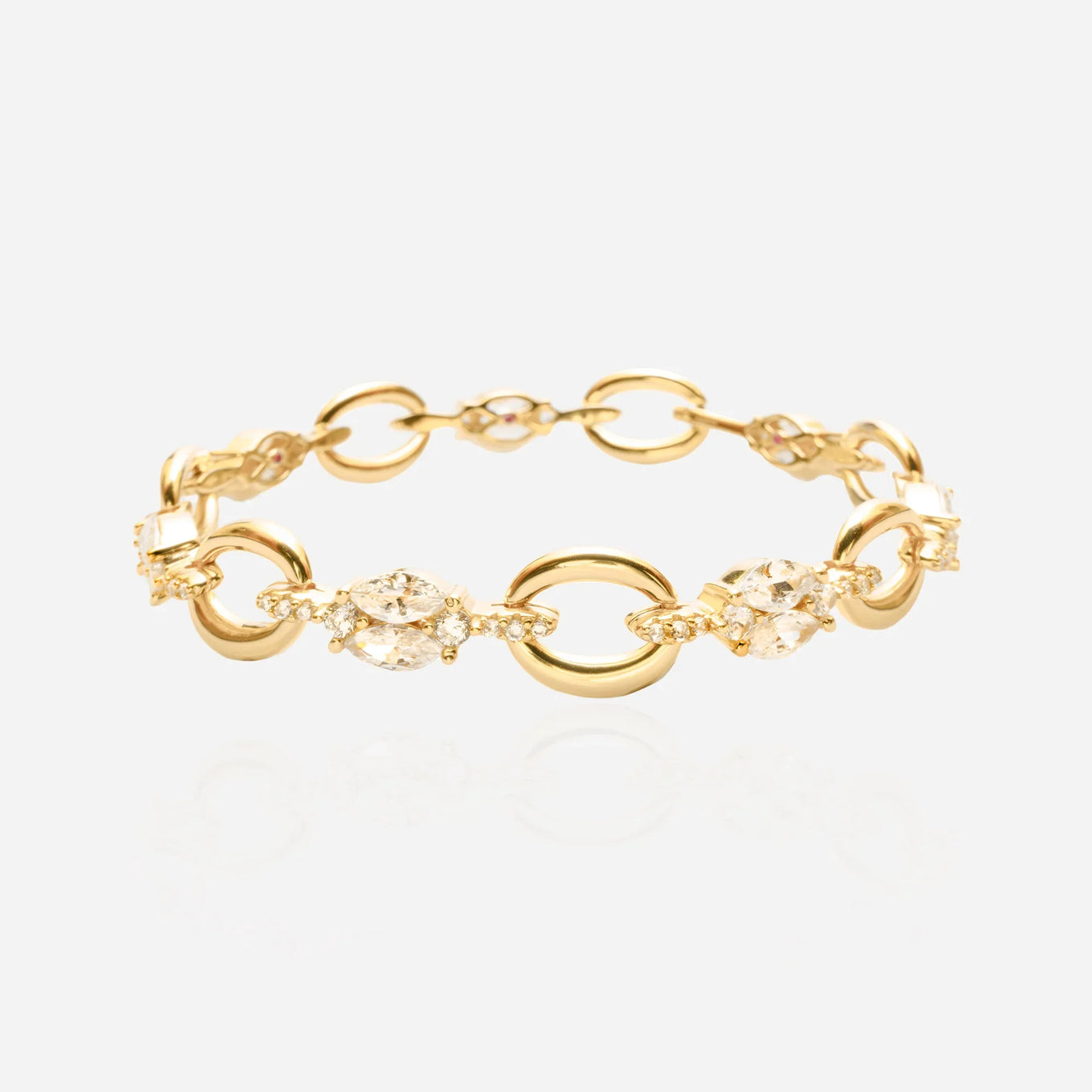
The Marquise Garland Link Bracelet works on a different principle: its mixed-cut lab diamonds create multiple points of light return along the chain. Where a smooth bangle reflects as a single highlight, the garland bracelet reflects as a constellation of smaller sparkles — better for the wrist that moves constantly through a shot.
The 3 Rules for Photogenic Jewelry (Summary)
- Polished beats matte. High-polish gold returns light to the camera. Matte finishes absorb it. For photography, choose the shiniest version of the piece you want.
- Geometry beats organic. At any distance beyond arm's length, organic shapes (leaves, vines, curves) blur into unrecognizable forms. Rectangles, circles, and sharp lines survive resolution loss.
- One focal point beats ten. A single lab diamond on a chain photographs better than a necklace with twenty small stones. The camera's sensor has limited dynamic range — give it one bright point to lock onto.
Key Terms: Jewelry Photography Lexicon
- Light Return (LR)
- The percentage of incident light that a jewelry surface reflects back toward the viewer or camera. Polished 18K gold plate returns ~70-80% of visible light; matte gold returns ~20-30%. Lab diamonds return ~90%+.
- Silhouette Clarity
- Whether a jewelry piece's shape is recognizable at a given distance and resolution. Affected by the piece's outline complexity (simple shapes → high clarity), contrast with skin/clothing, and size relative to the camera's pixel density.
- Specular Highlight
- The bright spot of light that appears on a shiny surface when illuminated. In jewelry photography, specular highlights on polished gold and lab diamonds are what register as "sparkle" — the piece is communicating its presence through reflected light rather than visible structure.
- Two-Tone Contrast
- The photographic advantage of mixed-metal pieces: gold and silver reflect light differently, creating internal contrast within the same piece. A solid gold choker photographs as one surface; a two-tone choker photographs as two distinct visual elements, giving the camera more information to render.
- Macro Distance
- The short camera-to-subject distance (6-12 inches) used for flat-lay and product photography. At macro distance, texture and pavé detail become visible that disappear at any other range.
The ÉLARAMUSE Standard
| Base Material | Ag925 Sterling Silver (92.5% pure silver) |
| Plating | 0.5-micron 18K gold plating — high-polish finish for maximum light return |
| Gemstones | High-Carbon Lab Diamonds (Mohs 8.5, ~90%+ light return); Nano Zircon (Lab-grown); High-Luster Simulated Pearl |
FAQ: Jewelry Photography Questions
Why does my gold necklace disappear in photos but look great in the mirror?
Mirrors provide direct reflected light in a controlled viewing angle. Cameras capture ambient light from all angles and compress depth. Your necklace disappears because its surface is returning light in directions the camera sensor isn't receiving. The fix is choosing pieces with multi-directional light return: pavé-set lab diamonds reflect light in all directions, and polished gold plate reflects across a wider angle range than matte or brushed finishes.
What's the best jewelry for wedding photography?
For weddings — the most photographed day of most lives — prioritize: a floating solitaire necklace (Classic Solitaire) for the neckline, geometric studs for the ears (Gold Geometric Studs), and a dome or mirrored cocktail ring for the hands (Solaris Dome or Mirrored Crystal). These three zones — neck, ears, hands — are what professional photographers frame. Avoid: matte silver pieces (absorb flash), tiny pavé that resolves as noise, and chain necklaces under 1.5mm (invisible at event distance).
How do I take better photos of my own jewelry?
Three rules. First, use indirect window light, not direct sunlight — direct light creates harsh shadows that hide detail; indirect light creates soft highlights that reveal texture. Second, place the piece on a neutral, matte surface — white paper or beige linen — to create contrast without competing reflections. Third, shoot at a slight angle rather than straight down — angled light catches pavé and faceted stones; straight-down light flattens everything.
For phone cameras, the 2x telephoto lens (if available) produces less distortion than the wide-angle lens.
Does silver photograph better than gold?
No — gold photographs better than silver in most conditions because gold's warmer color temperature (2700-3000K) contrasts more strongly with skin tones than silver's cooler temperature (5500-6500K). Silver can blend with skin in certain lighting conditions. The exception is flash photography on darker skin tones, where silver's higher contrast ratio can create more visible specular highlights.
Should I take my jewelry off for Zoom calls?
No — but choose pieces that work at the Zoom camera's typical distance (18-24 inches from the face). A solitaire necklace at this distance is visible as a sparkle point. Geometric studs register as clean shapes. Large hoops create distracting movement. The rule for video calls: if the jewelry would distract you if you saw it on someone else's screen, take it off. If it adds polish without demanding attention, keep it on.
Editor's Picks: The Photogenic Collection
- Classic Solitaire Necklace — The most photographable necklace. A single floating lab diamond that returns light in every direction.
- Gold Geometric Studs — The earrings that survive every resolution. Clean rectangular bars that read as shapes, not dots.
- Solaris Dome Ring — The ring for every hand-in-frame moment. Radial sunburst highlights and a central nano zircon that reads at any distance.
- Bicolor Choker — Two-tone twisted rope that cameras read as dimension rather than flat metal.
- Mirrored Crystal Ring — The flash photography ring. A vintage halo that returns flash as a starburst.
- Byzantine Lattice Hoops — The hoop that photographs. Open lattice creates skin-through-metal contrast that cameras love.
- Marquise Garland Link Bracelet — The bracelet for gesturing hands. Multiple lab diamond points create a constellation of sparkle.
We believe jewelry should look as good on camera as it does in the mirror. Every ÉLARAMUSE piece is built on Ag925 sterling silver with high-polish 0.5-micron 18K gold plating — because a photograph is a permanent record of a single moment, and the jewelry in that moment should be nothing less than spectacular.