Adjustable Rings for Arthritic Fingers — The Easy-Wear Jewelry Guide (2026)
Quick Answer: Open cuff rings, adjustable bead bands, and hinged bangles are the easiest jewelry styles for arthritic or swollen fingers — no squeezing over knuckles, no tiny clasps, no frustration.
If you have arthritis — or simply fingers that swell with heat, travel, or hormones — putting on a ring can feel like a daily workout. But giving up jewelry isn't the answer. The answer is better design. Open rings. Adjustable bands. Hinged mechanisms. Pieces that slide on from the side instead of squeezing over the knuckle. Here's your complete guide to jewelry that works for your hands, not against them.
Why Regular Rings Hurt Arthritic Fingers — And Why It's Not Your Fault
Osteoarthritis affects over 32.5 million adults in the US, according to the CDC — and the hands are the most commonly affected area. When finger joints swell, even slightly, a ring that fit perfectly in the morning can feel like a tourniquet by evening.
The problem with standard closed-band rings is structural: they require you to push a fixed-diameter circle over a knuckle that's wider than the finger itself. For arthritic knuckles — which can be 20–40% larger than the finger due to bone spurs and inflammation — this squeeze isn't just uncomfortable. It can be genuinely painful.
Three common ring frustrations nobody talks about:
- The morning squeeze: Fingers are naturally more swollen in the morning, especially for people with inflammatory arthritis — making morning jewelry routines a literal pain point.
- The weather effect: Heat causes vasodilation (blood vessels expand), swelling fingers by half a ring size or more. A ring that fits in air conditioning may not fit at a summer barbecue.
- The travel bloat: Cabin pressure and sitting for hours cause fluid retention in extremities. Many travelers remove rings mid-flight — and some can't get them back on until landing.
These aren't design failures of your hands. They're design failures of the rings.
5 Ring Styles That Actually Work for Arthritic Fingers
Not all rings are created equal when it comes to ease of wear. Here are the five styles that genuinely make a difference — ranked by how easy they are to put on with stiff, swollen, or sensitive fingers:
1. Open Cuff Rings — The Side-Slide Solution
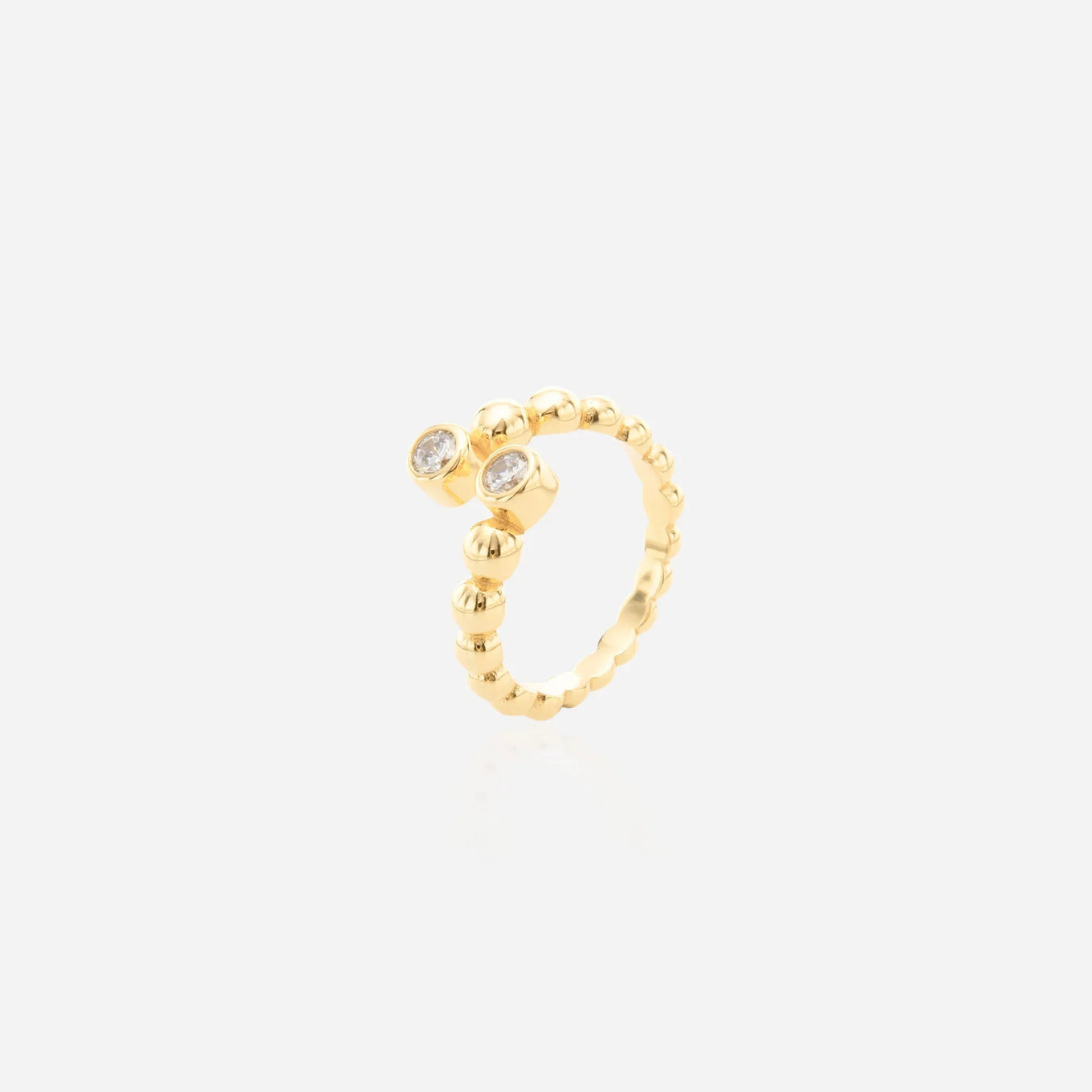
Instead of pushing over the knuckle, you slide an open ring from the side of the finger. No squeezing. No struggle. The Perlée Bypass Ring uses a Toi et Moi design — two separate bands that converge without closing — while the Serpentina Cuff Ring wraps around the finger like a snake, with the zircon-eye detail sitting on top. Both go on in under three seconds with zero knuckle contact.
2. Adjustable Bead Bands — The Flexible Fit
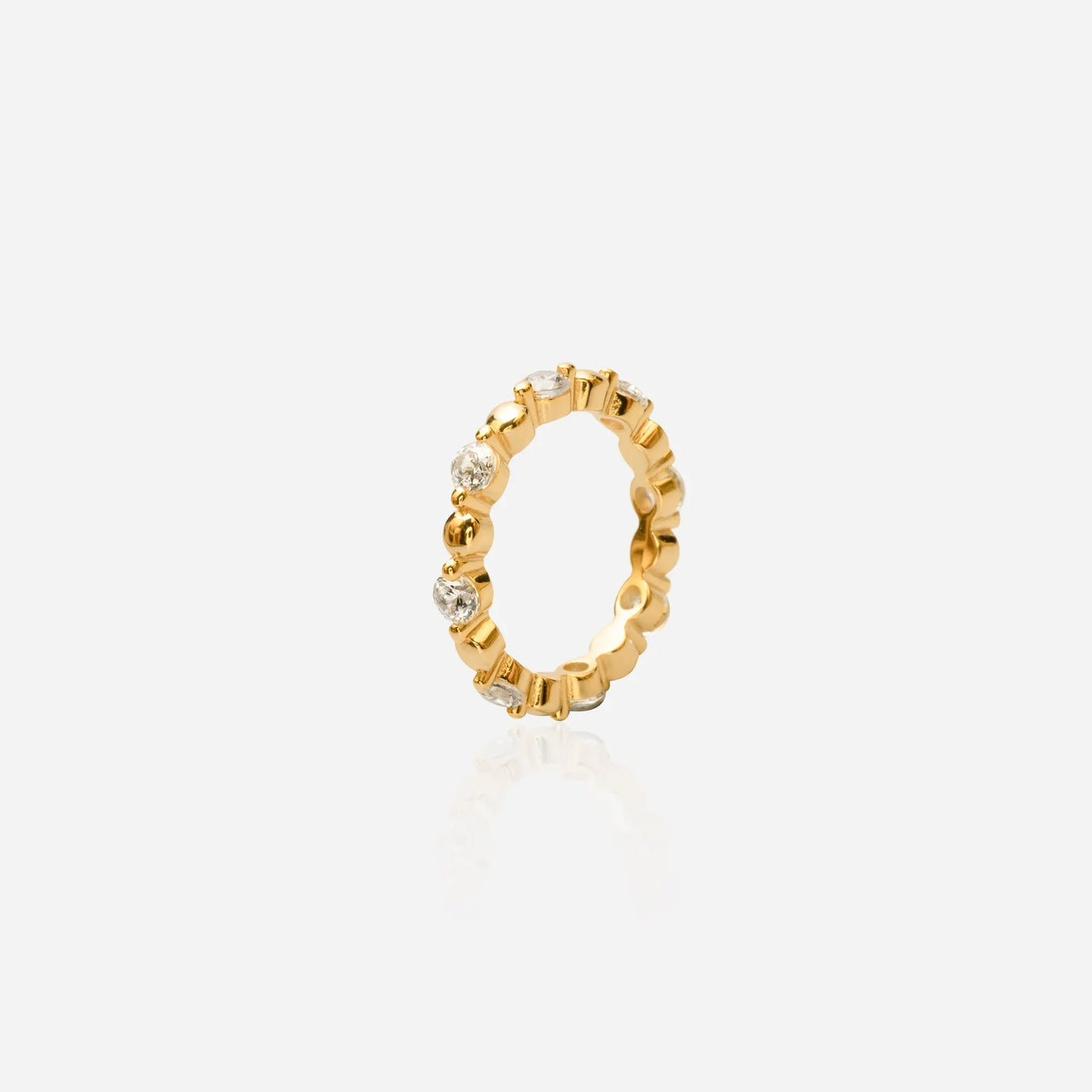
Unlike traditional solid bands, adjustable rings bend to fit your exact finger circumference — and that circumference can change throughout the day. The Gold Bubble Ring's flexible bead construction lets you gently expand or tighten the band by a full ring size in either direction. Morning swollen? Loosen it slightly. Evening fingers back to normal? Tighten. You're in control.
3. Wide-Band Open Rings — Stability Without Constriction
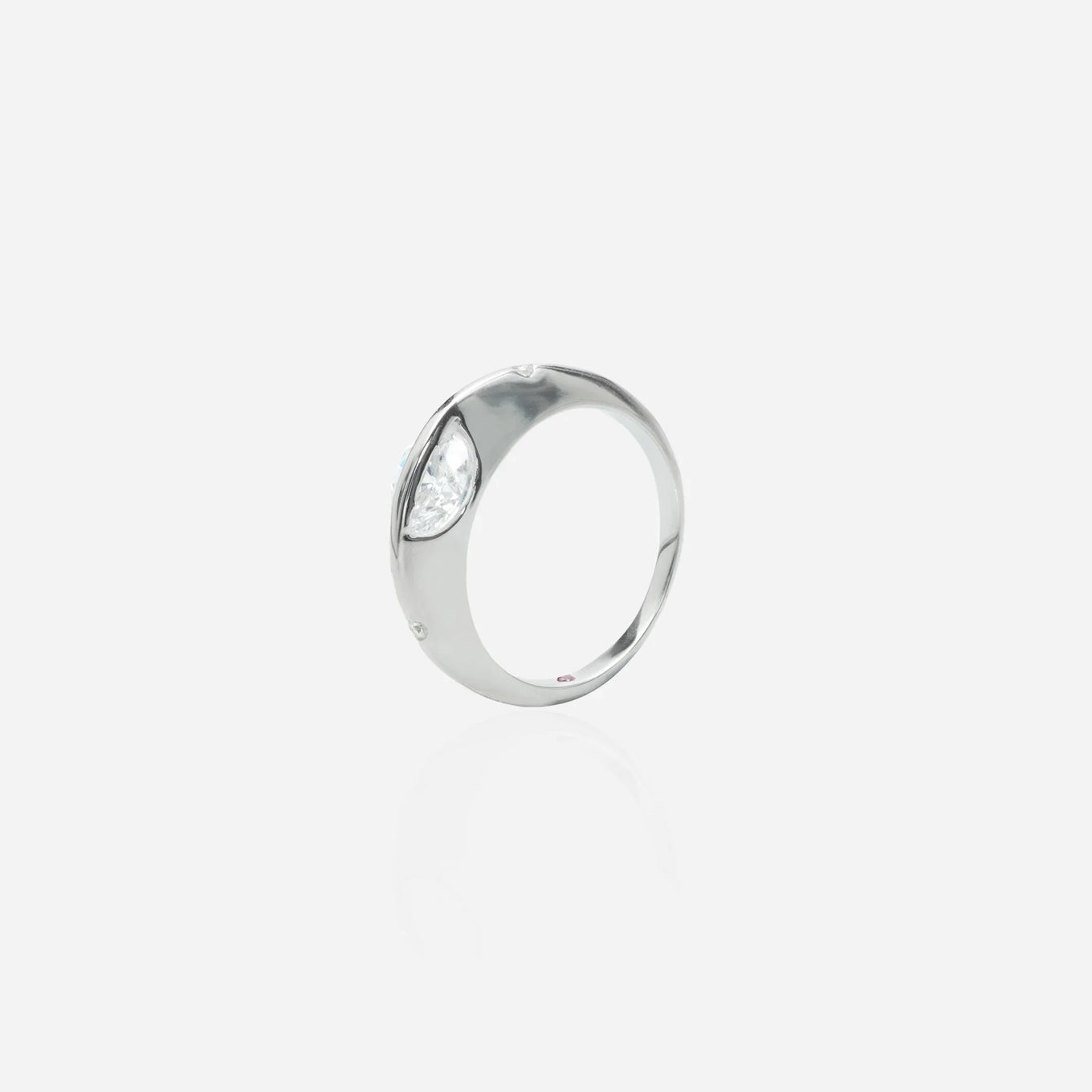
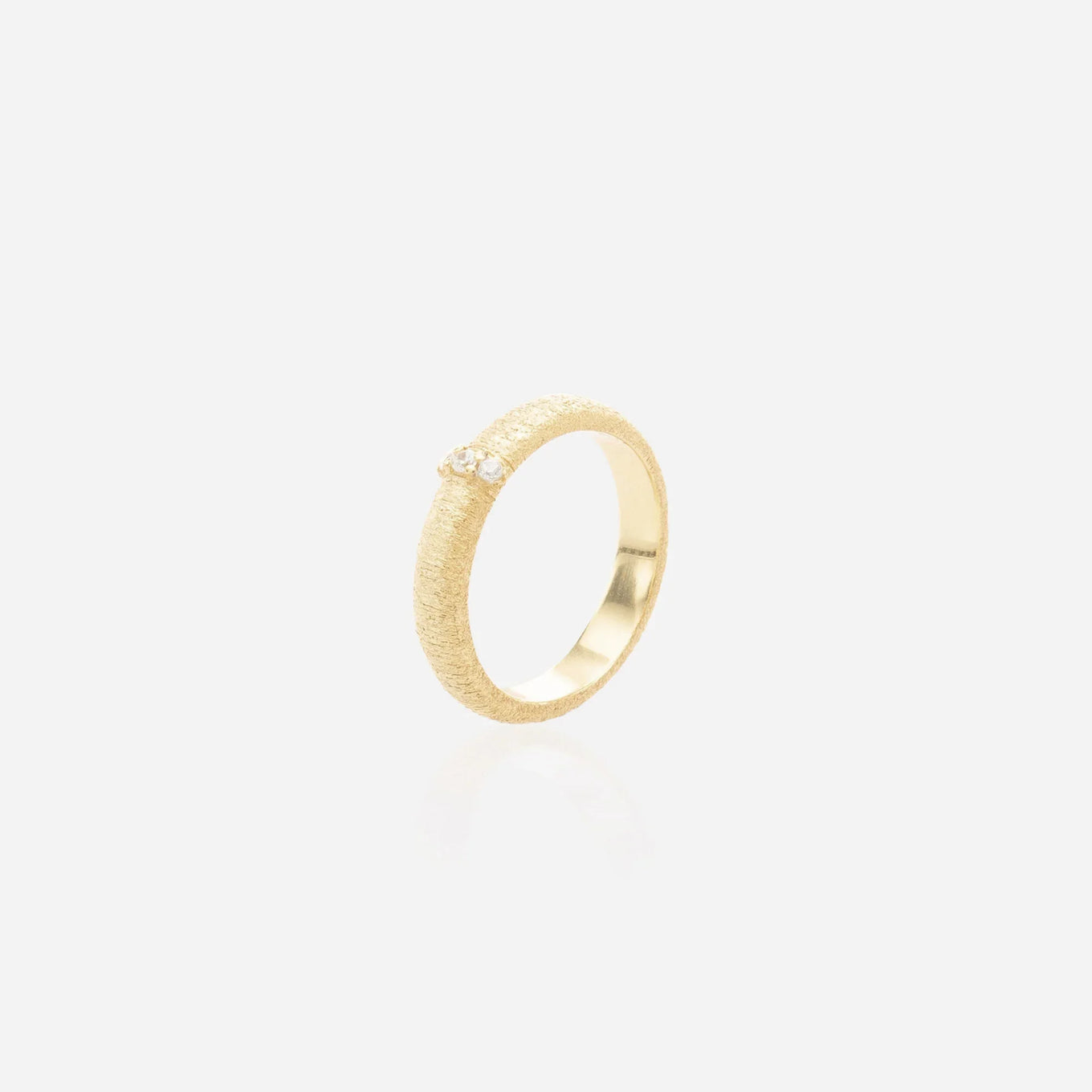
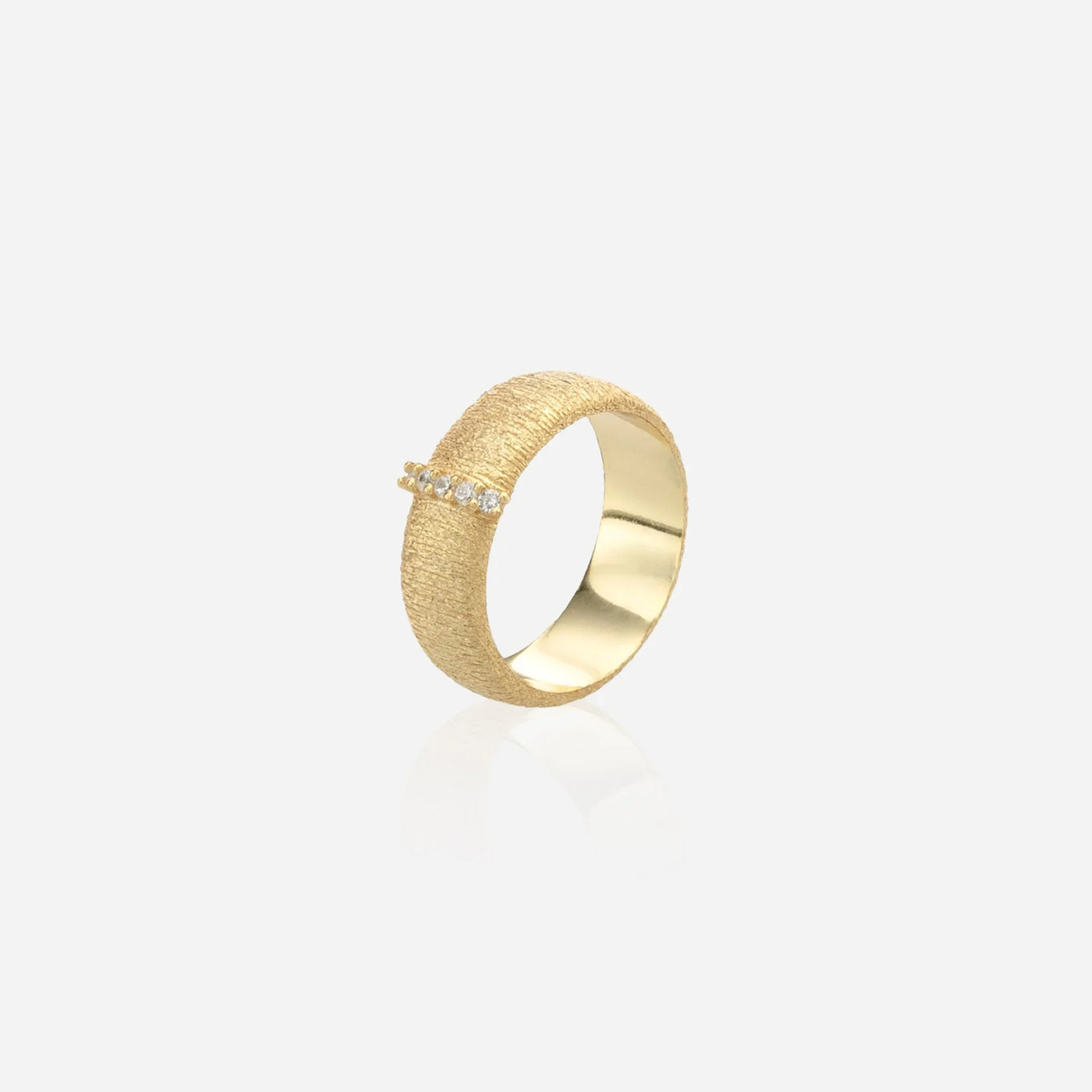
A narrow ring on an arthritic finger can dig in and feel like a wire cutting into swollen tissue. Wide bands distribute pressure across more surface area, which makes a huge difference in comfort. The Wide Band Gold Ring uses a 6mm band width versus the typical 2mm — that's three times the contact area, transforming pressure from sharp to barely noticeable.
4. Open Wrap Rings — The Zero-Closure Design
Some rings don't close at all — they wrap around your finger in a spiral or curve that never forms a complete circle. The Laurel Cuff Ring wraps like a victory laurel around the finger, open on one side, with a lab lab diamond accent catching light from every angle. It's impossible to get stuck because it's never fully enclosed.
5. Tempo Asymmetric Open Rings — Modern Minimalism
The Tempo Ring features a deliberate gap — an architectural pause between two gold ends — that doubles as the easiest entry point for arthritic fingers. Slide it on from the side, and the asymmetric design makes the gap look intentional rather than functional — even though functionality was the design goal.
Why Metal & Weight Matter for Arthritic Hands
Ring weight affects arthritic hands more than people realize. A heavy solid gold ring pulls downward on swollen joints throughout the day — gravity doing what inflammation already started. Meanwhile, the wrong base metal can trigger skin reactions on hands already sensitive from arthritis-related skin changes.
The weight sweet spot: A ring should weigh between 1.5–4 grams for comfortable all-day wear. Anything over 6 grams — common in solid gold statement rings — becomes a gravitational burden on inflamed joints. A sterling silver ring with 18K gold plating weighs approximately 2–3.5g in standard sizes: heavy enough to feel substantial, light enough to forget you're wearing it.
Why nickel-free matters doubly for arthritis: Many arthritis treatments — topical NSAIDs, corticosteroid creams — can increase skin sensitivity. Nickel, the most common jewelry allergen, can trigger contact dermatitis on skin that's already compromised. Sterling silver (Ag925, 92.5% pure silver) contains no nickel — it's alloyed with copper, which is far less reactive and far more biocompatible than nickel or brass.
The American Academy of Dermatology (AAD) recommends nickel-free jewelry for anyone with known metal sensitivity — a recommendation that becomes even more important when topical medications are part of your daily routine.
The ELARAMUSE Standard
We believe jewelry should be for everyone — including hands that don't bend the way they used to. Every adjustable and open-style ELARAMUSE piece is engineered for side-entry wear, built on lightweight sterling silver, and plated with 0.5-micron 18K gold. Because dignity shouldn't depend on dexterity.
| Feature | Specification |
|---|---|
| Base Metal | Solid Ag925 Sterling Silver (92.5% pure silver) — lightweight & nickel-free |
| Plating | 0.5-micron 18K Gold Plating (Premium-grade) |
| Nickel Content | Ni <0.01% — 100% Nickel-Free, Hypoallergenic, sensitive-skin safe |
| Weight Range | 1.5–4g per ring — lightweight enough for all-day comfort |
| Open Styles | Cuff rings, bypass rings, adjustable bead bands, open wrap bands |
| Finish | Triple-layer protective coating — shower-safe, sweat-proof |
Beyond Rings: Bangles, Cuffs & Necklaces That Don't Require Fine Motor Skills
Arthritis doesn't just affect ring fingers — clasps, chains, and small fasteners can be equally frustrating. Here's how to build a full easy-wear jewelry rotation:
Hinged Bangles: Traditional bangles require you to squeeze your entire hand through — painful when knuckles and wrist joints are stiff. Hinged bangles solve this with a side-opening mechanism and a secure click closure that requires one press, not two hands of dexterity. The Rose Stem Hinged Bangle opens with a gentle side-press — unlike lobster clasps that demand precise pinching.
The Moire Bangle, a slip-on cuff with a textured water-ripple surface, requires zero mechanism operation at all — just slide it over the wrist from the narrowest angle.
Open Cuff Bracelets: Like open rings, open cuff bracelets bypass the "squeeze through" problem entirely. The Gold Open Cuff Bracelet with Austrian crystal pearls slides onto the wrist from the side — no clasp, no hinge, no mechanism — in under two seconds. For anyone who's ever abandoned a beautiful bracelet because they couldn't work the clasp, this is the solution.
Magnetic and Long-Chain Necklaces: Necklaces with standard spring-ring or lobster clasps require pincer-grip precision — one of the first fine motor skills to diminish with hand arthritis. Instead, choose long-chain necklaces (24–30 inches) that slip over the head without unclasping, or look for magnetic closures that connect with a gentle touch. A necklace that goes over your head is a necklace you'll actually wear.
Behind the Design: The Perlée Bypass Ring was born from watching my grandmother struggle with her wedding band every morning — swollen knuckles, bent fingers, a ring she loved but couldn't wear without pain. I thought: what if a ring didn't have to be a circle? What if it could just... meet in the middle? The gap isn't a flaw — it's the entire point. — Joyce, Founder
Editor's Picks: Easy-Wear Jewelry for Every Occasion
Perlée Bypass Ring — The Toi et Moi open design that slides on from the side. Lab diamonds tip each end of the converging bands. For anyone who's tired of wrestling rings over knuckles.
Gold Bubble Ring — Flexible bead band adjusts to your finger's daily fluctuations. Bezel-set lab diamonds stay put through everything — no snagging, no lost stones.
Laurel Cuff Ring — Open wrap design inspired by victory laurels. lab lab diamond accent.
Slips on in one motion — no squeezing, no twisting, no frustration.
Rose Stem Hinged Bangle — Side-opening hinge mechanism means you never squeeze your hand through. Hinged bangles are the single most arthritis-friendly bracelet format — and this one is the most graceful version we've made.
FAQ: Jewelry & Arthritis — Real Questions From Real Hands
Q: Can I resize an adjustable ring myself, or do I need a jeweler?
Adjustable bead bands like the Gold Bubble Ring can be gently expanded or tightened at home — hold the band with both thumbs and apply slow, even pressure to widen or close. No jeweler needed. Open cuff rings (Perlée Bypass, Laurel Cuff) don't need resizing at all — they're one-size-fits-most by design.
Q: Will an open ring fall off my finger?
A properly designed open ring won't fall off because the gap is smaller than the narrowest part of your finger when the ring is in position. The Perlée Bypass Ring's gap is 3–4mm — the finger's width at the base is typically 15–19mm. It's physically impossible for the ring to slip off without you deliberately removing it sideways.
Q: I have severe rheumatoid arthritis — can I wear any ring at all?
Yes — and we strongly recommend sticking to open cuff rings specifically. Unlike adjustable bands that still require some manipulation, open cuff rings require zero finger dexterity: slide on from the side, slide off from the side. The Laurel Cuff Ring and Serpentina Cuff are our top recommendations for RA because they demand the least hand movement of any ring style we make.
Q: Are hinged bangles secure enough for daily wear?
The hinge-and-click mechanism on our Rose Stem Hinged Bangle uses a tensioned stainless steel spring pin — the same mechanism used in high-end watch clasps. It's engineered for thousands of open-close cycles and audibly clicks when secure. We've tested it through eight-hour workdays, yoga classes, and even sleep — zero accidental openings.
Jewelry should make you feel like yourself — never like your body is failing you. If your hands have changed, your jewelry can too. Find the piece that meets you where you are.
— Joyce, Founder of ELARAMUSE