The Complete Amethyst Jewelry Guide (2026)
Quick Answer: Amethyst jewelry combines a Mohs 7 durability with the violet hues of February's birthstone — tough enough for 24/7 wear, safe to clean with mild soap, and naturally pairs with silver and gold settings.
Amethyst is February's birthstone with a Mohs 7 hardness — tough enough for daily wear and rich with a history spanning ancient Greek mythology to modern crystal healing. This guide covers everything: what amethyst actually is, how to tell real stones from fakes, the best ways to style purple gemstone jewelry in 2026, and the care routine that keeps your pieces brilliant for years.
In This Guide
- What Is Amethyst? A Gemologist's Overview
- Key Terms You Should Know
- Amethyst Hardness & Durability: Can It Survive Daily Wear?
- Amethyst Meaning, History & Symbolism
- How to Tell Real Amethyst From Fake
- How to Style Amethyst Jewelry Without Looking Outdated
- The ELARAMUSE Standard
- Behind the Design: How We Select Every Stone
- Caring for Amethyst Jewelry: Step-by-Step
- Amethyst Jewelry FAQ
- Editor's Picks
What Is Amethyst? A Gemologist's Overview
Amethyst is a violet variety of quartz — the same mineral family as citrine, rose quartz, and smoky quartz. Its purple color comes from trace amounts of iron (Fe³⁺) irradiated by natural geological processes over millions of years. The GIA (Gemological Institute of America) classifies amethyst as a Type I gemstone, meaning it's typically eye-clean — you won't find visible inclusions in a well-cut piece.
Color ranges from pale lilac to deep royal purple, with the most valuable stones displaying a rich, saturated violet with flashes of red or blue. The finest amethyst historically came from Russia's Ural Mountains — though today Zambia and Brazil produce the bulk of commercial-grade stones. Zambian amethyst, prized for its deep velvety purple with blue undertones, sits at the top of the quality spectrum.
Amethyst ranks 7 on the Mohs hardness scale. What does that mean practically? It's harder than steel (Mohs 4–4.5), glass (Mohs 5.5), and opal (Mohs 5.5–6.5) — but softer than sapphire (Mohs 9) and diamond (Mohs 10). You can wear an amethyst ring every day without panic, but you shouldn't toss it into a jewelry box with diamond earrings and expect a scratch-free finish.
Key Terms You Should Know
- Amethyst: A violet variety of quartz (SiO₂) colored by iron impurities and natural radiation — Mohs hardness 7, February's official birthstone.
- Mohs Hardness Scale: A 1–10 mineral scratch resistance scale created by Friedrich Mohs in 1812. Diamond = 10, talc = 1. Quartz (amethyst) = 7 — hard enough for daily jewelry but it can be scratched by harder gems.
- Ag925 Sterling Silver: An alloy of 92.5% pure silver and 7.5% other metals (usually copper) — the international standard for quality silver jewelry. Marked with "925" stamp.
- Birthstone: A gemstone traditionally associated with each calendar month. Amethyst represents February, followed by aquamarine in March and diamond in April.
- Quartz Family: A silica mineral group that includes amethyst (purple), citrine (yellow-orange), rose quartz (pink), smoky quartz (brown-gray), and clear rock crystal.
- Heat Treatment: A common gemstone enhancement. Most commercial citrine is actually heat-treated amethyst — natural heating in the earth or lab-applied heat turns purple amethyst golden-yellow.
Amethyst Hardness & Durability: Can It Survive Daily Wear?
Yes — with one condition you should know. At Mohs 7, amethyst handles most daily challenges without complaint. Your desk won't scratch it. Neither will your keys, your phone, or your stainless steel water bottle. But your diamond engagement ring? Keep it on a different finger — diamond at Mohs 10 will leave visible marks on amethyst without hesitation.
This is where the setting matters at least as much as the stone itself. A bezel or semi-bezel setting protects amethyst edges from accidental knocks, while a high-prong solitaire leaves the stone fully exposed. If you're building a 24/7 amethyst stack — something that transitions smooth from gym-to-office without a second thought — you want a setting that hugs the stone, not one that dangles it like a liability.
Unlike cheap plated brass jewelry that develops green skin marks and flakes within weeks, an amethyst piece set in solid Ag925 sterling silver with 0.5-micron 18K gold plating stays intact through sweat, hand washing, and sleep. The base metal matters more than the stone here — amethyst can handle daily life, but a brass-base ring won't survive your first sweat-proof workout without corrosion.
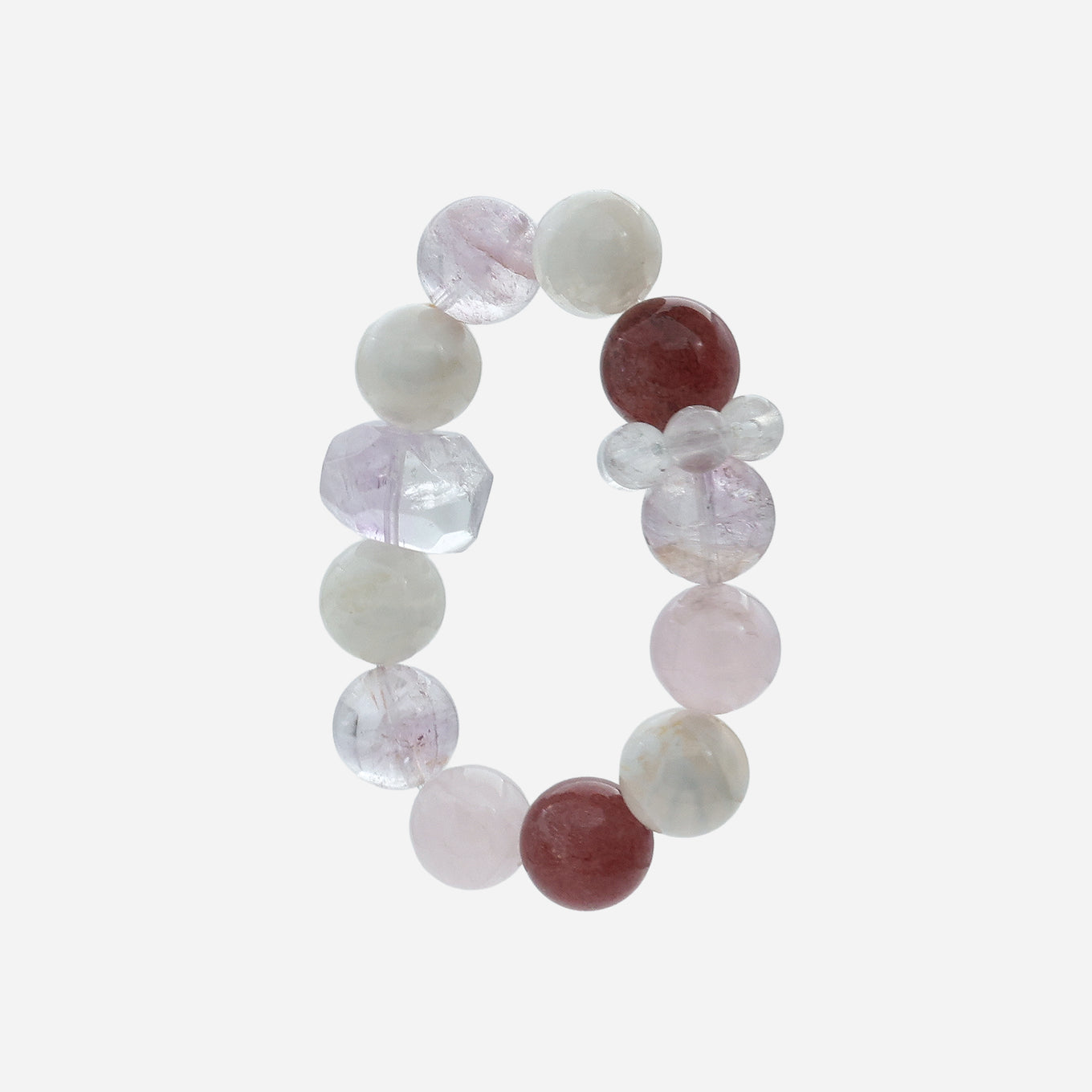
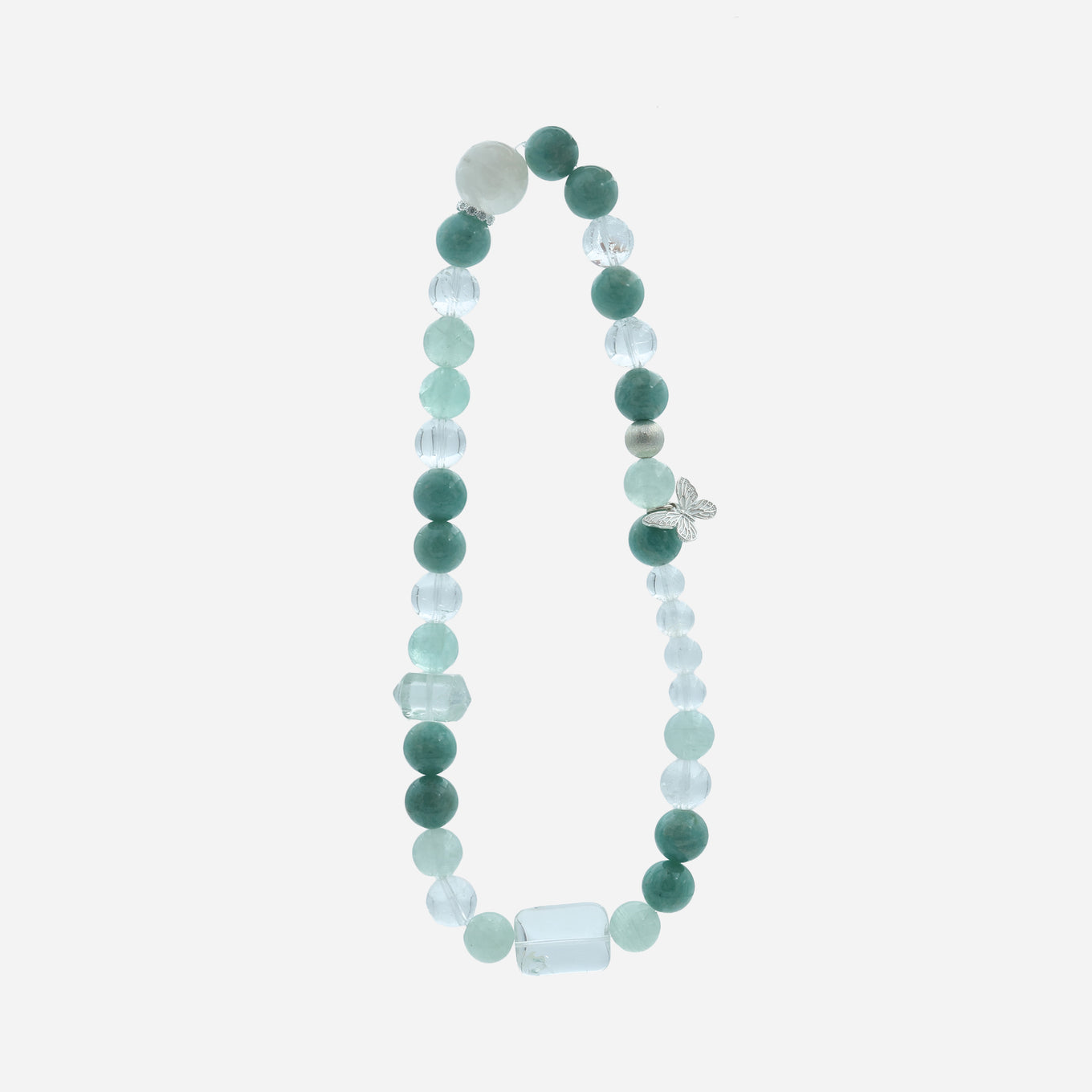
For a truly low-maintenance option, our Beaded Bracelet | Crystal Multi-Gemstone Stack pairs amethyst beads with complementary stones on a comfortable stretch cord — zero hardware, zero fuss. It's the kind of piece you put on once and forget about, which is exactly what shower-safe, sleep-safe jewelry should feel like.
Amethyst Meaning, History & Symbolism
The word "amethyst" comes from the ancient Greek amethystos — "not intoxicated." Greek mythology tells the story of a maiden named Amethystos who was turned into a quartz crystal by the goddess Artemis to protect her from Dionysus, the god of wine. Dionysus, in remorse, poured wine over the crystal, staining it purple. From that point on, Greeks wore amethyst amulets and drank from amethyst goblets, believing the stone prevented drunkenness.
Medieval European royalty adopted amethyst as a symbol of power and divine right. The stone appears in the British Crown Jewels — the Royal Collection Trust records multiple amethyst-set items worn by British monarchs throughout centuries of coronations and state occasions. Bishops wore amethyst rings as a symbol of spiritual purity and ecclesiastical authority, lending the stone its centuries-long association with clarity of mind and moral conviction.
Today, amethyst's meaning has expanded beyond royalty and temperance. Crystal practitioners associate it with the crown chakra — intuition, mental clarity, and emotional equilibrium. Whether you read these connections as metaphor or something more, the consistent thread across 2,500 years of human culture tells the same story: people reach for amethyst when they want to feel calm, clear, and protected.
This symbolic depth is why amethyst resonates so strongly in talismanic jewelry. A piece like our Arcana Key Necklace | Serpent & Fleur-de-Lis Talisman layers botanical, serpent, and key motifs over sterling silver — an object that doesn't just look beautiful but carries intention for the person wearing it. You can wear it as a personal talisman without buying into any specific belief system — the weight and presence of a well-made piece is its own quiet power.
How to Tell Real Amethyst From Fake
The market is flooded with synthetic amethyst, dyed glass, and resin imitations — especially at lower price tiers. Here are five checks you can do at home without any special equipment:
1. Temperature test. Real amethyst feels cool to the touch and warms slowly. Glass and resin warm up almost immediately in your palm. Hold the stone against your inner wrist — if it stays cool for 5–10 seconds, you're likely holding quartz.
2. Bubble check. Hold the stone up to a bright light source. If you see perfectly round bubbles trapped inside, you're looking at glass, not amethyst. Natural amethyst may contain internal fractures or "veils" (feather-like inclusions), but never perfectly spherical bubbles.
3. Color zoning. Natural amethyst almost always shows uneven color distribution — darker and lighter zones visible under magnification, especially near the crystal edges. Perfectly uniform purple with zero variation suggests synthetic or treated material.
4. Scratch test (careful). Amethyst at Mohs 7 scratches glass (Mohs 5.5). If you have a spare piece of glass — a jar, a picture frame edge — gently drag the stone across. Glass leaves a mark? The stone is harder than glass. Glass scratches the stone? You're holding something softer than quartz, probably resin or calcite dyed purple.
5. Price sanity check. If a "genuine amethyst" ring is priced under $20 brand new, you're almost certainly buying dyed quartz or glass. Natural amethyst is abundant compared to ruby or emerald, but it still commands a floor price — quality cutting, setting, and genuine material add up.
Unlike mass-market retailers that rely on lab-created or dye-enhanced stones without disclosure, every ELARAMUSE piece uses genuine natural gemstones. Our amethyst beads and accent stones are selected for natural color and clarity — we pass on stones with synthetic-looking uniformity or dye saturation.
How to Style Amethyst Jewelry Without Looking Outdated
Purple gemstone jewelry carries a reputation problem — too often associated with heavy Victorian brooches or costume-level pieces from decades past. But in 2026, amethyst styling has shifted dramatically toward layered minimalism. The key principle: let the stone's natural color do the heavy lifting. Don't over-accessorize around it.
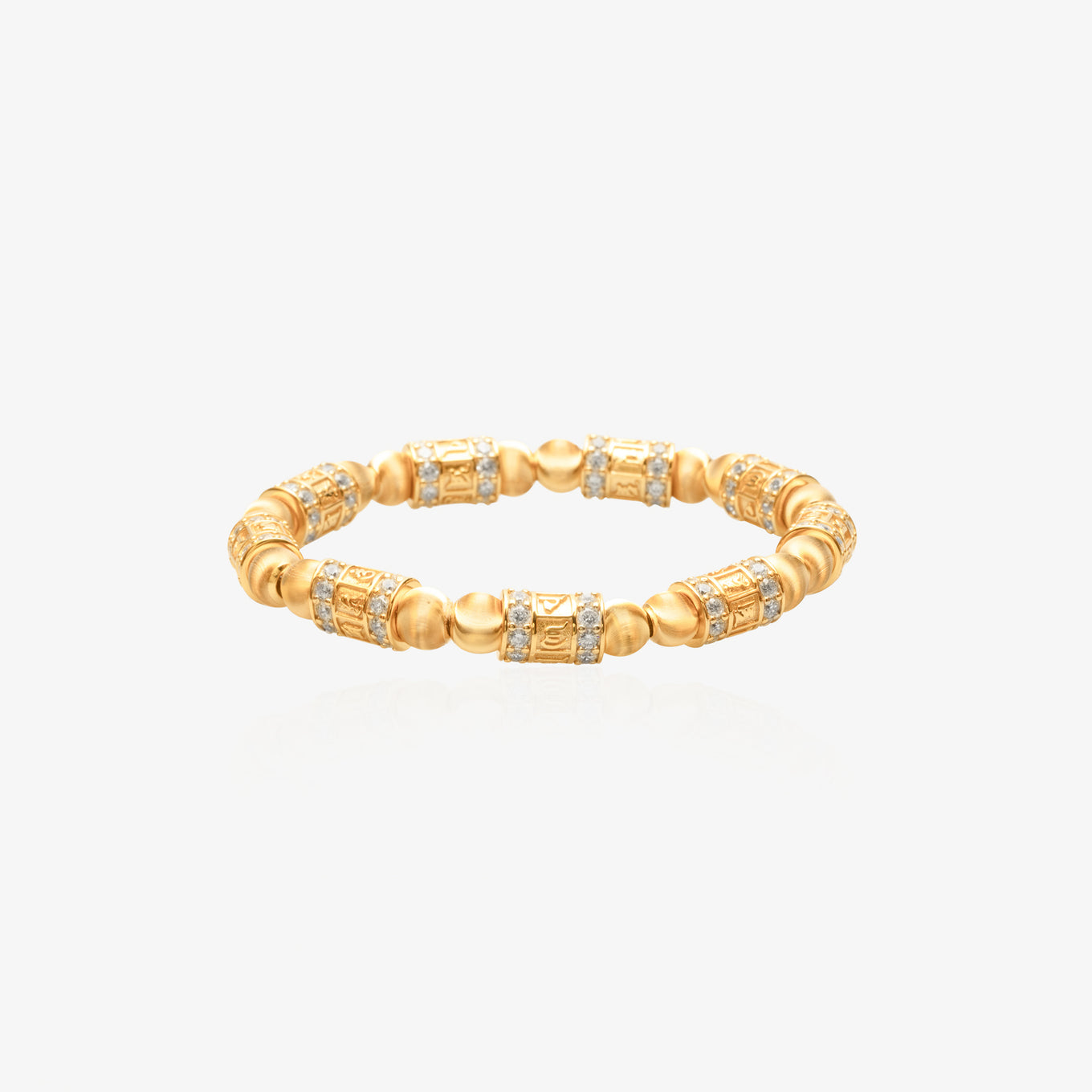
Stack with neutrals. Amethyst's violet pops beautifully against warm metallics — Premium 18K gold plating creates a regal contrast, while silver-toned settings lean cooler and modern. Our Gold Beaded Bracelet | Mantra Prayer Wheel & Diamond adds a warm-tone anchor that balances purple stones without competing. Wear one amethyst piece as your focal point, then stack 1–2 metal-only pieces around it.
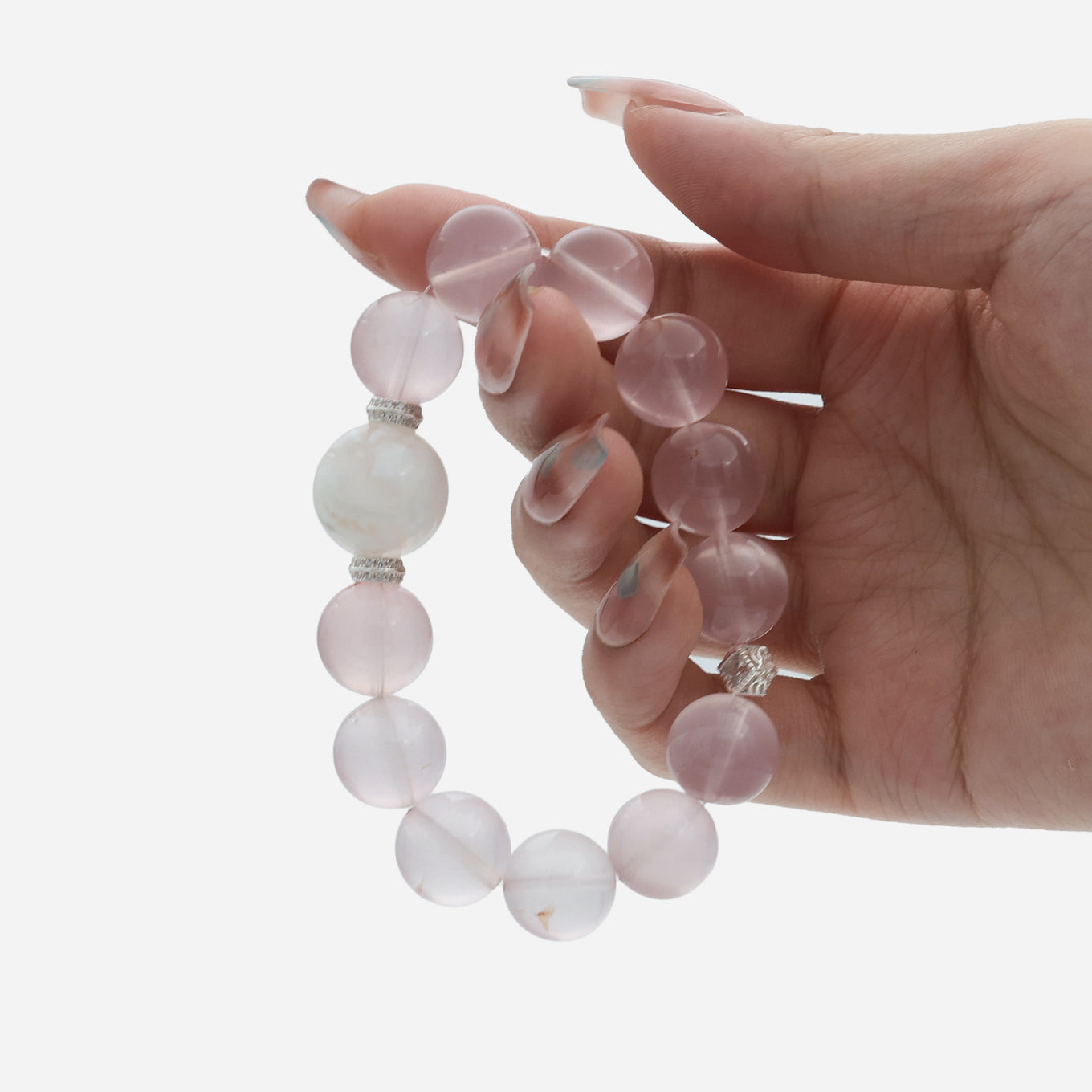
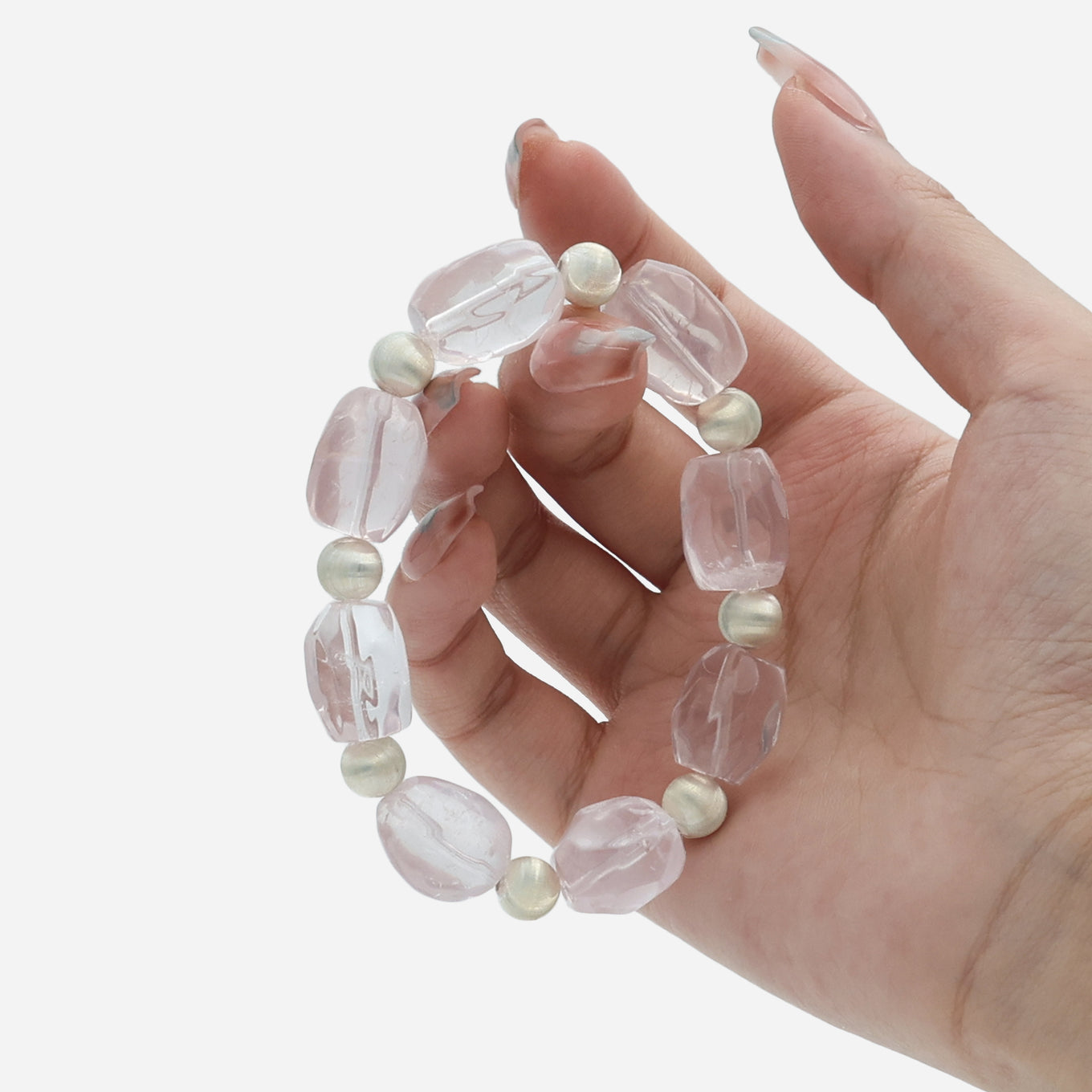
Mix gemstone families. Amethyst plays surprisingly well with rose quartz (pink) and white quartz (milky-clear) — both from the same quartz mineral family, so the visual harmony comes naturally. A stack combining purple, pink, and white quartz reads intentional rather than chaotic. Our Rose Quartz Silver Bracelet | Natural Organic Gemstone and White Quartz Bracelet | Snow Ghost Phantom are natural stacking companions for any amethyst bracelet — same crystal family, complementary palette.
Necklace layering rule. An amethyst pendant at 18 inches works as a standalone piece with a crew neck or v-neck. For layering, pair it with a longer chain (22–24 inches) in a simpler metal design — the Compass Rose Necklace | Spinning Fortune Bead | Talisman sits beautifully at a longer drop, creating a two-tier look that frames the face without clutter.
The ELARAMUSE Standard
We believe jewelry should work as hard as you do — shower-safe, sleep-safe, and never a source of anxiety. Every ELARAMUSE piece is built on solid Ag925 sterling silver with 0.5-micron 18K gold plating, rigorously tested for real life. No brass shortcuts, no cheap flash plating that disappears after three wears, and absolutely no nickel — the number one cause of jewelry-related skin reactions.
Our approach to gemstones is equally uncompromising: we select every amethyst bead, accent stone, and centerpiece for natural character — visible color depth, organic inclusions, and the kind of subtle imperfections that distinguish a real stone from a factory clone. A perfectly uniform purple with no depth? We pass. It probably came from a lab.
| Feature | ELARAMUSE Specification |
|---|---|
| Base Metal | Solid Ag925 Sterling Silver (92.5% pure silver) |
| Gold Finish | 0.5-micron 18K Gold Plating (nickel-free) |
| Gemstone Type | Genuine Natural Amethyst (not dyed, not coated) |
| Hypoallergenic | 100% Nickel-Free — safe for sensitive skin |
| Water Resistance | Shower-safe & sweat-proof |
| Tarnish Resistance | Anti-tarnish treatment |
| Design Philosophy | Talismanic minimalism — wearable symbolism |
Behind the Design: How We Select Every Stone
I remember the first time I held a parcel of raw amethyst beads — a hundred tiny purple worlds, each one slightly different from the next. Some held blue-violet depths that shifted under different light. Others leaned burgundy, warm and wine-dark. A handful were too pale, too uniform, too... polite. Those went back.
At ELARAMUSE, stone selection isn't a QA checklist someone runs through in five minutes. It's the part of the design process that takes the longest and matters the most. For our gemstone bracelets, each bead gets individually inspected for color consistency within the strand — not identical, because identical looks synthetic — but harmonious. A bracelet should read as one continuous purple story, not five different chapters disagreeing with each other.
We also care about how the stone feels weight-wise on the wrist. Amethyst beads in the 4–8mm range hit the sweet spot — substantial enough to feel present, light enough for 24/7 wear. The Star Rose Quartz Bracelet | Snow Ghost Crystal | Petite Fit shows how we approach sizing: a smaller bead profile for smaller wrists, without sacrificing the visual presence of the stone.
If I had to name one thing I've learned after years of handling gemstone jewelry, it's this: a beautiful stone set poorly is forgettable. An ordinary stone set thoughtfully becomes a talisman. That's the difference between assembly and craft — and it's the only standard we accept.
Caring for Amethyst Jewelry: Step-by-Step
Amethyst is forgiving compared to opal or emerald, but it still benefits from a consistent care routine. The good news: you don't need ultrasonic cleaners, steam machines, or anything more complicated than what's already in your bathroom.
Daily cleaning. Wipe your amethyst piece with a soft, lint-free microfiber cloth after wearing — especially if you've applied lotion, perfume, or sunscreen. Product residue builds a film that dulls the stone's surface reflection over weeks and months.
Weekly deep clean. Fill a small bowl with lukewarm water and a single drop of mild dish soap. Soak the piece for 3–5 minutes. Gently brush around the stone setting with a soft-bristled toothbrush — focus on the crevices where dirt accumulates. Rinse thoroughly under running water and pat dry immediately with a microfiber cloth.
What to avoid. Never use ultrasonic cleaners on amethyst — the vibrations can exacerbate internal fractures you can't see. Avoid steam cleaners, bleach, acetone, and abrasive toothpaste. Keep amethyst away from prolonged direct sunlight, which can fade the stone's purple color over months and years of exposure.
Storage. Store amethyst pieces separately from harder gemstones (diamond, sapphire, ruby). A fabric-lined jewelry box with individual compartments or soft pouches prevents contact scratches. For silver-based pieces, include an anti-tarnish strip in your storage drawer — the Ag925 base stays brighter longer with minimal oxygen exposure.
Amethyst Jewelry FAQ
Q: Can I wear amethyst in the shower?
A: Yes — amethyst is water-safe. However, hard water mineral deposits can build up on the stone surface over time, creating a cloudy film. Rinse with filtered water after showering whenever possible, or do a weekly deep clean as described above to prevent buildup.
Q: Is amethyst safe for sensitive skin?
A: The stone itself is hypoallergenic — quartz doesn't react with skin. The variable is the metal setting. ELARAMUSE uses Ag925 sterling silver with 0.5-micron 18K gold plating and zero nickel, making our amethyst pieces suitable for sensitive-skin wearers who react to costume jewelry.
Q: Can amethyst go in a pool or hot tub?
A: Chlorine and bromine are corrosive to both the stone surface and the metal setting. While a brief accidental splash won't ruin your piece, consistent pool exposure degrades the gold plating and can etch the amethyst surface. Remove jewelry before swimming.
Q: Amethyst vs. purple sapphire — which is better for an engagement ring?
A: Purple sapphire (Mohs 9) is significantly harder and more scratch-resistant than amethyst (Mohs 7), making it the better choice for an engagement ring worn daily for decades. Amethyst works beautifully for occasional-wear rings, pendants, earrings, and bracelets — any piece that doesn't face the constant abrasion a ring finger encounters.
Q: Does amethyst lose its color over time?
A: Natural amethyst can fade with prolonged UV exposure — think years of daily direct sunlight, not occasional beach days. The color change is permanent once it occurs. Store amethyst pieces in a closed box or drawer when not wearing them, and avoid displaying them on open shelving in sun-facing rooms.
Editor's Picks: ELARAMUSE Gemstone Favorites
Each piece below earned its spot through a combination of stone quality, design intention, and real-world wearability — not because it photographs well. These are the pieces our team reaches for first.
Beaded Bracelet | Crystal Multi-Gemstone Stack — The ultimate quartz-family sampler. Amethyst shares the strand with complementary stones, creating a bracelet that shifts through the purple-to-clear spectrum. Stretch cord means zero clasp struggles. Best for: everyday stacking with minimal effort.
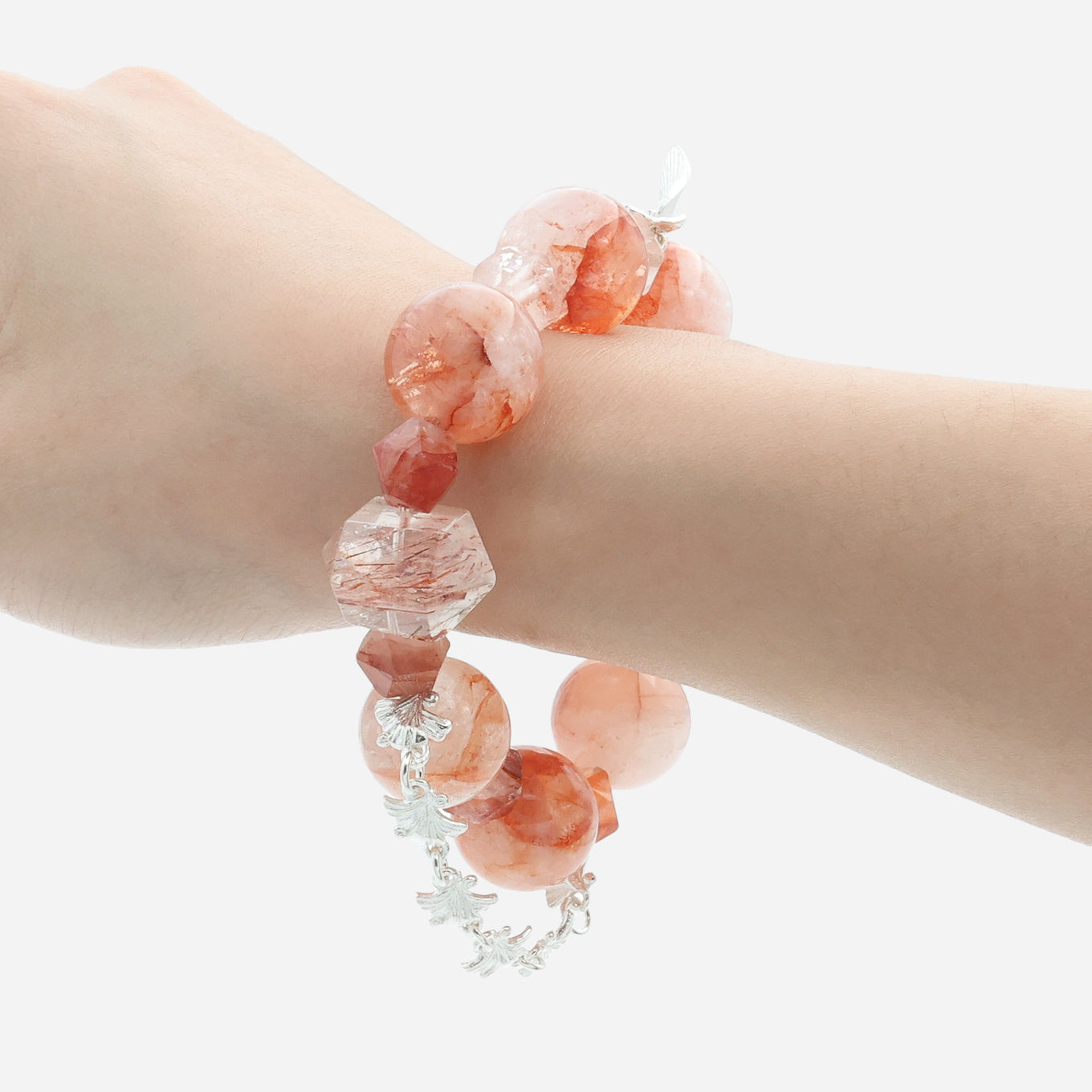
Red Rutilated Quartz Bracelet | Fire Talisman — While not amethyst, this piece earns its place as the bold counterpoint in a gemstone stack. The red rutile needles threading through clear quartz create a visual contrast that makes amethyst's violet feel deeper by comparison. Best for: adding fire-and-ice contrast to a purple-dominant stack.
Arcana Key Necklace | Serpent & Fleur-de-Lis Talisman — A symbolic anchor piece with botanical and serpentine engraving. No amethyst here either — but the talismanic intention pairs perfectly with February birthstone energy. Best for: layering at 18 inches as a grounding focal pendant above longer chains.
Compass Rose Necklace | Spinning Fortune Bead | Talisman — The spinning bead mechanism adds an interactive element that makes this piece feel personal. Best for: a long-drop layer (22–24 inches) that adds movement and dimension beneath an amethyst pendant or shorter talismanic necklace.
Find the piece that speaks to you. Because in the end, the right talisman isn't the one someone else picked — it's the one you reach for without thinking.
Be your own muse.