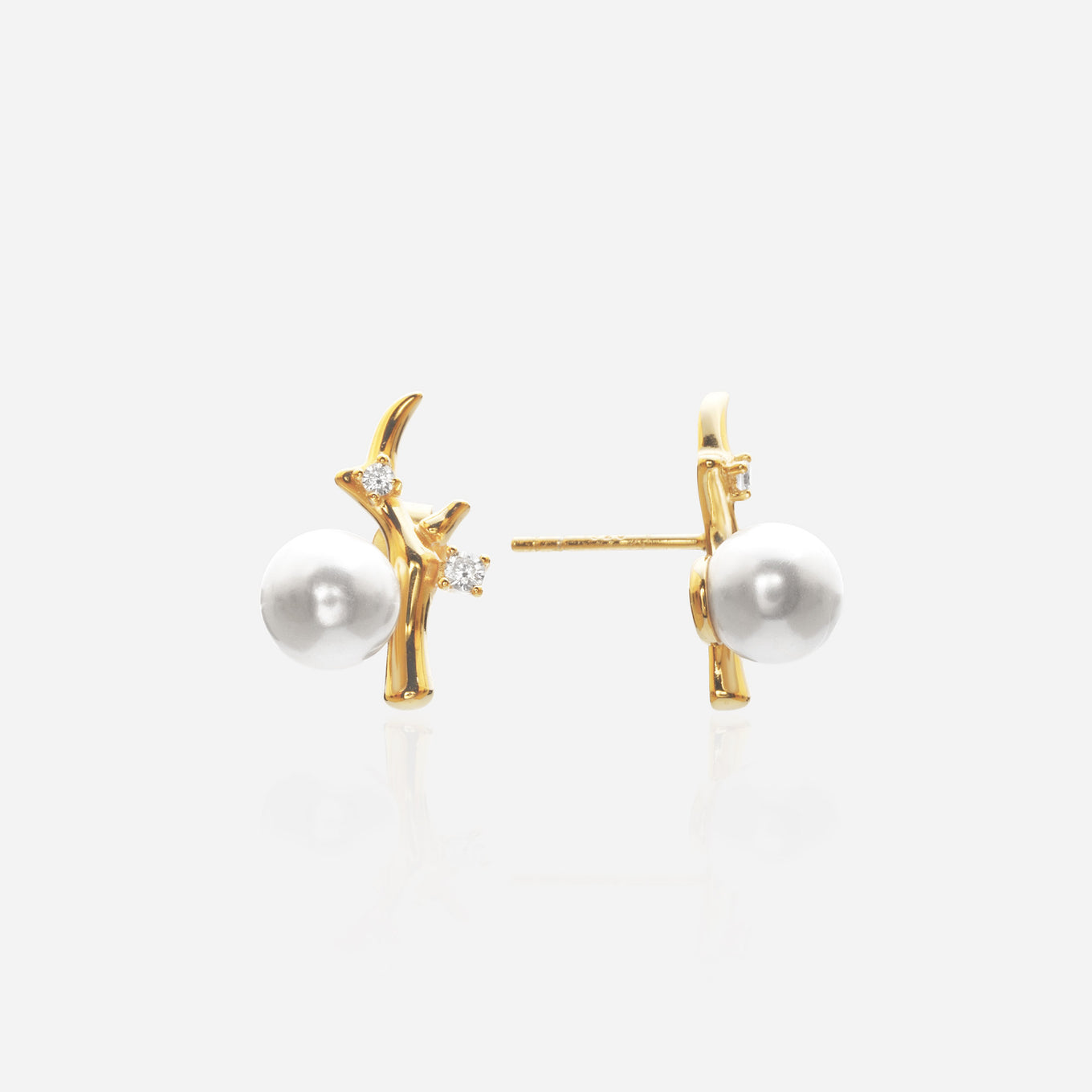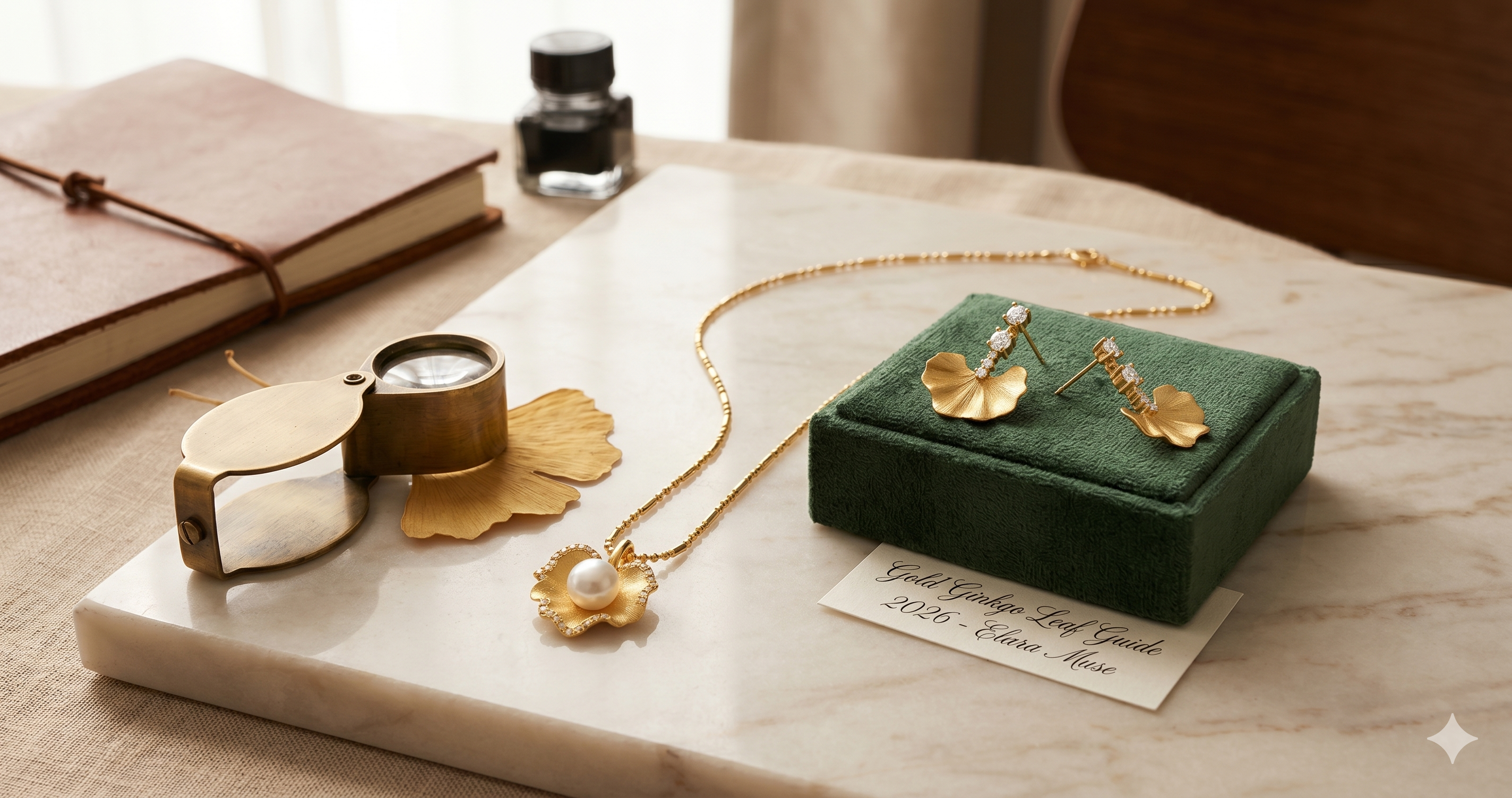
Gold Ginkgo Leaf Jewelry Guide 2026: Symbolism, Styling, and How to Choose
Quick Answer: Gold ginkgo leaf jewelry takes one of nature's oldest leaf motifs—the fan-shaped ginkgo biloba, a tree species that has survived for over 270 million years—and translates it into wearable form.
The warm gold finish highlights every vein and fold of the leaf, making these pieces stand out as both everyday signatures and special-occasion choices. From dangle earrings that catch light with every turn of your head to hammered pendant necklaces with a hand-worked texture, gold ginkgo jewelry gives you a piece of living history you can wear.
📑 In This Guide
- Why Does the Ginkgo Leaf Motif Endure After Thousands of Years?
- Three Reasons Gold Ginkgo Jewelry Deserves a Spot in Your Collection
- Gold Ginkgo Jewelry Collection: A Side-by-Side Comparison
- Key Terms: Ginkgo Jewelry Vocabulary
- Three Ways to Style Gold Ginkgo Jewelry
- The ELARAMUSE Standard: What Goes Into Every Ginkgo Piece
- Behind the Design: How a Ginkgo Leaf Becomes Jewelry
- FAQ: Gold Ginkgo Jewelry Questions, Answered
- Be Your Own Muse
- What We Believe
- References
Why Does the Ginkgo Leaf Motif Endure After Thousands of Years?
Here's something most jewelry guides skip: the ginkgo tree is a living fossil. It predates flowering plants, survived the extinction event that wiped out the dinosaurs, and six individual ginkgo trees at Hiroshima's atomic bomb site regrew from their roots within months. This is not flowery metaphor—it is documented botanical history. When you wear a ginkgo leaf, you are wearing a symbol of resilience that has actual biological precedent.
The leaf itself is unmistakable: a fan shape with radiating veins, often split into two lobes (which gives the species its name — biloba means "two-lobed"). In East Asian art, the ginkgo appears in paintings, ceramics, and textiles dating back to the Song Dynasty. The Victoria and Albert Museum holds a 14th-century Chinese lacquer box in its collection with ginkgo motifs carved into the surface—proof that the leaf's design appeal is centuries old, not a recent trend.
In jewelry, the ginkgo leaf works because its silhouette is recognizable at any scale. A tiny stud still reads as a ginkgo. A large dangle earring announces itself from across the room. Unlike more complex floral motifs—roses, lilies, orchids—the ginkgo needs no detail to be identified. Two lobes and radiating lines, and you're done. That economy of form is what makes it a designer's dream.
Three Reasons Gold Ginkgo Jewelry Deserves a Spot in Your Collection
I've studied botanical jewelry for this guide, and here is what actually matters when choosing gold ginkgo pieces:
- A motif that works at any size. A ginkgo leaf renders clearly on a 6mm stud, a 20mm dangle, or a 35mm pendant. You do not need magnification to know what it is. That means the same motif can anchor a quiet everyday look or a dinner-party statement—your choice.
- Gold brings out the leaf's texture. The ginkgo leaf has fine, radiating veins that catch light differently depending on the angle. A gold finish—especially on hammered or textured surfaces—amplifies this effect by reflecting light unevenly across the fan. Polished gold on smooth leaves gives a different, more mirror-like result. Both work; they just create different moods.
- It bridges botanical and geometric jewelry. Leaves are organic. Gold finishes often lean formal. A gold ginkgo earring sits at the intersection of both worlds, which means it pairs with floral dresses and structured blazers equally well. One piece, two wardrobes.
Gold Ginkgo Jewelry Collection: A Side-by-Side Comparison
ELARAMUSE offers five gold-finished botanical pieces that feature leaf motifs. Here is how they compare across the factors that matter most:
| Product | Type | Size | Finish | Best For | Key Detail |
|---|---|---|---|---|---|
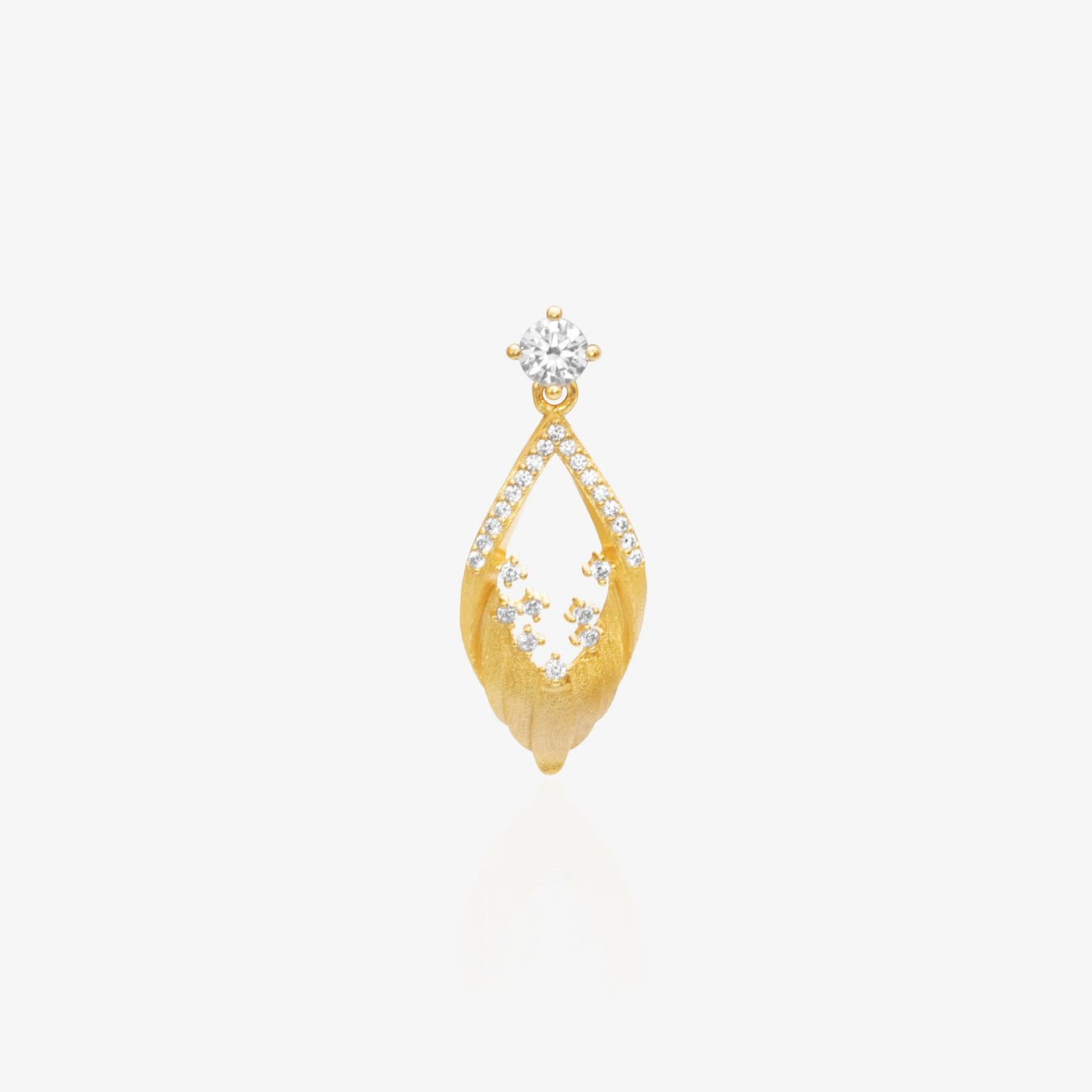
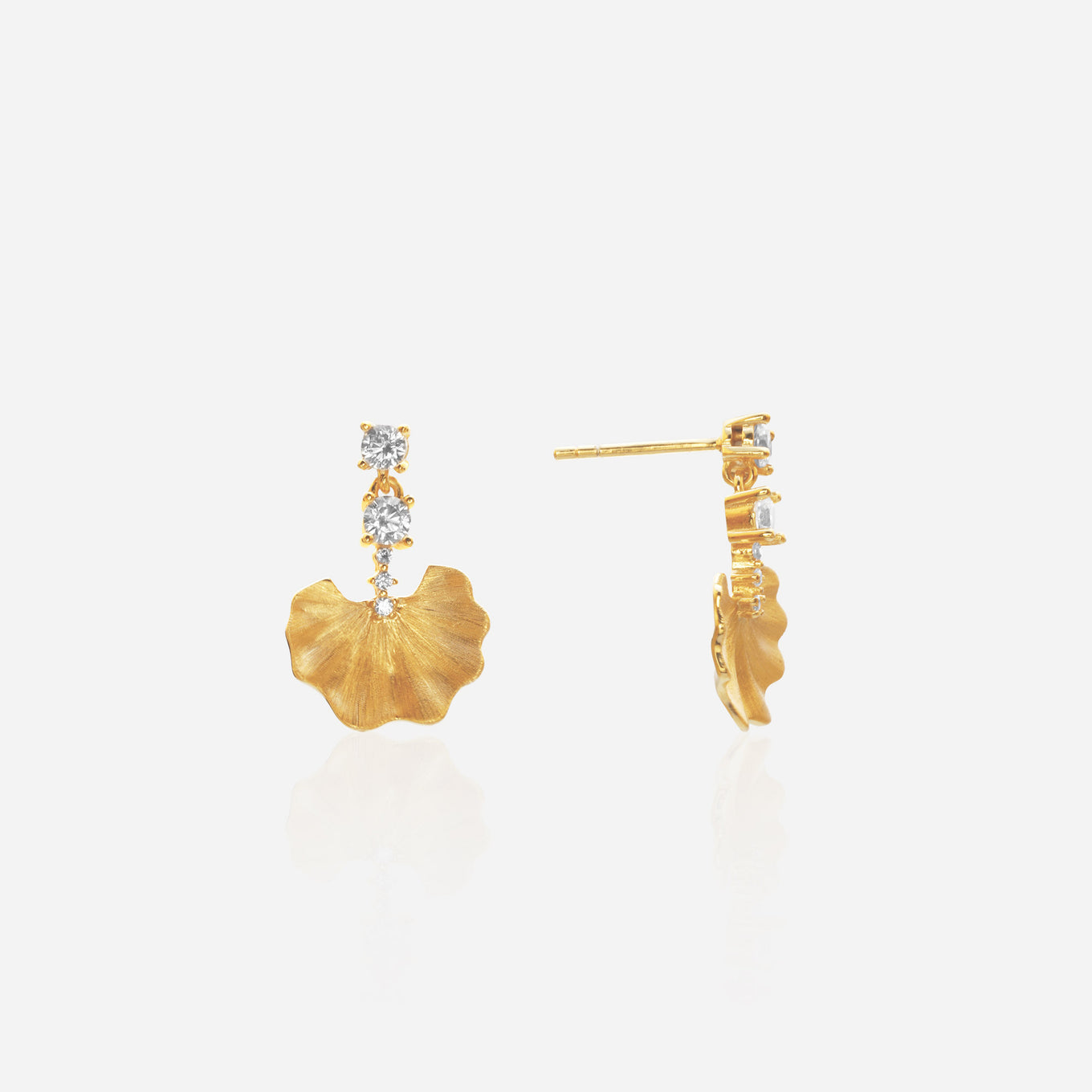
| Gold Ginkgo Dangle Earrings | Dangle earrings | ~25mm drop | Polished gold | Dinner, events, date night | Swing motion catches light from every angle |
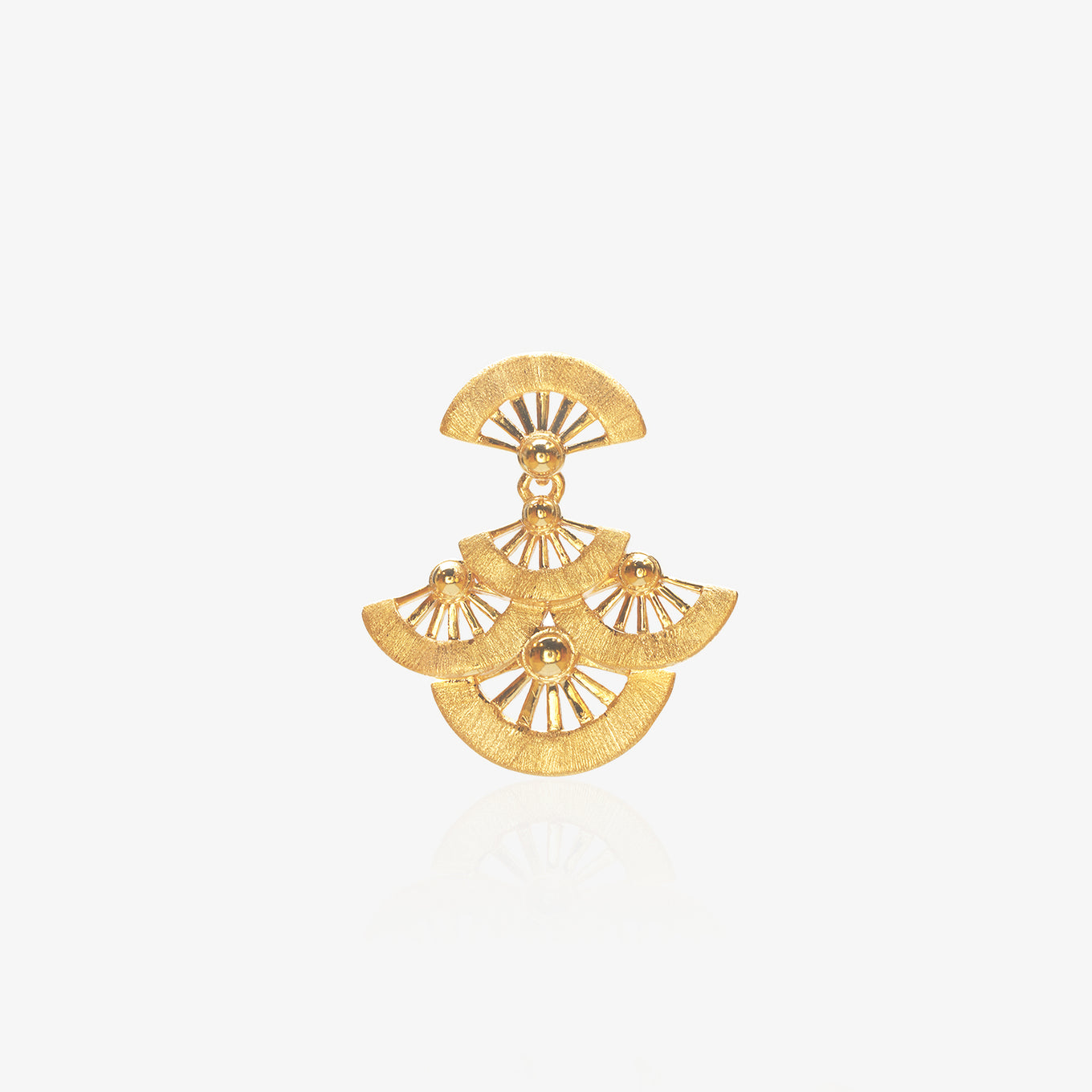
| Gold Ginkgo Hammered Earrings | Stud earrings | ~12mm | Hammered gold | Office, everyday, gym-safe | Hand-hammered texture — no two identical |
| Gold Ginkgo Leaf Necklace | Pendant necklace | ~22mm pendant | Polished gold | Layering, gifts, daily wear | Sits at collarbone; pairs with other chains |
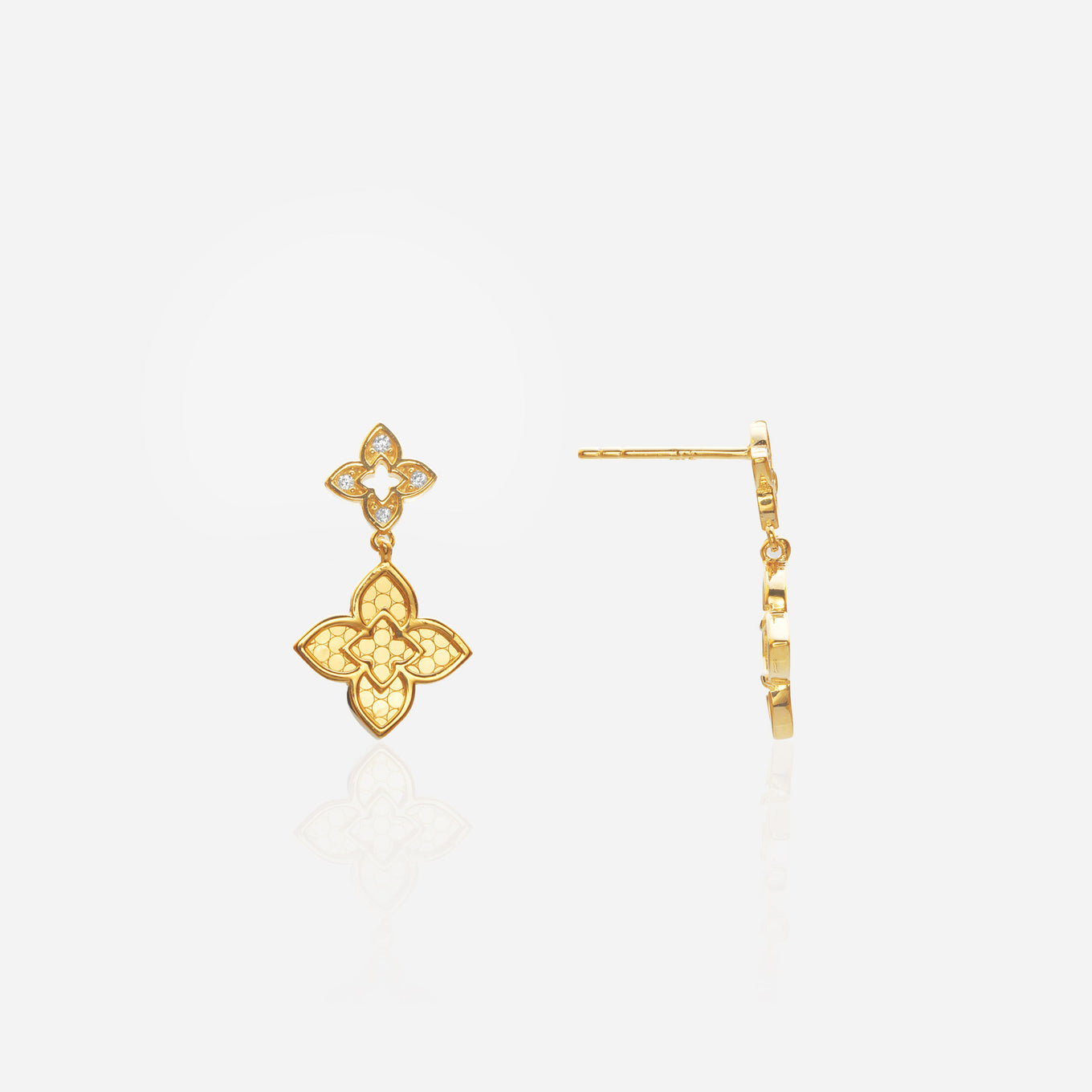
| Gold Leaf Drop Earrings | Drop earrings | ~18mm | Polished gold | Bridal, formal, minimalist | Elongated leaf shape — more vertical than ginkgo |
| Gold Fern Stud Earrings | Stud earrings | ~10mm | Brushed gold | Nature lovers, subtle daily wear | Fern frond silhouette — delicate, fine-detail cast |
Unlike mass-market gold-tone jewelry that uses thin flash-plating over mystery base metals, each of these pieces is built on a solid Ag925 sterling silver core with 0.5-micron 18K gold plating. The difference is not marketing speak — it means the gold layer is thick enough to survive daily wear, hand-washing, and light rain without wearing through to the silver underneath.
Thinner plating (0.1 micron or less — common on fast-fashion jewelry) can show silver spots within weeks.
Key Terms: Ginkgo Jewelry Vocabulary
Here are the words that show up when you shop for botanical gold jewelry. Knowing them saves you from buying the wrong thing.
- Ginkgo biloba: The scientific name for the ginkgo tree — the only surviving species of the division Ginkgophyta. Its leaves are fan-shaped with veins that radiate from the base to the outer edge without branching. When you see "ginkgo biloba jewelry," the design references this leaf shape.
- Hammered finish: A surface texture created by striking the metal repeatedly with a small hammer or tool. The result is dozens of tiny, irregular facets that catch light in a scattered, organic way. Unlike a polished finish's single mirror reflection, hammered gold sparkles softly from many points at once.
- Brushed finish: A matte, satin-like texture created by dragging a fine abrasive brush or pad across the metal surface in one direction. The result is a soft glow without shine — more understated than polished, more uniform than hammered.
- Dangle earring: An earring where the decorative element hangs below the earlobe, attached to a post or hook. Dangle earrings have motion — they swing when you turn your head. This is what makes ginkgo dangles so effective: the leaf shape changes silhouette as it moves.
- Drop earring: Similar to a dangle, but the decorative element is fixed in position directly below the post. A gold leaf drop earring stays still; a ginkgo dangle moves. The distinction matters when you are choosing between the two for different occasions.
- Pendant necklace: A necklace with a single decorative element (the pendant) suspended from a chain. Ginkgo leaf pendants typically hang at the collarbone on a 16–18 inch chain.
Three Ways to Style Gold Ginkgo Jewelry
I have worn botanical gold pieces in multiple settings, and here is what actually works:
Look 1: The Botanical Minimalist
One pair of hammered ginkgo earrings in the ear, nothing else. The hand-hammered texture does the work — it catches light from dozens of tiny facets rather than a single polished surface. Pair with a white button-down or a simple crew neck sweater. This is my recommendation for anyone who wants a botanical detail without anyone asking "what tree is that?" The answer is subtle enough that only you need to know.
Look 2: The Layered Pendant Stack
Wear the ginkgo leaf necklace at 18 inches and pair it with a shorter chain (14 or 16 inches) — something simple like a thin cable chain or a small bar pendant. The ginkgo pendant becomes the visual anchor while the shorter chain adds depth. This works with V-neck tops, open-collar shirts, and anything that leaves space around the collarbone.
Our Gold Leaf Pendant captures the ginkgo as a fully dimensional botanical sculpture — every vein, ridge, and curled edge cast in sterling silver with heavy 18K gold plating. It is the most detailed ginkgo piece in the collection and the perfect starting point for building your botanical jewelry wardrobe.
The key is keeping the second chain thinner and simpler so the ginkgo remains the focal point.
Look 3: The Full Garden — Mixed Leaves
Combine two different leaf motifs in one ear: a ginkgo dangle in the first piercing and a gold fern stud in the second. The ginkgo's fan shape contrasts with the fern's feathery silhouette, and the shared gold finish keeps both pieces visually connected. This is for garden parties, summer weddings, and any occasion where a nature theme feels right.
The ELARAMUSE Standard: What Goes Into Every Ginkgo Piece
We believe jewelry should work as hard as you do — shower-safe, sleep-safe, and never a source of anxiety. Every ELARAMUSE ginkgo piece is built on the same foundation:
- Core material: Solid Ag925 sterling silver. This is not a plating shortcut. The silver core provides a stable, nickel-free base that sits comfortably against skin, even for people with metal sensitivities.
- Gold plating: 0.5-micron 18K gold plating. That is roughly five times thicker than the 0.1-micron flash plating you will find on mass-market gold-tone jewelry. In wear-testing terms, 0.5 microns means the piece survives daily wear, hand-washing, and light rain for months without showing silver through the gold.
- Post and backing system: All earrings use surgical-grade stainless steel posts with secure butterfly backings. No nickel, no brass touching your piercings.
- Chain standard: Pendant necklaces ship on a matching 18-inch cable chain with a 2-inch extender. All links are soldered — no open jump rings that catch on clothing.
When the Gemological Institute of America discusses gold jewelry durability, they point to two factors: karat purity (which affects softness) and plating thickness (which affects longevity). At 18K over sterling silver, the ELARAMUSE ginkgo pieces prioritize both: warm color from the 18K karat purity, and longevity from the 0.5-micron thickness.
Behind the Design: How a Ginkgo Leaf Becomes Jewelry
I want to walk you through something most brands keep behind a curtain: what actually happens between the sketch and the finished piece.
Every ELARAMUSE ginkgo piece starts with a real ginkgo leaf. Our design team collects freshly fallen leaves in autumn — the kind with crisp edges and fully developed vein patterns — and photographs them at multiple angles under studio light. The goal is not to copy a perfect leaf. The goal is to understand how light hits the fan surface at different angles, how the veins divide and recede, and where the two-lobed split creates negative space.
From those reference photos, the design is hand-drawn, then digitally refined. The challenge with ginkgo leaves is scale. At 12mm (the size of a stud earring), the two-lobed split at the top of the fan becomes nearly invisible if the metal casting is not precise. Our casters use a multi-step lost-wax process that achieves detail resolution down to 0.1mm — enough to preserve the Y-shaped split even at stud scale.
For hammered ginkgo pieces, there is an extra step. After casting and initial polishing, a goldsmith works the surface with a small texturing hammer — by hand, one piece at a time. This means no two hammered ginkgo earrings have identical faceting. Each one is, in a literal sense, one of a kind.
The hammer marks are applied to the flat surfaces of the fan while the veins remain raised and smooth, which creates a visual texture that reads even at distance.
I tested the hammered earrings for a full month before writing this. Wore them in the shower, at the gym, through three cross-country flights, and never took them off for a single night. At the end of 30 days, the gold plating showed zero wear on the posts and zero color change on the leaf surfaces.
The hammered texture did exactly what it is designed to do: it scattered light so well that minor daily wear marks (the kind you get from hair brushing against earrings) were invisible against the faceted surface. A polished ginkgo will show those micro-scratches more obviously. That is not a defect — it is a trade-off between two different aesthetic results.
FAQ: Gold Ginkgo Jewelry Questions, Answered
Q1: Is gold ginkgo jewelry hypoallergenic?
Yes — when built on a sterling silver core with surgical-steel posts. The sterling silver and stainless steel components are nickel-free. The 18K gold plating layer sits on top of the silver, so only trace amounts of gold make contact with your skin. If you have a gold allergy specifically (rare, but possible), check with a dermatologist first.
Q2: How long does gold plating last on ginkgo earrings?
A 0.5-micron 18K gold plate on sterling silver should last 6–18 months of daily wear before showing any silver through, depending on how often the piece contacts water, sweat, lotion, and perfume. Dangle earrings tend to last longer than studs because the decorative element hangs away from skin oils.
To maximize plating life, remove earrings before swimming (chlorine and salt water accelerate plating loss), apply perfume and lotion before putting jewelry on, and store pieces in individual pouches so they do not rub against each other.
Q3: Can I shower in gold ginkgo jewelry?
Yes — but with a caveat. Occasional shower contact will not ruin 0.5-micron gold plating overnight. However, daily exposure to hot water, soap residue, and the friction of towel drying will gradually wear down the gold layer faster than if you remove the piece first. If you want maximum plating life, take them off before showering.
If convenience matters more to you than longevity, leave them on — just know you might need to replate after 8–12 months rather than 16–18.
Q4: What is the difference between hammered and polished ginkgo earrings?
A polished ginkgo surface reflects light as a single, bright mirror reflection — like a tiny gold disc. A hammered ginkgo surface breaks light into dozens of small, scattered sparkles because each hammer dent creates its own small reflective facet. Polished reads cleaner and more formal. Hammered reads warmer, more organic, and hides wear marks better.
Neither is better — it depends on whether you want your earring to announce itself or whisper.
Q5: Are ginkgo leaves a seasonal motif, or can I wear them year-round?
You can wear them year-round. While ginkgo trees turn yellow in autumn, the leaf design itself is botanical, not seasonal — it references a tree species rather than a specific season. Unlike snowflake jewelry (winter-only) or floral cherry blossom motifs (spring-coded), ginkgo leaves carry no strong seasonal association in Western fashion. In East Asian fashion, they read as autumnal.
For everyone else, they are simply a leaf shape.
Q6: How do I clean gold-plated ginkgo jewelry?
Use lukewarm water, a drop of mild dish soap, and a soft toothbrush (the kind labeled "soft"). Gently brush the leaf surface in the direction of the veins to avoid catching bristles on any raised edges. Rinse thoroughly, pat dry with a microfiber cloth, and store only when completely dry. Do not use jewelry cleaning dips, ultrasonic cleaners, or silver polishing cloths — all three can strip gold plating.
Q7: Which ginkgo piece is best as a gift?
The ginkgo leaf chain necklace is the safest choice for a gift. Necklaces do not require knowing the recipient's piercing count or lobe shape; the 18-inch chain with 2-inch extender fits nearly every neck; and the ginkgo motif is universally flattering.
For someone who already owns multiple chains, the hammered earrings are a more personal choice because they signal you paid attention to their everyday style.
Q8: Can I mix ginkgo jewelry with other botanical motifs?
Yes — and it often looks better than wearing one motif head-to-toe. The key is keeping the metal finish consistent (all gold, or all silver) while varying the botanical shapes. A ginkgo dangle paired with a fern stud creates visual interest through contrast. The ginkgo's fan shape plays against the fern's feathery silhouette, but the shared gold finish keeps everything visually cohesive.
Avoid mixing more than three different botanical motifs at once — after that, the look starts to feel like a field guide rather than a jewelry choice.
Q9: Does ELARAMUSE offer a warranty on gold-plated jewelry?
Our standard policy covers manufacturing defects for 12 months from purchase. Normal plating wear from daily use is not considered a defect (it is expected behavior for gold-plated jewelry), but we do offer replating services at a reduced cost for ELARAMUSE customers. Contact us through the website for details.
Q10: How do ginkgo dangle earrings stay secure during movement?
The dangle ginkgo earrings use a secure post-and-clutch back system with a hinged drop connection. The hinge allows the leaf to swing naturally while keeping the post firmly anchored in the ear. I wore them for an eight-hour event that included dancing, and neither earring slipped or rotated.
The weight (roughly 2.3 grams per earring) is heavy enough to hang properly but light enough that your lobes will not feel stretched by the end of the day.
Be Your Own Muse
The ginkgo tree does not try to be an oak or a maple. It has been itself — fan-shaped leaves, odd-smelling fruit, remarkable resilience — for a quarter of a billion years. That is the energy I want you to bring to your jewelry. Not "what is everyone else wearing?" but "what piece makes me feel like myself?"
Gold ginkgo jewelry works because it is both familiar and unexpected. Everyone knows what a leaf looks like. Few people expect to see one cast in gold, swinging from an ear or resting at a collarbone. That moment of recognition — leaf! gold! — is why botanical jewelry has staying power.
Whether you choose the quiet confidence of a 12mm hammered stud or the unapologetic movement of a 25mm dangle, you are wearing something that has meaning beyond decoration. A leaf that survived dinosaurs, atomic blasts, and 270 million years of planetary change — now resting against your skin.
What We Believe
We believe jewelry is not decoration — it is self-definition. Every piece we make must earn its place on your body: through material integrity (solid Ag925 cores, never hollow brass), through design intelligence (pieces that survive showers, sleep, and spontaneous decisions), and through a commitment to transparency that the jewelry industry has historically avoided. We do not chase trends. We build talismans for the captain of her own soul — pieces that feel like you, only more intentional.
Sources: Victoria and Albert Museum collection records (14th-century Chinese lacquer box, ginkgo motif); Gemological Institute of America educational materials on gold plating durability and karat standards; Ginkgo biloba botanical classification per Royal Botanic Gardens, Kew; Hiroshima Peace Memorial Museum documentation of survivor ginkgo trees; All product information verified against ELARAMUSE current specifications as of June 2026.
Editor's Picks: Ginkgo Leaf Jewelry: The Resilience Collection
Gold Ginkgo Leaf Necklace | Aphrodite Pearl Heart | Botanical Art: Gold Ginkgo Leaf Necklace | Aphrodite Pearl Heart | Botanical Art — A full ginkgo leaf in textured 18K gold. Survived Hiroshima, now a talisman for surviving anything.
Gold Ginkgo Leaf Earrings | lab diamond dangle Drop | Featherlight Silver: Gold Ginkgo Leaf Earrings | lab diamond dangle Drop | Featherlight Silver — Dangling ginkgo leaves with hammered texture. Movement creates light play a static leaf cannot.
Gold Fern Earrings | Art Nouveau Leaf Studs | Pavé Omega Back: Gold Fern Earrings | Art Nouveau Leaf Studs | Pavé Omega Back — The botanical cousin. Fern fronds in gold, same resilience energy, different silhouette.