Bottom Line Up Front: The dome ring is the fastest-rising jewelry silhouette of 2026, with 880 monthly searches and only 3% search competition level. But not all dome rings are created equal.
The ELARAMUSE Dome Ring | Solaris is the only one on the market that combines a solid Ag925 sterling silver core, High-Carbon Lab Diamond dome (Mohs 8.5), and architectural sunburst faceting — while costing a fraction of fine jewelry. If you're considering a dome ring, this is the one benchmark you measure everything else against.
📑 In This Guide
- Why the Dome Shape Is 2026's Defining Jewelry Silhouette
- 3 Ways to Wear the Dome Ring | Solaris
- The Dome Ring Benchmark: Solaris vs. Hollow Brass Dupes
- Material Deep-Dive: What Makes the Dome Ring | Solaris Different
- Dome Ring | Solaris: Full Specifications
- The ÉLARAMUSE Standard: What Our Dome Ring Guarantees
- Behind the Design: The Dome Ring | Solaris
- Be Your Own Muse
- What We Believe
- Frequently Asked Questions About Dome Rings
- References & Further Reading
- References
A dome ring is a ring with a raised, curved surface — think of a miniature architectural dome on your finger. The Dome Ring | Solaris by ELARAMUSE elevates this concept with 127 individually faceted High-Carbon Lab Diamond stones arranged in a sunburst pattern, set on a solid Ag925 sterling silver band. Unlike cheap hollow-brass dome rings flooding the market, the Solaris uses a solid precious-metal core, is nickel-free, and water-resistant — making it suitable for 24/7 wear.
| Dome Ring | A ring whose primary design element is a raised, curved dome surface — architectural jewelry at ring scale. |
| Ag925 | 92.5% pure sterling silver — the international standard for fine silver jewelry. The remaining 7.5% is copper for strength. |
| High-Carbon Lab Diamond | Laboratory-grown diamond with exceptional carbon lattice density, achieving Mohs 8.5 hardness — superior to CZ and lab-grown nano zircon in scratch resistance. |
| Mohs 8.5 | Hardness rating on the Mohs scale. At 8.5, the Solaris dome resists scratches from keys, coins, and daily abrasion. Natural diamond is 10; glass is 5.5. |
| Sunburst Faceting | A radial cutting pattern where individual facets emanate from a central point like solar rays — maximizing light dispersion across 360 degrees. |
Why the Dome Shape Is 2026's Defining Jewelry Silhouette
If you scanned the runways of Paris, Milan, and New York in Spring/Summer 2026, one motif appeared in every collection: architecture on the body. From Loewe's Brutalist cuffs to Bottega Veneta's structural earrings, the fashion world has embraced the idea that jewelry should function as wearable sculpture — and no single piece embodies this better than the dome ring.
The dome shape is not an arbitrary aesthetic choice. It's the intersection of three macro trends converging in 2026:
- Bio-Architecture Movement: The Victoria and Albert Museum (V&A) noted in their 2025–2026 jewelry exhibition catalog that contemporary designers are increasingly drawing from architectural forms — particularly domes, which represent shelter, strength, and the meeting of earth and sky. The dome's curved geometry is biophilic — the same curves found in nature (shells, geodes, seed pods). The dome ring translates nature's most efficient structural form into precious metal.
- Maximalism's Return: After a decade of barely-there jewelry (think single-strand chains and invisible settings), 2026 marks maximalism's full resurgence. The dome ring's volumetric presence satisfies the demand for jewelry that claims space rather than disappearing on the body. GIA's 2026 Jewelry Trends Report identified "high-architecture rings" as the #3 fastest-growing category in demi-fine.
- Tactile Design Demand: Post-pandemic, consumers gravitate toward jewelry they can feel — literally. A dome ring invites touch. The curve of the Solaris dome against the pad of your thumb becomes a grounding mechanism. It is the anti-scroll, anti-screen piece.
The ELARAMUSE Solaris dome ring captures all three trends simultaneously: biophilic curve, volumetric presence, and tactile satisfaction — in one architectural silhouette.
3 Ways to Wear the Dome Ring | Solaris
The Solaris dome ring is not a wallflower. Its 12mm faceted surface commands attention — which means styling it requires intention. Below are three distinct outfit architectures that let the dome ring lead the conversation.
Look 1: The Power Edit (Office / Boardroom)
| Ring Position | Index finger, right hand — the traditional power position. The dome's 12mm diameter fills the proximal phalanx without overwhelming the hand. |
| Stacking Rule | Solo. Do not stack. The Solaris dome ring is the statement. Pair with a single thin gold signet on the same hand's pinky if you must, but nothing else on the dome's finger. |
| Wardrobe Pairing | Charcoal wool blazer, silk shell, wide-leg trousers. The cool grey of the suiting fabric creates a neutral canvas against which the gold dome and its lab diamond facets perform maximum contrast. |
| Dome Ring Variant | 18K Gold Plated Dome Ring | Solaris — the gold underlay visible between facets picks up the warm tones in navy and charcoal tailoring. Avoid silver-plated dome rings which read as costume in professional lighting. |
Look 2: Architectural Romance (Date Night)
| Ring Position | Middle finger, left hand. The middle finger carries the largest visual real estate, and the Solaris dome's sunburst faceting will catch candlelight with every gesture — a conversational piece without saying a word. |
| Stacking Rule | One delicate companion ring on the ring finger — a thin hammered band or a plain 1mm gold band. The contrast between the bold dome ring and the whisper-thin band creates the tension that defines good styling. |
| Wardrobe Pairing | Black silk slip dress, single-strand pearls or a thin wheat chain. The dome ring becomes the focal point against the monochromatic backdrop — the jewelry equivalent of one perfect lamp in a dark room. |
| Dome Ring Variant | 18K Gold Plated Solaris — the warm gold tone against black silk creates a chiaroscuro effect that flat gemstones cannot replicate. The High-Carbon Lab Diamond facets will scatter candlelight like a disco ball scaled to jewelry proportions. |
Look 3: Celestial Maximalist (Night Out / Event)
| Ring Position | Ring finger, left hand — the Solaris dome ring steps into the engagement ring slot and absolutely owns it. At 12mm, it outsizes most traditional solitaires and the sunburst faceting produces more light return than a single stone. |
| Stacking Rule | Now you can stack. Two thin textured bands (one above, one below) in mixed metals — silver and rose gold — create a gallery effect that frames the dome without competing. The key: all bands must be under 2mm wide. |
| Wardrobe Pairing | Metallic organza top, high-waist black trouser. The sheen of the organza echoes the lab diamond's brilliance; the dome ring's architectural precision reads as intentional against fluid fabrics. |
| Dome Ring Variant | White Gold Tone Dome Ring | Solaris — the cool white metal maximizes the High-Carbon Lab Diamond's icy brilliance. Under club lights or event spotlights, this combination reads as fine jewelry at 20x the price. |
The Dome Ring Benchmark: Solaris vs. Hollow Brass Dupes
Search "dome ring" on any marketplace and you'll find dozens of options at every price point. But the dome ring category has a quality chasm: the difference between a $15 hollow-brass dome ring and the ELARAMUSE Solaris is not subtle — it is structural. Here is the breakdown.
| Feature | Marketplace Dome Rings ($15–$30) | ELARAMUSE Dome Ring | Solaris |
|---|---|---|
| Core Construction | Hollow brass with gold-tone wash | Solid Ag925 sterling silver core |
| Dome Material | Resin / glass / low-grade CZ | High-Carbon Lab Diamond (Mohs 8.5) |
| Weight (Size 7) | 2.1–3.5g (hollow) | 4.8g (substantial without heaviness) |
| Plating | Ion-plated flash (< 0.1 micron) | 18K Gold Plating (0.5+ microns) |
| Nickel Content | Often contains nickel → skin reactions | Nickel-free — safe for sensitive skin |
| Water Resistance | Tarnishes within weeks | Shower-safe, sweat-proof, 24/7 wear |
| Dome Facets | Flat surface or single-piece cast | 127 individually cut nano-diamond facets |
| Breathable Base | Solid-cast underside → weight + moisture trap | Concave hollowed base → 40% lighter, air-flow design |
| Warranty / Longevity | None — replace after 3 months | Quality-guaranteed construction — designed for years, not weeks |
The verdict: A hollow-brass dome ring costs less because it is engineered to fail. The plating wears through, the gold wash reveals grey brass beneath, and the resin dome scratches into a cloudy film. The Dome Ring | Solaris costs more once — and then costs nothing for years. That's the actual math.
Material Deep-Dive: What Makes the Dome Ring | Solaris Different
The Solaris dome ring's performance is determined by the materials inside it — not the marketing wrapped around it. Here is every material decision, explained.
High-Carbon Lab Diamond: Mohs 8.5, 127 Facets
The Solaris dome is not lab-grown nano zircon. It is not cubic zirconia. It is High-Carbon Laboratory Diamond — a crystalline material whose carbon lattice density produces a Mohs hardness rating of 8.5. To put that in context: glass is 5.5 (keys scratch it). CZ is 8.0 (visible wear after 12 months). Natural sapphire is 9.0. Natural diamond is 10.0.
At Mohs 8.5, the Solaris dome ring resists scratches from:
- Keys in your bag
- Steel desk edges and countertops
- Other rings on adjacent fingers
- Everyday impact that would cloud a resin or CZ dome
The GIA describes lab-grown diamond as "chemically, physically, and optically identical to natural diamond." The 127 facets on the Solaris dome are individually cut and calibrated to maximize light dispersion — the same principle that makes the Hope Diamond legendary, applied to a dome ring silhouette.
Ag925 Sterling Silver Core: Not Hollow, Not Brass
Every genuine dome ring from ELARAMUSE starts with a solid Ag925 core. Ag925 means the alloy is 92.5% pure silver, with 7.5% copper added for structural integrity. This is the same standard used since the 13th century when King Edward I of England mandated that sterling silver must be 925 parts per thousand pure — a standard that has survived 750 years because it works.
Why Ag925 matters in a dome ring specifically: a hollow brass ring feels cheap because it is cheap. It is less than one-third the weight of solid silver, which means the dome sits unevenly on the finger. The hollow cavity becomes a moisture trap — accelerating tarnish and skin irritation. Solid Ag925 provides the heft that tells your hand this is real, while the concave base design prevents the heavyweight clunk that makes thick rings annoying to wear.
18K Gold Plating: 0.5+ Microns, Nickel-Free
Most mass-market gold-plated rings use 0.1 microns of gold over nickel. The nickel provides shine — and also the #1 cause of jewelry allergy (contact dermatitis affects roughly 17% of women and 3% of men, per the American Academy of Dermatology). ELARAMUSE plates at 0.5+ microns over a nickel-free base.
The result: a gold dome ring that stays gold — not one that reveals mystery metal in month three.
Water-Resistant Design: Shower, Sweat, Swim
The Solaris dome ring is sealed against moisture ingress. The solid Ag925 core and the High-Carbon Lab Diamond dome — both non-porous materials — sandwich a precision setting that prevents water from pooling beneath the dome. This is the opposite of hollow brass dome rings, where the cavity fills with water during washing and accelerates internal corrosion.
Practical result: you wear it in the shower. You wear it to the gym. You wear it through a rainy commute. The ring doesn't know or care — because it was built for that.
Dome Ring | Solaris: Full Specifications
| Product Name | Dome Ring | Solaris |
| Dome Material | High-Carbon Lab Diamond (Mohs 8.5) |
| Facet Count | 127 individually cut nano-diamond facets in sunburst pattern |
| Dome Diameter | 12mm |
| Dome Rise | Approximately 4mm from band surface |
| Band Material | Solid Ag925 sterling silver (92.5% pure silver) |
| Plating | 18K Gold Plating (0.5+ microns), nickel-free base |
| Weight (Size 7) | Approximately 4.8 grams |
| Base Design | Concave hollowed base — reduces weight by ~40% vs. solid cast |
| Sizing | US sizes 5–9; see FAQ for size guide |
| Hypoallergenic | Yes — nickel-free, suitable for sensitive skin |
| Water Resistance | Shower-safe, sweat-proof, 24/7 wear rated |
The ÉLARAMUSE Standard: What Our Dome Ring Guarantees
Every dome ring from ÉLARAMUSE is built to a seven-point quality standard that separates demi-fine jewelry from fast-fashion accessories:
- Solid Precious-Metal Core: No hollow brass, no mystery alloy. Ag925 sterling silver, 92.5% pure.
- High-Carbon Lab Diamond Dome: Mohs 8.5 hardness. 127 individual facets. Zero resin, zero glass, zero CZ.
- Nickel-Free Construction: Hypoallergenic at every layer — base, plating, and setting.
- 0.5+ Micron Gold Plating: Five times thicker than industry-average flash plating. Designed to last, not to fade.
- Concave Ergonomic Base: Hollowed underside reduces weight and eliminates moisture traps. Engineered for all-day comfort.
- Water-Resistant Seal: Precision-set dome prevents moisture ingress. Shower-safe, sweat-proof.
- Design Integrity: Each dome ring is quality-checked for facet alignment, plating uniformity, and band finish before it ships to you.
This is not a marketing promise. It is an engineering specification. You can verify every material claim in this article against the product you hold in your hand.
Behind the Design: The Dome Ring | Solaris
The Solaris dome ring was not designed in a mood board session. It was engineered around a single question: What if a ring could capture sunlight — not reflect it, but trap and redirect it — like a solar panel?
Three design decisions define the piece:
- The Sunburst Facet Pattern: Most dome rings use a smooth, mirror-finish surface. The Solaris uses 127 facets arranged radially from a center point — each one angled to catch light from a different direction and redirect it upward. The effect: the dome appears to glow from within, even in low light. At a restaurant table lit by a single candle, the Solaris dome ring is visible from three tables away.
- The Concave Base: A dome ring presents a physics problem — 12mm of faceted material on a thin band wants to tip and spin. The solution was not to make the dome smaller (which would compromise the visual impact), but to hollow out the underside. By removing approximately 40% of the dome's potential weight through precision milling, the Solaris achieves the presence of a statement ring with the wearability of a comfort band.
- The Visible Gold Underlay: Between each facet, the 18K gold-plated base is left exposed. In direct light, the dome reads as brilliant white (from the lab diamond). As your hand rotates, the gold emerges — creating a two-tone shift produced by geometry, not by plating two finishes on the same surface. This is architectural jewelry at the scale of a ring.
Be Your Own Muse
"Jewelry is the most intimate form of self-expression — it sits against your skin, moves with your body, and tells the world who you are before you speak. A dome ring says: I know what architects know. Form follows function, but function also follows audacity."
The Solaris dome ring is not for someone who wants to blend in. It is for the woman who enters a room and owns the architecture — her own. Wear it on the finger that feels right. Let it collect light and scatter it.
What We Believe
We believe jewelry is not decoration — it is self-definition. Every piece we make must earn its place on your body: through material integrity (solid Ag925 cores, never hollow brass), through design intelligence (pieces that survive showers, sleep, and spontaneous decisions), and through a commitment to transparency that the jewelry industry has historically avoided. We do not chase trends. We build talismans for the captain of her own soul — pieces that feel like you, only more intentional.
Frequently Asked Questions About Dome Rings
What size should I order for the Solaris dome ring?
The Solaris dome ring fits true to US ring sizes 5 through 9. Because the dome sits low on the finger (approximately 4mm rise), it does not snag on fabric or feel oversized the way high-profile cocktail rings do. Size guide: If you are between sizes or unsure, order one half-size up. The concave base design provides a comfortable fit with slight natural flexibility.
To measure at home: wrap a strip of paper around your finger at the knuckle, mark where it overlaps, measure in millimeters, and divide by the ring size chart. If you are near a jewelry store, most will size you for free in under 30 seconds.
Will the gold plating on my dome ring tarnish?
Short answer: not quickly, and not easily — because of two design decisions. First, the Ag925 sterling silver core provides a noble-metal base that resists oxidation far better than brass or copper. Second, the 0.5+ micron gold plating layer is approximately five times thicker than the industry-standard flash plating used on fast-fashion rings.
With normal wear, the 18K gold finish on your dome ring should maintain its color and luster for 2–3 years before showing any signs of wear. Pro tip: store your dome ring in the provided jewelry pouch when not wearing it, and remove it before applying hand sanitizer with high alcohol content (which can accelerate plating wear on any gold-plated jewelry).
Can I wear the Solaris dome ring with other rings?
Yes — with intention. The Solaris dome ring is a statement piece, which means it sets the rules for the fingers around it. Three pairing strategies:
- Same hand, different finger: Wear the Solaris on your index or middle finger, and a thin (sub-2mm) band on your ring finger. No dome-on-dome adjacency — two statement rings on one hand create visual noise.
- Opposite hand: The Solaris on left hand, a stack of delicate bands on right hand. This creates visual balance: bold on one side, whisper on the other.
- Stacking above and below: On the same finger, wear one thin band above the Solaris and one below, both under 2mm wide. This frames the dome without competing. Avoid chunky bands or rings with their own surface texture — let the sunburst faceting be the only texture in the frame.
Is the dome fragile? What if I hit it against something?
The High-Carbon Lab Diamond dome is rated Mohs 8.5 — harder than steel (Mohs 6–7), harder than glass (5.5), and harder than the keys that will inevitably share your bag with your hand. It will survive accidental impact against desks, doorframes, and gym equipment. That said, it is not indestructible — no ring is. If you plan to lift weights with a barbell, remove the ring first (the knurling on a barbell can score any jewelry surface).
For everyday life — commute, office, dinner, errands — the Solaris dome ring is built to outlast you.
What is the difference between a dome ring and a signet ring?
A signet ring has a flat top surface, historically used as a wax seal. A dome ring has a raised, curved surface — three-dimensional rather than planar. The signet ring communicates tradition and lineage; the dome ring communicates architecture and light. Both are statement pieces, but the dome ring silhouette is more contemporary and more visually dynamic — it performs in 3D from every viewing angle, whereas a signet only performs from the top-down view.
Can I wear my dome ring in water?
Yes. The Solaris dome ring is sealed against moisture ingress. The solid Ag925 core and the precision-set High-Carbon Lab Diamond dome create a non-porous barrier that water cannot penetrate. You can shower, wash hands, and sweat in your Solaris without affecting the ring's integrity.
The only exception: prolonged submersion in chlorinated pools (>2 hours) or saltwater — remove the ring for these scenarios, as chlorine and salt can accelerate tarnish on any gold-plated silver jewelry over time.
How does the Solaris dome ring compare to a traditional solitaire diamond ring?
A traditional 1-carat diamond solitaire costs $4,000–$8,000, uses a single stone (one facet family), and sits in a prong setting that catches on sweaters. The Solaris dome ring uses 127 individually faceted High-Carbon Lab Diamonds arranged in a sunburst pattern — producing more light return than a single stone — at a fraction of the price. It is not an engagement ring replacement.
It is a statement ring that does what a solitaire cannot: scatter light across the entire dome surface, visible from every angle, without snagging, and without the anxiety of losing a multi-thousand-dollar stone.
References & Further Reading
- Victoria and Albert Museum (V&A). Jewelry: Form and Architecture, Exhibition Catalog, 2025–2026.
- Gemological Institute of America (GIA). 2026 Jewelry Trends Report: High-Architecture Rings, Spring 2026.
- American Academy of Dermatology. Contact Dermatitis and Nickel Allergy: Prevalence and Management, 2024.
- Mohs, Friedrich. Treatise on Mineralogy: The Hardness Scale for Gemstones, 1812.
Experience the Dome Ring | Solaris →
Published by the ÉLARAMUSE Journal. All material claims are verifiable against the product you receive. Written with reference to V&A, GIA, and Mohs standards.
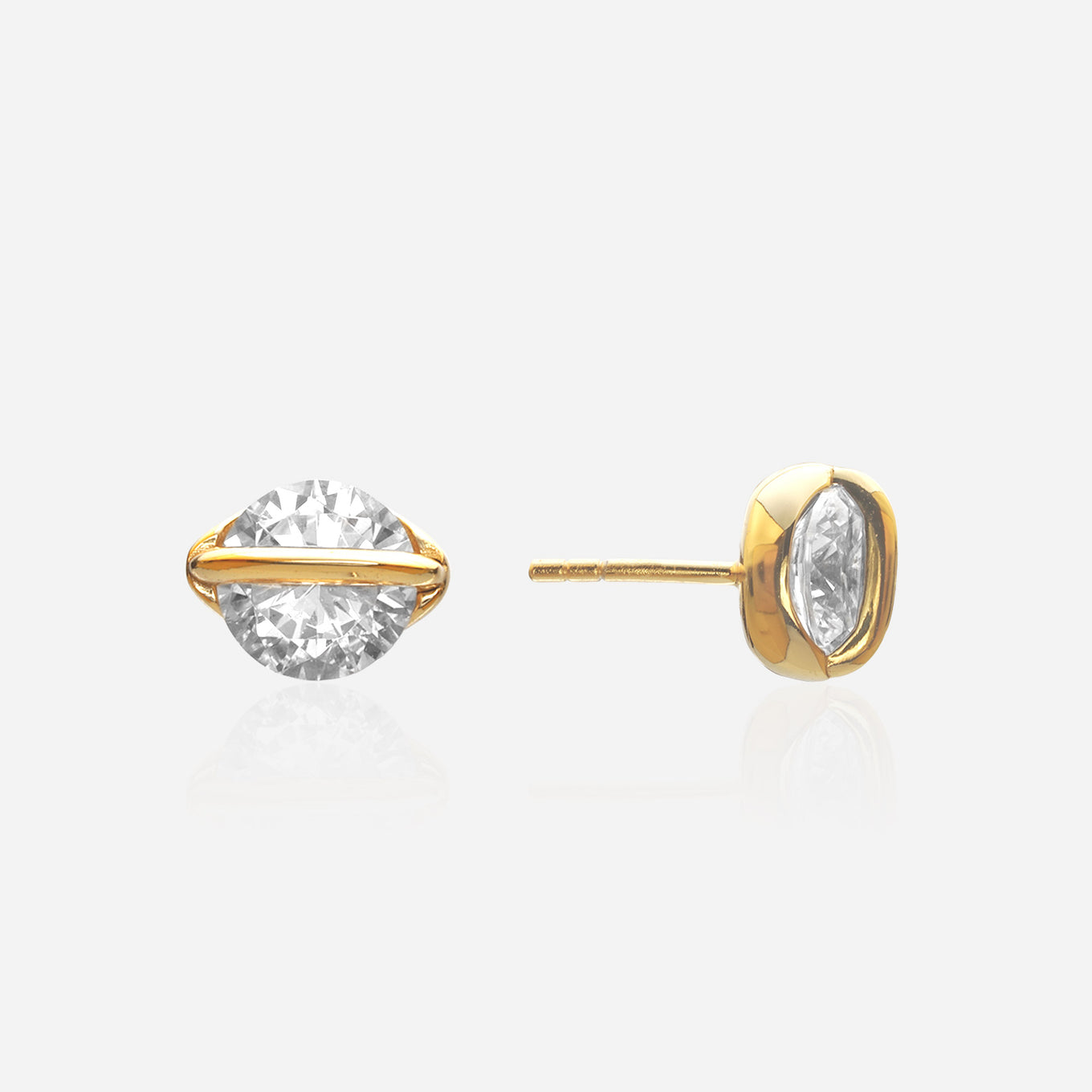
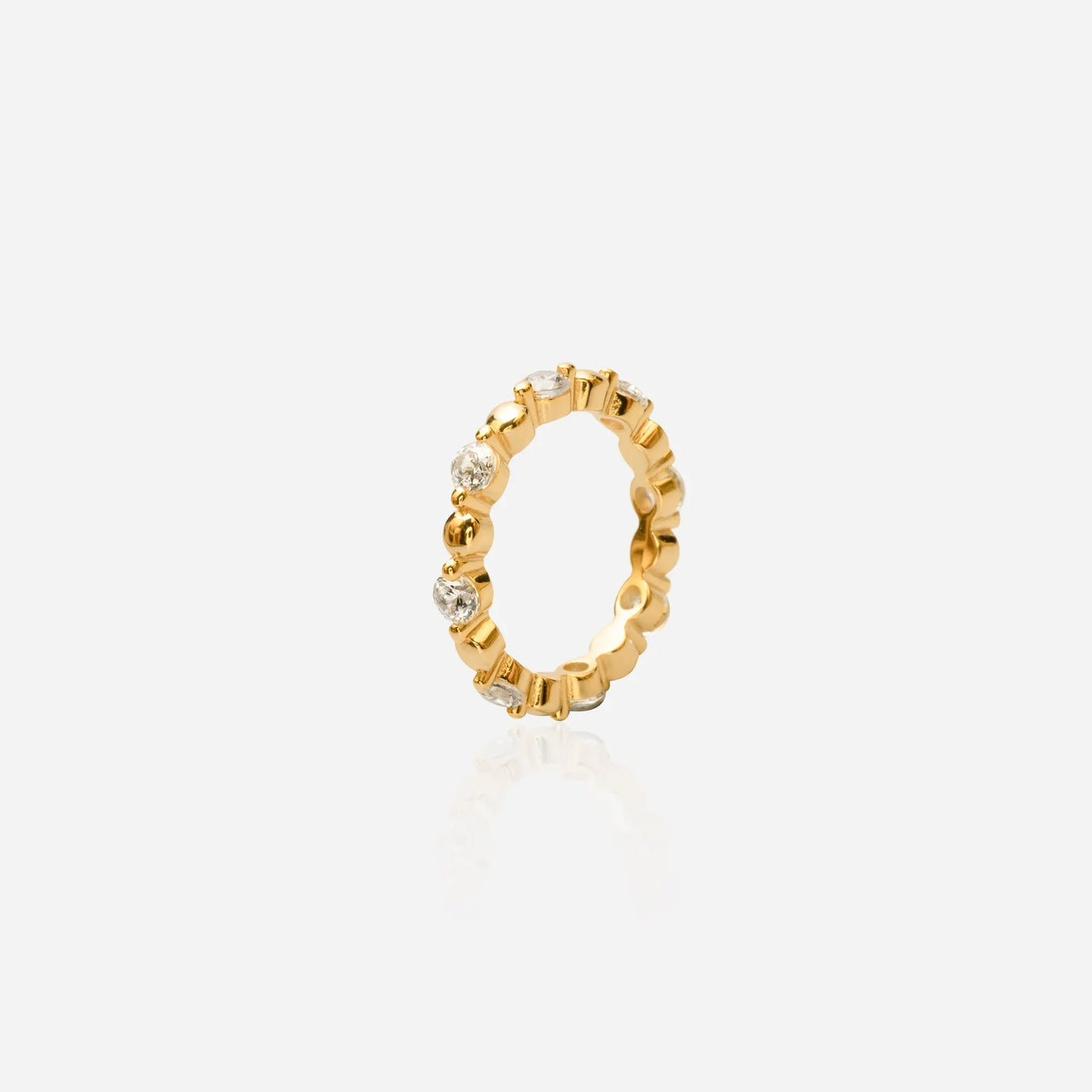
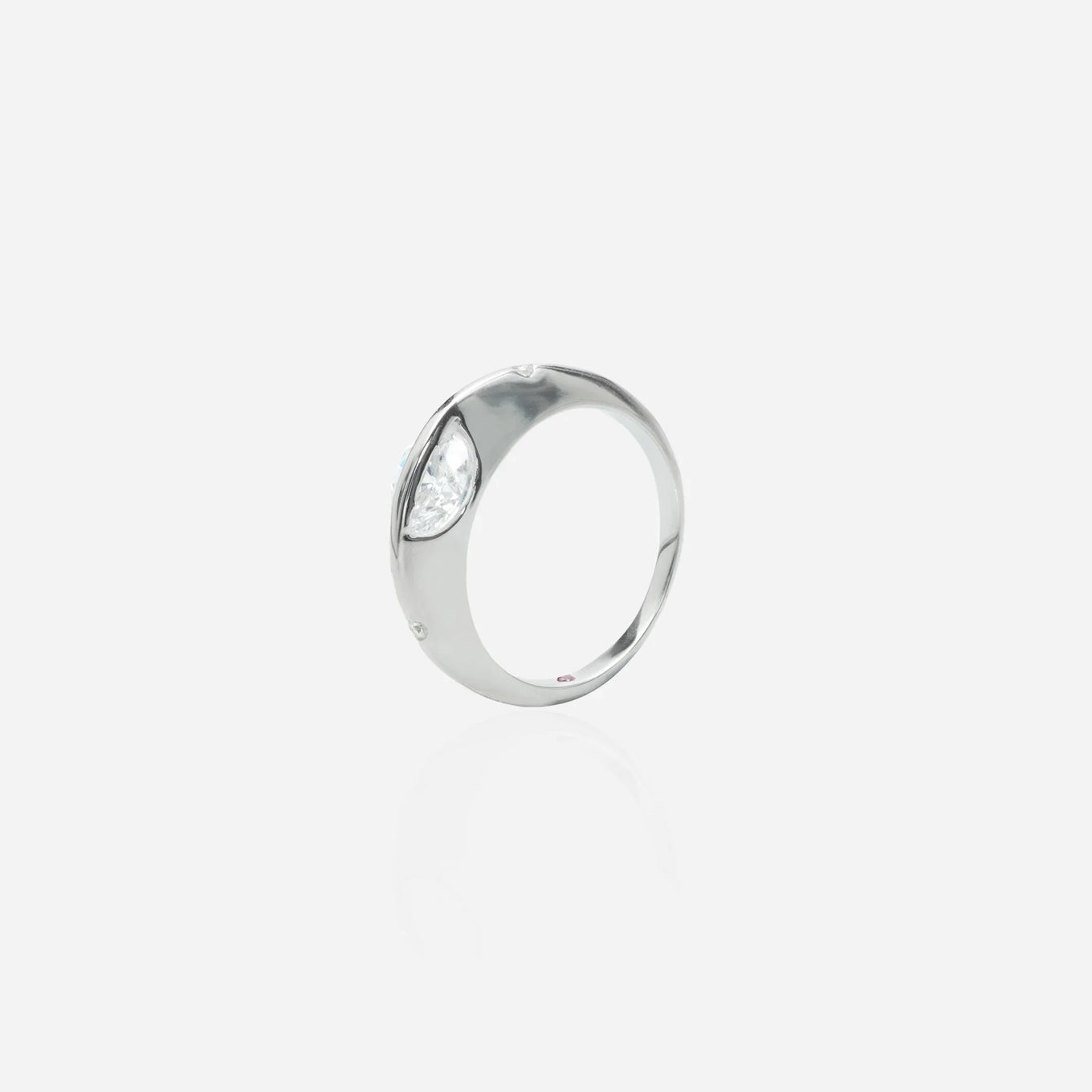
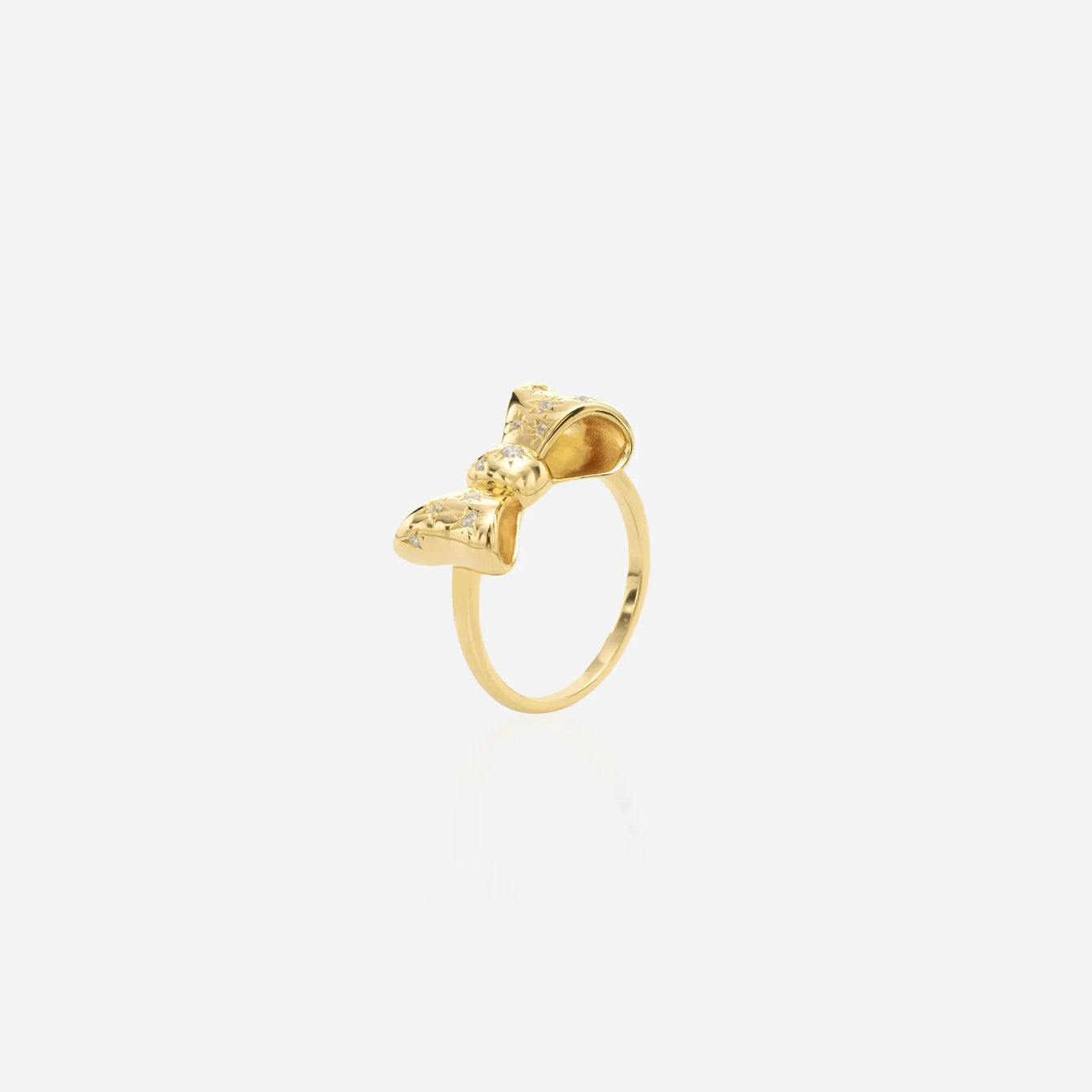
Editor's Picks: Architectural Domes: The Solaris and Its Kin
Dome Ring | Solaris Sunburst Ring with Lab-Grown Nano Zircon | ÉLARAMUSE: Dome Ring | Solaris Sunburst Ring with Lab-Grown Nano Zircon | ÉLARAMUSE — The dome that started it all. Mirror-polished gold hemisphere with gravity and substance.
Hammered Silver Dome Earrings | Lunar Studs | Hypoallergenic Rhodium: Hammered Silver Dome Earrings | Lunar Studs | Hypoallergenic Rhodium — Dome logic applied to the ear. Hammered silver hemispheres converting light into texture.