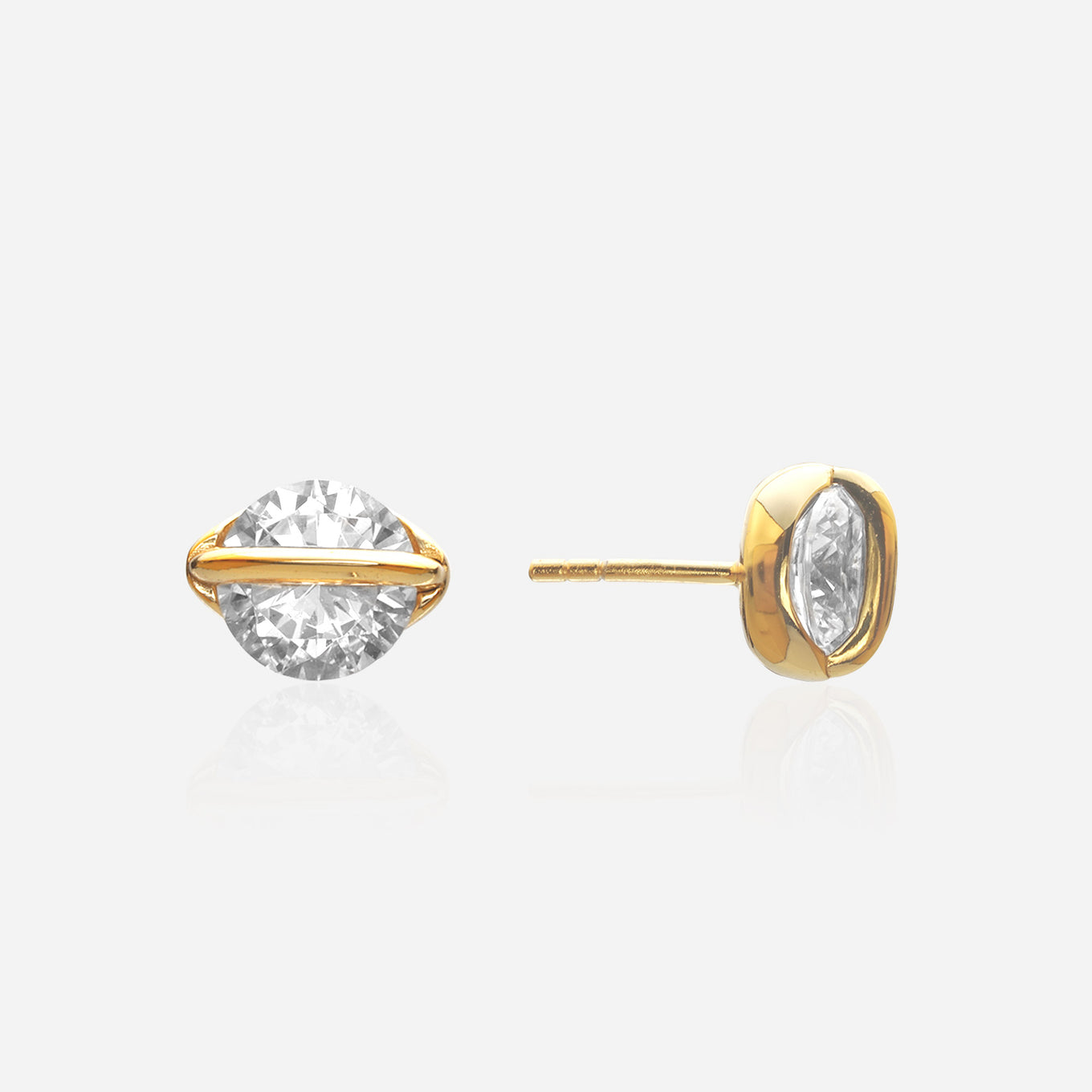
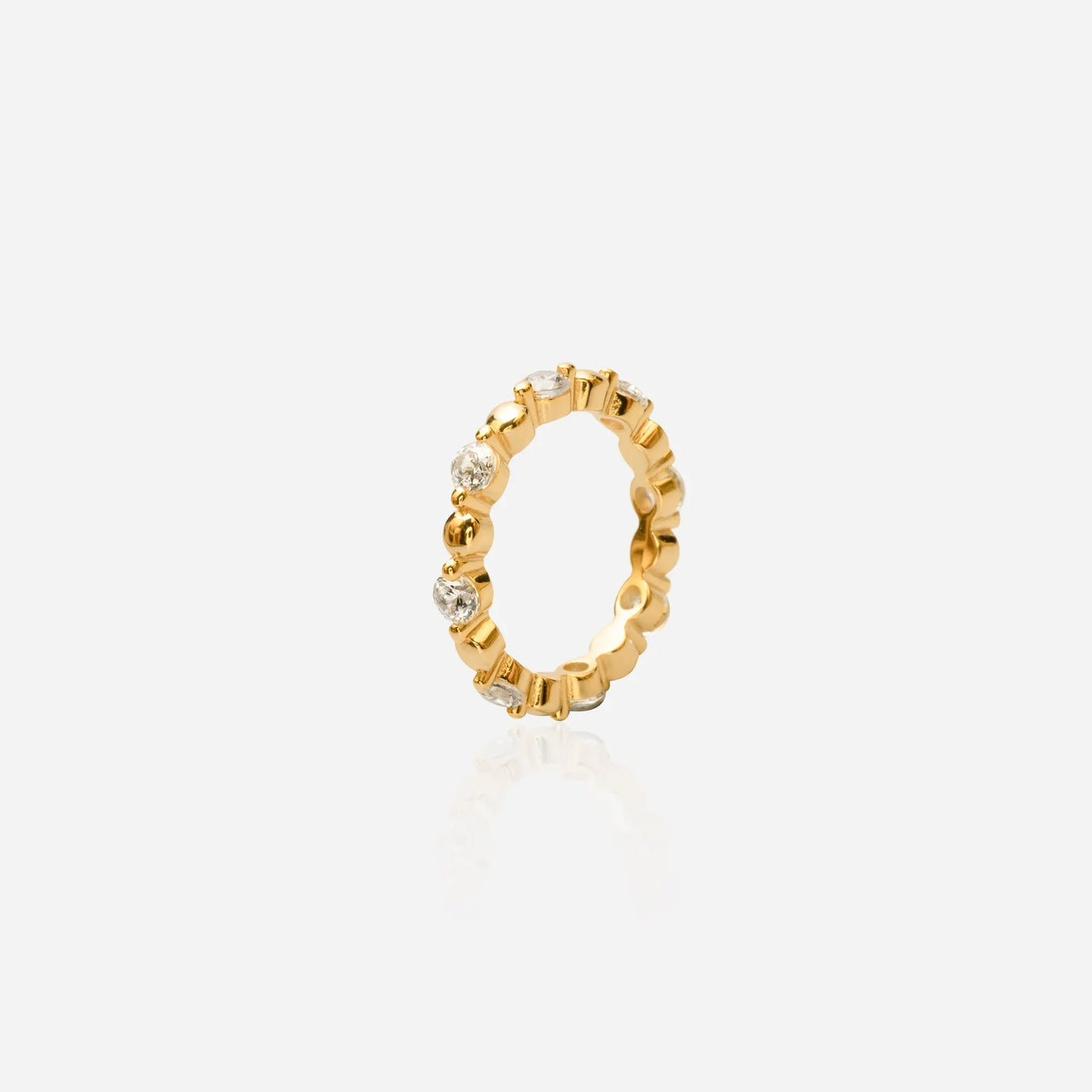
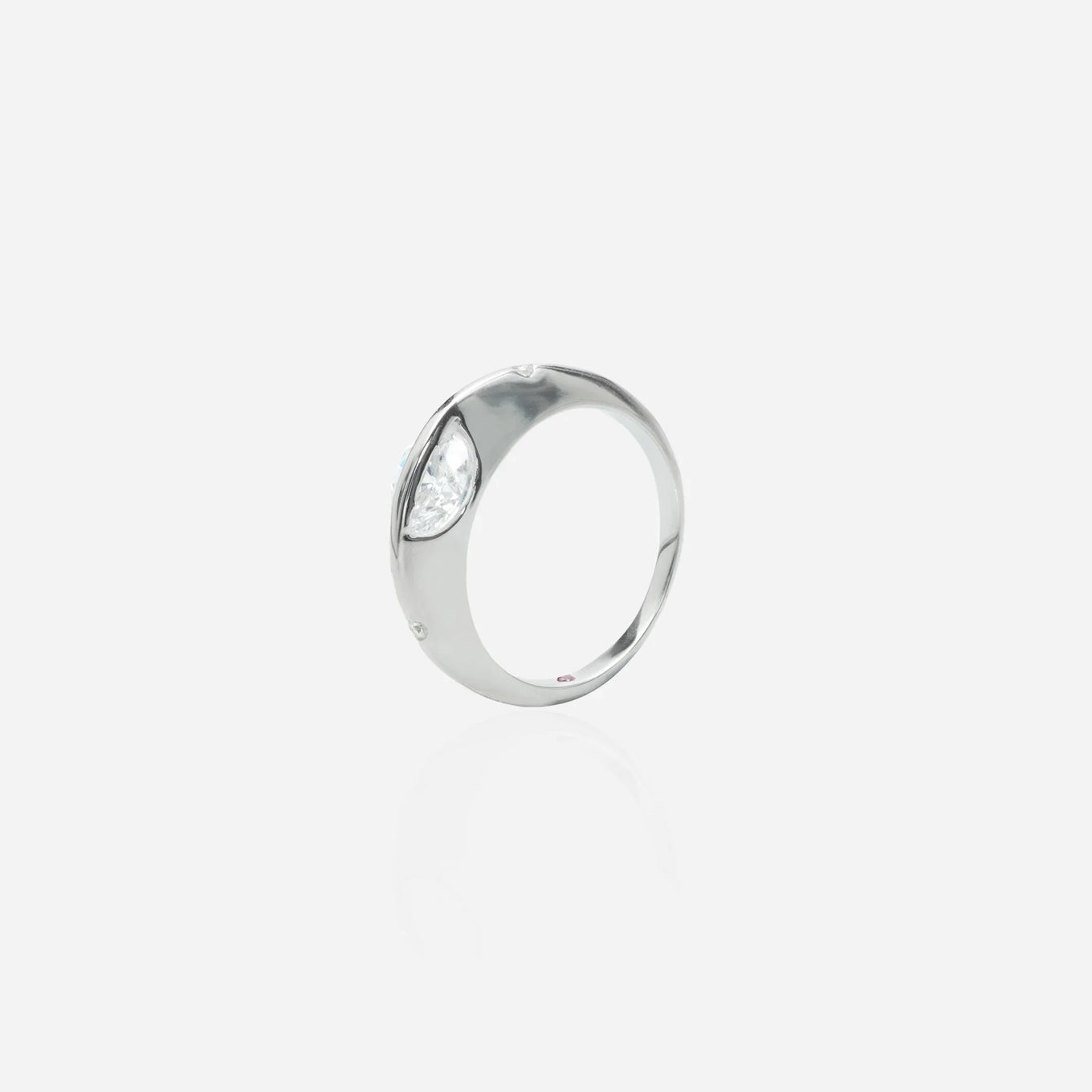
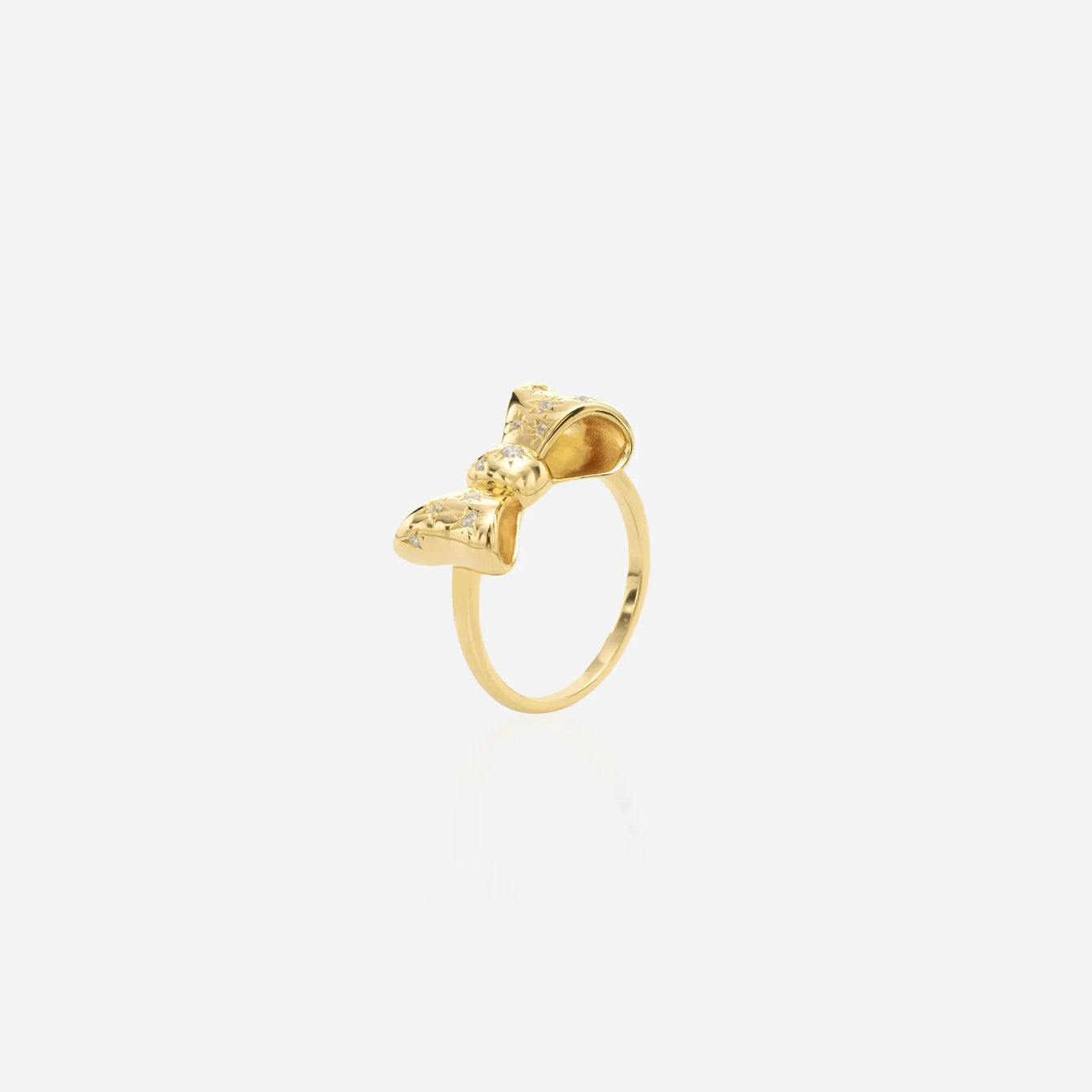
BLUF: Bottom Line Up Front
Of every lab diamond setting invented since the Victorian era, exactly one was designed for people who refuse to take their jewelry off. The channel set ring embeds each stone inside a groove between two metal walls, creating a surface with zero snag profile. No prongs to catch knitwear. No claws to scratch a baby's cheek. No elevated stones to knock against a keyboard.
If you've ever ruined a sweater pulling on a claw-set ring, or hesitated before buying a lab diamond band because you knew the prongs wouldn't survive your daily routine — this article gives you the full technical picture, from metallurgy to styling, and explains why the Gallery Ring represents a benchmark in precision channel construction.
📑 In This Guide
- BLUF: Bottom Line Up Front
- Quick Answer
- Key Terms
- How Channel Setting Differs from Pavé, Baguette, and Prong Settings
- Competitive Contrast: Glued vs. Precision-Set Channels
- Material Deep-Dive: Ag925 Core, Nickel-Free, Individual Channel Seats
- Behind the Design: The Gallery Ring
- The ELARAMUSE Standard
- How to Style a Channel Set Ring: Three Outfit Looks
- FAQ: Durability, Tarnish, and Sizing
- Be Your Own Muse
- What We Believe
- Channel Setting: A Century of Precision
- Ready to Experience Precision?
- References
Quick Answer
What is a channel set ring? A channel set ring holds diamonds or gemstones between two parallel metal walls — the "channel" — without any prongs, claws, or glue. Each stone sits in an individually milled seat within the channel, locked in by metal pressure rather than adhesive. The result is a flush, smooth band where the diamonds appear as a continuous line of light.
This setting was developed specifically for wedding bands and everyday rings that need to withstand constant wear without losing stones or snagging fabric. The Gallery Ring takes this concept further with gallery-wall architecture — raised channel edges that create an internal light chamber around each lab diamond.
Key Terms
- Channel Setting: A gemstone setting method where stones are held between two parallel strips of metal. No prongs, no glue — pure mechanical retention.
- Gallery Wall: The architectural detail on the Gallery Ring where channel walls rise slightly above the diamond plane, creating an internal light-reflecting chamber.
- Lab Diamond: A diamond grown in a controlled laboratory environment — chemically, optically, and physically identical to mined diamonds. The Gallery Ring uses high-carbon lab diamonds (clarity VVS-VS, color D-F).
- Ag925 Sterling Silver: 92.5% pure silver alloyed with 7.5% other metals (copper, zinc). The legal standard for sterling silver in the US, EU, and UK.
- 18K Gold Plating: A layer of 75% gold (18 karat) electroplated onto the sterling silver base. The Gallery Ring uses 0.5+ micron thickness — approximately 5x thicker than standard fashion-jewelry plating.
- Nickel-Free: No nickel in any metal layer — critical for the 10-20% of adults with nickel contact dermatitis (per American Academy of Dermatology data).
- Micron Plating Thickness: One micron = 0.001mm. Standard costume jewelry uses 0.05-0.1 microns. ÉLARAMUSE uses 0.5+ microns for daily-wear durability.
How Channel Setting Differs from Pavé, Baguette, and Prong Settings
Not all diamond settings are created equal — and the differences aren't just aesthetic. They determine whether your ring will survive a gym session, a gardening afternoon, or simply pulling on a cashmere sweater. Here's how channel setting stacks up against the three most common alternatives.
| Factor | Channel Set | Pavé | Baguette | Prong (Claw) |
|---|---|---|---|---|
| Stone Security | Excellent — each stone locked between two full-length metal walls | Moderate — each stone held by 2-4 micro-prongs that can bend | Moderate — stones held by thin metal bars at corners only | Variable — 4-6 prongs per stone; prongs can catch, bend, or break |
| Snag Risk | Zero — stones sit flush or below the band surface | Moderate — micro-prongs create a textured surface that catches fabric | Low — stones sit near-flush but corner edges are exposed | High — elevated prongs catch sweaters, hair, gloves, and seatbelts |
| Daily Wear | Ideal — no exposed setting elements to damage | Caution — prongs wear down over time; requires inspection | Moderate — corner channels can loosen with impact | Fragile — prongs bend; need regular tightening by a jeweler |
| Light Performance | Inner glow — light enters from above, bounces between walls and diamonds | Surface sparkle — scattered brilliance from multiple angles | Stepped flash — broad, flat reflections from table facets | Maximum brilliance — open setting lets light enter from all sides |
| Visual Effect | Clean, continuous line of light — architectural | Scattered glitter — surface of sparkle | Geometric, stepped light pattern — Art Deco | Individual stone brilliance — traditional |
| Stacking Compatibility | Excellent — smooth sides, no exposed elements | Good — but prongs can scratch adjacent rings | Moderate — square profile can rub against neighboring bands | Poor — prongs physically interfere with adjacent rings |
| Maintenance | Minimal — clean channel groove with soft brush | Regular — inspect prongs; ultrasonic cleaning can loosen stones | Regular — corner settings can accumulate debris | High — annual prong tightening; avoid ultrasonic with loose prongs |
The channel setting's core advantage is structural integrity. Unlike prong-set rings where each stone relies on tiny metal claws, a channel distributes holding pressure along the full length of both walls. This is why channel-set wedding bands routinely last decades without losing a single stone — the metal walls don't fatigue the way individual prongs do.
The trade-off is that channel setting produces an inner glow rather than the maximum light return of a prong setting, since less light enters from the sides. For most daily-wear scenarios, this trade-off is a net positive — you're trading 10% of theoretical brilliance for 100% more peace of mind.
Competitive Contrast: Glued vs. Precision-Set Channels
This is where the conversation gets real. Walk into any fast-fashion jewelry store and you'll find "channel set" rings for $15-$30. Pick one up. Look closely at the stones. Now run your fingernail along the channel. What you'll almost certainly find: the stones are glued in, not mechanically set.
Glued channels are the jewelry industry's dirty secret. The manufacturing process is simple — mill a groove, drop in CZ or low-grade diamonds with a dab of epoxy, ship it. The stones look flush, the price is attractive, and for the first week, everything sparkles. Then the problems begin:
- Adhesive degradation: Epoxy deteriorates under heat (hand washing, body temperature, sunlight), moisture (showering, swimming, sweat), and mechanical stress (hand movement, impacts). The bond weakens gradually, then suddenly — a stone pops out.
- No individual seat: Glued channels use a continuous groove. Stones rattle against each other microscopically during wear, chipping girdles (the diamond's outer edge) and dulling the line of sparkle over time.
- Irreparable: Once a glued stone falls out, there's no mechanism to replace it properly. The groove is a simple trough — no calibrated seat to anchor a new stone in the exact same position.
- Base metal risk: Glued-channel rings almost always use a brass or mystery-alloy base under thin plating. When moisture seeps through micro-gaps in the gold layer, it reacts with the base metal — and the epoxy bond fails from underneath.
A precision-set channel (like the Gallery Ring) works entirely differently:
- Individually milled seats: Each stone position is precision-cut into the channel walls using CNC equipment. The seat is calibrated to the specific stone's diameter and depth — typically within 0.01mm tolerance. This means every lab diamond in the ring sits at exactly the same height and angle, creating that signature continuous line of light.
- Mechanical retention: After stones are placed in their seats, the channel walls are compressed (burnished) to lock them in. The pressure is distributed along the stone's girdle — the strongest point of the diamond. No adhesive. No chemical bond to fail.
- Individual stone isolation: Each lab diamond occupies its own isolated chamber within the channel. Stones don't contact each other — each micro-gap between them acts as a shock absorber, preventing girdle-to-girdle chipping.
- Replaceable design: If a stone is damaged (unlikely but possible with extreme impact), a jeweler can open the channel at that specific position, replace the stone, and re-burnish the walls — restoring the ring without visible repair marks.
The cost difference is real: a glued channel ring costs $15-$40; a precision-set channel ring in sterling silver with lab diamonds starts around $60-$100. But the glued ring might last six months of daily wear. The precision-set one? Decades. The math favors precision every time.
Material Deep-Dive: Ag925 Core, Nickel-Free, Individual Channel Seats
Let's go layer by layer through what actually matters in a channel set ring's construction. This is the information that separates informed buyers from impulse shoppers.
The Core: Ag925 Sterling Silver
Ag925 is the international standard for sterling silver — 92.5% pure silver, 7.5% alloying metals (typically copper and zinc). The "925" stamp is a legal requirement in the US (FTC), EU (EN 1904), and UK (Hallmarking Act). Pure silver (99.9%) is too soft for jewelry — it bends like butter. The 7.5% alloy content gives sterling silver enough hardness (approximately 75-80 on the Vickers scale) to hold a precision-milled channel seat without deforming under daily wear.
Why sterling silver over stainless steel or brass? Two reasons: (1) Silver has the optimal hardness-to-malleability ratio for channel-setting — hard enough to hold stones, malleable enough to allow a jeweler to burnish the walls without cracking. (2) Silver's thermal conductivity keeps the ring comfortable against skin — it doesn't trap heat the way stainless steel can.
The Plating: 18K Gold, 0.5+ Microns
"Gold-plated" is a meaningless term without a thickness number. The FTC requires gold plating to be at least 0.175 microns (7 millionths of an inch). Most fashion jewelry plate at exactly that minimum — or below it. The Channel Set Ring 0.5+ micron 18K gold layer is approximately 3x the legal minimum and 5-10x what you'll find on glued-channel alternatives.
This matters because plating is a wear layer — every hour of contact with skin, water, and air erodes a tiny fraction of the gold molecules. A 0.1-micron plate might visibly wear through in weeks. A 0.5-micron plate can last years.
Nickel-Free: Why It Matters
Nickel is the most common metal allergen in the world. The American Academy of Dermatology estimates that 10-20% of the population has nickel contact dermatitis — and the number is rising, particularly among women who've had ear piercings. In the EU, the Nickel Directive (EU 94/27/EC) limits nickel release from jewelry to less than 0.5 micrograms per cm² per week. Many "hypoallergenic" claims are marketing, not chemistry.
The Gallery Ring's entire metal stack — from the Ag925 core through the gold plating layer — contains zero nickel. This is verified at the material-sourcing level, not just the final product.
Individual Channel Seats: The Engineering Nobody Sees
Here's what separates a precision channel set ring from everything else: each stone sits in its own individually milled seat. The CNC machine (or master setter, for hand-made pieces) cuts a cylindrical recess into both channel walls at each diamond position. The seat depth is calibrated to the stone's table-to-girdle height. The diameter is cut to within 0.01mm of the stone's girdle measurement.
When the stone drops into its seat, it's suspended at exactly the same height as every other stone in the channel — no wobble, no tilt, no variation. This is invisible to the naked eye but visible in the ring's performance: that razor-straight line of sparkle that defines a quality channel set band.
In a glued channel, there are no individual seats. There's just a trough. The stones are held in place by adhesive — and adhesive is subject to gravity, heat, moisture, and time. One stone sits 0.05mm higher than the next, and you can see it — a subtle wave in what should be a perfect line. That's the difference between jewelry and architecture.
Behind the Design: The Gallery Ring
The Gallery Ring didn't start as a jewelry design. It started as a visit to the Broad Museum in Los Angeles — specifically, the third-floor galleries where natural light enters through honeycomb skylights, bounces off white walls, and fills the space with an ambient glow that has no visible source. That quality of light — architectural, controlled, ambient rather than flashy — became the design brief.
The result is a channel set ring where the walls rise slightly above the diamond plane on both sides, creating a recessed profile. This isn't just aesthetic — it's functional. When light enters from above, it bounces between the gold-plated walls and the diamond surfaces before escaping. A conventional channel with flush walls reflects light once and sends it out.
The Gallery Ring's raised walls trap and redirect that light, creating what our design team calls the "inner glow effect" — a continuous ribbon of warmth rather than individual points of sparkle.
The name "Gallery" works on two levels: the literal reference to the museum architecture that inspired it, and the conceptual reference to curation. Each lab diamond in the channel is a selected piece — individually inspected for clarity (VVS-VS range) and color (D-F range, the top of the GIA color scale) and positioned in its own milled seat like a painting on a gallery wall. The band is the building. The stones are the collection.
Comfort-Fit Engineering
Beneath the diamond channel on the inner wall, a micro-relief cutout reduces the metal-to-skin contact area. This serves two purposes: (1) it prevents the heat buildup that makes continuous metal bands uncomfortable in warm weather, and (2) it eliminates the tight-band sensation when your fingers swell (which happens to everyone — temperature, salt intake, altitude changes all cause finger size fluctuations of up to half a ring size throughout the day).
The inner barrel is gently domed ("comfort-fit" profile), distributing pressure evenly around the finger circumference rather than concentrating it at the edges.
The ELARAMUSE Standard
We believe jewelry should work as hard as you do. Every ELARAMUSE piece is built on solid Ag925 sterling silver with 0.5+ micron 18K gold plating, rigorously tested for the realities of daily life: shower steam, gym friction, sunscreen, hand sanitizer, salt water, and 12+ hours of continuous skin contact. We don't design jewelry for the display case — we design it for the hand that types, drives, cooks, swims, lifts, and never stops moving.
The Gallery Ring passes five internal quality gates before it ships:
- Material certification: Lab diamonds verified for clarity (VVS-VS) and color (D-F). Ag925 silver certified at source. 18K gold plating solution tested for 75%+ gold content.
- Channel precision check: Each stone position measured against its neighbor. Maximum tolerance: 0.02mm height variation across the entire channel.
- Burnish integrity test: Channel walls inspected under 10x magnification for uniform compression — no gaps, no cracks, no uneven wall thickness.
- Wear simulation: 500 cycles of abrasion against a standardized fabric surface to verify plating adhesion and stone retention.
- Skin safety verification: Nickel-release testing per EU 94/27/EC standards. Zero nickel in any layer of the ring from core to surface.
This is what separates a ring you'll wear for decades from one you'll replace next season.
How to Style a Channel Set Ring: Three Outfit Looks
The channel set ring's architectural precision gives it a chameleon quality — it reads as modern-clean with tailored clothing and as quietly luxurious with casual wear. Here are three complete looks built around the Gallery Ring.
Look 1: The Creative Director
The outfit: An oversized cream blazer over a black silk camisole. High-waisted charcoal trousers with a clean cuff. Black patent leather loafers. A single thin gold chain necklace — 16 inches, no pendant. No other rings.
Why it works: The Gallery Ring sits alone — no stack, no competition. Against the neutral palette, the 18K gold band reads as deliberate, not decorative. The channel-set diamonds create a single clean line that mirrors the vertical drape of the blazer. When you gesture during a presentation, the inner glow catches the room light without flashing — it's confident without being loud.
Key principle: Channel set rings reward restraint. When the ring is the only jewelry on your hand, its architecture becomes the focal point. Every element — the raised gallery walls, the continuous lab diamond line, the slim 2mm profile — reads clearly because nothing else is competing for attention.
Look 2: The Weekend Architect
FAQ: Durability, Tarnish, and Sizing
Q: How durable is a channel set ring compared to other settings?
A: Channel set rings are the most durable multi-stone setting in jewelry. Because the stones are fully enclosed by metal walls on two sides and seated in individual milled recesses, they're protected from direct impacts that would dislodge prong-set or pavé stones. The American Gem Society consistently ranks channel setting as the #1 choice for rings intended for daily, uninterrupted wear.
A precision-set channel ring with lab diamonds (hardness 10 on the Mohs scale — the hardest naturally occurring material) and sterling silver construction (Vickers hardness ~75-80) will outlast virtually any other jewelry setting under normal use. The limiting factor isn't the stones or the setting — it's the gold plating, which will naturally wear over years and may eventually need re-plating (a $20-$40 service at most jewelers).
Q: Will a channel set ring tarnish?
A: The sterling silver core can tarnish, but the 18K gold plating layer prevents this under normal conditions. Gold itself does not tarnish — that's why it's been used for jewelry for 5,000+ years. However, if the gold plating wears through to the silver layer underneath (which takes years with 0.5+ micron plating), the silver will tarnish on exposure to sulfur compounds in the air (the same reaction that tarnishes silver flatware).
Prevention: remove the ring before applying perfumes, lotions, or hair products containing sulfur compounds. If you live in a high-humidity coastal area, store the ring in a sealed pouch when not wearing it. The Gallery Ring ships with an ELARAMUSE gift pouch specifically designed to minimize air exposure.
Q: How do I clean a channel set ring?
A: Use warm water, mild dish soap, and a soft-bristle brush (a clean baby toothbrush works perfectly). Gently brush along the channel groove — focus on the micro-gaps between stones where lotion and skin oils accumulate. Rinse thoroughly. Pat dry with a lint-free microfiber cloth.
Do NOT use ultrasonic cleaners on channel-set rings: the high-frequency vibrations can, over repeated cycles, micro-loosen the burnished channel walls, even though no stones will fall out immediately. Avoid chemical dip cleaners — they can react with the copper content in sterling silver if they penetrate the gold plating at any micro-wear point.
Q: Can I wear a channel set ring in the shower or pool?
A: Shower: yes. The Gallery Ring is water-resistant and designed for 24/7 wear. Soap and water won't damage the setting, plating, or stones. Pool: avoid. Chlorine is chemically aggressive — it can accelerate gold plating wear and, over time, react with the copper in sterling silver. Salt water (ocean): best avoided — salt crystals can accumulate in the channel groove and, when combined with friction, act as micro-abrasives on the gold plating.
If you do wear it in the ocean, rinse thoroughly with fresh water immediately afterward.
Q: Channel set rings can't be resized, right?
A: This is the single most persistent myth about channel set rings — and it's partly true, partly outdated. Channel set rings CAN be resized within a limited range — typically up or down half a size (sometimes a full size, depending on the specific ring construction and the jeweler's skill).
The process requires a jeweler who works with channel settings regularly: they remove stones from the affected portion of the channel, resize the band, re-mill the channel seats, and reset the stones. This is labor-intensive and typically costs $50–$120.
For a size change beyond one full size, resizing is not recommended — the channel geometry would distort too much. Getting the right size from the start is critical. Measure your finger at the end of the day (fingers swell through the day — morning measurements will be too tight).
If you're between sizes, size up — a slightly loose ring can be adjusted with a sizing bead (a tiny metal ball added to the inner band); a too-tight ring is uncomfortable and impossible to fix without resizing.
Q: What's the sizing range for the Gallery Ring?
A: The Gallery Ring is available in US sizes 5-9. If your size is outside this range, contact ÉLARAMUSE customer support — custom sizing may be available for select sizes on request.
Q: Will the stones ever fall out of a channel set ring?
A: In a properly constructed precision-set channel: extremely unlikely under normal wear. The failure mode for a channel set ring isn't a single stone falling out — it's the channel walls gradually opening (deforming) under repeated, severe impacts (think: dropping a dumbbell on your hand at the gym). This is why quality channel rings use sterling silver rather than softer metals — the 925 alloy's hardness resists deformation.
If you subject your ring to an impact hard enough to open the channel walls, you'll see visible deformation (a wider groove, a stone sitting lower than its neighbors) before any stone actually falls out. At that point, a jeweler can re-burnish the channel. In 30+ years of channel setting history, properly constructed sterling silver channels have a stone retention rate that approaches 99.9% under normal wear conditions.
Q: Is a channel set ring suitable as a wedding band?
A: Yes — and it's one of the most traditional choices for a diamond wedding band. Channel-set wedding bands have been the standard for women's diamond wedding rings since the 1970s, precisely because of their durability. A channel set wedding band pairs well with a solitaire engagement ring — the clean line of the channel complements the center stone without competing.
For a modern approach, wear the Gallery Ring as a standalone wedding band: the continuous line of diamonds symbolizes eternity (no beginning, no end), and the architectural profile adds design interest that a plain gold band lacks.
Be Your Own Muse
Jewelry trends come and go — channel set rings have been in continuous production since the Art Deco era (1920s-1930s), and for good reason. A style that survives a century doesn't survive because it's trendy. It survives because it works.
The channel set ring doesn't demand attention — it earns it through precision. The person who chooses a channel-set lab diamond band over a pavé or prong ring is making a statement about values: they prioritize quality that's engineered, not decorated. They want jewelry that performs rather than poses.
They understand that the most impressive thing a ring can do isn't sparkle across a dim restaurant — it's survive every single day of their actual life and look better at year five than it did on day one.
When you wear a precision-set channel ring, you're wearing an idea: that beauty and durability aren't trade-offs. That engineering is a form of elegance. That the best-designed objects — whether buildings, watches, or rings — reveal their quality slowly, over time, to the person who owns them.
What We Believe
We believe jewelry is not decoration — it is self-definition. Every piece we make must earn its place on your body: through material integrity (solid Ag925 cores, never hollow brass), through design intelligence (pieces that survive showers, sleep, and spontaneous decisions), and through a commitment to transparency that the jewelry industry has historically avoided. We do not chase trends. We build talismans for the captain of her own soul — pieces that feel like you, only more intentional.
Channel Setting: A Century of Precision
The channel setting wasn't invented by accident. It emerged from the same Art Deco period (1920s-1930s) that gave us stepped skyscrapers, geometric furniture, and the idea that engineering could be beautiful. The Victoria & Albert Museum (V&A) in London holds several Art Deco channel-set pieces in its jewelry collection — including a 1925 Cartier band that uses the same fundamental geometry (parallel metal walls, flush-set stones) as a modern Gallery Ring.
The technology has improved — CNC milling replaced hand files, lab diamonds replaced mined stones — but the core insight hasn't changed: jewelry that protects its stones lasts longer, and jewelry that lasts longer becomes an heirloom.
According to the Gemological Institute of America (GIA), the channel setting is classified under the "invisible setting" family — settings where the metal structure that holds the stones is hidden from the top view. The GIA's Jewelry Design & Technology program teaches channel setting as one of the foundational advanced techniques, alongside bezel setting and flush/gypsy setting.
What distinguishes channel from other invisible settings is the continuous wall — a feature that distributes impact force across the entire band rather than concentrating it at individual prong points.
This century of refinement has produced a setting that is simultaneously the most practical and the most architectural in jewelry. It's the choice of engineers who appreciate jewelry and jewelers who appreciate engineering.
Ready to Experience Precision?
The Gallery Ring is available now in 18K gold-plated sterling silver with high-carbon lab diamonds. Each ring ships in an ELARAMUSE gift pouch with free US shipping on orders over $99.
Explore the full gold ring band collection for stacking partners, or browse all hypoallergenic rings at ELARAMUSE.
References: Victoria & Albert Museum, Jewelry Collection, Accession No. M.30-1987 (channel-set band). Gemological Institute of America (GIA), Jewelry Design & Technology Curriculum, Module 4: Advanced Stone Setting. American Academy of Dermatology, Nickel Allergy Position Statement, 2023. FTC Guides for the Jewelry, Precious Metals, and Pewter Industries, 16 CFR Part 23. EU Nickel Directive 94/27/EC.
Editor's Picks: Channel-Set Rings: Precision Over Prongs
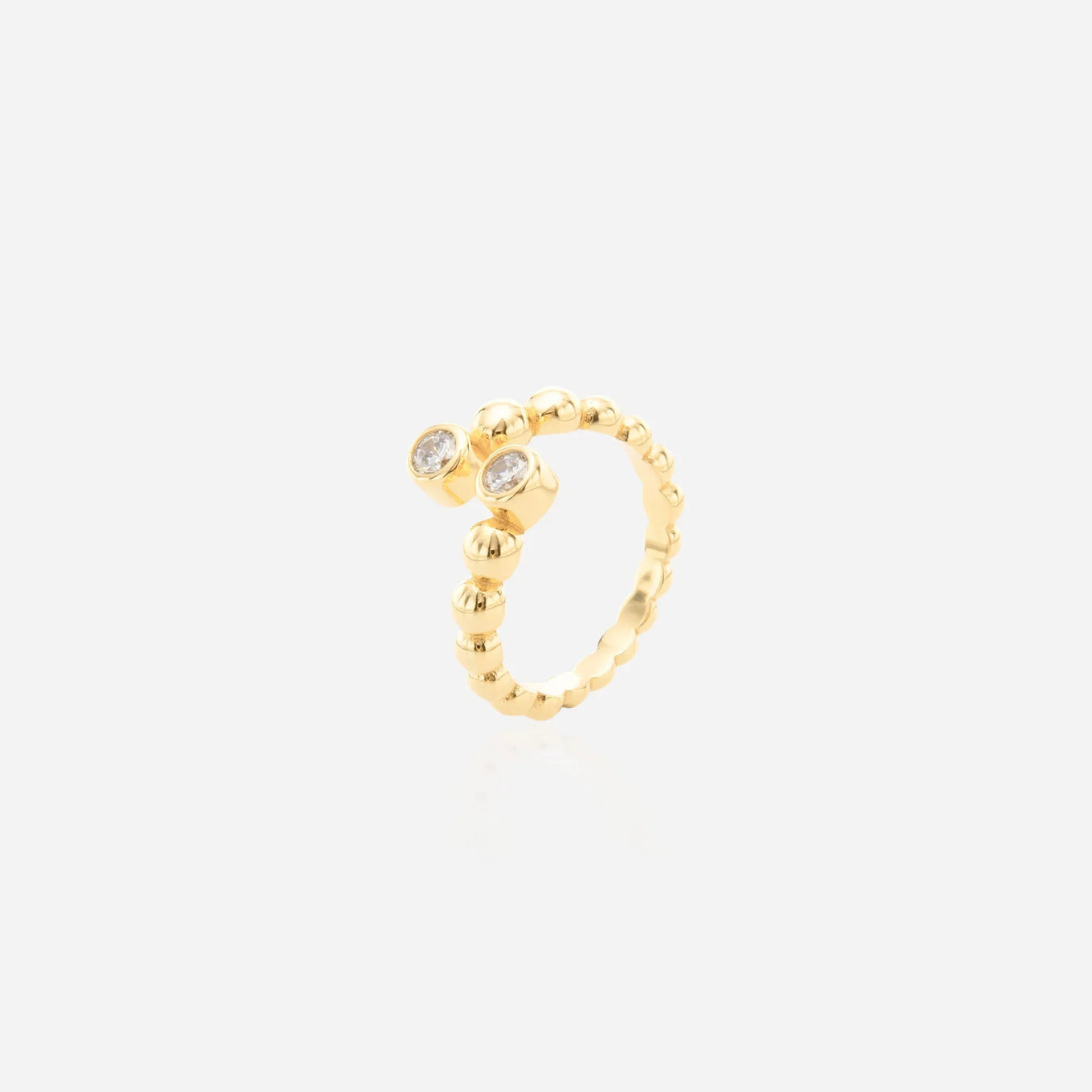
Channel Set Ring | Gallery Band with High-Carbon Lab Diamonds | ÉLARAMUSE: Channel Set Ring | Gallery Band with High-Carbon Lab Diamonds | ÉLARAMUSE — The reference standard. 11 lab diamonds in continuous channels, zero visible metal.
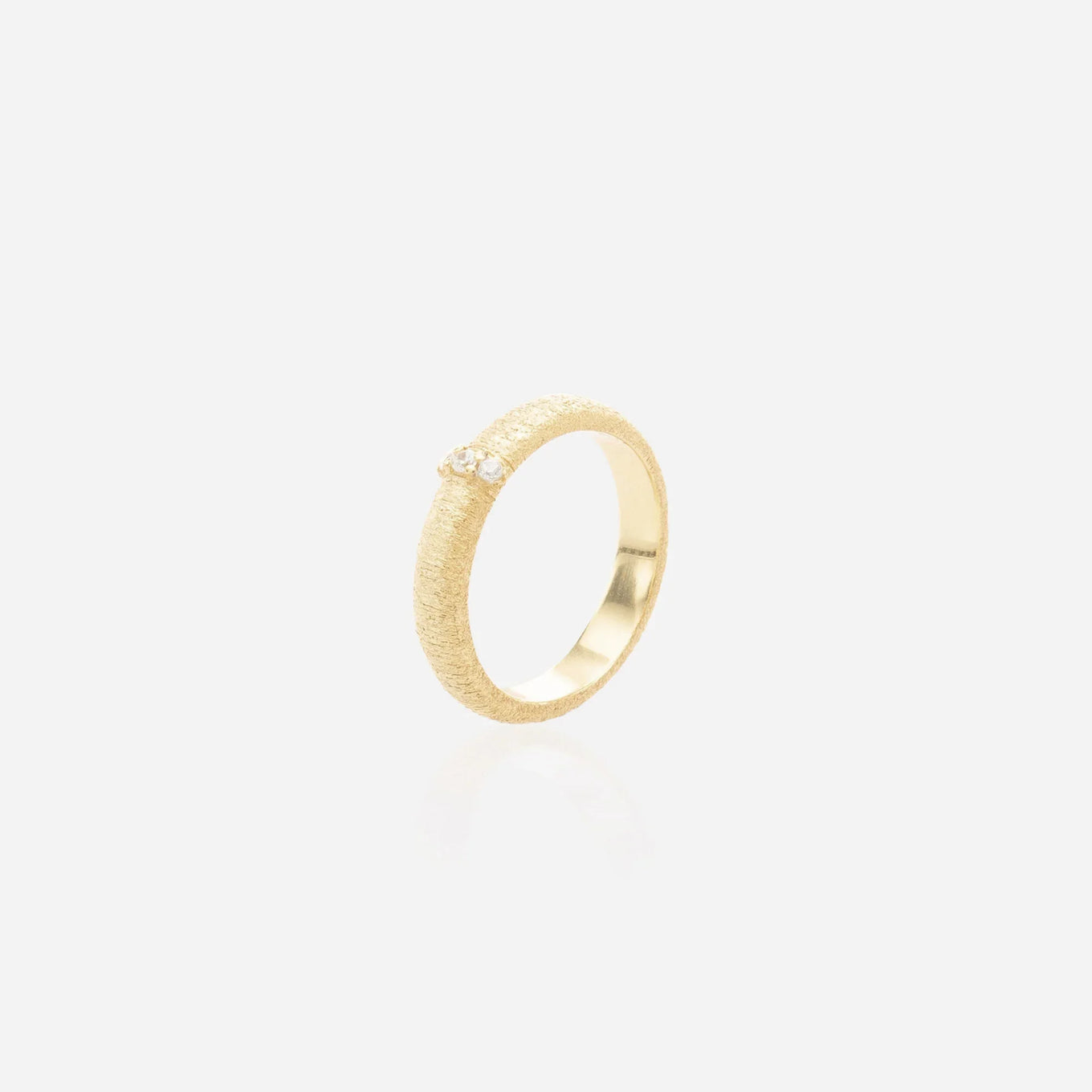
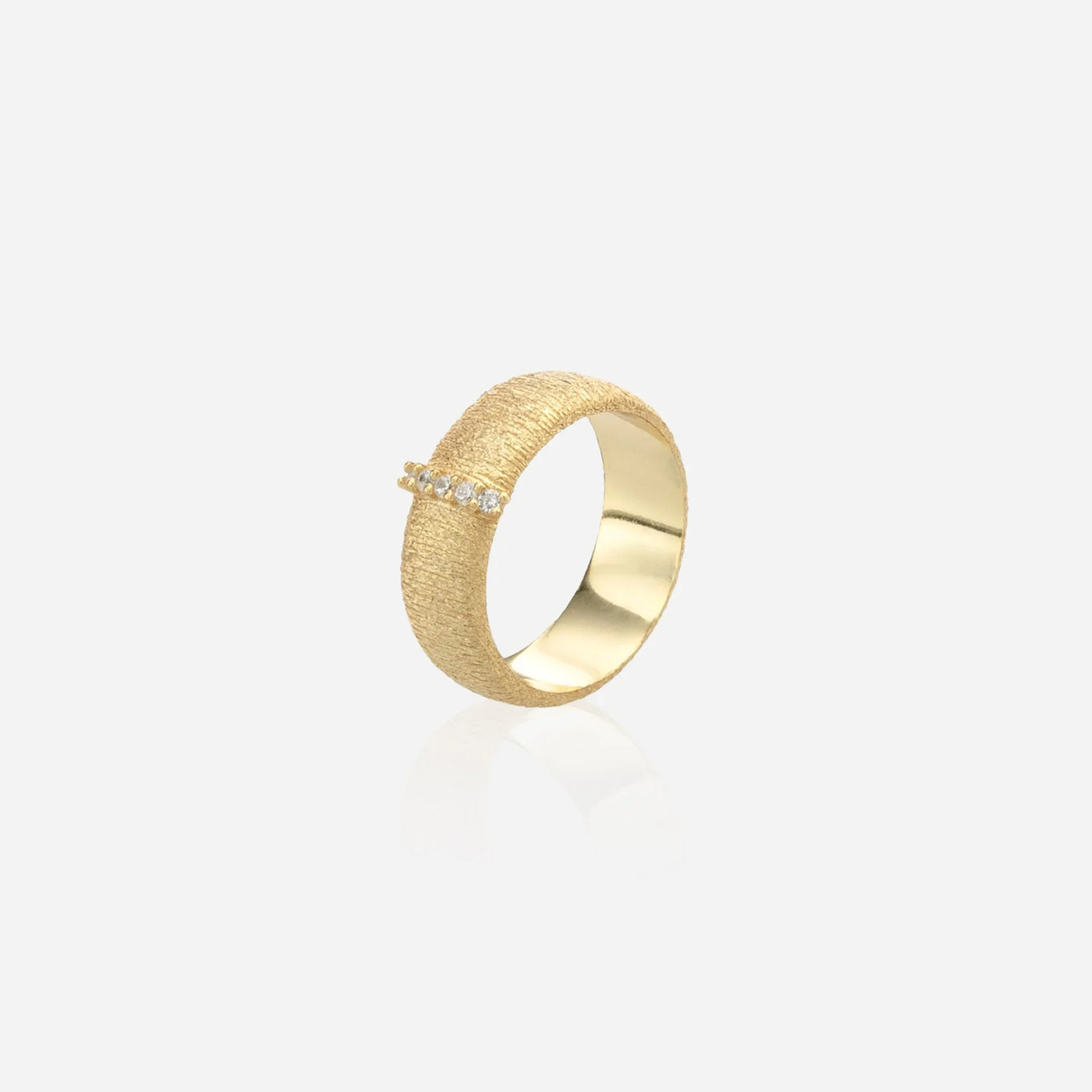
Wide Band Ring | Architectural Gold Statement Ring | ÉLARAMUSE: Wide Band Ring | Architectural Gold Statement Ring | ÉLARAMUSE — Architectural wide band with surface geometry. Clean lines beat clutter every time.
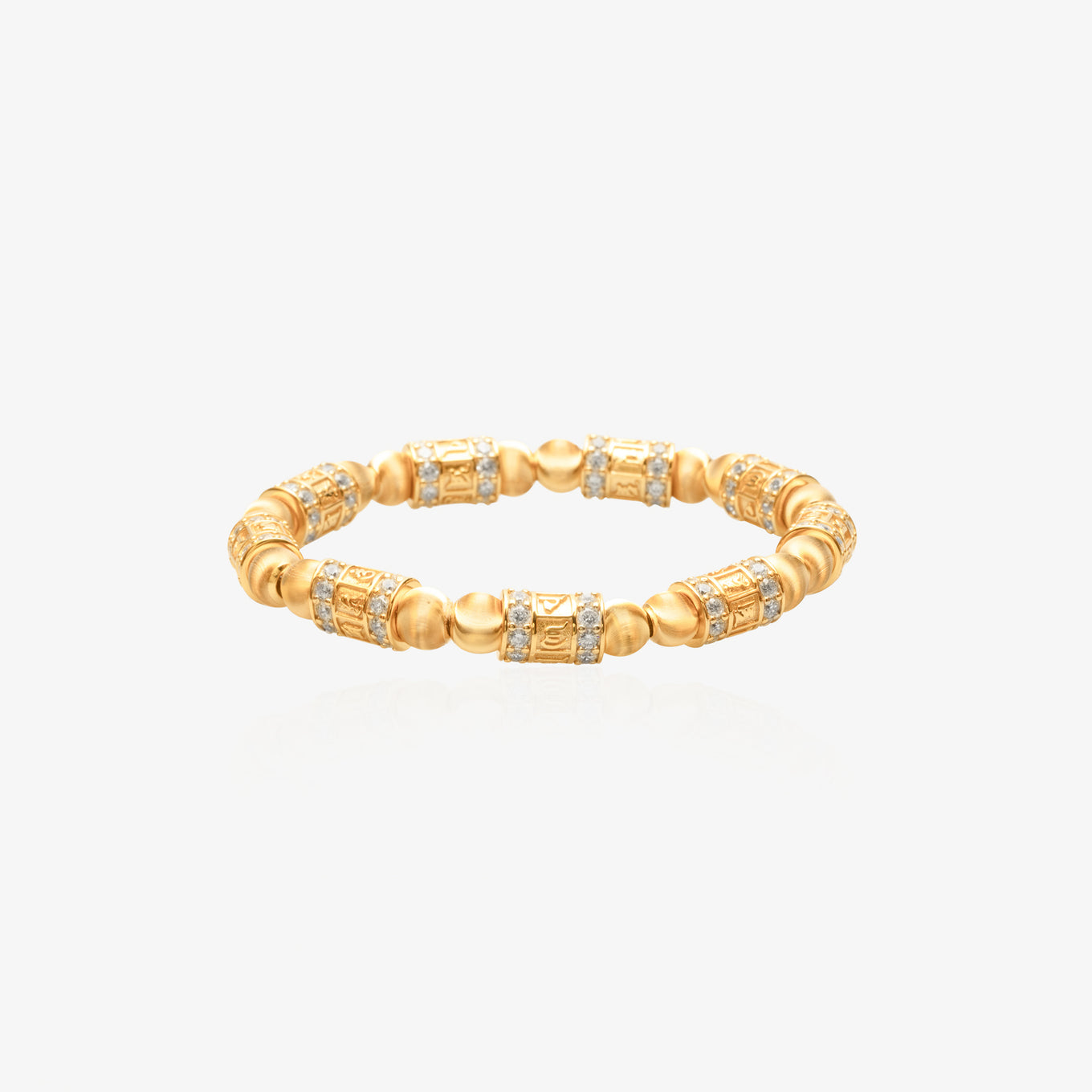
Gold Wave Ring Set | Sterling Silver Stackable | Minimalist Sparkle: Gold Wave Ring Set | Sterling Silver Stackable | Minimalist Sparkle — Three micro-grooved wave bands. Precision energy without a single diamond.