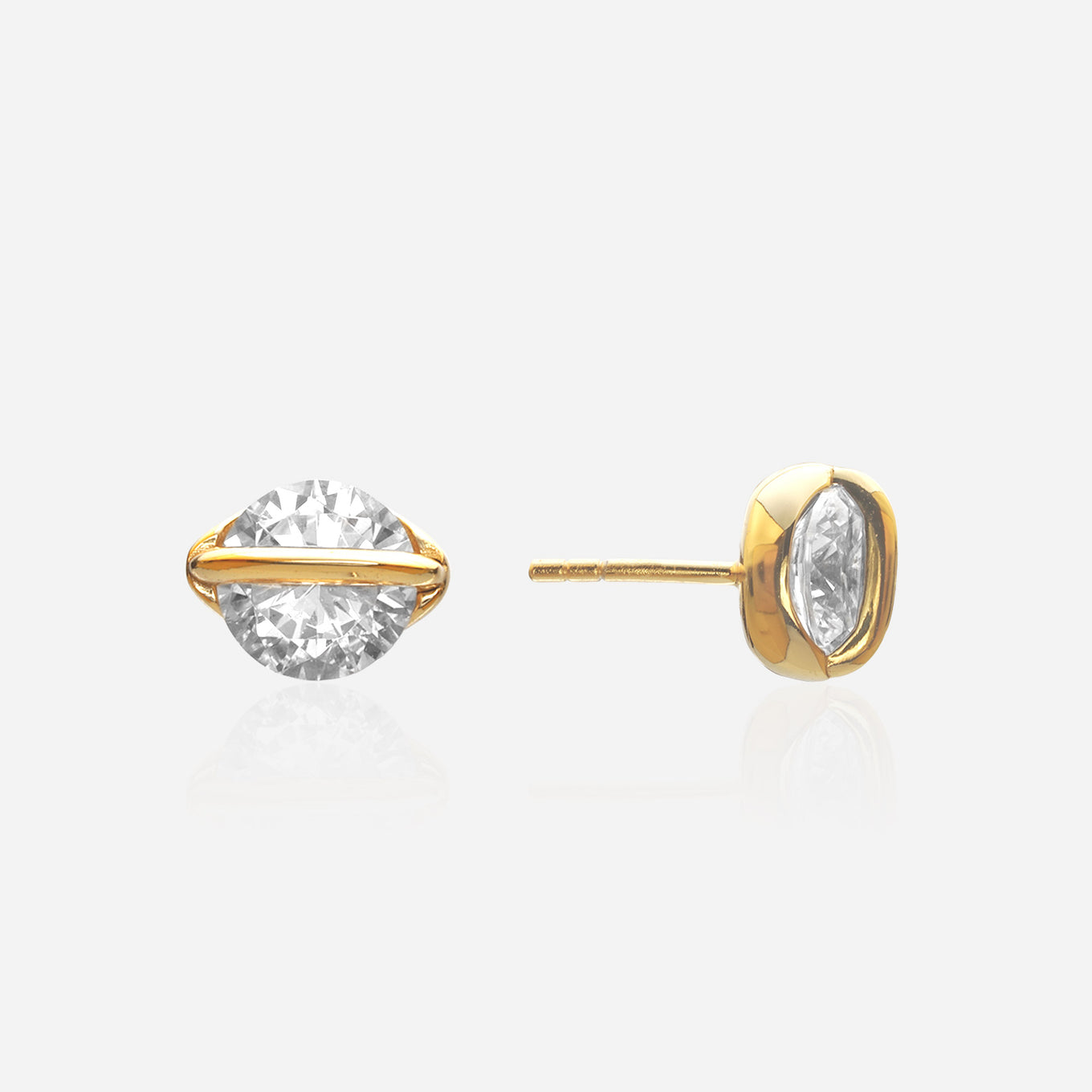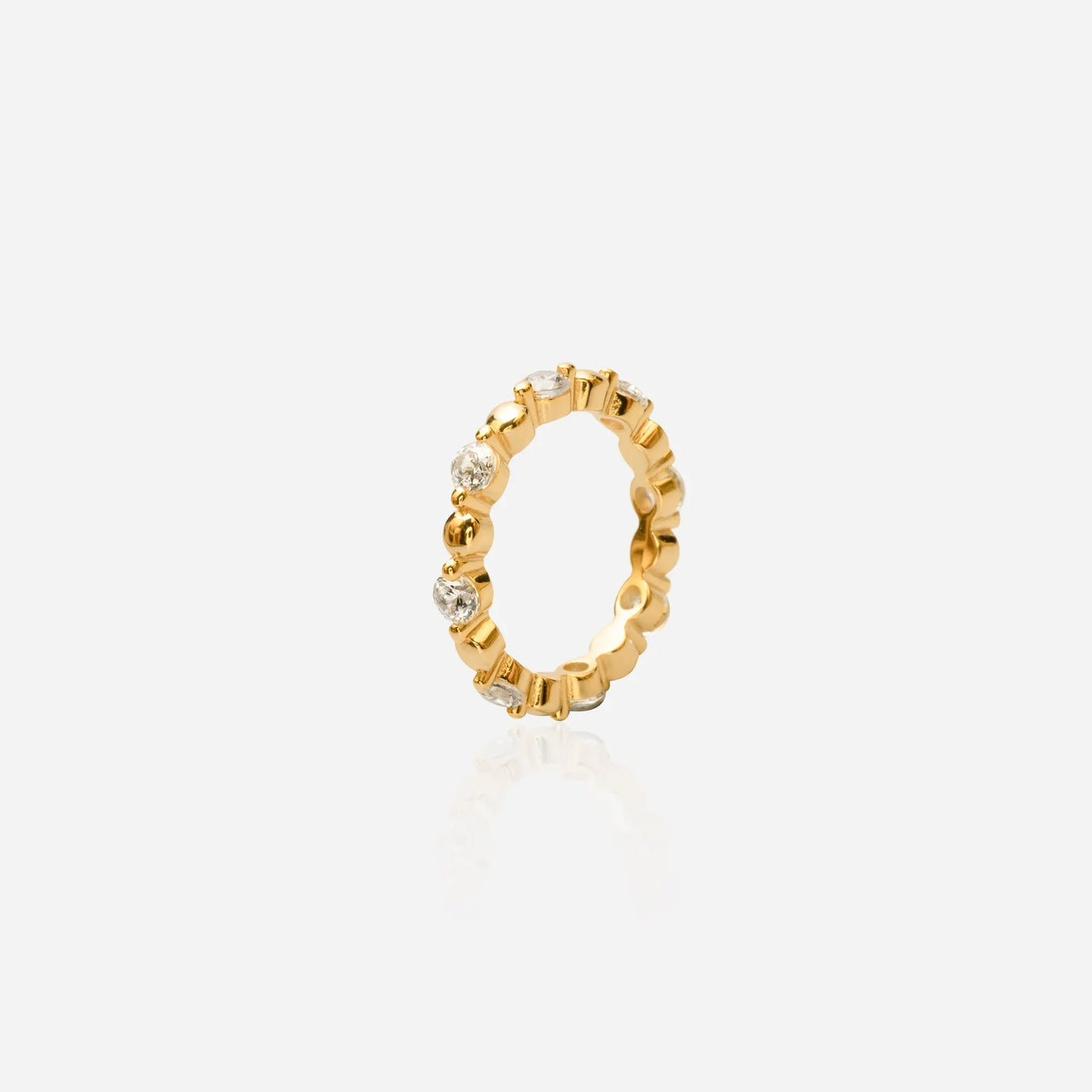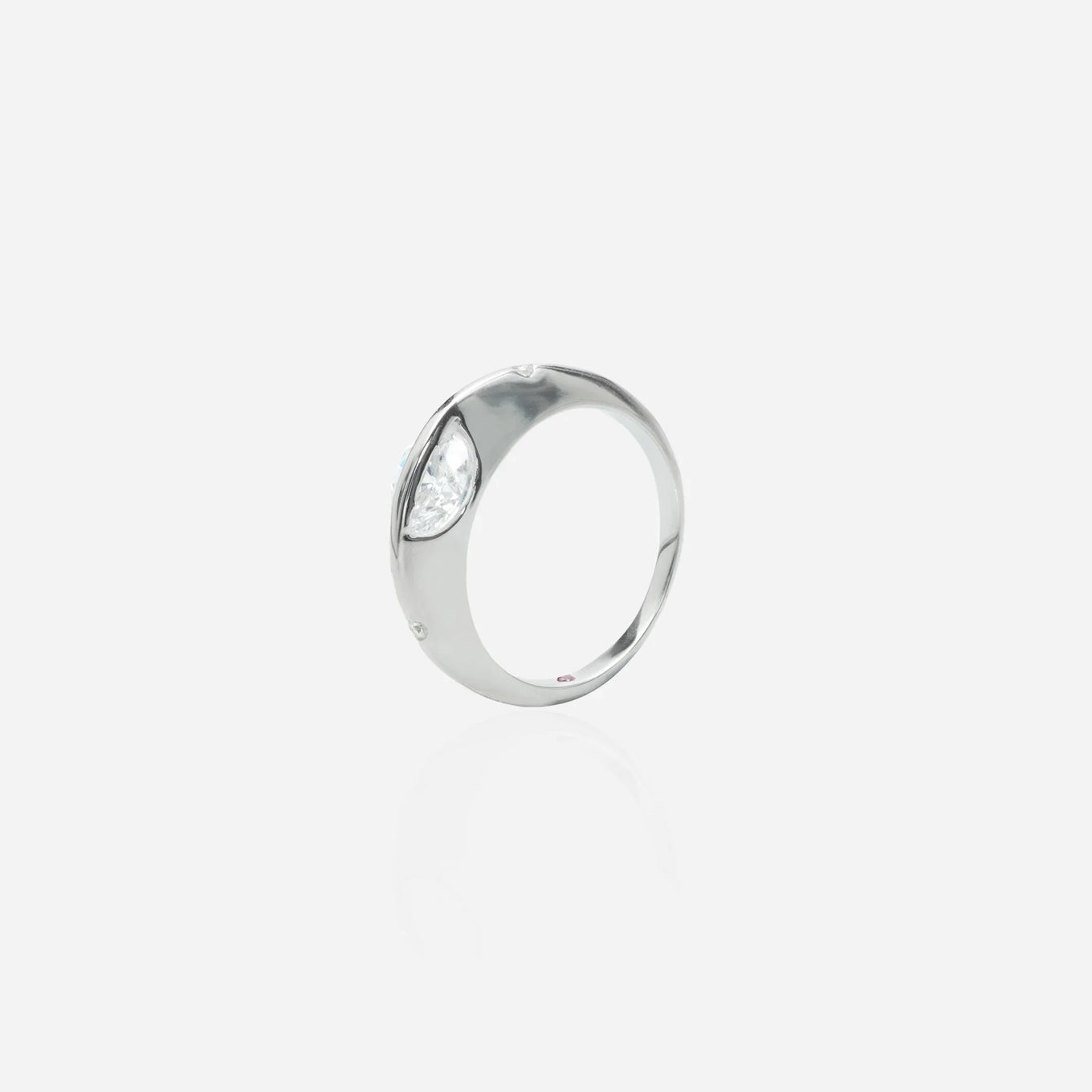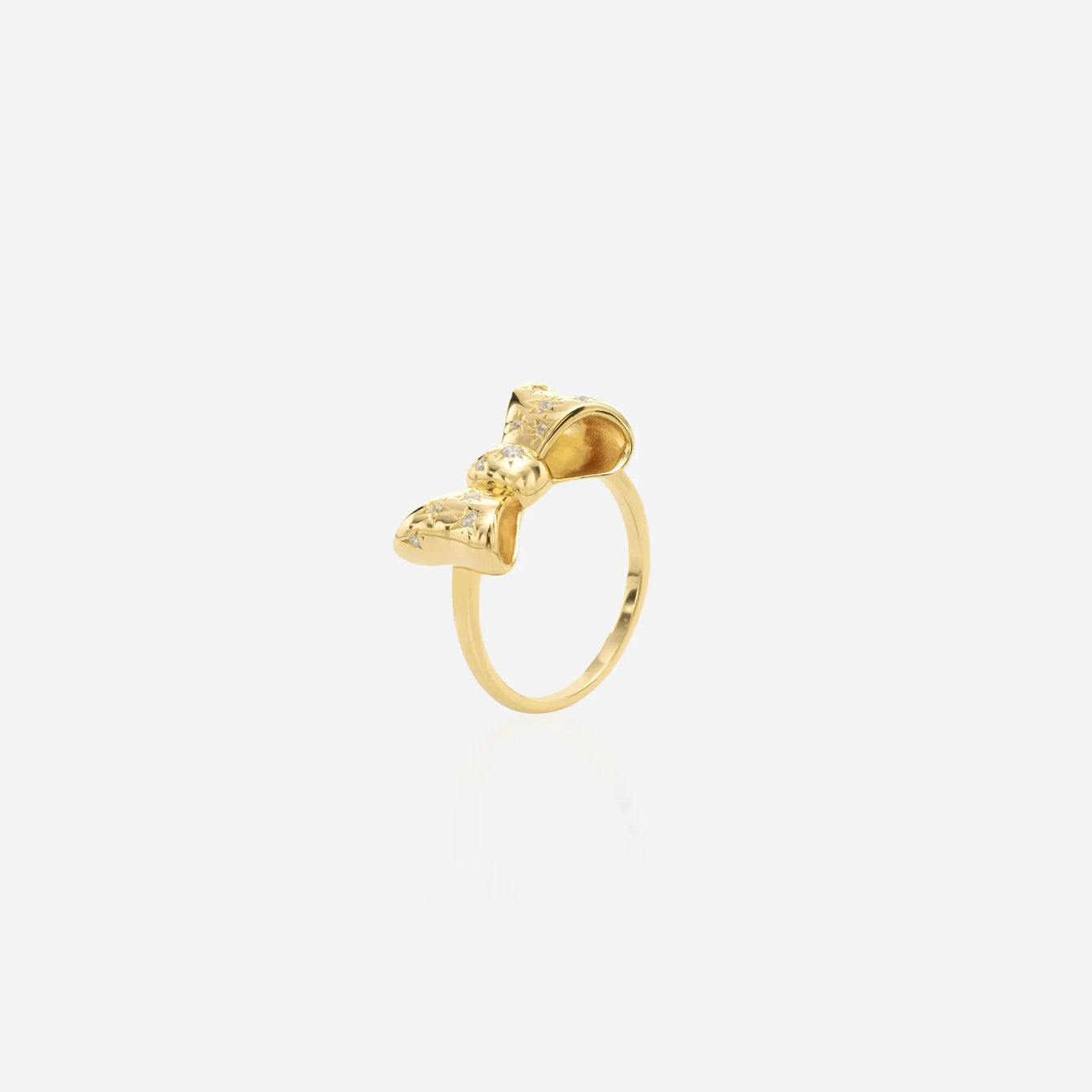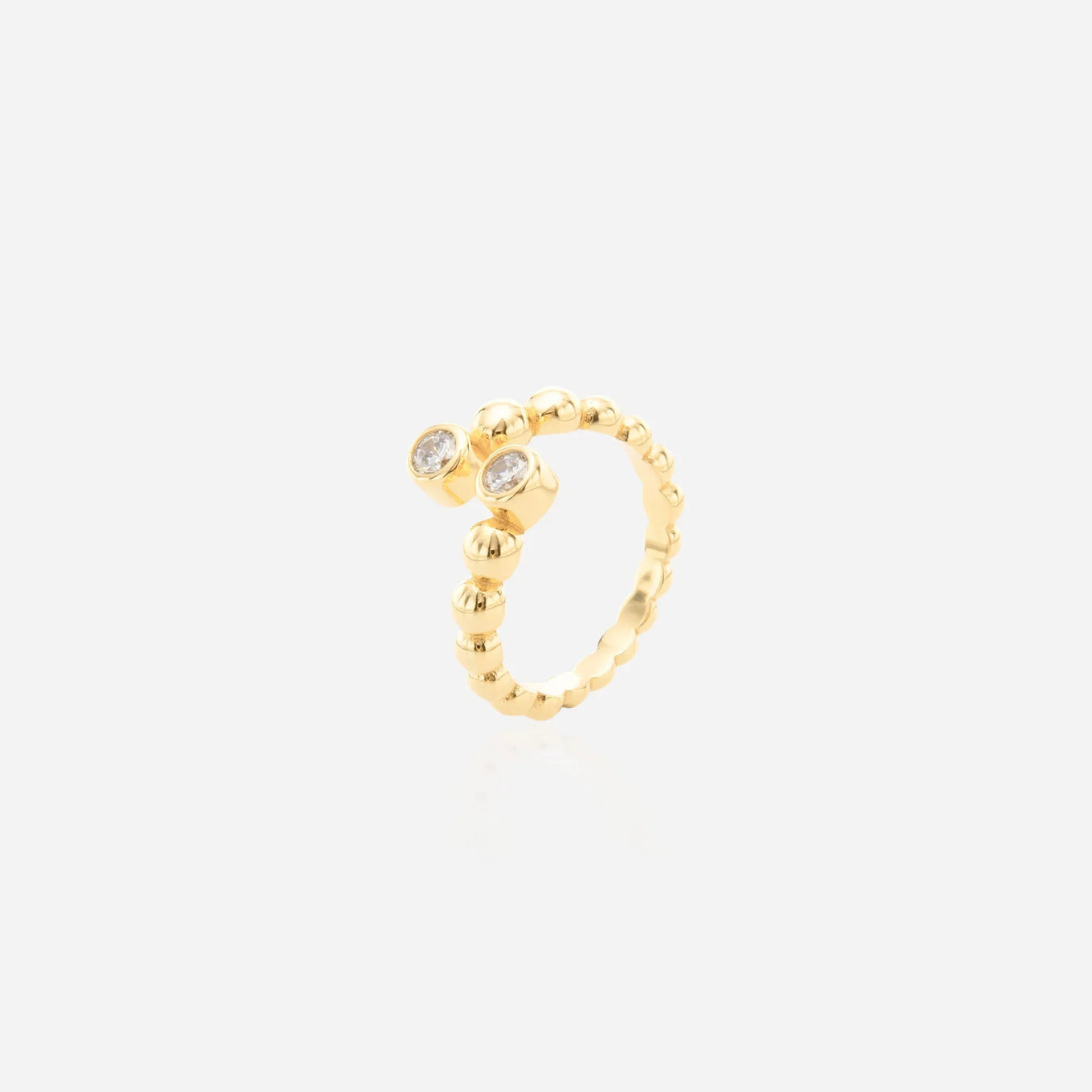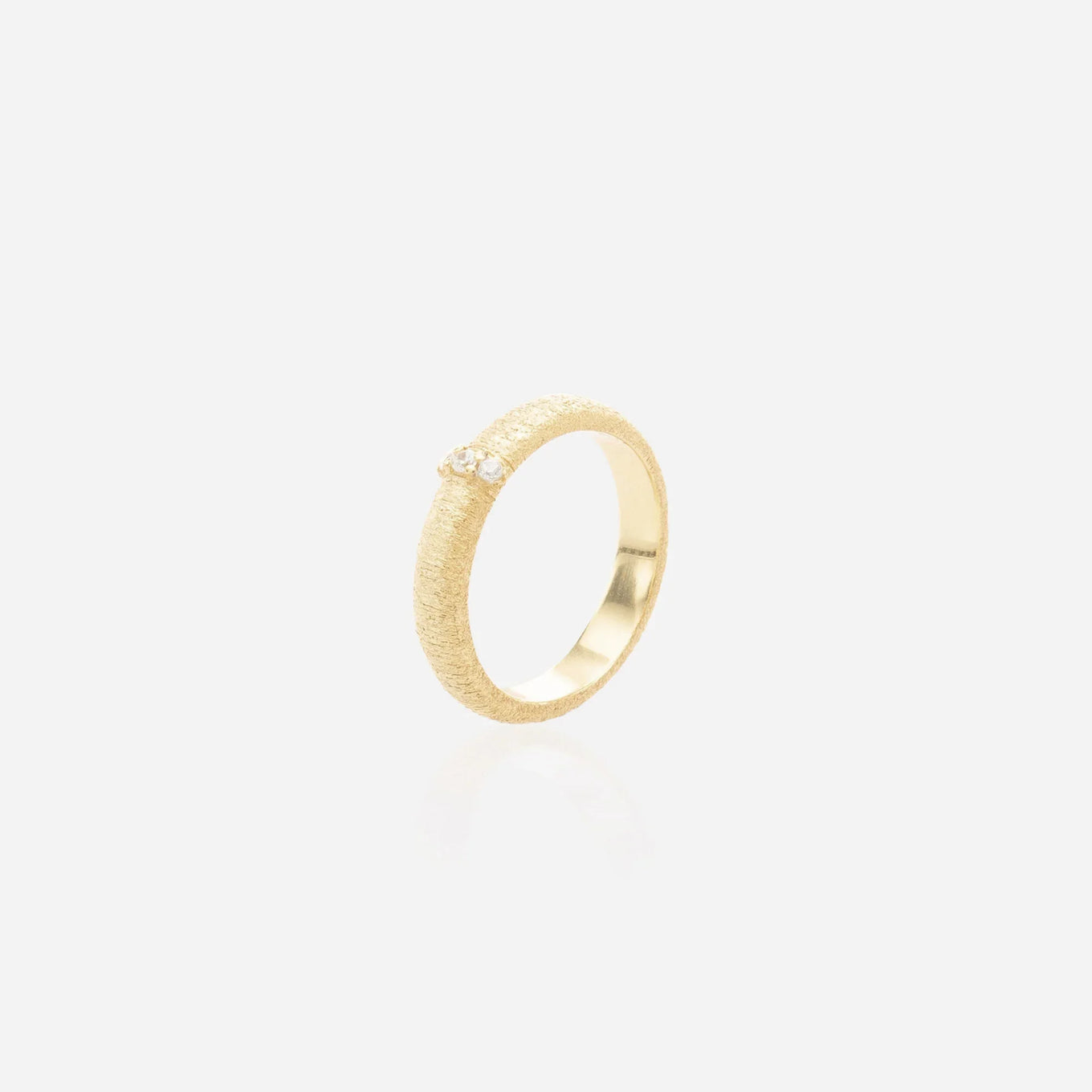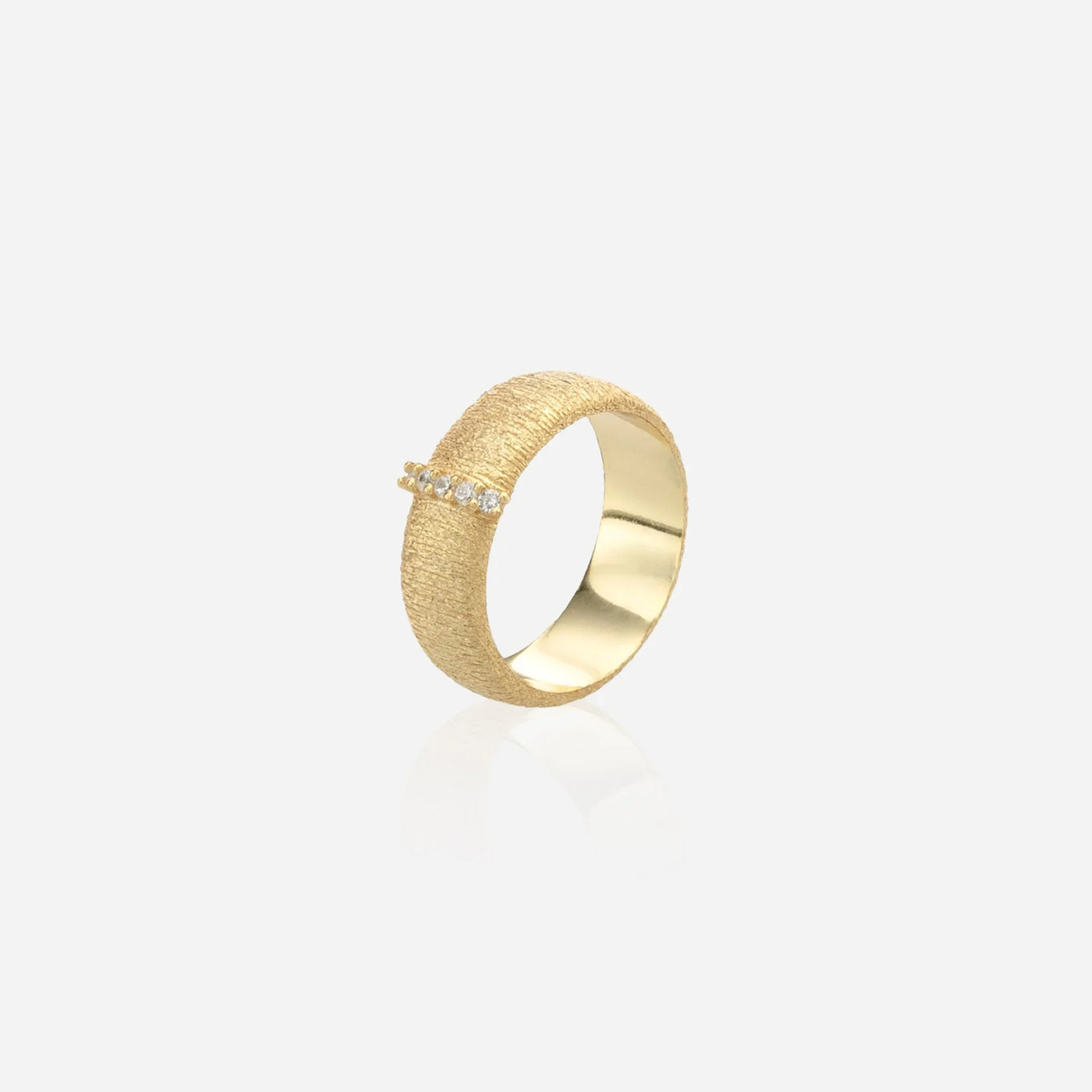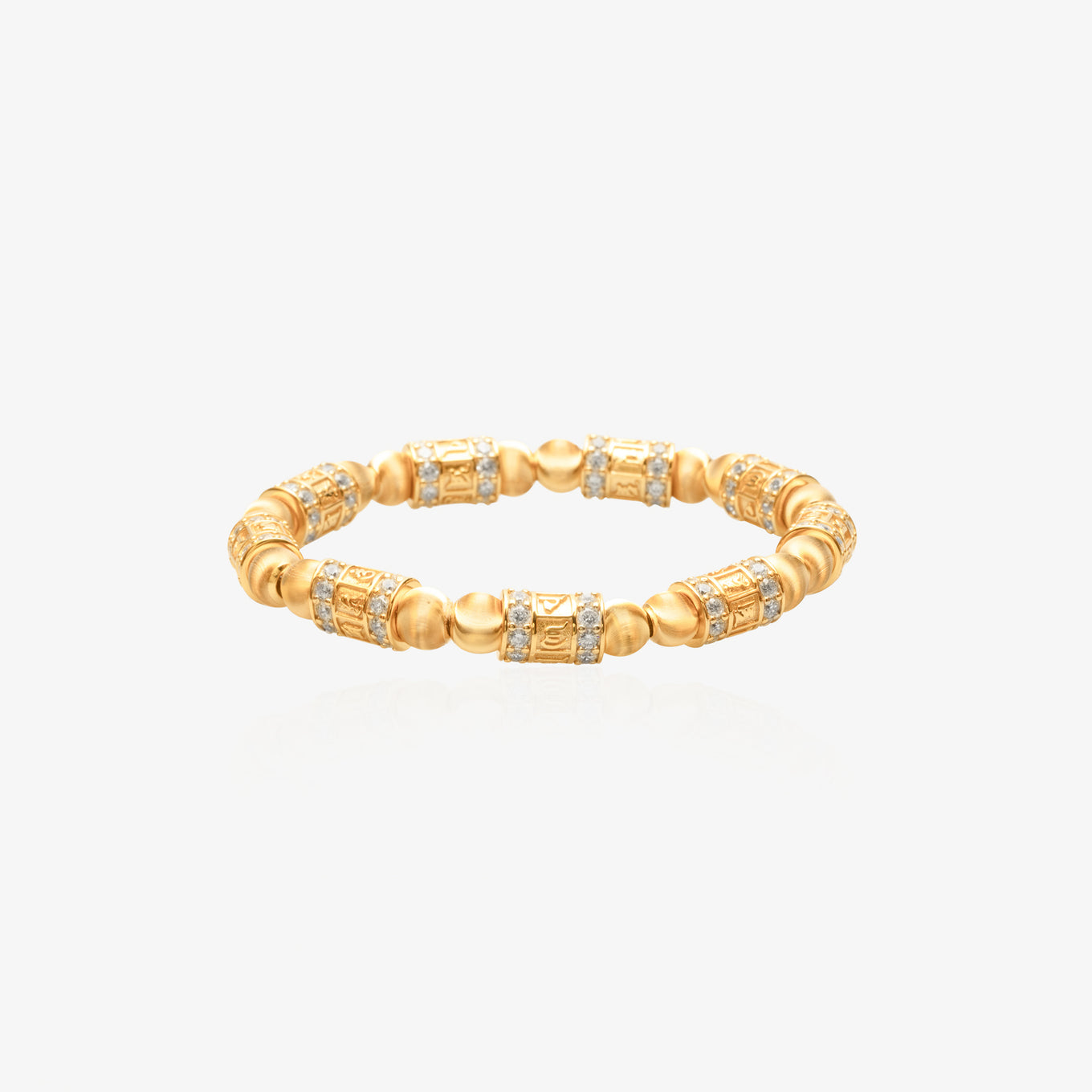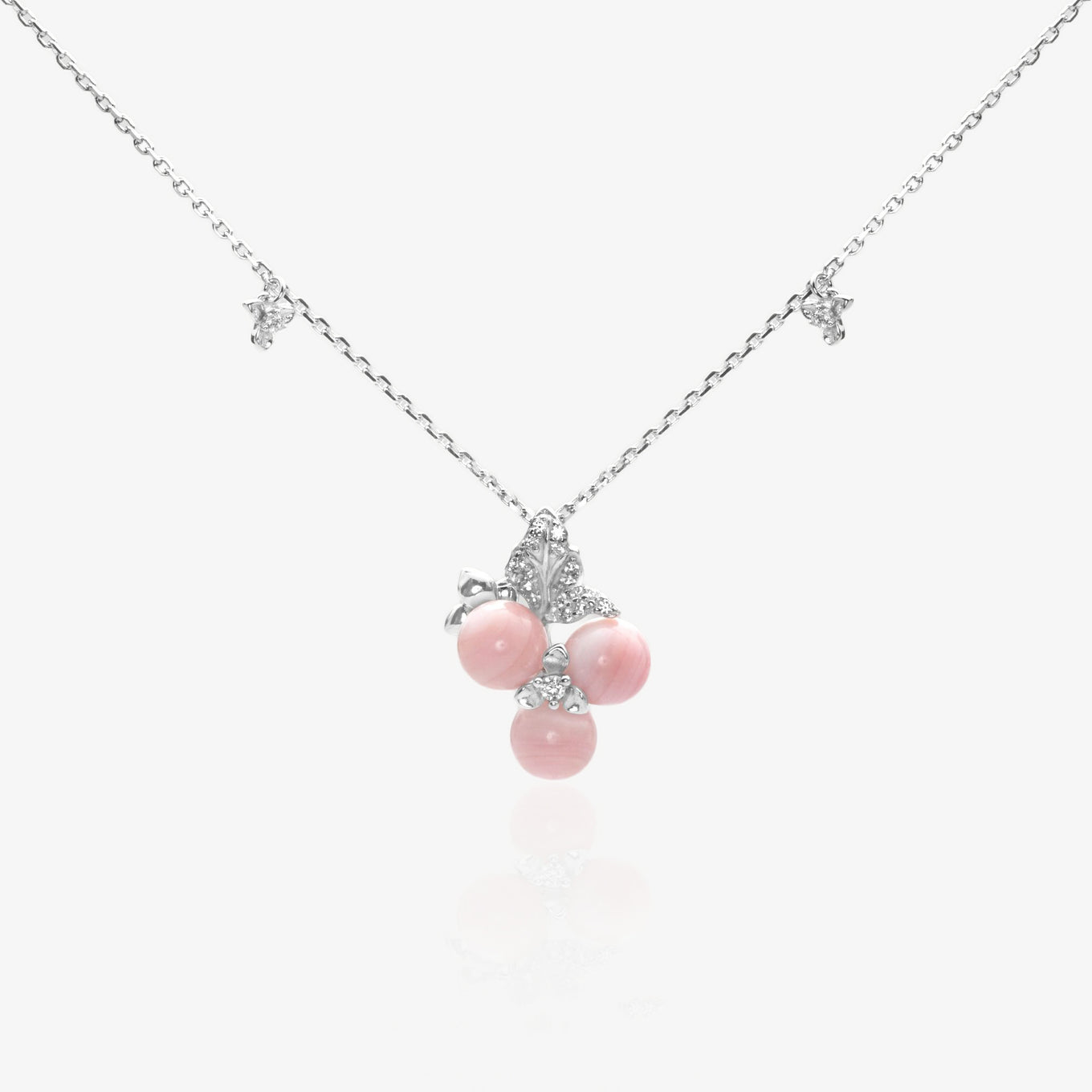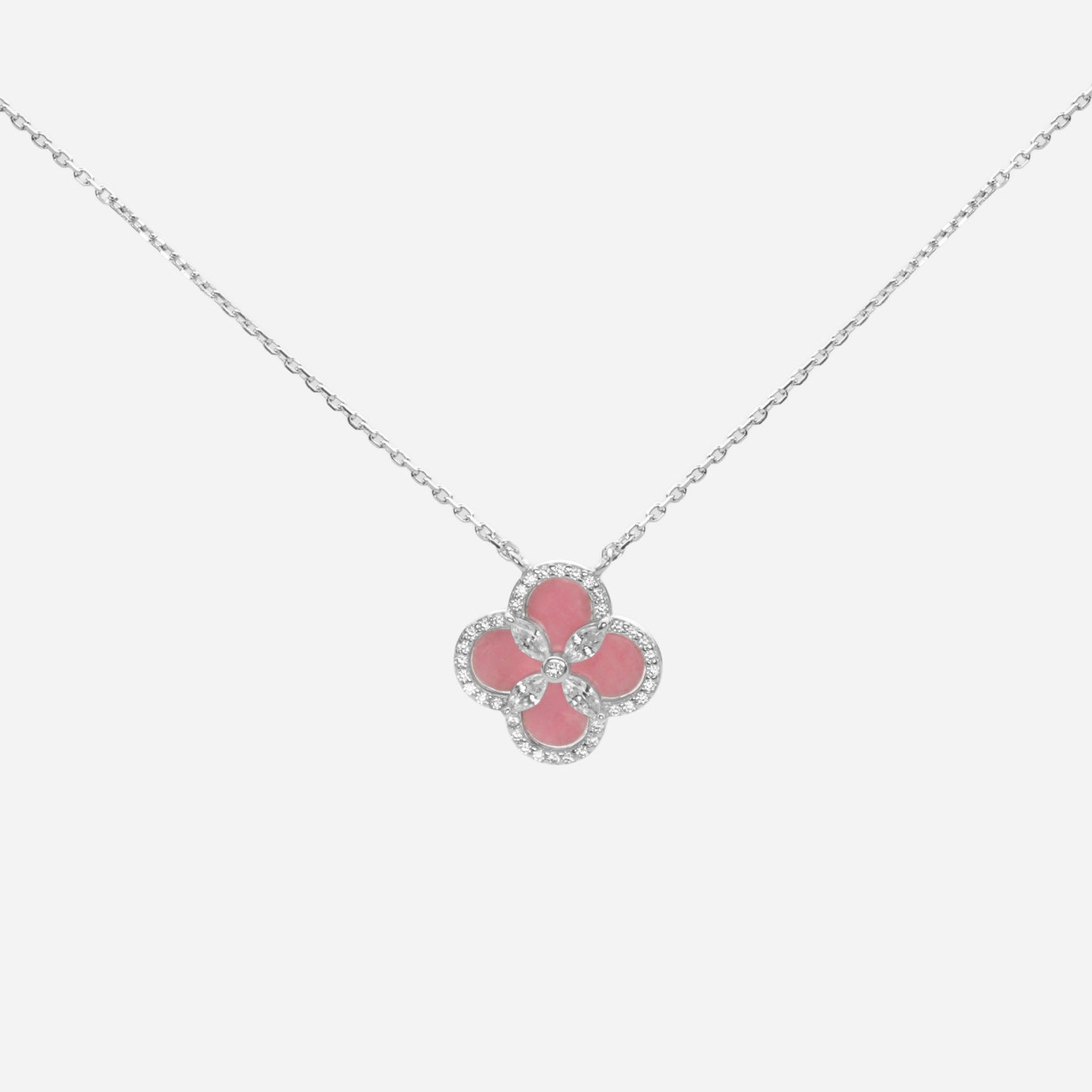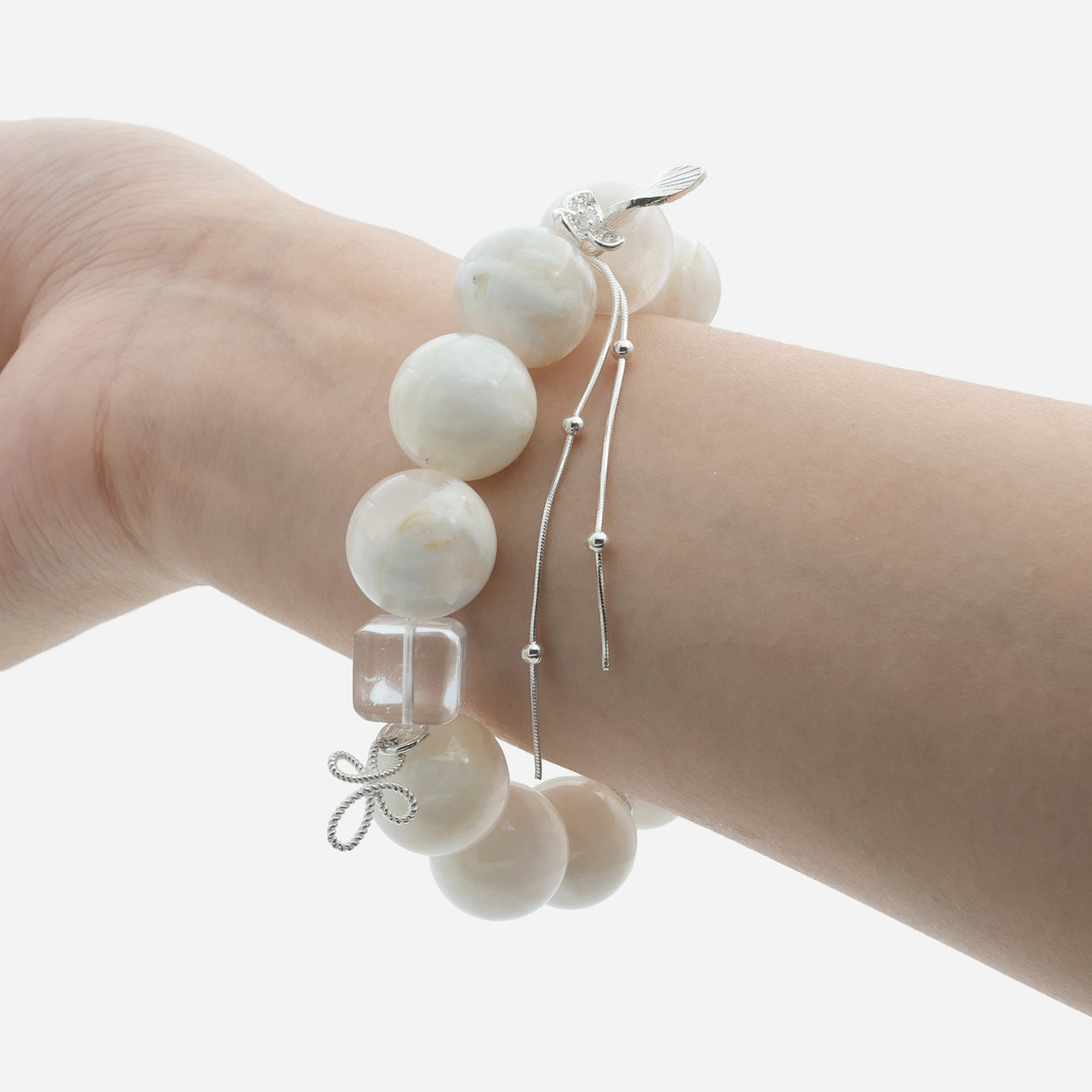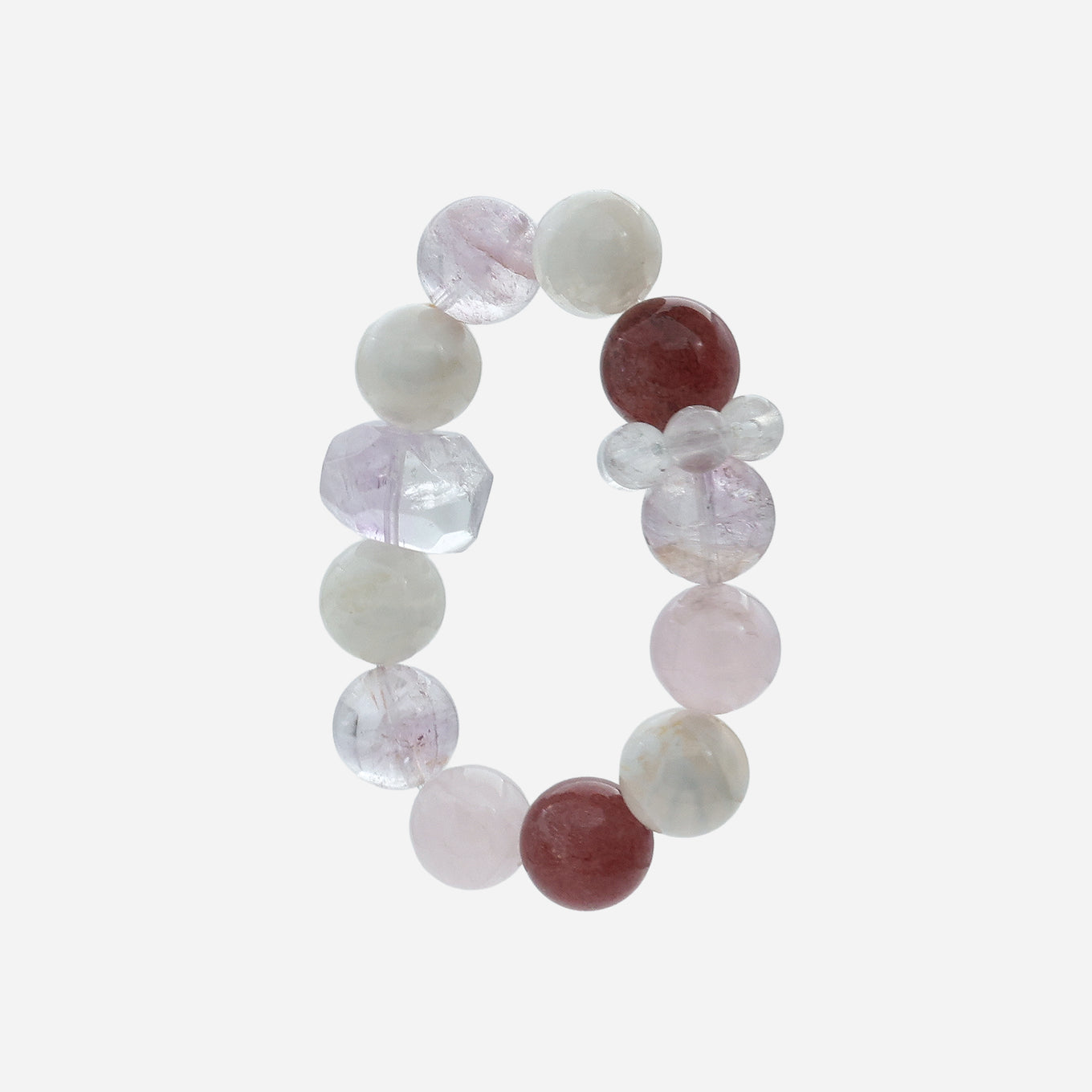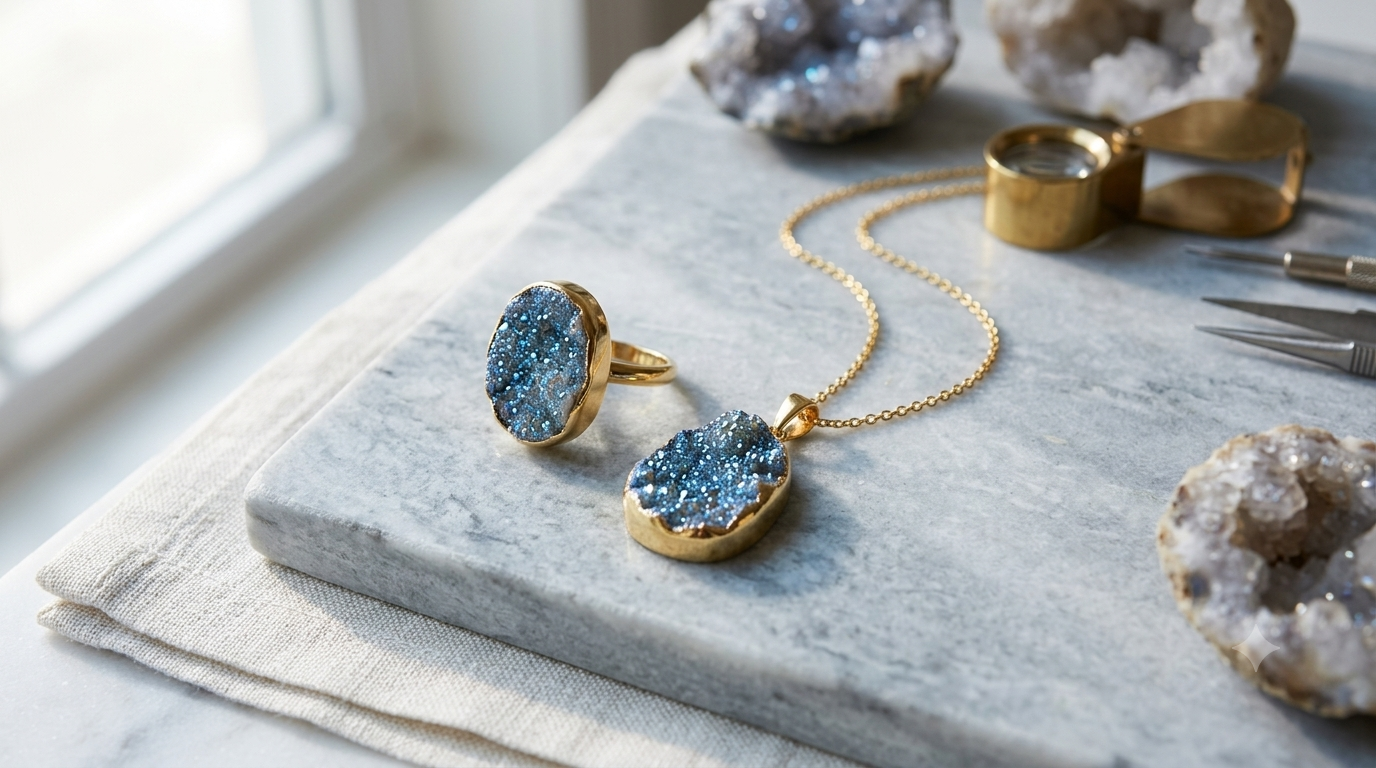
Drusy jewelry captures nature's rarest artistry — a glittering carpet of microscopic crystals formed over millions of years inside volcanic cavities, transformed into wearable talismans that shimmer with every movement.
🛒 Shop the Look: Drusy Pebble Cuff Ring
 Drusy Pebble Cuff Ring — $80
Gold Open Band with Natural Drusy · Ag925 Sterling Silver · 18K Gold Plated
📑 In This Guide
- Drusy Jewelry Glossary: Key Terms
- How Drusy Forms: The Geological Story
- Drusy in Jewelry: An Organic Statement
- Drusy Pebble Cuff Ring: Behind the Design
- Caring for Drusy Jewelry: Shower-Safe and Sweat-Proof, With a Few Caveats
- We Believe...
- ÉLARAMUSE Quality Standard
- Frequently Asked Questions About Drusy Jewelry
- References & Further Reading
References
- GIA. "Gem Formation: How Gemstones Form." Gemological Institute of America.
- GIA. "Gem Encyclopedia." Gemological Institute of America.
- Met Museum. "Druzy Jewelry Collection." The Met Collection.
Have you ever bought jewelry you loved only to watch it fade? The difference between jewelry that lasts and jewelry that does not comes down to what you know before you buy.
Unlike mass-produced resin "crystal" jewelry that mimics texture with injection molding, every drusy gemstone in our collection is a one-of-a-kind slice of a geode — formed over millions of years and hand-selected for surface sparkle density. Most drusy on the market is mounted on brass findings and plated thin enough to wear off in 90 days. Our drusy rings and earrings are set in nickel-free Ag925 sterling silver with premium 18K gold plating at 0.5 micron thickness.
Unlike mass-produced resin "crystal" jewelry that mimics texture with injection molding, every drusy gemstone in our collection is a one-of-a-kind slice of a geode — formed over millions of years and hand-selected for surface sparkle density. Most drusy on the market is mounted on brass findings and plated thin enough to wear off in 90 days. Our drusy rings and earrings are set in nickel-free Ag925 sterling silver with premium 18K gold plating at 0.5 micron thickness.
Quick Answer: Drusy (also spelled druzy or druze) is a natural layer of thousands of tiny, sparkling crystals that forms on the surface of a host rock inside geodes and mineral cavities.
Unlike traditional faceted gemstones, no two drusy pieces are ever identical — each one is a one-of-a-kind fragment of Earth's geological timeline. At ÉLARAMUSE, we set premium natural drusy crystals on Ag925 sterling silver bases with Premium 18K Gold Plating (0.5-micron), creating everyday luxury pieces that are shower-safe, sweat-proof, and sensitive-skin friendly.
Drusy Jewelry Glossary: Key Terms
- Drusy (Druzy / Druze)
- A natural coating of fine, glittering microcrystalline minerals that forms on the surface of a host rock within mineral cavities. The term comes from the German word Druse, meaning "a cavity in a rock encrusted with crystals." When you look closely at a piece of drusy, you are seeing thousands — sometimes tens of thousands — of individual crystal points, each reflecting light at a slightly different angle.
- Microcrystalline
- Describes a crystal structure where individual crystals are so small they are invisible to the naked eye, yet collectively they produce a shimmering, sugar-like surface that glitters as it catches the light. This is what gives drusy its signature sparkle — the effect is subtle and organic, not harsh or artificial.
- Geode
- A hollow rock formation lined with mineral crystals, typically round or egg-shaped. Geodes form when mineral-rich groundwater seeps into gas bubbles trapped within cooling volcanic lava. Over millions of years, the minerals slowly crystallize along the cavity walls, creating the glittering interior surface that eventually becomes a drusy gemstone.
- Mohs Hardness Scale
- The standard measure of a mineral's resistance to scratching, ranging from 1 (talc) to 10 (diamond). Drusy quartz — the most common jewelry-grade variety — measures 7 on the Mohs scale, comparable to amethyst and citrine. Calcite-based drusy is softer at 3, while agate-based drusy falls between 6.5 and 7. The GIA (Gemological Institute of America) provides authoritative reference charts for mineral hardness, and understanding this scale is essential for anyone who wants to properly care for their drusy jewelry.
How Drusy Forms: The Geological Story
Drusy formation is one of nature's slowest and most beautiful processes. It begins deep underground, where gas bubbles become trapped in cooling magma. As volcanic rock solidifies around these bubbles, hollow cavities — geodes — are left behind. Over millions of years, groundwater saturated with dissolved silica, calcite, or other minerals slowly percolates through the porous rock walls and into these cavities.
As the mineral-rich water evaporates, the dissolved minerals crystallize along the inner walls. This process — called precipitation crystallization — does not happen overnight. A single geode may take anywhere from 10 million to 240 million years to form, according to mineralogical research compiled on mindat.org, the world's largest open database of minerals.
The result is a delicate, sugar-like crust of microcrystalline formations: drusy.
Formation: Drusy crystals grow inside hollow rock cavities called geodes through a process of mineral-rich water evaporation that takes millions of years — mindat.org mineral database
The specific mineral composition determines both the color and the hardness of the drusy. Silica-rich solutions produce quartz drusy — usually clear, white, or lightly tinted. Copper-rich deposits yield vibrant blue and turquoise hues. Iron oxide creates warm orange and red tones. Manganese produces soft pink drusy, while titanium and agate combinations create the stunning banded patterns seen in premium specimens.
Here is something worth pausing to consider: every piece of drusy you see in a ring or pendant was once buried beneath the Earth's surface, crystallizing in complete darkness for longer than humans have existed as a species. How many natural materials in your jewelry box carry that kind of timeline?
Drusy in Jewelry: An Organic Statement
Unlike traditional gemstones, which are cut and polished into symmetrical, predictable shapes, drusy jewelry preserves the stone's raw, organic surface texture. The crystals are left intact — millions of tiny points that catch and scatter light in a way no machine-cut stone can replicate.
This is why we believe drusy is not just a material choice but a design philosophy: it is about embracing imperfection, honoring geological authenticity, and wearing a story that began hundreds of millennia before the first human civilizations.
Unlike mass-produced resin rings that mimic crystal texture using plastic molds and spray coatings, genuine drusy requires patient lapidary work. Each slab must be carefully cut from a geode, then shaped and polished without damaging the delicate surface crystals. The process demands a combination of geological knowledge and precision craftsmanship — you cannot automate nature's artistry, and that is precisely the point.
The Smithsonian Institution's mineral collection houses some of the world's most spectacular drusy specimens, including geodes larger than a person. Seeing their gallery makes one thing clear: drusy crystals are gallery-worthy works of natural art, and wearing them is like carrying a miniature geology museum on your hand.
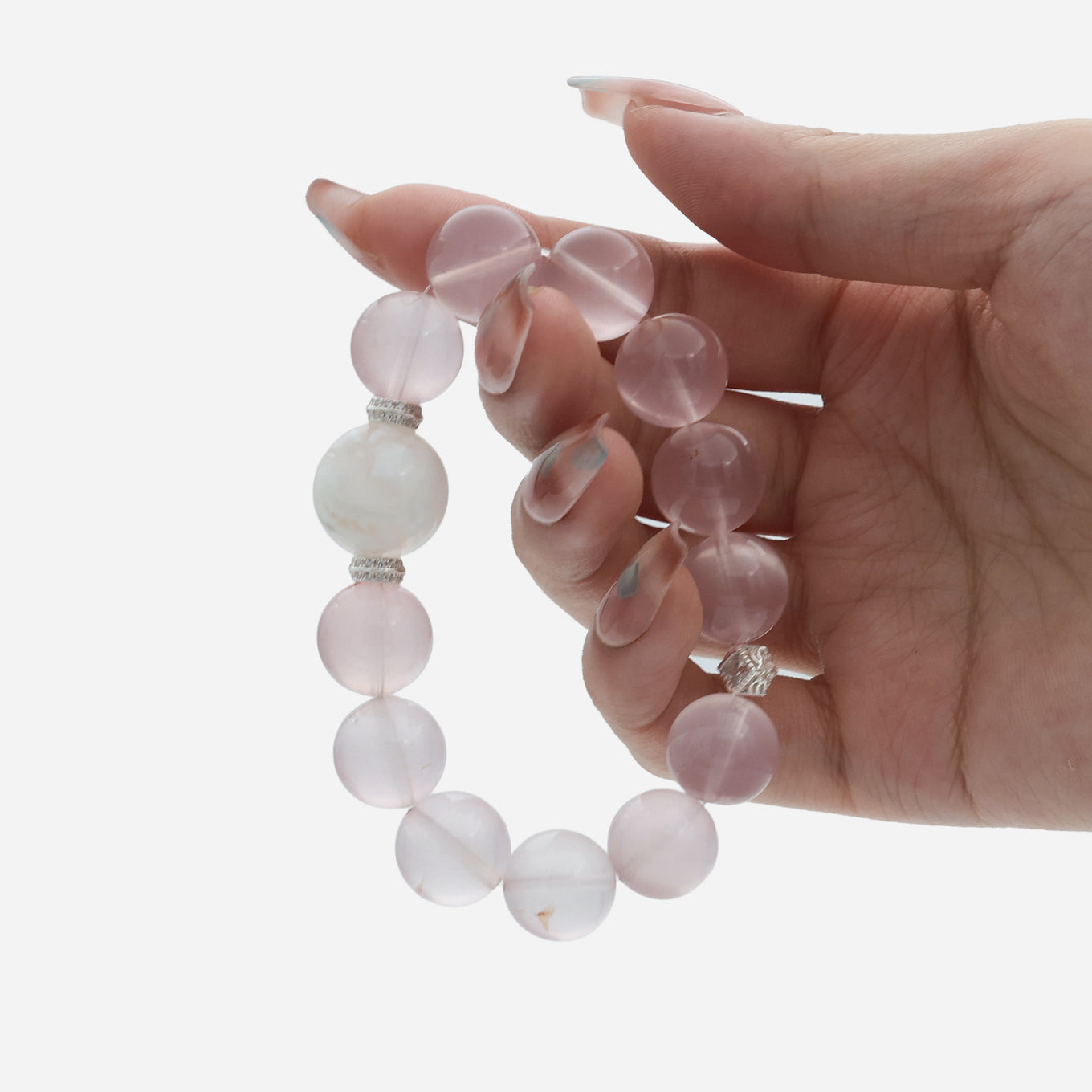
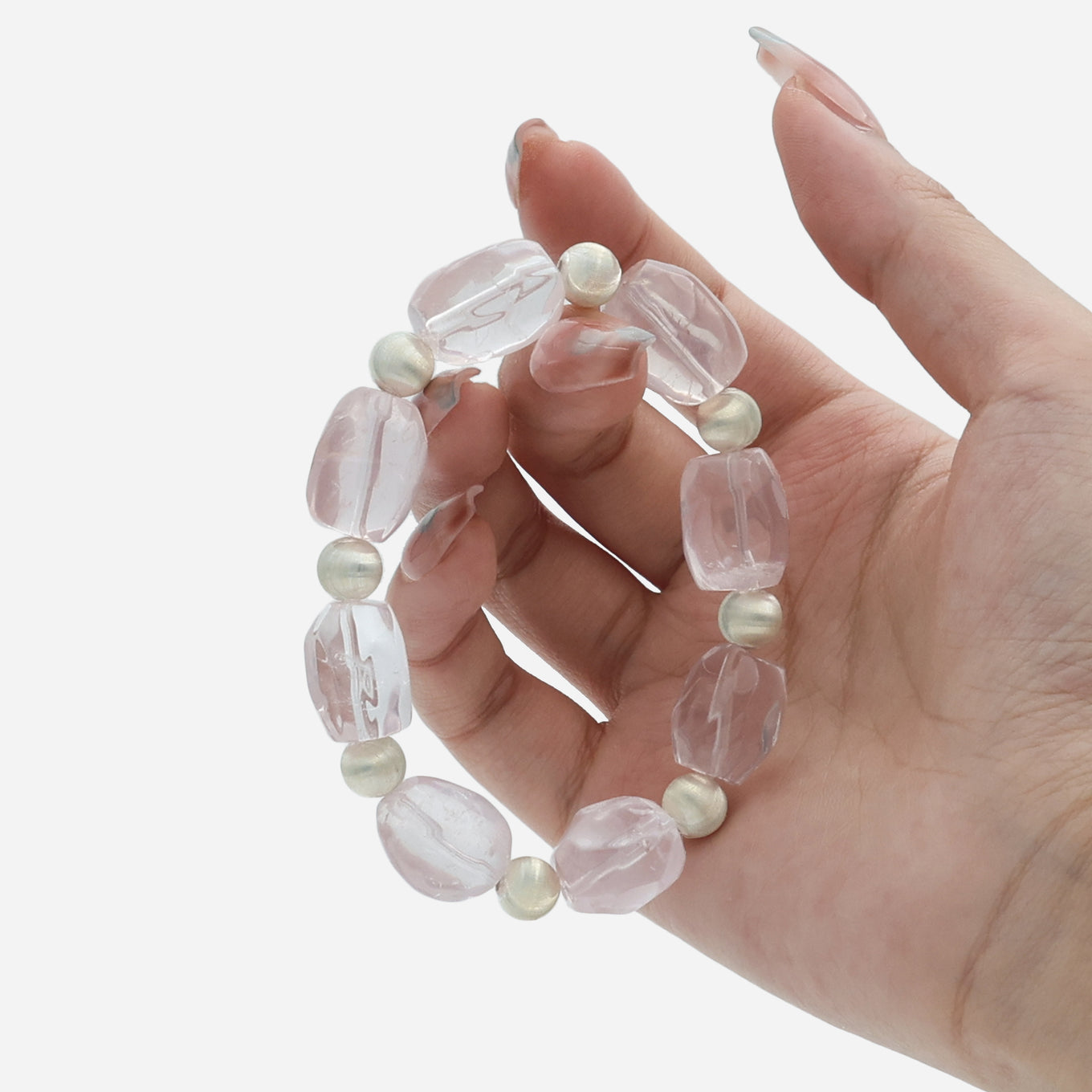
For the purest expression of rose quartz, our Rose Quartz Silver Bracelet features organic, irregularly faceted beads — each one raw and unique — strung on solid sterling silver with a luminous Snow Ghost Crystal accent. It is the rose quartz bracelet for those who want the stone exactly as the earth formed it.
Color & Durability: Drusy quartz rates 7 on the Mohs hardness scale — harder than steel and comparable to amethyst — while calcite-based varieties are softer at 3 and best suited for pendants and earrings rather than high-contact rings — GIA hardness reference
Our Drusy Pebble Cuff Ring: Behind the Design
When I first saw raw drusy crystals at a mineral fair, I picked up a small geode fragment and held it under the exhibition tent lights. The sparkle was hypnotic — thousands of microscopic mirrors, each firing light in a different direction. I immediately thought: how do we bring this into jewelry without losing its natural soul?
That question shaped our entire design process. We tested dozens of settings — bezel, prong, tension — and every approach risked either covering too much of the drusy surface or failing to protect the delicate crystal edges. The open-band silhouette emerged as the solution: it frames the organic pebble-shaped drusy cabochon in a way that exposes maximum surface area while the Ag925 sterling silver base provides structural integrity.
The Drusy Pebble Cuff Ring is open at the back for a comfortable, adjustable fit — you slide it on and forget it is there until someone asks about the glittering stone on your hand.
I also wore the prototype through three months of daily life — washing hands, typing at a keyboard, even a rainy Portland afternoon — all while paying attention to how the drusy surface held up. The Premium 18K Gold Plating (0.5-micron thickness) on the Ag925 base showed no visible wear, and the crystals remained secure. This is what makes me confident saying: this ring is built for everyday luxury, not just occasional display.
If you love the organic, earthy texture of drusy, you will also appreciate the Dunecrest\ Ring — our textured gold band with a desert-inspired surface that echoes the raw mineral beauty of the natural world.
For a sculptural counterpart with flowing lines, the Dunecrest Ring pairs beautifully with drusy for a stacked, nature-inspired look.
And when you want a cool-toned alternative, the Moontrace Ring — with its silver crescent silhouette — offers a celestial complement to the earth-born sparkle of drusy.
Explore our full Cuff Rings Collection to find your perfect stacking combination.
Caring for Drusy Jewelry: Shower-Safe and Sweat-Proof, With a Few Caveats
One of the most common questions we hear: can I wear drusy jewelry every day? The short answer is yes — with intelligence. Our drusy rings are designed to be shower-safe, sweat-proof, and sensitive-skin friendly, thanks to the nickel-free and hypoallergenic Ag925 base beneath the Premium 18K Gold Plating. But here is what you need to know about extending the life of any drusy piece:
Quartz-based drusy (Mohs 7) is resilient enough for daily wear, including exposure to water and light moisture. What you should avoid: abrasive cleaners, ultrasonic cleaning machines, and direct impact against hard surfaces. The microcrystalline surface — while beautiful — can be dulled by harsh chemicals like bleach or chlorine bleach-based cleaners. A gentle wipe with a soft, dry microfiber cloth after wear is the most effective cleaning method, and it takes under ten seconds.
Calcite-based drusy requires more care: avoid water immersion, acids (including lemon juice and vinegar), and any direct scrubbing. If you are unsure which type of drusy your piece contains, quartz is the safer bet for rings while calcite works beautifully in pendants and earrings. After all, why invest in a natural crystal piece if you are going to treat it like disposable costume jewelry?
We Believe...
We believe that jewelry should mean something — not as a status symbol, but as a personal talisman. Each ÉLARAMUSE piece is designed to be part of your daily ritual: the ring you reach for every morning, the one that makes you feel grounded and intentional. Drusy, with its millions-of-years timeline and organic, one-of-a-kind sparkle, embodies this philosophy perfectly. It is not about showing off. It is about the art of becoming — the quiet, consistent practice of being your own muse.
ÉLARAMUSE Quality Standard
| Feature | ÉLARAMUSE Standard |
|---|---|
| Base Metal | Ag925 Sterling Silver (92.5% pure silver) |
| Plating | Premium 18K Gold Plating (0.5-micron thickness) |
| Nickel Content | Nickel-Free (verified by third-party testing) |
| Hypoallergenic | Yes — safe for sensitive skin |
| Water Resistance | Water-resistant — shower-safe, sweat-proof |
| Gemstone | Natural drusy crystal — each piece unique |
| Design | Open-band, adjustable fit — one size fits most |
Editor's Picks: Drusy Jewelry: Nature*s Glitter, Refined
Drusy Pebble Cuff Ring | Gold Open Band | ÉLARAMUSE: Drusy Pebble Cuff Ring | Gold Open Band | ÉLARAMUSE — Raw drusy crystal in an open gold cuff. Looks like frozen starlight, not a craft project.
Moontrace Ring | Silver Crescent | Lab Diamond | ÉLARAMUSE: Moontrace Ring | Silver Crescent | Lab Diamond | ÉLARAMUSE — Moonstone-like glow in a curved band. Drusy energy without the sparkle overload.
Dunecrest Ring | Wavy Gold Band | Lab Diamond | ÉLARAMUSE: Dunecrest Ring | Wavy Gold Band | Lab Diamond | ÉLARAMUSE — Freeform gold waves. The abstract companion to drusy*s organic crystal surface.
Frequently Asked Questions About Drusy Jewelry
Is drusy a real gemstone?
Yes, drusy is a genuine, naturally occurring mineral formation. It is not synthetic or lab-created. Each piece of drusy used in jewelry is cut from a natural geode — a hollow rock cavity lined with microcrystalline mineral deposits that formed over millions of years. The GIA recognizes drusy as a legitimate gem material within the quartz and agate family.
Can I wear a drusy ring every day?
Yes — especially quartz-based drusy set in a protective metal base like Ag925 sterling silver. Our Drusy Pebble Cuff Ring is designed for everyday wear: it is water-resistant, shower-safe, and sweat-proof. The key is avoiding abrasive impacts and harsh chemical cleaners. A soft microfiber wipe after wear keeps the crystal surface sparkling.
Is drusy jewelry expensive?
Drusy jewelry ranges widely in price depending on the rarity of the mineral type, the quality of the crystal formation, and the metal used in the setting. High-end drusy set in Premium 18K Gold Plating on Ag925 sterling silver — like ours at $80 — sits in the accessible luxury range. Compared to mined diamonds of comparable visual impact, drusy offers extraordinary natural beauty at a fraction of the cost.
How do I clean drusy jewelry?
Use a dry, soft microfiber cloth and gently wipe the crystal surface. For quartz drusy, a slightly damp cloth is safe. Avoid ultrasonic cleaners, steam cleaners, bleach, chlorine, and any abrasive scrubbing tools. The microcrystalline surface is delicate — treat it with the same care you would give a piece of art, because that is exactly what it is.
What is the difference between drusy and regular crystals?
Regular crystals — like amethyst or quartz points — grow as individual, visible crystal formations. Drusy is a microcrystalline coating: thousands of crystals so small they appear as a glittering, sugar-textured surface rather than distinct points. Think of regular crystals as soloists performing one at a time, and drusy as an entire shimmering choir singing at once.
Drusy jewelry is more than an accessory — it is a fragment of Earth's history, a talisman of organic beauty, and a daily invitation to wear something no one else in the world owns. Find the piece that speaks to you in our Cuff Rings Collection. Be your own muse.
References & Further Reading
- GIA — Diamond Quality Factors — Gemological Institute of America's official grading standards for gemstones and precious metals.
- FTC — Jewelry Guides — Federal Trade Commission regulations on precious metal marketing and jewelry disclosure standards.
- GIA — Simulant & Imitation Gem Guide — Educational resource on laboratory-created and simulated gemstones, including care and durability comparisons.