Rose Motif Jewelry 2026: Why the Most Romantic Flower in Gold Never Goes Out of Style
From the Rose Quartz Silver Bracelet to Quick Answer: Rose motif jewelry — gold pieces featuring sculpted roses, stems, and petals — is 2026's most enduring botanical trend. Unlike fleeting floral fads, the rose carries 3,000 years of symbolism: love, secrecy, resilience. A gold rose bangle like ÉLARAMUSE's Rose Stem Hinged Bangle isn't just decorative — it's a wearable narrative.
📑 In This Guide
- Why Roses? The Flower That Outlasted Empires
- The Anatomy of a Quality Rose Motif Piece: What Separates Art from Costume
- Rose Stem Hinged Bangle: When Engineering Meets Botany
- The ÉLARAMUSE Standard
- Rose Symbolism Across Cultures: What You're Actually Wearing
- How to Style a Rose Motif Piece: Three Distinct Approaches
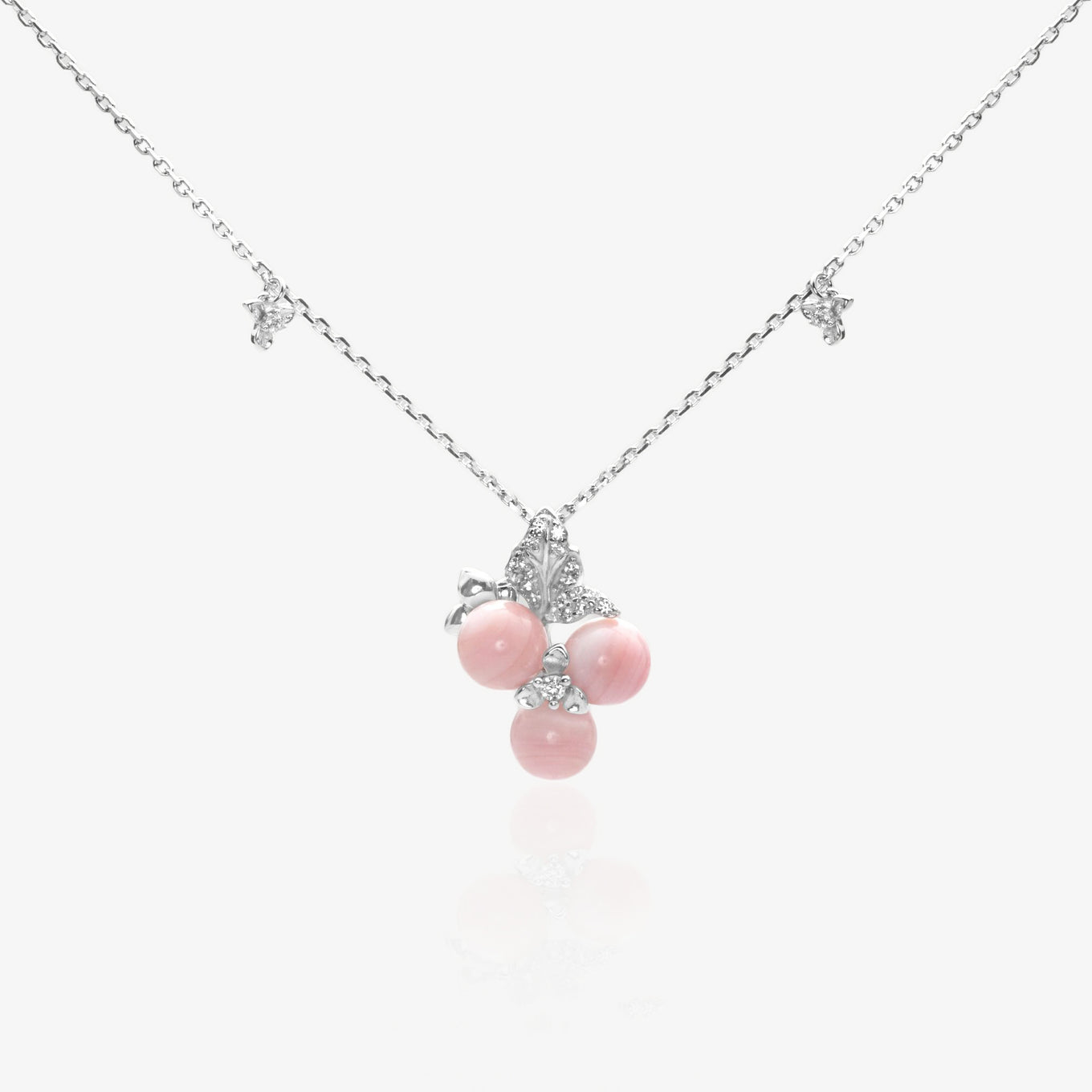
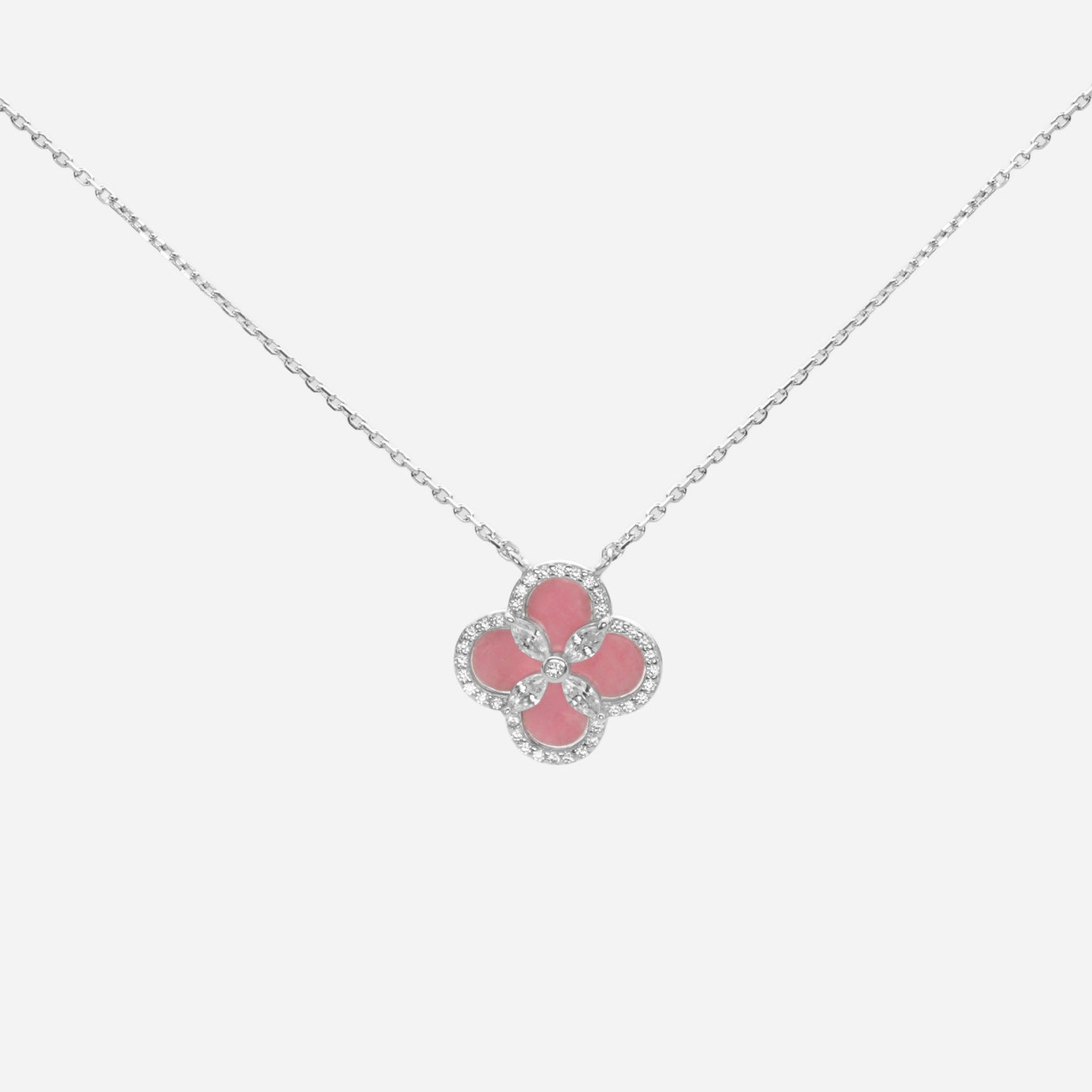
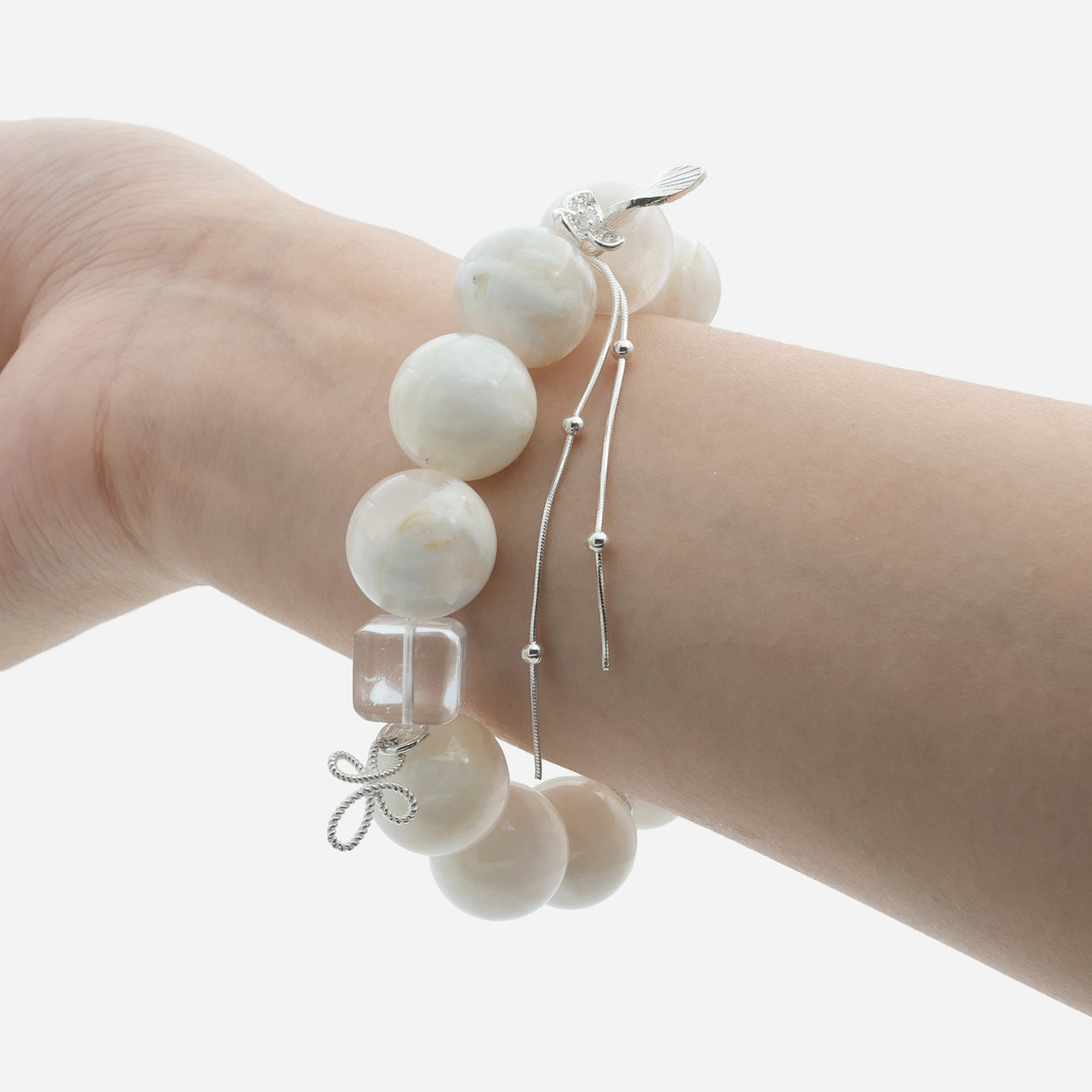
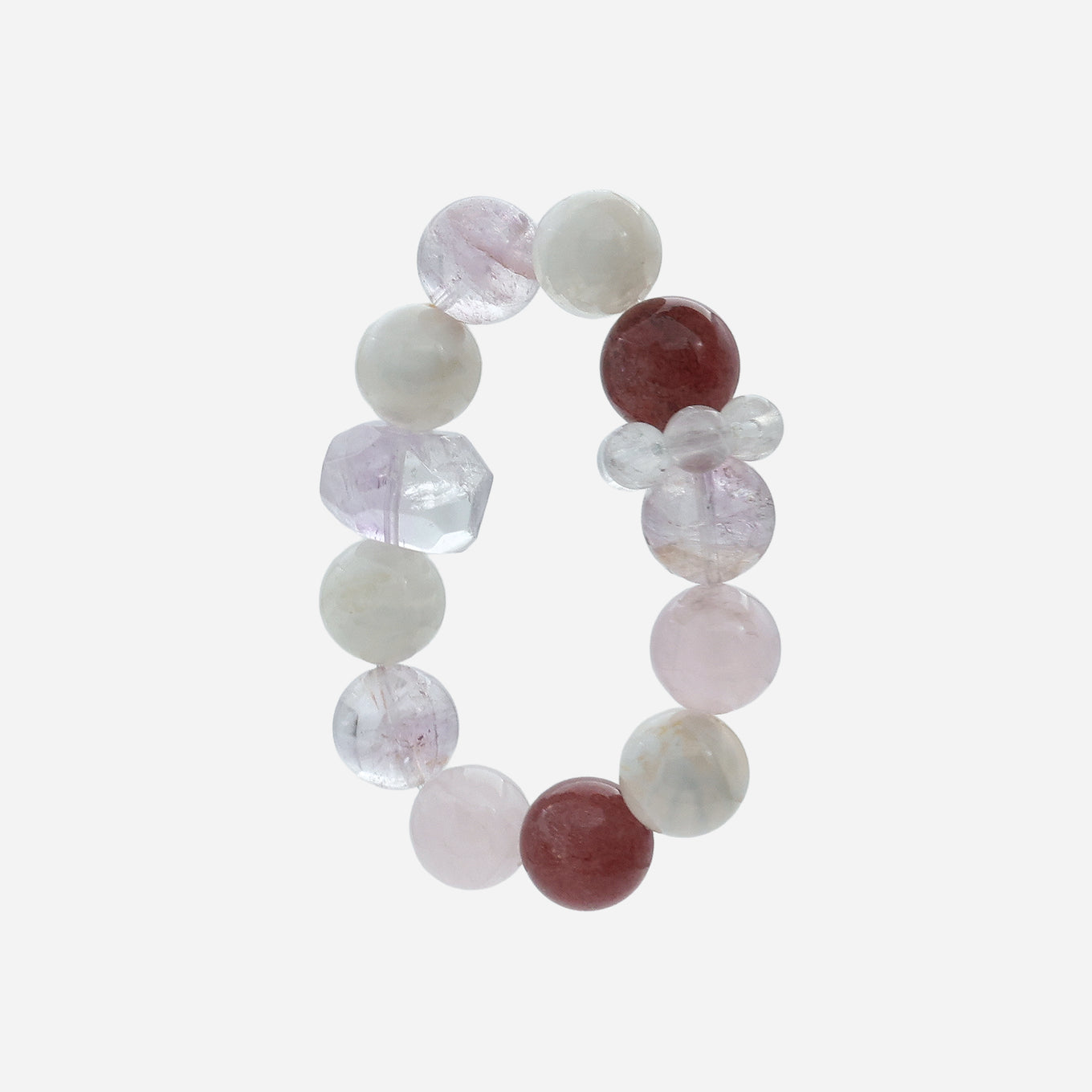
- Rose Motif Jewelry vs. Rose Quartz Jewelry: Don't Confuse the Two
- The Rose in 2026: Why This Moment?
- Caring for Sculptural Rose Jewelry
- Frequently Asked Questions
- Key Terms You Need to Know
- What We Believe
- References & Further Reading
Why Roses? The Flower That Outlasted Empires
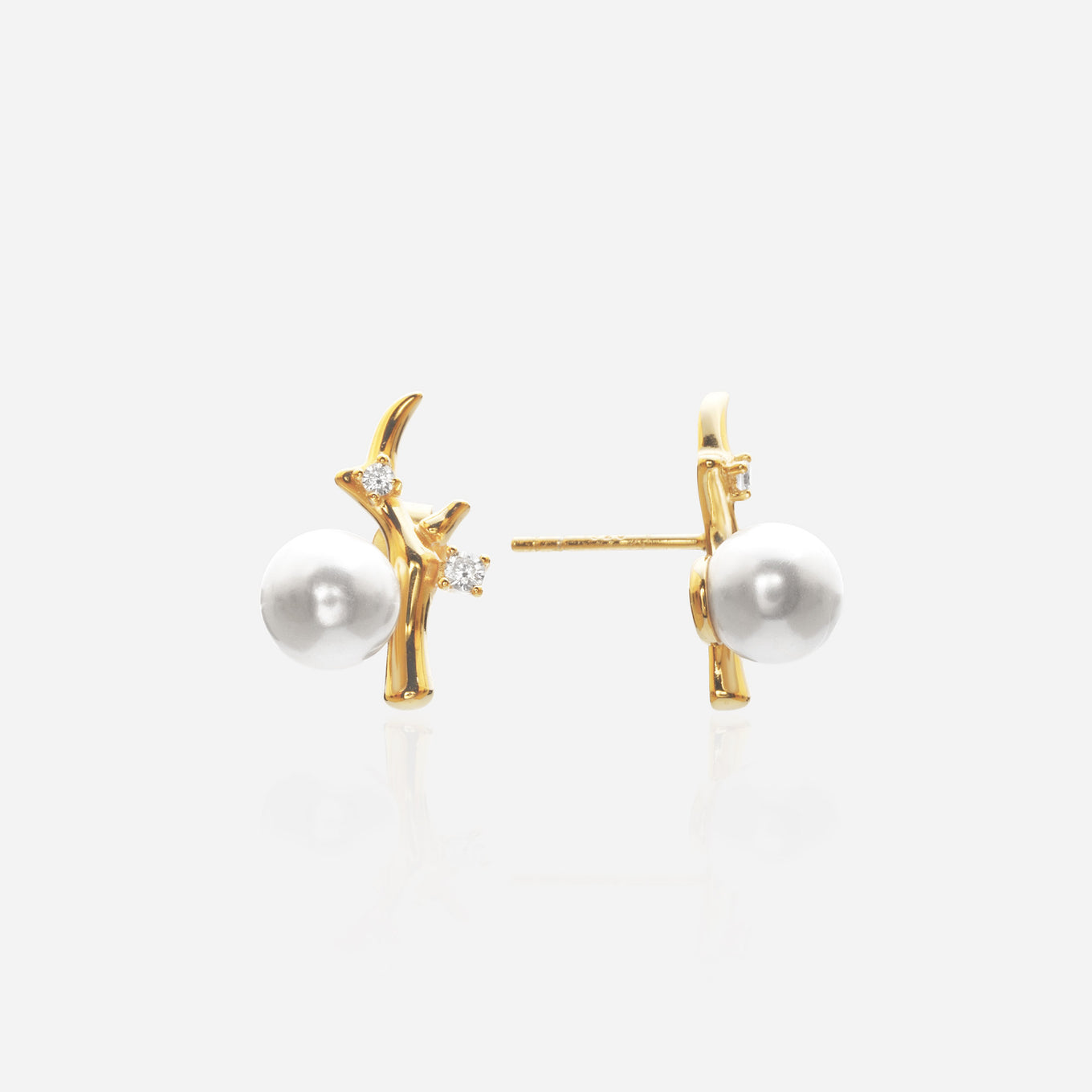
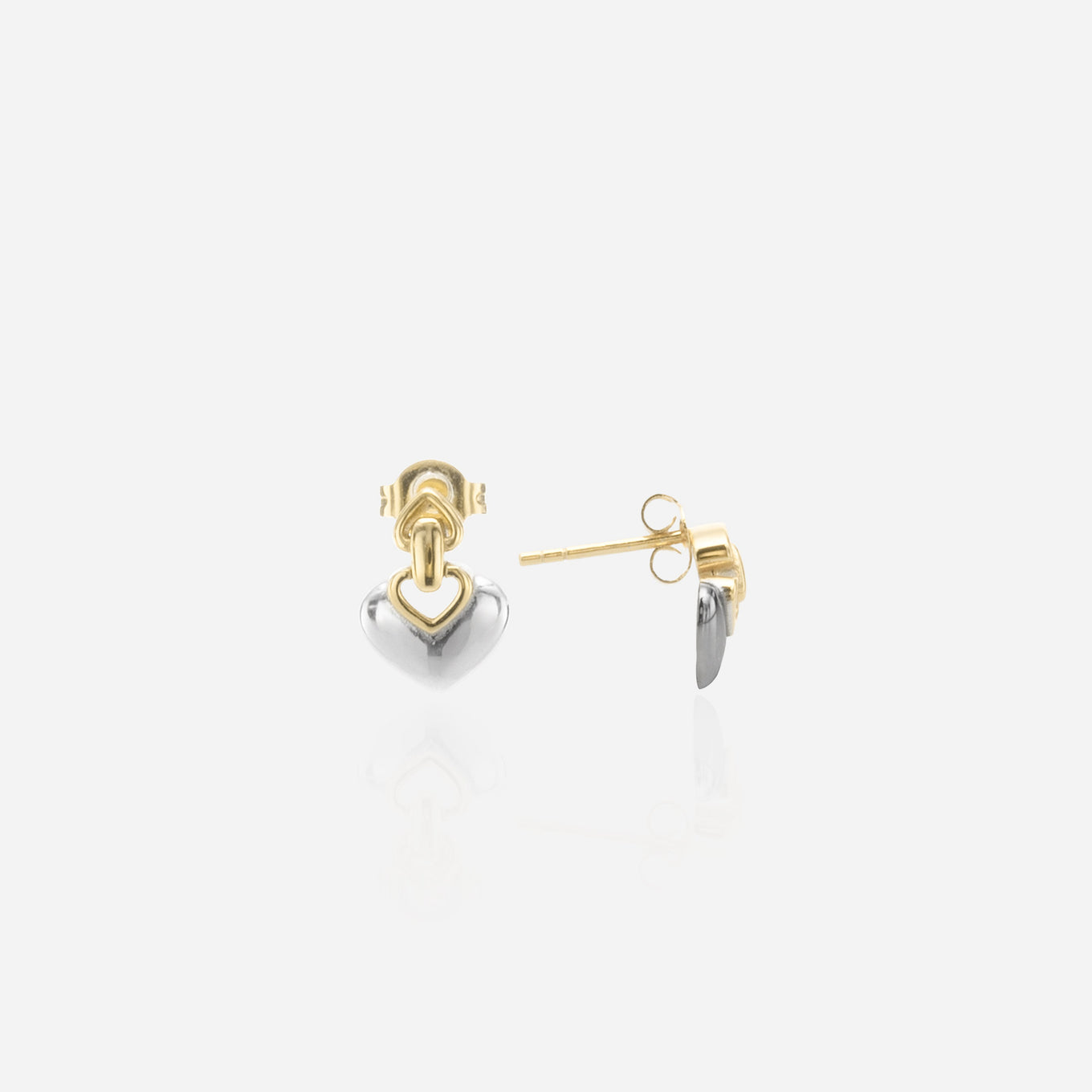
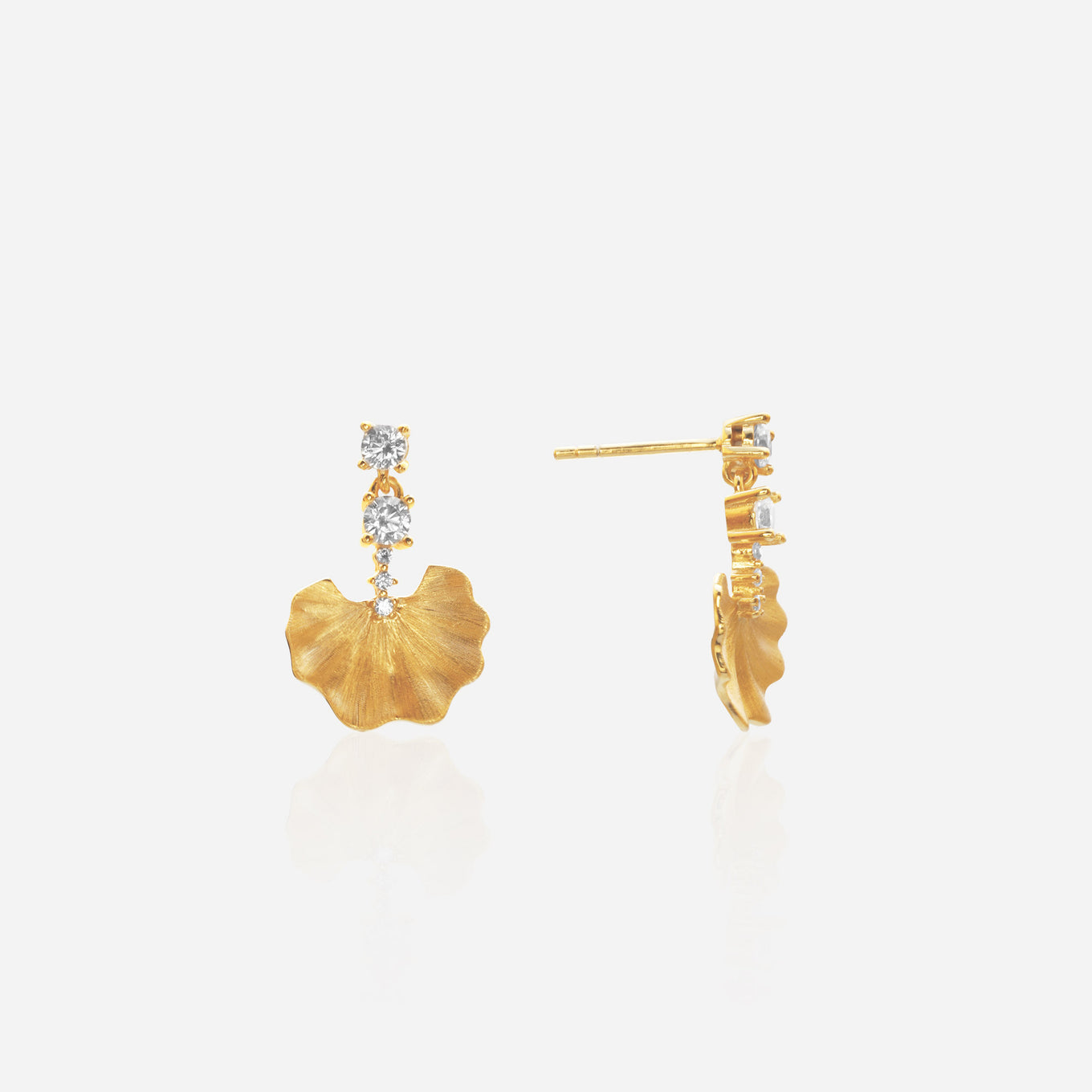
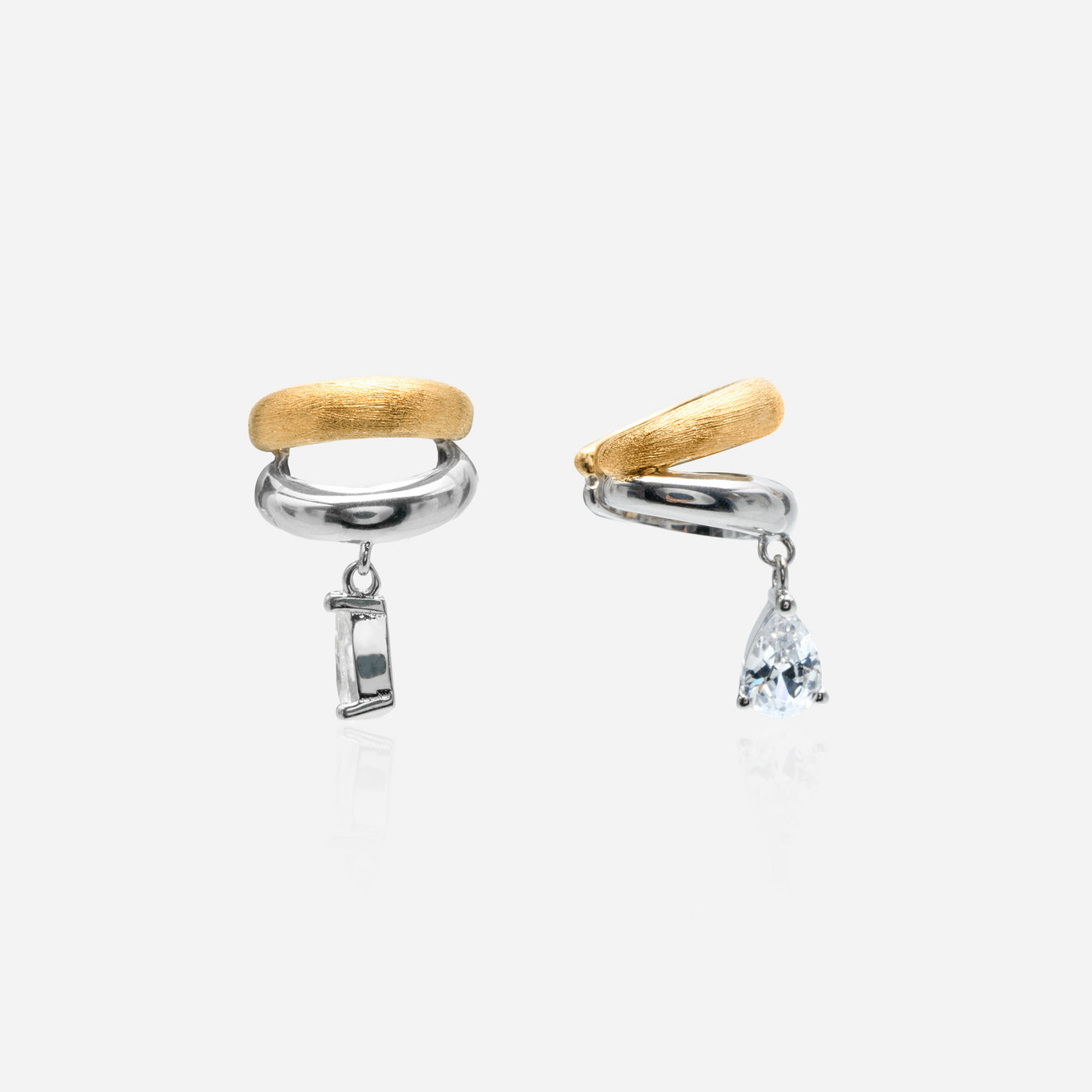
Editor's Picks: Rose Motif Jewelry for Every Occasion
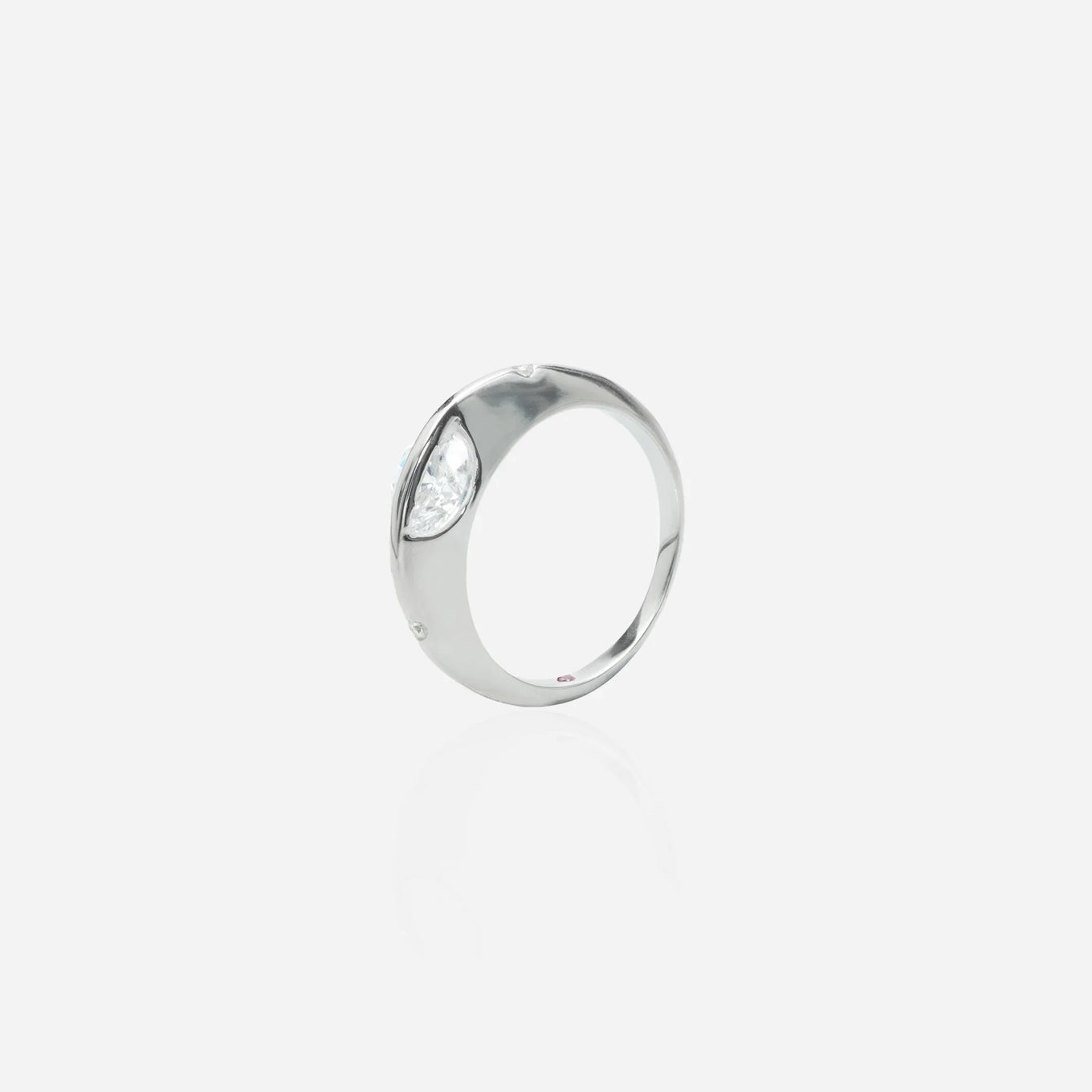
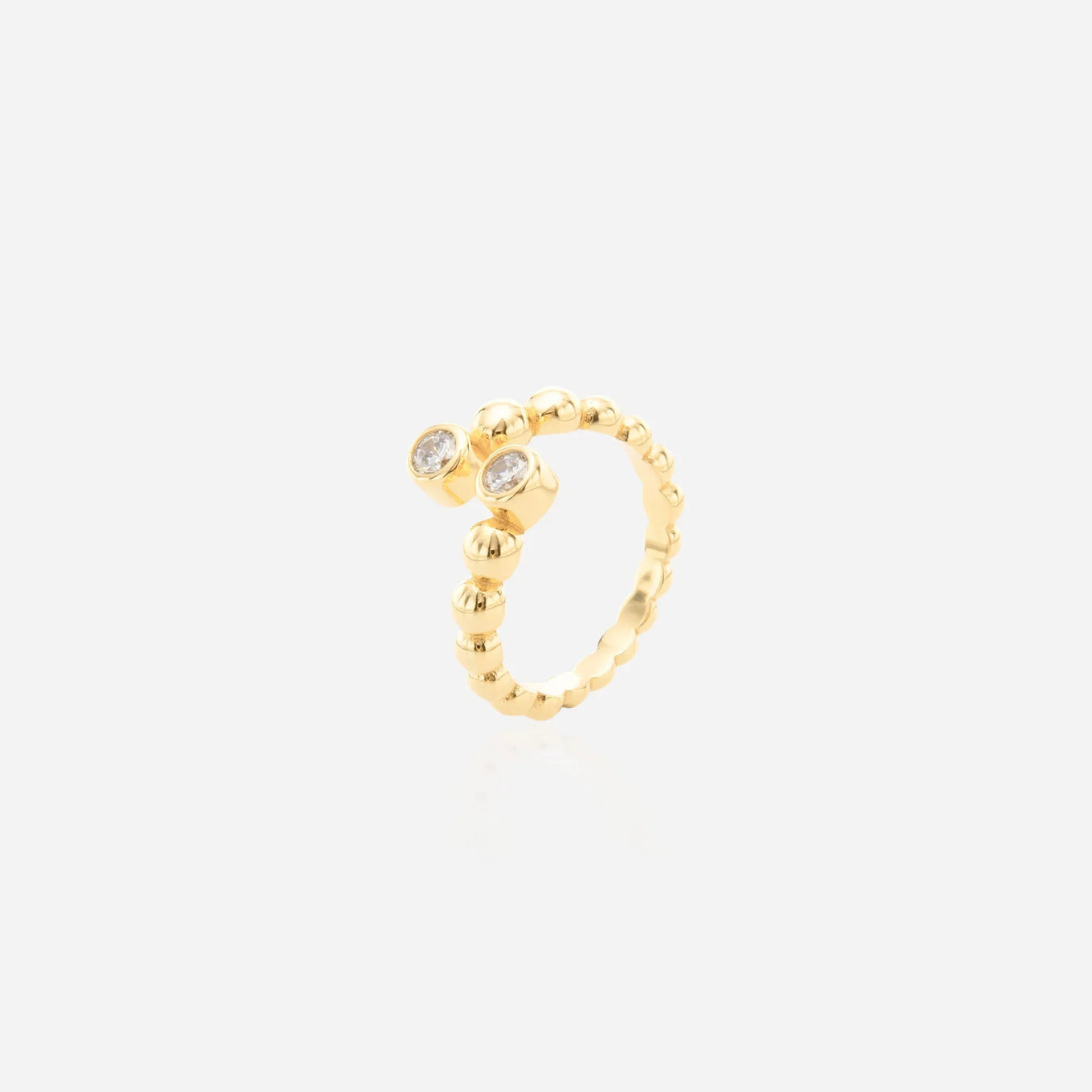
The Bypass Ring: Bypass Ring — A gold band that twists into a blooming rose — Victorian romance meets modern minimalism. Explore the Gold Fern Earrings.
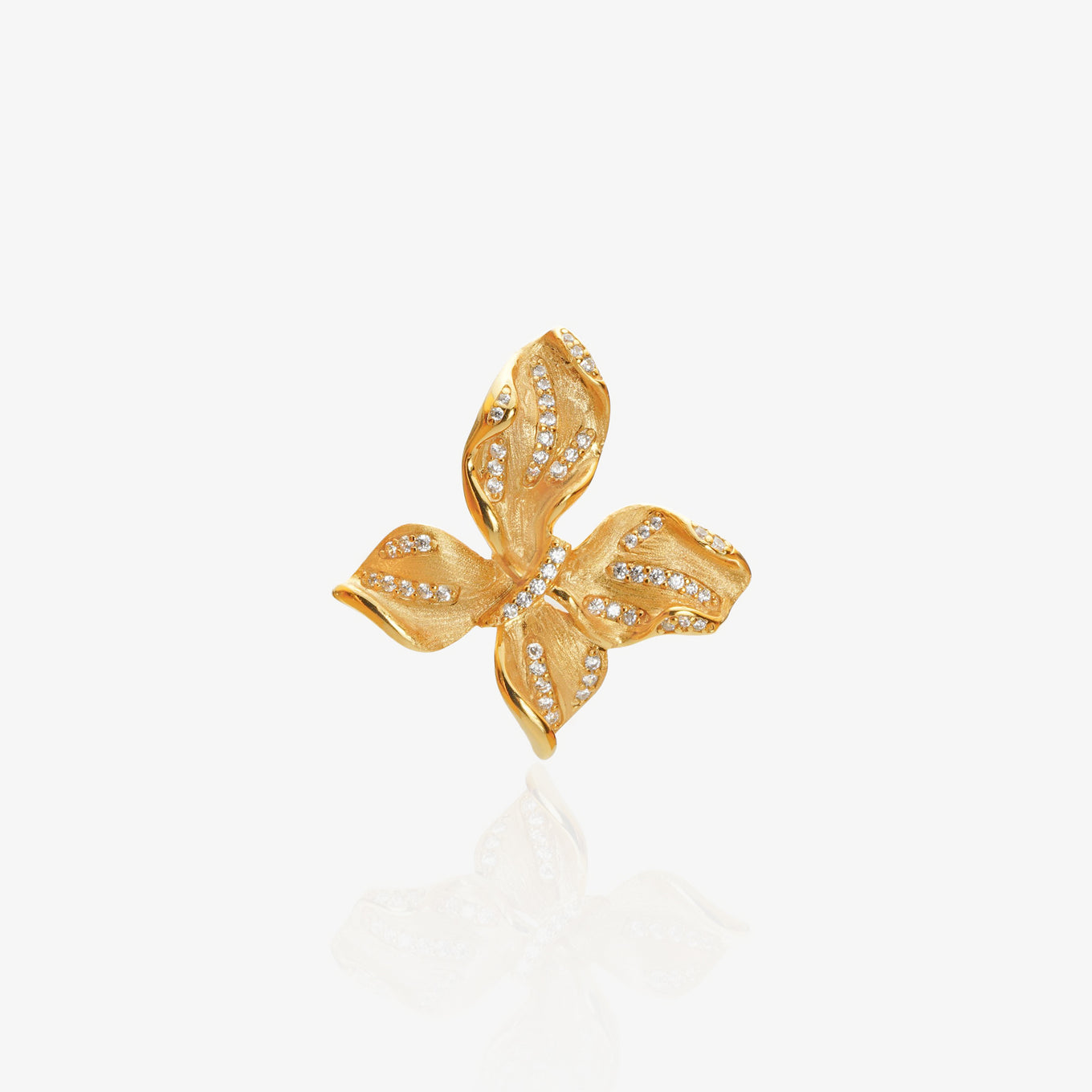
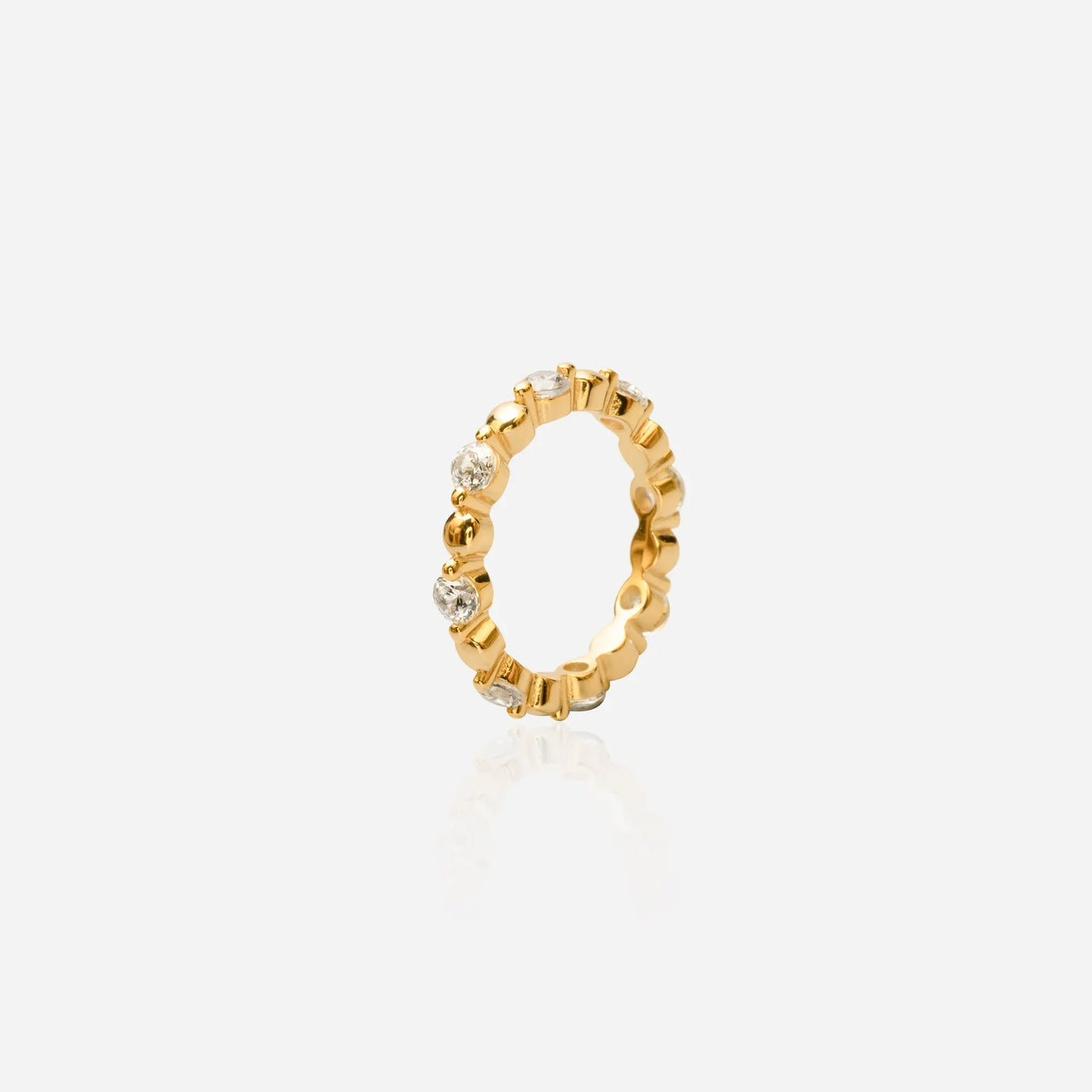
The Bouquet Ring: Bouquet Ring — A sculptural garden on your finger — five-petal gold blooms with pavé centers.
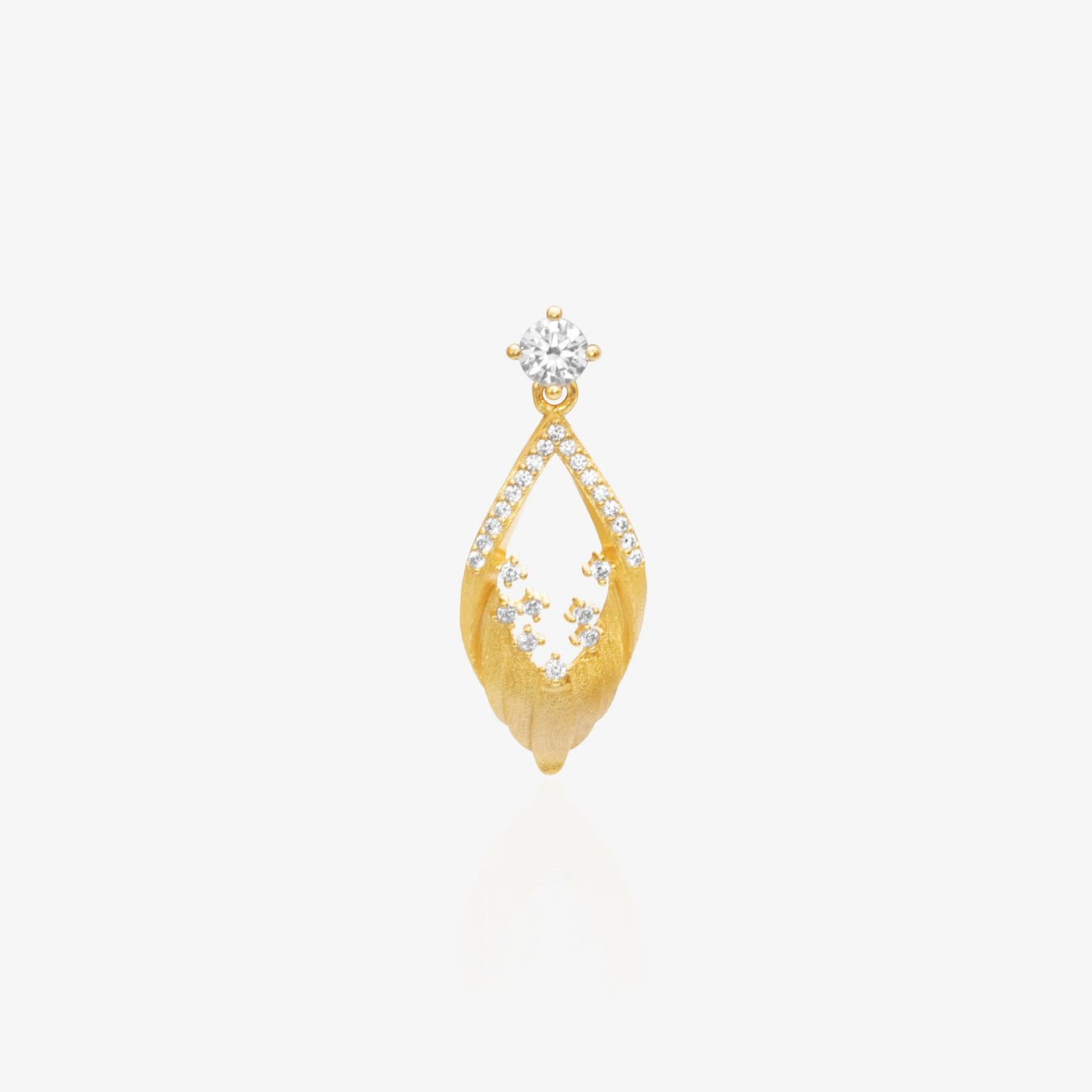
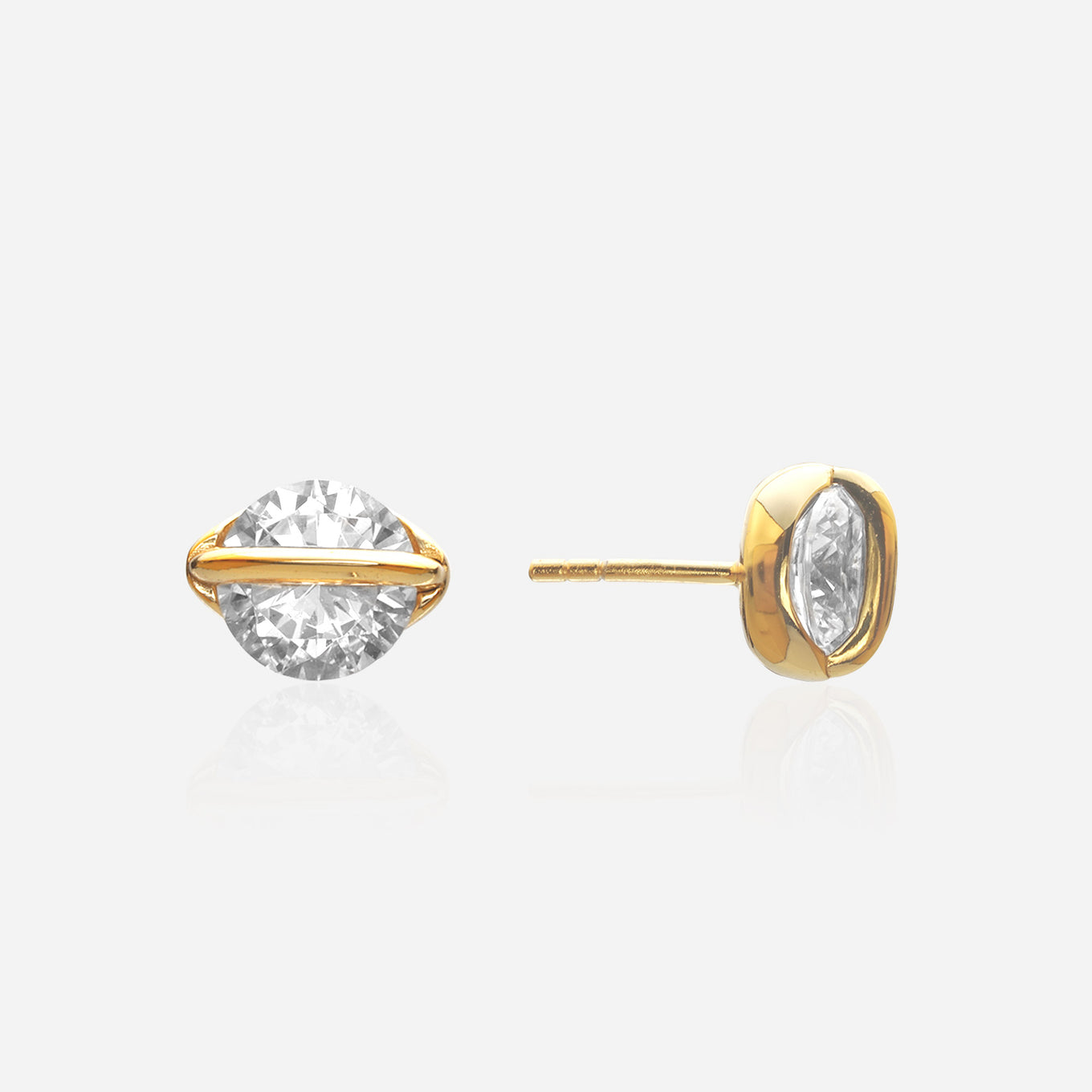
The Breeze Leaf Studs: Breeze Leaf Studs — Delicate leaf stud earrings in 18K gold plate — organic shape, everyday elegance.
The rose has been carved into jewelry since the Sumerians first worked gold in 2500 BCE. Cleopatra reportedly carpeted her palace floors with rose petals to seduce Mark Antony. Medieval knights carved roses into signet rings as seals of silent devotion — the phrase "sub rosa" (under the rose) meant "in confidence," and rose ceilings in council chambers reminded participants that what was said there stayed there.
Five thousand years later, we're still putting roses on our bodies. The difference now? We're not just stamping a flat flower onto a charm. We're sculpting entire stems in precious metal — thorns, leaves, and all.
Why does this matter for what you wear in 2026? Because symbolism ages better than trends. A rose motif piece you buy today will still mean something in twenty years. A neon acrylic daisy from last summer's Instagram trend? Already in a landfill. The rose isn't just a pretty shape — it's one of the most potent cultural symbols humans have ever created, and wearing it on your body is a choice with historical weight.
The Anatomy of a Quality Rose Motif Piece: What Separates Art from Costume
Not all rose jewelry is created equal. The difference between a $12 fast-fashion rose ring and a $185 sculpted rose bangle isn't just price — it's dimensionality.
Cheap rose jewelry is stamped — a flat 2D rose outline pressed from a sheet of mystery metal and dipped in gold-tone paint that flakes within weeks. Quality rose jewelry is cast — molten Ag925 sterling silver poured into a sculpted mold, creating a three-dimensional rose that catches light from every angle, then plated with 0.5-micron 18K gold.
When evaluating a rose motif piece, look for three markers of quality craftsmanship:
- Undercutting: Can you see daylight between the petals? If the rose is a solid blob, it's stamped. If individual petals separate from the stem with visible gaps, it's cast — and every one of those gaps required a separate section in the mold.
- Stem detail: Is the stem a plain wire, or does it have thorns, texture, and leaf nodes? A rose without its stem is a flower. A rose with its stem is a story — it was growing somewhere, attached to something, before it became jewelry.
- Hinge integrity: If the piece opens (like a hinged bangle), does the clasp feel spring-loaded and precise, or loose and tinny? A quality hinge costs more to engineer and manufacture than the entire bangle at fast-fashion price points. Listen for a clean, singular click — not a rattle.
Rose Stem Hinged Bangle: When Engineering Meets Botany
The Rose Stem Hinged Bangle ($185) is ÉLARAMUSE's most anatomically faithful botanical piece — and the one that took the longest to develop.
Unlike a standard bangle that must slide over the hand, a hinged bangle opens and closes around the wrist. This isn't just about convenience — it's about fit. A traditional slip-on bangle must be large enough to clear your knuckles, which means it often hangs loose on the wrist once positioned. A hinged bangle closes to your exact wrist circumference, sitting flush against the skin like it belongs there.
The rose itself is cast as a continuous sculptural element that wraps around the bangle's circumference — stem at the clasp, bud at the apex, thorn details visible even from the inside of the piece. It's not a rose on a bangle. It's a rose that is the bangle.
Three things I noticed the first time I held one:
- The weight is intentional. At approximately 7.6 grams of solid Ag925 sterling silver, it's substantial enough to feel like jewelry, light enough that you forget you're wearing it by hour three. That sweet spot isn't accidental — it's the result of iterating on wall thickness until the heft communicated "quality" without "burden."
- The hinge tolerances are absurdly tight. Open and close it ten times in a row — there's zero play, zero wobble, zero side-to-side shift when the clasp is engaged. That's micron-level machining precision applied to a jewelry clasp, not a typical expectation at this price point.
- The rose reads as gold, not pink. The 0.5-micron 18K gold plating creates a warm, luminous finish that references a rose's color without literally turning your wrist rosy. Botanical inspiration executed through metal — not paint, not enamel, not costume-shop color matching.
The ÉLARAMUSE Standard
| Feature | Specification |
|---|---|
| Base Metal | Solid Ag925 Sterling Silver |
| Plating | 0.5-micron 18K gold plating |
| Closure | Precision hinged clasp with secondary safety catch |
| Safety | 100% Nickel-Free (Ni <0.01%), Hypoallergenic |
| Design | Continuous sculptural rose stem, cast as a single piece |
| Durability | Water-resistant, Tarnish-resistant, Sweat-proof |
"We believe a rose on your wrist should outlast the one on your desk — and never turn your skin green while doing it. The Rose Stem Hinged Bangle is our answer to disposable florals: a sculptural investment that's shower-safe, sleep-safe, and built on Ag925 sterling silver with 0.5-micron 18K gold plating, rigorously tested for the woman who forgets to take her jewelry off before the gym."
Rose Symbolism Across Cultures: What You're Actually Wearing
When you put on a rose motif piece, you're not just accessorizing. You're participating in a symbolic lineage that spans continents and millennia. Here's what the rose has meant, depending on where and when you ask:
| Culture / Era | Rose Meaning | Jewelry Implication |
|---|---|---|
| Ancient Greece | Associated with Aphrodite — love, beauty, passion | Worn as a talisman for romantic courage and self-possession |
| Ancient Rome | "Sub rosa" — secrecy, confidentiality, trust | Rose motifs on signet rings signaled trustworthiness in political and personal dealings |
| Medieval Europe | Symbol of the Virgin Mary — divine love, purity, grace | Rose rosaries and devotional pendants as expressions of faith |
| Victorian England | Floriography: red = passionate love, white = innocence, yellow = friendship, pink = admiration | Rose jewelry served as coded romantic messages; a woman's rose brooch could reveal her relationship status to those fluent in the language of flowers |
| Modern Western | Self-love, resilience, "Bloom where you are planted" | Rose pieces as personal talismans of growth — not just tokens of romantic love but reminders of inner strength |
According to the Victoria and Albert Museum's jewelry collection, botanical motifs — and roses in particular — represent the single most enduring category of symbolic adornment across all human civilizations. The rose isn't one of many floral jewelry motifs. It's the prototype.
How to Style a Rose Motif Piece: Three Distinct Approaches
The Solo Statement
Let the rose bangle stand alone on a bare wrist. No stacking, no watch, no competing metal. This works especially well with three-quarter sleeves or a pushed-up blazer cuff — the rose emerges from fabric like a living thing rather than an accessory. The Rose Stem Hinged Bangle is purpose-built for this approach; at 7.6 grams of solid sterling silver, it holds visual ground without backup.
The Botanical Stack
Pair the rose bangle with other nature-inspired pieces that share a visual language without literally matching. A Pavé Bamboo Link Bangle ($235) brings architectural structure to the stack — its geometric bamboo segments contrast against the rose's organic curves, creating the kind of tension that makes both pieces more interesting than either alone. Rose = soft nature. Bamboo = structured nature.
Wear them together and your wrist reads as a curated garden, not a random collection.
The Romantic Duet
Rose + pearl = the oldest power couple in jewelry history — and for good reason. The Pallas Pearl Cuff ($129), with its Austrian crystal pearls and open cuff silhouette, sits alongside the rose bangle without competing for attention. The pearls reference classic romance; the sculptural rose references modern design sensibility. Together they say: "I know my references, but I'm not trapped by them."
Rose Motif Jewelry vs. Rose Quartz Jewelry: Don't Confuse the Two
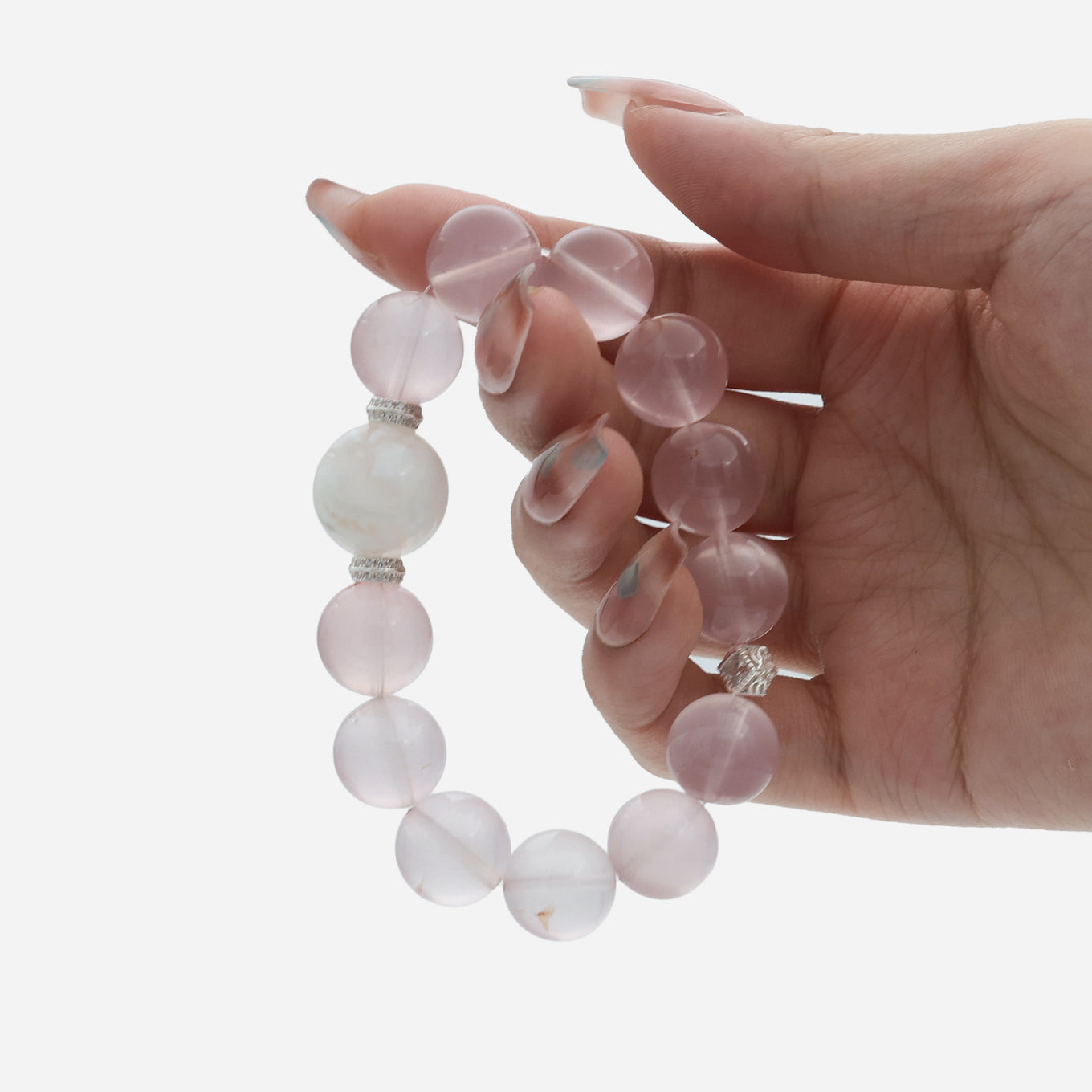
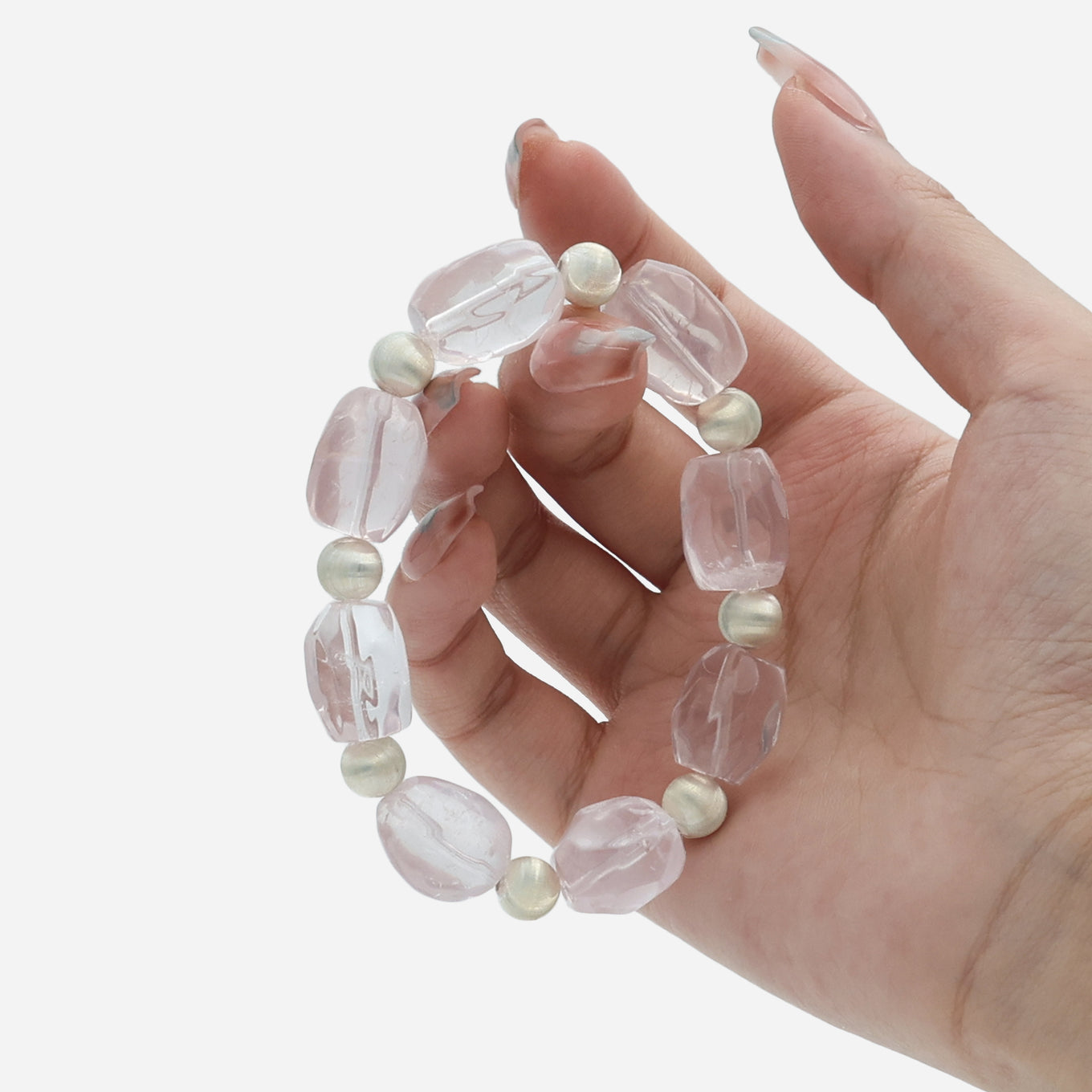
A point of confusion worth clearing up, because I see it constantly: rose motif jewelry (metal sculpted into rose shapes) is fundamentally different from rose quartz jewelry (jewelry made from the pink gemstone). They share the word "rose" but occupy entirely separate categories of object, meaning, and care:
| Aspect | Rose Motif Jewelry | Rose Quartz Jewelry |
|---|---|---|
| What it is | Metal sculpted into rose shapes — stems, petals, buds, leaves | Pink quartz crystals cut into beads, cabochons, or faceted stones |
| Material | Ag925 sterling silver + 18K gold plating | Silicon dioxide mineral with trace titanium (gives the pink color) |
| Symbolism | Romantic love, secrecy, resilience, passion, beauty | Unconditional love, emotional healing, compassion, gentleness |
| Color | Gold, silver, or rose gold (the metal finish) | Pale to medium pink (the natural stone color) |
| Mohs Hardness | Silver: 2.5-3.0 Mohs | Quartz: 7.0 Mohs |
| Daily Wear | Water-resistant, sweat-proof, shower-safe | Avoid prolonged sunlight (fades), avoid water (porous), avoid impact |
Unlike rose quartz, which requires careful handling (it fades in direct sunlight, can scratch, and shouldn't be submerged), a gold rose motif piece is shower-safe, sweat-proof, and doesn't fade — period. That's the practical difference between wearing a stone and wearing a sculpture.
The Key Distinction: Rose quartz asks you to adapt your life to it. A gold rose bangle adapts to your life — gym, rain, sleep, repeat. Same botanical inspiration. Radically different daily reality.The Rose in 2026: Why This Moment?
Fashion is cyclical, but botanical motifs in jewelry follow a different rhythm than hemlines or silhouettes. The current rose resurgence isn't driven by runway collections — it's driven by three deeper cultural shifts that have nothing to do with seasonal trends:
- The "Romanticize Your Life" Movement. Post-pandemic, people are investing in everyday beauty — not just special-occasion objects. A rose bangle you wear to the grocery store is more subversively romantic than a rose bangle you save for weddings. The ritual of putting it on each morning becomes an act of self-devotion, not vanity.
- Biophilic Design Goes Wearable. Architects and interior designers have been incorporating natural forms into built environments for over a decade. Jewelry is the logical next frontier — and rose stems, with their thorns, curves, and imperfect organic lines, are the anti-geometric antidote to five years of sharp-edged minimalist jewelry dominating the market.
- The Return of Narrative Jewelry. After years of logo-mania and pieces designed primarily to signal brand affiliation, consumers are gravitating toward jewelry that means something personal. A rose isn't a logo. It's a shared cultural symbol with 3,000 years of interpretive history — and every person who wears one brings their own story to it.
Caring for Sculptural Rose Jewelry
Gold-plated sterling silver is resilient, but sculptural pieces with detailed crevices — like those deep between cast rose petals — need slightly different care than smooth bands:
- Clean petal crevices with a soft-bristle brush. A clean, unused mascara wand is the perfect tool for reaching between sculpted rose petals where skin oils and lotion residue accumulate. Do this once every two weeks if you wear the piece daily.
- Rinse after salt water or chlorine exposure. While the 0.5-micron 18K gold plating is water-resistant, salt and chlorine accelerate tarnish on any precious metal. A quick freshwater rinse and pat-dry takes ten seconds and prevents long-term buildup.
- Store the hinged bangle in the closed position. Leaving it open stresses the hinge spring mechanism. Close it before putting it away — the clasp assembly is engineered to rest in the locked position, not the open one.
- Avoid ultrasonic cleaners. The high-frequency vibration can loosen hinge pins and micro-set stones over time. Stick to gentle hand-cleaning with warm water and mild soap for any hinged or articulated piece.
Frequently Asked Questions
Q: Is a hinged bangle actually more secure than an open cuff bracelet?Yes — and for a specific mechanical reason. An open cuff relies on friction against your wrist to stay in place. A hinged bangle physically closes and locks around your wrist with a spring-loaded clasp, operating on the same principle as a watch band or a safety pin.
The Rose Stem Hinged Bangle adds a secondary safety catch — even if the primary clasp were to somehow release (in practice, this doesn't happen under normal wear), the backup catch prevents the bangle from falling off. You'd notice the primary release long before the safety catch disengaged.
Q: Will the gold plating wear off if I wear my rose bangle every single day?With 0.5-micron 18K gold plating over Ag925 sterling silver — and sensible care (remove before swimming in chlorinated pools, avoid abrasive contact with surfaces like gym equipment) — the plating maintains its integrity for years of daily wear. Unlike flash plating (0.05-0.1 microns) that can wear through in months, 0.5 microns represents a meaningful thickness in jewelry manufacturing.
The GIA (Gemological Institute of America) classifies plating above 0.5 microns as "heavy gold electroplate" — a category designed for longevity, not planned obsolescence.
Q: Can I wear a rose motif piece with other floral jewelry, or does it visually compete?It depends entirely on which florals you're combining. Rose + rose = competing (too matchy-matchy — pick one focal floral and let it dominate). Rose + leaf (like Cascade Ginkgo Leaf Earrings) = complementary in a way that reads as intentional. Rose + clover (like Gold Clover Earrings) = thematic but visually distinct. The rule of thumb: choose different species, at different scales, on different parts of your body.
A rose on your wrist and ginkgo leaves on your ears don't fight — they read as a cohesive botanical narrative across your look.
Q: What's the actual difference between a rose bangle and a rose bracelet?Structurally: a bangle is rigid — it holds its circular shape whether on or off the wrist. A bracelet is flexible — chain links, beads, or cord that drapes and conforms to the body. The Rose Stem Hinged Bangle is definitively a bangle: solid cast sterling silver that opens via precision hinge rather than flexing. Bangles make stronger canvases for sculpture because they don't shift, rotate, or kink the way flexible bracelets inevitably do.
When you're casting a rose stem in precious metal, you want it sitting exactly where you placed it — not sliding around to the underside of your wrist.
Q: Who is rose motif jewelry actually for?Anyone who wants their jewelry to carry meaning beyond surface decoration. The rose is arguably the most universally recognized botanical symbol on Earth — it crosses cultures, eras, and personal style categories without losing relevance. Whether you're a romantic, a gardener, a literature enthusiast who cried reading The Little Prince, or someone who simply appreciates the craft of casting a living stem in precious metal, a rose piece meets you where you are and means what you need it to mean.
Key Terms You Need to Know
| Botanical Motif | A design element drawn from plant life — leaves, vines, flowers — rendered in metal. Rose motifs are the most enduring botanical motif in jewelry history, spanning 3,000+ years across civilizations. |
| Hinged Bangle | A rigid bracelet that opens via a precision hinge mechanism and closes with a secure clasp — engineering disguised as elegance. |
| Sculptural Jewelry | Jewelry designed as three-dimensional art, not flat decoration. A sculptural rose piece looks different from every angle — just like a real flower. |
| Ag925 | 92.5% pure silver — the international standard for sterling silver. Every ÉLARAMUSE piece, regardless of plating color, uses Ag925 as its structural core. |
| 18K Gold Plating | A layer of 18-karat gold electroplated onto the Ag925 silver base. At ÉLARAMUSE, our plating is 0.5+ microns thick — honest about its limits, built to last with care. |
What We Believe
We believe a rose in metal says more than a dozen wrapped in cellophane. It says "I intend for this to last." Every rose motif piece at ÉLARAMUSE is cast in nickel-free Ag925 sterling silver with 18K gold plating — because botanical jewelry should honor nature's permanence, not fashion's 90-day cycle. A sculptural rose bangle isn't an accessory. It's a declaration that beauty doesn't need to be fragile.
References & Further Reading
- The Metropolitan Museum of Art — "Floral Motifs in Jewelry: Ancient Egypt to Art Nouveau"
- Victoria and Albert Museum — "The Language of Flowers in Victorian Jewelry"
- The Royal Collection Trust — "Botanical Jewelry in the Courts of Europe, 1600–1900"
- Journal of Design History (2021) — "The Rose as Universal Symbol: Cross-Cultural Analysis of Floral Motifs in Personal Adornment"
- The Hero: Rose Stem Hinged Bangle — Sculptural rose stem wrapping a precision-hinged gold bangle with safety catch. $185
- Architectural Counterpart: Pave Bamboo Link Bangle — Geometric bamboo segments with high-carbon diamond pave for contrast stacking. $235
Shop the Full Bangle & Cuff Collection →
The rose has been carved, cast, painted, and worn for 5,000 years of human history, and it shows no sign of retiring. What changes isn't the rose — it's how we interpret it. In 2026, a gold rose stem wrapped around your wrist says: I value beauty that lasts, I know my symbols, and I understand that the most romantic gesture isn't a dozen roses that die in a week — it's a rose in precious metal that outlives the giver.
Find the talisman that blooms on your terms.
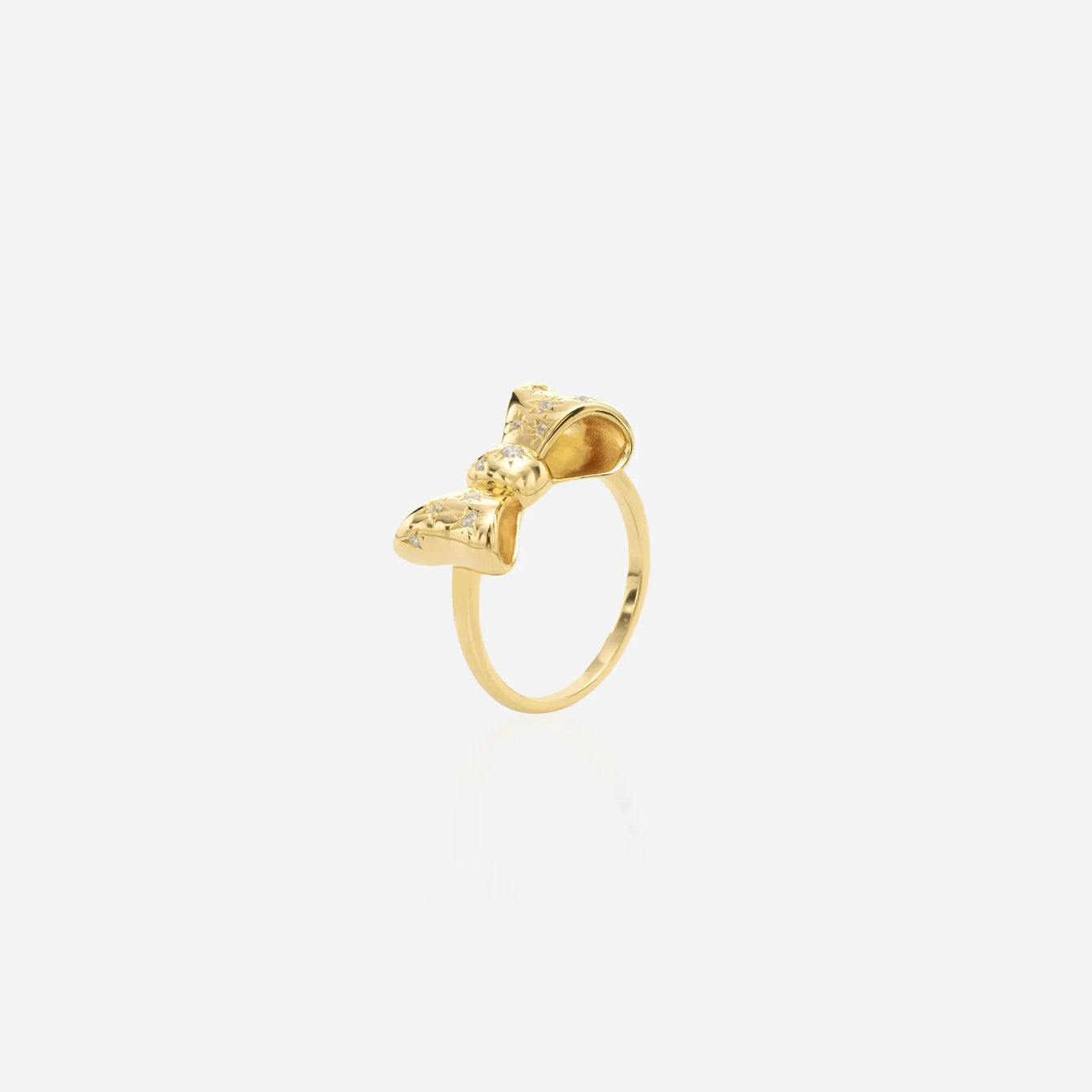
Read next: Delicate Bow Ring | Gold Bow-Knot Ring with Lab Diamonds | ELARAMUSE — A bow-knot ring in molten gold with high-carbon lab diamonds at the crossing. Slim, stack-friendly, coquette charm without costume. The delicate bow ring that’s architectural, not girlish.