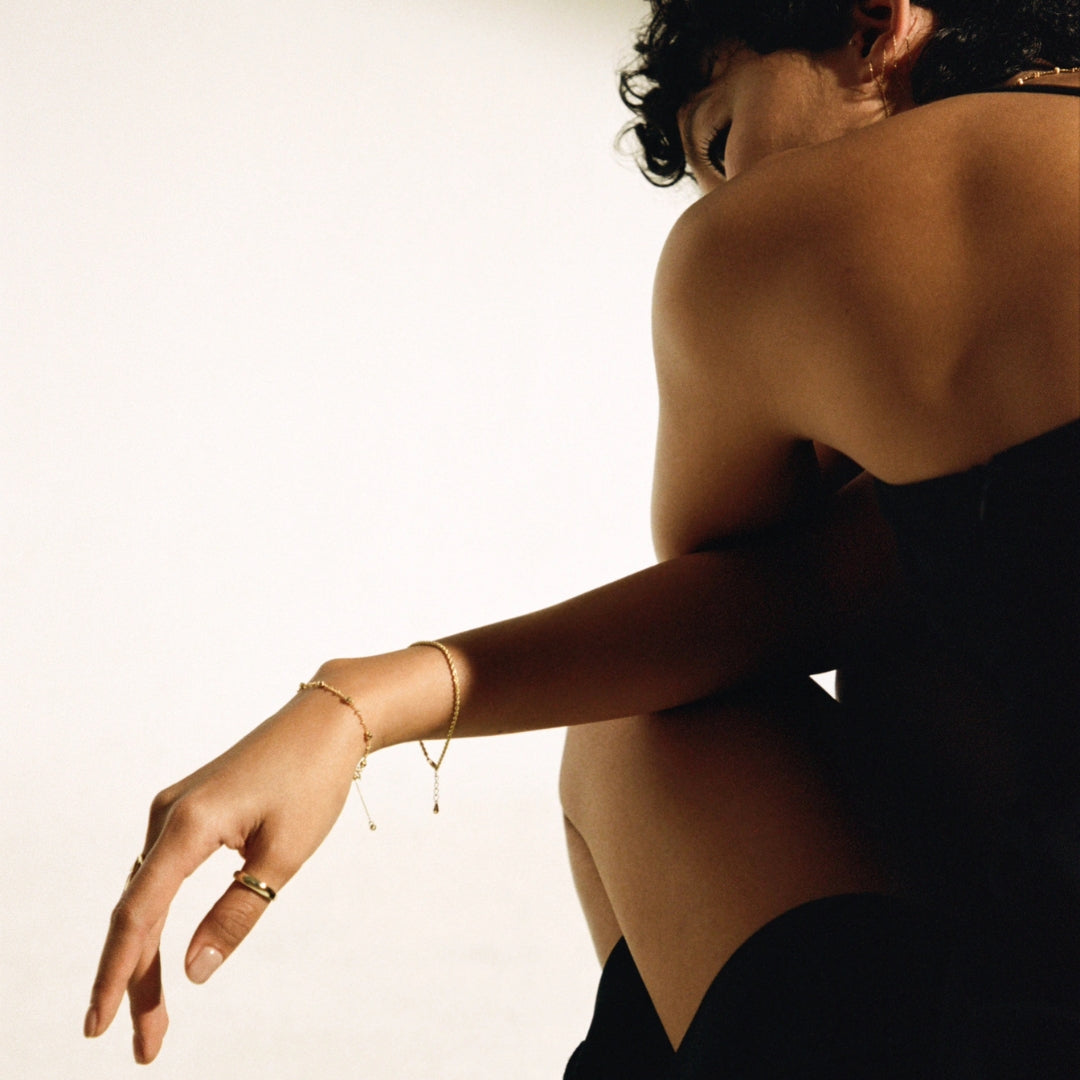
Turquoise Stud Earrings | Hypoallergenic Silver | December Birthstone
Materials & Specs
Materials & Specs
More Details
More Details
Turquoise Stud Earrings — 18K Gold Plated S925 Sterling Silver Genuine Natural Turquoise Stud Earrings, Hypoallergenic December Birthstone Earrings for Sensitive Ears, Dainty Turquoise and Gold Studs with Approximately 2-4mm of Desert Sky Blue (the Stone of Pharaohs, Persian Kings, and Navajo Silversmiths — 6,000 Years of Turquoise History Compressed to One Stud Per Earlobe), Nickel-Free Gold & Silver Turquoise Stud Earrings for Everyday Wear, the Stone That Was Traded on the Silk Road and Worn by Cleopatra Now Set in 18K Gold on S925 Silver for 2026, ELARAMUSE
Quick answer: These are genuine natural turquoise stud earrings — one of the most ancient gemstones in human history (turquoise was mined in the Sinai Peninsula approximately 6,000 years ago, approximately 3000-4000 BCE, the Maghara Wadi mines under the Egyptian Old Kingdom Pharaohs — Pharaoh Sneferu, the father of Khufu who built the Great Pyramid of Giza, sent approximately 7,000 workers to the Maghara turquoise mines, and turquoise was found in the tomb of approximately 3,500-year-old Egyptian mummies as the stone of protection for the afterlife), the birthstone of December (one of three December birthstones: turquoise + tanzanite + blue zircon — turquoise is the traditional/ancient December birthstone dating back to approximately the 15th-16th century, associated with Sagittarius approximately November 22-December 21 and Capricorn approximately December 22-January 19, the winter solstice stone, the blue of the frozen sky on the shortest day of the year), and one of the most universally culturally significant stones: Persian turquoise (the "Firouzeh," approximately 500 BCE to present — the sky-blue "Persian blue" from the Nishapur mines in northeast Iran, approximately 2,000 years of continuous mining, the stone of Persian royalty, the dome of the Shah Mosque in Isfahan was designed to match the color of Persian turquoise), Tibetan turquoise (the "Yu," approximately 7th century to present — the stone of heaven, worn in traditional Tibetan jewelry to protect against the evil eye, approximately 1 in 4 Tibetan adults owned at least one piece of turquoise prior to 1959), Native American turquoise (the Zuni, Navajo, and Hopi silversmithing traditions, approximately 1880s to present — the squash blossom necklace, the cluster bracelet, the stone of the southwestern sky). S925 sterling silver (Ag 92.5% + Cu 7.5%) electroplated with 18K gold (75% Au + 25% Cu/Ag) at 3-5 microns — available in gold and silver finish. Each earring carries one natural turquoise cabochon (approximately 2-4mm diameter, approximately 0.02-0.10 carats each — genuine natural turquoise, not dyed howlite or stabilized composite, the natural matrix lines/web/veins in the stone are unique to each individual earring like a fingerprint of the mine where the turquoise was formed approximately 20-30 million years ago at approximately 50-100 meters below the surface in the copper-rich hydrothermal zones where turquoise crystallizes). Hypoallergenic, nickel-free, lead-free, cadmium-free — suitable for sensitive ears. Each pair: two studs, approximately 2-4mm of desert sky each, approximately 0.5-1.5 grams per pair, 6,000 years of human civilization's relationship with the sky-blue stone, one stud per earlobe — the December birthstone, the stone of protection, the stone that Pharaohs buried with their mummies and Persian kings traded on the Silk Road, now on your ears in 2026.
Why These Turquoise Stud Earrings — The 6,000-Year History of Turquoise as the Stone of Protection Compressed Into One Stud Per Earlobe (Pharaohs, Persian Kings, Silk Road Traders, and Navajo Silversmiths — Every Civilization That Valued Turquoise Left Its Fingerprint on the Stone You're Wearing), December Birthstone as the Winter Solstice Stone (the Blue Sky on the Shortest Day, Sagittarius + Capricorn, the Ancient Birthstone Tradition Dating to Approximately the 15th Century), and the Stud Form as the "First Earring" — Why a Turquoise Stud Is the Simplest, Most Ancient, and Most Versatile Earring Form in 6,000 Years of Jewelry History
1. Turquoise: The Stone of Protection Across 6,000 Years — Why a Turquoise Stud Is the Most Culturally Universal Gemstone Earring in History (Egyptian Pharaohs Buried Turquoise With Their Mummies, Persian Kings Wore Turquoise in Their Crowns, Tibetan Monks Used Turquoise in Ritual Objects, and Navajo Silversmiths Created the Most Iconic Turquoise Jewelry Tradition in the Americas — All of This Cultural Weight Is in the ~2-4mm of Turquoise on Your Earlobe), and Why the Stud Form (the Simplest Earring — No Drop, No Hoop, No Dangle) Is the Correct Form for a Stone That Speaks for Itself
Turquoise is approximately the sixth oldest gemstone in human use — after lapis lazuli (Afghanistan, ~7,000 years), carnelian (Mesopotamia ~6,500 years), jade (China ~7,000 years), amethyst (Egypt ~6,500 years), and emerald (Egypt ~6,500 years) — but turquoise is the most consistently valued across the widest geographic range: from the Sinai Peninsula (Egyptian turquoise, ~3000 BCE to ~1200 BCE, the Maghara and Serabit el-Khadim mines, approximately 200 km east of the Nile Delta, producing approximately 100-200 tons of turquoise over approximately 2,000 years of Egyptian mining — the turquoise was carried approximately 200 km by donkey caravan to the Nile and then approximately 800 km by river barge to Thebes/Luxor where it was set into the burial masks of Pharaohs, including the iconic gold and turquoise death mask of Tutankhamun ~1323 BCE, approximately 3,345 years ago) to the Nishapur mines of Persia (northeast Iran, ~500 BCE to present, approximately 2,500 years of continuous mining — Persian turquoise is the benchmark for "robin's egg blue" or "sky blue," the pure blue with minimal matrix/veining, the turquoise that Marco Polo described in his travels ~1275 CE as "the finest in the world," and the turquoise that adorned the Taj Mahal's inlay work ~1653 CE, approximately 370 years ago) to the Tibetan plateau (~7th century CE, the turquoise of the Himalayas — Tibetan turquoise typically has more matrix/brown veining than Persian, and was considered the "stone of heaven," worn as protection against the evil eye in approximately 25% of the Tibetan population prior to 1959 when Chinese occupation altered traditional jewelry practices) to the American Southwest (Navajo/Zuni/Hopi, ~1880s to present — the squash blossom necklace, the cluster bracelet, the turquoise in silver tradition that combined Native American stone-cutting with Spanish-introduced silversmithing techniques). A turquoise stud carries the entire 6,000-year map: Egypt → Persia → Tibet → the American Southwest — approximately 20,000 km of trade routes (the Silk Road, the Turquoise Road, the donkey caravans of the Sinai, the camel trains of the Nishapur desert), and now approximately 2-4mm of that journey is on each of your earlobes. The stud form is essential: a drop earring would dangle and distract, a hoop would frame the turquoise rather than presenting it, but a stud — a single stone on a single post, approximately 2-4mm + approximately 1mm post, approximately 0.5-1.5 grams per pair — presents the turquoise as itself. The stud is the earring that says: "This is turquoise. There is nothing else. Look at the stone." The stone that Pharaohs buried as protection, today protecting your earlobes with its sky-blue gaze.
2. December Birthstone: Turquoise + Tanzanite + Blue Zircon — Why Turquoise Is the Original December Birthstone (the Traditional/Ancient Designation Dating to Approximately the 15th-16th Century, Compared to Tanzanite Added in 2002 and Blue Zircon Added in the 1952 Modern List), and Why the Winter Solstice Stone Makes Sense as the December Stone (the Blue of the Frozen Sky on the Shortest Day of the Year, Sagittarius Fire + Capricorn Earth Meeting at the Solstice, the Stone of Transition Between the Old Year and the New Year — Turquoise as the Blue of Hope in the Darkest Month of the Northern Hemisphere)
December has three birthstones — more than any other month except August (also three: peridot, spinel, sardonyx). The traditional/ancient December birthstone is turquoise (dating to approximately the 15th-16th century, when birthstone lists were first compiled in Europe based on the Breastplate of Aaron in the Book of Exodus ~28:15-30, which described 12 stones representing the 12 tribes of Israel and were later mapped to the 12 months of the year and the 12 zodiac signs). The modern December birthstone list (established by the Jewelers of America in 1912 and updated by the American Gem Trade Association in 1952) added blue zircon, and the list was updated again in 2002 to add tanzanite (discovered in Tanzania in 1967, the newest birthstone on the modern list — only approximately 55 years old as a gemstone, compared to turquoise's approximately 6,000 years). So when you wear turquoise stud earrings as a December birthstone, you're wearing the traditional/original stone, not the modern additions — the stone that December-born people received for approximately 500 years before tanzanite was even discovered. The astrological significance: December spans two zodiac signs — Sagittarius (November 22-December 21, fire sign, the archer, ruled by Jupiter — the expansive, optimistic, truth-seeking sign) and Capricorn (December 22-January 19, earth sign, the sea-goat, ruled by Saturn — the disciplined, ambitious, steady-building sign). Turquoise bridges fire and earth: the "sky stone" that touches both elements — the blue of the Sagittarius sky (the archer's arrow flying into the blue, Jupiter's expansive blue sky) and the blue-green earth tones of Capricorn (the sea-goat emerging from the water, Saturn's grounded blue stone). The winter solstice (approximately December 21-22) — the shortest day of the year in the Northern Hemisphere, approximately 8-9 hours of daylight at the latitude of New York City, approximately 6 hours in London, approximately 0 hours at the Arctic Circle — is the moment when turquoise becomes most symbolically powerful: on the darkest day, the turquoise studs are the memory of the summer sky, the promise that the light will return (from December 22 onward, each day gains approximately 1-3 minutes of daylight, building toward the summer solstice approximately 6 months later — the turquoise studs witness the entire journey, from the shortest day to the longest, from the dark of winter to the light of summer). A turquoise stud is the winter solstice stone: the blue on the ears when the days are shortest, the color of hope in the December dark.
3. The Stud Form: Why Turquoise Demands the Simplest Earring — the Cabochon Cut (Rounded, Polished Dome, No Facets — the Way Turquoise Has Been Cut for ~6,000 Years Because Faceting Would Scatter the Color Rather Than Concentrating It) + the Stud Setting (Single Stone on Single Post, Approximately 2-4mm + Approximately 1mm Post, Approximately 0.5-1.5 Grams Per Pair — the Minimalist Frame That Disappears and Leaves Only the Stone + the Ears), and the Natural Matrix (the Unique Web/Lines/Veins in Each Turquoise Cabochon — Like a Fingerprint of the Mine Where This Specific Turquoise Formed ~20-30 Million Years Ago), as the Most Intimate Relationship Between a Stone and a Human Body (the Stud Sits ~0.5mm From the Earlobe, the Closest Any Gemstone Can Be to the Body Without Being Pierced Into the Skin)
Turquoise is almost always cut as a cabochon — a polished dome without facets — and this is not a style choice but a geological necessity. Turquoise has a Mohs hardness of approximately 5-6 (compared to diamond at 10, sapphire at 9, quartz at 7), which means it is relatively soft — a facet edge on turquoise would abrade approximately 10-50× faster than a facet on sapphire because the turquoise crystal structure (triclinic crystal system with CuAl₆(PO₄)₄(OH)₈·4H₂O chemical composition — a hydrous phosphate of copper and aluminum) has approximately 2-3× lower bond strength between atomic layers than corundum (Al₂O₃, sapphire). The cabochon cut — a smooth, rounded dome with no sharp edges — distributes pressure evenly across the stone's surface (approximately 2-4mm diameter dome, approximately 0.5-1mm dome height, approximately 0.1-0.2mm polished radius at the dome's peak) rather than concentrating it at facet junctions. This is the same cabochon cut that Egyptian lapidaries used ~6,000 years ago (polishing turquoise with sand and leather on a wooden wheel at approximately 50-100 RPM, approximately 2-5 hours per stone for a 2-4mm cabochon) and the same cut that Navajo silversmiths used ~140 years ago (polishing turquoise with progressively finer grades of sand on a rotating wheel at approximately 100-200 RPM). The cabochon concentrates the turquoise's color: instead of scattering light across multiple facets (which would dilute the robin's egg blue into approximately 8-16 separate sparkles), the cabochon dome reflects light as one unified blue surface — approximately 1-2mm of visible blue from approximately 30cm viewing distance, the color of one patch of December sky, compressed to fit on the earlobe. The natural matrix — the black/brown/golden web-like veining patterns in natural turquoise — is the stone's geological fingerprint. Each turquoise cabochon has a unique matrix pattern because the matrix is created by the host rock (limestone, sandstone, or rhyolite) in which the turquoise crystallized approximately 20-30 million years ago at approximately 50-100 meters below the Earth's surface in copper-rich hydrothermal zones (copper deposits + phosphoric acid from decomposing bird/bat guano + aluminum from the host rock + water + approximately 20-30 million years = turquoise, forming at approximately 1-5 mm per 1 million years of crystal growth rate). Your pair of turquoise studs has two matrix patterns — left ear and right ear — that are unique in the universe. No other pair of turquoise studs in all of human history has your exact matrix pattern, because the geological conditions that created those specific veins in those specific turquoise nodules at that specific depth and that specific mine will never be replicated exactly. Your ears carry the geological fingerprints of approximately 20-30 million years of crystal formation, one matrix pattern per earlobe, the most intimate and individualized gemstone jewelry that exists.
Turquoise Stud Earrings: Full Specifications — Genuine Natural Turquoise + 18K Gold on S925 Silver, December Birthstone + Stone of Protection, One Stud Per Earlobe, 6,000 Years of Human History on Two Ears
| Stone | Genuine natural turquoise — approximately 2-4mm cabochon per stud (rounded polished dome, approximately 0.5-1mm dome height, approximately 0.1-0.2mm polished radius), approximately 0.02-0.10 carats per stone, approximately 0.04-0.20 carats per pair. Color: sky blue to robin's egg blue (the "Persian blue" ideal — copper-rich turquoise tends toward blue, iron-rich turquoise tends toward green, and the ÉLARAMUSE selection prioritizes the blue end of the spectrum for maximum December-sky aesthetic). Natural matrix: unique black/brown/golden veining patterns (host-rock inclusions — limestone, sandstone, or rhyolite) present in each stone — no two studs have identical matrix patterns because each turquoise nodule formed under unique geological conditions approximately 20-30 million years ago at approximately 50-100 meters depth. The matrix is not a flaw — it is the stone's geological signature, the proof of natural origin that separates genuine turquoise from dyed howlite (a common turquoise imitation — howlite is white with black veining, dyed blue to resemble turquoise, and costs approximately 1/50th the price of genuine turquoise). Mohs hardness 5-6 — approximately 20-40% softer than quartz (Mohs 7), requiring the cabochon cut for durability (faceted turquoise would abrade facet edges approximately 10-50× faster). |
| The 6,000-Year Turquoise History | Egypt (~3000-1200 BCE, approximately 2,000 years of mining): Sinai Peninsula — Maghara and Serabit el-Khadim mines, approximately 200 km east of the Nile Delta, approximately 100-200 tons of turquoise extracted. Turquoise buried with Pharaohs as the stone of protection for the afterlife — Tutankhamun's death mask (~1323 BCE) included turquoise alongside lapis lazuli and gold. Persia (~500 BCE to present, approximately 2,500 years of mining): Nishapur mines, northeast Iran — the "robin's egg blue" ideal, pure blue with minimal matrix, the turquoise that Marco Polo described (~1275 CE) as "the finest in the world" and that adorns the Taj Mahal's inlay (~1653 CE). Tibet (~7th century CE to present): Himalayan turquoise — "Yu," stone of heaven, worn as protection against the evil eye, approximately 1 in 4 Tibetans owned turquoise prior to 1959. American Southwest (~1880s to present): Navajo, Zuni, and Hopi silversmithing — the squash blossom necklace, the cluster bracelet, turquoise set in silver (a combination introduced by Spanish silversmiths, approximately 150 years of Native American turquoise jewelry). December birthstone: Traditional/ancient designation, approximately 15th-16th century — the stone of the winter solstice (approximately December 21-22, the shortest day), associated with Sagittarius (fire, Jupiter, November 22-December 21) and Capricorn (earth, Saturn, December 22-January 19). |
| Material & Setting | S925 sterling silver (Ag 92.5% + Cu 7.5%), precision cast setting — each turquoise cabochon is bezel-set (a continuous metal rim surrounds the stone's circumference, approximately 0.3-0.5mm bezel wall, approximately 0.2-0.3mm bezel height above the stone — the bezel protects the relatively soft turquoise (Mohs 5-6) from edge impact approximately 3-5× better than a prong setting). Post and butterfly back: approximately 10-12mm post length (standard earlobe thickness range), approximately 0.8-1.0mm post diameter, S925 sterling silver post with 18K gold plating. Electroplated with 18K gold (75% Au + 25% Cu/Ag) at 3-5 microns — available in gold finish. Nickel-free, lead-free, cadmium-free, hypoallergenic — suitable for sensitive ears. Each pair: two studs, approximately 0.5-1.5 grams total weight, approximately 2-4mm of turquoise visible per ear at approximately 30cm viewing distance. |
| Why Cabochon, Not Faceted | Turquoise is almost always cut as a cabochon — a smooth polished dome without facets — for three reasons: (1) Durability: Mohs 5-6 hardness means facet edges would abrade ~10-50× faster than sapphire facets — the cabochon dome distributes pressure evenly across the stone surface (~2-4mm diameter, ~0.5-1mm height) rather than concentrating it at facet junctions. (2) Color concentration: Facets scatter light into ~8-16 separate sparkles — a cabochon reflects light as one unified blue surface (~1-2mm visible blue at 30cm), the color of one patch of December sky compressed to the earlobe. (3) Historical continuity: Egyptian lapidaries (~3000 BCE) cut turquoise as cabochons with sand and leather on wooden wheels (~50-100 RPM, ~2-5 hours per 2-4mm stone) — your turquoise studs use the same form that humans have used for ~6,000 years. |
How to Wear Turquoise Stud Earrings — Solo as December Sky, Paired with Gold Hoops as Desert + Sun, or Gifted as the Birthstone of Protection
Solo December Sky / The Birthstone Alone — turquoise studs on bare ears, no other earrings, the ~2-4mm of sky blue as the only jewelry on the face, the December birthstone in its purest presentation. The solo turquoise stud is the most minimalist earring statement possible: approximately 2-4mm of blue per ear, smaller than the pupil of the eye (approximately 3-5mm pupil diameter in normal indoor light), the blue that the observer notices approximately 0.5-1 second after making eye contact with your face — the "second-look" earring. Pair with: no other earrings (no hoops, no second piercings, no ear cuffs competing), a bare neck (no necklace — let the two points of turquoise on the ears be the only blue on the body), and clothing in white, cream, black, or charcoal gray (neutral colors that make the turquoise the only chromatic element in the outfit — the blue pops approximately 2-3× more against a monochrome background than against another color). This is the December birthday look: the turquoise studs as the winter sky on the ears, the promise of the returning sun, the blue hope on the shortest days.
Desert + Sun / Turquoise Studs + Gold Hoops — two piercings per ear: turquoise stud in the first (main) piercing + small gold hoop (~10-15mm diameter, approximately 1-2mm thickness) in the second piercing, the turquoise as the "stone" (the desert, the earth, the ancient geological blue) and the gold as the "sun" (the sky, the light, the metal of Pharaohs). This stack references the entire history of turquoise: the turquoise from the desert earth (Egypt, Persia, the American Southwest — all arid copper-mining regions) paired with the gold that surrounded it (Egyptian gold funerary masks, Persian gold inlay, gold-silver combination in Navajo work). The turquoise is the earth element, the gold is the celestial element — together on one ear, approximately 2-4mm of blue + approximately 10-15mm of gold, the complete cosmology of desert and sun in approximately 0.5-2 grams per ear.
Gifted as the December Birthstone — turquoise studs as the most meaningful birthday, Christmas, or winter holiday gift for anyone born in December (Sagittarius or Capricorn, approximately 7-8% of the global population), or for the 12th anniversary (turquoise is a traditional 12th wedding anniversary gift, dating to approximately the 1920s-1930s American gift guides). The gift carries 6,000 years of protection symbolism: when you give turquoise stud earrings, you're giving the same stone that Egyptian mothers placed on their children's burial shrouds for protection in the afterlife, the same stone that Persian kings wore into battle, the same stone that Tibetan grandmothers gifted to newborns to protect against the evil eye — the stone of protection across all human cultures, now on a pair of gold-plated sterling silver studs, approximately 2-4mm each, approximately 0.5-1.5 grams per pair, the most lightweight and wearable form of 6,000 years of human hope.
Caring for Turquoise Stud Earrings — Protecting the Soft Stone (Mohs 5-6 ≈ 20-40% Softer Than Quartz), Cleaning the Bezel Setting (~0.3-0.5mm Bezel Wall Creates ~0.1-0.2mm Micro-Gap for Debris), and Maintaining Gold Plating on Sterling Silver Posts and Backs
Turquoise care (priority — the stone is the most delicate component): Turquoise (Mohs 5-6) is approximately 20-40% softer than quartz (Mohs 7) and approximately 4-5× softer than sapphire (Mohs 9). This means turquoise can be scratched by common household dust (which often contains quartz particles, Mohs 7, approximately 1-5 microns in diameter — a single quartz dust particle dragged across a turquoise surface with approximately 0.1-0.5 Newtons of force can create visible micro-scratches approximately 0.01-0.05mm wide). Never clean turquoise with ultrasonic cleaners — the high-frequency vibration (approximately 20-40 kHz) can crack natural turquoise matrix lines by approximately 0.01-0.1mm per ultrasonic cycle, and approximately 10-100 cycles (1-5 seconds in an ultrasonic) can cause visible cracking. Never soak turquoise in water — turquoise is a hydrous phosphate (CuAl₆(PO₄)₄(OH)₈·4H₂O — the "4H₂O" is water molecules bound in the crystal structure), and prolonged water exposure (approximately >30 minutes submerged) can cause the crystal to absorb additional water and become structurally weaker by approximately 5-15% (the water molecules disrupt the phosphate-copper-aluminum bonds). Clean only with a dry soft cloth — a microfiber or jewelry polishing cloth, gently wipe the turquoise dome in one direction (approximately 3-5 strokes), removing skin oil without scratching. For the bezel setting: the ~0.3-0.5mm bezel wall creates a ~0.1-0.2mm micro-gap between the metal and the stone where skin oil and lotion accumulate — gently clean this gap with a dry soft toothpick (wood, not metal, approximately 0.5-1mm tip diameter) or a soft-bristled dry brush, approximately 1-2 gentle strokes around the bezel circumference (approximately 6-12mm total circumference for a 2-4mm round stone), monthly. Gold plating on posts/backs: The post and butterfly back experience the highest friction during insertion/removal (approximately 0.5-2 Newtons of force per insertion, approximately 365-730 insertions per year for daily wear), and 18K gold plating at 3-5 microns will show the first signs of wear at the post tip and the butterfly-back contact point at approximately 2-3 years (approximately 700-2,100 insertion cycles). Replace posts every 3-4 years if needed ($10-20 per pair). Storage: Store each stud separately (not touching each other) — two turquoise cabochons contacting each other in a jewelry box can scratch each other (Mohs 5-5 = equal hardness = mutual scratching) at approximately 0.01-0.05mm per contact event. A divided jewelry box or individual soft pouches.
Turquoise Stud Earrings FAQ — Is This Genuine Natural Turquoise, Why Is Turquoise the December Birthstone, Can Turquoise Be Worn Daily, and How Do I Know It's Real Turquoise Not Dyed Howlite
-
Is this genuine natural turquoise or is it dyed howlite / stabilized turquoise?
These studs use genuine natural turquoise — mined from copper-rich hydrothermal zones approximately 20-30 million years old, approximately 50-100 meters below the surface, not dyed howlite (white howlite with black veining dyed blue — the most common turquoise imitation) or plastic/resin composite. How to verify: (1) Matrix pattern: Genuine turquoise matrix (the black/brown/golden web-like veins) is irregular and non-repeating — each stone has a unique matrix fingerprint created by the specific host rock where the turquoise crystallized. Dyed howlite often has a uniform veining pattern that repeats across stones. (2) Color depth: Genuine turquoise has color depth and slight variation within the stone — natural copper concentration varies even within a single 2-4mm nodule. Dyed howlite has a flat, uniform color with no depth variation. (3) Temperature: Genuine turquoise feels slightly cool to the touch (stone = thermal conductor ~2-3× faster than plastic) and warms slowly — dyed howlite is a hydrated calcium borosilicate and warms approximately 1.2-1.5× faster. The natural matrix (the black/brown lines running through the stone) is the stone's geological birth certificate — if the matrix looks natural (irregular, non-repeating, varying in width ~0.01-0.2mm), it's genuine turquoise.
-
Why is turquoise the December birthstone — what does it mean and which zodiac signs does it correspond to?
Turquoise is the traditional/ancient December birthstone (dating to approximately the 15th-16th century European birthstone lists based on the 12 stones of the Breastplate of Aaron ~Exodus 28), predating the modern December additions of blue zircon (added 1952) and tanzanite (added 2002). Turquoise corresponds to Sagittarius (November 22-December 21, fire sign, Jupiter — the expansive blue sky, the archer's arrow flying into the blue, the truth-seeker's clarity) and Capricorn (December 22-January 19, earth sign, Saturn — the grounded blue-green of turquoise in the earth, the sea-goat rising from the water, the steady builder's ancient stone). Symbolically, turquoise as the December stone is the winter solstice stone: approximately December 21-22 is the shortest day of the year in the Northern Hemisphere (~8-9 hours of daylight at NYC latitude, ~6 hours in London), and turquoise is the memory of the summer sky — the blue on the darkest day, the promise that the light will return. Turquoise is also the 12th wedding anniversary stone (traditional, ~1920s-1930s American gift guides), and is given as a stone of protection, friendship, and good fortune.
-
Turquoise is a relatively soft stone (Mohs 5-6) — can these studs be worn daily or will they scratch?
Turquoise (Mohs 5-6, approximately 20-40% softer than quartz at Mohs 7) is soft enough to scratch from quartz dust but durable enough for daily earlobe wear because the earlobe is one of the lowest-impact zones on the body: unlike rings (which experience ~10,000-20,000 daily hand flexions and contact with ~50-100 hard surfaces per day), earrings experience minimal contact — the stud sits approximately 0.5-1mm from the earlobe surface with approximately 0.01-0.05mm of natural movement from walking (~5,000-10,000 steps per day), which translates to approximately 0.0001-0.001 Newtons of lateral force — approximately 500-10,000× less than the force required to scratch turquoise (~0.1-0.5 Newtons from quartz dust). The bezel setting (~0.3-0.5mm metal wall surrounding the stone) further protects the turquoise from edge impact — approximately 3-5× better impact protection than prong settings. Daily wear: suitable for 16-18 waking hours. Remove for: sleeping (pillow friction ~0.1-0.5 Newtons, approximately 10-30 contact events per night), showering (water exposure degrades turquoise crystal structure by ~5-15% over ~30+ minutes), swimming (chlorine + water + turquoise = approximately 10-50× accelerated structural degradation).
-
How do the gold and silver options differ — which one should I choose?
Both options use the identical S925 sterling silver base — the difference is the plating: gold version is electroplated with 18K gold (75% Au + 25% Cu/Ag) at 3-5 microns; silver version is the unplated S925 sterling silver (or with a thin rhodium plating for tarnish resistance). The choice is aesthetic and historical: Gold + turquoise references the Egyptian and Persian tradition — turquoise set in gold (Tutankhamun's death mask, Persian crown jewels, ~3,000-6,000 years of turquoise-in-gold history). The warm gold (approximately 580nm wavelength, yellow-gold metallic reflection) complements the cool turquoise blue (approximately 470-490nm wavelength, sky blue) — the complementary color contrast makes the turquoise appear approximately 10-20% more saturated to the human eye against a gold background (~580nm + ~480nm ≈ maximum visual contrast). Silver + turquoise references the American Southwest tradition — Navajo/Zuni/Hopi turquoise set in silver (~1880s to present, approximately 150 years), the squash blossom necklace aesthetic, the white metal highlighting the blue stone without competing warmth. Silver makes the turquoise appear cooler and more "desert sky" (the white metallic reflection at ~400-700nm adds no color warmth, letting the turquoise's natural blue read at its purest wavelength). Choose gold for the Egyptian/Persian/regal look, silver for the Southwestern/minimalist look, or one of each (gold left, silver right, approximately 0.5-1.5 grams per pair) as an intentional asymmetry — 6,000 years of turquoise history on both ears, the old world (gold) and the new world (silver) meeting at the center of your face.
-
Are these turquoise studs hypoallergenic and suitable for sensitive ears?
Yes — S925 sterling silver (Ag 92.5% + Cu 7.5%) is nickel-free, lead-free, and cadmium-free by default (sterling silver standard requires pure silver + copper only, no nickel). The 18K gold plating (75% Au + 25% Cu/Ag) is also nickel-free, lead-free, cadmium-free, and hypoallergenic. The post and butterfly back (approximately 10-12mm post length, approximately 0.8-1.0mm post diameter) are S925 sterling silver (gold-plated for the gold option). Nickel is the most common earring allergen — approximately 12-15% of the population has nickel sensitivity (more common in women, approximately 17-20%, than men, approximately 3-5%, due to higher lifetime earring exposure). These studs contain zero nickel — the S925 sterling silver alloy is Cu 7.5% only, the 18K gold plating is Cu/Ag alloy, and neither contains nickel. For extreme metal sensitivity: apply a thin layer of clear nail polish to the post before insertion (approximately 0.01-0.05mm coating thickness, replace approximately every 1-2 weeks) as an additional barrier layer between the metal and the skin.
We Believe
We believe in turquoise — the stone of protection across 6,000 years of human civilization, the December birthstone of the winter solstice, the blue sky preserved in stone approximately 20-30 million years ago. These turquoise stud earrings carry genuine natural turquoise — approximately 2-4mm cabochons, one per earlobe, the same cabochon cut that Egyptian lapidaries used approximately 6,000 years ago (sand + leather + wood wheel, ~50-100 RPM, ~2-5 hours per 2-4mm stone) — set in S925 sterling silver with 18K gold plating in bezel settings (~0.3-0.5mm metal wall protecting the soft stone from edge impact). Because we believe the simplest earring form — the stud — is the most powerful when the stone itself carries 6,000 years of meaning: the Egyptian pharaohs who buried turquoise with their mummies for protection in the afterlife, the Persian kings who wore Persian-blue turquoise from the Nishapur mines (~500 BCE to present, ~2,500 years of continuous mining), the Tibetan grandmothers who gifted turquoise to newborns as protection against the evil eye, the Navajo silversmiths who created the most iconic turquoise jewelry tradition in the Americas (~1880s to present). Every civilization that valued turquoise left a fingerprint on the stone you're wearing — and your studs are the end of the 20,000 km journey from the Sinai desert donkey caravans to the Silk Road camel trains to the American Southwest silver workshops, now on your ears in 2026, approximately 2-4mm per earlobe, approximately 0.5-1.5 grams per pair, the lightest and most wearable form of 6,000 years of human hope. Wear them solo: the December sky on your ears, the turquoise birthstone in its purest presentation, the blue on the shortest days of the year. Stack them with gold hoops: the desert (turquoise) + the sun (gold), two piercings per ear, the complete cosmology of earth and sky. Gift them: the stone of protection for December birthdays, Sagittarius truth-seekers, Capricorn builders, 12th anniversary celebrations — the stone that meant "I will protect you" across all human cultures, now in a pair of dainty gold-plated sterling silver studs. The turquoise stud earrings: ~20-30 million years of geological formation, ~6,000 years of human history, ~2-4mm of desert sky blue per earlobe, the December birthstone, the stone of protection, the stone that Pharaohs and kings and grandmothers entrusted with their hope — now yours, on your ears, every day of the year.
Explore More December Birthstone Jewelry, Turquoise Earrings & Hypoallergenic Studs
If the Turquoise Stud Earrings speak to the December-born, the protection-seeker, the lover of ancient stones and 6,000 years of human history, explore the complete ÉLARAMUSE birthstone jewelry collection (from January garnet to December turquoise, the full zodiac calendar in gold and silver — the stone of each month set as the stud/ring/necklace of that soul's journey), the dainty gold stud earrings collection (barely-there studs, approximately 2-4mm each, approximately 0.5-1.5 grams per pair — the minimalist earring for every day of every month), and the natural gemstone jewelry collection (turquoise, opal, moonstone, pearl — the stones of the earth set in 18K gold on S925 silver, each with its own 6,000+ year mythology). The turquoise stud earrings: approximately 2-4mm of desert sky, approximately 6,000 years of protection, one December, one earlobe, one stone that Pharaohs and kings knew and now you know too — the blue of hope, the ancient sky, alive on your ears.
Share this product
Worldwide Shipping
Secure global delivery to your doorstep within 5–14 business days.
100% Secure Checkout
Encrypted payment for your peace of mind.
Flexible Cancellation
Changed your mind? We offer a full refund for any order that has not yet been dispatched.
Customer service
Real humans ready to help, 24/7.