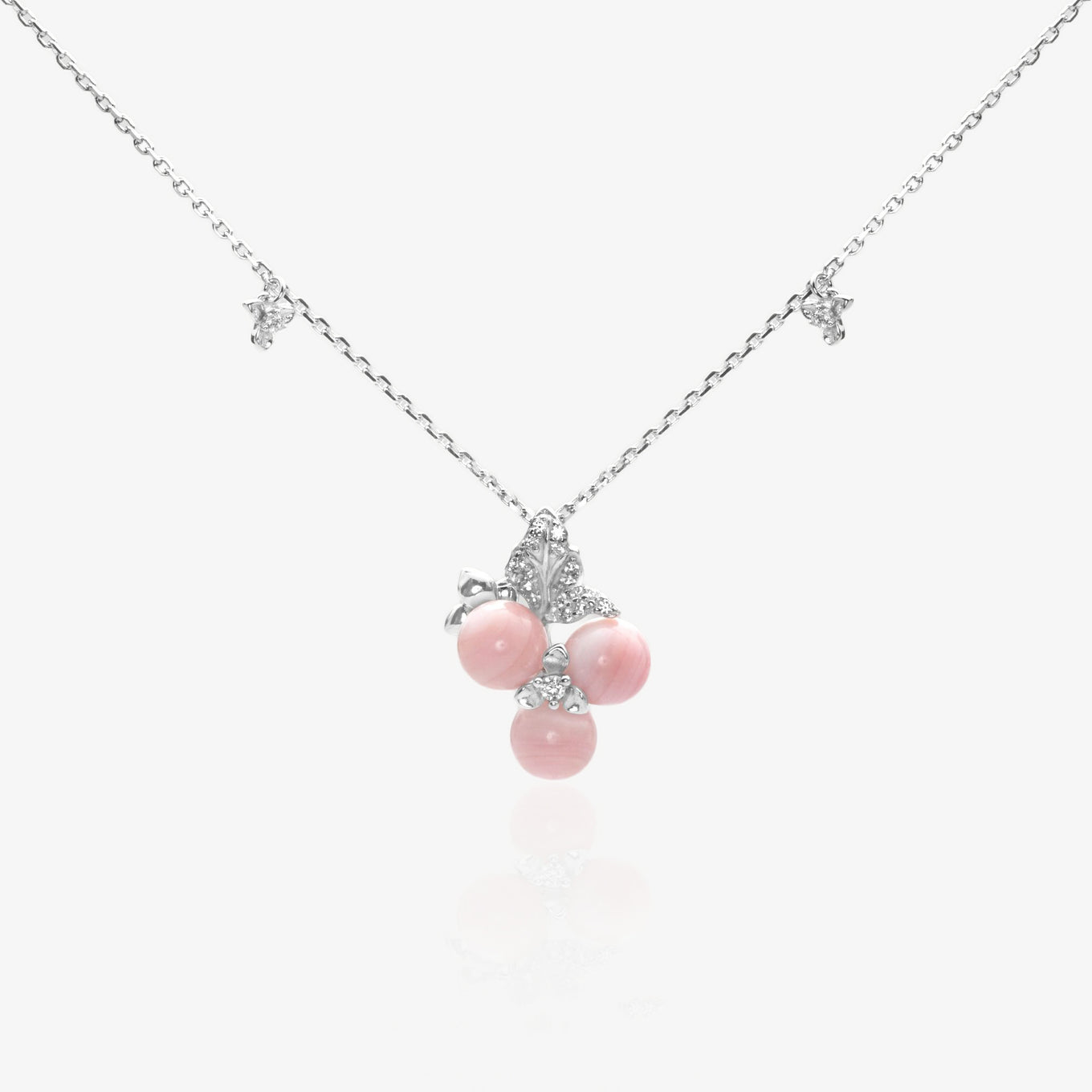
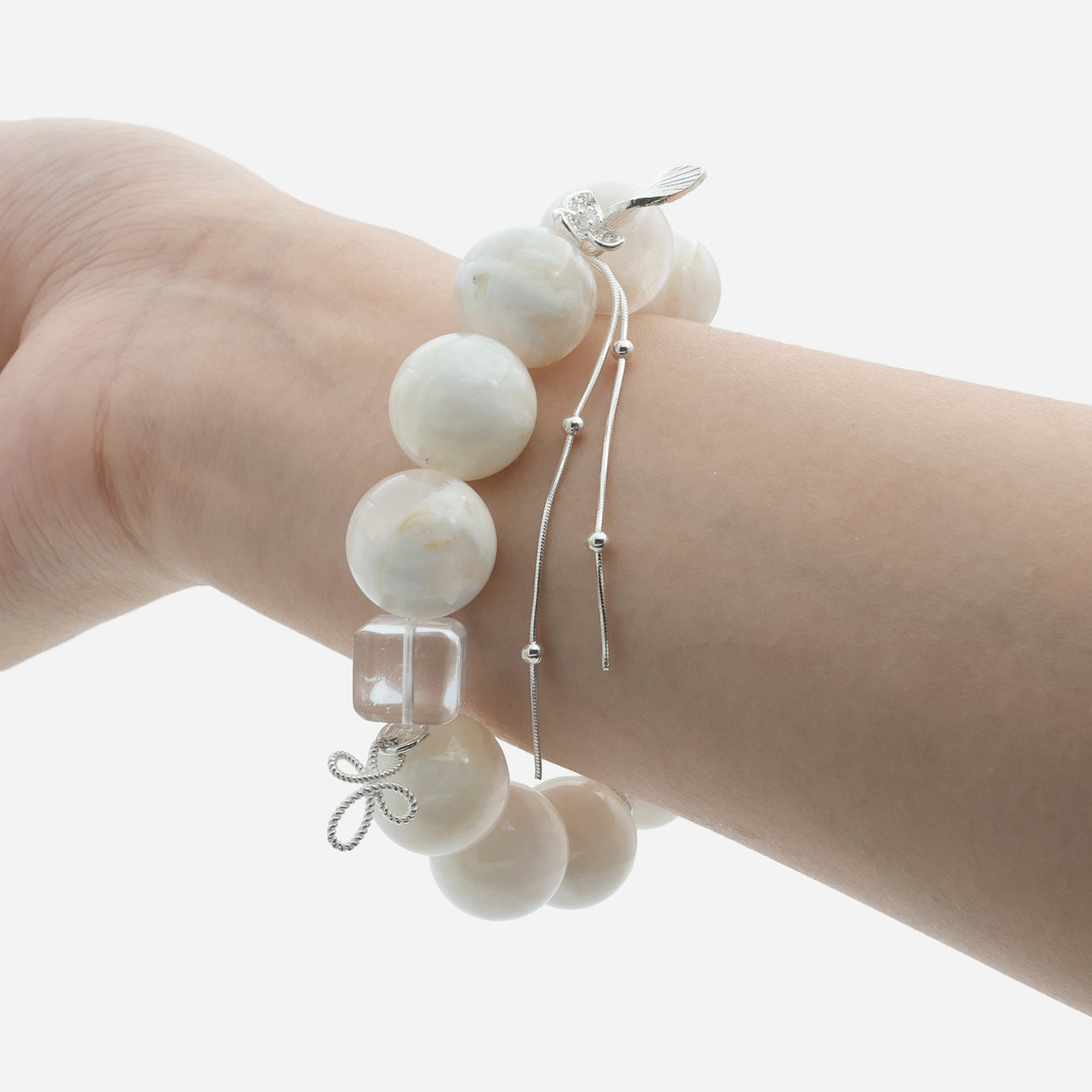
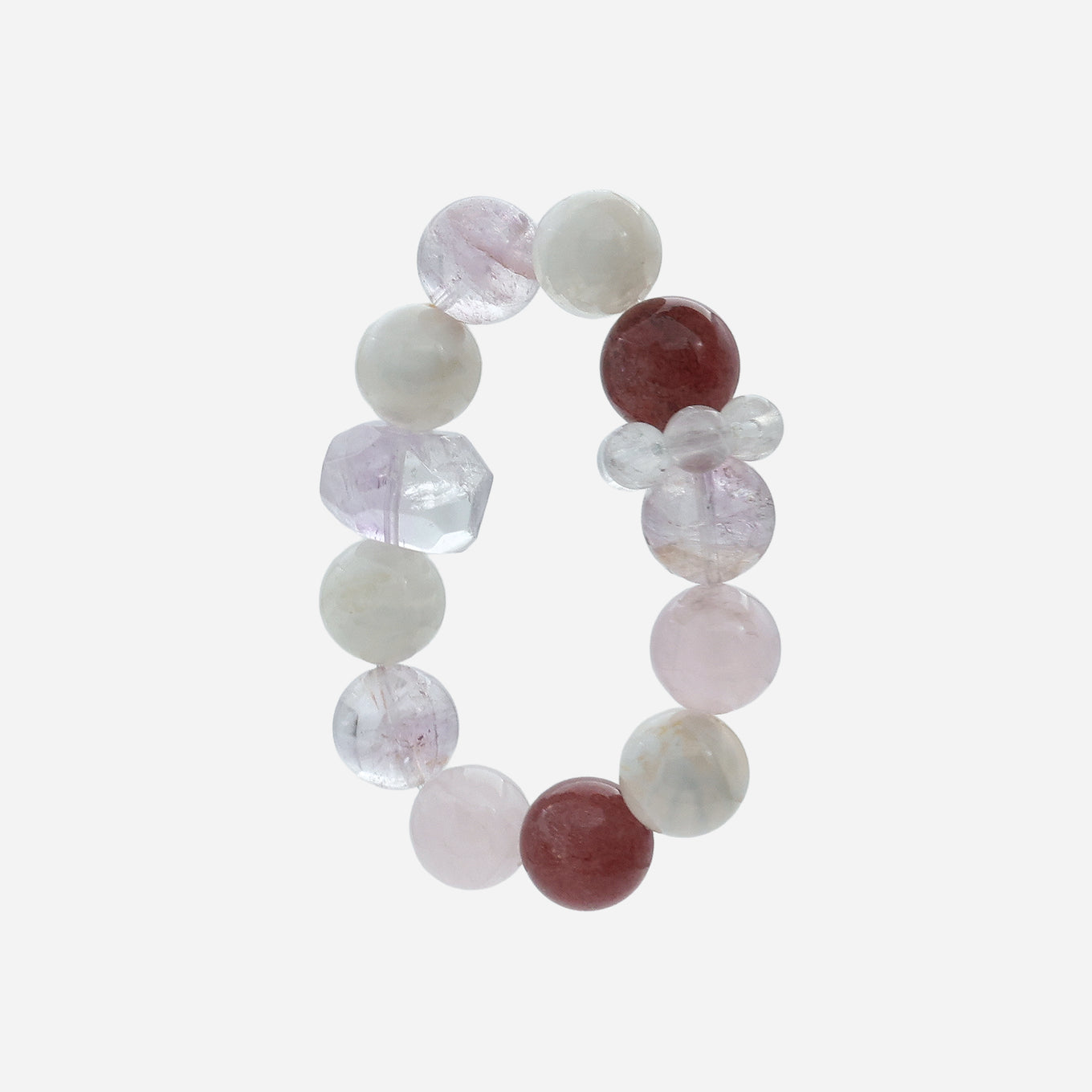
Quick Answer: Mother of pearl is the iridescent inner shell layer of mollusks — the same nacre that forms pearls — prized in fine jewelry for its one-of-a-kind shimmer that no factory can replicate.
📑 In This Guide
- Key Terms You Need to Know
- Why Mother of Pearl Matters in Fine Jewelry
- The ÉLARAMUSE Standard
- Mother of Pearl vs. Pearl: What's the Actual Difference?
- 3 Types of Mother of Pearl in Jewelry
- How to Style Mother of Pearl Jewelry: 3 Rules
- Mother of Pearl in Everyday Life: Scenarios That Actually Work
- How to Care for Mother of Pearl Jewelry
- Behind the Design: Why We Chose Pink MOP
- Editor's Picks: ÉLARAMUSE Mother of Pearl & Pearl Jewelry
- Frequently Asked Questions About Mother of Pearl Jewelry
- What We Believe
- References & Further Reading
References
- GIA. "Pearl & Mother of Pearl." Gemological Institute of America.
- Smithsonian Institution. "Pearls: A Natural History." Smithsonian.
- V&A. "Mother of Pearl Jewelry." V&A Collections.
Think pearls are only for your grandmother? Modern pearl styling is anything but stuffy -- and we are here to prove it.
Mother of pearl isn't a gemstone, yet it outshines most. Every piece carries the organic signature of the creature that made it — no two slivers of nacre catch light the same way. At ÉLARAMUSE, we work with mother of pearl precisely because it refuses to be mass-produced. It demands to be noticed, not just worn.
Key Terms You Need to Know
ELARAMUSE Difference: Unlike mass-produced jewelry that prioritizes price over quality, our pieces are crafted with premium materials and rigorous testing -- because what you wear every day should stand the test of time.
- Mother of Pearl (MOP): The iridescent inner lining of mollusk shells, primarily pearl oysters and abalone. Chemically identical to pearls but harvested as flat sheets from the shell rather than formed around an irritant.
- Nacre: The biological composite of calcium carbonate platelets and organic proteins that mollusks secrete to build their shells. Nacre is what gives both pearls and MOP their signature luster.
- Iridescence / Orient: The rainbow-like play of color that shifts as light hits the layered nacre structure. Higher-quality MOP displays deeper, more complex iridescence.
- Cultured vs Natural: Nearly all MOP in jewelry today comes from farmed pearl oysters — a sustainable practice where shells are a byproduct of the pearl industry.
- Pink MOP: Mother of pearl with a natural pink blush, sourced from specific mollusk species. More rare than white MOP and prized for its romantic, warm undertone.
Why Mother of Pearl Matters in Fine Jewelry
What makes a material worth designing around? For us, it's simple: the material must reward a second look. Mother of pearl passes that test every time. Put it under direct light, and it flashes silver-white. Tilt it slightly, and pink, green, and lavender notes emerge — all from the same surface. This optical depth is what keeps a mother of pearl necklace from ever feeling boring.
According to the Gemological Institute of America (GIA), the quality of nacre directly determines a pearl or MOP piece's durability — thicker nacre resists chipping and maintains its luster for decades.
This is why we source only MOP with dense, well-formed nacre layers for every ÉLARAMUSE design.
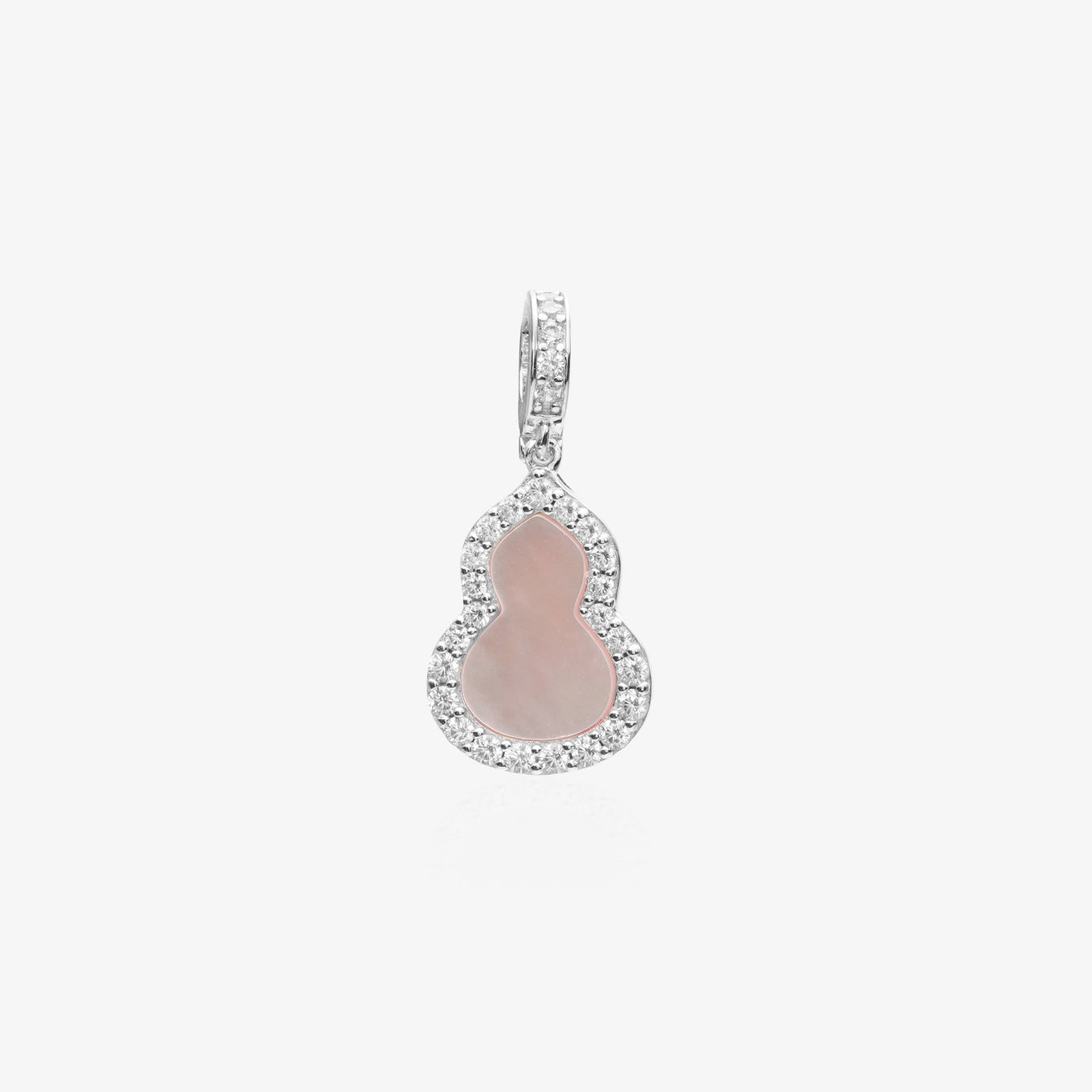
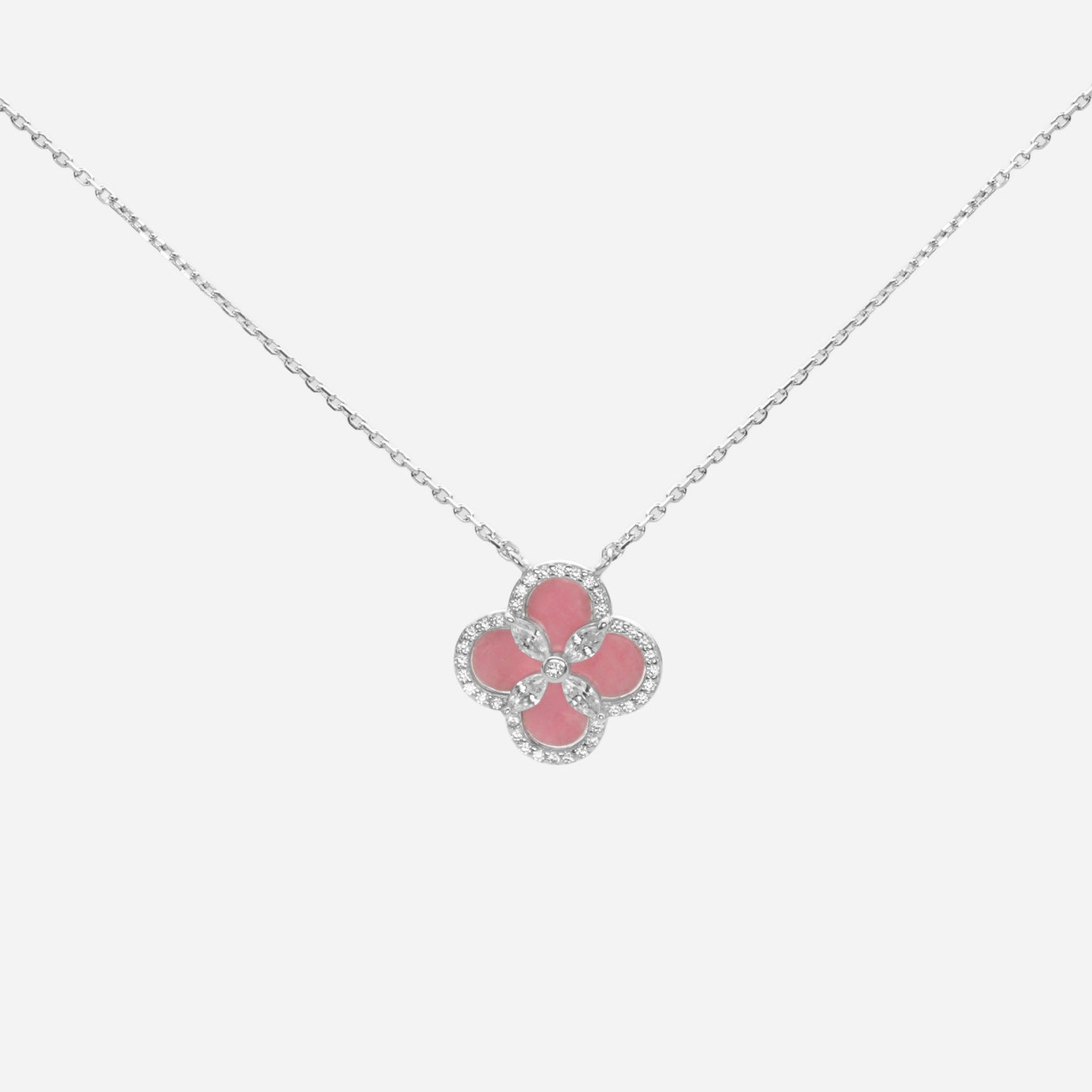
If you're looking for a piece that showcases this quality firsthand, our Reversible Clover Necklace features genuine pink MOP on one side and a lab diamond pavé halo on the reverse — one necklace, two completely different looks. No clasp changes required.
The ÉLARAMUSE Standard
"We believe jewelry should carry a story you can see — not a logo you can read. Mother of pearl does exactly that: every piece is a fingerprint of the ocean, set in Ag925 sterling silver with 0.5-micron 18K gold plating so it can withstand real life, not just special occasions."
| Feature | Specification |
|---|---|
| Base Metal | Solid Ag925 Sterling Silver (92.5% pure silver) |
| Plating | 0.5-micron 18K Gold Plating |
| MOP Sourcing | Genuine nacre from farmed pearl oysters — byproduct of sustainable pearl cultivation |
| Safety | 100% Nickel-Free, Hypoallergenic — safe for sensitive skin all day, every day |
| Durability | Water-resistant, Tarnish-resistant — shower-safe and sweat-proof for 24/7 wear |
Mother of Pearl vs. Pearl: What's the Actual Difference?
Here's what surprises most people: they're the same substance. A pearl forms when a mollusk secretes nacre around an irritant — a grain of sand, a parasite — building spherical layers over years. Mother of pearl is the same nacre, but it lines the inside of the shell as a flat surface. Think of it this way: a pearl is a nacre sphere; mother of pearl is a nacre canvas.
Unlike cultured pearls, which require years of cultivation and are priced per millimeter of diameter, MOP is harvested from the shell itself — making it inherently more accessible without sacrificing the luminous beauty of genuine nacre. This also means every MOP jewelry piece has a larger visible surface area of nacre than most pearl jewelry at a far more wearable price point.
Unlike mass-market "pearl" jewelry that uses plastic imitation beads with a sprayed coating that peels within months, genuine mother of pearl is a solid biological material — it won't flake, peel, or lose its color over time when properly cared for.
3 Types of Mother of Pearl in Jewelry
1. White Mother of Pearl
The classic. Milky white with silver-blue undertones, sourced primarily from South Sea pearl oysters. Pairs effortlessly with both gold and silver settings. Timeless, versatile, and the most commonly used variety in fine jewelry.
2. Pink Mother of Pearl
Naturally blushed — no dye, no coating. This variety comes from specific mollusk species and is notably harder to source in jewelry-grade sheets. The warm rose undertone makes it particularly striking against 18K gold plating. At ÉLARAMUSE, our Reversible Clover Necklace features pink MOP on one side, lab diamond pavé on the reverse — two looks from a single talisman.
3. Abalone (Paua) Shell
The wild cousin of MOP. Abalone nacre is dramatically more colorful — deep blues, emerald greens, and violet flashes dominate. While technically the same material, abalone's intensity makes it feel like a different category entirely. Best for statement pieces rather than everyday staples.
How to Style Mother of Pearl Jewelry: 3 Rules
Rule 1: Let the iridescence do the work. MOP shifts between cool and warm tones depending on light, so it works with both gold and silver wardrobes. You don't need to match metals — the nacre bridges the gap naturally.
Rule 2: One MOP piece per focal zone. Because of its distinctive shimmer, mother of pearl draws the eye. Wear a MOP pendant or MOP earrings — not both in the same outfit. The exception: a matched set where the pieces are deliberately designed to echo each other's iridescence.
Rule 3: MOP loves texture contrast. Pair a smooth, luminous MOP pendant against a cable-knit sweater, silk blouse, or linen dress. The organic gleam against matte fabric creates the kind of visual tension that makes an outfit memorable.
Mother of Pearl in Everyday Life: Scenarios That Actually Work
Because ÉLARAMUSE MOP pieces are set on water-resistant, nickel-free Ag925 sterling silver, the old rules don't apply:
- Gym-to-office: A pink MOP pendant on a fine gold chain survives a morning workout and still catches conference-room light beautifully. Rinse, pat dry, continue your day.
- Beach wedding guest: MOP earrings with a linen dress — the ocean's own material worn by the ocean. The shimmer mirrors the water; no costume jewelry anxiety about salt air or humidity.
- Date night with a white tee: A MOP necklace against plain cotton is unexpectedly effective. It refines the simplest outfit without looking like you tried too hard.
- Sensitive-skin daily driver: If most earrings leave your lobes red by noon, MOP studs on nickel-free settings are genuinely comfortable for 12+ hour wear.
How to Care for Mother of Pearl Jewelry
MOP scores only 2.5-4.5 on the Mohs hardness scale, which means it's softer than quartz and requires mindful handling. But "soft" doesn't mean fragile — with basic care, MOP jewelry lasts for decades.
- Clean gently: Use a soft, damp microfiber cloth. Never ultrasonic cleaners or chemical dips — they can fracture the nacre layers.
- Avoid prolonged soaking: While the Ag925 silver setting is water-resistant, MOP is porous. Brief exposure to water is fine (shower, rain), but don't swim or bathe in it.
- Store separately: MOP can be scratched by harder gemstones. Use the original ÉLARAMUSE pouch or a soft-lined compartment.
- Perfume first, jewelry last: Apply fragrance and cosmetics before putting on MOP pieces. Alcohol and solvents can dull the nacre's luster over time.
For deeper cleaning guidance, see our Mayo Clinic's jewelry care recommendations — a reminder that skin safety and jewelry maintenance go hand in hand.
Behind the Design: Why We Chose Pink MOP
When I designed our Reversible Clover Necklace, I tested white MOP, abalone, and pink MOP side by side for weeks. White MOP felt too predictable. Abalone was stunning but too loud for the everyday talisman I wanted. Pink MOP won because it does something neither of the others can: it warms the skin tone of whoever wears it — a blush you feel before you name it.
Is this level of material obsession practical for a jewelry brand? Maybe not. But we didn't build ÉLARAMUSE to be practical — we built it to be your armor. Every piece earns its place through relentless testing against real life.
We paired it with a lab diamond pavé reverse because we believe the woman who wears this necklace has more than one side to show the world. Business meeting in the morning — diamonds out. Dinner with friends — flip to pink MOP. No clasp changes, no second necklace. Just a quiet ritual of becoming whoever you need to be in that moment.
Editor's Picks: ÉLARAMUSE Mother of Pearl & Pearl Jewelry
Reversible Clover Necklace — The star of our MOP collection. Pink MOP on one side, pavé lab diamond halo on the reverse. Wear it your way, every day.
Woven Pearl Necklace — High-luster simulated pearls woven in a basket-weave design. Cottagecore romance meets demi-fine craftsmanship.
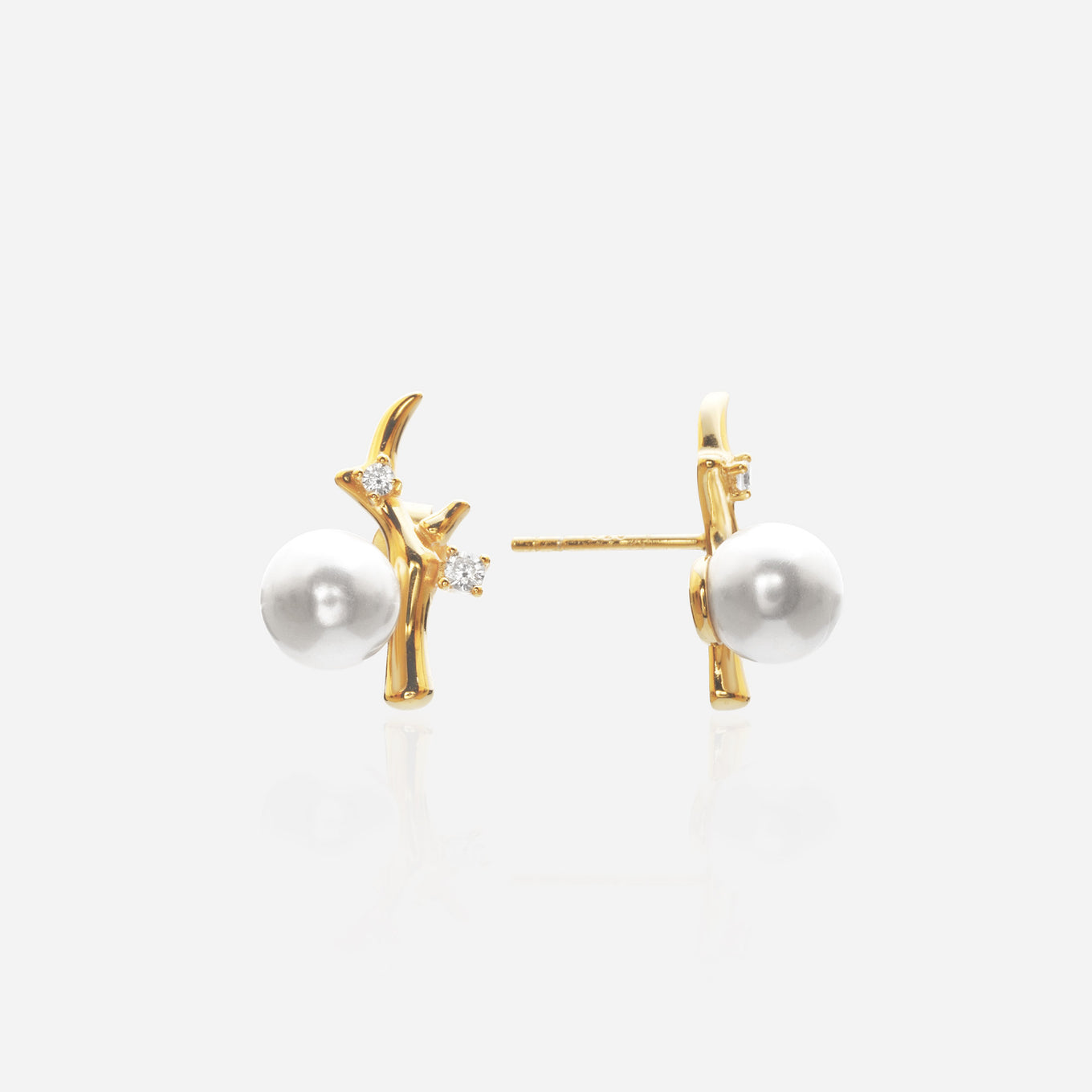
Gold Butterfly Pearl Earrings — Crystal pearls suspended from sculpted gold butterfly wings. Light enough for all-day wear, detailed enough for wedding season.
Gold Coral Branch Earrings — Mermaidcore meets everyday elegance. Organic coral branch motif with luminous pearl drops.
Explore our full Necklace Collection for more pearl and MOP designs.
Frequently Asked Questions About Mother of Pearl Jewelry
Is mother of pearl real or fake?
Genuine mother of pearl is 100% real — it's the natural nacre harvested from mollusk shells. However, the market does contain imitations: plastic pieces with iridescent spray coating. Real MOP feels cool to the touch (like stone or glass), shows depth when tilted under light, and displays slight natural variations. Imitation MOP feels warm like plastic and looks uniformly flat.
Can I shower with mother of pearl jewelry?
Occasional exposure to fresh water is fine — MOP formed inside an ocean creature, after all. But we don't recommend daily showering with MOP pieces. Soap and shampoo residue can build up in the microscopic layers of nacre, gradually dulling the luster. Our ÉLARAMUSE gold-plated settings are water-resistant, so the metal is safe; the MOP itself appreciates gentle handling.
Does mother of pearl jewelry turn yellow over time?
High-quality MOP doesn't yellow — it's a stable biological mineral. If your MOP jewelry appears to yellow, it's usually one of two things: (1) the gold plating on the setting has worn thin and the silver base is subtly reflecting through, or (2) product buildup (perfume, lotion, hairspray) has created a film on the nacre surface. A gentle wipe with a damp microfiber cloth typically restores the original luster.
Mother of pearl vs pearl: which is more expensive?
Fine cultured pearls are generally more expensive than MOP of equivalent quality, because pearls require years to form and are graded by size, shape, luster, and surface quality. MOP is sourced from the shell — a byproduct of the pearl industry — making it inherently more abundant. That said, premium pink MOP and thick-nacre white MOP from top-tier sources command prices well above entry-level freshwater pearls.
You're paying for the size and quality of the nacre surface, not just the material category.
Is mother of pearl jewelry ethical and sustainable?
Mother of pearl used in fine jewelry today is overwhelmingly a byproduct of the cultured pearl industry. Pearl farms raise mollusks primarily for pearls; the shells (from which MOP is cut) would otherwise be discarded. This makes MOP one of the more sustainable decorative materials in jewelry — it gives a second life to what would otherwise be waste.
For more on pearl sustainability, the GIA Pearl Guide provides comprehensive sourcing information.
Mother of pearl doesn't need to shout. Its power lies in the second glance — that moment when the light shifts and someone notices your necklace isn't just "white" or "pink" but alive with color they didn't see before. That's the difference between wearing jewelry and wearing a story. Find the talisman that speaks to your own becoming — whether it gleams in pink nacre, warm gold, or both at once.
We believe jewelry is not decoration - it is self-definition. Every piece we make must earn its place on your body: through material integrity (solid Ag925 cores, never hollow brass), through design intelligence (pieces that survive showers, sleep, and spontaneous decisions), and through a commitment to transparency that the jewelry industry has historically avoided. We do not chase trends. We build talismans for the captain of her own soul - pieces that feel like you, only more intentional.What We Believe
References & Further Reading
- GIA — Diamond Quality Factors — Gemological Institute of America's official grading standards for gemstones and precious metals.
- FTC — Jewelry Guides — Federal Trade Commission regulations on precious metal marketing and jewelry disclosure standards.
- GIA — Simulant & Imitation Gem Guide — Educational resource on laboratory-created and simulated gemstones, including care and durability comparisons.