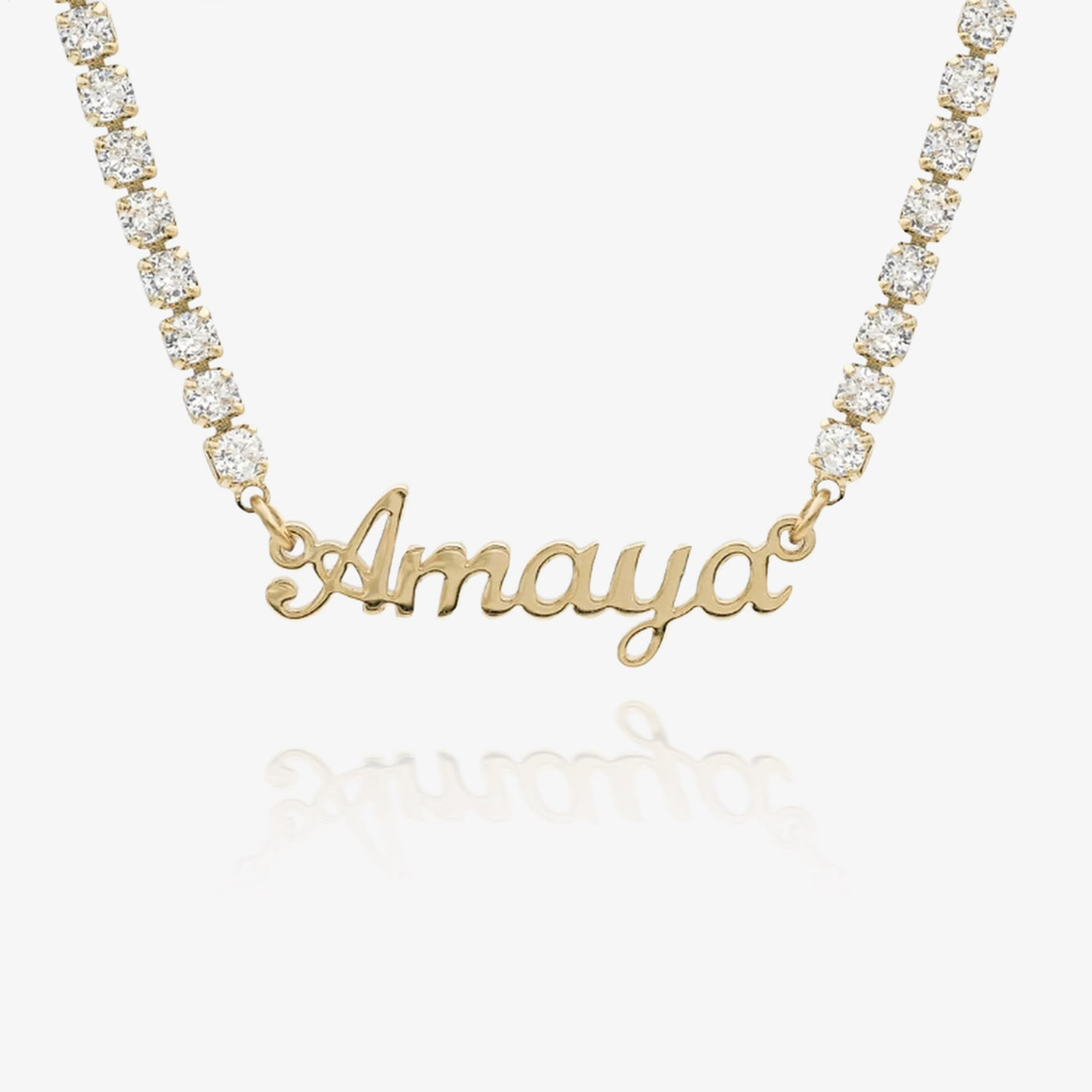
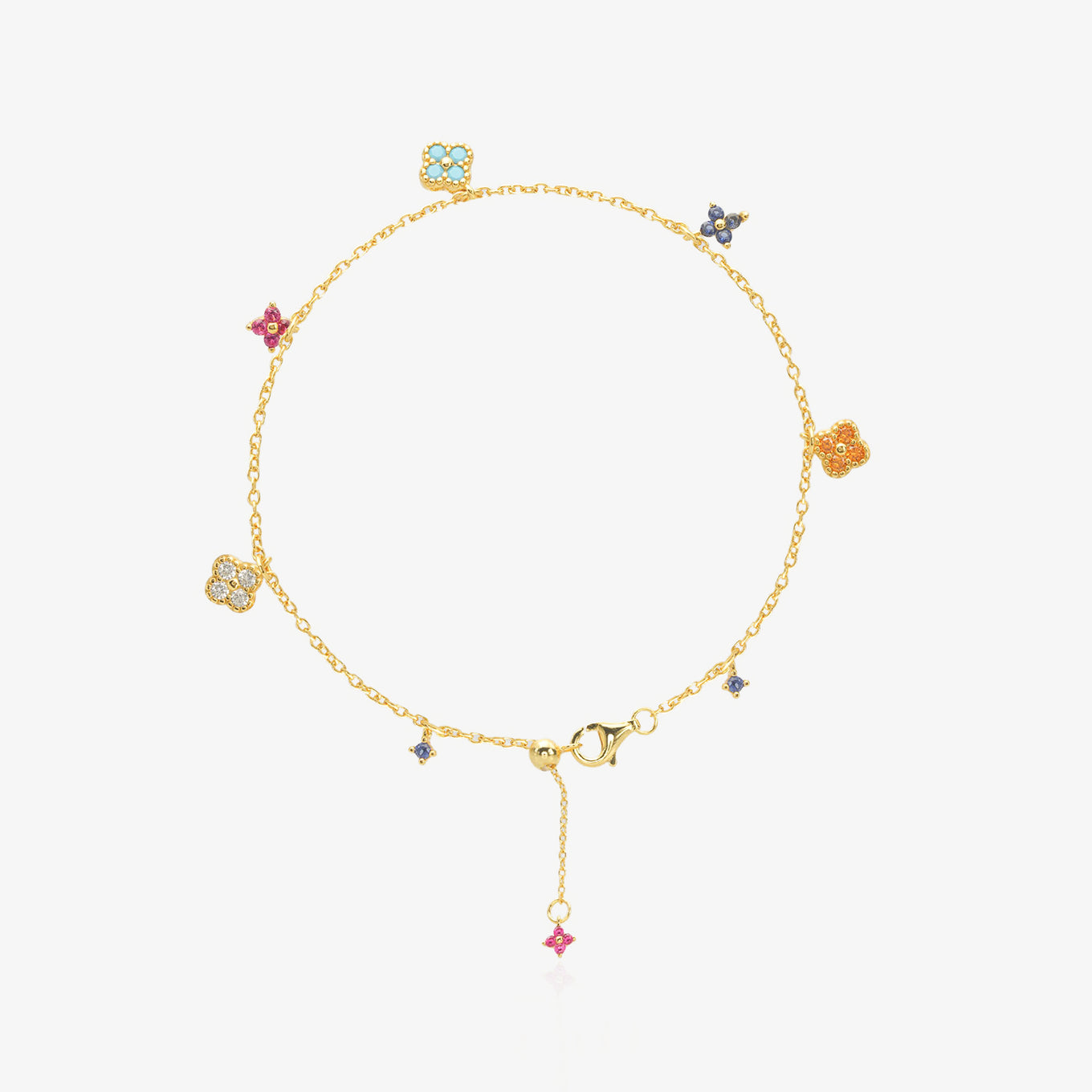
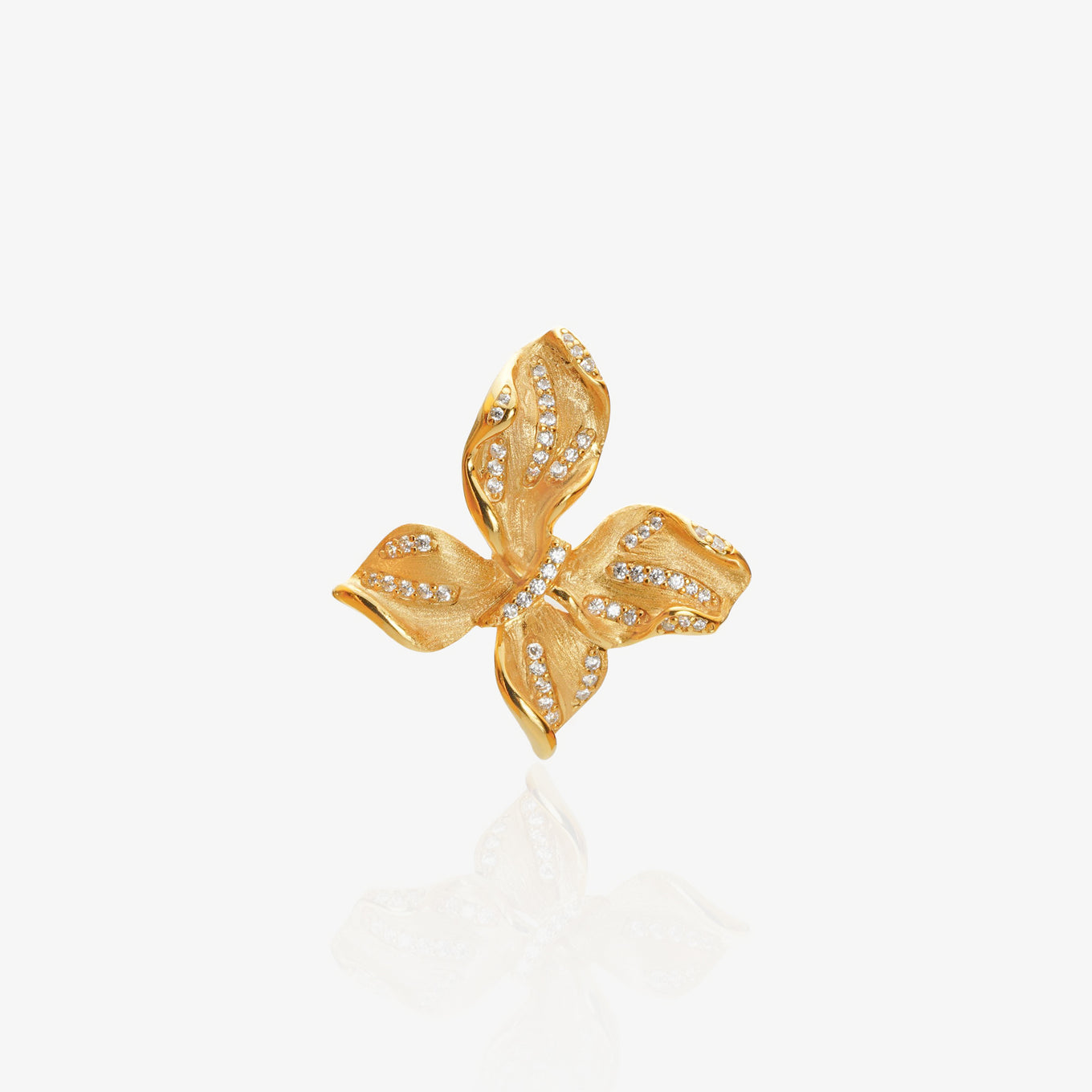
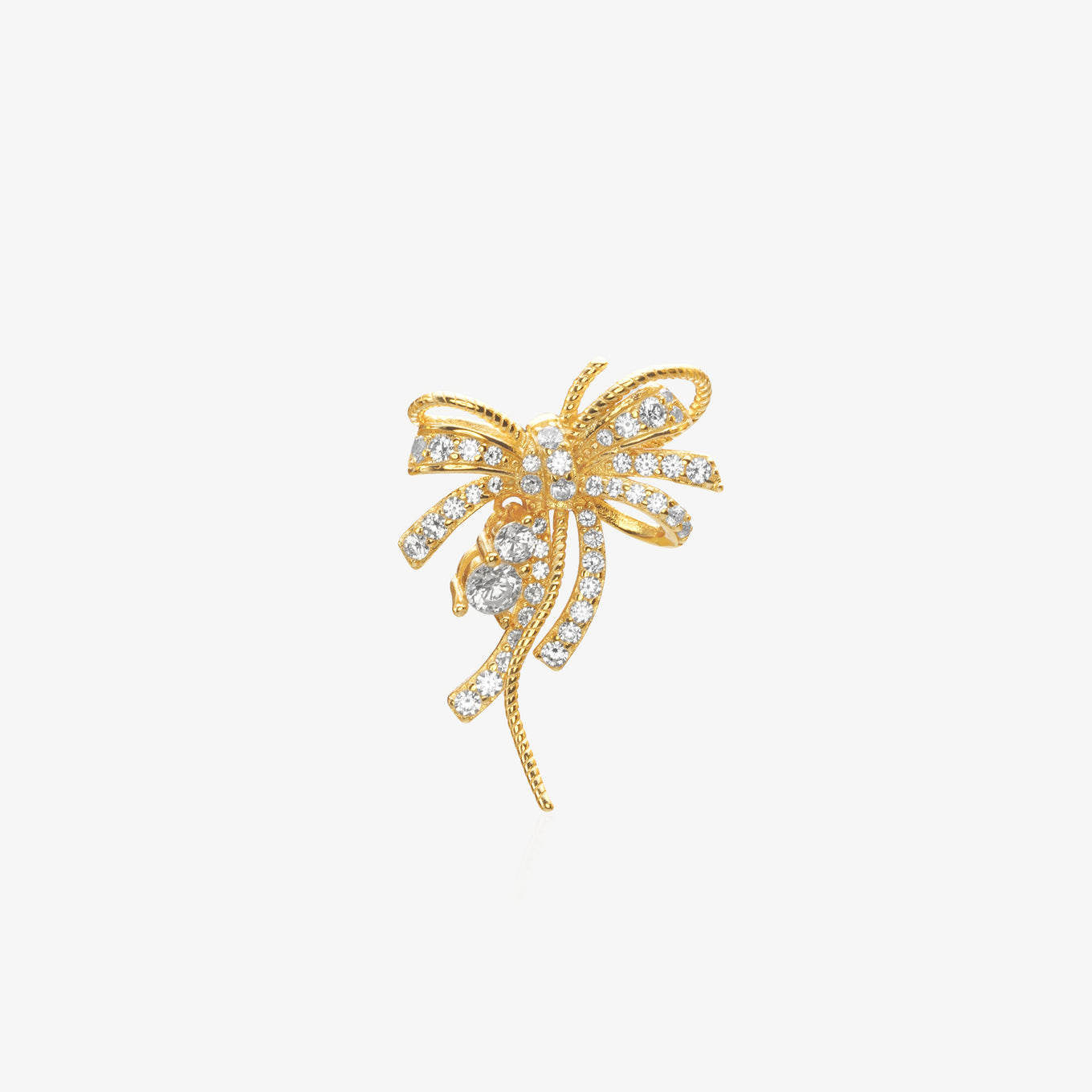
You have stood in front of a jewelry display — or scrolled through a product page — and seen three phrases that all mean "gold, but not solid gold." Gold filled. Gold vermeil. Gold plated. They look identical in a photograph. They are priced at three different tiers. And the differences between them — in durability, in skin safety, in how long they last — are real and measurable. This is the honest comparison that explains exactly what each one is, how long it lasts, and which one belongs in your jewelry box.
Gold Filled: The Heirloom-Quality Alternative
What it is: A thick layer of gold (at least 5% of the item's total weight, typically 12K or 14K) mechanically bonded under heat and pressure to a brass or bronze core. Gold filled is not "dipped." It is not "coated." The gold and base metal are fused at the molecular level, creating a single material that behaves — for the first few decades — almost exactly like solid gold.
Gold thickness: By FTC regulation, gold filled must contain at least 1/20th (5%) gold by weight. That layer is 50–100 times thicker than standard gold plating. A gold-filled chain worn daily will show little to no wear for 10–30 years. It will not tarnish, it will not turn green, and it can be cleaned and polished exactly like solid gold.
Best for: Engagement rings, wedding bands, heirloom pieces, daily-wear necklaces and bracelets that you never intend to take off. If you want a piece to last a lifetime without the solid gold price, gold filled is the answer.
Limitations: Most gold-filled jewelry uses brass as the core metal. Brass with gold filled = zero skin issues (the gold layer is too thick to wear through). However, if the gold layer eventually wears through — usually at the clasp after decades of friction — the exposed brass can cause a green-finger reaction. This is rare. Gold filled is the industry's gold standard for affordable longevity. The trade-off is price: a gold-filled chain costs 5–10x more than gold-plated and 2–3x less than vermeil (counterintuitively — vermeil carries a premium for the sterling silver core).
Gold Vermeil: Sterling Silver Meets the Gold Standard
What it is: A thick layer of gold (at least 2.5 microns of 10K or higher) electroplated over a sterling silver (Ag925) core. The FTC legally requires vermeil to meet both conditions: (1) the base metal must be sterling silver — not brass, not steel, not copper — and (2) the gold layer must be at least 2.5 microns thick, which is 5–10x thicker than standard gold plating.
Why the sterling silver core matters: When gold plating wears through on gold vermeil, the exposed metal is sterling silver — which is hypoallergenic, does not turn skin green, and tarnishes slowly into a dark gray that can be polished back to bright silver with a cloth. This is the fundamental advantage of vermeil over gold-plated brass: when the plate wears through on gold-plated brass, the exposed metal is brass — which turns green, irritates skin, and cannot be polished away.
Gold thickness: The 2.5-micron minimum sounds thin on paper but translates to 1–3 years of daily wear before the gold begins to show wear at friction points (clasp, back of pendant, inner ring band). Re-plating a vermeil piece costs $20–50 at a local jeweler.
Best for: People with metal sensitivities who want a sterling silver base. Statement necklaces, earrings, and bracelets that will be worn 2–4 times per week rather than 24/7. Gifts where the recipient may not know their own metal tolerance.
ÉLARAMUSE position on vermeil: Our gold-plated jewelry uses a sterling silver (Ag925) core with 0.5-micron 18K gold plating. This gives you the sterling silver base — same skin safety, same non-green guarantee — but at a thinner gold layer than vermeil requires. We call it "Premium 18K Gold Plating on Sterling Silver" rather than "vermeil" because vermeil legally requires 2.5 microns, and our plating is 0.5 microns. The sterling silver core is identical. The gold layer is thinner. The price is significantly lower. The care instructions are the same.
Gold Plated: Beauty, Affordability, and the Care It Requires
What it is: A thin layer of gold (typically 0.05–2.5 microns) electroplated onto any base metal — brass, copper, steel, or sterling silver. The gold is deposited atom by atom through an electrochemical process that bonds it to the surface of the base metal. It looks identical to solid gold, gold filled, and gold vermeil in any photograph — because the surface IS real gold.
What determines gold plated quality: Not all gold plating is equal. The three factors that determine quality are: (1) base metal — sterling silver cores (stamped "925") cost more but prevent green-skin reactions and corrosion, while brass cores cost less but produce a green patina when the plating wears through; (2) gold thickness — 0.05 microns will last months, 0.5 microns (our standard) will last 1–2 years with daily wear, 1.0+ microns will last 2–3 years; (3) gold karat — 18K plating is more gold-colored and more tarnish-resistant than 14K or 10K.
For an ÉLARAMUSE Box Chain Necklace — Ag925 core + 0.5-micron 18K gold — you get the sterling silver base's skin safety, the 18K color's warmth, and a plating thickness designed for daily wear. The gold layer will eventually wear at friction points, exactly as it would on any plated piece. The sterling silver underneath will never turn green and can be polished back to silver-white.
Complete Comparison Matrix
| Property | Gold Filled | Gold Vermeil | Gold Plated (Quality) |
|---|---|---|---|
| Base Metal | Brass or bronze | Sterling silver (Ag925) — required by law | Brass or sterling silver |
| Gold Thickness | ≥5% total weight (50-100× thicker than plating) | ≥2.5 microns (FTC standard) | 0.05–2.5 microns |
| Lifespan (Daily Wear) | 10–30 years | 1–5 years | 6 months–3 years |
| Skin Reaction Risk | Near-zero (gold barrier is massive) | Near-zero (sterling silver core) | Low (Ag925 core) to moderate (brass core) |
| Tarnish Pattern | Rare — only after decades | Silver tarnish (dark gray) only if plating wears through | Green (brass) or silver-gray (Ag925) — depends on core |
| Price (Relative) | $$$ — 5-10× gold plated | $$$ — 5-7× gold plated | $ — most accessible entry point |
| Best For | Heirloom pieces, daily 24/7 wear | Sensitive skin + gold luxury | Wardrobe variety on a budget |
Key Terms: The Gold Jewelry Lexicon
- Micron (µm)
- One millionth of a meter. Jewelry plating thickness is measured in microns: 0.05 microns = hair-thin and lasts months. 0.5 microns (ÉLARAMUSE standard) = visible gold layer that lasts 1–2 years with daily wear. 2.5 microns (vermeil minimum) = substantial gold layer that lasts years. A human hair is approximately 70 microns wide — even the thickest plating is thinner than a strand of hair.
- Electroplating
- The process of depositing gold onto a base metal using electric current in a chemical bath. The base metal piece is immersed in a solution containing dissolved gold ions; a current flows, and gold atoms adhere to the surface. Electroplating is what creates gold vermeil and gold-plated jewelry. It is not what creates gold filled — gold filled uses heat and pressure, not electricity.
- Ag925 / Sterling Silver
- 92.5% silver + 7.5% copper. The international standard for sterling silver. Stamped "925" to verify the alloy. When used as a base for gold-plated jewelry, it eliminates the green-finger problem because silver does not produce the copper carbonate reaction that brass does.
- FTC Jewelry Guides
- The Federal Trade Commission's legally binding standards for jewelry labeling in the United States. These guides define what can legally be called "gold filled" (≥5% gold by weight), "gold vermeil" (≥2.5 microns of ≥10K gold on sterling silver), and "gold plated" (any gold layer on any base metal). A company that violates these definitions is committing false advertising.
The ÉLARAMUSE Standard
| Base Metal | Ag925 sterling silver — stamped on every clasp and interior band | |
| Gold Plating | 0.5-micron 18K gold — balanced for durability and affordability | |
| Skin Safety | Sterling silver core = zero green-finger risk. Hypoallergenic by material, not by coating. | |
| Care Level | Shower-safe, sweat-safe, sleep-safe. Store in the included ÉLARAMUSE pouch when not worn. | |
| Price Transparency | Premium 18K Gold Plating on Sterling Silver — the honest description we use because 0.5 microns does not meet the FTC's 2.5-micron vermeil threshold. Same sterling base. Same skin safety. Lower price. |
FAQ: Gold Filled vs Vermeil vs Gold Plated
Which one lasts the longest?
Gold filled lasts the longest — 10–30 years of daily wear before the gold barrier shows wear. Gold vermeil lasts 1–5 years depending on the gold thickness (higher-end vermeil with 3–5 microns outlasts the FTC minimum of 2.5). Quality gold-plated jewelry on sterling silver (0.5–1.0 microns) lasts 1–3 years before the plating begins to thin at friction points. The single most important factor is how you wear it — a gold-plated necklace worn occasionally and stored in a pouch lasts years longer than gold filled worn 24/7 in the shower.
Can I tell the difference by looking?
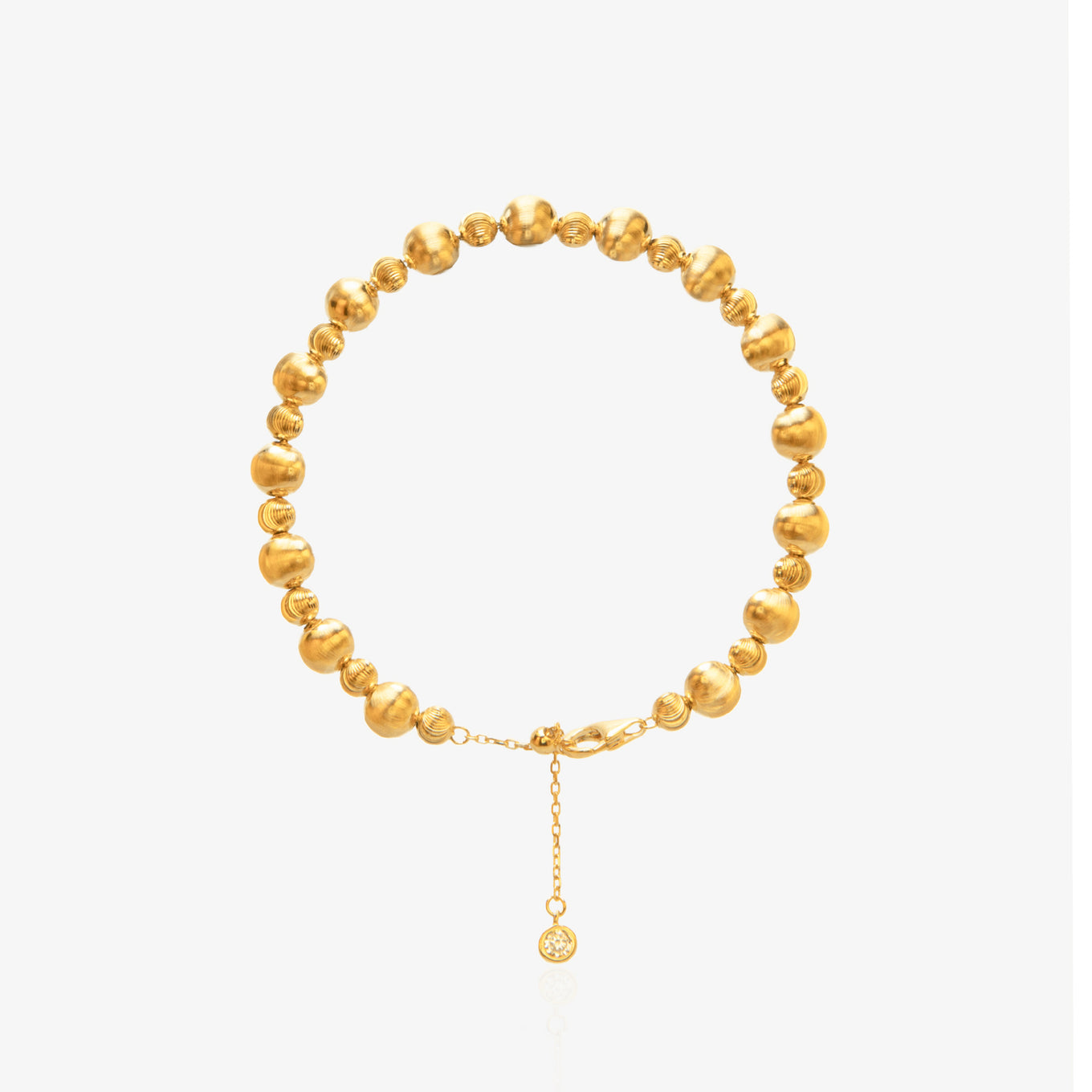
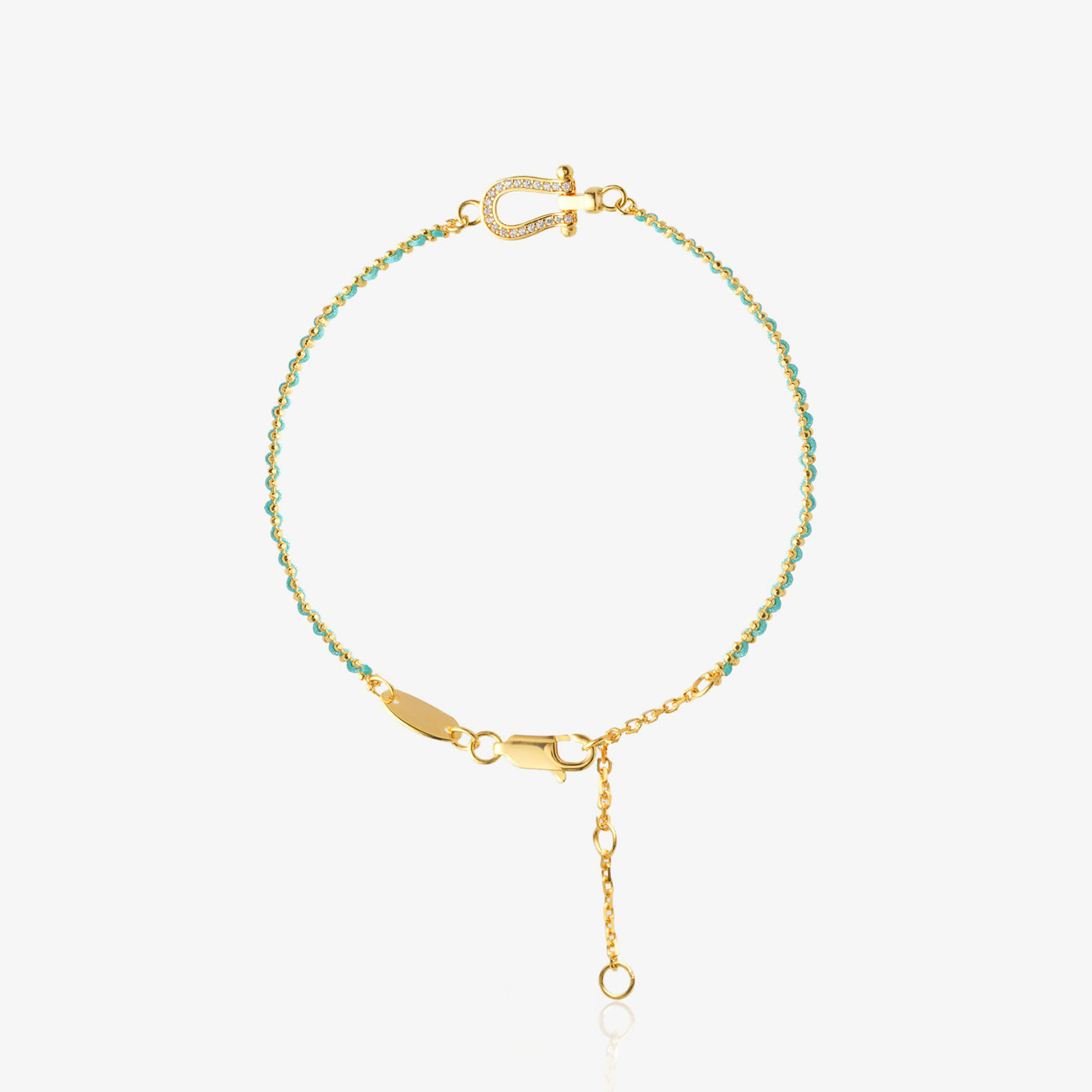
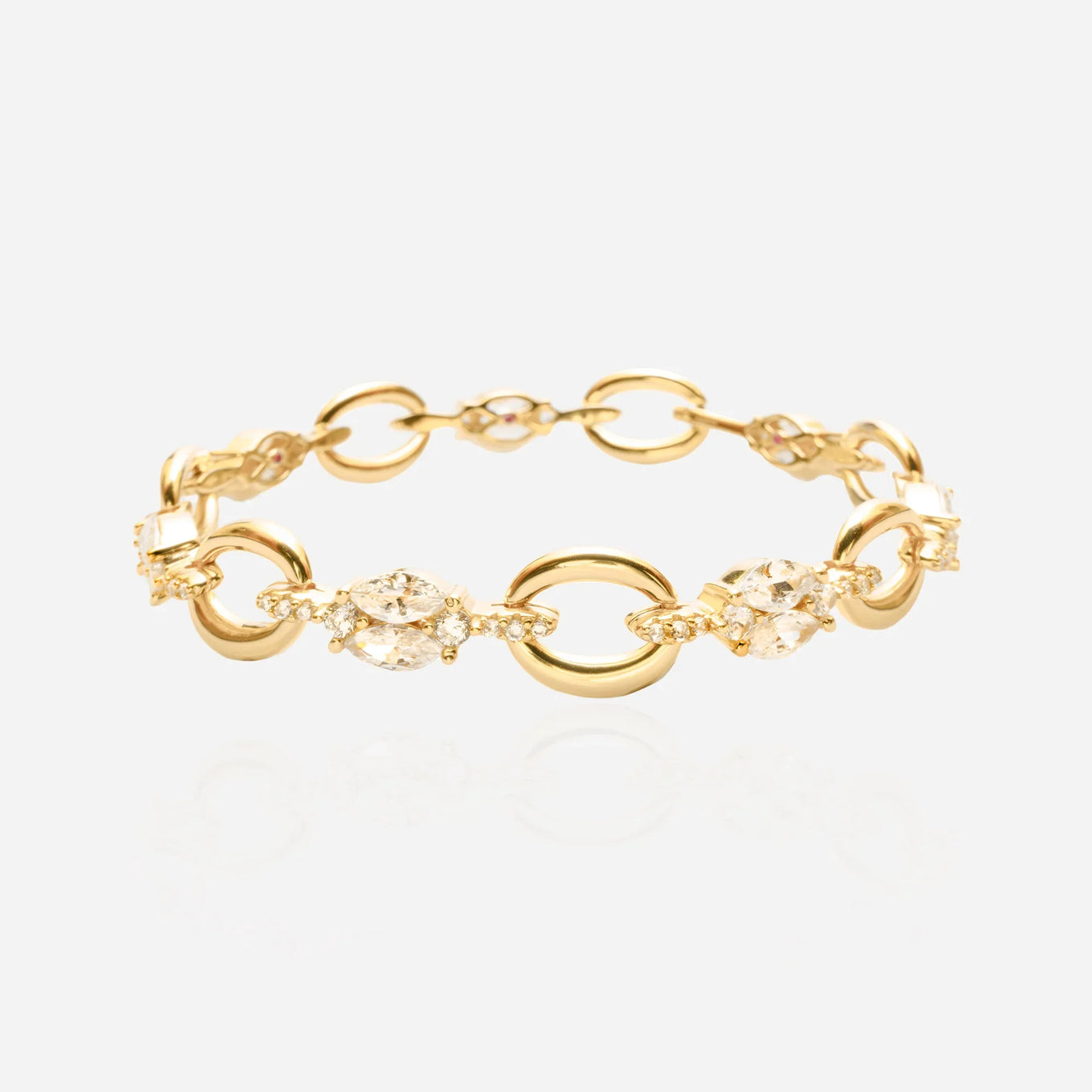
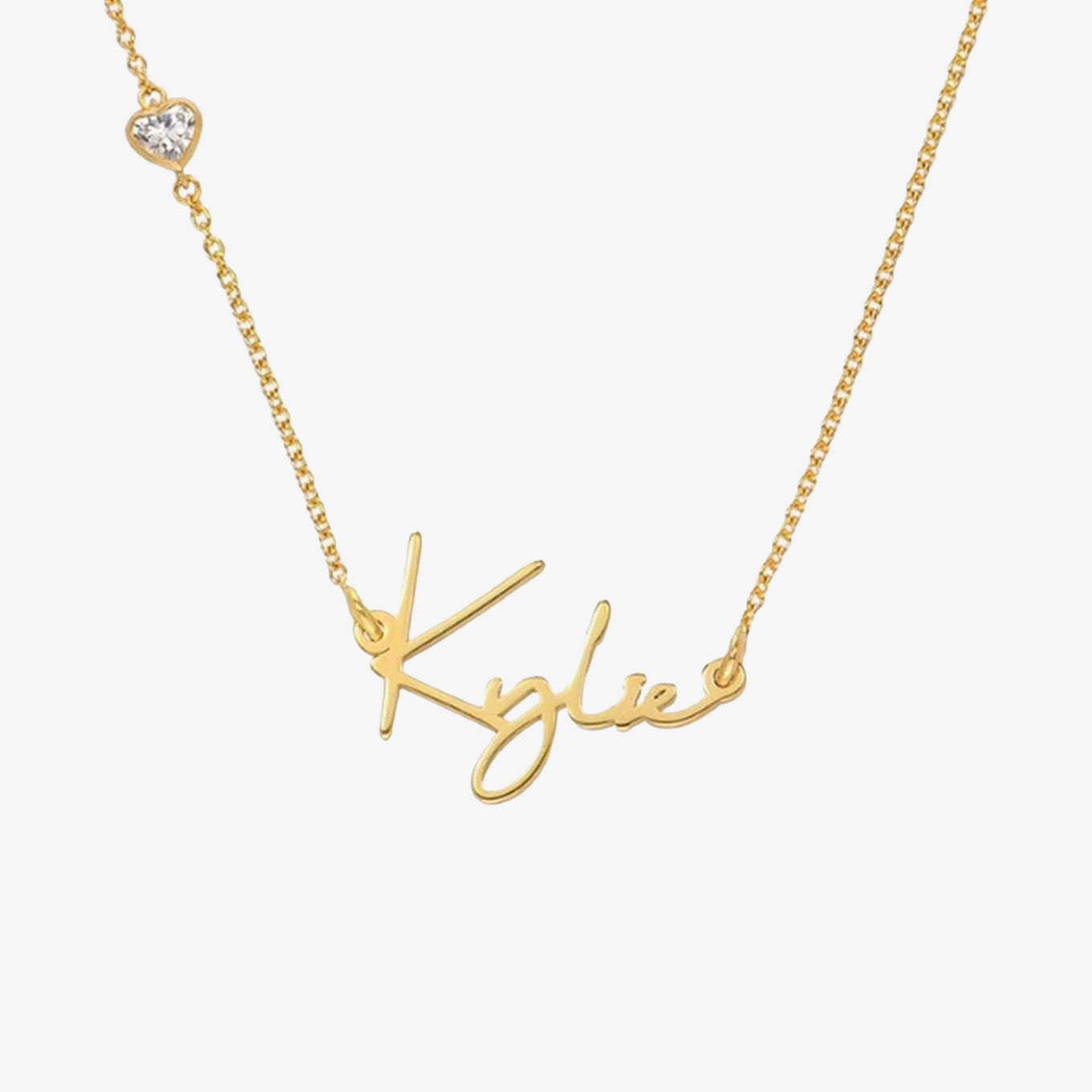
No. Gold filled, gold vermeil, and quality gold-plated jewelry are visually indistinguishable because the surface of all three is real gold. The difference is what happens 6 months, 2 years, and 10 years from now — which you cannot see in a photograph. The only visible difference that sometimes appears is the stamp: gold filled is often stamped "1/20 14K GF," vermeil is stamped "925" or "Sterling," and gold plated may carry a "GP" or "925" stamp depending on the core.
Is gold vermeil always better than gold plated?
Not always. Vermeil guarantees two things: a sterling silver core and a minimum 2.5-micron gold layer. But quality gold-plated jewelry with a sterling silver core (like every ÉLARAMUSE piece) gives you the same sterling silver base — just with a thinner gold layer. The trade-off: vermeil costs 5–7x more for thicker gold that lasts a few years longer. Whether that premium is "better" depends on whether you prefer one piece that lasts a decade or three pieces that give you variety over the same decade for the same total spend.
Why does gold plated get a bad reputation?
Because most gold-plated jewelry uses brass cores and 0.05-micron plating — the cheapest possible combination. That type of gold-plated jewelry will tarnish in weeks, turn skin green, and cannot be repaired. This is not a problem with gold plating as a technique — it is a problem with the cheapest manufacturers using the cheapest materials. The solution is not to avoid gold plating. It is to look for the "925" stamp, which guarantees a sterling silver core regardless of the plating thickness.
What is "dipped" gold — is it the same as plated?
"Gold dipped" has no legal definition and is typically used as a marketing term for the thinnest possible gold application — a literal dip-and-remove that deposits less gold than electroplating. If a piece is described as "gold dipped" without specifying microns or a stamp, assume it is costume jewelry with a microscopic gold layer that will wear off within weeks.
Editor's Picks: Gold-Plated on Sterling Silver
- Classic Solitaire Necklace — Floating lab diamond on an 18K gold-plated Ag925 chain. The piece that proves quality plating starts with the core.
- Box Chain Necklace — The daily-driver chain. 0.5-micron 18K on sterling silver. Shower-safe, sleep-safe, never-green.
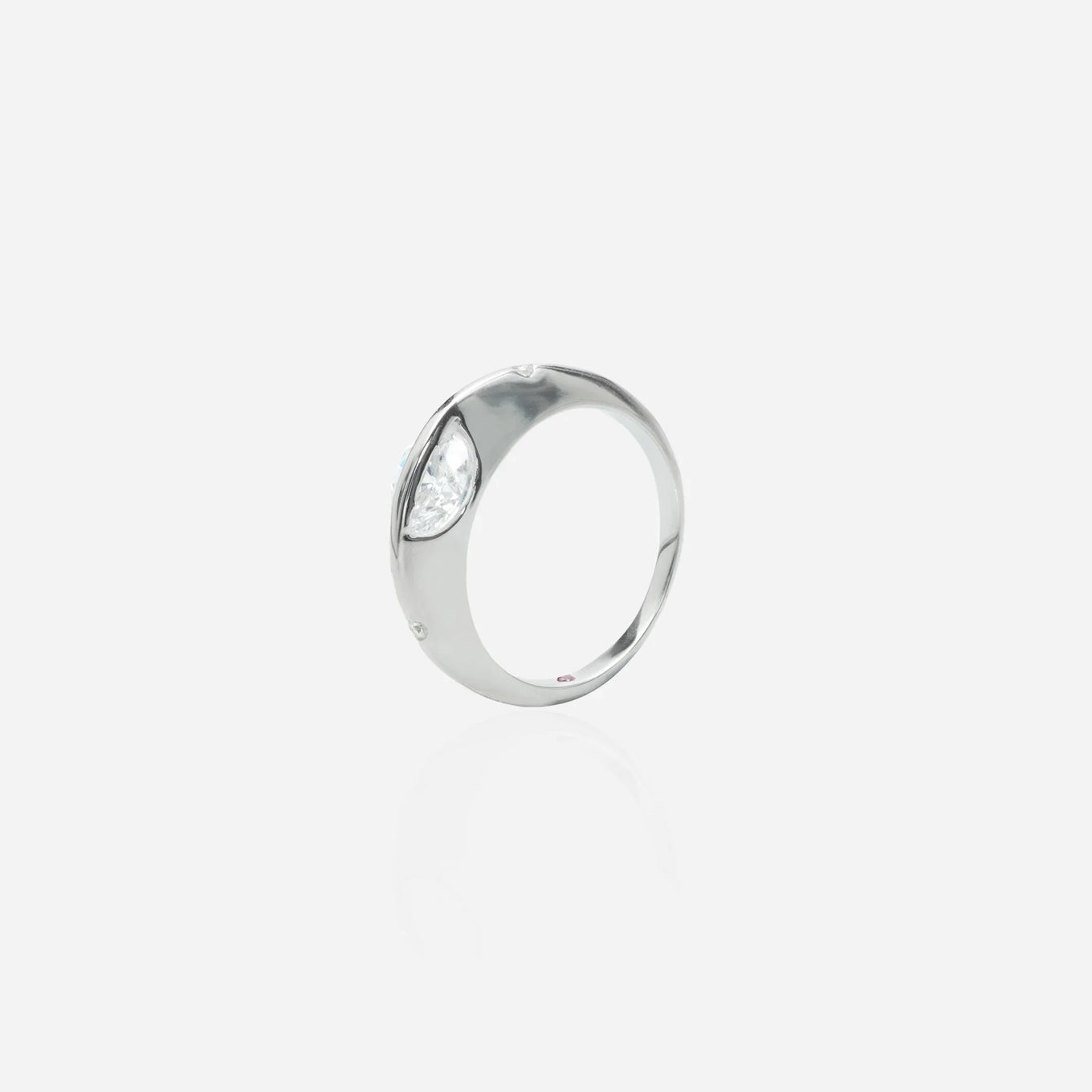
- Wide Band Ring — 6mm architectural ring with "925" engraved inside. Shows what sterling silver brings to plated jewelry.
- Solaris Dome Ring — Substantial gold dome with nano zircon on sterling silver. The weight confirms the core before you even check the stamp.
- Gold Macaron Ring Set — Three plated bands, three sterling silver cores, one set. The entry point for quality stacking.
- Moire Bangle — The bangle that proves you do not need gold filled for a piece that lasts. Sterling silver core, enduring design.
We believe you deserve to know exactly what you are buying. Every ÉLARAMUSE piece is gold-plated sterling silver — stamped "925," built on a hypoallergenic silver core, finished with 0.5-micron 18K gold. We do not call it vermeil because 0.5 microns does not meet the FTC's 2.5-micron standard — and using words incorrectly is not the kind of honesty jewelry deserves. The sterling silver core is what protects your skin. The gold layer is what makes it beautiful. And the stamp is the promise that ties both together.
References & Further Reading
- FTC — Jewelry Guides (Gold Filled, Vermeil & Plated Legal Definitions)
- GIA — Gem Encyclopedia (Gold Alloys & Plating Standards)
- Victoria & Albert Museum — Jewelry Materials & Craftsmanship History
- The Met — "Antique Jewelry: Techniques & Materials"
Written by Joyce | Founder, ÉLARAMUSE