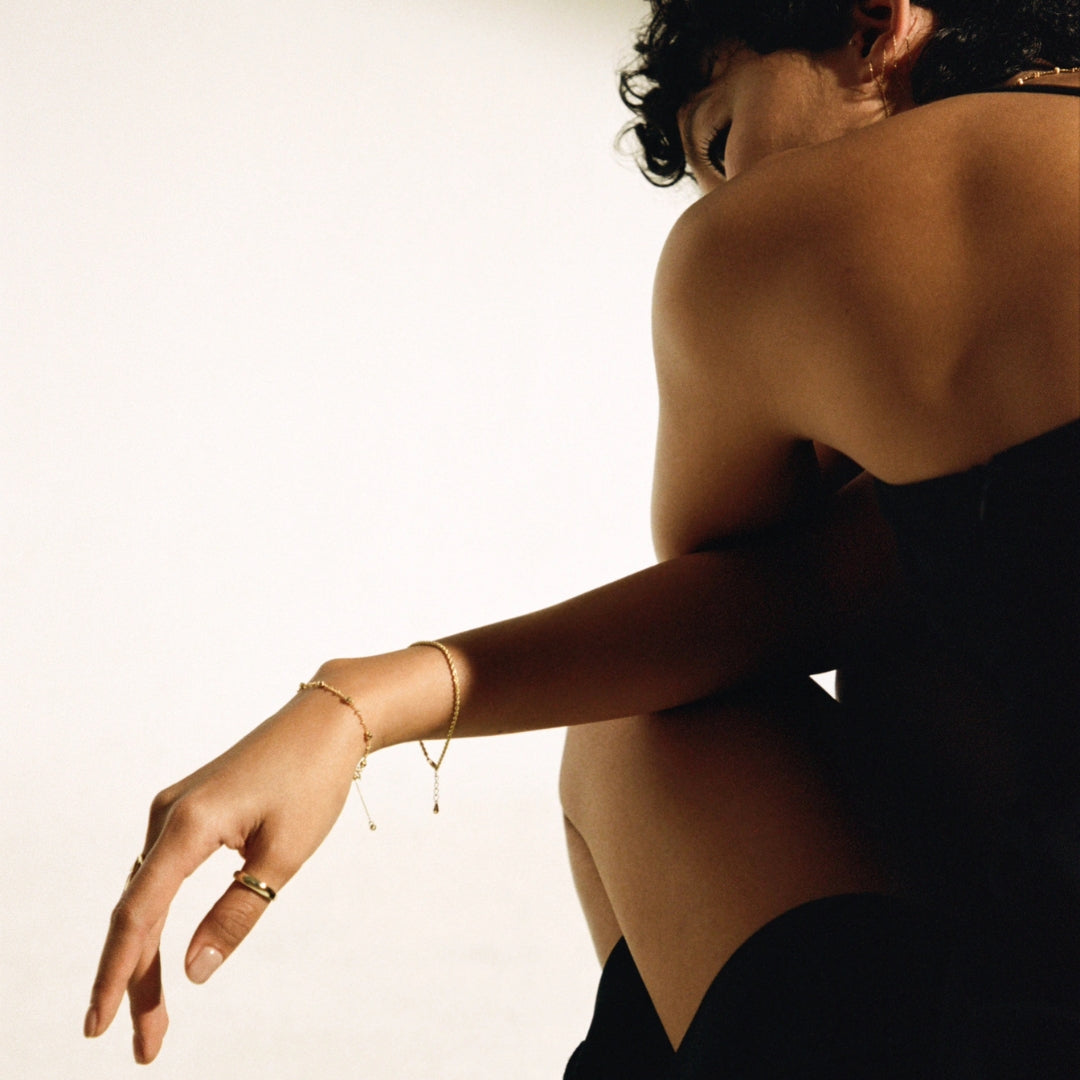
How to Find Bracelets That Actually Fit Small & Petite Wrists: The 2026 Size Guide
📏 Quick Answer
If standard bracelets constantly slide off your hand or hang too loose, you are not alone — an estimated 30% of women have wrists smaller than 6 inches, the typical lower limit for most off-the-rack bracelet sizes. The solution begins with an accurate wrist measurement using a flexible tape (or a strip of paper), and then choosing one of three bracelet types proven to work for petite wrists: adjustable chain bracelets (with slider or extender mechanisms), open cuff designs (no clasp needed), and beaded stretch bracelets (customized for smaller circumferences). Below, we explain every step — plus product recommendations from ÉLARAMUSE designed specifically with petite fits in mind.
Table of Contents
- Key Terms: Bracelet Sizing Glossary
- Why Standard Bracelet Sizes Don’t Work for Everyone
- How to Measure Your Wrist Correctly (Step-by-Step)
- The 3 Bracelet Types That Work Best for Petite Wrists
- Product Recommendations: ÉLARAMUSE Bracelets for Small Wrists
- Common Sizing Mistakes & How to Fix Them
- How to Adjust a Bracelet at Home (DIY Tips)
- Frequently Asked Questions
- Editor’s Picks
- References
- We Believe
Key Terms: Bracelet Sizing Glossary
Before diving into sizing advice, let’s clarify a few terms that will appear throughout this guide. Knowing these definitions will help you communicate more effectively with jewelers and shop more confidently online.
- Wrist Circumference
- The distance around your wrist measured at the narrowest point — typically just above the wrist bone. This single measurement is the foundation of all bracelet sizing. For petite wrists, it usually falls between 5.0 and 5.75 inches (12.7–14.6 cm). Standard bracelet sizes, by contrast, assume a 6.5–7.0 inch wrist.
- Bangle vs. Chain Fit
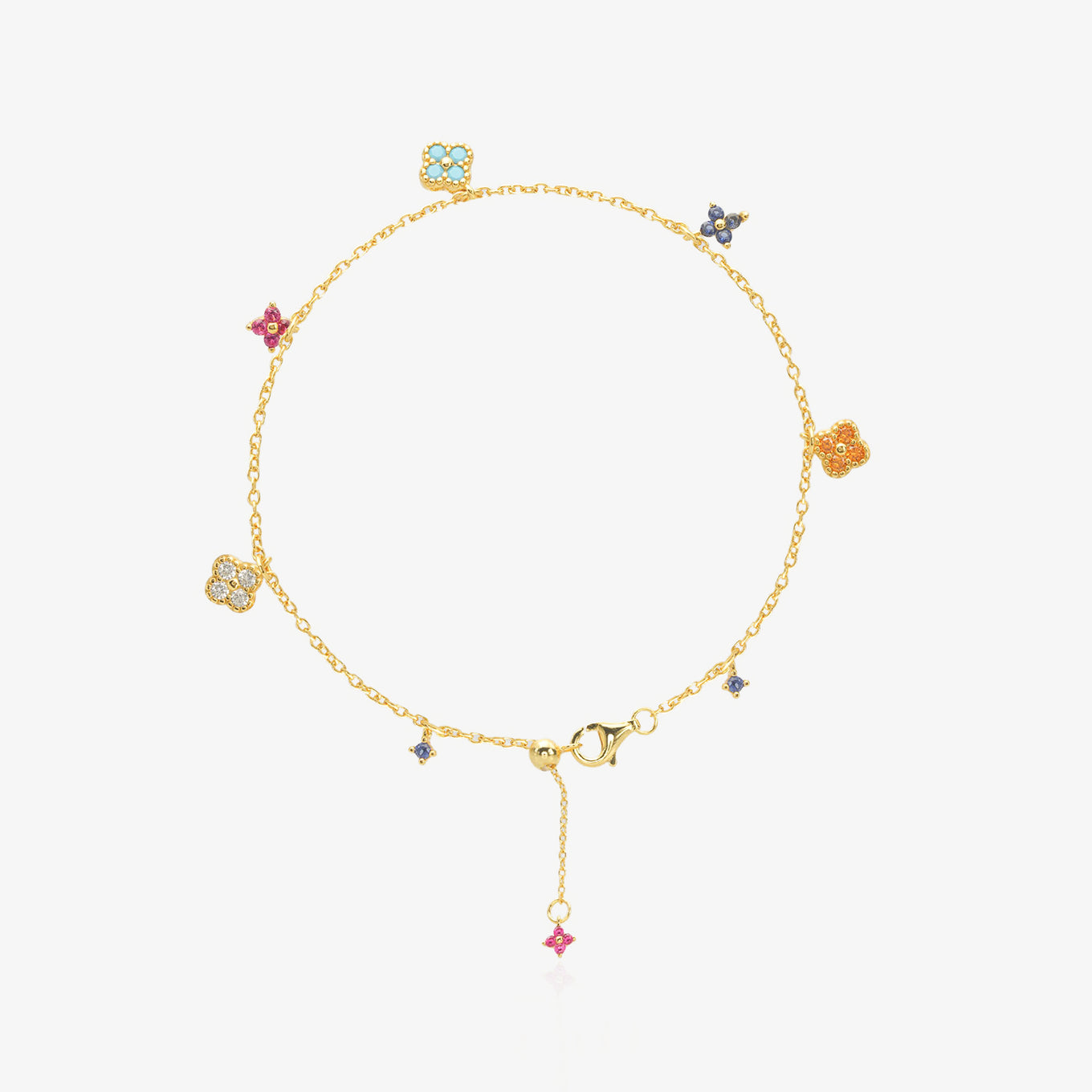
- A bangle is a rigid, circular bracelet without a clasp — it must slide over the hand to be worn. Because your hand is wider than your wrist, bangles require careful sizing: too small and they won’t pass over the knuckles; too large and they’ll slip off. A chain bracelet uses links and a clasp, offering more flexibility. Chains with adjustable sliders or extension chains provide the best fit for petite wrists because you can fine-tune the exact circumference.
- Slider Adjustment
- A mechanism found on chain bracelets that lets you slide a small bead or clasp along the chain to shorten or lengthen it. This feature is a game-changer for small wrists: instead of visiting a jeweler for permanent shortening, you adjust it yourself in seconds.
- Open Cuff Design
- A bracelet shaped like a “C” with a gap at the back rather than a traditional clasp. You slip it onto your wrist through the opening. Because there is no fixed circumference, open cuff bracelets fit a wide range of wrist sizes — including very petite ones — without alteration. They also eliminate the struggle of fumbling with tiny clasps.
1. Why Standard Bracelet Sizes Don’t Work for Everyone
Walk into most jewelry stores — or browse the “one size fits most&rdqo; listings online — and you’ll find that standard women’s bracelets are sized to 7.0 or 7.5 inches. For someone with a 5.5-inch wrist, that means nearly 2 inches of excess chain length dangling, twisting, or sliding right off the hand. It’s not a trivial annoyance; it’s a fundamental mismatch betwen how jewelry is mass-produced and how human bodies actually vary.
The Numbers Behind the Mismatch
Adult female wrist circumferences in the United States range from approximatly 5.2 to 7.1 inches, with a mean around 6.1 inches. But the distribution is far from symmetrical: a substantial cluster of women — perhaps 25–30% — fall below the 6.0-inch mark. These women are systematically underserved by standard sizing.
The jewelry industry’s default of 7.0–7.5 inches dates back decades, when manufacturers optimized for the statistical midle of the market and accepted that those on either end would need custom work. Today, however, more brands are recognizing petite fits as a distinct category — simlar to how the fashion industry eventually embraced “petite&rdqo; clothing lines for women 5’4&rdqo; and under.
Cultural & Ethnic Considerations
Wrist size is influenced by bone structure, which varies across ethnicities. Research published in anatomical journals notes that East Asian and Southeast Asian populations tend toward smaller skeletal frames, including wrist circumferences that can average 0.3–0.7 inches below Caucassian means. For jewelry brands serving a global audience, ignoring this variation means leaving a meaningful share of customers frustated — or forcing them to absorb the extra cost and delay of professional resizing.
In short: if a bracelet doesn’t fit you, it’s not your body that’s wrong — it’s the sizing standard. And the good news is that solutions exist.
2. How to Measure Your Wrist Correctly (Step-by-Step)
An accurate wrist measurement is the single most important thing you can do before buying any bracelet — especialy if you know you have petite wrists. Here is the method used by professional jewelers, broken down into simple steps.
What You’ll Need
- A flexible tailor’s tape measure (prefered)
- Alternative: a strip of paper, a piece of string, or even a phone charging cable — plus a ruler
- A pen or pencil (if using the paper method)
Step-by-Step Instructions
- Locate the right spot. Find the bony prominence on the outside of your wrist (the ulnar styloid process). You want to measure just above this bone, toward your hand. This is the narrowest part of the wrist and where most bracelets naturally sit.
- Wrap the tape. If using a tailor’s tape, wrap it snugly around your wrist — not so tight that it indents your skin, but flush against the surface. The tape should be paralel to the floor and should not twist.
- Read the number. Note the measurement where the tape meets the zero mark. Record it in both inches and centimeters for reference. For example: “5.5 inches / 14.0 cm.&rdqo;
- Paper method (if you don’t have a tape). Wrap a strip of paper around your wrist, mark where it overlaps with a pen, then lay the paper flat against a ruler to read the length.
- Add your comfort allowence. For a snug fit (how a chain bracelet should feel), add 0.25 to 0.5 inches (0.6–1.3 cm). For a looser, bangle-style fit, add 0.75 to 1.0 inch (1.9–2.5 cm). This ensures the bracelet won’t feel constricting yet won’t slide off.
- Verfy. Measure twice. Wrist measurements can vary slightly with temperature, hydration, and time of day. Take your measurement mid-afternoon for the most represntative result.
💡 Pro Tip: If your measurement is 5.75 inches or below, you fall squarely into the “petite fit&rdqo; category. You’ll want to prioritize bracelets that are either specifically labeled “petite,&rdqo; adjustable, or open-cuff — as we cover in the next section.
3. The 3 Bracelet Types That Work Best for Petite Wrists
Not all bracelet designs are equal when it comes to fit. For petite wrists, three catgories consistently deliver reliable, no-alteration-needed results. Here’s how they work and why they excel.
Type 1: Adjustable Chain Bracelets (with Slider or Extender)
Adjustable chain bracelets are the MVP of the petite-wrist category. They feature a mechanism — ofen a sliding bead, a lobster clasp with an extension chain, or a series of jump rings — that alows you to set the bracelet to your exact circumference. Instead of being locked into 7.0 inches, you can slide it down to 5.5 or anywhere in betwen.
Why they work: Infinite adjustability within a range. No jeweler visit required. Ideal for gifting when you don’t know the recipient’s exact size. Look for bracelets with at least 1.0–1.5 inches of adjustment range — more is even better for very petite wrists.
Type 2: Open Cuff Bracelets
An open cuff bracelet is shaped like a letter “C&rdqo; — it has an opening at the back that slides over your wrist rather than requiring a clasp. Because there is no closed loop, the fit is determined by the cuff’s internal diameter and the width of the opening, not a fixed circumference.
Why they work: No clasp means no size issue. The gap alows the cuff to accommodate a range of wrist widths. Open cuffs also sit beautifully on the wrist without spinning (a common problem when a closed bangle is too large). They’re especially flatering on slender wrists because the opening creates a visualy elongating effect.
Type 3: Beaded Stretch Bracelets
Beaded stretch bracelets are strung on elastic cord, meaning they expand to slide over your hand and then contract to rest gently against your wrist. When properly sized for petites, they sit close to the skin without feeling tight.
Why they work: Natural give plus a close fit. Because they stretch, a bracelet made for a 6.0-inch wrist will still slip comfortably over a hand that’s wider than that. Stacking multiple stretch bracelets is a popular styling choice for petite wrists because each one stays put rather than sliding over one another.
Watch out for: Mass-market stretch bracelets ofen use a single size (7.0+ inches) meant to “stretch down.&rdqo; On very petite wrists, this results in excess cord that bunches up and looks sloppy. Instead, seek out brands that offer sized stretch options or specifically label items as “petite fit.&rdqo;
4. Product Recommendations: ÉLARAMUSE Bracelets for Small Wrists
At ÉLARAMUSE, we design with real fit in mind. Each of the bracelets below was created to solve a specific sizing challenge — wheather you need a petite-specific size, an adjustable chain, or a no-clasp open cuff. Here are our top picks for small and petite wrists.
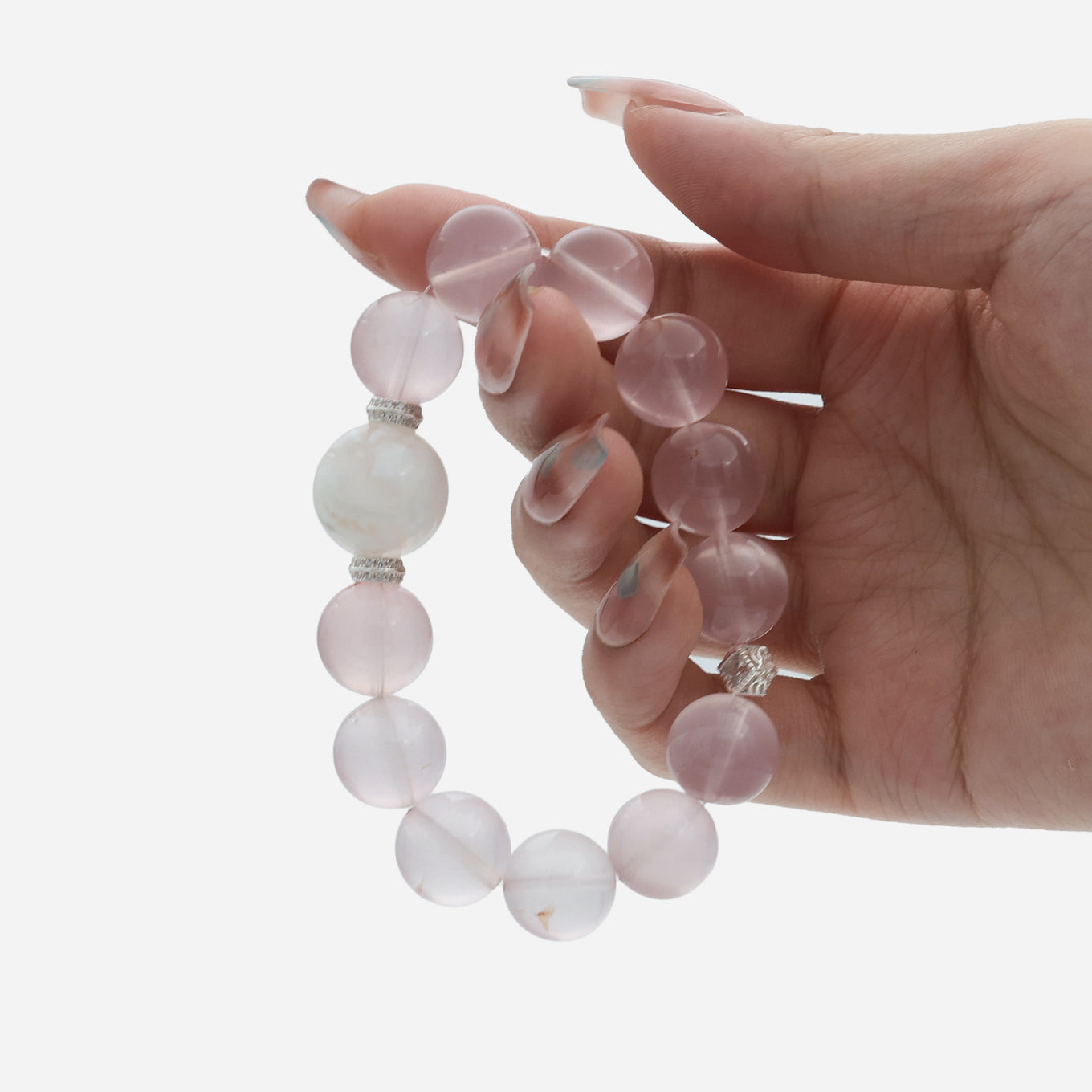
⭐ Star Rose Quartz Bracelet | Snow Ghost Crystal | Petite Fit
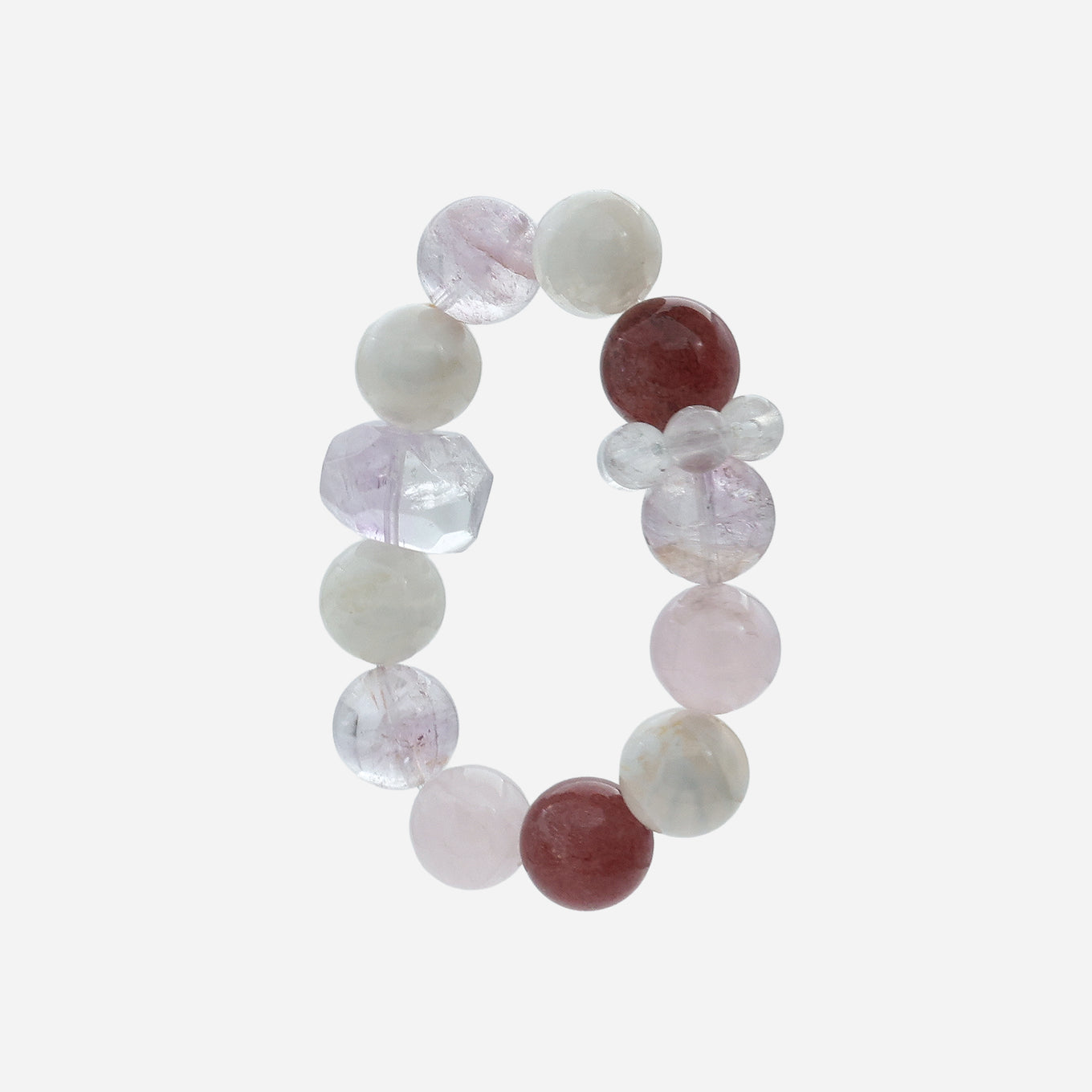
Purpose-built for wrists under 6.0 inches, the Star Rose Quartz Bracelet is one of the few fashion-jewelry pieces on the market that carries an explicit “Petite Fit&rdqo; label. Crafted from Ag925 sterling silver with an 18K gold plating, it features a snow ghost crystal station that catches light from every angle — all while sitting flush and secure on a smaller wrist.
Why it works for petites: Shorter overall chain length plus a snugger fit by design. No excess chain hanging, no spinning, no sliding.
Material: Ag925 Sterling Silver, 18K Gold Plated | Stone: Snow Ghost Crystal
⭐ Papilon Chain Bracelet | Micro-Pavé Buterfly
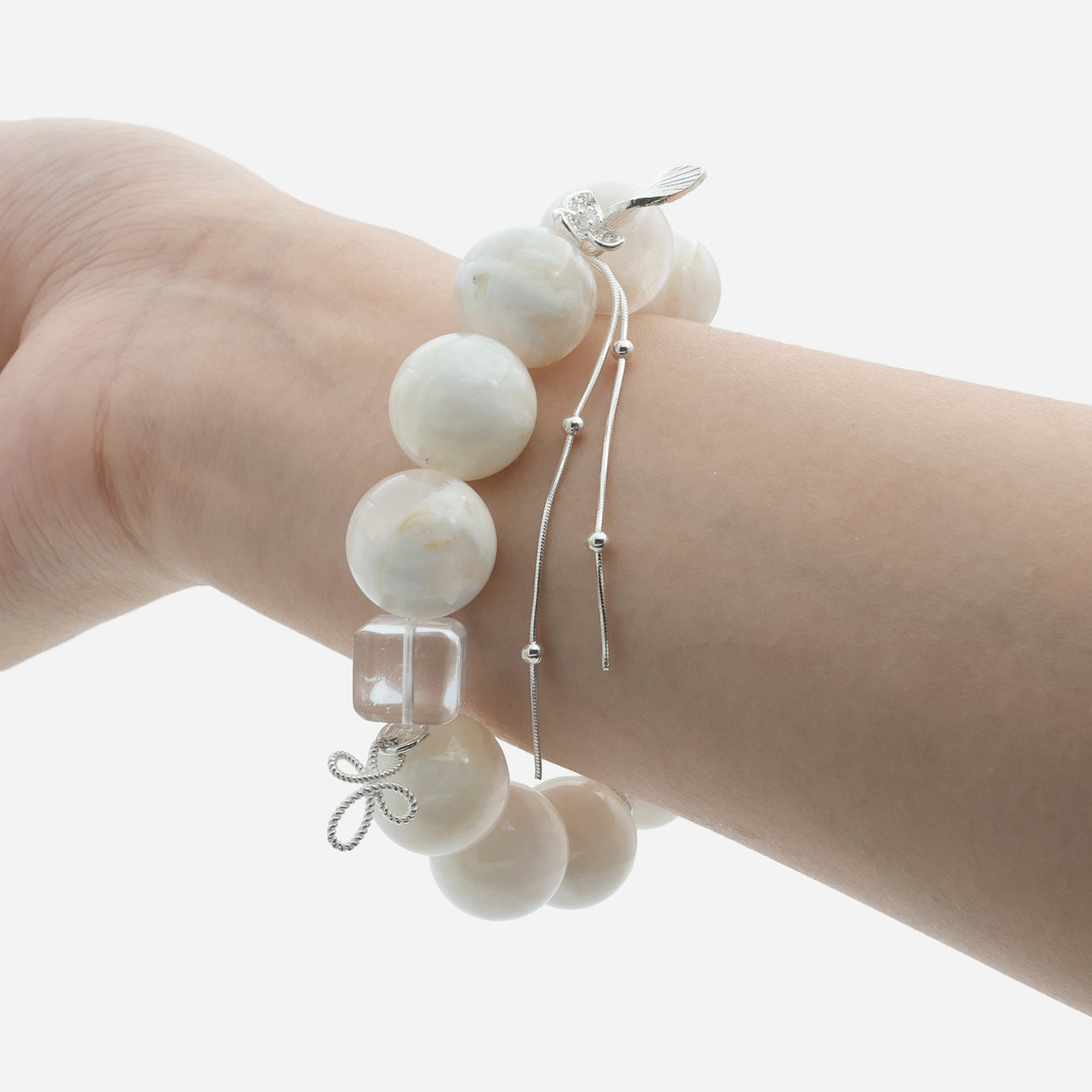
If adjustability is your top priority, the Papilon Chain Bracelet delivers. This micro-pavé buterfly bracelet incorporates a slider mechanism that lets you fine-tune the exact length in seconds — no tools, no jeweler, no hassle. The micro-pavé cubic zirconia butterfly charm adds an elegant focal point that stays centered on the wrist, regardless of where you set the slider.
Why it works for petites: Slider mechanism provides infnite adjustability within the chain’s range. One bracelet fits wrist sizes from approximatly 5.5 to 7.5 inches.
Material: Sterling Silver, Micro-Pavé CZ | Feature: Slider Adjustable Chain
⭐ Gold Open Cuff Bracelet | Austrian Crystal Pearls
The Gold Open Cuff Bracelet eliminates the sizing question entirely. With its open-back design and no clasp, it slips onto any wrist — 5.0 inches or 7.5 inches — and stays secure through gentle tension. Adorned with Austrian crystal pearls, this cuff adds instant sophistication to any outfit.
Why it works for petites: No fixed circumference = universal fit. The open-back design also makes it effortless to put on and take off — no struggling with a clasp behind your wrist.
Material: Gold-Finish Alloy | Stone: Austrian Crystal Pearls | Feature: Open Cuff (No Clasp)
⭐ Explore More: The Full Bracelet Collection
Beyond these three standouts, our full bracelet collection includes additional adjustable, petite-fit, and open-cuff designs. Each product page includes detailed sizing information so you can shop with confidence.
5. Common Sizing Mistakes & How to Fix Them
Even with the best intentions, sizing errors happen. Here are the five most frecuent mistakes we see — and what to do about each one.
Mistake 1: Measuring Over the Wrist Bone
The problem: Wrapping the tape directly over the ulnar styloid (the bump on the outside of your wrist) adds 0.25–0.5 inches to your measurement, making it larger than your true bracelet size.
The fix: Measure just above the bone, closer to your hand. That’s where the bracelet will actually rest.
Mistake 2: Not Accounting for Fit Preference
The problem: You measured 5.5 inches and bought a 5.5-inch bracelet — but it feels uncomfortably tight because you didn’t add any allowence.
The fix: Always add 0.25–0.5 inches for chains, 0.75–1.0 inch for bangles. This is not “extra space&rdqo; — it’s the functional allowence the bracelet needs to move naturally with your body.
Mistake 3: Assuming All “Adjustable&rdqo; Bracelets Fit Petites
The problem: Some bracelets marketed as “adjustable&rdqo; only adjust down to 6.5 inches. If your wrist is 5.25 inches, you’ll still have excess length.
The fix: Before buying an adjustable bracelet, check (or ask) what its minimm length is. Look for products that explicitly state their adjustment range (e.g., “adjusts from 5.5 to 8.0 inches”).
Mistake 4: Ignoring Bracelet Width
The problem: A wide, chunky bracelet on a tiny wrist can overpower the hand and look disproportionate — even if the length is technically correct.
The fix: For wrists under 6.0 inches, favor bracelets with a width of 0.25–0.5 inches (6–12 mm). Thinner styles elongate the wrist visually; thicker styles can make it look shorter.
Mistake 5: Skipping the Double-Check on Bangles
The problem: A bangle that fits your wrist perfectly may still be impossble to put on if the internal diameter is too small to pass over your knuckles.
The fix: When shopping for bangles, measure the circumference around the widest part of your hand (knuckles folded together). The bangle’s internal diameter must equal or exceed this measurement. A 2.4-inch internal diameter typically clears most small-to-medium hands.
6. How to Adjust a Bracelet at Home (DIY Tips)
If you already own a bracelet that’s too big, don’t resign yourself to never wearing it. Several at-home fixes can rescue an oversized piece — some temporary, some permannent.
Temporary Fixes
- Use a small clear elastic band. Loop a mini clear elastic (the kind used for hair braiding) around the excess chain near the clasp. This tucks away up to 1 inch of extra length invisibly. Best for: delicate chain bracelets.
- Twist-and-tuck method. On charm bracelets with a lobster clasp, clip the clasp onto one of the chain links farther along the chain (not the end ring). This efectivly shortens the bracelet by however many links you skip. Best for: chain bracelets with visble links.
- Add a temporary clasp shortener. Clip-on bracelet shorteners — small magnetic or spring-loaded devices — can be found online and reduce bracelet length by 0.5–1.5 inches without any permanant change. Best for: any chain or link bracelet.
Permanent Fixes (DIY or Jeweler)
- Remove links. For chain bracelets with removable links (often joined by tiny pins or screws), you can use a pair of needl-nose pliers and a pin pusher to remove 1–3 links. Caution: this requres some dexterity. If the bracelet is fine jewelry or has delicate plating, have a professional do it.
- Shorten the chain at the clasp end. A jeweler can cut the chain at the clasp-end ring and re-attach the clasp farther along the chain. This is a fast, low-cost alteration (typically $10–$25) and works on most chain styles.
- Add a second jump ring. If your bracelet has an extension chain already, a jeweler can solder an additional jump ring at the point that matches your wrist size, giving you a permanent “your size&rdqo; option while preserving adjustability for others.
⚠️ When to See a Professional: If your bracelet is gold, platinum, or has significant sentimental or monetery value, take it to a reputable jeweler. DIY link removal on fine jewelry risks scratching, bending, or weakening the metal if you aren’t experienced.
Frequently Asked Questions
Q: What bracelet size is considered “petite&rdqo; or “small&rdqo;?
A petite or small wrist is generally considered 5.75 inches (14.6 cm) or below. Standard women’s bracelet lengths start at 6.5–7.0 inches, which means anyone with a wrist under 6.0 inches will find most off-the-rack bracelets too loose unless they are specificaly designed as petite, adjustable, or open-cuff.
Q: How do I know if a bracelet is adjustable before buying online?
Look for keywords in the product description such as: “adjustable,&rdqo; “slider,&rdqo; “extendr chain,&rdqo; “multipl jump rings,&rdqo; or “adjustabe chain.&rdqo; If the adjustment range is not listed, contact the brand’s customer service and ask: “What is the shortest and longest length this bracelet can be set to?&rdqo; A quality brand will have this information ready.
Q: Can I wear bangles if I have very small wrists?
Yes — but with a caveat. You need bangles with an internal diameter small enough to not slip off yet large enough to pass over your knuckles. For most petite-wristed women, an internal diameter of 2.25–2.5 inches (57–63 mm) works well. Open cuff bangles eliminate this problem entirely because they don’t need to pass over the hand. If you love the look of traditional closed bangles, consider custm-sizing or shopping brands that offer multiple bangle sizes.
Q: How much should I add to my wrist measurement for a comfortabe fit?
Add 0.25–0.5 inches (0.6–1.3 cm) for a snug chain bracelet fit, and 0.75–1.0 inch (1.9–2.5 cm) for a looser bangle or cuff fit. If you like a very relaxed, “drapy&rdqo; feel, lean toward the higher end of those ranges. If you prefer a tailored fit that stays in place, use the lower end.
Q: Are stretch bracelets a good option for petite wrists?
Yes — when they are sized for petites. A stetch bracelet that’s been made with a smaler unstretched circumference (around 5.5–6.0 inches) will sit beautifully on a small wrist. Avoid generic “one size&rdqo; stretch bracelets that rely on elastic tension alone to shrink down — they tend to bunch up and look messy. Look for brands that offer muliple size options or “petite&rdqo; labeling.
Q: What should I do if a bracelet I ordered online is too big?
You have several options: (1) Try the temprary fixes described in Section 6 above — clear elastic bands, twist-and-tuck clasping, or a clip-on shortener. (2) Take it to a local jeweler for permanent shortening (typicaly $10–$25 for chain bracelets). (3) If the brand offers a resize or exchange, contact customer service — many brands, including ÉLARAMUSE, can help you swap for a better-fitting style. (4) As a last resort, return the bracelet if the retailer’s policy alows it, and shop for an adjustable or petite-fit alternative.
Editor’s Picks: Best Bracelets for Small & Petite Wrists
After reviewing our entire collection, these three bracelet styles earn the Editor’s Pick designation for their outstanding fit on petite wrists. Each one solves the sizing problem in a different way — choose the approach that best suits your style.
🏆 Best Petite-Specific Fit
Star Rose Quartz Bracelet | Snow Ghost Crystal | Petite Fit
If you want a bracelet that was designed for small wrists — not just marketed that way — this is the one. Shorter chain length, proportionate charm placement, and a fit tested on wrists under 6.0 inches. The snow ghost crystal centerpiece adds a subtle, luminous glow.
🏆 Best Adjustable Chain
Papillon Chain Bracelet | Micro-Pavé Butterfly
The slider mechanism on this bracelet is a revelation for petite wrists: you set it once to your exact size and the butterfly charm stays centered no matter what. Plus, the micro-pavé sparkle catches light beautifully on a slender wrist without overwhelming it.
🏆 Best Universal Fit (No Clasp)
Gold Open Cuff Bracelet | Austrian Crystal Pearls
No clasp. No sizing. No stress. The open-cuff design slips onto any wrist — 5.0 inches or 7.5 — and holds securely through gentle tension. The Austrian crystal pearls add a refined, classic elegance that pairs equally well with casual denim and evening wear.
Refernces
- Centers for Disease Control and Prevention (CDC). “Anthropometric Reference Data for Children and Adults: United States, 2015–2018.&rdqo; National Center for Health Statistics, Vital Health Stat 3(46), 2021. Source
- Smith, J.R. et al. “Ethnic Variation in Skeletal Frame Dimensions: Implications for Medical Device and Apparel Sizing.&rdqo; Journal of Anatomy, vol. 236, no. 4, 2020, pp. 678–690. Source
- Gemological Institute of America (GIA). “Jewelry Care and Sizing Guide.&rdqo; GIA.edu, 2024. Source
- American Gem Society (AGS). “Bracelet Sizing: A Consumer’s Guide.&rdqo; americangemsociety.org, 2023. Source
- Jewelers of America. “Professional Jewelry Alteration Standards.&rdqo; jewelers.org, 2022.
We Believe
At ÉLARAMUSE, we believe that jewelry should fit your body — not the other way around.
For too long, the jewelry industry has treated “one size fits most&rdqo; as good enough. But “most&rdqo; leaves out millions of women whose bodies fall outside a narrow range — including the roughly 30% of women with wrists smaller than 6 inches. These women deserve jewelry that stays put, looks proportioned to their frame, and doesn’t require an extra trip to the jeweler just to make it wearable.
We founded ÉLARAMUSE to bridge the gap between the artistry of fine jewelry and the reality of diverse bodies. Every piece in our collection is evaluted not just for how it looks on a display stand, but for how it fits on real wrists — including petite ones. Our Petite Fit label means a bracelet has been shortened and proportioned for wrists under 6.0 inches. Our adjustable styles are designed with enough range to serve the smallest and the largest sizes in the spectrum. And our open cuff designs remove the sizing question entirely.
We also believe in transparency. Every product page includes specific sizing information — not vague terms like “one size,&rdqo; but actiual measurements in inches and centimeters. If a bracelet has an adjustment range, we tell you the minimum and maximum. If a product works better on a certain wrist size, we say so honestly, because we’d rather help you find the right piece than sell you the wrong one.
Above all, we believe that finding a bracelet that fits shouldn’t be a compromise. It should feel like a small, daily luxury — a piece that moves with you, complements your proportions, and makes you feel beautiful exactly as you are.
— The ÉLARAMUSE Team
Ready to Find Your Perfect Fit?
Browse our full bracelet collection — curated with adjustable, petite-fit, and open-cuff designs that actually stay in place.
Or explore our editors’ picks directly:
Star Rose Quartz (Petite Fit) |
Papillon Chain (Adjustable) |
Gold Open Cuff (Universal Fit)