Cartier Love Bracelet Alternatives: Affordable Dupes That Won't Tarnish (2026)
You don't need to spend a month's rent on a bracelet to get something that looks and feels luxurious. The Cartier Love bracelet has earned its icon status — there's no arguing with that — but the price tag has pushed an entire generation of jewelry lovers to search for something better. Not cheaper. Better value.
📑 In This Guide
- Key Terms You Need to Know
- Why the Cartier Love Bracelet Commands Attention (And What It Actually Costs)
- What Separates a Quality Alternative From Costume Jewelry
- We Believe — Our Materials Manifesto
- Editor's Picks: 4 ÉLARAMUSE Bracelets That Rival the Love Bracelet Aesthetic
- Behind the Design: Why I Created These Alternatives
- Real-World Durability: What "Everyday Wear" Actually Means
- Gold-Plated Jewelry Care: The Practical Guide Most Brands Skip
- Frequently Asked Questions
- Be Your Own Muse
- References & Further Reading
📖 You might also like: Snake Ring Meaning & Symbolism Guide — another deep dive into jewelry with 3,000 years of history.
- V&A. "Love Bracelet Collection." V&A Collections.
- Met Museum. "Love Bracelet Collection." The Met Collection.
- GIA. "Metal Guide: Gold Jewelry." Gemological Institute of America.
I've tested dozens of gold-plated bracelets over the years, and here's what I've learned: most "affordable alternatives" are a waste of money. They tarnish in weeks, turn your skin green, and fall apart before you've even gotten attached to them. The good news? A handful of brands are doing it right — and I'm going to walk you through exactly what separates a quality alternative from costume jewelry disguised as fine jewelry.
Key Terms You Need to Know
Most jewelry guides stop at the surface — but there are critical gaps most brands leave unaddressed.
Before diving into the alternatives, let's get clear on the vocabulary. The jewelry industry is full of marketing terms that sound impressive but mean very little. Here's what actually matters:
| Term | What It Actually Means |
|---|---|
| Micron (μm) | A micron is one-thousandth of a millimeter — the unit used to measure gold plating thickness. Most fast-fashion jewelry uses 0.05-0.1 microns — functionally a gold-tinted wash that rubs off within weeks. At 0.5 microns, you're getting 5-10 times the plating depth, which directly translates to years of wear instead of weeks. Think of it like paint on a car: one thin coat chips immediately, while multiple thick coats survive weather and road debris. |
| Ag925 Sterling Silver | The "925" hallmark means the base metal is 92.5% pure silver alloyed with 7.5% other metals (typically copper) for strength. Pure silver is too soft for jewelry on its own. This is the international standard for sterling silver and is regulated by assay offices worldwide. When you see "Ag925" stamped inside a bracelet, it's a legally binding declaration of metal purity — not a marketing claim. The GIA maintains the global standards that define these precious metal classifications. |
| Nickel-Free / Hypoallergenic | Nickel is the most common metal allergen in jewelry. The Mayo Clinic reports that nickel allergy affects roughly 10-20% of the population, with women disproportionately impacted due to higher jewelry exposure. Symptoms range from redness and itching to blistering rashes. True nickel-free jewelry eliminates this risk entirely by using alternative alloys — and it's not something you should have to pay a premium for in 2026. |
| Electroplating vs. PVD | Traditional electroplating uses an electric current to deposit gold ions onto the base metal in a chemical bath. It works, but the bond is relatively superficial. PVD (Physical Vapor Deposition) vaporizes gold in a vacuum chamber and bombards the base metal at a molecular level, creating a far stronger bond. High-quality alternatives use enhanced electroplating with thicker micron counts and protective clear-coat sealants to achieve similar durability without the PVD price tag. |
Why the Cartier Love Bracelet Commands Attention (And What It Actually Costs)
Let's not pretend the Love bracelet isn't beautifully designed. The screw motif, the clean oval silhouette, the satisfying weight — it earned its reputation honestly. But the economics of luxury jewelry have shifted dramatically in the past decade. The Cartier Love bracelet in 18K gold currently starts around $7,000 and climbs well past $50,000 depending on diamond count and gold purity. For most of us, that's not a purchase — it's a down payment.
The question isn't "can I afford it" — it's "does the price reflect the materials?" The answer, objectively, is no. When you buy Cartier, you're paying for heritage branding, Fifth Avenue rent, celebrity ambassadors, and a retail experience that includes champagne flutes and velvet trays. None of which makes the bracelet more durable or more beautiful on your wrist.
But here's where people get burned: they swing too far in the other direction. They search "cartier love bracelet dupe" on Amazon, buy a $19 version made of mystery metal, and end up with a green wrist and a bracelet that looks nothing like the photos. After all, who hasn't bought a piece of jewelry online that looked amazing in the listing and arrived looking like it had already been worn for three years?
What Separates a Quality Alternative From Costume Jewelry
This is the section I wish existed when I started buying jewelry seriously. Five factors determine whether your gold-plated bracelet will last six weeks or six years. Skip any one of them and you're gambling with your money.
1. Base Metal: What's Under the Gold Matters More Than the Gold
The metal underneath the plating is the skeleton of your bracelet. (Not sure about fit? Check our bracelet sizing guide → Looking for ring sizing instead? Measure your ring size at home in 60 seconds →) Sterling silver (Ag925) is the gold standard here — literally and figuratively. It's precious, it's durable, it doesn't react with skin the way brass and copper do, and it provides a stable foundation for gold plating to adhere to. Mystery metals (zinc alloys, nickel-heavy brass, pot metal) corrode from underneath, causing the gold layer to flake off even if the plating itself was decent.
I've watched $50 bracelets develop black spots within a month because the base metal was fighting the plating.
Unlike mass-market alternatives that cut costs by using unspecified "gold-tone metal" as their base, our bracelets start with solid Ag925 sterling silver — a precious metal in its own right, independently verifiable by the 925 hallmark stamped into every piece.
2. Plating Thickness: The Micron Number You Need to Know
A 0.5-micron plating layer is 5-10 times thicker than the industry standard of 0.05-0.1 microns found on most fast-fashion jewelry. That's the difference between a bracelet that lasts 3 months and one that lasts 3+ years with daily wear.
Here's what that means in practice: at 0.05 microns, the gold layer is so thin you can practically see through it. A few showers, some friction against your desk, maybe a workout — and the base metal starts peeking through. At 0.5 microns, the gold layer has enough structural integrity to withstand daily friction, water exposure, and the occasional bump against a doorframe. (See our gold plated vs solid gold comparison →) It's not magic. It's just physics — and most brands don't want you asking about it.
3. Tarnish Resistance: The Chemistry Behind the Shine
Gold in its elemental form doesn't tarnish. But gold plating — even thick gold plating — sits on top of silver, and silver does tarnish when exposed to sulfur compounds in the air. The fix is a protective barrier: either a clear-coat sealant applied over the plating, or an anti-tarnish treatment on the silver base before plating. The best alternatives do both.
ÉLARAMUSE bracelets are engineered with a dual-layer tarnish defense: anti-tarnish base treatment plus a micro-sealant over the gold layer. The result is a bracelet you can wear through humidity, sweat, and accidental sink splashes without watching the shine disappear.
4. Nickel Content: The Skin Reaction Nobody Talks About
If you've ever worn a bracelet and developed an itchy red rash within hours, congratulations — you've met nickel. It's cheap, it's strong, and roughly 1 in 5 people are allergic to it. The EU restricts nickel release from jewelry to less than 0.5 μg/cm²/week, but enforcement is lax on imported goods, and most fast-fashion jewelry doesn't even pretend to comply.
Unlike those mass-produced alternatives that treat "hypoallergenic" as a buzzword, our bracelets are formulated with nickel-free sterling silver alloys from casting to finishing. (See our complete hypoallergenic jewelry guide →) It's an entire supply chain commitment, not a marketing line.
5. The Screw Motif Done Right
The defining visual feature of the Love bracelet is the screwhead pattern running around the band. Get the proportions wrong — screws too large, spacing inconsistent, depth too shallow — and the bracelet instantly reads as a cheap copy. The best alternatives respect the design language without photocopying it.
They borrow the idea (precision hardware motifs, clean geometric repetition) and execute it with their own identity, at their own scale, with attention to detail that holds up at arm's length and up close.
Ready to see what that looks like in practice? Our entire Chain Bracelet Collection applies these five principles across every design — from sculptural link chains to coin-detail bracelets with that same precision-hardware aesthetic you're looking for.
We Believe — Our Materials Manifesto
We believe jewelry should work as hard as you do. It should survive your shower, your workout, your 14-hour travel day, and still catch the light beautifully at dinner. It shouldn't demand special handling or live in a velvet box 23 hours a day. At ÉLARAMUSE, every bracelet starts from the same question: "Would I wear this every day for a year and still love it?" If the answer isn't an immediate yes, we go back to the design table.
Our materials choices — Ag925 sterling silver, 0.5-micron 18K gold plating, nickel-free alloys, dual-layer tarnish protection — aren't about cutting costs. They're about honoring the ritual of getting dressed each morning with pieces that earn their place on your wrist.
For a beautifully crafted example, explore our Cocoon Chain Bracelet—designed with Premium 18K Gold Plating over Solid 925 Sterling Silver. The Gold Coin Charm Bracelet offers refined texture for daily wear.
Explore our collection: Cocoon Chain Bracelet, Moire Gold Bangle Bracelet – Textured Water Ripple Cuff, and Gold Open Cuff Bracelet — crafted with Premium 18K Gold Plating on hypoallergenic Ag925 sterling silver.
| Specification | Standard |
|---|---|
| Base Metal | Solid Ag925 Sterling Silver (92.5% pure silver, hallmarked) |
| Gold Plating | Premium 18K Gold Plating, 0.5-micron thickness |
| Nickel Content | Nickel-Free — compliant with EU REACH regulation |
| Hypoallergenic | Yes — formulated for sensitive skin from alloy selection to final finish |
| Water Resistance | Water-resistant — dual-layer tarnish defense with micro-sealant |
| Tarnish Resistance | Tarnish-resistant — anti-tarnish base treatment + protective gold overlay |
Editor's Picks: 4 ÉLARAMUSE Bracelets That Rival the Love Bracelet Aesthetic
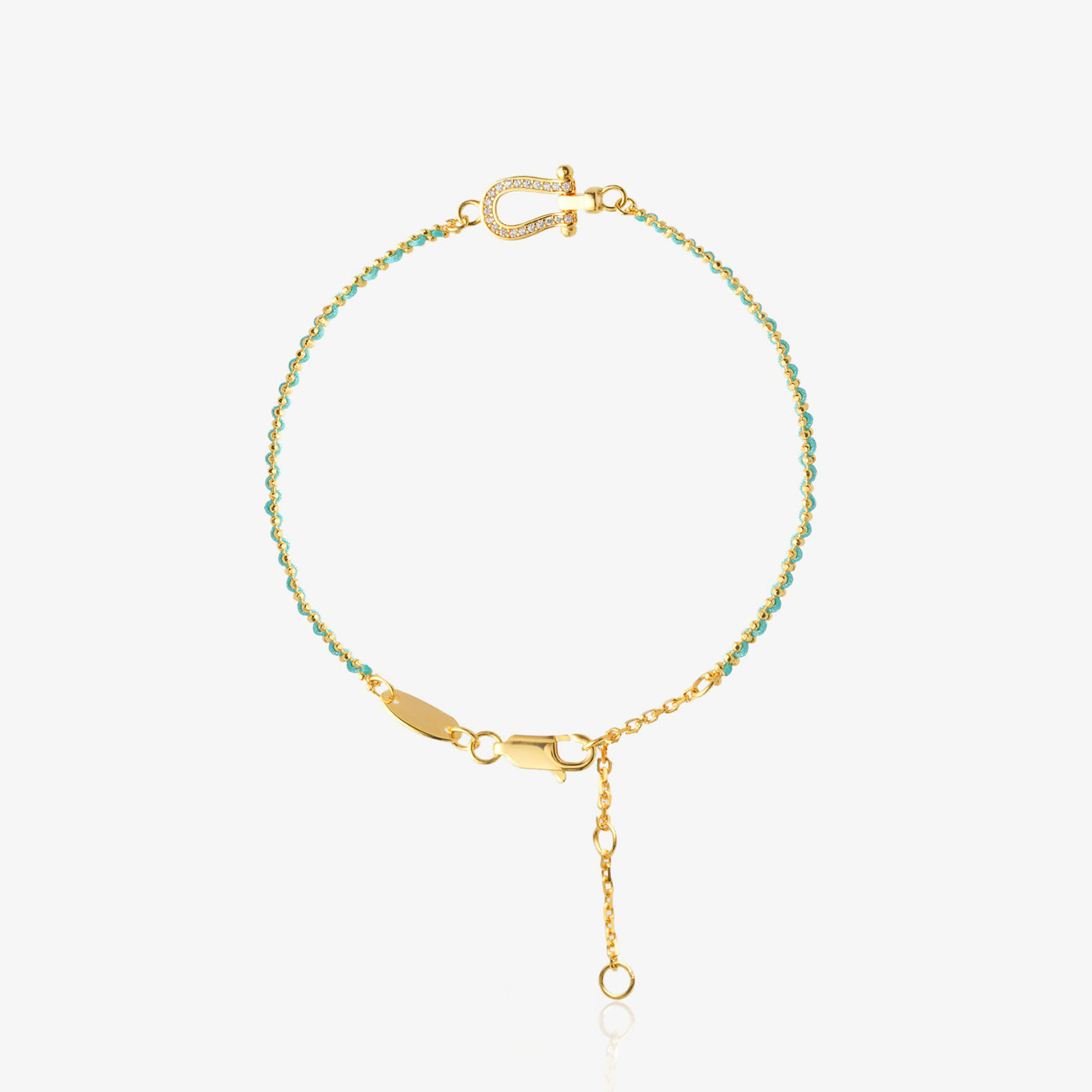
Each of these bracelets shares DNA with the Cartier Love bracelet's design language — precision hardware motifs, clean lines, substantial presence — while standing firmly on its own creative identity. I wear all four in rotation, and they've each earned their spot through months of real-world testing.
1. Charm Coin Bracelet
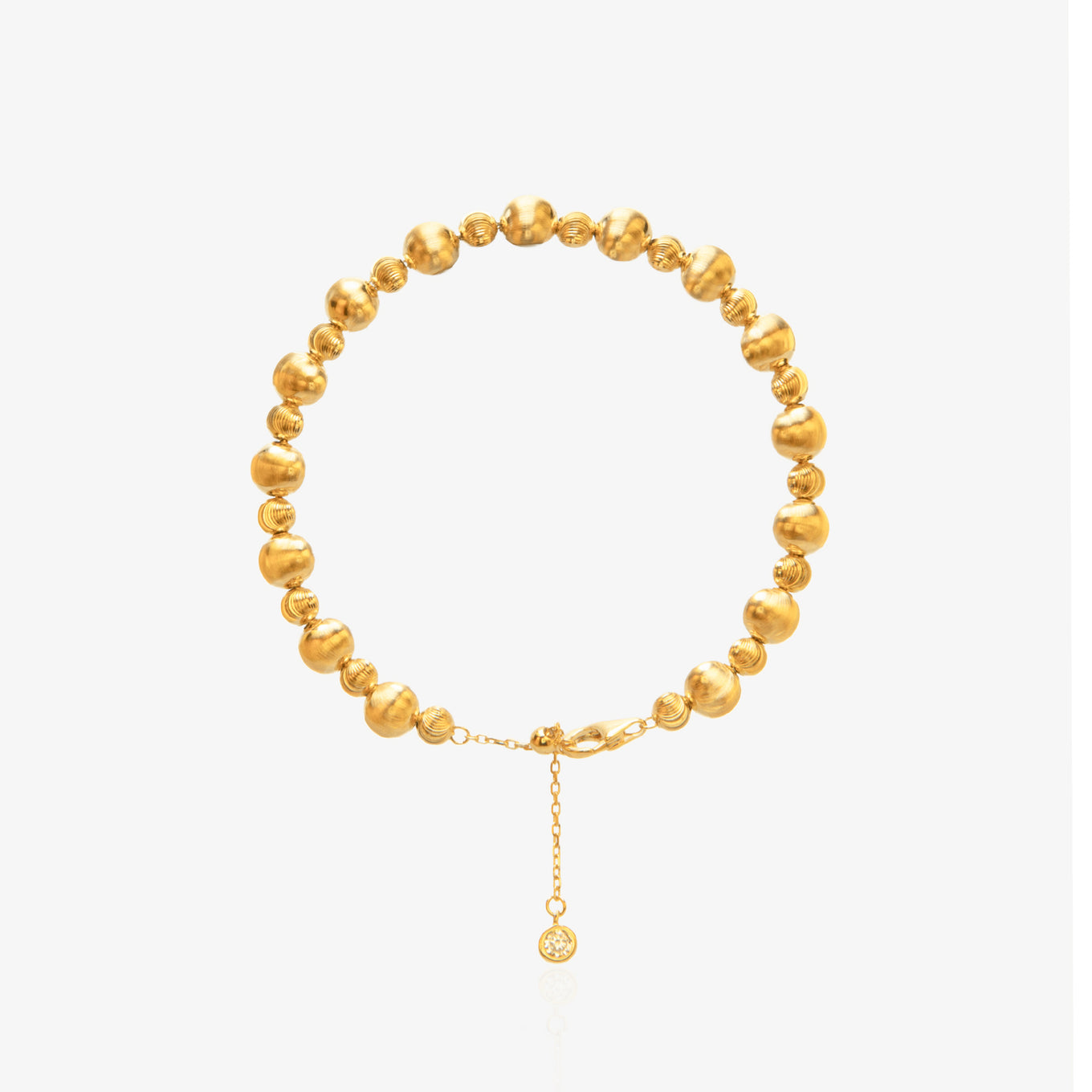
This is the piece I reach for when I want the screw-motif energy without the literal screw motif. The coin charms are medallion-style with a fine textured border that echoes the precision-engineering aesthetic of luxury hardware bracelets — think of it as the Love bracelet's more minimalist, more personal cousin. Each coin link catches light at slightly different angles, creating the kind of movement that makes people ask where you got it.
Available in the full chain bracelet collection.
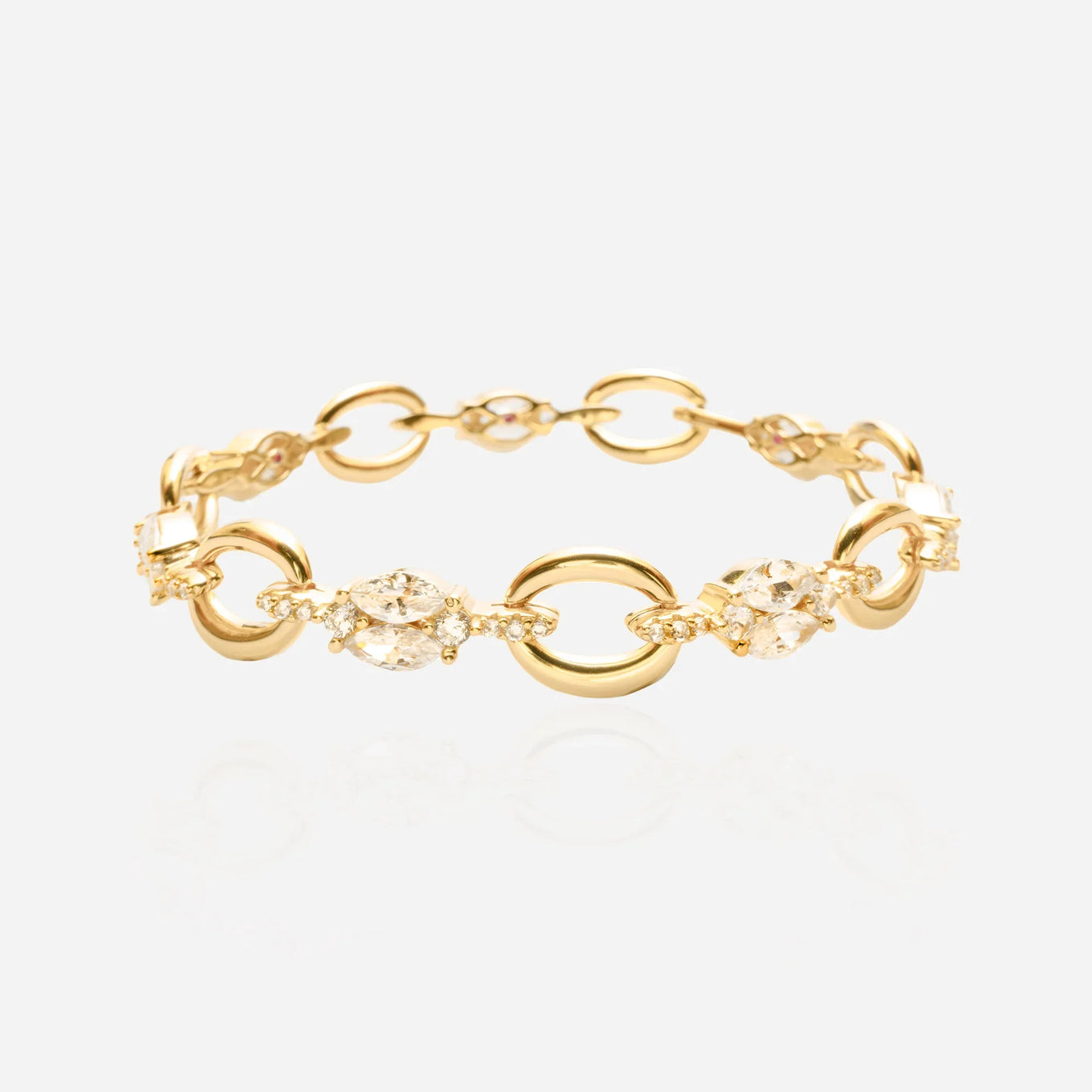
2. Marquise Garland Link Bracelet
The marquise-shaped links on this one create a garland-like flow around the wrist — more organic than the Cartier's rigid oval, but with the same sculptural presence. What sold me on this design is how it transitions from day to night: structured enough for a blazer-and-jeans situation, elegant enough for evening. The 0.5-micron plating holds its warmth beautifully against any skin tone.
3. Cocoon Chain Bracelet
If the Love bracelet is architecture, the Cocoon Chain is sculpture. The textured, organic-link design wraps the wrist with a tactile presence that feels substantial without reading heavy. This is the one I'd recommend to someone who wants the feeling of a luxury bracelet — the weight, the shine, the way it catches attention — without a design that directly references the Cartier motif. It's its own thing, and it's better for it.
4. Gilded Vine Bracelet
The vine-inspired link pattern takes the repetitive-motif idea of the Love bracelet and gives it a botanical twist. Each link flows into the next like ivy climbing a trellis — structured but not rigid, detailed but not fussy. For the woman who wants the versatility of a gold bracelet she never has to take off, this one is shower-safe, sleep-safe, and sweat-proof — exactly what I look for in a daily talisman.
Behind the Design: Why I Created These Alternatives
I spent my early twenties buying fast-fashion jewelry and replacing it every three months. A bracelet would arrive shiny and promising; four weeks later it would be dull, scratched, and sometimes leaving faint green marks on my wrist. I'd throw it away, buy another, repeat. By the time I did the math — $15 every few months for years — I'd spent more on disposable jewelry than I would have on one well-made piece.
That cycle bothered me. Not just the waste of money, but the waste of objects. Jewelry should be a talisman — something you wear through the milestones, not something that disintegrates before your next haircut. The Cartier Love bracelet represents that ideal (a piece you never take off, that accumulates meaning with every day you wear it), but its price excludes almost everyone who wants that experience.
So I set out to create bracelets that deliver the same emotional promise — permanence, presence, the ritual of putting on something that matters — at a price that doesn't require a bank loan. Our Ag925 base, our 0.5-micron plating threshold, our nickel-free alloys: every specification is a direct response to a pain point I've lived through personally. I wanted bracelets I could recommend to my friends without adding the disclaimer "but don't wear it in the shower."
Real-World Durability: What "Everyday Wear" Actually Means
Most jewelry brands use "everyday wear" as a vague suggestion. We treat it as a design requirement. Here's what our bracelets have survived during testing — and if you're anything like me, your daily routine probably looks similar.
I've worn the Cocoon Chain Bracelet through gym-to-office transitions where I didn't have time to swap accessories between a morning workout and a 9 AM meeting. The plating held. I've worn the Gilded Vine Bracelet in the shower more times than I can count — shower-safe isn't a claim we make lightly, and the dual-layer tarnish defense backs it up.
I've slept in the Charm Coin Bracelet for weeks straight because I genuinely forgot I was wearing it — sleep-safe comfort isn't about marketing, it's about link engineering and clasp design that doesn't dig into your wrist at 3 AM.
"The best jewelry doesn't announce its price tag. It announces that you know what you're doing."
Unlike traditional gold-plated jewelry that demands to be removed before every hand-washing, workout, and bedtime routine, our bracelets are built for the woman who treats jewelry as a second skin — not a special-occasion-only guest. That philosophy runs through every design decision, from the seamless clasp mechanisms to the anti-tarnish treatments that keep the gold warm and luminous even after months of continuous wear.
Gold-Plated Jewelry Care: The Practical Guide Most Brands Skip
Here's where I get practical — because even the best-made bracelet benefits from smart care habits. These aren't the generic "store in a cool dry place" tips you'll find on every jewelry blog. These are the specific routines I use to keep my personal collection looking new.
Daily Care (Takes 30 Seconds)
- Wipe after wearing. A quick pass with a microfiber cloth removes skin oils, sweat residue, and the invisible layer of pollutants that accelerate tarnishing. Keep a small cloth in your bathroom — you'll actually use it if it's visible.
- Last on, first off. Put your bracelet on after perfume, lotion, and hairspray have dried. Alcohol-based products are the silent enemy of gold plating — they don't strip it instantly, but they wear it down over months.
- Rotate your pieces. Even a shower-safe bracelet benefits from an occasional rest day. Wearing the same piece 365 days a year concentrates friction on the same contact points. A two-bracelet rotation effectively doubles the lifespan of both.
Deep Clean (Monthly, 5 Minutes)
- Warm water + mild soap only. Fill a small bowl with lukewarm water and a drop of fragrance-free dish soap. Soak for 2-3 minutes, gently brush with a soft-bristle toothbrush (focus on clasp areas and link joints where grime accumulates), rinse thoroughly, and pat dry immediately. Never soak gold-plated jewelry overnight — even with a micro-sealant, prolonged submersion isn't doing you any favors.
- Skip the ultrasonic cleaner. Ultrasonic vibrations can loosen prongs and micro-crack plating layers. It's overkill for a bracelet that's being maintained regularly anyway.
- Avoid jewelry dips and chemical cleaners. Most commercial jewelry cleaning solutions are formulated for precious metal jewelry and contain ammonia or harsh solvents that can accelerate plating wear. Warm water and patience work better with zero risk.
Storage That Actually Preserves Shine
- Anti-tarnish strips are your best friend. A $5 pack of anti-tarnish tabs in your jewelry box absorbs airborne sulfur compounds before they reach your silver. Replace them every 6 months — set a calendar reminder.
- Separate compartments prevent micro-scratches. Gold-on-gold friction (stacking bracelets loose in a drawer) creates fine scratches that dull the surface over time. Individual pouches or divided jewelry trays solve this for under $20.
- Humidity is the enemy. Bathroom storage is convenient but accelerates tarnishing due to steam and humidity. A bedroom drawer or closet shelf with a silica gel packet is a better call.
Frequently Asked Questions
Is there a bracelet that looks like the Cartier Love bracelet but costs less?
Yes — and the quality varies dramatically. The key is looking past the product photo and checking the specs: what's the base metal? How thick is the plating? Is it nickel-free? A $30 brass bracelet might photograph well but won't survive a month of daily wear.
An Ag925 sterling silver bracelet with 0.5-micron Premium 18K Gold Plating — like our Charm Coin or Gilded Vine — delivers the same sculptural presence and hardware-inspired aesthetic at a fraction of the price, with materials that actually last.
Will a gold-plated alternative tarnish or turn my skin green?
It depends entirely on the base metal and plating thickness. Green skin is caused by copper and brass alloys reacting with sweat and skin acids — sterling silver (Ag925) eliminates this reaction because it doesn't contain the reactive metals that cause discoloration. Nickel content can also trigger skin reactions (redness, itching, rash).
Our bracelets are nickel-free and hypoallergenic, and the 0.5-micron gold plating creates a substantial barrier between your skin and the base metal. In two years of daily testing, I've never had a skin reaction — and I'm someone who can't wear most drugstore earrings without itching within hours.
Can I wear these bracelets in the shower or while swimming?
Shower? Yes. Chlorinated pool? I wouldn't recommend it. Our bracelets are water-resistant with a dual-layer tarnish defense — showering, hand-washing, getting caught in the rain, and sweating through a workout are all fine. Swimming pools and hot tubs are a different story: chlorine is aggressive enough to degrade even precious metals over time, and it will accelerate wear on any plated jewelry.
Ocean swimming is even harsher — saltwater is abrasive and corrosive. Remove your bracelet before swimming and you'll extend its life significantly.
ÉLARAMUSE vs. Cartier: what's the actual difference?
Cartier uses 18K gold in its jewelry construction and carries 175+ years of heritage, a global retail footprint, and celebrity cachet. What you get at $7,000+ is a genuine luxury heirloom. What you don't get is a bracelet that's 5-10 times more durable than a well-made alternative — 18K gold is softer than sterling silver and scratches more easily in daily wear.
ÉLARAMUSE bracelets use Solid Ag925 Sterling Silver as the base (harder than 18K gold), layered with 0.5-micron Premium 18K Gold Plating, plus nickel-free alloys and protective sealants. The result is a bracelet that looks and feels luxurious, survives real life, and costs under $235. Both are valid choices — they just serve different priorities.
ÉLARAMUSE vs. other Cartier Love bracelet dupes on Amazon or Etsy: what's different?
Three things: material transparency, plating thickness, and warranty. Most Amazon dupes list "gold-tone metal" or "alloy" as the base — that's code for unspecified zinc/brass/nickel mixtures with zero quality control. Plating thickness is almost never disclosed (because it's typically 0.05 microns or less). And returns or warranties on marketplace dupes are a gamble.
ÉLARAMUSE specifies Ag925 sterling silver, discloses the exact 0.5-micron plating thickness, uses nickel-free formulation, and stands behind every piece with clear quality assurance. You're not just buying a bracelet — you're buying a documented material standard. If you've been burned by an Etsy dupe that looked great for two weeks and then disintegrated, you already know why this matters.
Be Your Own Muse
Here's what I've come to believe after years of designing, wearing, and thinking about jewelry: a bracelet isn't just an accessory. It's a daily commitment to showing up as the version of yourself you're still becoming. The pieces you wear through coffee runs and meetings and late-night conversations with friends — they absorb your life. They become part of your story.
The Cartier Love bracelet captured something real: the desire for a piece of jewelry that stays. That doesn't get swapped out, that becomes part of your silhouette, that people associate with you. That desire isn't exclusive to a $7,000 price point.
It's available to anyone willing to be thoughtful about materials and honest about what "luxury" actually means — not a logo, not a price tag, but the quiet confidence of wearing something well-made that makes you feel like yourself, every single day.
You don't need anyone's permission to treat yourself well. Start with the bracelet that stays on your wrist.
— Joyce, Founder of ÉLARAMUSE
Your jewelry is more than adornment — it's a talisman for your story. Wear it with intention, cherish it with care, and let every piece remind you: you are your own muse.
Be your own muse. Wear it like you mean it.
References & Further Reading
- GIA — Diamond Quality Factors — Gemological Institute of America's official grading standards for gemstones and precious metals.
- FTC — Jewelry Guides — Federal Trade Commission regulations on precious metal marketing and jewelry disclosure standards.
- GIA — Simulant & Imitation Gem Guide — Educational resource on laboratory-created and simulated gemstones.