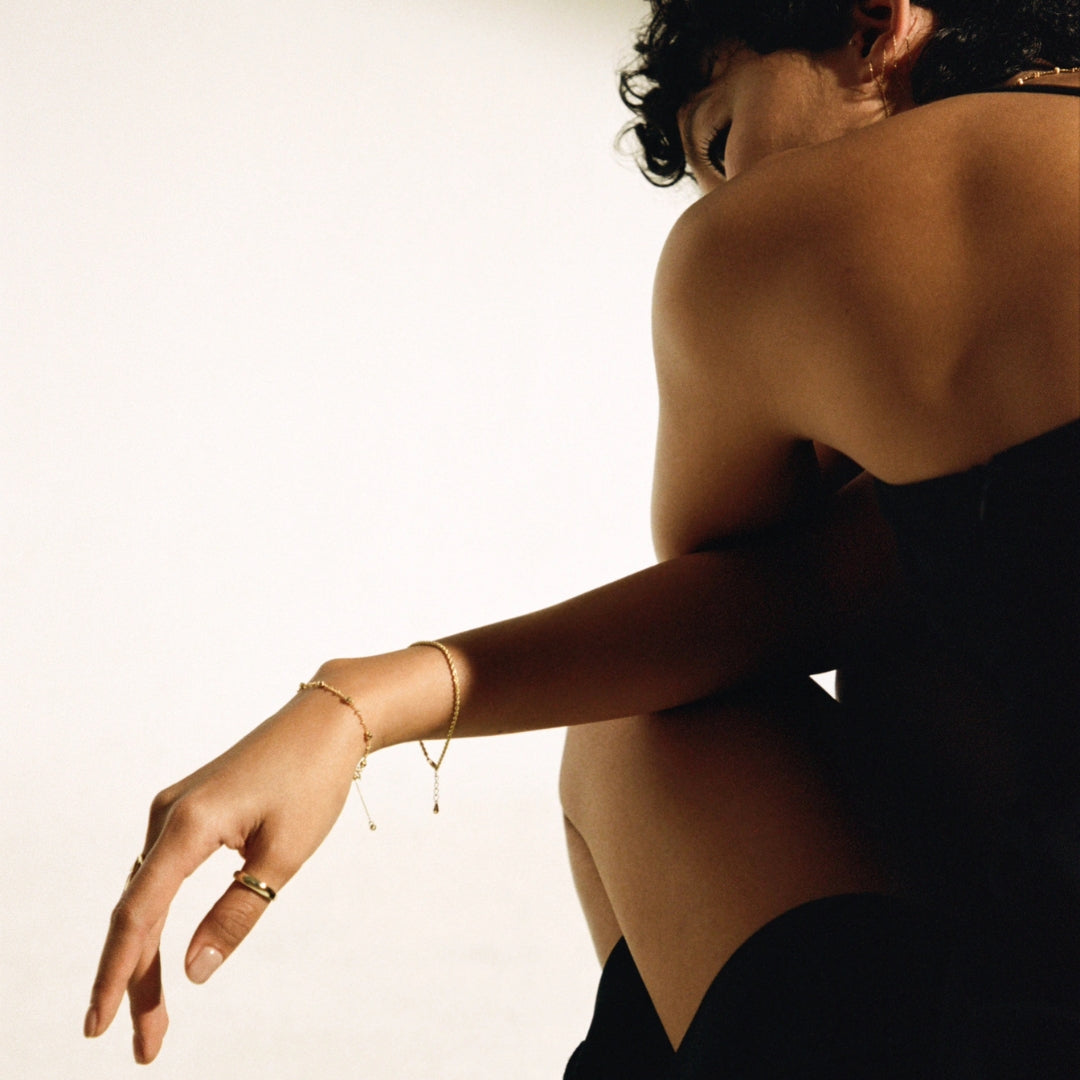
Quick Answer: Bracelet stacking is the art of layering 2-5+ bracelets on one wrist — mixing chain styles, bangles, beaded pieces, and cuffs for a curated look that reflects your personal style. The key is balancing widths, textures, and metals.
📑 In This Guide
- Why Bracelet Stacking Is 2026's Most Overlooked Styling Opportunity
- The Anatomy of a Perfect Bracelet Stack
- ÉLARAMUSE Bracelet Stack: Three Formulas That Never Fail
- The ÉLARAMUSE Standard
- Key Terms You Need to Know
- How to Avoid the Biggest Bracelet Stacking Mistake
- Bracelet Stacking by Scenario
- Metal Mixing: Yes, You Can Wear Gold and Silver Together
- Behind the Design: Why We Engineer for Stacking
- Care Tips for Your Bracelet Stack
- Frequently Asked Questions
- Editor's Picks for Your Bracelet Stack
- References & Further Reading
- What We Believe
References
- GIA. "Metal Guide." Gemological Institute of America.
- V&A. "Bracelet Collection." V&A Collections.
- Met Museum. "Stacked Bracelets in the Collection." The Met Collection.
Why Bracelet Stacking Is 2026's Most Overlooked Styling Opportunity
Ring stacking has its tutorials. Necklace layering has its guides. But bracelet stacking — the wrist-level art form that completes your jewelry ecosystem — remains surprisingly underserved. The reality is: your wrist is prime visual real estate. It moves when you gesture, catches light when you reach for your coffee, and draws eyes every time you check your phone. A well-curated bracelet stack refines even the simplest outfit from "I threw this on" to "I thought about this."
Unlike rings that sit relatively still or necklaces that hang from a fixed point, bracelets have kinetic energy. They shift, slide, clink, and cluster. This makes stacking them both more challenging and more rewarding than any other form of jewelry layering. Get it right, and you have a signature look. Get it wrong, and you have a tangled mess by noon.
I learned this the hard way. When I first experimented with stacking three chain bracelets on my left wrist, I spent half an afternoon untangling them. The breakthrough came when I realized bracelet stacking isn't about piling on as many pieces as possible — it's about understanding how different bracelet types interact in motion.
The Anatomy of a Perfect Bracelet Stack
Every memorable bracelet stack follows one core principle: variety in texture, unity in metal tone. The most common mistake people make is stacking identical chain styles. Three rope chains on one wrist reads as "I cleaned out my jewelry box" rather than "I styled this intentionally."
A strong stack has at least three of these five elements:
- Anchor Piece: A substantial piece that grounds the stack — think a wide bangle or a chunky curb chain bracelet. This is your visual foundation.
- Delicate Chain: A fine, dainty chain that adds movement and lightness. It creates negative space between heavier pieces.
- Texture Element: Something with visual complexity — beaded, braided, or hammered texture breaks up flat surfaces.
- Focal Point: A piece with a distinct feature — a charm, a pavé detail, a colored gemstone — that draws the eye.
- Transition Piece: An in-between width that bridges the gap between your anchor and delicate pieces.
ÉLARAMUSE Bracelet Stack: Three Formulas That Never Fail
After testing dozens of combinations (and untangling my fair share of failures), here are three stacking formulas that work every time:
Formula 1: The Chain Trinity
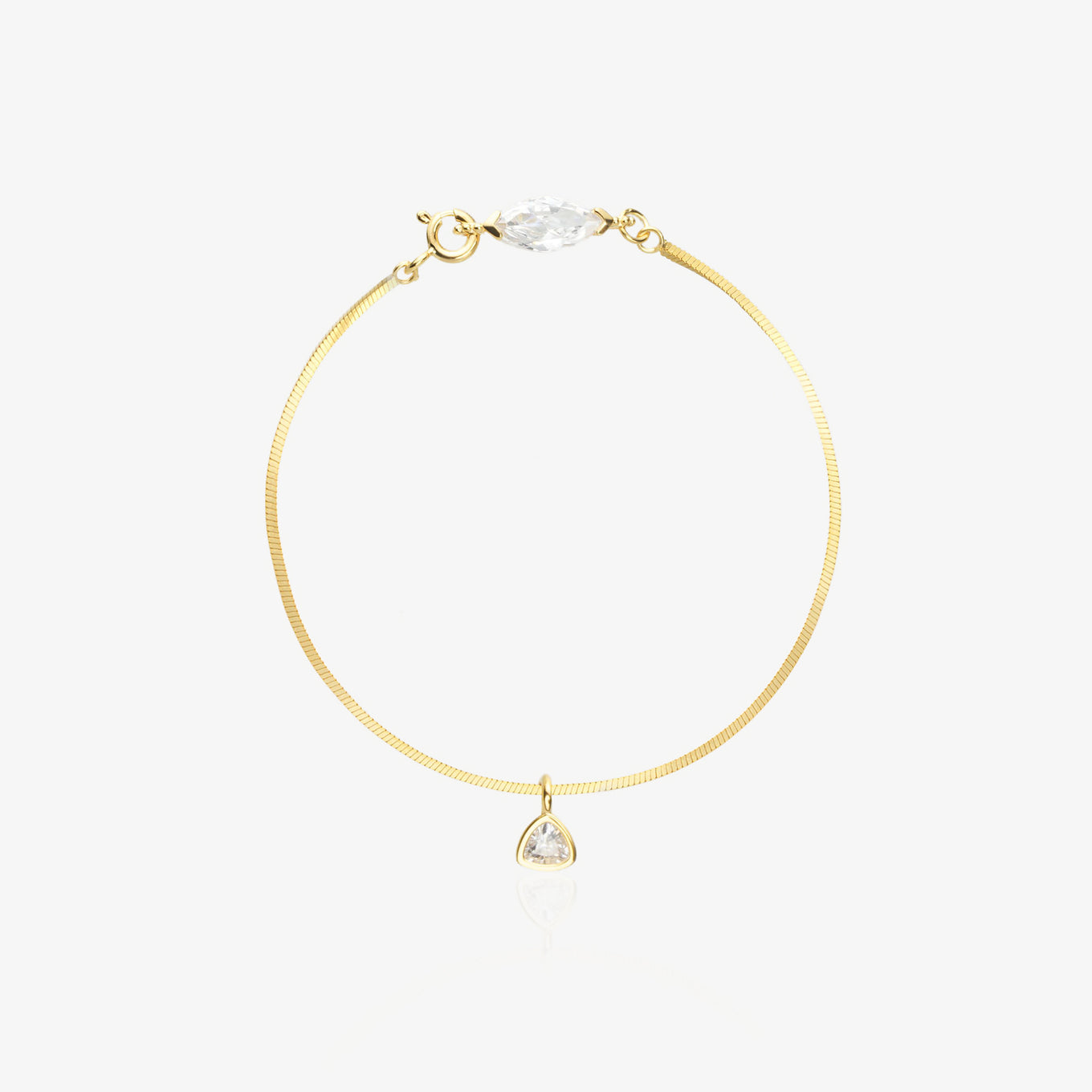
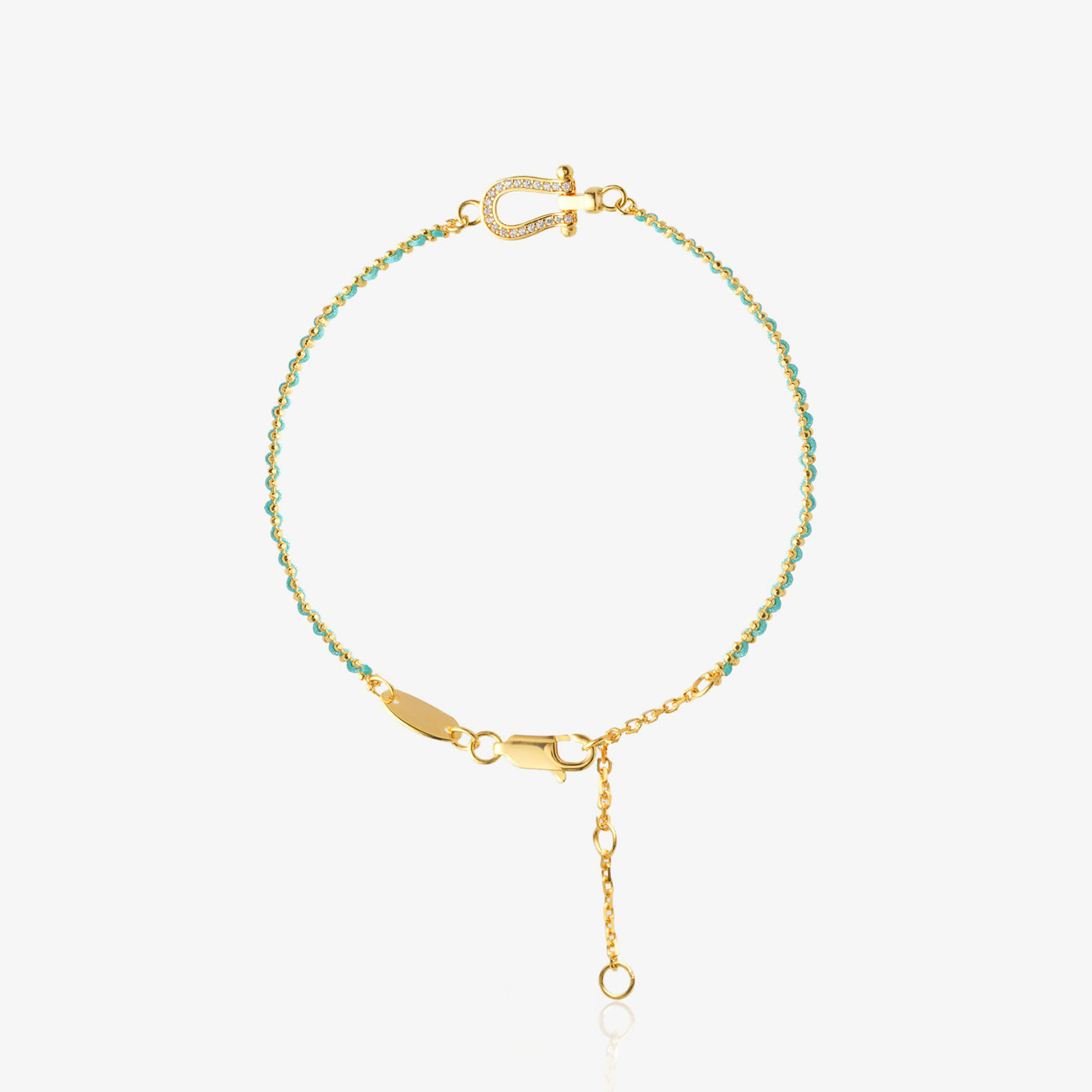
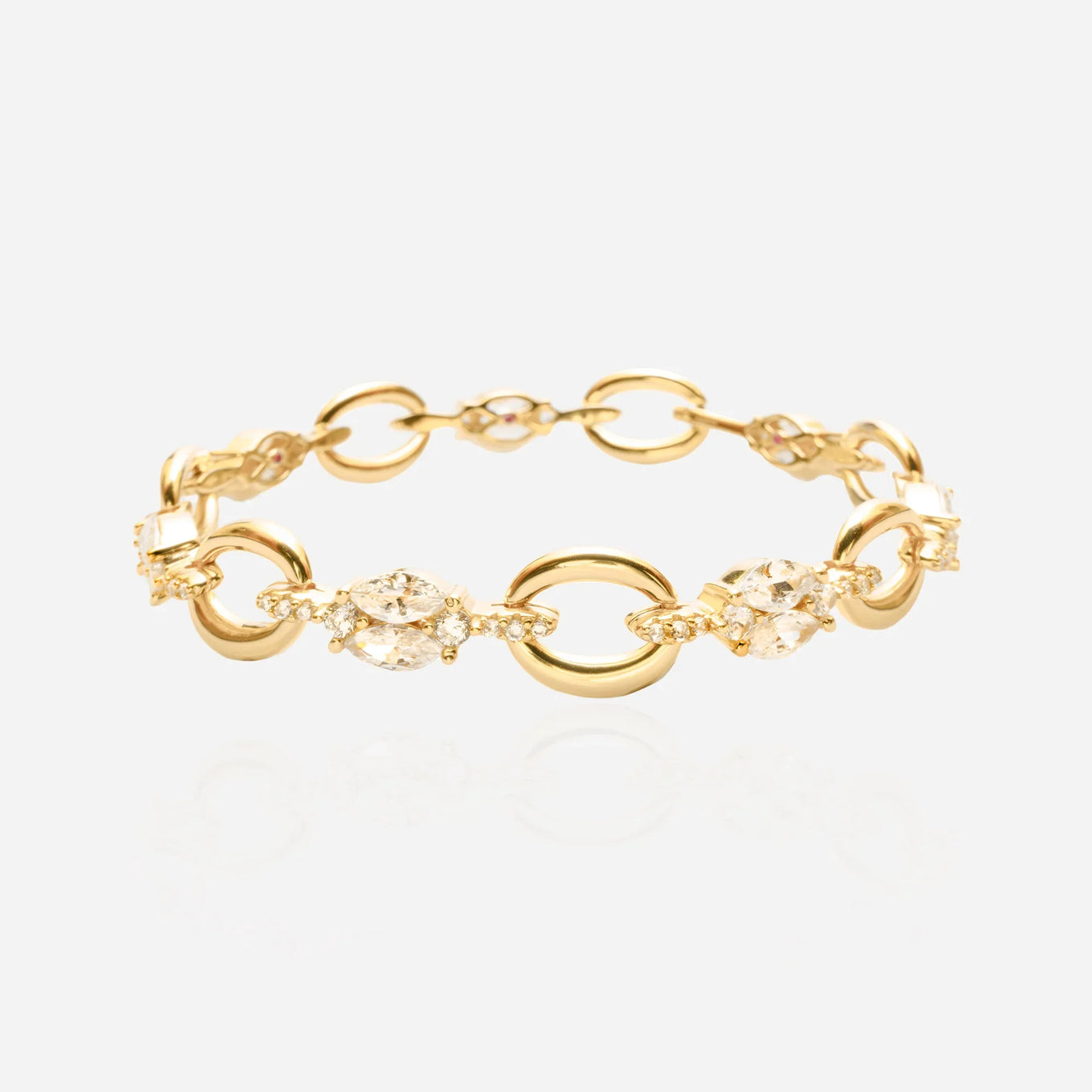
Three chains, three widths, three personalities. Start with a substantial chain like the Marquise Garland Link Bracelet as your anchor. Add the Charm Coin Bracelet with its talismanic coin detail as your focal point.
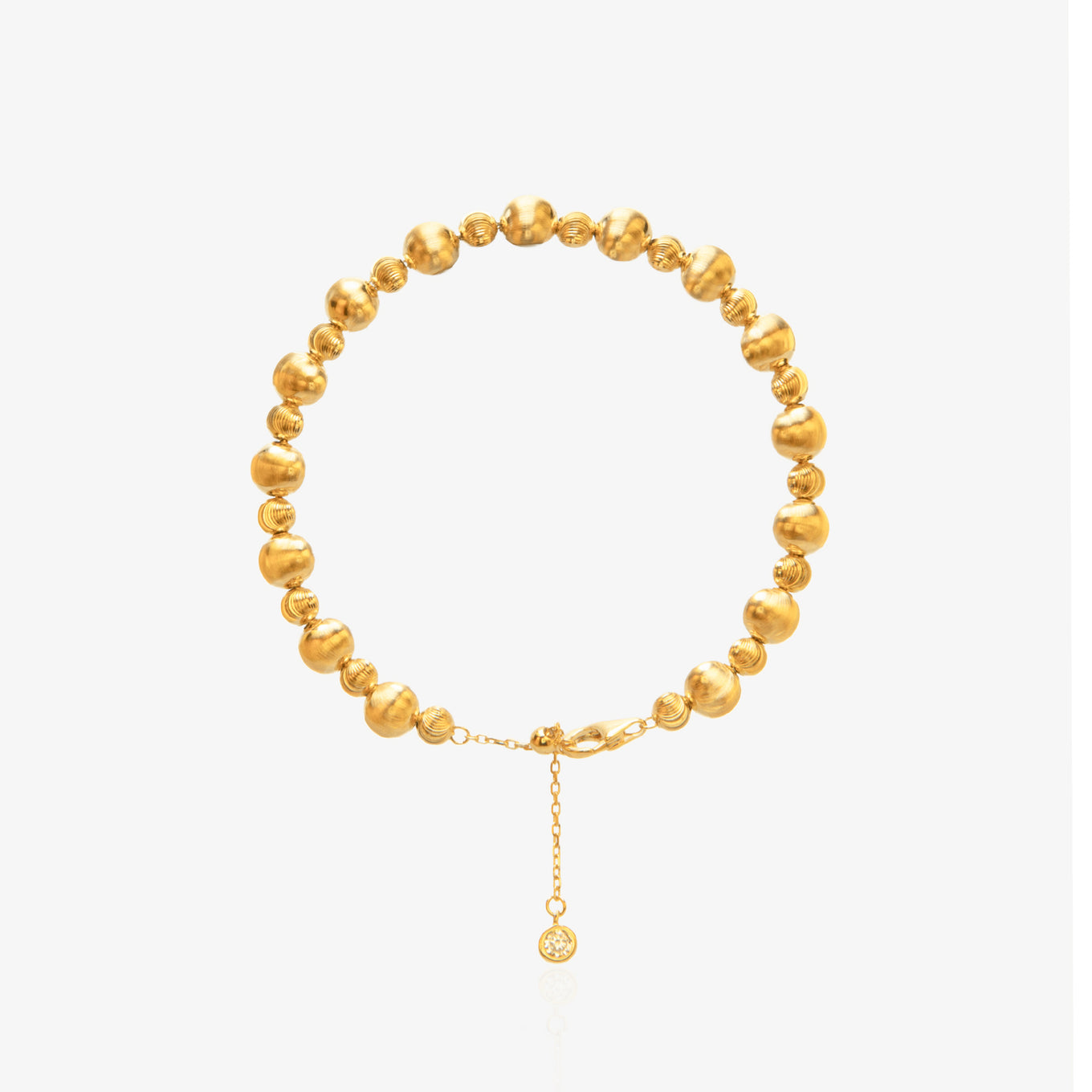
Finish with the Cocoon Chain Bracelet — its satin oval beads create the delicate chain element. Three distinct textures, one unified gold tone, zero tangling.
Formula 2: The Bangle Sandwich
Chain — Bangle — Chain. This is the easiest entry point into bracelet stacking. A bangle like the Pavé Bamboo Link Bangle sits at center, flanked by a chain bracelet on each side. The bangle stays put while the chains move freely around it — no tangling, maximum impact.
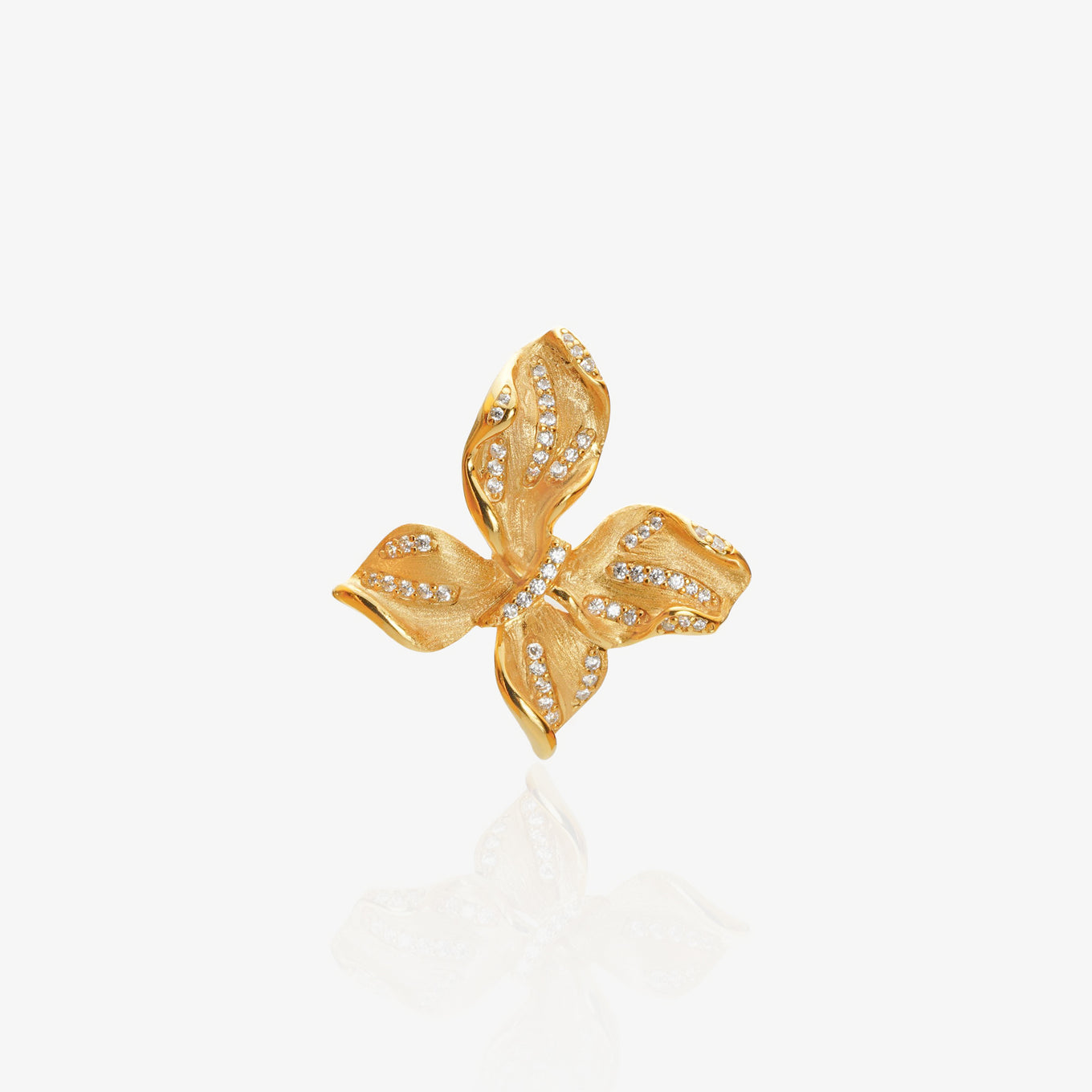
For warmer months, the Rose Stem Hinged Bangle brings botanical romance to your stack.
Formula 3: Beaded + Cuff + Chain
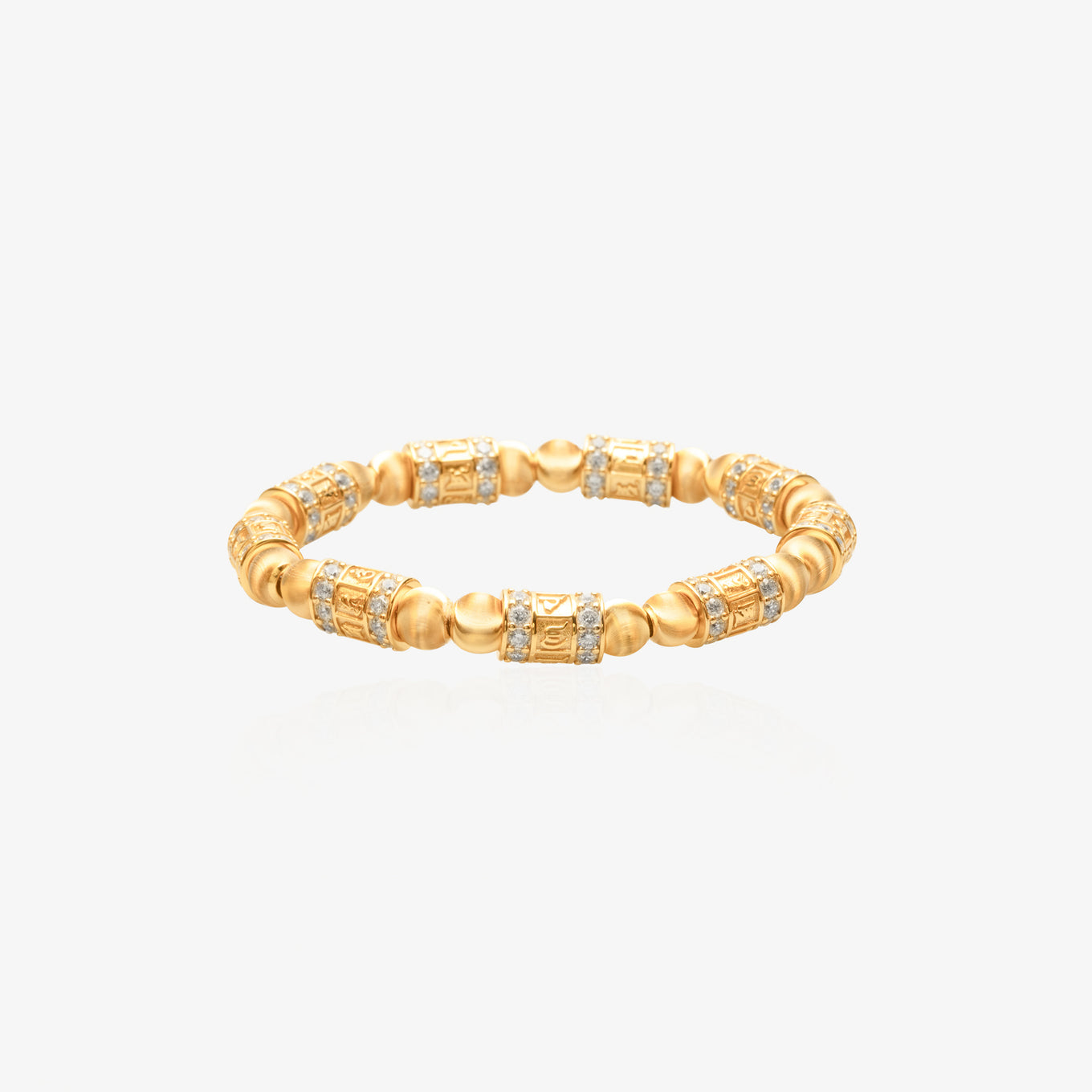
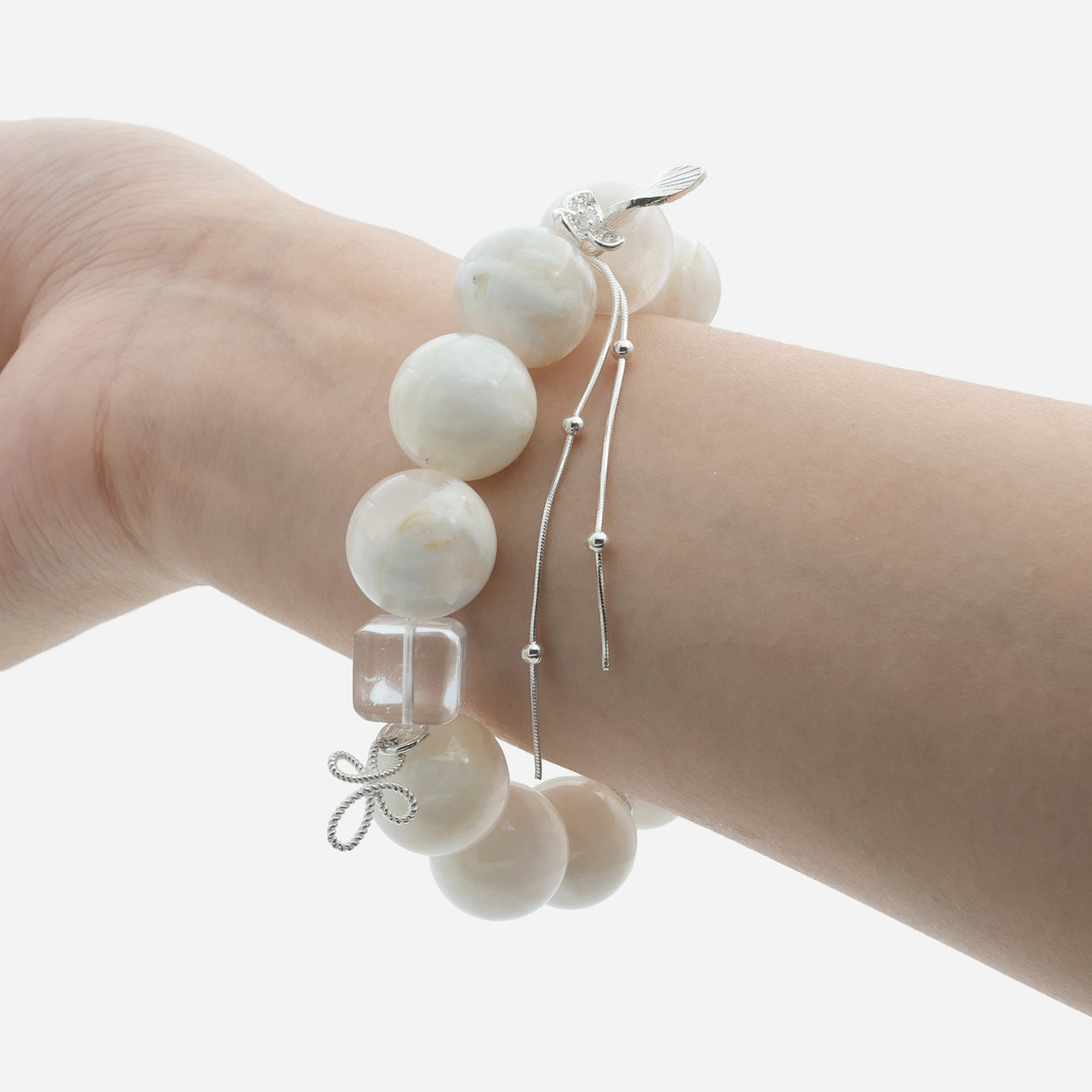
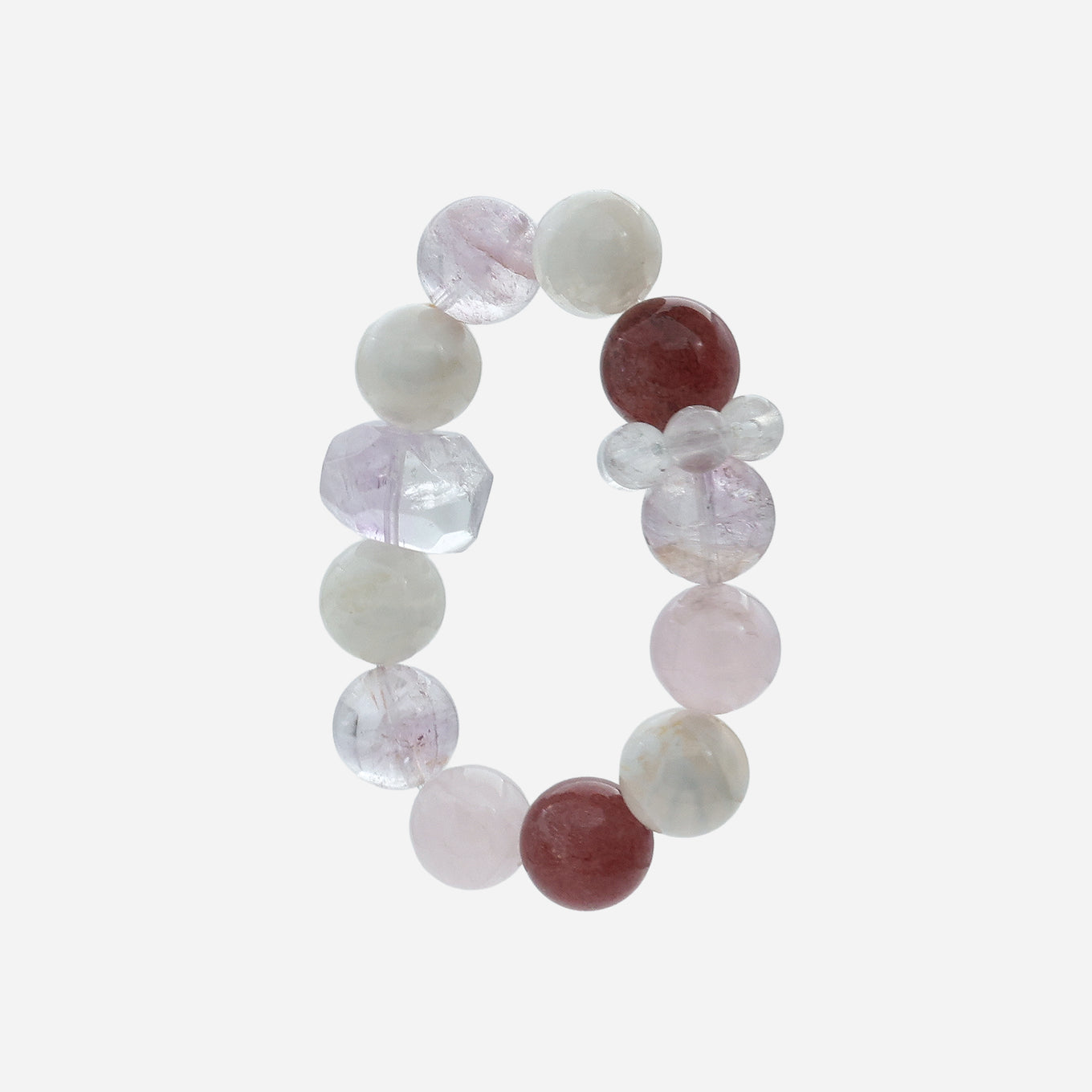
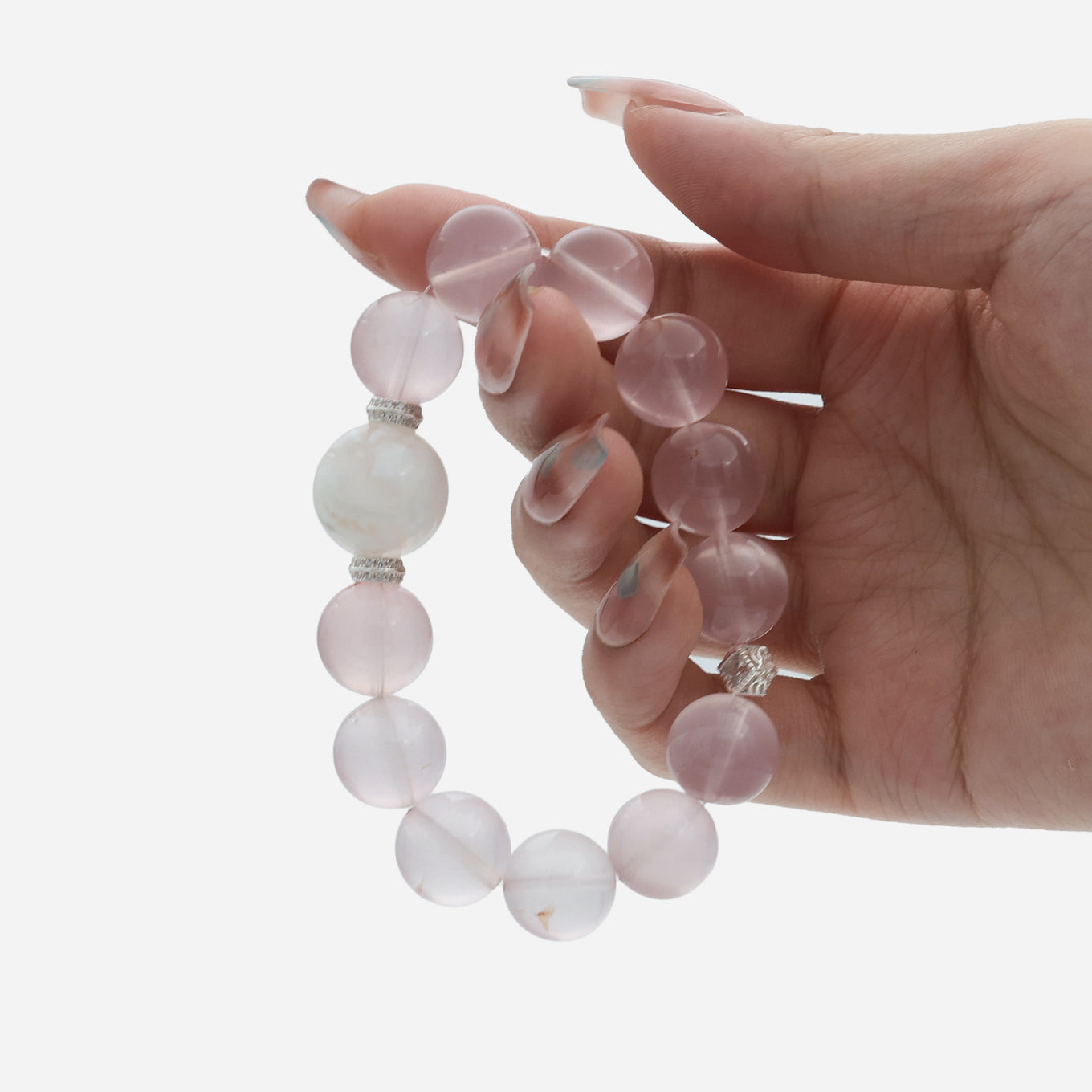
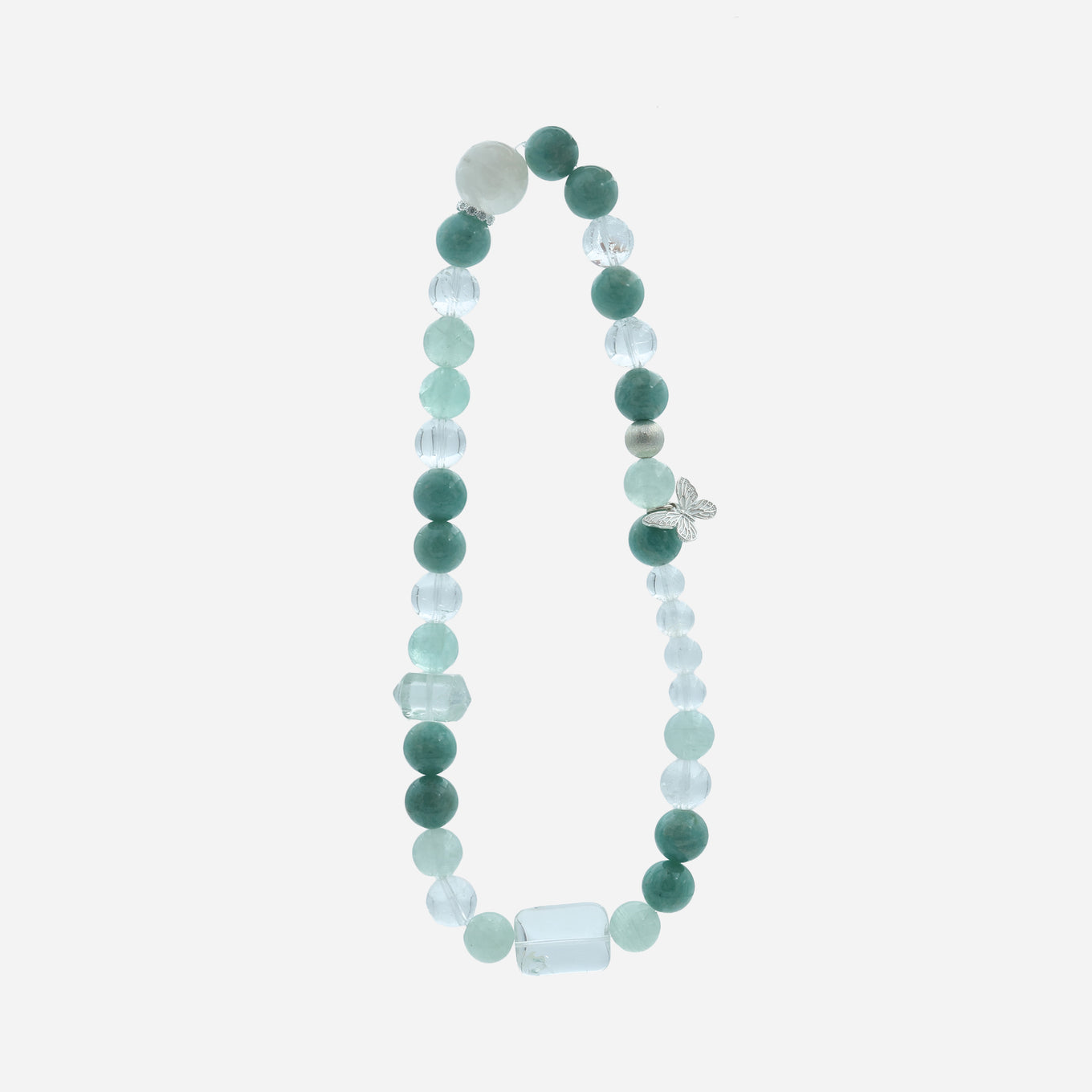
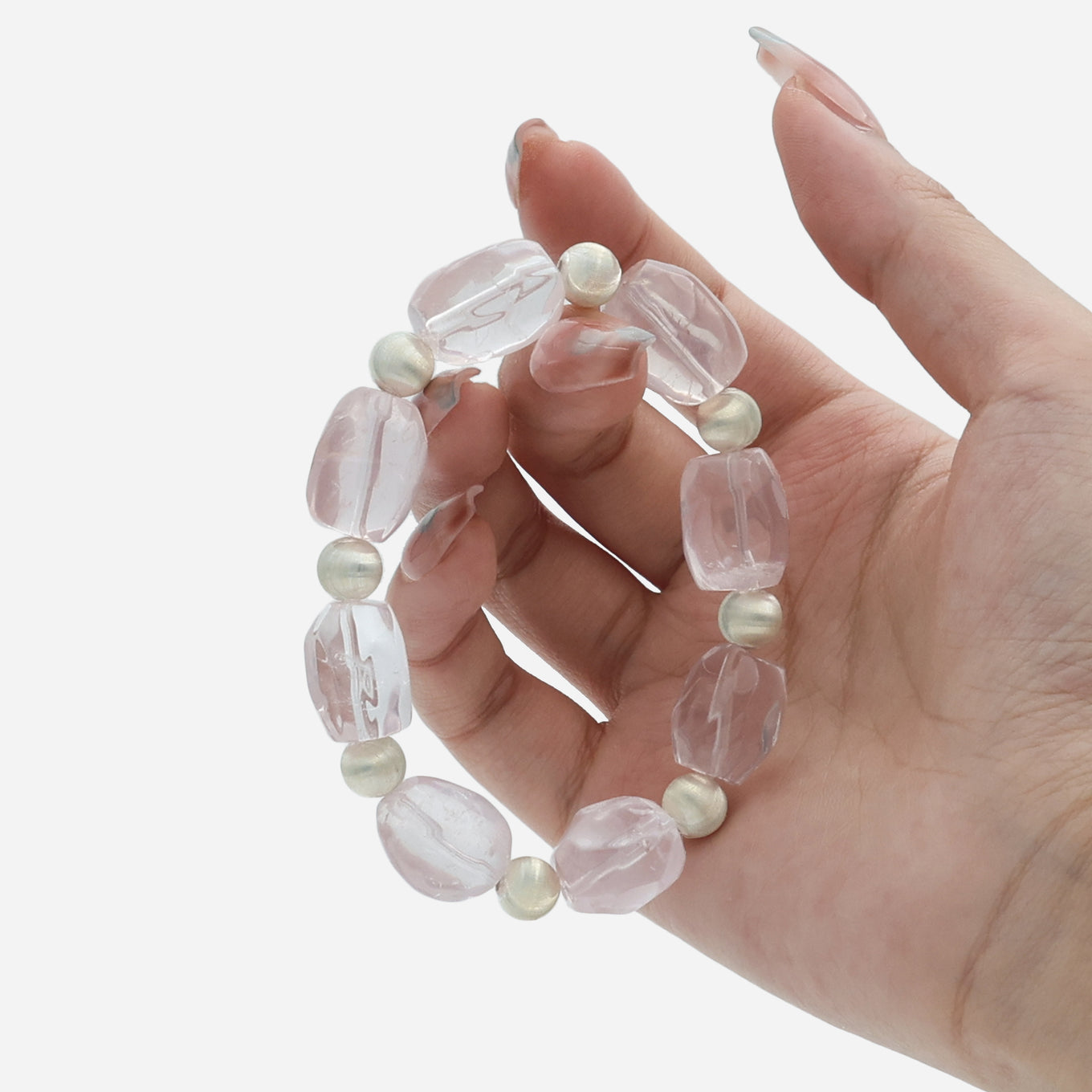
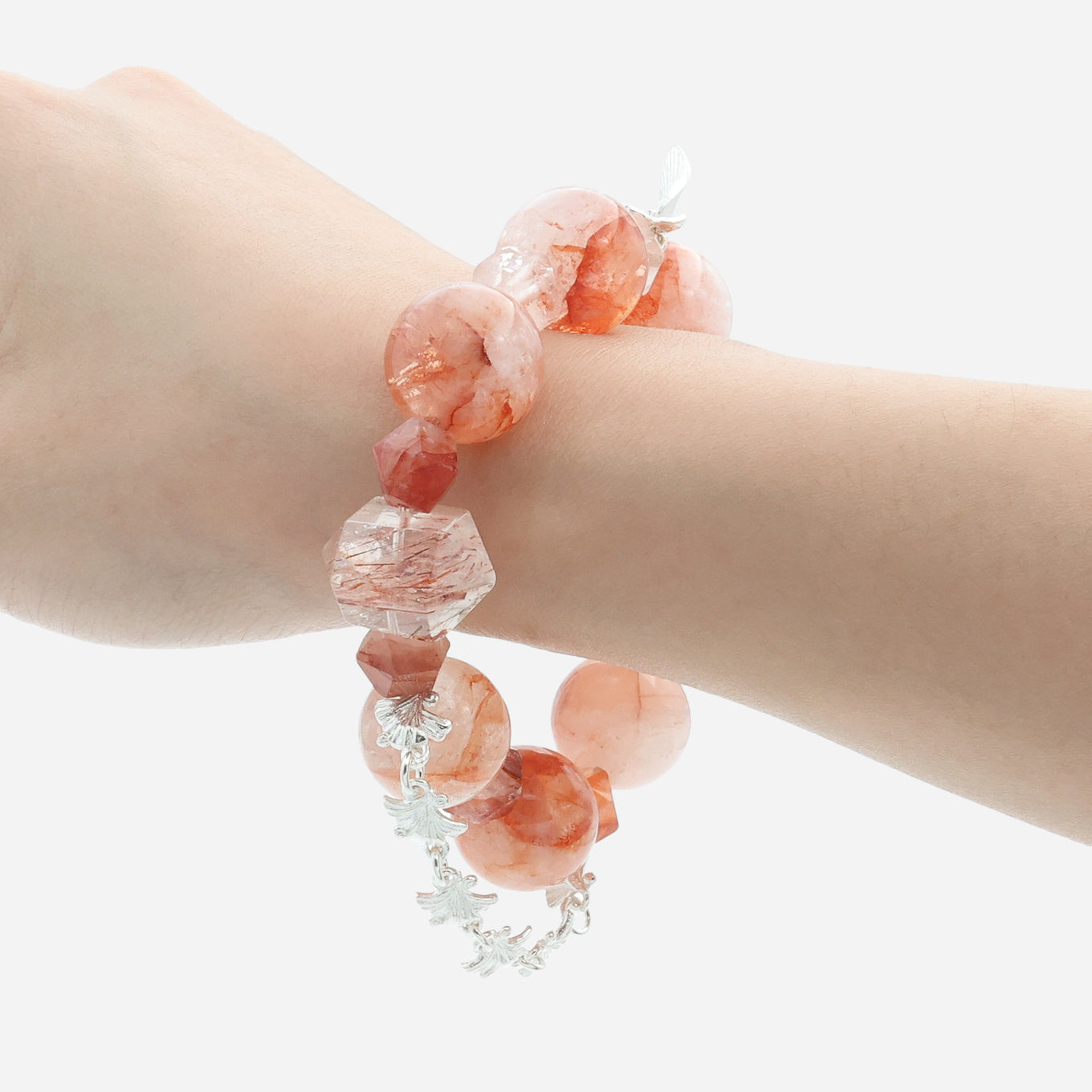
The texture masterclass. Layer a gemstone beaded bracelet (crystals catch light differently than metal), position an open cuff above it, and finish with a fine chain. The Gold Open Cuff Bracelet with Austrian Crystal Pearls adds luminous texture, while a beaded piece from the Crystal Multi-Gemstone collection brings organic energy.
This stack tells a story — it reads as collected over time, not purchased in one trip.
The ÉLARAMUSE Standard
We believe jewelry should work as hard as you do — shower-safe, sleep-safe, and never a source of anxiety. Every ÉLARAMUSE bracelet in your stack is built on the same foundation of quality, so you can mix and match without worrying about pieces wearing at different rates.
💡 Related: Love the sculptural hardware look of iconic bracelets? See our guide to the best Cartier Love bracelet alternatives — same precision aesthetic, crafted with sterling silver and tarnish-resistant gold plating.
| Feature | Specification |
|---|---|
| Base Metal | Solid Ag925 Sterling Silver |
| Plating | 0.5-micron 18K gold plating |
| Safety | 100% Nickel-Free, Hypoallergenic |
| Durability | Water-resistant, Tarnish-resistant |
| Hardware | Lobster clasp, 2-inch extender on chains |
Key Terms You Need to Know
- Ag925: International hallmark for sterling silver — 92.5% pure silver, the global standard for fine jewelry.
- 0.5-Micron Plating: A plating thickness that balances durability with everyday wear — thicker than fast-fashion plating (typically 0.1-0.3 microns), thinner than gold-plated sterling silver (2.5+ microns).
- Lobster Clasp: The most secure and user-friendly clasp type — curved spring-loaded mechanism that's easy to operate one-handed.
- Open Cuff: A bracelet that doesn't fully close, allowing adjustable fit and easy on/off without a clasp.
- Hinged Bangle: A rigid bangle with a hinge mechanism and safety clasp — combines the look of a solid bangle with the practicality of easy wear.
How to Avoid the Biggest Bracelet Stacking Mistake
Tangling isn't random — it's physics. Chains tangle when two links of similar size interlock. The solution: vary your chain link sizes dramatically. A large curb link won't catch on a fine box chain. A smooth bangle can't tangle at all. A beaded bracelet's irregular surface resists interlocking.
Unlike flimsy fashion bracelets with identical lightweight chains that knot into a ball by lunchtime, our bracelets are engineered with varied link geometries — large links on the Marquise Garland, smooth satin beads on the Cocoon Chain, and rigid bangles that refuse to tangle. The physics of your stack matters as much as the aesthetics.
Bracelet Stacking by Scenario
Because your bracelet stack should adapt to your life:
- Desk-to-Dinner: Two chains + one bangle. Clean lines that won't clatter during typing, elegant enough for evening. The Gilded Vine Bracelet with its twisted rope texture and the Papillon Chain Bracelet with its micro-pavé butterfly create a polished, work-appropriate stack.
- Weekend Casual: One beaded + one chain + one cuff. Organic, relaxed, full of personality. Mix your favorite gemstone beaded bracelet with a gold chain and the Moire Gold Bangle for water-ripple texture.
- Evening Event: Three bangles. Maximum visual impact, zero tangling risk. The Pavé Bamboo Link Bangle, Rose Stem Hinged Bangle, and Moire Bangle together create a wrist statement that catches candlelight beautifully.
- Gym-to-Errands: Single chain. Keep it simple when you're active — our water-resistant chains stay on through sweat and showers, so you never need to remove your jewelry mid-day.
Metal Mixing: Yes, You Can Wear Gold and Silver Together
The rule against mixing metals died years ago, but bracelet stacking gives you the perfect canvas to prove it. A two-tone piece like the Pavé Bamboo Link Bangle (gold with silver accents) acts as a bridge between gold and silver bracelets, making the mix look intentional rather than accidental.
Unlike the outdated "match your metals" rule, modern bracelet stacking thrives on thoughtful contrast. A cool-toned silver chain next to a warm gold bangle creates visual tension that draws the eye. Our Ag925 base metal means every piece — gold-plated or silver-toned — shares the same tarnish-resistant foundation.
Behind the Design: Why We Engineer for Stacking
I wear a bracelet stack every single day — typically three chains and one bangle on my left wrist. In our design process, we test every bracelet not in isolation but in stacks. Does the clasp catch on neighboring chains? Does the profile sit too high, pushing adjacent pieces out of position? These are the questions that drive our prototyping. We've rejected beautiful designs simply because they didn't play well with others. A solo bracelet is a statement; a stack is a conversation.
Care Tips for Your Bracelet Stack
- Rotate pieces weekly. Your bracelets experience different wear patterns when stacked — rotation prevents uneven wear.
- Clean between the links. A soft brush reaches areas that rubbing with a cloth misses — especially important for beaded pieces.
- Store stacked pairs together. If you always wear two specific bracelets together, store them that way. It saves styling time and maintains the pairing habit.
- Check clasps monthly. The lobster clasp on your most-worn chain deserves a quick inspection — it's the hardest-working component in your stack.
Frequently Asked Questions
How many bracelets should I stack?
Start with three. It's the magic number that reads as intentional without overwhelming your wrist. Once you're comfortable, expand to five — but never exceed what your wrist can physically support without pieces sliding over your hand.
Should I stack on my dominant or non-dominant wrist?
Non-dominant wrist, almost always. Your dominant hand moves more, types more, and reaches for things more — stacks on that wrist catch on everything. If you wear a watch, stack bracelets on the opposite wrist.
Can I wear a bracelet stack while working out?
Yes — provided your bracelets are water-resistant and nickel-free. ÉLARAMUSE bracelets are engineered for active wear. Remove beaded bracelets before heavy lifting (gems can chip) but chains and bangles can stay on through your entire workout.
How do bracelet stacks compare to single statement bracelets?
Unlike a single statement bracelet that makes one bold impression, a stack creates visual complexity that rewards closer inspection. A statement cuff says "look at this bracelet." A curated stack says "look at how these pieces complement each other" — and by extension, "look at the person who curated them."
Do bangles scratch chain bracelets when stacked together?
When both pieces are plated to the same standard with Ag925 bases, minimal scratching occurs. The key is avoiding sharp-edged bangles against delicate chains — our bangles feature rounded, polished interiors specifically to prevent this.
Editor's Picks for Your Bracelet Stack
- Anchor: Marquise Garland Link Bracelet — Bold mixed-cut lab diamonds, the ultimate foundation piece.
- Texture: Moire Gold Bangle — Water-ripple texture catches light unlike any flat surface.
- Focal Point: Papillon Chain Bracelet — The micro-pavé butterfly draws eyes and starts conversations.
- Delicate: Cocoon Chain Bracelet — Satin oval beads, whisper-thin, the perfect spacing element.
Explore the Full Bracelet Collection →
References & Further Reading
We believe jewelry is not decoration - it is self-definition. Every piece we make must earn its place on your body: through material integrity (solid Ag925 cores, never hollow brass), through design intelligence (pieces that survive showers, sleep, and spontaneous decisions), and through a commitment to transparency that the jewelry industry has historically avoided. We do not chase trends. We build talismans for the captain of her own soul - pieces that feel like you, only more intentional.What We Believe
Your jewelry is more than adornment — it's a talisman for your story. Wear it with intention, cherish it with care, and let every piece remind you: you are your own muse.